Esther 5:2
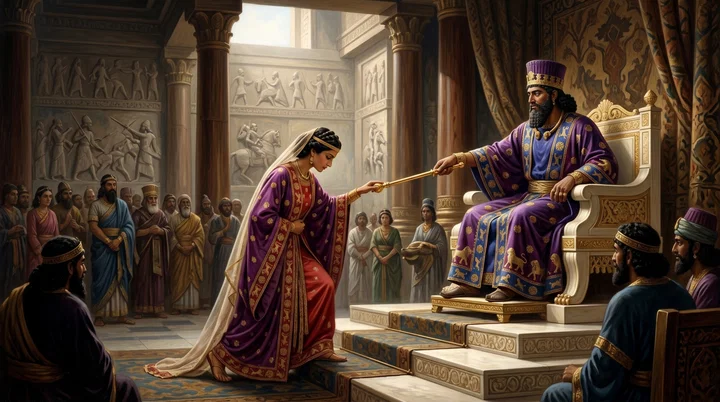
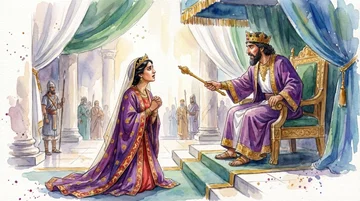
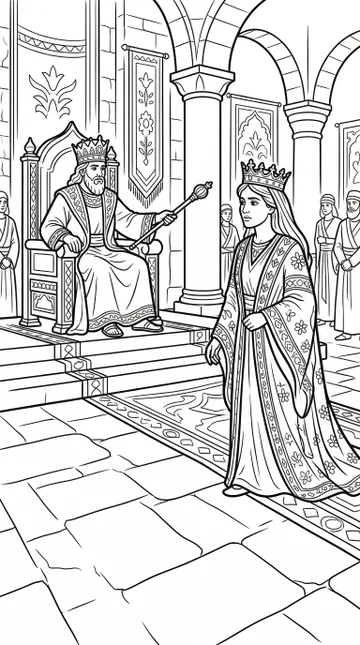
And it was so, when the king saw Esther the queen standing in the court, that she obtained favour in his sight: and the king held out to Esther the golden sceptre that was in his hand. So Esther drew near, and touched the top of the sceptre.
Translations
American King James Version, Webster Bible
And it was so, when the king saw Esther the queen standing in the court, that she obtained favor in his sight: and the king held out to Esther the golden scepter that was in his hand. So Esther drew near, and touched the top of the scepter.
King James Version, KJV Cambridge Paragraph Bible, Revised Version
And it was so, when the king saw Esther the queen standing in the court, that she obtained favour in his sight: and the king held out to Esther the golden sceptre that was in his hand. So Esther drew near, and touched the top of the sceptre.
And it was so, when the king saw Esther the queen standing in the court, that she obtained favor in his sight; and the king held out to Esther the golden sceptre that was in his hand. So Esther drew near, and touched the top of the sceptre.
and it cometh to pass, at the king's seeing Esther the queen standing in the court, she hath received grace in his eyes, and the king holdeth out to Esther the golden sceptre that [is] in his hand, and Esther draweth near, and toucheth the top of the sceptre.
And it was so, when the king saw the queen Esther standing in the court, that she obtained grace in his sight; and the king held out to Esther the golden sceptre that was in his hand; and Esther drew near, and touched the top of the sceptre.
And it came to pass, when the king saw Esther the queen standing in the court, that she obtained favour in his eyes,—and the king held out to Esther, the golden sceptre which was in his hand, so Esther drew near, and touched the top of the sceptre.
Berean Standard Bible, Majority Standard Bible
As soon as the king saw Queen Esther standing in the court, she found favor in his sight. The king extended the gold scepter in his hand toward Esther, and she approached and touched the tip of the scepter.
When the king saw Esther the queen standing in the court, she obtained favor in his sight; and the king held out to Esther the golden scepter that was in his hand. So Esther came near and touched the top of the scepter.
And when the king saw Esther the queen waiting in the inner room, looking kindly on her he put out the rod of gold in his hand to her. So Esther came near and put her fingers on the top of the rod.
And when the King saw Ester the Queene standing in the court, shee founde fauour in his sight: and the King held out the golden scepter that was in his hand: so Ester drewe neere, and touched the toppe of the scepter.
Douay-Rheims (Challoner revision)
And when he saw Esther the queen standing, she pleased his eyes, and he held out toward her the golden sceptre, which he held in his hand: and she drew near, and kissed the top of his sceptre.
Pictures









Cross-references
- Esther 4:16
Go, gather together all the Jews that are present in Shushan, and fast ye for me, and neither eat nor drink three days, night or day: I also and my maidens will fast likewise; and so will I go in unto the king, which is not according to the law: and if I perish, I perish.
Esther’s resolve to risk death for her people leads to the king’s favor.
- Esther 4:11
All the king’s servants, and the people of the king’s provinces, do know, that whosoever, whether man or woman, shall come unto the king into the inner court, who is not called, there is one law of his to put him to death, except such to whom the king shall hold out the golden sceptre, that he may live: but I have not been called to come in unto the king these thirty days.
The law made approaching the king uninvited fatal unless he extended the scepter.
- Hebrews 4:16
Let us therefore come bold ly unto the throne of grace, that we may obtain mercy, and find grace to help in time of need.
Both portray approaching a ruler for mercy and favor.
- Esther 5:6-8
And the king said unto Esther at the banquet of wine, What is thy petition? and it shall be granted thee: and what is thy request? even to the half of the kingdom it shall be performed.
The king again invites Esther to make her request at the banquet.
- Esther 4:14
For if thou altogether holdest thy peace at this time, then shall there enlargement and deliverance arise to the Jews from another place; but thou and thy father’s house shall be destroyed: and who knoweth whether thou art come to the kingdom for such a time as this?
Mordecai urges Esther to use her royal position to help her people.
- Genesis 49:10
The sceptre shall not depart from Judah, nor a lawgiver from between his feet, until Shiloh come; and unto him shall the gathering of the people be.
It promises that the scepter will remain with Judah, from whom Christ came.
Commentary
Each commentary is drawn from primary sources: the writings of Ellen G. White and Adventist pioneers and periodicals. Each commentary is separate. Its own words are not a quotation; follow the references to read the source passages.
Ellen G. White
7 sources
When Esther stood in the court the king showed her favor by holding out his golden scepter to allow and welcome her approach, and Esther drew near and touched the top of the scepter.1T 16.2–4STB 366.2CET 17.2–18.2LS 139.2–140.3MWISDAP 23.3 The scene is of Esther as queen in a long flowing gown and veil standing in a richly furnished palace chamber with ornamental columns before the Persian king Ahasuerus.PK 598 Attendants are present including one bowing and another holding a fan, as the king holds his scepter and extends his hand toward her in favor and asks what she desires, and Esther raises her hand to answer.PK 598
The golden scepter is a picture of the mercy and grace that Jesus as gracious Saviour holds out to the sinner trembling in His presence.1T 16.2–4CET 17.2–18.2LS 139.2–140.3MWISDAP 23.3Ms 122, 1905, par. 18–19 It is called the holy scepter.STB 366.2MWISDAP 23.3Ms 122, 1905, par. 18–19 As Esther came near and touched the scepter, the repentant sinner wavering between hope and fear must come into Christ's presence and reach out with the hand of faith to touch the scepter.1T 16.2–4STB 366.2CET 17.2–18.2LS 139.2–140.3MWISDAP 23.3 This means surrendering to God at once and venturing upon His mercy in trust even at the risk of death.STB 366.2LS 139.2–140.3MWISDAP 23.3Ms 122, 1905, par. 18–19
This approach to Christ is made while He is still pleading in heaven for the sinner.MWISDAP 23.3Ms 122, 1905, par. 18–19 That touch of faith insures pardon and peace and makes the sinner a hopeful, believing child of God.1T 16.2–4CET 17.2–18.2LS 139.2–140.3 He has pledged to hear and answer all who come to Him in faith.LS 139.2–140.3 The sinner need not and must not wait to become more worthy before claiming the promises, for waiting to become worthy is a fatal mistake.1T 16.2–4CET 17.2–18.2LS 139.2–140.3 All self-dependence and efforts to gain favor are vain, for Jesus alone cleanses from sin and forgives transgression.LS 139.2–140.3
Sources
Pioneers and periodicals
27 sources
Entering unsummoned into the inner court could mean death unless the king extended the golden scepter, and Esther came after thirty days without a summons because silence would not spare her when her people were doomed.ST Feb 27, 1893ST Feb 27, 1893ST Mar 4, 1886 When the king saw her standing in the court she obtained favor in his sight, and he held out the golden scepter which she drew near and touched as the sign of safe permission to approach and plead.ST Feb 27, 1893ST Mar 4, 1886RH Sep 14, 1916RH May 7, 1914 That favor helped frustrate the attempt through Haman to destroy all God's people, and God by this deliverance preserved them from destruction.ST Nov 19, 1896ST Jun 27, 1911ST Mar 23, 1882 As Ahasuerus extended the golden scepter to Esther, Jesus holds out the scepter of mercy and grace to the trembling sinner, who need only reach out the hand of faith to receive pardon and peace without first making himself worthy.LS 139.2–140.3ST Jan 27, 1876ST Apr 11, 1878 The offered scepter is therefore an invitation to bold prayer, by which all may come through the merits of Christ alone to a gracious Heavenly Father and ask with confidence that they will not ask in vain.ST May 21, 1885RH Mar 4, 1915RH Nov 17, 1859RH Aug 5, 1873
Esther's Dangerous Appeal
Entering the inner court without being summoned could bring death unless the king extended the golden scepter to spare the intruder.ST Feb 27, 1893ST Feb 27, 1893ST Mar 4, 1886RH Dec 21, 1911RH Jun 9, 1863 Esther had not been called to come to the king for thirty days when the crisis came upon the Jews.ST Feb 27, 1893 Mordecai warned her that remaining silent would not spare her from the danger facing her people and urged her to act, reminding her that she may have come to the kingdom for such a moment as this.ST Feb 27, 1893
When the king saw Esther the queen standing in the court, she obtained favor in his sight.ST Feb 27, 1893ST Mar 4, 1886RH Sep 14, 1916RH Jun 9, 1863ST Apr 30, 1902 He held out to her the golden scepter that was in his hand, and she drew near and touched the top of it.ST Feb 27, 1893ST Mar 4, 1886RH Sep 14, 1916RH Dec 21, 1911RH Jun 9, 1863 That holding out was the sign of favor and permission to approach safely, opening the way for her to make her request on behalf of her people.ST Feb 27, 1893ST Mar 4, 1886RH Dec 21, 1911RH Jun 9, 1863ST Apr 30, 1902
After three days of fasting and prayer she was physically and emotionally overwhelmed and fainted before him.ST Sep 7, 1904 The king's welcome gave her opportunity to speak, yet she did not at once reveal the threat against herself and her people but first invited him and Haman to a banquet.ST Sep 7, 1904 Her risky visit was then followed by a gracious welcome and an offer to grant her request even up to half the kingdom.ST Apr 30, 1902
Although the fast was proclaimed for three days, she went in before the king on the third day, showing that in Jewish reckoning a period called three days could include only part of the first and third days.RH Mar 15, 1860 The extended golden scepter was the signal of the king's favor and royal authority, of the kind rulers wielded in Esther's day as they still do.RH May 7, 1914
God Frustrates Satan's Plot
Esther 5:2 stands within Satan's attempt through Haman in the reign of Ahasuerus to destroy all God's people, the woman through whom the Man-child should come.ST Nov 19, 1896 That attempt came while Medo-Persia ruled as the second head of the Satanic beast system of government.ST Nov 19, 1896 The king's granting of favor to Esther by holding out his golden scepter and allowing her to approach him helped frustrate Satan's purpose through Haman.ST Nov 19, 1896ST Jun 27, 1911 God by this deliverance frustrated that purpose and preserved His people from destruction, with Esther's boldness in going before the king despite the danger, after fasting and prayer, becoming the means of deliverance for her and her people.ST Nov 19, 1896ST Mar 23, 1882
Scepter of Mercy and Prayer
As Ahasuerus held out the golden scepter to Esther as the signal of his favor, Jesus as gracious Saviour holds out the scepter of mercy and grace to the sinner trembling in His presence.LS 139.2–140.3ST Jan 27, 1876ST Apr 11, 1878 All the sinner wavering between hope and fear must do is surrender to God at once, venture upon His mercy, and put forth the hand of faith to touch the scepter.LS 139.2–140.3ST Jan 27, 1876ST Apr 11, 1878 That touch of faith insures pardon and peace and makes the sinner a hopeful, believing child of God, receiving grace, pardon, and peace.LS 139.2–140.3ST Jan 27, 1876ST Apr 11, 1878
No effort to make oneself worthy can earn divine favor, and all self-dependence and wonderful efforts to gain favor are vain.LS 139.2–140.3ST Jan 27, 1876ST Apr 11, 1878 Waiting to become more worthy before claiming the promises is a fatal mistake.LS 139.2–140.3 Jesus alone cleanses from sin and forgives transgression, and He has pledged to hear and answer all who come to Him in faith.LS 139.2–140.3ST Apr 11, 1878 Christ welcomes fearful sinners who come to Him, and they may trust He will not reject them, and their return brings joy in heaven.RH Jul 16, 1857 Yet He will be either Saviour or Judge, so the sinner must come to Him for mercy and make peace while mercy is available rather than resist His rule and be brought under judgment.
Esther risked death by entering the court without being summoned, resolved to save her people even if she perished, and after silent prayer the king looked on her with favor and extended his golden scepter so that danger gave way to a welcome audience.RH Jun 9, 1863 As the king received Esther, Christ receives a believer who comes to Him with petitions, showing that fear wrongs Christ.RH Jun 9, 1863 Her fearful approach contrasts with the open access now given through Christ, for sinners who deserve death may come to the throne of grace, find favor, and ask God for what they need.RH Dec 21, 1911 The offered scepter is an image of divine grace and of Christ inviting people to ask boldly, with God Himself as the greatest gift.ST May 21, 1885 It invites people to come to God as King and live.
Prayer is a privilege through which people may ask for eternal life and other blessings with confidence that they will not ask in vain, rather than a duty approached only from conscience or fear.ST Mar 30, 1876RH Jul 14, 1863 Those who touch God's extended scepter may come to the throne of grace and ultimately to the throne of glory.RH Mar 4, 1915 The verse pictures prayer as royal intercession before God, a royal duty all may continually perform by which God makes people partners of His omnipotence.RH Mar 14, 1912 Unlike Esther's uncertain approach to the arbitrary Xerxes, believers come to a living Heavenly Father to touch a merciful scepter, and the petitions of sister, wife, and mother surely pierce the sky to reach His heart.RH Mar 14, 1912 Esther's tact, courage, intercession, and faith in finding favor are applied to mothers who must address difficult matters and prevail with the King of the universe.RH Dec 14, 1911
The petitioner approaching a ruler who extends a scepter in favor illustrates approaching God, whose favor is sought through the merits of Christ alone.RH Nov 17, 1859 The scene is an image of prayer reaching Jesus and coming close to Him near the throne, where labor may have a place but prayer comes closest.RH Aug 5, 1873 It is the longing for the heavenly King to grant access, so that pride may be removed and buried at the feet of Christ.RH Jun 26, 1860
Sources