Genesis 49:10
The sceptre shall not depart from Judah, nor a lawgiver from between his feet, until Shiloh come; and unto him shall the gathering of the people be.
Translations
The scepter shall not depart from Judah, nor a lawgiver from between his feet, until Shiloh come; and to him shall the gathering of the people be.
The sceptre shall not depart from Judah, nor a lawgiver from between his feet, until Shiloh come; and unto him shall the gathering of the people be.
The sceptre shall not depart from Judah,
Nor a lawgiver from between his feet,
Until Shiloh come;
And unto him shall the gathering of the people be.The scepter shall not depart from Judah, nor a lawgiver from between his feet, until Shiloh shall come: and to him shall be the gathering of the people.
Revised Version, American Standard Version
The sceptre shall not depart from Judah, Nor the ruler’s staff from between his feet, Until Shiloh come; And unto him shall the obedience of the peoples be.
The sceptre turneth not aside from Judah, And a lawgiver from between his feet, Till his Seed come; And his [is] the obedience of peoples.
The sceptre will not depart from Judah, Nor the lawgiver from between his feet, Until Shiloh come, And to him will be the obedience of peoples.
The sceptre shall not depart from Judah, Nor the commander’s staff from between his feet,—Until that he come in as a Shiloh, And, his, be the obedience of the peoples:
Berean Standard Bible, Majority Standard Bible
The scepter will not depart from Judah,
nor the staff from between his feet,
until Shiloh comes
and the allegiance of the nations is his.The scepter will not depart from Judah,
nor the ruler’s staff from between his feet,
until he comes to whom it belongs.
The obedience of the peoples will be to him.The rod of authority will not be taken from Judah, and he will not be without a law-giver, till he comes who has the right to it, and the peoples will put themselves under his rule.
The scepter shall not depart from Iudah, nor a Lawegiuer from betweene his feete, vntill Shiloh come, and the people shall be gathered vnto him.
Douay-Rheims (Challoner revision)
The sceptre shall not be taken away from Juda, nor a ruler from his thigh, till he come that is to be sent, and he shall be the expectation of nations.
Pictures
Cross-references 20 of 77
- Daniel 9:25
Know therefore and understand, that from the going forth of the commandment to restore and to build Jerusalem unto the Messiah the Prince shall be seven weeks, and threescore and two weeks: the street shall be built again, and the wall, even in troublous times.
The sixty-nine weeks mark the appointed time for the Messiah’s appearance.
- Isaiah 9:6-7
For unto us a child is born, unto us a son is given: and the government shall be upon his shoulder: and his name shall be called Wonderful, Counsellor, The mighty God, The everlasting Father, The Prince of Peace.
Foretells the promised ruler who bears the government and reigns on David’s throne forever.
- Micah 5:2
But thou, Beth-lehem Ephratah, though thou be little among the thousands of Judah, yet out of thee shall he come forth unto me that is to be ruler in Israel; whose goings forth have been from of old, from everlasting.
Names Bethlehem as the birthplace of the promised ruler from Judah.
- Revelation 5:5
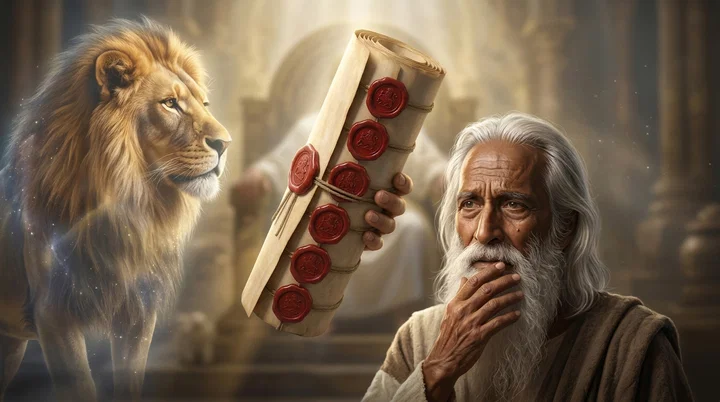
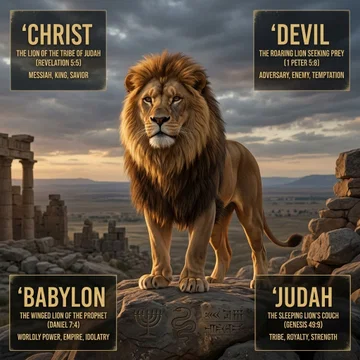
And one of the elders saith unto me, Weep not: behold, the Lion of the tribe of Juda, the Root of David, hath prevailed to open the book, and to loose the seven seals thereof.
Identifies Shiloh as the Lion of the tribe of Judah.
- Jeremiah 23:5-6
Behold, the days come, saith the LORD, that I will raise unto David a righteous Branch, and a King shall reign and prosper, and shall execute judgment and justice in the earth.
Both identify the promised Davidic ruler who reigns justly and brings salvation.
- 2 Samuel 7:12-16
And when thy days be fulfilled, and thou shalt sleep with thy fathers, I will set up thy seed after thee, which shall proceed out of thy bowels, and I will establish his kingdom.
God promises David an enduring royal line fulfilled in the promised ruler.
- Genesis 3:15
And I will put enmity between thee and the woman, and between thy seed and her seed; it shall bruise thy head, and thou shalt bruise his heel.
Both promise the victorious Seed as Christ, coming through Judah.
- Numbers 24:17
I shall see him, but not now: I shall behold him, but not nigh: there shall come a Star out of Jacob, and a Sceptre shall rise out of Israel, and shall smite the corners of Moab, and destroy all the children of Sheth.
Balaam’s prophecy also foretells a coming ruler from Israel.
- Ezekiel 21:27
I will overturn, overturn, overturn, it: and it shall be no more, until he come whose right it is; and I will give it him.
The kingdom is overturned until the rightful ruler comes.
- Isaiah 53:3
He is despised and rejected of men; a man of sorrows, and acquainted with grief: and we hid as it were our faces from him; he was despised, and we esteemed him not.
same first coming as suffering Messiah
- Luke 1:32-33
He shall be great, and shall be called the Son of the Highest: and the Lord God shall give unto him the throne of his father David:
Jesus receives David’s throne and reigns forever.
- Isaiah 11:1
And there shall come forth a rod out of the stem of Jesse, and a Branch shall grow out of his roots:
Both foretell the Messiah as a ruler from Jesse’s line.
- Matthew 1:1-16
The book of the generation of Jesus Christ, the son of David, the son of Abraham.
Traces Jesus’ ancestry through Judah.
- Hebrews 7:14
For it is evident that our Lord sprang out of Juda; of which tribe Moses spake nothing concerning priesthood.
Jesus, identified as Shiloh, sprang from Judah, not the priestly tribe of Levi.
- Luke 2:25-32
And, behold, there was a man in Jerusalem, whose name was Simeon; and the same man was just and devout, waiting for the consolation of Israel: and the Holy Ghost was upon him.
Simeon recognizes the infant Jesus as the promised Messiah, bringing salvation to Israel.
- Deuteronomy 18:15
The LORD thy God will raise up unto thee a Prophet from the midst of thee, of thy brethren, like unto me; unto him ye shall hearken;
Both prophecies foretell the coming Messiah.
- Matthew 2:1-2
Now when Jesus was born in Bethlehem of Judaea in the days of Herod the king, behold, there came wise men from the east to Jerusalem,
Jesus is born in Bethlehem and identified as the King of the Jews.
- Acts 2:30
Therefore being a prophet, and knowing that God had sworn with an oath to him, that of the fruit of his loins, according to the flesh, he would raise up Christ to sit on his throne;
God promises David that Christ will sit on his throne, fulfilling Judah’s royal promise.
- Jeremiah 23:6
In his days Judah shall be saved, and Israel shall dwell safely: and this is his name whereby he shall be called, THE LORD OUR RIGHTEOUSNESS.
Names the coming ruler as the Lord our Righteousness, identifying the Messiah.
- Zechariah 9:9
Rejoice greatly, O daughter of Zion; shout, O daughter of Jerusalem: behold, thy King cometh unto thee: he is just, and having salvation; lowly, and riding upon an ass, and upon a colt the foal of an ass.
Foretells the Messiah, Judah’s King, coming to Jerusalem lowly and riding an ass.
Commentary
Each commentary is drawn from primary sources: the writings of Ellen G. White and Adventist pioneers and periodicals. Each commentary is separate. Its own words are not a quotation; follow the references to read the source passages.
Ellen G. White
34 sources
Jacob on his deathbed blessed Judah with the promise that his tribe would keep royal authority and its own rulers without break until Shiloh should come.AA 223.1Ms 110, 1897, par. 6–111SP 154.2–156.1PP 236.1–2SG3 171.3 Shiloh is Jesus Christ, the promised Seed from Judah who is the Son of David, the Prince of Life and the peace-giving Redeemer of the world.Ms 110, 1897, par. 6–11PP 236.1–24RED 127.2 The loss of self-rule to Rome and a foreign ruler on Mount Zion marked that the appointed time was fulfilled and that Christ had already been born.Ms 110, 1897, par. 6–11DA 34.1–2DA 103.1–4 To him shall the gathering of the people be means that peoples and nations would gather to him under his banner, for he comes as Redeemer not of the Jews only but of the world.PK 683.2AA 223.1Ms 116, 1897, par. 33–34DA 204.4–205.1DA 192.2–4 Many looked for a royal deliverer to break political bondage, yet he came first in humiliation as a man of sorrows and sacrifice, healing the sick, raising the dead and preaching to the poor, and will come again as King to reign over all the earth.GC88 358.2–359.1GC 359.1–360.116MR 120.2–4RH Feb 20, 1900
Blessing's Setting and Terms
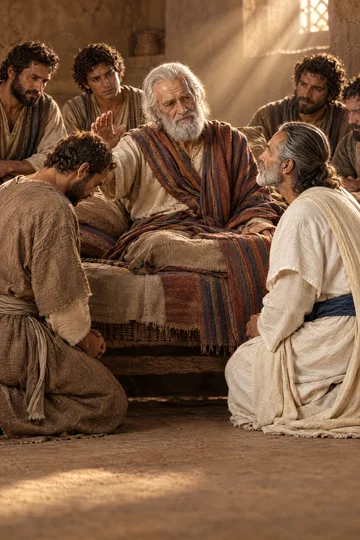
The words belong to Jacob's dying blessing to Judah, spoken when his sons gathered about him to receive his blessing and hear his last words of advice.1SP 154.2–156.1 They were uttered nearly seventeen hundred years before Christ's death and bear upon later generations.Ms 110, 1897, par. 6–11 He spoke as an affectionate father who had forgiven his children and loved them to the last, with no resentful or unforgiving spirit over their wrongs.SG3 172.2 The word did not come from mere natural paternal feeling, which would have uttered only love and tenderness in dying testimony, but God by the spirit of prophecy elevated his mind above natural feeling.SG3 172.2 In his last hours angels were all around him and the power of God's grace shone upon him, and under the Spirit of the Lord resting upon him in inspiration he uttered truth even though painful.1SP 154.2–156.1SG3 172.2
It is a joyful prophecy rather than a gloomy one, unlike the words exposing deeds of violence and declaring that God would visit Simeon and Levi for their sins.1SP 154.2–156.1SG3 171.3SG3 171.2 Its prophetic eye looks hundreds of years ahead to the birth of Christ.1SP 154.2–156.1SG3 171.3 It lays open future history and reveals the purposes of God.1SP 154.2–156.1
The sceptre was a sign of a tribe's governmental authority, and sceptre and lawgiver remaining with Judah meant Judah's continued rule and authority and royal line.AA 223.1Ms 110, 1897, par. 6–11ST Feb 5, 1880 Judah would remain a distinct tribe, ruled by one of its own offspring and retaining supremacy through adversity.Ms 110, 1897, par. 6–11 The kingdom and the promised ruler belong to Judah, with the sceptre given to David's seed, and the sceptre and lawgiver remain with Judah until Shiloh comes.1SP 154.2–156.1PP 235.2–4RH Feb 20, 1900 The Messiah was thus to come from Judah's royal line.AA 223.1
Shiloh is Christ, the promised Messiah to come from the tribe of Judah.Ms 110, 1897, par. 6–114RED 127.2ST Jul 22, 1886 He is the promised Seed and Sent of God, who came to establish a spiritual kingdom, and also the Apostle and High Priest of the Christian faith.Ms 110, 1897, par. 6–11 He is the Son of David, the true Lion of the tribe of Judah, to whom all powers will finally bow and all nations render homage.PP 236.1–2 He is the Prince of Life and Redeemer of the world, and the title Shiloh belonging to Jesus the Messiah means the peace-giver.ST Jul 22, 1886DA 103.1–4 His entering Jerusalem identifies him as this promised Messiah from Judah.DA 578.2–579.5
Unto him shall the gathering of the people be means the peoples and nations will gather to him and under his banner.Ms 110, 1897, par. 6–11PP 236.1–2Ms 22, 1890, par. 1–3 Judah's sceptre and rule continue until Shiloh comes, and then the people gather to him.PK 683.2AA 223.1 It foreshadows the hope of deliverance through the world's Redeemer.PK 683.2 The sacrifices and tabernacle service typified him and pointed to his perfect offering, and through him God's purpose and the hope of the nations are fulfilled.Ms 22, 1890, par. 1–3
Messiah's First Coming Foretold
Jacob's blessing to Judah is an early prophecy reaching hundreds of years forward to the birth of Christ at his first advent.1SP 154.2–156.1ST Feb 5, 1880SG3 171.3 It belongs to the Old Testament witness to Christ and to the line of promise reaching from Adam through the patriarchs and the Jewish system.DA 211.5–212.1ST Jun 20, 1906 In that line every prophet bears witness to him, and all history, precept and prophecy shine with his glory as the compacted prophecy of the gospel.DA 211.5–212.1 Seers beheld him beforehand as the future coming Redeemer to whom the gathering of the people belongs.ST Feb 5, 1880DA 211.5–212.1ST Jun 20, 1906
The taking of the sceptre from Judah and legislative power from between his feet marks the time of the Messiah's first coming.GC88 358.2–359.1GC 359.1–360.1 The waning power of Israel showed the time was fulfilled and his coming was at hand.DA 34.1–2 When a Roman ruler sat in the palace upon Mount Zion it proved by the sure word that Christ was already born, since the Messiah was to appear before a king should cease to reign on David's throne.DA 103.1–4 When the Jews told Pilate they had no king but Caesar, they acknowledged that the sceptre had departed from Judah.Ms 110, 1897, par. 6–11
The promise connects the Messiah's coming with the second temple, which was declared superior to the first despite lesser outward splendor because of its special connection with him.Ms 116, 1897, par. 33–3410MR 123.2 That superiority lay in his honoring it with his personal presence and in the gathering of the people to him.Ms 116, 1897, par. 33–34RH Dec 12, 1907 Jesus of Nazareth is the true Messiah who came the first time in humiliation as a sacrifice for the sins of men after that departure of the sceptre.GC88 358.2–359.1GC 359.1–360.1 He came as a man of sorrows acquainted with grief, brought like a lamb to the slaughter with pierced hands and feet, and the same Jesus will come a second time in the clouds of heaven with the trump of the archangel as king and deliverer to reign over all the earth.GC88 358.2–359.1GC 359.1–360.1
The idol shrines Solomon built for his wives remained as a melancholy sight in ruins until Christ came and looked upon them.RH Mar 10, 1910Ms 47, 1898, par. 387MR 74.1–3 They still stood when he saw them, long surviving beyond Solomon's reign.Ms 47, 1898, par. 387MR 74.1–3 Their survival shows that the consequences of his idolatry remained until Christ's time.Ms 47, 1898, par. 387MR 74.1–3
Gathering Hope and Response
The continuance of ruling power with Judah until the coming of Shiloh kept hope alive among faithful Jews who waited for the hope promised to the fathers and strengthened their faith.PK 683.2DA 34.1–2PK 683.1 That promise fed a widespread expectation of a mighty prince who would establish his kingdom in Israel and come as a deliverer to the nations.DA 34.1–2 When humanity had become more degraded through ages of transgression, the appointed fullness of time for the coming of Shiloh the Redeemer to whom the people would be gathered had arrived.PK 683.2DA 34.1–2DA 34.3 In him lay the hope of deliverance through the world's Redeemer and the hope of redemption through the coming Saviour and King.PK 683.2PK 683.1
The gathering to him began to be fulfilled when sympathetic hearts among the multitude in Jerusalem were drawn to Christ.DA 204.4–205.1 They understood his words and were warmed and comforted by his teaching of God as a tender father and by his works of mercy.DA 204.4–205.1 They accepted his lessons of love and benevolence in preference to the rigid ceremonies required by the priests.DA 204.4–205.1 The gathering belongs to him because he comes as Redeemer not of the Jews only but of the world, and on that promise the Samaritans based their faith in the coming Messiah.DA 192.2–4Ms 22, 1890, par. 1–3 The sacrifices and tabernacle service typified him and pointed to his perfect offering, and through him God's purpose and the hope of the nations are fulfilled.Ms 22, 1890, par. 1–3
Jacob foretold Jesus as Shiloh of the tribe of Judah, the Prince of Life and Redeemer of the world.ST Jul 22, 1886COS 96.2–97.102SP 395.2 Jesus entering Jerusalem is therefore the promised Messiah to whom the gathering of the people belongs.DA 578.2–579.5COS 96.2–97.102SP 395.2 As the procession descended the Mount of Olives, Jacob's words answer the question who he is and declare him Shiloh, the coming ruler to whom the people gather.ST Jul 22, 1886DA 578.2–579.52SP 395.2
Many Jews understood the promise as meaning a royal Messiah from Judah who would break their political subjection and make Israel a kingdom of priests.16MR 120.2–4 Jesus fulfilled the Messiah's prophetic signs by healing the sick, restoring the afflicted, raising the dead, and preaching the gospel to the poor, and these works testified to his identity.16MR 120.2–4 Many nevertheless rejected him because his holiness exposed their sin rather than bringing the earthly rule they expected.16MR 120.2–4 The scepter had been given to the seed of David for universal dominion, yet Judah's former privilege did not protect the people from judgment, and for their iniquities they were presented as a people facing destruction.16MR 120.2–4RH Feb 20, 1900
Sources
Pioneers and periodicals
108 sources
Jacob on his deathbed in Egypt foretold under inspiration what would befall his sons in the latter days, giving Judah the place of praise and rule after Reuben forfeited the birthright, as progenitor of the chief Ruler to come.RH Jul 4, 1865ST Dec 8, 1898ST Dec 8, 1898ST Sep 9, 1889ST Feb 18, 1913
The rod and the ruler's staff were to remain with Judah's tribe and its teachers and princes without interruption, and Shiloh, meaning peace and rest, is Jesus Christ the promised Seed born of Judah and David at Bethlehem.RH Dec 21, 1869RH Feb 19, 1861RH Dec 13, 1853ST Feb 18, 1913RH Feb 19, 1861
Judah was miraculously preserved as a distinct tribe with its genealogies, laws and council even under Babylon, Persia, Greece and Rome, until its rule ceased at the fullness of time when it was made subject to Rome under Herod and the procurators and its temple and commonwealth were soon broken up.ST Feb 4, 1913ST Jan 9, 1893GSAM 42.4–5ST Sep 3, 1896RH Nov 18, 1862
Its exact fulfillment in tribe, family, place and time while the temple still stood proves that Jesus of Nazareth is the true Messiah, divinely commissioned and sinless, whom His own rejected because they looked for an earthly deliverer from Rome.ST Jun 30, 1914ST Dec 3, 1896ST Oct 13, 1881RH Jul 17, 1866
From His coming He became the center to whom the obedience and gathering of the peoples belongs, drawing Jew and Gentile by His lifted cross into one fold and church, to be completed in the resurrection and restitution at His second coming when as David's greater Son He takes the sceptre and reigns forever in righteousness and peace.RH Dec 21, 1869ST Feb 4, 1913ST Dec 11, 1884ST Apr 3, 1907RH May 29, 1855
Jacob's Dying Blessing Setting
Jacob's word to Judah was spoken in Egypt near the close of his life, as his inspired dying prophecy and death-bed prediction over his own sons and over Joseph's sons concerning what would befall them in the latter days and the future history of the tribes.ST Dec 8, 1898ST Feb 18, 1913RH Feb 26, 1857 It was given in connection with Israel's journey down to Egypt and reception by Joseph and Pharaoh before Jacob's death and burial, after his victory at the ford of Jabbok in personal converse with the Lord Himself had prepared him to speak positively of Messiah's coming.ST Dec 9, 1913 It was not mere paternal tenderness but truth declared under God's power and moved by Inspiration concerning the future of his sons.ST Feb 18, 1913ST Dec 9, 1913 The introductory word about the last days means future time in general, not necessarily the end of the world or the Christian dispensation, though if it means the time of Christ the promises are fulfilled in Judah.ST Sep 9, 1889
Judah is therein made the central figure among his brethren, holding the position of praise and rule and given priority and eminence after Reuben the eldest lost the birthright and the pre-eminence through heinous sin and instability.RH Jul 4, 1865ST Dec 8, 1898 This was because Judah's noble disposition and manly and generous conduct won the respect and esteem of his brothers, and he is fitly represented by the symbol of a lion's whelp.RH Jul 4, 1865ST Dec 8, 1898 Because no son of Jacob was worthy of the entire birthright, the forfeited birthright was divided among Judah, Joseph and Levi, with Judah receiving the honor of becoming progenitor of Christ the chief ruler from whom the Messiah would come, and from that division until the birth of the Messiah genealogy is not reckoned after the birthright.RH Sep 21, 1911 His blessing is surpassed only by Joseph's, placing him above the other tribes, presenting him as a king, and making him the tribe appointed to give the royal line and the Saviour, so that Hur as a chief prince of Judah was a fitting supporter and deputy of Moses alongside Aaron the chief priest of Levi.ST Mar 25, 1889RH Jan 4, 1912RH Jul 4, 1865
Alone among the blessings on the sons, the word to Judah extends beyond the Israelite nation and the old covenant to embrace eternity.ST Sep 9, 1889 The predictions concerning the other eleven sons were all fulfilled before the first advent within the Jewish dispensation, while this is in substance the same promise given in Paradise concerning the seed of the woman and sworn to Abraham that in him and his seed all nations and families of the earth would be blessed, which is the gospel, here renewed and repeated with increasing clearness and fullness.ST Sep 9, 1889RH Oct 25, 1853 It belonged not to Abraham merely as a favored individual but in his public capacity as divinely constituted patriarch and representative, so it always belonged to the church formed in his family and was essentially included in the covenant by which that church was constituted.RH Oct 25, 1853 It is one early unfolding of the one great idea running through the whole Bible, that man ruined by sin will be redeemed by grace through Christ, growing clearer as His coming drew on, with Jacob's prophetic vision looking beyond Judah's sceptre to the gathering of God's people from every nation and the widening of the promise from Abraham to the chosen nation and then to all families of the earth.RH May 21, 1861RH Mar 20, 1866RH Mar 12, 1901
The verse thus answers which of Jacob's twelve sons would bring the promised Seed-Restorer by naming Judah, marking Judah from among the twelve as the line through which the hope of Eden and the blessing promised to Abraham, Isaac and Jacob would be fulfilled.ST Feb 18, 1913 This choice continues the narrowing of the Seed line after the flood from Abraham to Isaac rather than Ishmael, to Jacob rather than Esau, to Judah, and later within Judah through Jesse to David to Solomon.ST Oct 15, 1896 Being chosen in this way did not reject the others for salvation, nor did it assure salvation to those chosen; it meant only selection as earthly progenitors of the Messiah, the Lion of the tribe of Judah.ST Oct 15, 1896RH Jun 23, 1868 It manifests God's care for the preservation of the progenitors of the promised Seed, while one exposition gives no further explanation of this verse's specific wording or fulfillment.
Words for Rule and Shiloh
The rod named in the blessing literally means a rod or staff, and here it denotes tribe or tribeship rather than royal authority in the sense of kingship.RH Feb 19, 1861RH Feb 19, 1861 It had no reference to royal rule at that moment because Judah held no sceptre then and would hold none for many generations afterward, while royal authority in fact departed from Judah more than five hundred years before the birth of Christ.RH Feb 19, 1861 Its true sense is tribe, as shown in the same chapter where Dan is said to judge as one of the tribes of Israel and where all are called the twelve tribes of Israel.RH Feb 19, 1861 The prediction therefore means Judah would not be scattered and confounded as the rest of Jacob's tribes would be, but would remain a distinct tribe known by genealogy until the Messiah should come.RH Feb 19, 1861RH Feb 19, 1861
Nor a lawgiver from between his feet means from among his offspring, and the word for lawgiver does not mean a lawmaker in the sense of one with right to make laws.RH Feb 19, 1861RH Feb 19, 1861 Its root means to engrave, and it yields laws, statutes, kings, rulers, leaders, scribes and teachers, namely rulers and teachers of Judah's offspring who judge and expound God's law.RH Feb 19, 1861RH Feb 19, 1861 No tribe had right to make laws, for God Himself was Lawgiver and even the king was governed by His laws, so each tribe had its prince or ruler as magistrate to judge by God's laws.RH Feb 19, 1861 This office appears especially in the magistrates, lawyers and expounders of the law, above all the Sanhedrin at Jerusalem whose members were chiefly of Judah and whose prince was always of that tribe.RH Feb 19, 1861RH Feb 19, 1861
Shiloh is a name of Christ expressing His relation to the people at that time.RH Dec 13, 1853ST Feb 18, 1913RH Jun 12, 1879 It means peace, abundance, peacemaker with God, quiet, in peace, safe, happy, and rest in Messiah, for Jesus is peace and peacemaker with God and the one who gives rest to weary and burdened souls.RH Dec 13, 1853ST Feb 18, 1913ST Mar 29, 1899 Judah is fitly represented by the symbol of a lion's whelp, and Shiloh as Jesus Christ is the Lion of the tribe of Judah who sprang from Judah.ST Dec 8, 1898 Jew comes from Judah, whose tribe is centered on Shiloh, and Judah here means the tribe itself, not the Jewish people as a whole.ST Jan 27, 1881
A sceptre departing means ruling power decaying and being lost.RH Aug 14, 1856
Shiloh Is Jesus Christ
Shiloh is Jesus Christ, the Messiah, Saviour, Deliverer and promised Seed, sprung from the tribe of Judah through Jacob's line and David's offspring.RH Dec 21, 1869ST Feb 4, 1913ST Dec 8, 1898RH Jul 5, 1915ST Jan 7, 1913 He is the Branch from the tribe of Judah, the rod from Jesse and Branch out of his roots, the promised seed of Abraham called the LORD OUR RIGHTEOUSNESS, born in Bethlehem in Judah's tribal home.ST Dec 8, 1898ST Jan 9, 1893RH Jul 5, 1915 Judah was made the central figure among his brethren in praise and rule, holding the sceptre and ruler's staff until Shiloh should come, and unto Him is the obedience and gathering of the peoples, not unto Judah.RH Dec 21, 1869ST Feb 4, 1913ST Dec 8, 1898ST Jan 9, 1893ST Jan 7, 1913 Judah's tribe was preserved until Jesus came in the fulness of time, so that His ancestry could be traced, and from then on Christ Himself became the center to whom the people gather.ST Feb 4, 1913ST Jan 9, 1893RH Jul 5, 1915
He is the Lion of the tribe of Judah and the Prince of Peace, under whom all the true people of Judah gather, with all others of like faith, and the true Jew is His follower.ST Sep 16, 1889 The title Shiloh belongs to Jesus the Messiah, the Prince of Life and Redeemer of the world, whose identity answered the question asked as the procession descended the Mount of Olives and as declared by His disciples at His first advent.ST Jul 22, 1886ST Jul 2, 1894 He is Israel's Messiah, called the Desire of the nations and the Desire of all nations, to whom the gathering of the people belongs.ST May 31, 1910ST Jan 21, 1903 He is also called the Star of Jacob, whose coming in poverty and obscurity from Bethlehem was treated with scorn though reckoned near from the decree to restore Jerusalem in Daniel's seventy weeks.ST May 31, 1910 He is the exalted Being of Judah who brings peace throughout the world, the promised Messiah-King and Branch of Righteousness, a gracious and supremely beautiful King whose rule rests on love, righteousness and justice rather than love of power, coming to Jerusalem lowly riding an ass yet with dominion from sea to sea without end, honored by all kings and nations, bringing righteousness, peace, salvation, deliverance, judgment and victory.ST Dec 9, 1889ST Jan 21, 1903 He is the Man of Sorrows acquainted with grief, the Captain of salvation made perfect through suffering and lifted on Calvary's cross.ST May 31, 1910
The prophet described as preparing His way is distinct from Jacob's Shiloh Himself.ST Jun 7, 1910 Jacob with Abraham and the other patriarchs died in faith in this promised Seed, knowing the gospel and the plan of salvation and believing in Christ before His first advent, and the prophecy of the Shiloh to come can be understood in no other way.ST Dec 9, 1889
Judah Preserved Until Coming
Ruling authority with the sceptre and ruler's staff was to remain with Judah and his descendants without interruption until Shiloh came, to whom the obedience of the peoples would then belong.ST Feb 4, 1913ST Dec 8, 1898RH Nov 29, 1853ST Jan 23, 1912ST Jan 7, 1913 Judah was assigned lasting rulership and kingship among Jacob's sons, while priesthood went to Levi and the double portion to Joseph, and after David only a man of Judah could sit on Israel's throne.ST Feb 4, 1913ST Apr 3, 1907 Even while subject to other nations the Jews retained some voice in government through the Sanhedrin until His coming, for Christ is the center and fulfillment of Jacob's prophecies concerning Israel.GSAM 42.4–5ST Jan 23, 1912
Judah was miraculously preserved as a distinct and chief tribe known by genealogy, with its tribal center, organization, customs, laws and government in greater or less degree, while the other tribes were scattered, carried away and lost their organization.RH Feb 19, 1861ST Jan 23, 1896RH Feb 26, 1857ST Sep 3, 1896 Its genealogies were carefully kept by frequent numbering until Jesus and until Jerusalem's destruction by Titus, to mark His human descent as son of Abraham, son of Judah and son of David.RH Feb 19, 1861RH Feb 19, 1861 Judah was kept as a tribe until He came in the fullness of time, and the preserved Judahite lineage fulfilled the verse by tracing Jesus' ancestry.ST Feb 4, 1913ST Jan 9, 1893
The promise held even under foreign domination through kings or governors under Babylon, Persia, Greece and Rome, including Gedaliah and Zerubbabel.RH Feb 19, 1861 It held chiefly through the Sanhedrin, a court whose members were chiefly of Judah and whose prince was always of that tribe until the latter end of Herod's reign, by which time Christ had come but soon after it lost its power.GSAM 42.4–5RH Feb 19, 1861 Though Zedekiah was the last regular king and the kingdom was overturned under successive empires, the tribe remained separate and recognizable until after the crucifixion.ST Sep 3, 1896ST Oct 10, 1895 After the ten-tribe kingdom was subverted Judah alone remained independent, kept its own king and preserved true worship, and by Christ's time Ephraim was absorbed in Judah so the sceptre had not departed before Shiloh came.ST Feb 4, 1913ST Oct 8, 1896
The royal line could remain intact even while Judah lost national independence and its kings temporarily ceased to exercise authority because of apostasy, for across the centuries a son of David remained entitled to the throne and this was fulfilled in Jesus who reigns over the house of Jacob forever.ST Apr 3, 1907 Judah was exempted from going into captivity when Ephraim was broken from being a people.RH Jan 10, 1856 Though King Manasseh was carried to Babylon in 677 B.C. he humbled himself and was restored and reigned over Judah in Jerusalem till his death with a continued succession of Judah's kings after him, proving the sceptre still remained with Judah, so his capture cannot date the seven times.RH Jan 10, 1856 Because David of Judah was promised a descendant who would be Christ on his throne, a remnant of Judah had to be spared.ST Oct 27, 1898
The departure came at the fullness of time when Judah ceased as an unbroken united people in its land governed by its own laws, king, judges and council with temple standing, Jerusalem flourishing and yearly sacrifice.RH Feb 19, 1861RH Nov 28, 1907 Jesus was born that very year when Augustus imposed a tax as token of subjection to Rome, and He claimed Judah as ancestor in direct line.RH Nov 18, 1862 When Christ was born the Edomite Herod reigned in Judea, and Herod's rule as a full-blooded Idumean marked the departure of the sceptre and lawgiver and showed Shiloh's coming near.ST Jul 2, 1902 Caesar confirmed neither Antipas nor Archelaus as king, so Archelaus returned only as ethnarch and never obtained the crown and the land was left without a king, which taking away of kingly power by pagan Rome fulfilled the prophecy. At Jesus' trial the leaders' admission of Roman authority showed the sceptre had departed, and when Archelaus was dethroned and Coponius made procurator Judea was debased into part of Syria.ST Jul 2, 1902ST Jan 17, 1911 Soon after Christ's death the temple was destroyed, the commonwealth broken and the Jews scattered as a name but not a nation, and for more than 1700 years Judah and all other tribes have lost genealogies, proving the Messiah must already have come.RH Feb 19, 1861
Judah's earthly rulership later ceased because the nation dishonored its sacred charge and became unfit to represent God, but the sceptre reverted to God and was held in trust in heaven by Christ until He personally exercises His rightful rule on earth.RH Dec 2, 1909 Judah's sceptre passed to Babylon when Israel lost its rule, and the kingdom was successively under Medo-Persia, Greece and Rome, being overturned three times, while Christ was born during the reign of Caesar Augustus as foretold.GSAM 47.3 With Shiloh come the Shekinah has dimmed and the glory departed, so there can be no restored Jewish Palestine or old theocracy with prophets and visions.
First Advent Time Fulfilled
The verse fixes the time and place and tribe of the Messiah's first appearing in flesh, when divinity would be clothed with humanity and the mystery of the kingdom hid from ages made manifest, and it was fulfilled in the birth of Jesus at Bethlehem, opening redemption and turning prophecy into history with good tidings to all people.RH Feb 19, 1861RH Mar 27, 1866ST Jun 18, 1894RH Feb 4, 1904RH Jul 1, 1873 Shiloh was to come before Judah ceased as a distinct tribe known by genealogy, during Judah's existence as a tribe, not after it was scattered and confounded as the rest of Jacob's tribes would be.RH Feb 19, 1861ST Jun 30, 1914ST Dec 3, 1896 The rod here means tribe or tribeship, not royal authority in the sense of kingship, for Judah had no sceptre then and would have none for many generations, and royal power departed more than five hundred years before Christ; as Dan is called one of the tribes and all are called the twelve tribes, so Judah would remain distinct, and great care was taken by frequent numbering to preserve its genealogy.RH Feb 19, 1861ST Sep 23, 1889ST Jul 26, 1905 Nor a lawgiver from between his feet means of his offspring, and the word does not mean a lawmaker, for its root means to engrave, giving laws, statutes, kings, rulers, leaders, scribes and teachers; no tribe made laws, for God Himself was Lawgiver and even the king was governed by His laws, while each tribe had its prince or magistrate to judge by God's laws, namely scribes and teachers and expounders of the law.RH Feb 19, 1861 The promise belongs to a continuous line from Eden through Adam, Abraham, David, Isaiah, Daniel and others, already fulfilled in Christ at His first advent, and its exact fulfillment in His birth and work points to Jesus of Nazareth as the fulfillment of Jacob's prophecy answering Who is this at the triumphal entry.RH Feb 4, 1904RH Jul 1, 1873ST Dec 3, 1896
Shiloh must appear when the days spoken by Daniel are fulfilled, after sixty-nine prophetic weeks or 483 years from the command to rebuild Jerusalem, including in the midst of the week at His death in the tomb as the Crucified.ST Jun 7, 1910ST Jul 5, 1910ST Jan 31, 1911ST May 31, 1910 John the Baptist used the prophets' writings to declare that the appointed time for the Messiah, the Deliverer longed for by Israel, had arrived, proclaiming the coming of Shiloh the Star of Jacob, though He came in poverty and obscurity and was treated with scorn.ST May 31, 1910
Its exact fulfillment while the temple still stood and before ruling power departed from Judah, meeting tribe and family and birthplace and time of mission and work and character and death on the cross and victory over the grave, proves Jesus born in Bethlehem to be the true Messiah, God incarnate, divinely commissioned and sinless against His accusers to save from sin.RH Dec 12, 1907ST Jun 30, 1914ST Dec 3, 1896ST Sep 23, 1889 The testimony was written fourteen hundred to four hundred years before Christ and long in Jewish hands while Jesus was not yet fifty, so it could not have been written or tampered with by Him; the absolute agreement of God's unchangeable recorded truth in the Old Testament with the deeds and character and whole life history recorded in the New Testament forms unimpeachable living witnesses to His Messiahship and divinity and to the truth of Christianity, surer than the senses.ST Dec 3, 1896ST Sep 23, 1889 Those particulars of appointed time and predicted tribe and family cannot be fulfilled again by a later claimant, so if Jesus is not the Christ no other man since His time can be and mankind has no hope.ST Jun 30, 1914ST Jul 26, 1905
He came in lowliness riding an ass and was not recognized or received by His own, and Judah's leaders rejected and crucified Him as King of the Jews, so their opportunity to recognize the time of their visitation passed, though Pilate's inscription proclaimed Him to the world as King of the Jews to whom Judah's sceptre rightfully belonged.ST Oct 13, 1881RH Jul 17, 1866RH Apr 24, 1879ST Jan 21, 1903 The Jews fastened on exaltation as King on Zion's hill on David's throne forever because it fit carnal notions of their own good and God's glory, demanding that Shiloh come honorable and powerful to free them from Roman bondage before they would receive Him, and therefore rejected Jesus when He came despised and crucified.RH Dec 27, 1853 His rule rests on love and righteousness and justice rather than love of power, bringing righteousness and peace and salvation and deliverance and judgment and victory, with dominion from sea to sea that never ends, through whom people of every nation may become God's people and share the future kingdom of David's Son.RH Jul 17, 1866ST Jan 21, 1903
Mistaken hope expected Shiloh to establish an earthly kingdom and deliver Israel from Roman rule, to take the kingdom and reign over Jerusalem and subdue the nations so Israel would rejoice over enemies and Jerusalem rule the nations and break Caesar's power.ST Oct 4, 1910ST Jul 5, 1910ST Oct 25, 1910 It was asked how Zion can be called the joy of the whole earth if Shiloh does not establish His kingdom in Jerusalem, and it was said He will come in splendor and glory rather than poverty to reign in Jerusalem.ST Oct 4, 1910ST Nov 15, 1910 His coming does not bring glory before suffering, for first He is despised and rejected bearing grief as Man of Sorrows, afterward as King of Kings He reigns forever, and Israel feared it might not be ready for its King and might reject Him as Moses had been rejected.ST Jul 5, 1910RH Dec 27, 1853
Jesus as Shiloh was revealed in the flight into exile when Herod drove the child from Bethlehem, in the Magi's worship affirming His birth in Bethlehem, in turning water into wine at Cana answering denial that He did miracles, in healings of the deaf hearing and dumb speaking and blind and sick and suffering healed and the withered hand and Bethesda sufferer, in raising Lazarus drawing many to gather to Him, in victory over the tempter's three wilderness temptations as Judah's Lion, in exposition on the Emmaus road, and in the descent from Olivet answering Who is this as Prince of Life and Redeemer of the world.ST Jul 22, 1886ST Aug 16, 1910ST Sep 20, 1910ST Jul 2, 1894ST Apr 19, 1910 The multitudes praised Him as Shiloh of Jacob the great Deliverer whose appointed time had arrived, and His miracles were offered as evidence that He is the promised one.ST Aug 16, 1910ST Sep 20, 1910 Those who held that this word to Judah still awaits fulfillment look to the Lion of the tribe of Judah, among genealogical records showing God's care for the promised Seed and the truthfulness of the word, while many prophecies were fulfilled in Israel's national life.ST Solomon's idol shrines remained as a melancholy sight until Christ came and looked upon them.RH Mar 10, 1910
Gathering of the Peoples
Unto him shall the gathering or obedience of the people be means the peoples and nations gather to Shiloh, to Christ, not to Judah.RH Dec 21, 1869ST Feb 4, 1913 Shiloh is Christ who comes from Judah, from Jacob's line, the Branch from the tribe of Judah who is also the rod from Jesse and Branch out of his roots, the promised seed of Abraham called the LORD OUR RIGHTEOUSNESS.ST Jan 9, 1893ST Jan 23, 1896 Judah was assigned the lasting rulership among Jacob's sons, the sceptre and lawgiver belonging to Judah and his descendants, while priesthood went to Levi and the double portion to Joseph.ST Feb 4, 1913 Judah's tribe was preserved as a distinct tribe until Jesus came in the fullness of time when the other tribes lost their organization, and from then on Christ became the center of the gathering of God's people, with His ancestry traceable through the preserved Judahite lineage.ST Feb 4, 1913ST Jan 9, 1893ST Jan 23, 1896 The gathering to Christ is by faith, and although He came through Jacob's descendants He came for the whole world.ST Jan 23, 1896 The blessings of Abraham were to continue to Israel after the fall of the nation through Shiloh of Judah, who is Jesus Christ, the long-looked-for Messiah and fullness of the Jews in whom all their riches, graces, blessings, hopes, adoption, glory, covenant, law, service and promises center and exist.ST Sep 16, 1889 Unto Him shall be the gathering of the nations, the whole Israel of God gathered by faith with all true people of Judah, so that salvation of the Jews comes through Christ and His fullness is offered equally to Jew and Gentile.ST Sep 16, 1889 Faith in Him cleanses the heart, making a person a true Jew inwardly, whether Jew or Gentile, and God gathers to Him those who prevail by faith from all nations.ST Dec 23, 1897 All the spiritual hopes of God's people center in the tribe of Judah, from which the term Jew comes, because Shiloh is Christ the one great Jew and one shepherd, and unto Him shall the gathering of the people be through bringing Gentile other sheep into one fold, which is Israel, so that every Christian is an Israelite and a Jew inwardly.ST Dec 17, 1894
This is the same gathering that results when Christ is lifted up on the cross, for His death puts away sin and opens the way into the holiest through His blood, and its power draws people to Him to receive the saving grace offered to all.ST Dec 11, 1884 At His coming the tribal distinction finished its purpose and ceased, and the gathering of the nations to Shiloh took place in the establishment of the Christian church, when the partition wall between Jew and Gentile fell down.RH Feb 19, 1861 Its recognized Israelites are those who belong to God inwardly, not merely by physical descent or outward circumcision.ST Dec 17, 1894ST This gathering applies to worldwide evangelization in this generation.ST Sep 16, 1889ST Dec 23, 1897
The gathering includes the resurrection of the dead at the second advent, being the gathering of the tribes of Jacob and the preserved of Israel by Jesus Christ Himself, not by general providence.RH May 29, 1855 In Him, the true Israel, the spiritual seed, will be united in obedience in the coming kingdom.ST Jun 22, 1904 Jacob on his dying bed looked forward to Christ, the one to whom God's people will be gathered, and the gathering means the blessed hope, the restitution of all things at Christ's second coming, which has ever been the pole-star of the church and toward which the eye of the believer turns with trembling intensity of interest.RH Jan 10, 1865 Shiloh is the rightful ruler who will take earth's sceptre and bring the people together, and His coming is awaited as the end of winter's blight and pain, the time when the dead are raised from the tomb, oppression and crime give way, and the suffering find joy and healing.RH Jan 7, 1902 He died for His people, He will come in glory, and His followers will gather to Him and be reunited with their loved ones who have died.RH Nov 30, 1911 His coming again will bring restoration, defeating the forces of evil, awakening the dead, and bringing healing and joy to the cursed earth.ST Dec 7, 1904
There is a set time when Jesus is gathering people and others are called to join in that same work of gathering with Him.RH Dec 13, 1853 Shiloh means peace, abundance, peacemaker with God, quiet, in peace, safe, happy, and Jesus is peace and peacemaker with God.RH Dec 13, 1853 Gathering with Him means being peacemakers and thus children of God, running to Him and abiding under the shadow of His wings for safety like scattered chicks running under the hen when danger comes at her alarm, while not gathering with Him is scattering abroad against God.RH Dec 13, 1853 He tenderly pities the weak and offers life and a home in the heavenly city to those who seek a living connection with Him.RH Aug 20, 1901 His coming as Prince of Judah and long-promised Deliverer, announced by the desert prophet calling to make ready for the coming of the Lord, requires putting down pride, oppression, craft, hate, wrong and injustice, giving the toiler his reward, thinking no evil, sheltering widows, pouring out oil and wine, feeding the hungry, and giving a life of faithful, unselfish service that hastens His blessed coming.ST May 28, 1894
Kingdom Reign and Lessons
The promise looks forward to a royal reign to be set up on this earth and to stand forever.ST Dec 5, 1916RH Dec 2, 1909 The coming one is David's greater Son, the true and rightful heir to whom rule belongs, who will take the royal sceptre into his own hands and sit upon David's throne.ST Apr 3, 1907RH Jun 16, 1859 His line remained entitled to that throne even when national independence was lost and kings ceased for a time to exercise authority because of apostasy, and in Jesus the Messiah-King that succession reaches its fulfillment as one who reigns over the house of Jacob forever.ST Apr 3, 1907 As Redeemer he has won back humanity's forfeited inheritance, and he will rule the restored earth forever with the peoples gathered in obedience to share in his kingdom.RH Dec 2, 1909 That kingdom will soon appear for waiting pilgrims to behold with joy, subduing despotism and tyranny and bringing righteousness, peace, salvation, deliverance, judgment and victory.ST Dec 5, 1916RH Jun 16, 1859ST Jan 21, 1903 He is the Branch of Righteousness and Desire of all nations, a gracious and supremely beautiful King whose rule rests on love, righteousness and justice rather than love of power, who comes to Jerusalem in lowliness riding upon an ass yet whose dominion stretches from sea to sea without end, with all kings and nations doing him honor.RH Dec 2, 1909ST Jan 21, 1903
Of Jacob's twelve sons Judah was chosen as the line of the promised Seed and given rulership as priesthood was given to Levi, with the genealogies of both tribes preserved until the time of Christ to show the fulfillment.ST Oct 15, 1894RH Sep 3, 1914 The promised one is Judah's Lion, who met the tempter in the wilderness, withstood the three temptations, and prevailed.RH Sep 3, 1914RH Feb 26, 1901RH May 23, 1854 That prevailing brings the triumph of truth.RH Feb 26, 1901RH May 23, 1854 The Lion is revealed as the Lamb that was slain, and by death he triumphed over the effort through pagan Rome under Herod and Pilate to destroy him as the second Adam come in human weakness, after earlier efforts through idolatry, hostile nations and intermarriage with the heathen to provoke God to destroy Israel had failed.ST Oct 15, 1894ST Oct 25, 1905 His death made it possible to open the sealed book.ST Oct 15, 1894ST Oct 25, 1905
The choice of Judah among the sons, continuing the narrowing from Abraham to Isaac rather than Ishmael, to Jacob rather than Esau, to Judah, and later within Judah through Jesse to David to Solomon, was a special assignment in the plan and not a guarantee of eternal salvation to those chosen nor a sentence of destruction upon the rest.ST Apr 10, 1907ST Oct 15, 1896 Being selected as earthly progenitors of the Messiah did not assure salvation to the chosen nor reject the others.ST Apr 10, 1907ST Oct 15, 1896 Its recognized Israelites are those who belong to God inwardly, not merely by physical descent or outward circumcision.ST Apr 10, 1907ST The head of God's spiritual kingdom, supreme in character and power, comes out of Judah to form a kingdom submissive to God's government and obedient to his law by gathering its citizens out of all countries and peoples of the earth.STRH Jun 5, 1900
Moses, being of Levi, was therefore not the promised final ruler or seed to whom the promise was made.ST Mar 25, 1889GSAM 44.1 Hur as a chief prince of Judah was a fitting supporter and deputy of Moses alongside Aaron the chief priest of Levi, since Judah was appointed to give the royal line and the Saviour.ST Mar 25, 1889GSAM 44.1 The mention of kings reigning before any king over Israel points back to this kingship foretold for Judah.GSAM 44.1RH May 1, 1879 The shepherd stories and parables are prophecies of Shiloh's kingdom and reveal the Fatherhood of God.ST Feb 27, 1907RH May 1, 1879
The word to Judah belongs with the promises of the land made to the fathers, which are fulfilled in Christ as the promised Seed and heir.ST May 29, 1884RH Sep 5, 1865 It is Moses writing of Christ, a promise God bound himself to fulfill and did fulfill at Jesus' coming, so that belief in Moses requires belief in Jesus and profession to believe Moses and the prophets while refusing Jesus does not truly believe Moses.ST May 29, 1884RH Sep 5, 1865 It points to Judah's calling to universal dominion, with the sceptre given to the seed of David.RH Feb 20, 1900ST May 29, 1884 Yet former privilege did not shield from judgment for iniquity, and for their iniquities the people were presented as facing destruction.RH Feb 20, 1900RH Sep 5, 1865
The prophecy grows ever more definite, from the seed of the woman to the seed of Abraham to the star out of Jacob to coming out of Judah to the son of David, before Daniel fixes the time of appearing, Isaiah the place of revelation, and Micah the character and office.RH Jun 5, 1900 It culminates in the promise of the Refiner in his temple, the gathering of God's jewels, the great day that burns as an oven, and the rising of the Sun of righteousness with healing in his wings.RH Jun 5, 1900
Sources