Exodus 1:16
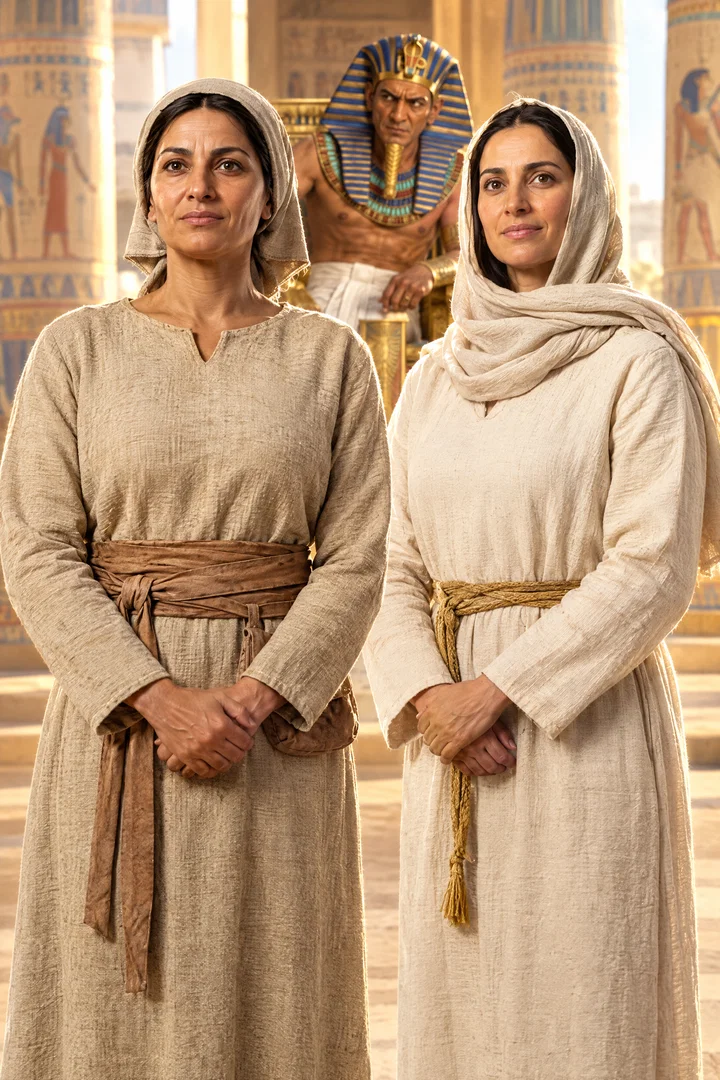
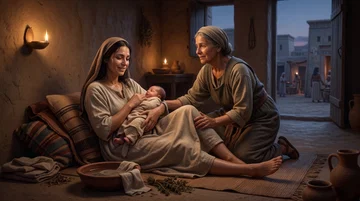
And he said, When ye do the office of a midwife to the Hebrew women, and see them upon the stools; if it be a son, then ye shall kill him: but if it be a daughter, then she shall live.
Translations
And he said, When you do the office of a midwife to the Hebrew women, and see them on the stools; if it be a son, then you shall kill him: but if it be a daughter, then she shall live.
And he said, When ye do the office of a midwife to the Hebrew women, and see them upon the stools; if it be a son, then ye shall kill him: but if it be a daughter, then she shall live.
and he said, When ye do the office of a midwife to the Hebrew women, and see them upon the stools; if it be a son, then ye shall kill him: but if it be a daughter, then she shall live.
And he said, When ye do the office of a midwife to the Hebrew women, and see them upon the stools; if it shall be a son, then ye shall kill him; but if it shall be a daughter, then she shall live.
and he said, When ye do the office of a midwife to the Hebrew women, and see them upon the birthstool; if it be a son, then ye shall kill him; but if it be a daughter, then she shall live.
and he said, When ye do the office of a midwife to the Hebrew women, and see them upon the birth-stool; if it be a son, then ye shall kill him; but if it be a daughter, then she shall live.
and saith, 'When ye cause the Hebrew women to bear, and have looked on the children; if it [is] a son — then ye have put him to death; and if it [is] a daughter — then she hath lived.'
and he said, When ye help the Hebrew women in bearing, and see [ them] on the stool, if it be a son, then ye shall kill him, but if a daughter, then she shall live.
then he said—When ye act as midwives unto the Hebrew women, then shall ye look out for the sex,—If it is, a son, then shall ye kill it, But, if it is, a daughter, then shall it live.
Berean Standard Bible, Majority Standard Bible
“ When you help the Hebrew women give birth, observe them on the birthstools. If the child is a son, kill him; but if it is a daughter, let her live.”
and he said, “ When you perform the duty of a midwife to the Hebrew women, and see them on the birth stool, if it is a son, then you shall kill him; but if it is a daughter, then she shall live.”
When you are looking after the Hebrew women in childbirth, if it is a son you are to put him to death; but if it is a daughter, she may go on living.
And sayde, When ye doe the office of a midwife to the women of the Ebrewes, and see them on their stooles, if it be a sonne, then yee shall kill him: but if it be a daughter, then let her liue.
Douay-Rheims (Challoner revision)
Commanding them: When you shall do the office of midwives to the Hebrew women, and the time of delivery is come: if it be a man child, kill it: if a woman, keep it alive.
Pictures
Cross-references
- Exodus 1:22
And Pharaoh charged all his people, saying, Every son that is born ye shall cast into the river, and every daughter ye shall save alive.
Pharaoh expands the order to kill Hebrew sons at birth to all his people.
- Exodus 2:1-10
And there went a man of the house of Levi, and took to wife a daughter of Levi.
Moses survives the decree and is rescued as an infant.
- Matthew 2:16
Then Herod, when he saw that he was mocked of the wise men, was exceeding wroth, and sent forth, and slew all the children that were in Bethlehem, and in all the coasts thereof, from two years old and under, according to the time which he had diligently enquired of the wise men.
Herod’s decree to kill Bethlehem’s boys parallels Pharaoh’s decree.
- Exodus 1:20-21
Therefore God dealt well with the midwives: and the people multiplied, and waxed very mighty.
God prospered the midwives for refusing the king’s command.
- Exodus 1:7
And the children of Israel were fruitful, and increased abundantly, and multiplied, and waxed exceeding mighty; and the land was filled with them.
gives the mighty increase that prompted the decree
- Acts 7:18
Till another king arose, which knew not Joseph.
Stephen recounts the rise of the king who knew not Joseph.
- Exodus 20:13
Thou shalt not kill.
Their refusal anticipates the command not to kill.
- Genesis 9:5-6
And surely your blood of your lives will I require; at the hand of every beast will I require it, and at the hand of man; at the hand of every man’s brother will I require the life of man.
God makes known his disapproval of taking human life.
- Genesis 3:15
And I will put enmity between thee and the woman, and between thy seed and her seed; it shall bruise thy head, and thou shalt bruise his heel.
The decree sought to thwart the promised offspring through whom salvation would come.
Commentary
Each commentary is drawn from primary sources: the writings of Ellen G. White and Adventist pioneers and periodicals. Each commentary is separate. Its own words are not a quotation; follow the references to read the source passages.
Ellen G. White
16 sources
Pharaoh commanded the Hebrew midwives to kill every newborn son at birth while letting every daughter live.PP 241.3–4SG3 179.1PP 242.1 After increased burdens and hard bondage had failed to lessen Israel's numbers and crush their spirit, he sought by this order to prevent their growth and to destroy the deliverer God would raise up among them, with Satan moving him because he knew such a deliverer was to come.PP 241.3–4SG3 179.1PP 242.1 The midwives feared God and refused to carry out the order, daring not to murder the children but disobeying the king and saving the male children alive.PP 241.3–4SG3 179.1PP 242.1 Because of that obedience God approved their course and prospered them, while Pharaoh in anger made the decree more urgent and extensive by charging all his people to destroy every newborn Hebrew son.SG3 179.1PP 242.1SG3 240.2–242.1 The verse also shows that in Bible times childbirth care was women's work, establishing as God's plan and order that women take responsibility for attending women in childbirth and be educated and trained as midwives and physicians for their sex.STB 730.4STB 639.5–640.2CH 395.2–3Lt 22, 1911, par. 6–8Lt 34, 1911, par. 7
Pharaoh's Command to Kill
Exodus 1:16 records Pharaoh's command to the Hebrew midwives at the birthstool to kill every newborn son while letting every daughter live.PP 241.3–4SG3 179.1PP 242.1SG3 240.2–242.1 The command came after increased burdens and hard bondage had failed to decrease Israel's numbers and crush their independent spirit.SG3 179.1 By it Pharaoh intended to prevent Israel's growth and to destroy the deliverer God would raise up among them to rescue them from oppression.PP 241.3–4SG3 179.1PP 242.1 Satan moved Pharaoh in this because he knew a deliverer was to be raised up among the Hebrews, and he thought that destroying the male children would defeat God's purpose.SG3 179.1
The midwives feared God and refused to carry out the order, daring not to murder the children but disobeying the king and saving the male children alive.PP 241.3–4SG3 179.1PP 242.1 Because of that obedience God approved their course and prospered them.SG3 179.1PP 242.1
When Pharaoh learned his command had not been obeyed he was very angry and made it more urgent and extensive.SG3 179.1PP 242.1 He charged all his people to keep strict watch to destroy every newborn Hebrew son while saving the daughters alive.SG3 179.1PP 242.1 So the order was broadened from the midwives to the whole nation, and the male children were hunted and slain.SG3 179.1PP 242.1SG3 240.2–242.1
Midwifery as Women's Work
In Bible times the care of women in childbirth was women's work, with women serving as midwives who attended the Hebrew women and took charge of them at birth.STB 730.4STB 639.5–640.2CH 395.2–3Ms 2, 1911, par. 10–11Ms 53, 1907, par. 20 Pharaoh's instruction to kill the newborn sons and spare the daughters was given to such women midwives in the midst of that work.STB 730.4Lt 22, 1911, par. 6–8 This biblical example establishes God's plan and the Bible's order that women take responsibility for attending women during childbirth and confinement.Lt 22, 1911, par. 6–8Lt 34, 1911, par. 713MR 115.2Ms 2, 1911, par. 3–513MR 114.2
Women should therefore be educated and entrusted to carry out this responsibility of taking charge of women in childbirth.Ms 2, 1911, par. 10–11Lt 22, 1911, par. 6–8Ms 2, 1911, par. 3–5 They should be trained to care for women in childbirth and to treat women's diseases.STB 639.5–640.2Ms 2, 1911, par. 10–11 They should be trained as midwives and as physicians for their sex.Ms 53, 1907, par. 209T 176.2–3Ms 2, 1911, par. 3–5Ms 39, 1909, par. 10–11
Men were not considered proper for this work, so gentleman and male physicians should not do the midwives' work in their place.Ms 53, 1907, par. 20Lt 34, 1911, par. 7Ms 39, 1909, par. 10–11 The Lord worked with the women who thus served as midwives and took responsibility for the care of other women.13MR 114.2
Sources
Pioneers and periodicals
36 sources
Pharaoh commanded the Hebrew midwives to kill every newborn son at birth while letting every daughter live, to check Israel's growth and suppress the people.ST Nov 14, 1906RH Mar 9, 1869ST Jan 28, 1913 The order came from a new king who knew not Joseph and saw Israel fruitful and mighty, and who said to his people, Come on, let us deal wisely with them.RH May 14, 1901 It belongs to Satan's effort through oppression and killing of male children to destroy the promised Seed and thwart God's plan, which God overruled by preserving His people.ST Dec 22, 1898ST Apr 30, 1894ST The killing was meant to prevent the deliverer Moses from being born and leading Israel out of bondage, but God preserved him and he led them out, a type of Christ leading His people to the promised inheritance.ST Mar 30, 1904RH Nov 28, 1912 The Hebrew midwives refused because they feared God and knew the command was contrary to His law against killing, proving that law was known before it was spoken on Sinai.ST May 4, 1882RH Oct 18, 1853ST Jun 3, 1875RH Jan 15, 1875ST Apr 18, 1911 Their refusal shows that when a human command requires what God's law forbids, disobedience to men becomes duty, for men ought to obey God rather than men.RH May 12, 1868RH Mar 1, 1860ST Dec 20, 1899
Pharaoh's Murderous Command
Exodus 1:16 records Pharaoh's order to the Hebrew midwives to kill every newborn son at birth while letting every daughter live, as a means to check Israel's growth and suppress the people.ST Nov 14, 1906RH Mar 9, 1869ST Jan 28, 1913ST Nov 7, 1906 It was an act of cruelty toward the Hebrews and of murder of their infants, part of the severe oppression that followed their earlier prosperity.RH Mar 9, 1869ST Jan 28, 1913 The order came from a new king over Egypt which knew not Joseph, who with jealous eye saw that the children of Israel were fruitful and increased abundantly and multiplied and waxed exceeding mighty until the land was filled with them.RH May 14, 1901 He reasoned they were likely to become more powerful than the Egyptians unless something was done to check their increase, so he said to his people, Come on, let us deal wisely with them.RH May 14, 1901
That dealing wisely meant setting over them taskmasters to afflict them with burdens, making them serve with rigor and making their lives bitter with hard bondage, culminating in the charge to destroy every newborn son and save every daughter alive.RH May 14, 1901 How dreadful and how different this was from when Joseph nourished them through the seven-year famine that left the Egyptians in slavery to Pharaoh, and when they were given a possession by the king in the best of the land.RH May 14, 1901 The verse thus belongs to the account of Israel's bitter bondage and enslavement under a new Egyptian dynasty, showing the severity of the persecution and Egypt's attempt to enslave or destroy the people through whom God's promise would come.RH Jan 20, 1916ST Nov 7, 1906 The decree to kill sons at birth was later broadened to require male children to be thrown into the Nile and into the river, and was repeated when the midwives would not carry it out.ST Mar 30, 1904RH Nov 28, 1912
This cruel decree against the Hebrew children explains why Moses was hidden for three months after his birth, his life being spared because the decree was disregarded.ST Nov 13, 1901ST Nov 27, 1901 The reference to the midwives has been interpreted figuratively rather than taken literally.RH Dec 19, 1865
Oppression in Egyptian History
The command to kill the sons belongs to the opening account of Israel's oppression in Egypt in chapters 1-4, which tells of the birth and upbringing of Moses until he is called to be the deliverer of his people. It stands at the start of the mainly historical first division of Exodus in chapters 1-18, before Moses is born and called to deliver the people.ST Jan 20, 1909 The oppression followed brief prosperity and came when Egypt forgot Joseph and his services, adding rigorous cruelty to ingratitude.ST Jul 21, 1881RH Dec 17, 1861 Abraham's family had to go down to Egypt and undergo long and terrible servitude, described as the iron furnace, before they could possess the promised land, because the iniquity of the Amorites was not yet full.RH Dec 17, 1861 The horror of great darkness and the smoking furnace seen by Abraham in vision foreshadowed this iron furnace and bitter servitude.RH Dec 17, 1861
The bondage lasted hundreds of years and is told in Exodus 1:7-19, where the Israelites were principally employed in brick-making, including work in mortar for the store-cities such as Pithom built under Rameses II, making bricks with straw until straw was withheld from them.RH Apr 23, 1908 That oppression belongs to the reign of Pharaoh Rameses II, who reigned sixty-seven years from 1564 to 1497 B.C. to within six years of the exodus from Egypt.ST Aug 9, 1910 He built the treasure cities Pithom and Raamses, one of which bore his own name.ST Aug 9, 1910 Notwithstanding the hardships and oppressions commanded, the people multiplied and grew from threescore and fifteen who entered Egypt to about three million who departed at the exodus.ST Aug 9, 1910
The destruction of the male offspring in the land of Goshen while the daughters were left to live was part of a nationalist reaction after the death of Khu-n-Aten. With the rise of the nineteenth dynasty under the cry of Egypt for the Egyptians, foreigners were driven out or massacred, and those who remained, like the Israelites, were reduced to the condition of public slaves and further decimated by killing their sons. That oppression in the first chapter of Exodus, in which the Israelites built the city of Raamses, is historical fact confirmed by archaeology.ST Oct 21, 1930 Rameses II recorded that he collected Semites and made them build the city of Raamses-Mera-Amen on the eastern delta of the Nile, the name Raamses is stamped on bricks used in ancient houses in Pithom, pictures in palaces show slaves mixing straw and mud, and houses in Pithom are actually made with strawless bricks as when Pharaoh compelled Israel to make bricks without straw.ST Oct 21, 1930
Absence of the history in Exodus 1-14 from the historical records of Egypt is to be expected, because Egyptian public monuments registered only successes and triumphs and court historians omitted national suffering such as a year of plagues and the disaster of the Red Sea.RH Apr 23, 1908 Points admitting comparison with the records remain: the employment of forced labor and its method, the inclusion of the Hebrews among the forced laborers, and the construction of store-cities and the names of the cities.RH Apr 23, 1908 The military organization of the time, the untimely loss of a son by the king under whom the Exodus took place, and any indication of exhaustion and weakness following the events related in Exodus also remain for comparison.RH Apr 23, 1908
Satan's Attack on Promised Seed
The command to kill Hebrew sons at birth while sparing daughters belongs to Satan's effort to destroy the promised Seed through oppression and the killing of male children, an attempt by Egypt to destroy the nation from which that Seed would come and to thwart God's plan.ST God overruled this attack and preserved His people. The hatred of the Egyptians went so far as to command the destruction of all the Hebrew male children in hope of destroying Israel.ST Dec 22, 1898ST Apr 30, 1894 That order was Satan's plan to destroy the promised seed and so defer the plan of salvation.ST Apr 30, 1894 It was an effort to destroy Abraham's promised seed and prevent its return to the promised land, an attack on the line through which Christ would be born and the promised restoration would come.ST Dec 22, 1898 God was with His people under it, and the tribulation worked out salvation for them.ST Apr 30, 1894
The decree to kill Hebrew sons at birth threatened the preservation of Abraham's godly line and would have forced the Hebrew daughters to marry outside it.ST Aug 3, 1915 God raised up Moses as a deliverer before this plan could corrupt and destroy the line.ST Aug 3, 1915 The decree was part of the affliction of Israel in Egypt and helped drive the people to leave Egypt rather than remain there.RH Aug 11, 1863 Their departure preserved their distinct identity and the lineage needed to establish the Messiah's descent from Abraham.RH Aug 11, 1863
The decree to put all male children to death left Israel with no alternative but to flee Egypt, since their race must run out if they stayed.RH Aug 11, 1863 Without that affliction they would have lived in ease and worldly prosperity in Egypt, and Moses could hardly have persuaded them to undertake a perilous wilderness journey for a land flowing with milk and honey.RH Aug 11, 1863 By forcing them out, the decree kept them from remaining in Egypt and mingling with the Egyptians until Hebrew and Egyptian could no longer be told apart by the time of the Saviour's advent.RH Aug 11, 1863 This preserved a distinct Hebrew line from Abraham so the Messiah could come and his pedigree could be traced back to Abraham to prove his Messiahship, without which there would have been no Messiah.RH Aug 11, 1863
Moses Preserved to Deliver
Pharaoh ordered the midwives to kill every newborn Hebrew son at birth while letting every daughter live, a decree repeated when the midwives would not carry it out and broadened to require male children to be thrown into the river.ST Mar 30, 1904RH Nov 28, 1912 The killing was intended to prevent Israel's deliverer Moses from being born and leading the people out of bondage, but God preserved him and Moses led Israel out of Egypt.ST Mar 30, 1904RH Nov 28, 1912 So preserved and leading Israel out of bondage, Moses serves as a type of Christ leading God's people to the promised inheritance.ST Mar 30, 1904RH Nov 28, 1912
The king's command was a civil law opposing God's will, so the midwives feared God and disobeyed it, saving the boys though it was an offense against the state, and God approved their choice and providentially protected the child who would become Israel's leader and deliver them from slavery.ST Dec 20, 1899 Egypt's killing of Israelite sons at birth was a high-handed outrage against long-serving bondmen, for which the later judgment on Egypt's own firstborn was righteous retribution.RH Mar 11, 1915 Pharaoh's attempt to stop Hebrew growth by ordering newborn boys killed is a picture of efforts to suppress new truth as it is emerging.RH Jun 27, 1871
Law Known Before Sinai
The king of Egypt commanded the Hebrew midwives to kill every newborn Hebrew son at birth while letting every daughter live, but they refused to obey because they feared God.ST May 4, 1882RH Oct 18, 1853ST Jun 3, 1875RH Jan 15, 1875ST Apr 18, 1911 Their refusal shows they knew the king's command to kill was contrary to God's law against murder and killing.ST May 4, 1882RH Oct 18, 1853ST Jun 3, 1875 That knowledge demonstrates God's moral law existed and was known before it was formally given at Sinai.ST May 4, 1882ST Jun 3, 1875RH Mar 1, 1864
Their disobedience proves they knew the human law stood against God's law, Thou shalt not kill.RH Jan 15, 1875 It proves that law had been given and was well known before it was spoken on Sinai.RH Jan 15, 1875 The order to destroy every Hebrew son while sparing the daughters breaks the sixth commandment against killing and proves that commandment was already in force before it was given from Sinai.ST Apr 18, 1911
Obey God Rather Than Men
Pharaoh ordered the Hebrew midwives to kill every newborn son at birth while letting every daughter live.ST Dec 20, 1899 Their refusal shows that a human command must be disobeyed when it requires an act contrary to God's law, and that to obey such a command would be sin.RH Mar 1, 1860 When a human ordinance conflicts with the higher law of God, disobedience to man becomes duty and obedience to civil rulers is sinful, for men ought to obey God rather than men.RH May 12, 1868
The king's command was a civil law opposing God's will, so the midwives feared God and disobeyed it and saved the boys alive.RH May 12, 1868ST Dec 20, 1899 In doing so they committed an offense against the state, yet God approved their choice.ST Dec 20, 1899 He providentially protected through them the child who would become Israel's leader and deliver the people from slavery.ST Dec 20, 1899 The command stands as an example of the idolatrous Egyptians persecuting the Hebrews, who worshiped the true God.RH Jun 8, 1916
Sources