Exodus 1:17
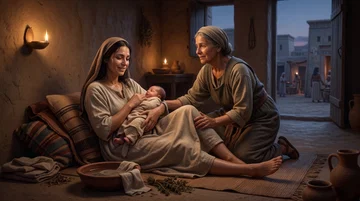
But the midwives feared God, and did not as the king of Egypt commanded them, but saved the men children alive.
Translations
American King James Version, King James Version, KJV Cambridge Paragraph Bible, Revised Version
But the midwives feared God, and did not as the king of Egypt commanded them, but saved the men children alive.
But the midwives feared God, and did not as the king of Egypt commanded them, but saved the male-children alive.
But the midwives feared God, and did not as the king of Egypt commanded them, but saved the men-children alive.
And the midwives fear God, and have not done as the king of Egypt hath spoken unto them, and keep the lads alive;
But the midwives feared God, and did not as the king of Egypt had said to them, but saved the male children alive.
But the midwives feared God, and did not as the king of Egypt spake unto them,—but suffered the male children to live.
Berean Standard Bible, Majority Standard Bible
The midwives, however, feared God and did not do as the king of Egypt had instructed; they let the boys live.
But the midwives feared God, and didn’t do what the king of Egypt commanded them, but saved the baby boys alive.
But the women had the fear of God, and did not do as the king of Egypt said, but let the male children go on living.
Notwithstanding ye midwiues feared God, and did not as the King of Egypt commanded them, but preserued aliue the men children.
Douay-Rheims (Challoner revision)
But the midwives feared God, and did not do as the king of Egypt had commanded, but saved the men children.
Pictures

Cross-references
- Exodus 2:2-3
And the woman conceived, and bare a son: and when she saw him that he was a goodly child, she hid him three months.
Moses is hidden and placed in the Nile to escape Pharaoh’s decree.
- Daniel 6:10
Now when Daniel knew that the writing was signed, he went into his house; and his windows being open in his chamber toward Jerusalem, he kneeled upon his knees three times a day, and prayed, and gave thanks before his God, as he did aforetime.
Daniel continued praying despite a royal decree forbidding it.
- Exodus 1:22
And Pharaoh charged all his people, saying, Every son that is born ye shall cast into the river, and every daughter ye shall save alive.
The king responded to the midwives’ refusal with a harsher decree.
- Acts 5:29
Then Peter and the other apostles answered and said, We ought to obey God rather than men.
Both state that God must be obeyed rather than human authorities.
- Matthew 2:16
Then Herod, when he saw that he was mocked of the wise men, was exceeding wroth, and sent forth, and slew all the children that were in Bethlehem, and in all the coasts thereof, from two years old and under, according to the time which he had diligently enquired of the wise men.
Herod’s slaughter of Bethlehem’s boys echoes Pharaoh’s decree against the children in Moses’ time.
- Exodus 1:9
And he said unto his people, Behold, the people of the children of Israel are more and mightier than we:
Pharaoh feared Israel’s growing numbers, prompting the order the midwives resisted.
- Exodus 20:13
Thou shalt not kill.
The midwives obeyed God’s prohibition of killing over Pharaoh’s command.
- Genesis 9:5-6
And surely your blood of your lives will I require; at the hand of every beast will I require it, and at the hand of man; at the hand of every man’s brother will I require the life of man.
God had already condemned the taking of human life.
- Daniel 3:16-18
Shadrach, Meshach, and Abed-nego, answered and said to the king, O Nebuchadnezzar, we are not careful to answer thee in this matter.
Both accounts show God’s servants refusing a king’s command that opposed God.
- 1 Samuel 22:17
And the king said unto the footmen that stood about him, Turn, and slay the priests of the LORD; because their hand also is with David, and because they knew when he fled, and did not shew it to me. But the servants of the king would not put forth their hand to fall upon the priests of the LORD.
The king’s servants refused his command to kill the priests.
- Acts 4:19
But Peter and John answered and said unto them, Whether it be right in the sight of God to hearken unto you more than unto God, judge ye.
They obeyed God rather than the authorities who commanded them.
- Hebrews 11:23
By faith Moses, when he was born, was hid three months of his parents, because they saw he was a proper child; and they were not afraid of the king’s commandment.
Moses' parents acted in faith.
- Romans 13:1-2
Let every soul be subject unto the higher powers. For there is no power but of God: the powers that be are ordained of God.
The midwives’ disobedience shows that rulers’ commands do not override divine law.
- 1 Samuel 14:44-45
And Saul answered, God do so and more also: for thou shalt surely die, Jonathan.
listed together as same proof
- Ezekiel 20:5
And say unto them, Thus saith the Lord GOD; In the day when I chose Israel, and lifted up mine hand unto the seed of the house of Jacob, and made myself known unto them in the land of Egypt, when I lifted up mine hand unto them, saying, I am the LORD your God;
God says he made himself known to Israel in Egypt.
- Exodus 3:7
And the LORD said, I have surely seen the affliction of my people which are in Egypt, and have heard their cry by reason of their taskmasters; for I know their sorrows;
God sees Israel’s suffering in Egypt and hears its cry.
- Deuteronomy 4:20
But the LORD hath taken you, and brought you forth out of the iron furnace, even out of Egypt, to be unto him a people of inheritance, as ye are this day.
calls Egypt the iron furnace of that servitude
Commentary
Each commentary is drawn from primary sources: the writings of Ellen G. White and Adventist pioneers and periodicals. Each commentary is separate. Its own words are not a quotation; follow the references to read the source passages.
Ellen G. White
18 sources
The Hebrew midwives feared God more than the king of Egypt, so they refused his command to kill the newborn boys at birth and saved them alive because they dared not commit murder.1MR 225.4–226.2PP 241.3–4SG3 179.1 The order to destroy the male children was urged by Satan to defeat God's purpose to raise up a deliverer from among the Hebrews, and by sparing the children the midwives thwarted that attempt.PP 241.3–41SP 160.2–162.1 God approved their obedience to Him above the king and prospered them, working with them in their course.PP 241.3–4SG3 179.1PP 242.1 When they refused, the king widened the command to all his people to kill every Hebrew son and spare every daughter.PP 242.1 Their work also shows God's plan for women to attend women in childbirth as midwives, a distinct appointed responsibility to preserve life that women should be educated and trained to carry with skill.STB 730.4STB 639.5–640.2CH 395.2–3Ms 2, 1911, par. 10–119T 176.2–3
Fear of God in Egypt
The Hebrew midwives feared God more than the king of Egypt, and when his command conflicted with God's they chose to obey God rather than the king.1MR 225.4–226.2PP 241.3–4SG3 179.1PP 242.11SP 160.2–162.1 They refused his command to kill the newborn boys at birth, because they dared not murder the Hebrew children, and instead saved the boys alive.PP 241.3–4SG3 179.1PP 242.11SP 160.2–162.1STB 639.5–640.2 Their refusal thwarted the attempt to destroy the children and to prevent the raising up of Israel's deliverer.PP 241.3–4
The order to kill the male children was urged by Satan, who knew that a deliverer was to be raised up among the Hebrews to rescue them from oppression.1SP 160.2–162.1 He hoped by destroying the male children to defeat God's purpose.1SP 160.2–162.1
God approved the midwives' course of disobeying the king in obedience to God, and the Lord worked with them and prospered them for it.PP 241.3–4SG3 179.1PP 242.11SP 160.2–162.113MR 114.2 Because the women disobeyed the king in obedience to God, the Lord prospered them.SG3 179.11SP 160.2–162.1Ms 2, 1911, par. 3–5 After the midwives refused, the king expanded the order, commanding all his people to kill every Hebrew son and spare every daughter.PP 242.1 This history in Egypt is part of Israel's history which God's people living in the last days are to consider and learn from.1MR 225.4–226.2
Women Caring for Women
The account belongs to Bible times when women served as midwives and attended women in childbirth.STB 730.4STB 639.5–640.2CH 395.2–3STB 627.3–628.1Ms 53, 1907, par. 20 This is God's plan for women to care for women, with childbirth attended by midwives rather than men.STB 730.4STB 639.5–640.2CH 395.2–3STB 627.3–628.1Ms 53, 1907, par. 20 The midwives feared God and saved the Hebrew boys alive instead of doing as the king of Egypt commanded them.STB 639.5–640.2CH 395.2–3 Their example is instruction that childbirth should be attended by women.STB 639.5–640.2CH 395.2–3STB 627.3–628.1Ms 53, 1907, par. 209T 176.2–3
Because women attended women in childbirth, women are to be educated and trained to take responsibility for this work.STB 639.5–640.2Ms 2, 1911, par. 10–119T 176.2–3Ms 39, 1909, par. 10–11 That training is to fit them to provide skilled care for women's health, including childbirth and other private care of women.STB 639.5–640.29T 176.2–3Ms 2, 1911, par. 3–5 The biblical precedent presents women serving as midwives as the basis for women being trained to care for women during childbirth.Ms 2, 1911, par. 10–119T 176.2–3Ms 39, 1909, par. 10–11 In this way women take charge of childbirth and of women's private care.STB 639.5–640.2Ms 2, 1911, par. 3–5
The midwives' work was a distinct appointed responsibility assigned to them in Bible times.13MR 115.2Ms 2, 1911, par. 3–513MR 113.2 It was to care for women and to protect the male infants and preserve life during childbirth.Lt 22, 1911, par. 6–813MR 114.213MR 115.2 They feared God and saved the boys' lives rather than obeying the king's command to destroy them.Lt 22, 1911, par. 6–813MR 114.213MR 113.2 The Lord worked with them as they carried out the work assigned to them and took responsibility for other women.13MR 114.2Ms 2, 1911, par. 3–5
Sources
Pioneers and periodicals
39 sources
The Hebrew midwives feared God and refused to obey Pharaoh's command to kill the newborn boys, but saved the male children alive.ST Nov 14, 1906RH Aug 11, 1863 Their choice shows that when human law commands what God's law forbids, obedience to God comes first and disobedience to man becomes duty.RH May 12, 1868RH Mar 1, 1860ST Dec 20, 1899ST Mar 30, 1904 It gives proof that the command not to kill was already known and obeyed before it was formally given at Sinai.ST May 4, 1882RH Oct 18, 1853ST Jun 3, 1875 The command to destroy the boys was Satan's effort to destroy the promised seed and to cut off a deliverer, even Moses the type of Christ, but God overruled the attack and preserved His people.ST Apr 30, 1894ST Mar 30, 1904ST Nov 7, 1906ST God approved the midwives and prospered them, and through one child preserved by their defiance He raised up the leader to bring Israel out of Egyptian bondage.ST Feb 12, 1880ST Dec 20, 1899
Israel's Bondage in Egypt
Exodus 1:17 stands in the first, mainly historical division of Exodus covering chapters 1-18, and within chapters 1-4 which relate the oppression of Israel in Egypt and the birth and upbringing of Moses until he is called to be the deliverer of his people.RH Jan 20, 1916 Exodus means going out, referring to the departure of Israel from Egypt, and the verse belongs to the opening where the family of Israel, grown more and mightier than the Egyptians, is in bitter bondage and oppression.RH Jan 20, 1916 It begins the story of their great deliverance from bitter bondage into a nation with organization, leadership, laws, and worship, starting with the rescue of Moses from Egyptian malice in his infancy.RH Jan 20, 1916 It is part of the account that introduces the chosen deliverer, his waiting, his call, and Aaron.RH Jan 20, 1916
The bondage stands in dreadful contrast to the earlier time when Joseph nourished Israel and Pharaoh gave them a possession in the best of the land, after which Joseph and his service were forgotten and cruelty replaced their earlier prosperity.RH Mar 9, 1869RH May 14, 1901 A new king over Egypt who knew not Joseph saw Israel fruitful and exceeding mighty and filling the land, and fearing Israel would become more powerful than the Egyptians unless their increase was checked, he dealt wisely against them.RH May 14, 1901 He set taskmasters over them to afflict them with burdens, and the Egyptians made Israel serve with vigor and made their lives bitter with hard bondage, while the king sought to prevent them from leaving Egypt.RH May 14, 1901ST Jul 21, 1881 That oppression culminated in Pharaoh's command to kill the sons and cast them into the river while saving the daughters alive.RH May 14, 1901
It was the family of Abraham going down into Egypt, where brief prosperity was followed by long and terrible oppression in bitter servitude with vigor under taskmasters with burdens.RH May 14, 1901RH Dec 17, 1861 That servitude was foreshadowed to Abraham by the horror of great darkness and the smoking furnace shown to him in vision, afterward called the iron furnace.RH Dec 17, 1861 The family had to remain there until the iniquity of the Amorites was full, so they could possess the land designed for them.RH Dec 17, 1861 The king's order to kill the Hebrew boys while the midwives saved the infants alive is an example of Egyptian cruelty toward Israel and its children.
The enslavement came under a new Egyptian dynasty and shows that human persecution could not stop God from prospering his people. It was the nineteenth dynasty, which rose after the death of Khu-n-Aten, the heretic king of Tel-el-Amarna who lived about a century before the Exodus, and after civil and religious war over his reform. It represented the triumph of the national faith and the cry of Egypt for the Egyptians, when foreigners were driven out or massacred and those who remained were reduced to public slaves in the land of Goshen and further decimated by destruction of their male children, which is the order the midwives refused to carry out. The Pharaoh of the oppression was Rameses II, who built the treasure cities Pithom and Rameses named in Exodus 1 and 12 and reigned from 1564 to 1497 B.C. to within six years of the exodus.ST Aug 9, 1910 Despite the hardships and oppressions put upon them, the Israelites multiplied and grew from the seventy-five who entered Egypt to about three million who departed at the exodus.ST Jan 28, 1913ST Aug 9, 1910
Israel was principally employed in brick-making and also to some extent in mortar, making bricks with straw until no straw was given them.RH Apr 23, 1908 The store-city Pithom, built in part by Rameses II, is built almost entirely of brick laid with mortar in regular tiers, and its bricks generally contain straw but in some instances are destitute of it, answering completely to that description.RH Apr 23, 1908 The account including the building of Raamses belongs to a chapter whose historical setting is supported by evidence of forced labor and brickmaking in ancient Egypt.ST Oct 21, 1930 The general events of Exodus 1-14 receive no direct mention in the historical records of Egypt because Egyptian public monuments registered only successes and triumphs, and Egyptian kings and court historians omitted defeats and calamities such as the year of plagues and the disaster of the Red Sea.RH Apr 23, 1908 The account is true history and not fable or myth, as shown because the same events of the king which knew not Joseph are told again by Stephen in Acts 7, and it continues the story of Joseph and God's providential dealings through him for the preservation of the lives of his relatives.ST Apr 13, 1904ST Jan 23, 1912
Midwives Feared God, Disobeyed
The Hebrew midwives feared God and did not do as the king of Egypt commanded them to kill the newborn boys, but saved the children alive.ST Nov 14, 1906ST Mar 21, 1878RH Aug 11, 1863RH Sep 24, 1872 The command to put the male children to death was part of the affliction Israel suffered in Egypt.RH Aug 11, 1863 Their reply to Pharaoh stated a fact to excuse their actions, and the setting gives no evidence that they lied.ST Mar 21, 1878
The midwives already knew and revered God while they were in Egypt, so they feared him and refused the king's command.RH Jul 24, 1866ST Jun 14, 1877RH Jul 14, 1874RH Sep 24, 1872 God's later making himself known to Israel there was a more intimate revelation and not their first knowledge of him.ST Jun 14, 1877RH Jul 14, 1874 This contradicts the claim that the Israelites had no knowledge of the true God and were no better than the Egyptians, and shows they retained knowledge of God and his ways.RH Jul 24, 1866ST Jun 14, 1877RH Jul 14, 1874RH Sep 24, 1872
Hebrew women served in this history as God-fearing nurses, whose reverence for God shaped their work.RH Nov 13, 1900
Satan's Attack, God's Preservation
Exodus 1:17 belongs to Satan's effort to destroy the promised seed by oppressing Israel and having its male children killed. It continues the attempt to destroy the nation and the Seed through which God's purpose would be carried forward, and God overruled the attack and preserved the people through whom the seed would come.ST The effort to destroy the promised people or keep them enslaved was resisted, and the Hebrew boys were preserved alive.ST Nov 7, 1906ST
The Egyptian command to destroy all the male children came from hatred in hope of destroying Israel.ST Apr 30, 1894 It was Satan's plan to destroy the promised seed and so defer the plan of salvation.ST Apr 30, 1894 Saving the male children alive shows God being with His people, so that tribulation worked out salvation for them.ST Apr 30, 1894 The Lord used the oppression as a means of making Israel stronger physically and increasing their numbers.ST Apr 30, 1894
Satan prompted Pharaoh's decree that all male children born to Israel should be put to death because the time was ripe for a deliverer to be born to lead Israel out of Egyptian bondage into the promised land.ST Mar 30, 1904 Satan meant Israel to remain in bondage, and meant Moses, the type of Christ, to perish under Pharaoh's decree and never lead God's people into the typical land of promise.ST Mar 30, 1904 When the midwives would not obey, the decree was repeated and intensified so that every male child should be thrown into the river.ST Mar 30, 1904RH Nov 28, 1912 Moses' mother hid him for three months and then concealed him in a basket among the reeds of the Nile, and Moses himself survived at birth because the cruel decree was disregarded.RH Nov 28, 1912ST Nov 27, 1901 The order threatened the preservation of Abraham's descendants and would have pressured the Hebrew daughters to marry outside the godly line, but God raised up Moses as a deliverer before the plan could succeed, preserving the line through which His purpose would be carried out.RH Nov 28, 1912ST Aug 3, 1915
God approved the midwives' choice and prospered them, and the king's command could not defeat God's purpose to raise a deliverer among the Hebrews.ST Feb 12, 1880 God vindicated their defiance of civil law by providentially choosing and providing care for one child preserved through it and making him the leader of Israel to bring them out of Egyptian bondage.ST Dec 20, 1899 The decree that all the Hebrew male children must be put to death gave Israel no alternative but to flee Egypt, because their race must run out if they stayed.RH Aug 11, 1863 Without that affliction they would have lived in ease and worldly prosperity in Egypt and would never have been persuaded to leave for a perilous wilderness journey to a land flowing with milk and honey.RH Aug 11, 1863 Had they stayed they would have so mingled with the Egyptians that by the time of the Saviour's advent no one could determine who were Hebrews, the pedigree back to Abraham would have been lost so the Messiahship of Christ could not be proved, and there would have been no Messiah.RH Aug 11, 1863
God's Law Above Human Law
The midwives feared God and refused the king of Egypt's command to kill the male children, but saved them alive.ST May 4, 1882RH Oct 18, 1853ST Jun 3, 1875RH Jan 15, 1875RH Mar 1, 1864 Their refusal shows the king's order was contrary to God's law, for they spared the boys because they feared God and knew the order violated his law.ST May 4, 1882RH Oct 18, 1853ST Jun 3, 1875RH Jan 15, 1875RH Mar 1, 1864 The king commanded by human law that all the male children be killed, yet they did not do as he commanded, which gives positive evidence that the commandment, Thou shalt not kill, was already given, well known, and obeyed before the law was formally given at Sinai.ST May 4, 1882RH Oct 18, 1853ST Jun 3, 1875RH Jan 15, 1875RH Mar 1, 1864
Their example teaches that God's commands must be obeyed rather than human commands that oppose them.RH May 12, 1868RH Mar 1, 1860 It illustrates that people are accountable to obey divine law over human commands that require disobedience to God.RH Mar 1, 1860 No ordinance of man may be obeyed when it conflicts with the higher law of God.RH May 12, 1868
Their disobedience was not rebellion but duty.RH May 12, 1868 When the law of God is at stake, disobedience to human law becomes duty, and obedience to civil rulers in such cases is sinful.RH May 12, 1868 Fearing God placed them between two opposing laws, and they chose to obey God rather than the king of Egypt even though evading the civil law was a crime against the state, refusing to enforce Egypt's law that Hebrew boy babies be killed at birth because to obey it would be sin against God.RH May 12, 1868ST Dec 20, 1899 They refused to become executioners of the newborn boys as commanded, and when they would not obey the decree was repeated and intensified so that every male child should be thrown into the river.ST Dec 20, 1899ST Mar 30, 1904
Their faithfulness in fearing God and obeying him rather than the king by refusing his command and keeping the children alive is an example of the righteous being persecuted by the wicked.RH Jun 8, 1916
Sources