Exodus 1:21
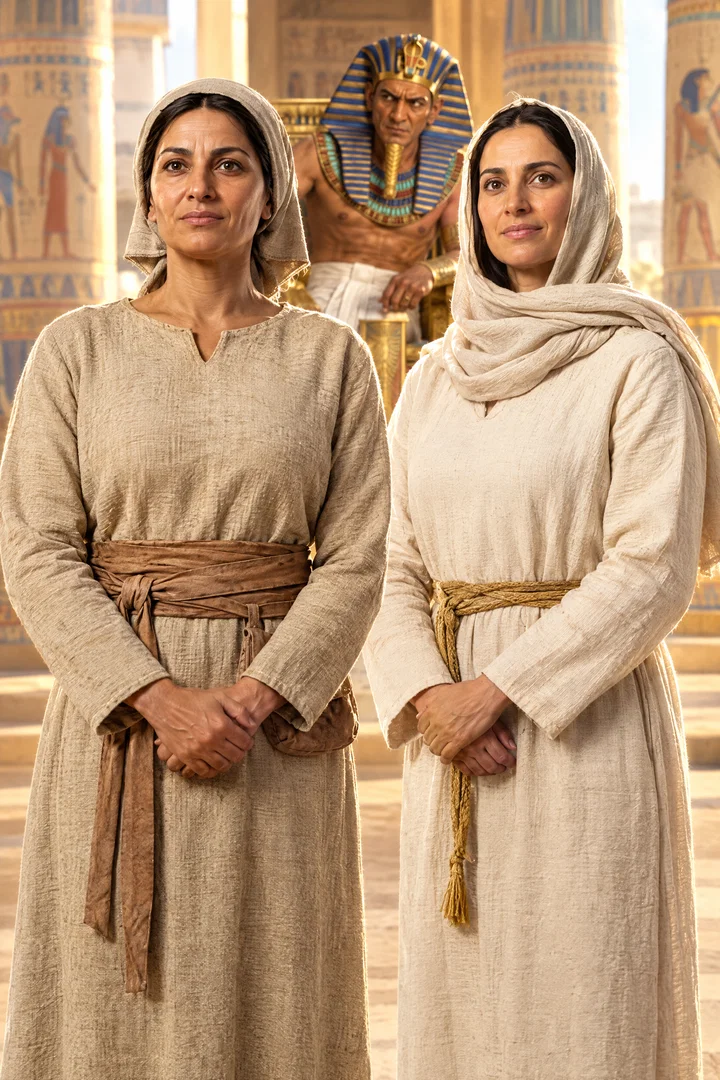
And it came to pass, because the midwives feared God, that he made them houses.
Translations
American King James Version, King James Version, KJV Cambridge Paragraph Bible, Webster Bible, Revised Version, Darby Translation
And it came to pass, because the midwives feared God, that he made them houses.
And it came to pass, because the midwives feared God, that he made them households.
and it cometh to pass, because the midwives have feared God, that He maketh for them households;
And it came to pass, because the midwives feared God, that he made for them households.
Berean Standard Bible, Majority Standard Bible
And because the midwives feared God, He gave them families of their own.
Because the midwives feared God, he gave them families.
And because the women who took care of the Hebrew mothers had the fear of God, he gave them families.
And because ye midwiues feared God, therefore he made them houses.
Douay-Rheims (Challoner revision)
And because the midwives feared God, he built them houses.
Pictures
Cross-references
- Exodus 1:17
But the midwives feared God, and did not as the king of Egypt commanded them, but saved the men children alive.
The midwives feared God and disobeyed the king’s command.
- Exodus 1:7-10
And the children of Israel were fruitful, and increased abundantly, and multiplied, and waxed exceeding mighty; and the land was filled with them.
sets Pharaoh's fear that Israel multiplied
- Exodus 1:11-14
Therefore they did set over them taskmasters to afflict them with their burdens. And they built for Pharaoh treasure cities, Pithom and Raamses.
shows hard labor that failed to lessen Israel
- Matthew 2:16
Then Herod, when he saw that he was mocked of the wise men, was exceeding wroth, and sent forth, and slew all the children that were in Bethlehem, and in all the coasts thereof, from two years old and under, according to the time which he had diligently enquired of the wise men.
Herod’s decree to kill Bethlehem’s boys parallels Pharaoh’s order.
- Exodus 2:1-10
And there went a man of the house of Levi, and took to wife a daughter of Levi.
Moses is preserved and raised up as Israel’s deliverer.
Commentary
Each commentary is drawn from primary sources: the writings of Ellen G. White and Adventist pioneers and periodicals. Each commentary is separate. Its own words are not a quotation; follow the references to read the source passages.
Ellen G. White
14 sources
The midwives feared God and refused to carry out Pharaoh's command to kill the Hebrew boys at birth, sparing them alive because they would not commit murder.PP 241.3–4SG3 179.1PP 242.1 Because they disobeyed the king in order to obey God, He showed His approval by prospering them and giving them families of their own.PP 241.3–4SG3 179.1PP 242.1 Pharaoh had given that murderous command because Satan was moving him to defeat God's purpose, knowing that a deliverer was to be raised up from among the Hebrews.1SP 160.2–162.1 The verse belongs to the account that shows women in Bible times were entrusted with the care of women in childbirth, with confinement as their appointed work.STB 730.4Lt 34, 1911, par. 713MR 113.2 It therefore upholds the Lord's plan for trained women to serve as midwives and physicians to women, a work in their own sphere that God recognizes and blesses with His presence.CH 395.2–3Ms 53, 1907, par. 2013MR 113.213MR 114.213MR 115.2
Midwives Feared God
The Hebrew midwives feared God and refused to obey the king of Egypt's command to kill the Hebrew boys at birth, saving the male children alive because they dared not commit murder.PP 241.3–4SG3 179.1PP 242.11SP 160.2–162.1 Their fear of God led them to defy Pharaoh's cruel order, choosing disobedience to the king in obedience to God.PP 241.3–4SG3 179.1PP 242.11SP 160.2–162.1 Because of that choice God approved them and prospered them, making them houses.PP 241.3–4SG3 179.1PP 242.11SP 160.2–162.1
Pharaoh's command to destroy the male children came because Satan moved him to defeat God's purpose.1SP 160.2–162.1 Satan knew that a deliverer was to be raised up among the Hebrews to rescue them from oppression, and stirred Pharaoh to destroy the boys to thwart that deliverance.1SP 160.2–162.1
Women Caring for Women
In Bible times women served as midwives who cared for women in childbirth, taking charge of and responsibility for their confinement as their appointed work.STB 730.4Lt 34, 1911, par. 713MR 113.2Ms 2, 1911, par. 3–5 Men acting in this capacity was not considered proper.STB 730.4Lt 34, 1911, par. 7 The account of the Hebrew midwives stands as biblical precedent for women attending women in childbirth.STB 639.5–640.2STB 627.3–628.113MR 115.2 This arrangement of women caring for women in childbirth is the Lord's plan.STB 627.3–628.113MR 115.2
Women should therefore be trained to provide skilled midwifery and medical care to other women.CH 395.2–3Ms 53, 1907, par. 20 Women in childbirth should be attended by women, who should serve as midwives and physicians to women.CH 395.2–3Ms 53, 1907, par. 20 This work of women caring for women was recognized and blessed by God, who made houses for the Hebrew midwives who took charge of the women in childbirth.13MR 113.213MR 114.213MR 115.2 God works with women who take this responsibility, and the Hebrew midwives are an example of women serving faithfully in their own sphere.13MR 113.213MR 114.213MR 115.2
Sources
Pioneers and periodicals
19 sources
Because they feared God, the midwives would not obey Pharaoh's command to kill the Hebrew sons at birth, and he showed his approval by giving them households and families of their own.ST Nov 14, 1906ST Mar 30, 1904RH Nov 28, 1912 He was with his people in their oppression, prospering the midwives and turning the attempt to destroy them into salvation for Israel.ST Nov 14, 1906RH Nov 13, 1900ST Jan 20, 1909 He preserved Moses through their disobedience so that he could grow up to lead Israel out of Egypt, frustrating the effort to cut off the deliverer and the godly line.ST Mar 30, 1904RH Nov 28, 1912ST Aug 3, 1915 The hatred aimed at the male children was Satan's attempt through Egypt to destroy the people through whom the promised Seed would come and to delay the plan of salvation, but God overruled it to preserve that line.ST Apr 30, 1894
Wording and Historical Setting
To be made houses is to be given households or families, a reward from God to the midwives because they feared Him and honored Him rather than obeying Pharaoh's command to kill the Hebrew boys.ST Nov 14, 1906 Midwifery and nursing was honorable employment for Hebrew women who feared God, and God-fearing nurses were so rewarded.RH Nov 13, 1900
The verse stands in the opening historical section of Exodus, which describes the oppression of Israel in Egypt and relates the birth and upbringing of Moses until he is called to be the deliverer of his people. It continues the story of Joseph and God's providential dealings through him for the preservation of the lives of his relatives.ST Jan 23, 1912 It is part of the account of the king who did not know Joseph, an incident also recounted by Stephen in Acts.ST Apr 13, 1904
It belongs to the reversal of Israel's condition from prosperity in Egypt to cruel treatment by the Egyptians.RH Mar 9, 1869 After the children of Israel were fruitful and increased abundantly and multiplied and waxed exceeding mighty until the land was filled with them, while the seven-year famine had left the Egyptians in slavery to Pharaoh and Israel had been nourished by Joseph and given a possession in the best of the land, there arose a new king over Egypt which knew not Joseph.RH May 14, 1901 His jealous eye saw the mighty increase of Israel and he reasoned they were likely to become more powerful than the Egyptians unless their increase was checked, so he proposed to deal wisely with them, set over them taskmasters to afflict them with burdens, made the children of Israel to serve with vigor and made their lives bitter with hard bondage, and charged all his people that every newborn son must be cast into the river while every daughter was saved alive, a dreadful change from when Joseph nourished them and the king welcomed them to the best of the land.RH May 14, 1901
It belongs to the time when the family of Abraham had to go down into Egypt for brief prosperity followed by long and terrible oppression.RH Dec 17, 1861 That bitter servitude and iron furnace had been foreshadowed to Abraham by the horror of great darkness and the smoking furnace seen in vision.RH Dec 17, 1861 It falls within Israel's oppression in the land of Goshen under a new Egyptian dynasty, in which human persecution could not stop God's prospering hand. That oppression came after the fall of Khu-n-Aten and the rise of the nineteenth dynasty, which marked the triumph of the national religion and the cry of Egypt for the Egyptians, driving out or massacring foreigners, while those who remained, like the Israelites, were reduced to the condition of public slaves and were further decimated by the destruction of their male offspring.
The oppression is that under Rameses II, the Pharaoh of the oppression who built the treasure cities including Rameses named for himself and reigned 1564 to 1497 B.C., sixty-seven years to within six years of the exodus.ST Aug 9, 1910 Notwithstanding hardships and oppressions the people multiplied and grew, until instead of the threescore and fifteen who entered Egypt there were about three million who departed at the exodus.ST Aug 9, 1910 The verse belongs to the series of events in Exodus 1-14 for which no direct mention in the historical records of Egypt is to be expected.RH Apr 23, 1908 Egyptian public monuments registered only successes and triumphs and never defeats or calamities, the court historiographers refrained from all mention of the year of terrible plagues suffered in Egypt and of the disaster of the Red Sea, and no monarch would inscribe any account of them upon his edifices.RH Apr 23, 1908
Faithful Disobedience and Divine Preservation
Because they feared God, the midwives honored Him rather than Pharaoh and refused to carry out the king's command to kill the Hebrew boys at birth. ST Feb 12, 1880ST Nov 14, 1906ST Mar 30, 1904RH Nov 28, 1912 They would not murder the children despite the royal order, and God approved their choice and prospered them. ST Feb 12, 1880ST Nov 14, 1906
God was with His people and rewarded the midwives because they feared Him, giving them households or families. ST Feb 12, 1880ST Nov 14, 1906RH Nov 13, 1900ST Jan 20, 1909 He turned Egypt's oppression into salvation for Israel, using what was meant to weaken them to make them stronger physically and to increase their numbers. ST Apr 30, 1894
Pharaoh ordered the Hebrew baby boys killed, first through the midwives and then by having them thrown into the Nile. ST Mar 30, 1904RH Nov 28, 1912 The midwives refused to carry out the order, the cruel decree was disregarded at Moses' birth, and his mother hid him before placing him in a basket among the river reeds. RH Nov 28, 1912ST Nov 27, 1901 God preserved Moses so he could lead Israel out of Egypt and raised him up as a deliverer, frustrating an attempt to prevent Israel's deliverance and to destroy Moses. ST Mar 30, 1904RH Nov 28, 1912ST Aug 3, 1915 That same attempt sought to destroy the godly line and to force its daughters to marry outside it, but God preserved the line so Pharaoh's plan could not defeat His purpose. ST Aug 3, 1915
The chapter shows God overruling Pharaoh's oppression and attempt to destroy Israel's male children to preserve the people through whom the promised Seed would come. ST Human persecution could not stop His prospering hand. The hatred that went so far as to destroy all the male children was Satan's plan, using Egypt in an attempt to destroy God's promised people or keep them permanently enslaved, to destroy the promised seed and so delay the plan of salvation, to destroy the nation of the Seed and thwart God's plan, but God overruled the tribulation to work out salvation for His people and preserved them despite the effort. ST Apr 30, 1894ST Aug 3, 1915ST Nov 7, 1906ST
The decree that all Hebrew male children must be put to death left Israel no alternative but to flee from Egypt, because their race must run out if they stayed. RH Aug 11, 1863 Without that affliction they would have lived in ease and worldly prosperity in Egypt, and Moses could hardly have persuaded them to undertake a perilous wilderness journey for a land flowing with milk and honey. RH Aug 11, 1863 Had they stayed they would have so mingled with the Egyptians that by the time of the Saviour's advent none could determine who were Hebrews and who were not, leaving no Messiah or no provable descent from Abraham to prove His Messiahship. RH Aug 11, 1863
Sources