Exodus 1:11
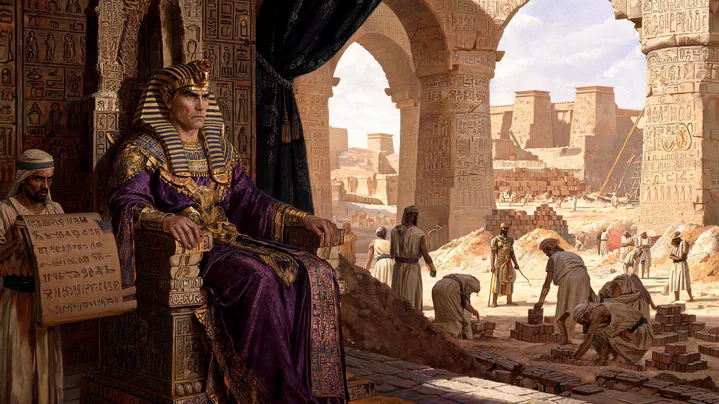
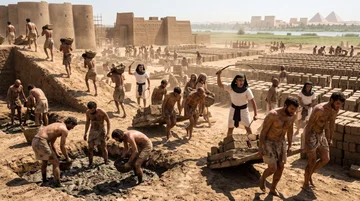
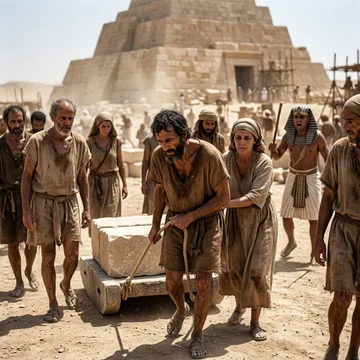
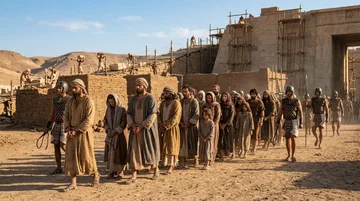
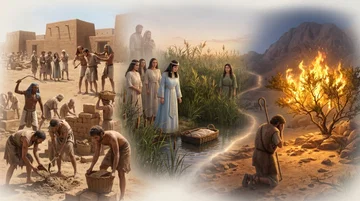
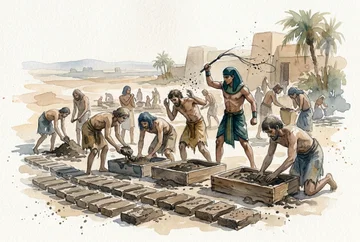
Therefore they did set over them taskmasters to afflict them with their burdens. And they built for Pharaoh treasure cities, Pithom and Raamses.
Translations
American King James Version, King James Version, KJV Cambridge Paragraph Bible
Therefore they did set over them taskmasters to afflict them with their burdens. And they built for Pharaoh treasure cities, Pithom and Raamses.
Therefore they set over them task-masters, to afflict them with their burdens. And they built for Pharaoh treasure-cities, Pithom, and Raamses.
Therefore they did set over them taskmasters to afflict them with their burdens. And they built for Pharaoh store cities, Pithom and Raamses.
Therefore they did set over them taskmasters to afflict them with their burdens. And they built for Pharaoh store-cities, Pithom and Raamses.
And they set over it princes of tribute, so as to afflict it with their burdens, and it buildeth store-cities for Pharaoh, Pithom and Raamses;
And they set over them service-masters to oppress them with their burdens. And they built store-cities for Pharaoh, Pithom and Rameses.
So they set over them chiefs of tribute, to the end they might humiliate them with their burdens,—and they built store-cities for Pharaoh, even Pithom and Raamses.
Berean Standard Bible, Majority Standard Bible
So the Egyptians appointed taskmasters over the Israelites to oppress them with forced labor. As a result, they built Pithom and Rameses as store cities for Pharaoh.
Therefore they set taskmasters over them to afflict them with their burdens. They built storage cities for Pharaoh: Pithom and Raamses.
So they put overseers of forced work over them, in order to make their strength less by the weight of their work. And they made store-towns for Pharaoh, Pithom and Raamses.
Therefore did they set taskemasters ouer them, to keepe the vnder with burdens: and they built the cities Pithom and Raamses for the treasures of Pharaoh.
Douay-Rheims (Challoner revision)
Therefore he set over them masters of the works, to afflict them with burdens, and they built for Pharao cities of tabernacles, Phithom and Ramesses.
Pictures
Cross-references
- Genesis 15:13-14
And he said unto Abram, Know of a surety that thy seed shall be a stranger in a land that is not theirs, and shall serve them; and they shall afflict them four hundred years;
God foretells Israel’s servitude in a foreign land and their eventual deliverance.
- Exodus 5:7-8
Ye shall no more give the people straw to make brick, as heretofore: let them go and gather straw for themselves.
Pharaoh doubles the Israelites’ brickmaking burden by withholding straw while keeping their quota.
- Exodus 3:7-10
And the LORD said, I have surely seen the affliction of my people which are in Egypt, and have heard their cry by reason of their taskmasters; for I know their sorrows;
God sees Israel’s affliction and commissions Moses to lead them out of Egypt.
- Exodus 1:22
And Pharaoh charged all his people, saying, Every son that is born ye shall cast into the river, and every daughter ye shall save alive.
Pharaoh escalates Israel’s oppression by ordering newborn sons killed.
- Exodus 12:37
And the children of Israel journeyed from Rameses to Succoth, about six hundred thousand on foot that were men, beside children.
Israel departs from Rameses after Pharaoh releases them from Egypt.
- Exodus 1:7
And the children of Israel were fruitful, and increased abundantly, and multiplied, and waxed exceeding mighty; and the land was filled with them.
Israel multiplied greatly in Egypt, prompting Pharaoh to set taskmasters over them.
- Exodus 2:23-25
And it came to pass in process of time, that the king of Egypt died: and the children of Israel sighed by reason of the bondage, and they cried, and their cry came up unto God by reason of the bondage.
Israel’s oppression in Egypt prompts their cry, and God hears and remembers his covenant.
- Genesis 46:6
And they took their cattle, and their goods, which they had gotten in the land of Canaan, and came into Egypt, Jacob, and all his seed with him:
Jacob and his family brought their goods into Egypt.
- Exodus 5:1
And afterward Moses and Aaron went in, and told Pharaoh, Thus saith the LORD God of Israel, Let my people go, that they may hold a feast unto me in the wilderness.
Pharaoh bidden to let Israel go
- Exodus 5:18
Go therefore now, and work; for there shall no straw be given you, yet shall ye deliver the tale of bricks.
The order to work without straw continues the account of brickmaking under taskmasters.
- Acts 7:18
Till another king arose, which knew not Joseph.
Stephen recounts the same oppression confirming Exodus
- Genesis 47:11-12
And Joseph placed his father and his brethren, and gave them a possession in the land of Egypt, in the best of the land, in the land of Rameses, as Pharaoh had commanded.
contrasts former nourishing and possession
- Deuteronomy 4:20
But the LORD hath taken you, and brought you forth out of the iron furnace, even out of Egypt, to be unto him a people of inheritance, as ye are this day.
calls Egypt the iron furnace
- Exodus 3:8
And I am come down to deliver them out of the hand of the Egyptians, and to bring them up out of that land unto a good land and a large, unto a land flowing with milk and honey; unto the place of the Canaanites, and the Hittites, and the Amorites, and the Perizzites, and the Hivites, and the Jebusites.
God’s promised deliverance answers Israel’s affliction in Egypt.
- Exodus 12:40-41
Now the sojourning of the children of Israel, who dwelt in Egypt, was four hundred and thirty years.
Israel leaves Egypt when the appointed period is complete.
- Exodus 3:10
Come now therefore, and I will send thee unto Pharaoh, that thou mayest bring forth my people the children of Israel out of Egypt.
Moses is commissioned to deliver Israel from Egypt.
- Deuteronomy 5:15
And remember that thou wast a servant in the land of Egypt, and that the LORD thy God brought thee out thence through a mighty hand and by a stretched out arm: therefore the LORD thy God commanded thee to keep the sabbath day.
Israel’s deliverance from bondage is given as a reason to keep the Sabbath.
- Genesis 47:4
They said moreover unto Pharaoh, For to sojourn in the land are we come; for thy servants have no pasture for their flocks; for the famine is sore in the land of Canaan: now therefore, we pray thee, let thy servants dwell in the land of Goshen.
Israel came only to sojourn, not stay
- Genesis 47:18-20
When that year was ended, they came unto him the second year, and said unto him, We will not hide it from my lord, how that our money is spent; my lord also hath our herds of cattle; there is not ought left in the sight of my lord, but our bodies, and our lands:
Egyptians sold their land and themselves to Pharaoh.
- Exodus 14:26-28
And the LORD said unto Moses, Stretch out thine hand over the sea, that the waters may come again upon the Egyptians, upon their chariots, and upon their horsemen.
The pursuing Egyptians are drowned in the Red Sea.
Commentary
Each commentary is drawn from primary sources: the writings of Ellen G. White and Adventist pioneers and periodicals. Each commentary is separate. Its own words are not a quotation; follow the references to read the source passages.
Ellen G. White
4 sources
A new king rose over Egypt who did not know Joseph, and he kept Israel in the land because they were able, understanding and skilled workmen of great service and value to the kingdom whose labor he was unwilling to lose, yet he feared them as a growing people who were more and mightier than his own and who might join Egypt's enemies in war and leave the land.SG3 178.3PP 241.3–41SP 160.2–162.1 To control them, reduce their numbers and break their independent spirit, he turned them into slaves, ranking them with the slave class who had sold their flocks, herds, lands and themselves, and he set taskmasters over them to afflict, burden and oppress them with harsh labor.SG3 178.3PP 241.3–41SP 160.2–162.1
Under those taskmasters they built treasure cities for Pharaoh, the royal store cities Pithom and Raamses, and their forced labor was also used for Egypt's palaces and temples.SG3 178.3PP 241.3–41SP 160.2–162.1 The affliction did not diminish them; instead they continued to multiply, and the more they were afflicted the more they multiplied and grew, which grieved the Egyptians.SG3 178.31SP 160.2–162.1
Angered by that failure, the king and his rulers imposed a fixed daily amount of work to subdue them with hard labor and crush out their independent spirit, making their lives bitter with rigorous bondage in mortar and in brick and in all manner of field service, even compelling their women to work in the fields as slaves.SG3 178.31SP 160.2–162.1 When hard labor still failed to check their growth, they hardened their hearts to go further and command the killing of the male children.1SP 160.2–162.1
This history of Israel in Egypt is an experience that God's people living in the last days are to consider and learn from.1MR 225.4–226.2
Sources
Pioneers and periodicals
81 sources
After Joseph and all his generation died a new king who knew not Joseph set taskmasters over Israel to afflict them with burdens, and under that bondage they built for Pharaoh the treasure cities Pithom and Raamses.ST Apr 30, 1894ST Apr 30, 1894ST Nov 6, 1901RH Jan 2, 1913 The king feared their mighty increase and meant by this wise dealing to check their growth, exploit their labor and break their spirit so they could not join his enemies or leave for Canaan.ST Apr 14, 1887ST Aug 9, 1910RH May 14, 1901 The more they were afflicted the more they multiplied and grew, for God saw their sorrow, heard their cry and preserved His people and His truth through them in fulfillment of the servitude foretold to Abraham.RH Nov 19, 1908ST Jun 11, 1894RH Aug 11, 1863 The uncovered square store-city of Pithom with its thick-walled, doorless brick chambers and strawless upper bricks, and Raamses built by Rameses II, still answer to the account of Hebrew slave labor.RH Jun 25, 1901ST Oct 21, 1930RH Apr 23, 1908RH Aug 24, 1905 God did not sanction this slavery but demanded their release, judged Egypt for refusing, and raised up Moses, born under the oppression, to lead the workers out to inherit the promised land.RH Nov 19, 1908RH Oct 1, 1861
Historical Setting in Egypt
Egypt at this time was a powerful kingdom whose granaries supplied other peoples, and its prosperity under Joseph's arrangement of grain storage for famine and his land laws lasted while his influence endured.ST Nov 14, 1906 The verse belongs to the opening of the mainly historical division of Exodus in chapters 1-18, describing the oppression by taskmasters and burdens before the birth and upbringing of Moses until his call to be deliverer. It stands at the beginning of the sequence leading to the chosen deliverer, waiting, the call, and Aaron.RH Jan 20, 1916 It continues the story of Joseph and God's providential dealings through him for preservation of the lives of his relatives, within the larger journey of Israel from Egypt to Canaan.ST Jan 23, 1912
It marks the change from the close of Genesis, when Israel's family was comfortable, prosperous and pleasantly settled in Egypt, to a people grown more and mightier than the Egyptians yet in bitter bondage and oppression.RH Jan 20, 1916 That condition leads to their great deliverance and their becoming a nation with organization, leadership, laws and worship.RH Jan 20, 1916 The bondage covered only part of the 215 years from Jacob's entrance into Egypt to the Exodus, for Joseph's saving of the land gave Israel favor and oppression began only after Joseph and all his brethren and all that generation died.RH Jan 2, 1913 Then a new king who knew not Joseph arose, meaning a new and unfavorable dynasty with a clear and decided change from favorable kings who knew the good Joseph had done for Egypt.RH Jan 2, 1913ST Apr 30, 1894ST Jan 23, 1912
That new dynasty was the nineteenth, rising after Khu-n-Aten with the cry of Egypt for the Egyptians, about a century before the Exodus.ST Apr 30, 1894 In one account it is described as sprung from Assyria.ST Jan 23, 1912 Under it Israel was treated as despised slaves, yet God's work prospered despite human persecution. After Joseph's death the Egyptians turned against the Hebrews, their earlier prosperity giving way to cruel oppression which helped bring about Israel's departure from Egypt.ST Jul 21, 1881
The cause was that Israel was fruitful and increased abundantly and multiplied and waxed exceeding mighty until the land was filled with them, while the seven-year famine had left the Egyptians themselves in slavery to Pharaoh.RH May 14, 1901 The new king with jealous eye saw their mighty increase and reasoned they would become more powerful than the Egyptians unless checked, fearing they would join his enemies in war and leave the land.RH May 14, 1901RH Nov 19, 1908 He said to his people, Come on, let us deal wisely with them, and the setting of taskmasters to afflict them with burdens was that wise dealing, the beginning of hard slavery in all its horrors.RH May 14, 1901 How dreadful and how different from when Joseph nourished them and the king gave them a possession in the best of the land.RH May 14, 1901
The events in adjacent verses need not have happened one day apart, so the building of Pithom and Raamses narrated after the rise of the new king does not establish how soon after he took the throne it occurred.ST Aug 27, 1885 The Tel-el-Amarna tablets explain how the oppression could have followed soon after the rise of the new king without the whole eighteenth dynasty intervening.ST Dec 23, 1889 The oppression took place during a peaceful period in Egypt when the policy of exploiting the Hebrews' work and breaking their spirit by forced labor could be carried out.ST Apr 14, 1887 It developed gradually from initial favor to increasing degradation by the time of deliverance, including the building of the store cities Pithom and Raamses.RH Oct 21, 1862
Pharaoh is not a personal name but an appellative or title like czar, emperor or king.ST Jan 23, 1912 The oppressor in the verse was Pharaoh, king of Egypt, not Herod, who lived nearly fifteen centuries later, the Herods being kings in Syria. The Pharaoh associated with the oppression and the building of the cities is Rameses II, also called Sesostris, the Pharaoh of the oppression and builder of Pithom and of Rameses named in Exodus 1 and 12.ST Aug 9, 1910ST Aug 9, 1910 He reigned sixty-seven years and was the greatest builder of all the Pharaohs, leaving his name on nearly every ruin in Egypt and Nubia, with a building program greater than all the other kings of Egypt for 2,000 years.ST Apr 30, 1894ST Apr 14, 1887 His reign lasted until six years before the Exodus, about B.C. 1350.ST Aug 9, 1910
His preserved body was found in July 1881 together with thirty-five other mummies of kings, queens, princes and high priests in a temple ruin near Thebes and identified by papyri and markings on the case and bandages, while his son Menephthah I, the Pharaoh of the Exodus, has a body never found.ST Apr 30, 1894 In another account the mummy and coffin of Pharaoh Rameses II are reported as found near Thebes in 1871. In another account the Pharaoh of the oppression was one of the great kings of Egypt of the eighteenth or nineteenth dynasty, whose mummy is preserved among thirty-nine mummies gathered in a gallery a few miles from Thebes that includes practically all the great kings and queens of those dynasties.RH Nov 9, 1916
The taskmaster bondage under the new king began in 1573 B.C., three hundred and forty-eight years after Abram left his father's house in 1921 B.C. and two years before Moses was born.RH May 14, 1901 It ended when Moses led Israel out in 1491 B.C., four hundred and thirty years after Abraham left, so the affliction and hard service lasted only eighty-two years from 1573 to 1491.RH May 14, 1901 During the 215 years Israel was held as servants giving labor and service and receiving no return of lands or cities save only their bread.RH Mar 17, 1874
Taskmasters, Burdens and Labor
After counsel together over the increase of Israel, the government of Egypt settled its plan of suppression by placing the people under taskmasters for compulsory labor to afflict them with burdens, and the first work laid upon them was the building of Pharaoh's store cities Pithom and Raamses.ST Apr 30, 1894ST Nov 6, 1901ST Nov 6, 1901 The new king looked with jealous eye upon Israel grown fruitful and exceeding mighty till the land was filled with them, while the seven-year famine had left the Egyptians themselves in slavery to Pharaoh, and he reasoned that unless their increase was checked they would become more powerful than the Egyptians, join Egypt's enemies in war, and go up out of the land.ST Aug 9, 1910RH May 14, 1901RH Nov 19, 1908 Saying to his people, Come on, let us deal wisely with them, he made the setting of taskmasters that wise dealing, the beginning of hard slavery in all its horrors, meant at once to exploit their work and break their spirit, to check their increase and weaken their growing power while still keeping the labor of a skilled, thrifty, numerous and useful people.ST Apr 14, 1887ST Aug 9, 1910RH May 14, 1901ST Nov 6, 1901 Valuing their service and knowing they expected sometime to return to Canaan, he meant by this affliction to make escape impossible and to set himself against God's word that in the fourth generation they should come again to Canaan, and by this he filled up his iniquity and brought about Egypt's fall.RH Jan 2, 1913ST Dec 22, 1898RH Mar 9, 1869 That affliction was meant to keep them from leaving Egypt and returning to Canaan, yet it helped bring about their departure by making them unwilling to remain, so that God used the king's hostility to advance His purpose of bringing Israel to Canaan.RH Mar 9, 1869ST Jul 21, 1881RH Mar 9, 1869
Taskmasters were drivers who beat forced laborers, working with overseers with sticks and rods who drove gangs, beating their naked backs and shoulders on slight provocation and exacting a fixed daily amount of task-work.RH Apr 23, 1908ST Apr 14, 1887 The burdens were toil in the brickfield, the quarry and the temple precincts, in brickmaking with straw and mud mixed by slaves, in stone-cutting, in transporting stone and great blocks dragged from across the river, and in erecting buildings such as the Sun-temple of Rameses-Miamun on the southern part of Memphis.ST Oct 21, 1930RH Apr 23, 1908ST Apr 14, 1887ST Apr 14, 1887 It was the Egyptian custom to condemn prisoners of war, including Asiatic captives, to this labor, and the Hebrews were driven to it along with thousands of negroes and others dragged in chains from Ethiopia in slave-hunting raids after the Syrian wars, all the foreign tribes of Semitic origin settled in the Delta, and even native Egyptians oppressed by taxation and exaction.RH Apr 23, 1908ST Apr 14, 1887 The numbers of prisoners taken in war were far too small for such countless works, so Rameses could supply the labor required only by enslaving all the population he could venture to enslave, the Hebrews among them, and the oppression fell most overwhelmingly under Rameses II with his great growth of building works, especially under Seti I and Rameses II, during a peaceful period when the policy could be carried out.ST Apr 14, 1887RH Apr 23, 1908ST Apr 14, 1887
The builders are named in Egyptian accounts as Aperiu or Aberiu, the Egyptian pronunciation of Iberim, Hebrews, laboring in gangs under Ameneman the chief of the Mazai, and they were given food rations each month alongside Egyptian soldiers.ST Apr 14, 1887 The Mazai were a gendarmerie of foreign mercenaries drawn from Libya with no sympathy for the oppressed, who filled the office of the under taskmasters who punished the gangs.ST Apr 14, 1887 Food was provided by the government and was not insufficient, but the hard work and exposure to the burning sun of Egypt were exhausting in the extreme, with privations and labor too great for human endurance, so that thousands died and life became a burden to those condemned to it.RH Apr 23, 1908ST Apr 14, 1887 The oppression grew still more rigorous when Pharaoh compelled Israel to make bricks without supplied straw yet required the full tale of bricks, with cruel taskmasters afflicting them in the brick-yards and beating them, and decrees putting their male children to death followed.ST Oct 21, 1930RH Aug 11, 1863 The extra burdens were intended to prevent them from resting on the Sabbath, their teachers being accused of making the people sabbatize, and the denial of religious privileges further intensified oppression toward insurrection.ST Nov 14, 1906ST Aug 11, 1909
The harsh treatment was carried out as enforcement of law by idolatrous Egyptians persecuting the Hebrews who worshiped the true God.RH Jun 8, 1916 Moses was the true leader of labor who organized and led the workers out from those brick-yards into the Promised Land, for the oppressor was Pharaoh, king of Egypt.
Treasure Cities Pithom and Raamses
Under that bondage Israel built treasure cities, also called store cities, for Pharaoh, Pithom and Raamses, also called Rameses.ST Apr 30, 1894ST Apr 30, 1894RH Jan 20, 1916 They stood in Goshen near Egypt's eastern frontier and served as depots and fortified magazines for storing grain and weapons and preserving grain for war or famine, and their geography identifies their localities.RH Jan 20, 1916ST Nov 20, 1884ST Apr 14, 1887ST Nov 6, 1901 The builders are named in Egyptian accounts as Aperiu or Aberiu, the Egyptian pronunciation of Iberim, Hebrews.ST Apr 14, 1887 They labored in gangs under Ameneman the chief of the Mazai and were given food rations each month alongside Egyptian soldiers, and the Mazai were a gendarmerie of foreign mercenaries drawn from Libya with no sympathy for the oppressed, who filled the office of the under taskmasters.ST Apr 14, 1887
The Septuagint adds On, or Heliopolis, meaning city of the sun, indicating that the cities were greatly enlarged to serve as treasure cities and bringing Egypt's sun worship into view.ST Sep 5, 1895 Pithom comes from Pa-Tum, the abode of the god Tum, with the religious name Pi Tum meaning devoted to Tum and the civil name Succoth, the same as the Greek Heroopolis.RH Apr 23, 1908ST Apr 30, 1894ST Jan 23, 1912 It is uncovered at Tel-el-Maskoutah near Tel-el-Kebir and was built in part at least by Rameses II, with inscriptions attributing its construction to him.RH Apr 23, 1908RH Aug 24, 1905ST Feb 11, 1886 Raamses was so called because it was built by Rameses II.ST Jan 23, 1912
Pithom was a square town enclosed by a brick wall twenty-two feet thick and six hundred and fifty feet on each side, containing about ten acres almost wholly occupied by solid square store-chambers divided by brick walls eight to ten feet thick with no door or window, two-storied with beam recesses about ten feet up, the lower room entered only by trap-door for storage and the upper for the keeper.RH Apr 23, 1908 Its chief buildings were brick storehouses without windows or doors, and its ruins with strong treasure chambers of sun-dried brick completely answer the description of a store-city.RH Apr 23, 1908RH Aug 24, 1905ST Nov 20, 1884 Raamses is Raamses-Mera-Amen on the eastern delta of the Nile, meaning the great Bekhennu of King Rameses the lover of Amon.ST Oct 21, 1930ST Apr 14, 1887 The twin city has not been identified but lay in the immediate vicinity of Tanis and was built perhaps in part by Seti I but mainly by Rameses II.RH Apr 23, 1908
The work was done almost entirely in brick laid with mortar in regular tiers, generally containing straw.RH Apr 23, 1908 The excavated bricks vary by level, with lower courses containing chopped straw, higher courses poorer with less, long and scanty straw, and uppermost courses containing none but rushes, sedges and other water plants, matching employment principally in brickmaking with straw until no straw was given and reflecting the severity and changing materials of the forced labor.RH Jun 25, 1901RH Apr 23, 1908ST Aug 7, 1901ST Nov 6, 1901ST Apr 30, 1894 Bricks stamped with the name Raamses were used in houses at Pithom, and strawless bricks are still found there.ST Oct 21, 1930 Egyptian depictions of Hebrew-featured slaves making bricks illustrate the work, and tablets speaking of the Habiri and their encroachment confirm the Hebrew presence.ST Nov 20, 1884ST Apr 30, 1894 Their work included transporting stone and great blocks dragged from across the river for the building works of Rameses, including the Sun-temple of Rameses-Miamun on the southern part of Memphis.ST Apr 14, 1887
The Israelites' forced labor greatly increased Egypt's wealth.ST Feb 4, 1889 As their dependence on land owned by others deepened into tyrannical slavery they were compelled to build Pharaoh's treasure cities.ST Feb 4, 1889ST Nov 23, 1904
Confirmation of the History
The account is true, literal history and not fable or myth, and its accuracy is established because Stephen tells of the same incident in Acts 7:18, with the New Testament thus corroborating the Old Testament record, and Israel's slavery in Egypt was a literal historical event.ST Apr 13, 1904ST Jan 3, 1884 The verse gives a reliable historical account of Israel's oppression under taskmasters in forced labor building Pharaoh's store cities Pithom and Raamses, and the relics of public work done under Joseph's supervision and of these store cities, together with Egyptian inscriptions and monuments corroborating and explaining the Pentateuch's account of Joseph and the exodus in Exodus 1:1-14, give abundant evidence confirming that Joseph was a real person and that a real Israel was in Egypt.ST Aug 7, 1901ST Apr 20, 1904ST Jul 30, 1885 The excavated bricks at Pithom support this, since lower layers contain straw, later layers contain poorer and scantier straw, and upper layers contain none, matching the worsening conditions when Israel had to make bricks without supplied straw.ST Aug 7, 1901
The discovered ruins of Pithom with its brick storage chambers fit and confirm the Bible's account of the bondage and of Hebrew slave labor in Egypt.RH Jun 25, 1901ST Oct 21, 1930RH Aug 24, 1905ST Nov 6, 1901ST Aug 12, 1913 Pithom is identified as a storage city built for Pharaoh by Israel under forced labor, its ruins having brick storage chambers laid with mortar with some tiers containing straw and others without, matching the harsh brickmaking of straw and mud mixed by slaves, and its name and the name of Rameses II as its builder were found there.RH Jun 25, 1901ST Oct 21, 1930RH Aug 24, 1905 The city uncovered at Tel-el-Maskoutah is identified by its inscriptions as Pithom and as built in part at least by Rameses II, and its construction as a store-city with strong treasure chambers of sun-dried brick matches the description, while bricks stamped with the name Raamses used in houses and strawless bricks still found in houses at Pithom remain as evidence.ST Oct 21, 1930RH Aug 24, 1905ST Feb 11, 1886 These cities stood in Goshen near Egypt's eastern frontier and stored grain and weapons, and Pithom has been identified with the ruins of Pi Tum, also called Succoth, whose buildings included thick-walled storage chambers.ST Nov 6, 1901 The bricks there vary in plant material by level, with lower courses containing chopped straw, higher courses containing less and poorer straw, and uppermost bricks containing no straw but rushes, sedges and other water plants, and archaeologists' finds of Pithom and storehouses built by Hebrew slaves with lower courses of straw-mixed bricks and most upper courses made without straw fit the account of bondage and reflect changing materials and severity of the forced labor.ST Nov 6, 1901ST Aug 12, 1913
Direct mention of the general series of events in the first fourteen chapters of Exodus should not be expected in Egypt's historical records, because nothing was ever registered on the public monuments except successes and triumphs, and court historiographers and the monarch would not record or inscribe defeats such as the plagues and the Red Sea disaster.RH Apr 23, 1908 The verse nevertheless gives points of the narrative that admit comparison with the records of the time, where agreement or disagreement would almost necessarily show itself: the employment of forced labor in Egypt at this period and the method of its employment, the inclusion of the Hebrews among the forced laborers, and the construction at the period of store-cities and the names of the cities.RH Apr 23, 1908 That system of forced labor under which Israel suffered prevailed especially under Seti I and Rameses II and became most overwhelming under Rameses II with his great growth of building works, when it was Egyptian custom to condemn prisoners of war including Asiatic captives to this labor.RH Apr 23, 1908RH Apr 23, 1908 Taskmasters with rods and overseers with sticks drove gangs, beating their naked backs and shoulders on slight provocation and exacting a fixed daily amount of task-work in brickmaking, stone-cutting, dragging blocks from quarries and erecting buildings, with food provided by the government and not insufficient but hard work and exposure to the burning sun of Egypt exhausting in the extreme and making life a burden.RH Apr 23, 1908 The building work at Pithom and Raamses, places whose geography identifies their localities, left evidences that still exist.RH Jan 20, 1916
A stela of Merneptah, son and successor of Rameses II, at Thebes names the Israelites as left without seed and already gone from Egypt, with no local habitation attached to their name while other peoples have one, showing they had left Goshen empty and were lost in the wilderness and that the Exodus had just taken place. Rameses II is thus the Pharaoh of the oppression and the builder of Pithom, and Merneptah reigned after him at the time of that inscription. The stele of Pharaoh Merneptah mentioning Israel in Egypt confirms the account of Israel's time in Egypt included in this verse.RH May 13, 1909
Promise Prophecy and Deliverance
The burdens laid on by taskmasters were the coming to pass in Egypt of the servitude and affliction foretold to Abraham, that his seed would serve strangers in a land not theirs and be afflicted four hundred years, fulfilled even though Abraham was dead.RH Nov 19, 1908RH Aug 11, 1863 God surely saw that affliction and heard the cry by reason of the taskmasters, for He knew their sorrows.RH Aug 11, 1863 The going down of Abraham's family into Egypt to brief prosperity followed by long and terrible oppression and bitter servitude with burdens was the iron furnace, foreshadowed by the horror of great darkness and the smoking furnace seen by Abraham in vision.RH Dec 17, 1861
The descendants were sent to Egypt, enslaved and grievously oppressed while they waited for God's promise to be fulfilled, so that inheriting the promised land seemed almost impossible, but God brought them out by His power when the appointed time came, after the iniquity of the Amorites was full.RH Nov 19, 1908ST Dec 28, 1876 That deliverance was God raising up a movement to fulfill His promise by appearing to Moses in the burning bush to bring Israel to a good land flowing with milk and honey and to give each tribe a permanent possession in Abraham's land.RH Nov 19, 1908 Moses was born into that oppression under a law that demanded his immediate death and became the special object of providential care, preserved through loving God-fearing parents, the ark of bulrushes, adoption by the king's daughter, and early instruction by his faithful mother before being taken into the king's family. He was learned in all the wisdom of the Egyptians and was mighty in words and in deeds, with no further detail given until he was forty years old. His stand in Egypt was resistance to despotic power and individual faithfulness to God, whom God vindicated and delivered with His people from oppression. He was the true leader of labor who organized and led the workers out from those brick-yards into the Promised Land.
The history of that bondage is a type of events to occur under the gospel and at the close of the dispensation, so its application reaches beyond the literal oppression.RH Sep 17, 1872 Egypt, the leading earthly empire, sought to destroy the promised seed by enslaving and oppressing them and keeping them permanently as slaves, to prevent their return to Palestine and inheritance of the land pledged to Abraham.ST Dec 22, 1898ST Nov 7, 1906 That hatred went so far as destroying all the male children in hope of destroying Israel, which was Satan's plan to destroy the promised seed and defer the plan of salvation.ST Apr 30, 1894 God nevertheless preserved His people and His truth to the world through that enslaved nation. The Lord's hand was especially manifested in the increase of their number and the preservation of their lives under great trial, as part of the making of a nation under God's providence.ST Jun 11, 1894ST Apr 30, 1894ST Nov 6, 1901ST Jan 23, 1912
The more they were afflicted the more they multiplied and grew, so that Egypt's power and shrewd and wicked policy that fought against God could not thwart God's purposes but was made to work out for their salvation.ST Jun 11, 1894ST Apr 30, 1894ST Nov 6, 1901ST Jan 23, 1912RH Oct 8, 1903 The affliction was permitted because it would accomplish for God's people what could not otherwise be accomplished.RH Aug 11, 1863 Their oppression followed their mingling with idolaters and loss of their holy character and association with heathen worship, in which they lost much of their knowledge of God and Christ and forgot the meaning of the early offerings that taught the atonement.ST Jun 10, 1880ST Mar 3, 1898 God allowed them to suffer so they would turn to Him, choose His righteous and merciful rule and obey His requirements, and because of His covenant with Abraham He did not forsake them in Egypt.ST Jun 10, 1880 After centuries of slavery God delivered Israel, but that experience had left them unable to grasp fully the salvation and character God required, and had humbled them and prepared them to receive the law and build the Lord's sanctuary, becoming the setting for the sanctuary's lessons about salvation.RH Oct 17, 1854
Doctrine Lessons and Application
The bondage in Egypt was permitted for a time, but it did not carry God's approval or sanction of slavery, for He demanded Israel's release, judged the Egyptians when they refused, and Himself led His people out of bondage.RH Oct 1, 1861 That bondage exposes the selfish love of slavery, which reduces and degrades human beings to the level of brutes.RH May 1, 1866 Pharaoh hardened his heart against the messengers God sent by Moses and Aaron to bid him let Israel go, reasoning away miracles and plagues until the judgments grew more severe and the first-born were slain.RH May 1, 1866 The same Pharaoh-like character appears when slaveholders harden their seared consciences and hold their slaves with a firm grasp, determined they shall not go, and even if compelled to release them remain unchanged in principle and make them feel oppressive power if possible.RH May 1, 1866 God alone can wrench the slave from the hand of the desperate, relentless oppressor and deliver the oppressed.RH May 1, 1866
The oppression was so severe that the Israelites could not keep the Sabbath even if they had wished to, and their deliverance made it possible for them to do so.RH May 16, 1854 During that enslavement the Sabbath ordinance, like the other divine ordinances, had fallen almost or altogether into disuse.RH Dec 11, 1856 The account's silence about Sabbath observance does not mean God had repealed the ordinance or granted a formal exemption during the captivity.RH Dec 11, 1856 Long subjection to a prince does not bind subjects to the prince's religion, though reverence is commanded to princes.ST May 28, 1912 Pharaoh had a religion of his own that was not God's true religion, and if Abraham's seed had framed their religion according to Pharaoh's tastes because they were his subjects, true religion would have been lost from the world.ST May 28, 1912 Right religion receives its origin and authority from the eternal God alone, not from princes, who of all others are often the most ignorant of God's true religion.ST May 28, 1912
That early history given in the five books of Moses, with God's dealings with His people tossed to and fro for many hundred years in captivities and conquests in mingled joy and sorrow, is not done away but is still interesting and profitable to be studied so their virtues may be emulated and their errors avoided.RH Nov 26, 1861 It leads on to the divided Red Sea saving one army and drowning another and the forty years' journey in the wilderness.RH Nov 26, 1861 Pharaoh belongs among the rulers who set themselves against the truth of God's word.ST Jul 15, 1908 Real help in such affliction is in the name of the Lord alone.ST Apr 30, 1894 Despite human persecution under a new dynasty that treated Israel as despised slaves, God's work prospered. The suffering of ancient Israel under heavy burdens and hard bondage, in which the more they were afflicted the more they multiplied and grew, is an example of trials through which God's people can continue to grow.RH Oct 8, 1903
Egypt persecuted God's chosen people despite evidence of God's wisdom, goodness and power, and the same spirit of persecution is present in people today even among those who have received greater light.ST Dec 25, 1901 The forced labor greatly increased Egypt's wealth, and the long unpaid work made Israel deserving of compensation when they later left Egypt.ST Feb 4, 1889 Israel was held as servants for 215 years, afflicted with burdens and building work, giving labor and service and receiving no return of lands or cities save only their bread, though Egypt owed its existence, laws, policy and opulence to Joseph, to whom it did not so much as furnish a grave.RH Mar 17, 1874 That unpaid toil, counted at very low wages with interest and doubled for the time of double work when Pharaoh refused to furnish materials, leaves Egypt immensely in debt.RH Mar 17, 1874 The jewels of silver and gold and costly plate taken at the departure were not borrowed but demanded as a small installment of wages long due, with only that small sum to be deducted from the total owed.RH Mar 17, 1874
The suffering of Israel under hard taskmasters parallels enslaved Black people in the United States, with Abraham Lincoln presented as the deliverer as Moses delivered Israel.RH May 10, 1864 Their misery under Egyptian taskmasters is an example of the bondage and oppression endured by slaves, showing the need for Christians to help free people from bondage.RH May 12, 1903 Pharaoh's oppression was a harsh tyranny, and Lincoln's army is described as standing between the country and a military despotism worse than Pharaoh's.RH Sep 23, 1862 The cruel tasking of Israel to make bricks is compared with forced labor on the Khedive's land in Egypt.RH May 1, 1879 Comparison to Pharaoh shows that a former mistress treated enslaved people with similarly cruel severity.ST Mar 11, 1880
The image of the taskmasters who afflicted Israel shows that human traditions have bound the Jewish people in even greater servitude than those Egyptian taskmasters did.RH Jul 23, 1914 Israel was subjected to forced labor in which taskmasters burdened and afflicted them and they built Pharaoh's store cities, and that enslavement was followed by escape with divine aid.RH Oct 13, 1859 The Egyptians were punished for trying to prevent their departure and drowned while pursuing them to recapture them.RH Oct 13, 1859 Israel was oppressed by taskmasters who burdened them with forced labor before the Lord delivered them from bondage.RH Feb 12, 1914 The account of the Hebrews' captivity, when they were oppressed with forced labor under taskmasters and made to build Pithom and Raamses, belongs to the oppression of Exodus 1:8-14, showing how quickly Egypt forgot Joseph its former deliverer.ST Jan 20, 1909ST Aug 12, 1913
Sources