Exodus 13:19
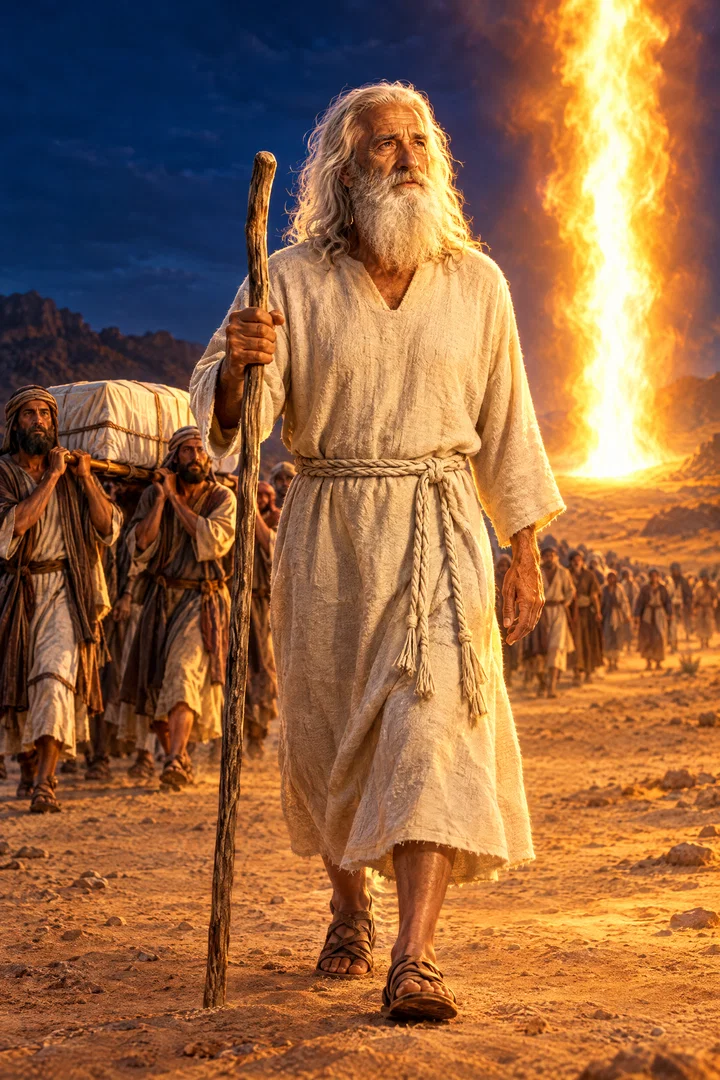
And Moses took the bones of Joseph with him: for he had straitly sworn the children of Israel, saying, God will surely visit you; and ye shall carry up my bones away hence with you.
Translations
And Moses took the bones of Joseph with him: for he had straightly sworn the children of Israel, saying, God will surely visit you; and you shall carry up my bones away hence with you.
King James Version, KJV Cambridge Paragraph Bible, Revised Version, American Standard Version
And Moses took the bones of Joseph with him: for he had straitly sworn the children of Israel, saying, God will surely visit you; and ye shall carry up my bones away hence with you.
And Moses took the bones of Joseph with him: for he had strictly sworn the children of Israel, saying, God will surely visit you; and ye shall carry up my bones hence with you.
And Moses taketh the bones of Joseph with him, for he certainly caused the sons of Israel to swear, saying, 'God doth certainly inspect you, and ye have brought up my bones from this with you.'
And Moses took the bones of Joseph with him; for he had made the children of Israel swear an oath, saying, God will be sure to visit you; then ye shall carry my bones with you hence.
And Moses took the bones of Joseph, with him,—for he had, taken an oath, of the sons of Israel saying, God will, surely visit, you, so then ye shall carry up my bones from hence with you.
Berean Standard Bible, Majority Standard Bible
Moses took the bones of Joseph with him because Joseph had made the sons of Israel swear a solemn oath when he said, “God will surely attend to you, and then you must carry my bones with you from this place.”
Moses took the bones of Joseph with him, for he had made the children of Israel swear, saying, “God will surely visit you, and you shall carry up my bones away from here with you.”
And Moses took the bones of Joseph with him, for Joseph had made the children of Israel take an oath, saying, God will certainly keep you in mind; and you are to take my bones away with you.
(And Moses tooke the bones of Ioseph with him: for he had made the children of Israel sweare, saying, God will surely visite you, and ye shall take my bones away hence with you)
Douay-Rheims (Challoner revision)
And Moses took Joseph’s bones with him: because he had adjured the children of Israel, saying: God shall visit you, carry out my bones from hence with you.
Pictures
Cross-references
- Genesis 50:25
And Joseph took an oath of the children of Israel, saying, God will surely visit you, and ye shall carry up my bones from hence.
Joseph made Israel swear to carry his bones out of Egypt when God delivered them.
- Hebrews 11:22
By faith Joseph, when he died, made mention of the departing of the children of Israel; and gave commandment concerning his bones.
Joseph’s instructions about his bones expressed faith in Israel’s future exodus.
- Joshua 24:32
And the bones of Joseph, which the children of Israel brought up out of Egypt, buried they in Shechem, in a parcel of ground which Jacob bought of the sons of Hamor the father of Shechem for an hundred pieces of silver: and it became the inheritance of the children of Joseph.
Israel buries Joseph’s bones in the land promised to his family.
- Psalms 105:26-38
He sent Moses his servant; and Aaron whom he had chosen.
Recounts God’s deliverance of Israel from Egypt.
- Psalms 114
When Israel went out of Egypt, the house of Jacob from a people of strange language;
later closing song not originally required
Commentary
Each commentary is drawn from primary sources: the writings of Ellen G. White and Adventist pioneers and periodicals. Each commentary is separate. Its own words are not a quotation; follow the references to read the source passages.
Ellen G. White
6 sources
Exodus 13:19 belongs to the account of Israel's departure from Egypt and journey into the wilderness, when God was bringing Israel out of bondage and separating them from Egypt so they could know Him, obey their invisible Leader, and learn what He would be to them.Ms 30, 1891, par. 1 Moses took and carried Joseph's bones out of Egypt with him and with Israel, because Joseph had made the children of Israel solemnly swear that when God visited them to deliver them and bring them out, they would carry his bones up and take them away with them from Egypt.SG3 230.2–231.1ST Apr 1, 1880PP 281.4Ms 21, 1897, par. 12–151SP 205.3 During Israel's long oppression those bones were a precious reminder that God would deliver them.PP 281.4 Moses carrying the bones fulfilled Joseph's sworn request and solemn charge and God's promise to bring Israel out of bondage.PP 281.41SP 205.3 This took place when God did not lead Israel by the near road through Philistine country lest they turn back at the sight of war, but led them around by the wilderness road toward the Red Sea, on the journey from Succoth to Etham under the pillar of cloud by day and pillar of fire by night.ST Apr 1, 1880
Sources
Pioneers and periodicals
20 sources
Moses took Joseph's bones with Israel out of Egypt in fulfillment of his strict sworn charge that God would surely visit His people and they must carry his bones up away with them.ST Apr 1, 1880ST Jan 25, 1910ST Feb 4, 1889 Joseph gave that commandment by faith when dying, making mention of the departing of Israel and resting on the certainty that God would bring them out.ST Feb 4, 1889ST Apr 23, 1894 The keeping of his bones through all the years in Egypt kept alive in Hebrew hearts the expectation of deliverance and the promised land.ST Jan 25, 1910ST May 28, 1885ST Feb 6, 1896 Their carrying was not the keeping of a relic of the dead but a confession of faith in life through death, the redemption of the body, and the resurrection of the just.RH Aug 20, 1872 What Israel received at the entry into Canaan was only a temporary possession, not the final accomplishment of the promise to Abraham, Isaac, Jacob, and Joseph, which must yet be fulfilled when they will be there personally with the rest of God's people to possess the land.RH Jun 2, 1859ST Sep 17, 1874ST Jun 29, 1882
Exodus Context and Journey
Exodus 13:19 belongs to the hurried departure from Egypt that follows the tenth plague and is closely bound to the Passover ordinance and the Lord's claim on the firstborn. It stands in the history portion of Exodus, chapters 1 to 18, which tells Israel's great deliverance from bitter bondage and oppression after they had grown more and mightier than the Egyptians.RH Jan 20, 1916 Exodus means going out, referring to the departure of Israel from Egypt.RH Jan 20, 1916 This history shows how they became a nation with thorough organization, efficient leadership, a complete code of laws, and an established form of worship under Moses as chosen leader, whose life from rescue from Egyptian malice in infancy through wonderful experiences is of absorbing interest.RH Jan 20, 1916
God did not lead Israel by the near road through Philistine country lest they turn back at sight of war, but led them around by the wilderness road toward the Red Sea, on the march from Succoth to Etham under the pillar of cloud by day and pillar of fire by night.ST Apr 1, 1880 It stands at the start of the journey from Egypt to the land flowing with milk and honey, a journey of between 300 and 400 miles. God led the very best way though not the shortest way. Because the people did not fully trust Him He made the way longer so they would not be frightened by warlike enemies, that they might learn of Him and see His glory and know His power. His presence went with them every step of the way in the pillar of cloud by day and the pillar of fire by night, by which He publicly identified Himself with Israel.
Moses took Joseph's bones with Israel out of Egypt in fulfillment of Joseph's strict, solemn sworn charge that God would surely visit His people and they must carry his bones up away with them.ST Apr 1, 1880ST Jan 25, 1910ST Feb 4, 1889ST Apr 23, 1894ST Jan 20, 1909 Joseph had made the children of Israel solemnly swear to carry his bones up when God visited them.ST Apr 1, 1880ST May 28, 1894 His request rested on faith that God would visit Israel and bring them out of Egypt.ST Feb 4, 1889ST Apr 23, 1894 He gave that commandment by faith, when dying making mention of the future departing of the children of Israel from Egypt.ST Feb 4, 1889
The events of the Exodus are not to be expected to receive direct mention in Egyptian historical records, which recorded royal successes and triumphs.RH Apr 23, 1908 The account was given under Moses' direct supervision and its history is stated no less positively than the account of creation.ST Jul 28, 1881 It belongs to the story of Joseph and his brothers and to Israel's journey through the wilderness toward the Promised Land.ST Dec 9, 1908 Through this deliverance from Egypt God demonstrated His wisdom, love, power, and right to rule.ST Mar 7, 1906
Faith Promise and Fulfillment
Joseph gave the charge about his bones by faith, when dying making mention of the future departing of the children of Israel from Egypt.ST Feb 4, 1889ST Apr 23, 1894 The oath he laid strictly upon them was that God would surely visit them, and they must carry his bones up with them when He did.ST Feb 4, 1889ST Apr 23, 1894 His request rested on faith that God would visit Israel and bring them out of Egypt.ST Feb 4, 1889ST Apr 23, 1894
The preservation of those bones in Egypt through all the time there was a prophecy to Israel that God would deliver them.ST Jan 25, 1910 They kept alive in Hebrew hearts the expectation of the promised land.ST May 28, 1885 His request expressed hope in the future redemption and restoration of God's people.ST Jan 25, 1910ST May 28, 1885ST Feb 6, 1896
Carrying the bones was not keeping a relic or memorial of the dead but making a confession of faith belonging to Joseph and Israel and Moses.RH Aug 20, 1872 It embalmed the creed of Abraham and Isaac and Jacob, the creed of the church from the beginning.RH Aug 20, 1872 The coffin proclaimed to Egypt and Israel and the world the one old patriarchal faith of life through death, the redemption of the body, the resurrection of the just.RH Aug 20, 1872 It was a singular and expressive testimony to the hope of the church that held a living hope rather than a dead body.RH Aug 20, 1872 It spoke in the name of Joseph and Israel that they believe not in death but in life, not in corruption but in incorruption, not in the grave but in deliverance from the grave, not in the triumph of the last enemy but in his destruction.RH Aug 20, 1872 It declared not Egypt but Canaan, not Pharaoh's palace but the mansions of a nobler king, not the tent and pilgrimage but the city that has foundations, not this present evil world but the world to come, the new heavens and new earth wherein dwells righteousness.RH Aug 20, 1872
Mortal relics are to be laid tenderly away out of sight, trusting God to keep them, with their dust needed only as a monitor of life to come.ST May 28, 1885 Those who sleep in Jesus rest safer and sweeter than embalmed Pharaohs.ST May 28, 1885 When the dominion of death is forever past the restored ones will appear with the very presence suggested by their names and every mark of recognition that makes reunion unmistakable.ST May 28, 1885 In proportion as the same hope is preached from every grave the bitterness of death is taken away.ST May 28, 1885
Joseph's bones were carried up when Israel went to possess Canaan, showing Joseph did not receive the land while alive.RH Jun 2, 1859ST Sep 17, 1874ST Jun 29, 1882 Abraham, Isaac, and Jacob were also not alive with them to possess it, making at least four generations who died without receiving it in life.ST Sep 17, 1874ST Jun 29, 1882 God had said to each personally, to Abraham I will give it to thee, to Isaac unto thee will I give all these countries, and to Jacob to thee will I give it.ST Sep 17, 1874ST Jun 29, 1882
What was fulfilled to the house of Israel at the entry into Canaan was only a temporary possession, not the full or final accomplishment of the promise to Abraham, Isaac, and Jacob.RH Jun 2, 1859ST Sep 17, 1874ST Jun 29, 1882 The seed to whom the promise was made is Christ, and fulfillment could not come prior to His first advent.ST Sep 17, 1874ST Jun 29, 1882 The promise must yet be fulfilled in the future when Abraham, Isaac, and Jacob will be there personally with the rest of God's people to possess the land.RH Jun 2, 1859ST Sep 17, 1874ST Jun 29, 1882
With Exodus 12-13 the verse belongs to an account that gives two yearly memorials of deliverance from Egypt.ST Sep 13, 1877RH Nov 15, 1853 The Passover was to remember how the destroying angel passed over Israelite houses when Egypt's firstborn died.ST Sep 13, 1877 The Feast of Unleavened Bread was to remember how the Egyptians hurried Israel away, with the appointed answer to sons asking its meaning that with mighty hand Jehovah brought them up from Egypt's land.ST Sep 13, 1877 These are the fitting yearly memorials of that work, and the weekly Sabbath is separate from them and unfit to memorialize a once-a-year hasty flight, since a weekly rest is no memorial of a rush.ST Sep 13, 1877 The verse does not identify the Sabbath as a memorial of that deliverance.ST Sep 13, 1877RH Nov 15, 1853
Sources