Exodus 15:21
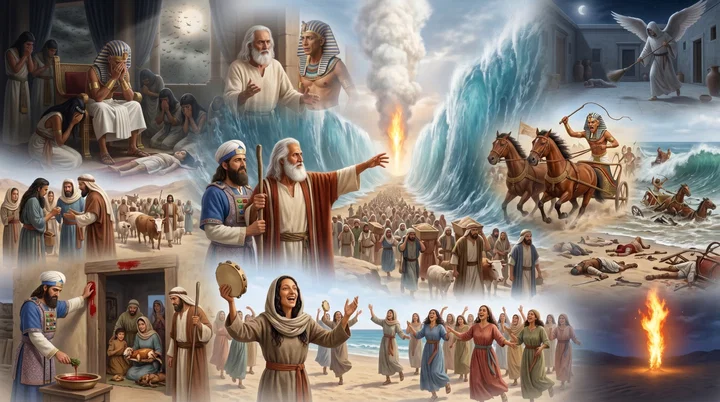
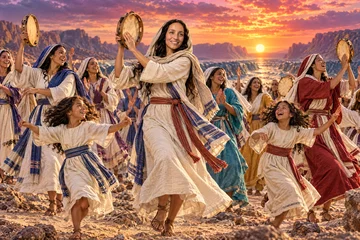
And Miriam answered them, Sing ye to the LORD, for he hath triumphed gloriously; the horse and his rider hath he thrown into the sea.
Translations
And Miriam answered them, Sing you to the LORD, for he has triumphed gloriously; the horse and his rider has he thrown into the sea.
King James Version, Webster Bible
And Miriam answered them, Sing ye to the LORD, for he hath triumphed gloriously; the horse and his rider hath he thrown into the sea.
And Miriam answered them,
Sing ye to the Lord, for he hath triumphed gloriously;
The horse and his rider hath he thrown into the sea.And Miriam answered them, Sing ye to the LORD, for he hath triumphed gloriously; The horse and his rider hath he thrown into the sea.
And Miriam answered them,
Sing ye to Jehovah, for he hath triumphed gloriously;
The horse and his rider hath he thrown into the sea.and Miriam answereth to them: — 'Sing ye to Jehovah, For Triumphing He hath triumphed; The horse and its rider He hath thrown into the sea!'
And Miriam answered them, Sing to Jehovah, for he is highly exalted: The horse and his rider hath he thrown into the sea.
And Miriam responded to the men, Sing to Yahweh for he is exalted—exalted, The horse and his rider, hath he cast into the sea.
Berean Standard Bible, Majority Standard Bible
And Miriam sang back to them:
“ Sing to the LORD,
for He is highly exalted;
the horse and rider
He has thrown into the sea.”Miriam answered them,
“ Sing to the LORD, for he has triumphed gloriously.
He has thrown the horse and his rider into the sea.”And Miriam, answering, said, Make a song to the Lord, for he is lifted up in glory; the horse and the horseman he has sent into the sea.
And Miriam answered the men, Sing yee vnto the Lord: for he hath triumphed gloriously: the horse and his rider hath hee ouerthrowen in the Sea.
Douay-Rheims (Challoner revision)
And she began the song to them, saying: Let us sing to the Lord, for he is gloriously magnified, the horse and his rider he hath thrown into the sea.
Pictures
Cross-references 20 of 26
- Exodus 14:26-31
And the LORD said unto Moses, Stretch out thine hand over the sea, that the waters may come again upon the Egyptians, upon their chariots, and upon their horsemen.
The sea overwhelms Pharaoh’s army, and Israel’s deliverance prompts a song of triumph.
- Revelation 15:3
And they sing the song of Moses the servant of God, and the song of the Lamb, saying, Great and marvellous are thy works, Lord God Almighty; just and true are thy ways, thou King of saints.
The victors sing the song of Moses and the Lamb after deliverance.
- Judges 5:1
Then sang Deborah and Barak the son of Abinoam on that day, saying,
Deborah and Barak sing praise after the Lord’s victory.
- Exodus 15:1
Then sang Moses and the children of Israel this song unto the LORD, and spake, saying, I will sing unto the LORD, for he hath triumphed gloriously: the horse and his rider hath he thrown into the sea.
Miriam’s song echoes Israel’s praise for the Lord’s victory at the Red Sea.
- Exodus 14:30-31
Thus the LORD saved Israel that day out of the hand of the Egyptians; and Israel saw the Egyptians dead upon the sea shore.
Israel’s deliverance there prompted the song of praise.
- Revelation 14:3
And they sung as it were a new song before the throne, and before the four beasts, and the elders: and no man could learn that song but the hundred and forty and four thousand, which were redeemed from the earth.
The redeemed company sings a song of victory and deliverance.
- Exodus 14:15
And the LORD said unto Moses, Wherefore criest thou unto me? speak unto the children of Israel, that they go forward:
Israel obeyed the command to go forward before singing of victory.
- Exodus 2:4
And his sister stood afar off, to wit what would be done to him.
Miriam watches over Moses as part of God's work.
- Psalms 106:12-13
Then believed they his words; they sang his praise.
They sang praise after the deliverance, then soon forgot God's works.
- Exodus 14:21-22
And Moses stretched out his hand over the sea; and the LORD caused the sea to go back by a strong east wind all that night, and made the sea dry land, and the waters were divided.
The song celebrates the divided sea and Israel’s passage through it.
- Exodus 15:6
Thy right hand, O LORD, is become glorious in power: thy right hand, O LORD, hath dashed in pieces the enemy.
Both verses praise the LORD’s victory at the Red Sea.
- Micah 6:4
For I brought thee up out of the land of Egypt, and redeemed thee out of the house of servants; and I sent before thee Moses, Aaron, and Miriam.
Names Miriam among those God sent to lead Israel.
- Exodus 15:11
Who is like unto thee, O LORD, among the gods? who is like thee, glorious in holiness, fearful in praises, doing wonders?
Both verses celebrate the LORD’s triumph at the Red Sea.
- Exodus 15:10
Thou didst blow with thy wind, the sea covered them: they sank as lead in the mighty waters.
destruction the song celebrates
- 1 Corinthians 10:11
Now all these things happened unto them for ensamples: and they are written for our admonition, upon whom the ends of the world are come.
The Red Sea events serve as types recorded for later believers’ instruction.
- Exodus 14:13
And Moses said unto the people, Fear ye not, stand still, and see the salvation of the LORD, which he will shew to you to day: for the Egyptians whom ye have seen to day, ye shall see them again no more for ever.
shows Moses believed before deliverance
- Joshua 3:14-17
And it came to pass, when the people removed from their tents, to pass over Jordan, and the priests bearing the ark of the covenant before the people;
Israel crossed the Jordan by faith, as they had crossed the Red Sea.
- Revelation 15:2
And I saw as it were a sea of glass mingled with fire: and them that had gotten the victory over the beast, and over his image, and over his mark, and over the number of his name, stand on the sea of glass, having the harps of God.
Victors stand by a sea, recalling Israel’s triumph over Pharaoh’s army.
- Exodus 14:11
And they said unto Moses, Because there were no graves in Egypt, hast thou taken us away to die in the wilderness? wherefore hast thou dealt thus with us, to carry us forth out of Egypt?
The Israelites complain before God opens the sea and delivers them.
- Revelation 19:6
And I heard as it were the voice of a great multitude, and as the voice of many waters, and as the voice of mighty thunderings, saying, Alleluia: for the Lord God omnipotent reigneth.
The redeemed praise God’s reign after his victory.
Commentary
Each commentary is drawn from primary sources: the writings of Ellen G. White and Adventist pioneers and periodicals. Each commentary is separate. Its own words are not a quotation; follow the references to read the source passages.
Ellen G. White
14 sources
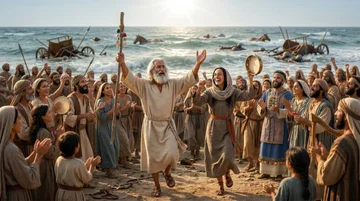
Miriam the prophetess led the women of Israel with timbrels and dance on the shore of the Red Sea, with Moses joining her in calling the whole host to sing praise to the Lord for His glorious victory in throwing horse and rider into the sea.ED 39.1–2Ms 23, 1886, par. 19–20Ms 21, 1897, par. 12–15ST Apr 1, 1880SG3 236.1–238.1 God had opened a path through the sea for Israel to cross safely on dry ground while shielding them from Pharaoh's pursuing army, then overwhelmed that army in the waters with His angelic host fighting for Israel.Lt 49a, 1896, par. 2–4Ms 21, 1897, par. 12–15ST Feb 27, 1896 It is the earliest recorded human song, an inspired outburst of grateful thanksgiving in which human hearts in sympathy with heaven respond to God's goodness, showing that praise belongs to the atmosphere of heaven and breaks out when heaven touches earth.ST Dec 21, 1915ST Apr 1, 1880SG3 236.1–238.1 The song was repeated along the wilderness journey to cheer the people and strengthen their faith, and was commanded to be preserved so that God's power and deliverance would be taught to children and kept in remembrance in worship for generations.ED 39.1–2Ms 23, 1886, par. 19–20ST Nov 2, 1915
Red Sea Deliverance Celebrated
The song was sung on the shore of the Red Sea immediately after God delivered Israel from Egypt.Lt 49a, 1896, par. 2–4Ms 21, 1897, par. 12–15ST Feb 27, 1896Ms 21, 1897, par. 16–17 He had opened a path through the sea so that Israel crossed safely on dry ground, while shielding them from Pharaoh's pursuing army.Ms 21, 1897, par. 12–15ST Feb 27, 1896Ms 21, 1897, par. 16–17 Then the sea overwhelmed and destroyed that army, drowning Pharaoh's forces after Israel was safe.Lt 49a, 1896, par. 2–4Ms 21, 1897, par. 12–15ST Feb 27, 1896 In that deliverance God's angelic host fought for Israel.Ms 21, 1897, par. 16–17 The voices of the people rang out in triumphant praise for the Lord's victory.Lt 49a, 1896, par. 2–4
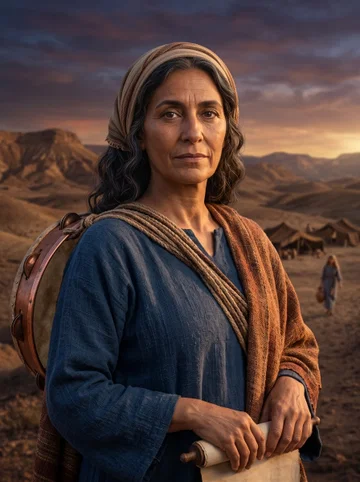
Miriam, the sister of Moses and a prophetess, led the women of Israel in that song.Ms 23, 1886, par. 19–20ST Apr 1, 1880SG3 236.1–238.11SP 210.1–212.1PP 410.1–3 She led with music and timbrels and dance, in an inspired outburst of praise for God's deliverance and triumph over Egypt.ST Apr 1, 1880SG3 236.1–238.11SP 210.1–212.1 Moses joined in the song with timbrels, calling the whole host to sing to the Lord.PP 410.1–3Ms 21, 1897, par. 16–17 Her call summoned all to sing to the Lord because He had won a glorious victory.ED 39.1–2Ms 23, 1886, par. 19–20SG3 236.1–238.11SP 210.1–212.1PP 410.1–3 That victory was specifically that the horse and its rider had been thrown into the sea, cast in by God in His triumph over Egypt.SG3 236.1–238.11SP 210.1–212.1PP 410.1–3
The song celebrated God's glorious triumph and became part of Israel's remembered experience.Ms 23, 1886, par. 19–20 It marks the joyful beginning of the wilderness journey.PP 410.1–3 That joyful beginning stands in contrast with Miriam's later death after lifelong wandering.PP 410.1–3
Song of Praise Remembered
This song is the earliest recorded from human lips, a glorious outburst of thanksgiving by the hosts of Israel at the Red Sea.ST Dec 21, 1915 It shows human hearts in sympathy with heaven responding to God's goodness in notes of praise, for the melody of praise is the atmosphere of heaven, and when heaven comes in touch with earth there is music and song.ST Dec 21, 1915 In that moment Miriam, Moses' sister and a prophetess, led the women in music with an inspired song of grateful praise for God's deliverance and triumph over Egypt after He destroyed the Egyptian host and army in the sea.ST Apr 1, 1880SG3 236.1–238.11SP 210.1–212.1 Her call summoned the people to sing to the Lord because He had triumphed gloriously, throwing the horse and its rider into the sea, thereby linking a great event of human history with song.ST Dec 21, 1915SG3 236.1–238.11SP 210.1–212.1
After the deliverance from Pharaoh's army, Israel sang praise to Jehovah proclaiming that He had triumphed gloriously.ED 39.1–2 That song of triumph by the whole host was repeated during the wilderness journey, cheering the people and strengthening their faith while fixing its precious lessons in their minds.ED 39.1–2ST Nov 2, 1915 Miriam's leading of the women in celebrating God's glorious triumph became part of Israel's remembered experience, sung in praise and thanksgiving during generations of worship.Ms 23, 1886, par. 19–20 Moses was commanded to preserve the song of Israel's deliverance so the people could teach the history of God's dealings to their children, keeping His power and deliverance in remembrance across generations.Lt 33, 1890, par. 7–9
The praise after the Red Sea deliverance, celebrating God's saving act and triumph over the Egyptians, stands as a contrast with Israel's later failure to show comparable gratitude for God's provision at Elim.Lt 49a, 1896, par. 5–6
Sources
Pioneers and periodicals
66 sources
Miriam's refrain belongs to the triumphant song sung on the farther shore after Israel passed through the Red Sea on dry ground, celebrating the Lord's glorious victory in throwing Pharaoh's pursuing horse and rider into the sea and freeing His people by His own power rather than human weapons.ST Jan 25, 1910RH Jan 20, 1916ST Jul 13, 1915RH Feb 10, 1859 As prophetess and first sweet singer of Israel she answered the host with a joyful call to sing to the Lord, leading the women in responsive song with timbrels after safety was reached.ST Apr 1, 1880ST Jul 13, 1915ST Apr 18, 1911RH Jun 29, 1911RH Mar 5, 1914 It stands as the earliest recorded outburst of human thanksgiving in sympathy with heaven, in which the whole host together praised God for His mighty works, justice, faithfulness and love, recognizing deliverance came from Him and not from themselves.ST Dec 21, 1915ST Mar 10, 1881RH Oct 19, 1916ST Aug 31, 1888RH Oct 14, 1909 The song expresses the experience of Moses, who believed God on both sides of the sea, while the multitude only joined after deliverance came, so their praise was sight and not faith, and could have been sung in prospect before the waters opened as surely as in retrospect.RH Apr 20, 1911ST Jul 21, 1898ST Jun 23, 1898RH Nov 18, 1862ST Nov 29, 1905 That triumph over the strongest earthly power foreshadows the final deliverance from this dark Egypt, when the redeemed sing the still greater song of Moses and the Lamb, joining deliverance from earthly foes to Christ's absolute victory over sin which Israel saved from Egypt did not yet know.ST Aug 22, 1911ST Jun 23, 1898STST Nov 8, 1899ST Jun 23, 1898
Red Sea Victory Celebrated
Exodus 15:21 is part of the triumphant song of Moses sung after Israel crossed the Red Sea, celebrating the Lord's glorious victory over Egypt and the destruction of the Egyptian host in the sea.ST Jan 25, 1910ST Feb 11, 1889ST Feb 4, 1913RH May 8, 1916 It is a song of deliverance from oppression, in which Miriam's words call for singing to the Lord because He has triumphed and thrown the horse and its rider into the sea.ST Feb 11, 1889RH May 8, 1916 The casting of horse and rider into the sea expresses the defeat of the enemies from whom Israel was delivered, when the Lord triumphed over the Egyptians after Israel had reached safety.ST Jul 13, 1915RH Feb 10, 1859 In that overthrow Israel's captives were freed, and the victory belonged to God rather than to human weapons.
The song was sung in triumph on the farther shore after passing through on dry ground, when Pharaoh and his army had been lost in the water.RH Jan 20, 1916ST Jan 30, 1912RH Dec 31, 1861 It closes the story that began with Israel in oppression and bondage with the whole power of Egypt set against them, following the first Passover and God's leading by fire and by cloud.RH Jan 20, 1916ST Jan 30, 1912 The mighty work it celebrates was a fresh display of creative power, greater than any work ever done in saving a nation.ST Jan 30, 1912 In it liquid water that would ordinarily bring destruction became solid walls of protection on either side, so that Israel passed through as on dry land on the way through the wilderness to Jericho.ST Jan 30, 1912RH Sep 8, 1904 That work of faith in building a solid out of liquid stands as the counterpart to faith making the solid wall of Jericho fall down flat like liquid.RH Sep 8, 1904 The deliverance at the Red Sea came before the journey to the wilderness of Sin, where the people kept the Sabbath before arriving at Sinai.RH Oct 21, 1851
Miriam and Women Worshipping
Miriam answered the host with a joyful refrain calling them to sing to the Lord for His glorious triumph in throwing the horse and his rider into the sea, leading the women in responsive song after Israel reached safety on the victorious passage through the Red Sea.ST Jul 13, 1915ST Apr 18, 1911RH Jun 29, 1911RH Dec 17, 1901 She led the great chorus of rejoicing with timbrels and voices in a public chorus of thanksgiving, joining Moses in praise for the overthrow of the Egyptian host and the deliverance from bondage.RH Jun 29, 1911RH Dec 17, 1901RH Oct 19, 1916ST Jan 30, 1896 Her song expresses the fitting joy and thanksgiving of those delivered from danger by God.RH Oct 19, 1916
Miriam, the sister of Moses, acted as a prophetess leading the women in music after God destroyed the Egyptian host, and their song was inspired praise for God's deliverance and triumph over Egypt.ST Apr 1, 1880RH Mar 5, 1914 She sounded her timbrel in song to the Lord as the first sweet singer of Israel, whose music was later followed by the wailing of the congregation as they carried her to her tomb.ST Jul 14, 1914 Her public leading in song shows the honor God bestowed on women and proves that restrictions on women's speech do not prohibit their taking part in the worship of God.RH Aug 8, 1871 Miriam and the women singing publicly to the Lord after His victory over the Egyptians is an example of women singing publicly for God, of women whom God used and blessed, showing that women may speak publicly in praise and service to God.ST Dec 8, 1914STST Jun 29, 1904
Prophesying in the verse means speaking forth God's message and not only foretelling future events, for Miriam spoke forth the message of the Lord to Israel as a preacher and religious teacher leading the people to sing for His glorious triumph.ST Apr 15, 1903 It proves God uses women as well as men in giving His messages to the people, with woman's place in the work of God always recognized, and that in Old Testament times women spoke as moved by the Spirit for God.ST Apr 15, 1903ST Jun 15, 1915 Prophesying therefore includes public teaching and bearing testimony to the Lord's work, and God does not design male or female to repress testimony and song and praise and instruction when needed.ST Jun 15, 1915 The example is of women bearing testimony for Christ, helping in His work, and proclaiming truth in a womanly, Christian way, and it does not support assuming authority to teach and rule.ST Mar 5, 1896
Miriam leading the song of the exultant host in public triumph after deliverance is the rare openly celebrated example of a woman's faith.RH Jan 12, 1860 It stands beside the thousand obscure believers who through ignominy, disappointment, delay, and sword-piercing sorrow still magnify the Lord and wait for promised redemption and salvation beside the cross and at the door of the sepulcher.RH Jan 12, 1860
Worship Through Sacred Song
This is the earliest song recorded from human lips, a glorious outburst of thanksgiving by the hosts of Israel at the Red Sea.ST Dec 21, 1915 In it human hearts in sympathy with heaven respond to God's goodness in notes of praise.ST Dec 21, 1915 The melody of praise is the atmosphere of heaven, and when heaven comes in touch with earth there is music and song.ST Dec 21, 1915 The call to sing to the Lord because He has triumphed gloriously links a great event of human history with song.ST Dec 21, 1915
As a triumph poem and magnificent ode it shows the power and beauty of the Bible in musical language, flowing rhetoric, and imagery.RH Dec 7, 1916 It is the Song of the Red Sea sung to celebrate the victory over Pharaoh's pursuing forces. It is an example of an Israelite song composed to memorialize a great event, God's triumph over Egypt at the Red Sea, and it gave expression to the life of God's chosen people.RH Apr 22, 1915
Men and women joined in praising God for His mighty deliverance and for His justice, faithfulness, and love.ST Mar 10, 1881 Israel praised the Lord for triumphing over the Egyptians at the Red Sea, crediting God with deliverance and remembering that the same God had led them out of Egypt with great power.ST Aug 31, 1888 The song recounts God's acts for His people while recognizing that success and prosperity came from God and not from human effort.RH Oct 14, 1909 Their music praised the Lord for His mighty works and arose from the Spirit-filled joy of salvation.RH Apr 24, 1900 It expresses the fitting joy and thanksgiving of those delivered from danger by God, as Miriam joined Moses in praise celebrating that the Lord had triumphed over Pharaoh's forces and cast horse and rider into the sea.RH Oct 19, 1916
The song belonged to the whole host of Israel together, not to Moses or Miriam alone.RH Jan 9, 1908 It was sung aloud with joyful noise so loudly that desert and sea rang and the mountains re-echoed with praise, in a public chorus accompanied by timbrels and voices.RH Jan 9, 1908ST Jan 30, 1896 It was repeated often on the wilderness journey to fix precious lessons in their minds, to cheer hearts, and to kindle the faith of the travelers.ST Nov 2, 1915RH Jan 9, 1908 That pattern bids God's children today to gladden their pilgrim life and cheer one another on the way by the music of sacred song.RH Jan 9, 1908
Miriam's leading of sacred song with the timbrel is an early example of the prominence placed upon singing in the worship of God.ST Jun 18, 1885 That simple timbrel song was later enlarged into the full musical worship at Jerusalem with harp, instrument of ten strings, high-sounding cymbals, organ, and thousands of chorus voices calling on everything that hath breath to praise the Lord.ST Jun 18, 1885 That same worship by song grew still wider and all-comprehending under the Christian dispensation.ST Jun 18, 1885 Sacred songs of deliverance like this cheered the way of the children of Israel and bid the children of God today to lighten their pilgrim life by song.RH Sep 3, 1908
Such songs have power to transform lives, so the principles of music are to be studied that they may be sung with harmony approaching that of the heavenly choirs.RH Sep 3, 1908 Singing them is as much an act of divine service and worship as prayer, and many such songs are prayers.RH Sep 3, 1908 Sung with the spirit and the understanding they have unrealized power, and when a child is taught this he thinks more of the meaning of the words and becomes more susceptible to their power.RH Sep 3, 1908 As the echo of the angels' song is awakened in earthly homes, hearts are drawn closer to the heavenly singers, for heaven's communion begins on earth and its keynote of praise is learned here.RH Sep 3, 1908 The praise included dancing as one of the ways God's people praised Him in time of victory rather than a pleasure sought for itself, the dancing then did not mix the sexes together as modern dancing does, and the verse describes the act without commending dancing itself.ST Feb 18, 1886
Victory Through Present Faith
The song is called the song of Moses because it expresses his experience and faith rather than the experience of the people.ST Jul 21, 1898ST Jun 23, 1898RH Nov 18, 1862 He believed God before the Red Sea opened and on both sides of the sea, so that he could declare the salvation of the Lord to murmuring Israel with the hosts of Egypt behind them and could receive the command to go forward, while the great mass were unbelieving and only joined after the trial was over and deliverance had come, which was sight and not faith.ST Jul 21, 1898ST Jun 23, 1898 Because it was the genuine expression of his faith it bears his name as the servant of God, and it is the privilege of believers to make the same song their own by a living faith that believes before Red Sea trials as well as sings after danger is past.ST Jul 21, 1898ST Jun 23, 1898 Those who learn to sing this triumph over earthly foes on the hither side of the conflict, when to all earthly appearance there is no hope, will sing it on the thither side in eternal deliverance.ST Jun 23, 1898
The triumph was already sure, so the song that followed deliverance could just as well have been sung by faith on the other side before the waters gave any sign of opening.RH Apr 20, 1911ST Nov 29, 1905ST Nov 29, 1905 The victory of faith is just as sure in prospect as in retrospect, and the thanksgiving of faith is therefore not confined to looking back over the past but looks forward to far greater things involved in the unfailing promises of God.ST Nov 29, 1905ST Nov 29, 1905 It shows forth loving-kindness every morning and faithfulness every evening, and the wilderness experiences were meant to teach Israel to claim victory by faith before it became their experience.RH Apr 20, 1911ST Nov 29, 1905ST Nov 29, 1905 Before the crossing their weak faith showed itself in doubt, murmuring, and faultfinding, yet Moses acted in faith and Israel was delivered.RH Apr 20, 1911
God opened the most difficult and impassable way when His people could not ford the sea and had no other escape, and when they trusted Jehovah and moved forward in obedience their difficulties vanished and their enemies suffered defeat.RH Apr 20, 1911RH Feb 24, 1916 Had Israel held onto that faith and continued singing through later obstacles, their journey to Canaan would have been a brief triumphal march, and losing that faith and song cost them dearly.ST Sep 17, 1894 The praise was short-lived, for within three days they were murmuring because the water was bitter, forgetting that He who could divide the sea could provide water to drink.ST Feb 25, 1886RH Apr 3, 1879 The same murmuring disposition and lack of faith was repeated when food failed and again at Rephidim when they were ready to stone Moses, and later in weeping and murmuring against Moses and Aaron at the report of the spies, with the wish that they had died in Egypt or in the wilderness, the fear that the Lord had brought them to fall by the sword and leave wives and little ones a prey, and the desire to return to Egypt.ST Aug 13, 1902 Even though they had distrusted God in apparent danger and reproached Moses for taking them to die in the wilderness for lack of graves in Egypt, God still delivered them and they sang, but they soon forgot His works and tempted Him.ST Feb 25, 1886RH Apr 3, 1879
Though they joined in that song of glorious triumph, that generation later died in the wilderness because of unbelief, except Caleb and Joshua.RH May 7, 1872 The quick turn from singing to complaining warns against the same unbelief when present discouragements tempt to turn back from gaining the promised land. Great danger in the path of God's people, when turned aside by united prayer, is followed by great joy, and special occasions of joy follow great occasions of trouble because trouble leads to repentance.RH Jan 21, 1875 The rejoicing was full in the hour of success, but the people had yet to show whether they could keep that joy through trial and difficulty. That joyful, praising spirit in God's service prevents reaction and backsliding, yet Israel soon became restive, fretful, and homesick and murmured at the dreary desert prospect, the lack of water, and the poor prospect for supplies, when they should have kept on praising God and praying for help.RH Jan 21, 1875
Believers must keep that joy through trial to show its reality, for conditions make no difference with God.RH Feb 24, 1916RH Jan 21, 1875 He can overrule in all conditions and bring victory to those who will be loyal to Him, to His own honor and glory.RH Feb 24, 1916 Faithfulness in trial gives Him the chance to work, and the greater the trial or affliction the greater the opportunity for God to glorify His holy name and for His people to gain wonderful victory, bringing hope and courage to all who are afflicted.RH Feb 24, 1916
Type of Last Deliverance
The going out from Egypt is a type of the deliverance of God's people from the dark Egypt of this earth, and the song of triumph raised after rescue from the strongest earthly power foreshadows the final deliverance when the redeemed sing the still greater song of Moses and the Lamb.STST Nov 8, 1899 That same song is truly sung by the children of God in the last generation, who are menaced by all the powers of earth as Israel was menaced by Egypt, and who receive glorious and complete deliverance from all persecuting, rebellious governments and from earthly enslavement.ST Aug 22, 1911 The song of Moses alone means deliverance from earthly foes and not victory over sin, for Israel saved from Egypt were still slaves of sin and the great mass died in the wilderness because of bondage to sin.ST Aug 22, 1911 The last victorious company therefore sing not only the song of Moses but the song of the Lamb, which is absolute and complete victory over sin won by Jesus Christ, triumphant through God over both earthly powers and the power of sin.ST Aug 22, 1911ST Jun 23, 1898
This combined triumph makes a new song no other company could learn, because no other company ever met the whole world united with all evil power against soul and body and came off victorious from both.ST Aug 22, 1911 The song of Moses was the song of his own experience and deliverance, and therefore explains the new song of the 144,000 as the song of their own experience and deliverance from the beast's power, which no other company can join or learn because no other company will have an experience like theirs.RH Nov 18, 1862RH Dec 21, 1869 It is the pattern for the final deliverance of God's loyal people after overcoming the beast and its image, mark, and name, when they sing the song of Moses and the Lamb after God delivers them from the Egyptians at the Red Sea.RH Dec 21, 1869 In that pattern Egypt represents the beast and Moses represents Christ who delivers His people, and the casting of horse and rider into the sea expresses the defeat of the enemies from whom Israel was delivered.RH Feb 10, 1859
That triumph over Pharaoh, won by God rather than by human weapons in the freeing of Israel's captives, points onward to the final defeat of sin, death, and hell and the restoration of creation. The chapter stands among prophetic views of God's sanctuary to be fully realized when the Lord reigns forever and Israel is planted permanently.RH Feb 3, 1853 The Song of Moses looks prophetically to the joyful scenes of Eden Zion.RH Sep 2, 1852 The song of exultation over the enemy sunk like lead in the mighty waters after the destruction of Egypt and its chivalry is like the song of Israel or the church when Jehovah of hosts reigns in Mount Zion and in Jerusalem when the sun is ashamed and the moon confounded.RH Apr 7, 1863
It comes before the festal song of resurrection joy and glory in the presence of God and King.RH Apr 7, 1863 The song will be repeated with the song of the Lamb, celebrating triumph over temporal and spiritual foes, because God defeated Israel's earthly foes by throwing the horse and its rider into the sea.ST Jan 25, 1910 It is a song of triumph by the power of God over earthly foes, sung because of deliverance and because Moses believed God not only after deliverance but before, so that he could declare the salvation of the Lord to murmuring Israel before the sea with the hosts of Egypt behind and receive God's command to go forward, singing the triumph on both sides of the sea.ST Jun 23, 1898 The last generation must learn to sing this same song of triumph over all earthly foes on the hither side of the great conflict when to all earthly appearance there is no hope, and those who sing it in the strength of God on the hither side will sing it on the thither side in eternal deliverance.ST Jun 23, 1898
Courage for Today's Pilgrims
When God's people are hemmed in by sea and mountains and foes, the way opens as they obey the command to go forward.RH Feb 25, 1875 The dark and forbidding sea divides as they approach it, and the song of victory is sung on the other shore after passing through.RH Feb 25, 1875 The same order holds now: when God's people rise up and go forward in obedience, the sea before them will divide, and they will soon sing the song of victory on the other shore.RH Feb 25, 1875
The casting of horse and rider into the sea shows that impressive mounted strength is not what wins the decisive battle.ST Mar 13, 1879 Defense of the faith and victory over sin do not come by such imposing force.ST Mar 13, 1879 They require humble, steady Christian living.ST Mar 13, 1879
Miriam's inspired song of holy triumph, sung with shaken timbrel as she led the women, is the song for times of great and unexpected blessing.ST Nov 5, 1912 It belongs to the hour when a soul long prayed for turns to the Lord and when great overpowering fear is removed.ST Nov 5, 1912 It belongs also when angels stand between a person and terrible moral and physical danger.ST Nov 5, 1912 It is the song when agony of temptation and wrestling with Satan in the wilderness ends, with angels coming and happiness filling the heart.ST Nov 5, 1912
In the better world the redeemed will listen to Miriam's voice leading the Hebrew women in the song of deliverance on the banks of the Red Sea.RH Sep 5, 1907 With her will be heard the voice of King David the sweet singer of Israel and the grand chorus of ransomed hosts mingling with the heavenly orchestra.RH Sep 5, 1907 Angels will sweep the celestial harps in that music.RH Sep 5, 1907 That joy will be far greater than earthly music and pleasures missed in this life.RH Sep 5, 1907
Sources