Exodus 15:20
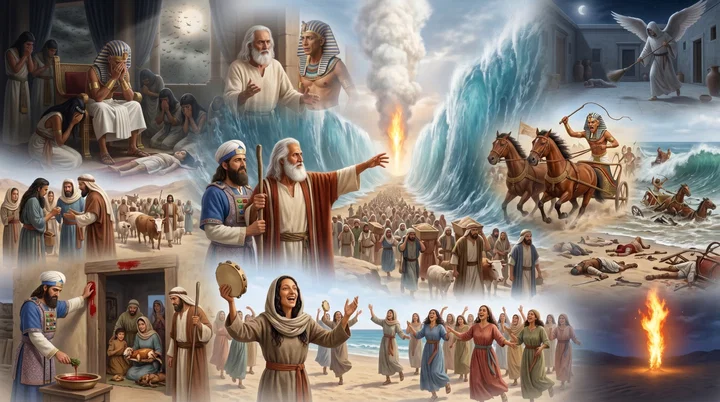
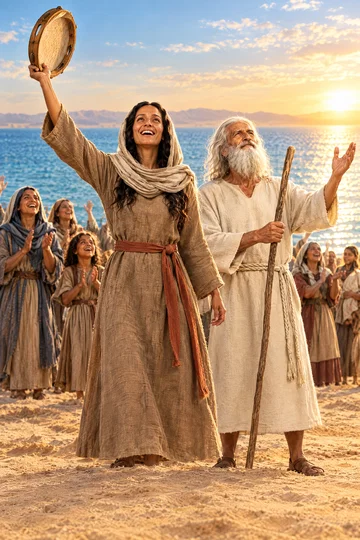
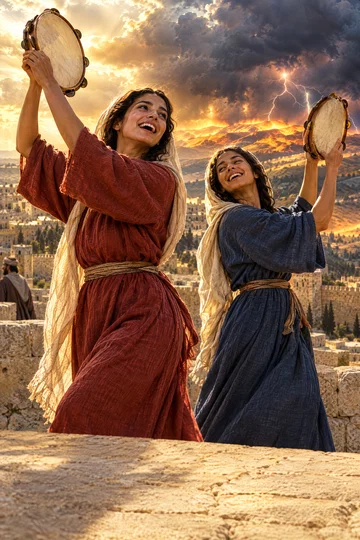
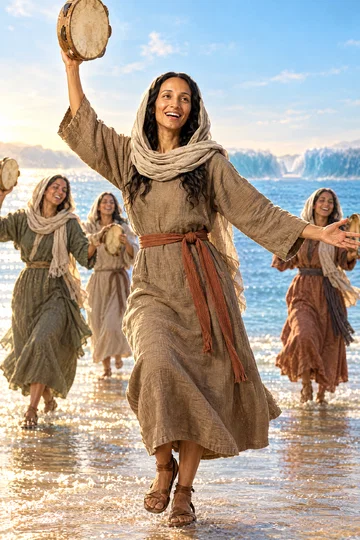
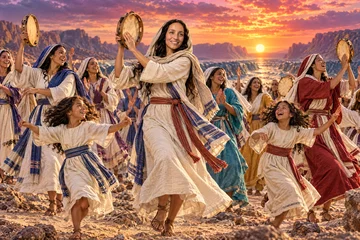
And Miriam the prophetess, the sister of Aaron, took a timbrel in her hand; and all the women went out after her with timbrels and with dances.
Translations
And Miriam the prophetess, the sister of Aaron, took a tambourine in her hand; and all the women went out after her with tambourines and with dances.
King James Version, KJV Cambridge Paragraph Bible, Revised Version, American Standard Version
And Miriam the prophetess, the sister of Aaron, took a timbrel in her hand; and all the women went out after her with timbrels and with dances.
And Miriam the prophetess, the sister of Aaron, took a timbrel in her hand; and all the women went out after her, with timbrels, and with dances.
And Miriam the inspired one, sister of Aaron, taketh the timbrel in her hand, and all the women go out after her, with timbrels and with choruses;
And Miriam the prophetess, the sister of Aaron, took the tambour in her hand, and all the women went out after her with tambours and with dances.
Then took Miriam the prophetess, sister of Aaron the timbrel in her hand,—and all the women came forth after her with timbrels and dances,
Berean Standard Bible, Majority Standard Bible
Then Miriam the prophetess, Aaron’s sister, took a tambourine in her hand, and all the women followed her with tambourines and dancing.
Miriam the prophetess, the sister of Aaron, took a tambourine in her hand; and all the women went out after her with tambourines and with dances.
And Miriam, the woman prophet, the sister of Aaron, took an instrument of music in her hand; and all the women went after her with music and dances.
And Miriam the prophetesse, sister of Aaron tooke a timbrell in her hande, and all the women came out after her with timbrels and daunces.
Douay-Rheims (Challoner revision)
So Mary the prophetess, the sister of Aaron, took a timbrel in her hand: and all the women went forth after her with timbrels and with dances:
Pictures
Cross-references 20 of 28
- Revelation 15:3
And they sing the song of Moses the servant of God, and the song of the Lamb, saying, Great and marvellous are thy works, Lord God Almighty; just and true are thy ways, thou King of saints.
The redeemed sing the song of Moses after victory, echoing Israel’s Red Sea celebration.
- Exodus 14:30-31
Thus the LORD saved Israel that day out of the hand of the Egyptians; and Israel saw the Egyptians dead upon the sea shore.
Israel’s deliverance at the sea prompts the song of triumph.
- Luke 2:36-38
And there was one Anna, a prophetess, the daughter of Phanuel, of the tribe of Aser: she was of a great age, and had lived with an husband seven years from her virginity;
Anna, like Miriam, is a woman identified as a prophetess who speaks publicly.
- Acts 21:9
And the same man had four daughters, virgins, which did prophesy.
Both describe women prophesying God's message.
- Judges 4:4
And Deborah, a prophetess, the wife of Lapidoth, she judged Israel at that time.
Deborah is listed with Miriam as a prophetess.
- Acts 2:17-18
And it shall come to pass in the last days, saith God, I will pour out of my Spirit upon all flesh: and your sons and your daughters shall prophesy, and your young men shall see visions, and your old men shall dream dreams:
Both show women prophesying God's message.
- Judges 5:1
Then sang Deborah and Barak the son of Abinoam on that day, saying,
Deborah and Barak sing in praise after Israel’s deliverance, paralleling Miriam’s song.
- Exodus 14:21-22
And Moses stretched out his hand over the sea; and the LORD caused the sea to go back by a strong east wind all that night, and made the sea dry land, and the waters were divided.
divided sea that made the victory song possible
- 2 Kings 22:14
So Hilkiah the priest, and Ahikam, and Achbor, and Shaphan, and Asahiah, went unto Huldah the prophetess, the wife of Shallum the son of Tikvah, the son of Harhas, keeper of the wardrobe; (now she dwelt in Jerusalem in the college;) and they communed with her.
Huldah is identified as a prophetess, as Miriam is.
- Exodus 15:1
Then sang Moses and the children of Israel this song unto the LORD, and spake, saying, I will sing unto the LORD, for he hath triumphed gloriously: the horse and his rider hath he thrown into the sea.
Miriam leads the women in celebrating Israel’s deliverance at the Red Sea.
- Numbers 20:1
Then came the children of Israel, even the whole congregation, into the desert of Zin in the first month: and the people abode in Kadesh; and Miriam died there, and was buried there.
Records Miriam’s death at Kadesh, completing her story from song to burial.
- Exodus 2:4
And his sister stood afar off, to wit what would be done to him.
Miriam watched over the infant Moses by the Nile.
- Exodus 14:15
And the LORD said unto Moses, Wherefore criest thou unto me? speak unto the children of Israel, that they go forward:
The command to go forward led to the deliverance celebrated in song.
- Micah 6:4
For I brought thee up out of the land of Egypt, and redeemed thee out of the house of servants; and I sent before thee Moses, Aaron, and Miriam.
Names Miriam among those God sent before Israel.
- Numbers 12:1-15
And Miriam and Aaron spake against Moses because of the Ethiopian woman whom he had married: for he had married an Ethiopian woman.
Recounts Miriam’s later conflict with Moses at Hazeroth.
- Psalms 106:12
Then believed they his words; they sang his praise.
Israel’s deliverance at the sea is followed by belief and song.
- Psalms 150:3-6
Praise him with the sound of the trumpet: praise him with the psaltery and harp.
later expansion of Miriam's timbrel worship
- Hebrews 11:29
By faith they passed through the Red sea as by dry land: which the Egyptians assaying to do were drowned.
Israel passes through the Red Sea by faith.
- Exodus 14:28
And the waters returned, and covered the chariots, and the horsemen, and all the host of Pharaoh that came into the sea after them; there remained not so much as one of them.
The song celebrates Pharaoh and his host being lost.
- Exodus 15:10
Thou didst blow with thy wind, the sea covered them: they sank as lead in the mighty waters.
The song celebrates the Egyptians sinking like lead in the sea.
Commentary
Each commentary is drawn from primary sources: the writings of Ellen G. White and Adventist pioneers and periodicals. Each commentary is separate. Its own words are not a quotation; follow the references to read the source passages.
Ellen G. White
12 sources
God opened a path through the Red Sea to deliver Israel while destroying Pharaoh's army in the waters, and Israel answered with an inspired song of triumph, praise and gratitude ringing out over the sea.Lt 49a, 1896, par. 2–4Ms 21, 1897, par. 12–15ST Apr 1, 1880 Miriam the prophetess, the sister of Aaron and Moses, used her gifts of poetry and music to lead out all the women with timbrels and dances while the whole host, with Moses, joined in united praise.ED 162.1Ms 21, 1897, par. 12–15ST Nov 2, 1915ST Apr 1, 1880SG3 236.1–238.1 The deliverance was formed into song to fix its precious lessons in the minds of the people through the wilderness journey, so they would remember God's power and care and teach them to their children.ST Nov 2, 1915Lt 33, 1890, par. 7–9 Sung to instrumental music with united voices as the people kept step together, the song lifted thoughts from trial, soothed the restless spirit, implanted truth in the memory, strengthened faith, taught order and unity, and brought the people closer to God and to one another.ST Nov 2, 1915
Deliverance Celebrated in Song
God opened a path through the Red Sea and delivered Israel from the Egyptians and Pharaoh's army, destroying and drowning the Egyptian forces in the waters.Lt 49a, 1896, par. 2–4ST Apr 1, 1880SG3 236.1–238.11SP 210.1–212.1ST Feb 27, 1896 Israel responded with an inspired song of triumph, praise and gratitude, with voices ringing out over the waters, as recorded in Exodus 15:1-21.Lt 49a, 1896, par. 2–4Ms 21, 1897, par. 12–15SG3 236.1–238.11SP 210.1–212.1ST Feb 27, 1896 That song was a sacred song of triumph after the Lord's deliverance at the sea, and Miriam and the women's celebration belongs within that response.Ms 21, 1897, par. 12–15ST Apr 1, 1880ST Feb 27, 1896
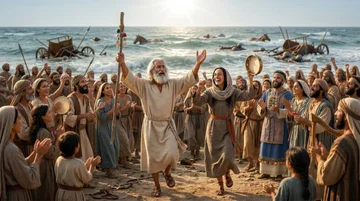
Miriam stood at the head leading the celebration, and all the women went out after her with timbrels and with dances and music.ED 162.1Ms 21, 1897, par. 12–15ST Nov 2, 1915Ms 21, 1897, par. 16–17ST Feb 27, 1896 The whole host of Israel joined in united praise, with Moses joining in the song accompanied by timbrels.ED 162.1ST Nov 2, 1915Ms 21, 1897, par. 16–17 It was a song of thanksgiving for God's triumph and Israel's deliverance.ED 162.1Ms 21, 1897, par. 12–15
Miriam is the prophetess, the sister of Aaron and of Moses.ST Apr 1, 1880SG3 236.1–238.11SP 210.1–212.1Lt 33, 1890, par. 7–9 She used her gifts of poetry and music to lead the women in celebrating the deliverance of the Hebrews and Jehovah's triumph.ST Apr 1, 1880SG3 236.1–238.11SP 210.1–212.1PP 382.3PP 410.1–3 This joyful scene at the Red Sea came long before her death in the wilderness after a life of wandering.PP 410.1–3
Purpose and Power of Song
The deliverance was formed into a song as a means of fixing its precious lessons in the minds of the people as they journeyed through the wilderness.ST Nov 2, 1915Lt 33, 1890, par. 7–9 By that song they were to teach their children and to remember God's power and care.ST Nov 2, 1915Lt 33, 1890, par. 7–9
It was sung to instrumental music with united voices while the people kept step together.ST Nov 2, 1915 It lifted their thoughts from the trials and difficulties of the way and soothed and calmed the restless, turbulent spirit.ST Nov 2, 1915 It implanted principles of truth in the memory and strengthened faith.ST Nov 2, 1915 It taught order and unity by concert of action, and it brought the people into closer touch with God and with one another.ST Nov 2, 1915
Sources
Pioneers and periodicals
70 sources
After Israel crossed the Red Sea and stood safe on the farther shore, delivered from Egyptian bondage and Pharaoh's pursuing host, Miriam the prophetess, the sister of Aaron, took a timbrel in her hand and led all the women out after her with timbrels and dances in the triumphant song of thanksgiving for God's victory.ST Jan 25, 1910ST Feb 11, 1889RH Aug 8, 1871RH Jun 29, 1911 The whole host joined in united praise so loud it rang over desert and sea, yet they sang only after the trial was over by sight and not by faith beforehand, and their gratitude was brief, for within three days they forgot and murmured.ST Mar 10, 1881RH Apr 20, 1911ST Jul 21, 1898 That deliverance is a type of the final deliverance, when the redeemed delivered from the beast by Christ, the antitype of Moses, will again sing the song of Moses joined with the song of the Lamb in complete victory over earthly foes and over sin.ST Aug 22, 1911ST Nov 8, 1899RH Feb 10, 1859RH Sep 29, 1863RH Dec 21, 1869 Her title and leading part show that women were endowed with the spirit of prophecy and honored with a place and voice in public worship, to prophesy, sing, testify, and proclaim truth under the Spirit's influence.RH Aug 8, 1871ST Dec 8, 1914RH May 9, 1865RH Dec 16, 1858 Their dancing was a public expression of holy religious joy and gratitude at a proper time to God's glory, separate from the men, and gives no warrant for the modern mixed dance, dancing in embrace, or dancing merely for amusement.RH Jul 20, 1916RH Sep 16, 1915ST Dec 9, 1913ST May 24, 1899ST May 16, 1911
Exodus Setting and Background
Exodus 15:20 belongs to the song of Moses in Exodus 15:1-21, the triumphant song of thanksgiving and praise sung after Israel crossed the Red Sea and was delivered from Egyptian bondage, oppression, and Pharaoh's pursuing host.ST Jan 25, 1910ST Feb 11, 1889ST Feb 4, 1913ST Jan 18, 1916 It celebrates the march to the sea, the miraculous crossing, and the destruction of the Egyptian host, and expresses Israel's experience of rescue from Pharaoh and his army who sought to destroy them.ST Feb 4, 1913ST Jan 18, 1916 Miriam leading the women with timbrel and dance in joyful thanksgiving belongs to that triumph, with a refrain celebrating the Lord's victory over the Egyptians.ST Jan 25, 1910ST Feb 11, 1889ST Jul 13, 1915 The song celebrates God's triumph, victory, justice, faithfulness, and love in deliverance.ST Jan 25, 1910ST Jul 13, 1915ST Jan 18, 1916
The song was sung once Israel stood safely on the opposite, farther, distant shore after passing through, when the waters divided at God's command for Israel to cross and Pharaoh and his host were lost in attempting to follow.RH Apr 20, 1911ST Jan 30, 1912RH Dec 31, 1861RH Aug 21, 1856 It closes the deliverance that began with Israel in oppression and bondage with the whole power of Egypt set against them and their escape from bondage to freedom.ST Jan 30, 1912RH Dec 31, 1861 It displays God's mighty saving work and creative power shown over again, such work as was never done in the saving of any other nation.ST Jan 30, 1912
In the structure of the book it stands in the mainly historical first division in chapters 1-18, coming after the departure from Egypt and before the journey to Sinai.ST Jan 20, 1909 That period from Egypt to Mount Sinai was marked by divine instruction and marvelous acts for guidance and sustenance in the wilderness, including the passage through the Red Sea.ST Jan 20, 1909 The song memorialized a great event in Israel's history.ST Mar 27, 1893RH Apr 22, 1915 As poetry written by Moses it shares literary character with Job, along with Deuteronomy 32 and Psalm 90, showing that Moses wrote Job.ST Mar 27, 1893
The crossing and song followed mighty signs and wonders in Egypt where God shielded Israel from evil while He plagued the Egyptians in fulfillment of His promise to Abraham, even after Israel reproached Moses for bringing them to die in the wilderness.RH Apr 3, 1879 By appointment the cloud appeared and moved, the tribes marched, and the sea retired, and on the farther shore the song of victory sounded with timbrels and dances after the Passover that taught Christ as an object-lesson and the foretold emancipation came.ST May 26, 1914 This fulfilled the promise to break the bands of servitude and to lead Israel with a high hand and an outstretched arm to a land flowing with milk and honey, the ancient home of their fathers.ST May 26, 1914 It shows that His word accomplishes what He pleases and prospers in the thing whereto He sends it.ST May 26, 1914
Miriam and Women's Celebration
Miriam was the prophetess, the sister of Aaron and also of Moses, who took a timbrel in her hand at the Red Sea.ST Apr 1, 1880ST Feb 11, 1889RH Aug 8, 1871 She took a leading part in organizing the women's joyful song after Israel crossed the sea, leading them as they celebrated with timbrels and dancing.ST Apr 1, 1880ST Feb 11, 1889RH Jun 29, 1911 She called them to sing to the Lord for His glorious triumph.RH Aug 8, 1871
All the women went out after her with timbrels and with dances, expressing holy joy after deliverance from Egypt.ST Jul 13, 1915ST May 16, 1911 They joined Moses and the Israelites in a triumphal song and procession with musical instruments, celebrating the victory over Pharaoh's pursuing forces.RH Jun 29, 1911 Their refrain celebrated the Lord's victory over the Egyptians, and their rejoicing expressed the change from oppression and sorrow to victory and joy.ST Jul 13, 1915
The song of triumph was not sung by Moses and Miriam alone, but the whole host of Israel joined together in united praise.ST Mar 10, 1881ST Nov 2, 1915RH Jan 9, 1908 Women joined the men in singing the song of thanksgiving for deliverance and for justice, faithfulness, and love.ST Mar 10, 1881ST Nov 2, 1915 They lifted a joyful noise so loud that it rang far over desert and sea and the mountains echoed the praise.RH Jan 9, 1908 That song was often repeated on the journey to cheer hearts and kindle faith, as they cheered one another on the way.RH Jan 9, 1908
Their dances were rhythmic marches accompanied by music, performed by women separately from men.RH Jul 20, 1916ST May 16, 1911ST Jun 3, 1880 All the women went out after Miriam apart from the men, with the women dancing by themselves in the daytime as a public expression of religious joy and gratitude after victory and mercies.ST Feb 18, 1886ST Jun 3, 1880ST Oct 10, 1911 This celebration is distinguished from a sensual round dance, gives no account of women dancing in men's arms or embrace, and was not to intoxicating dance music.RH Jul 20, 1916ST Sep 15, 1909ST Oct 10, 1911
Miriam is remembered as the first sweet singer of Israel, whose timbrel sounded the celebration, and as the sweet singer of Israel.RH Sep 5, 1907ST Jul 14, 1914 Her leadership in worship was part of the special work for which she had been trained, and as leader of the Hebrew women in the song of deliverance she points to the joy and music of the redeemed whose voices will join a heavenly chorus.RH Mar 5, 1914RH Sep 5, 1907 That sound of celebration was later followed by the wailings of the congregation as they carried her to her tomb.ST Jul 14, 1914
Faith Before and After
Israel sang only after the trial was over and the deliverance had come, once standing safely on the opposite shore in praise for triumph over Pharaoh's host.RH Apr 20, 1911ST Jul 21, 1898 That singing was belief after the fact, belief by sight and not by faith, and did not express trusting God beforehand.RH Apr 20, 1911ST Jul 21, 1898 The song would have been sweeter if sung by faith before the deliverance was visible, when victory was already certain, for the wilderness experiences were meant to teach claiming that victory by faith before it became experience.RH Apr 20, 1911ST Jul 21, 1898
Moses believed God on both sides of the sea, before the sea opened when Israel stood before the rolling sea with Egypt behind and to all appearance there was no hope, as well as after.ST Jun 23, 1898ST Jul 21, 1898 The song is therefore truly the expression of his faith.ST Jun 23, 1898ST Jul 21, 1898 Singing the same song requires living faith that believes God before Red Seas are passed as well as after danger is past.ST Jun 23, 1898ST Jul 21, 1898
The thanksgiving of faith might just as well have been sung on the other side of the sea before the waters gave any sign of opening, because the victory of faith is just as sure in prospect as in retrospect.ST Nov 29, 1905ST Nov 29, 1905 It is not confined to the year's retrospect but looks forward to far greater things in the unfailing promises of God.ST Nov 29, 1905ST Nov 29, 1905 It shows forth loving-kindness every morning and faithfulness every evening.ST Nov 29, 1905ST Nov 29, 1905
Deliverance comes by going forward in trust and obedience when every avenue is closed, hemmed in by sea, mountains, and Egyptians.RH Feb 24, 1916RH Feb 25, 1875 God parted the impossible way that could not be forded when the people trusted Jehovah and moved forward, so that difficulties vanished and enemies suffered defeat.RH Feb 24, 1916RH Feb 25, 1875 The sea would never have parted if they had refused to obey.RH Feb 24, 1916 This shows conditions make no difference with God, who can overrule in all conditions and bring victory to those loyal to Him to His honor and glory, and the greater the trial or affliction the greater the opportunity for glory and victory to the loyal who are faithful no matter what.RH Feb 24, 1916RH Feb 25, 1875
The song expressed the faith Israel needed to keep through the pilgrimage and the change from oppression and sorrow to victory and joy, yet their ability to remain joyful through later trials had yet to be tested.ST Sep 17, 1894 Had they held that faith and continued singing, the journey to Canaan would have been a brief succession of triumphs, for losing faith and the song meant losing those victories.ST Sep 17, 1894 That joyful praise in God's service with prayer for help would have prevented reaction and backsliding, whereas weariness and languor in God's work precede and accompany backsliding and apostasy until they change to restiveness, fretfulness, homesickness, murmuring at desert prospects and wants, and positive dislike of God's work.ST Sep 17, 1894RH Jan 21, 1875
Their gratitude was brief, for within three days they forgot Him who divided the sea and murmured over bitter water, showing a murmuring disposition and lack of faith that quickly forgot miraculous preservation.ST Feb 25, 1886RH Apr 3, 1879 After distrusting Him in apparent danger and reproaching Moses for bringing them to die in the wilderness they sang praise for wondrous deliverance, yet soon forgot His works and returned to murmuring and rebellion.ST Feb 25, 1886RH Apr 3, 1879 That later weeping all night, murmuring against Moses and Aaron, bitter regret at not dying in Egypt or the wilderness, fear of falling by the sword with wives and little ones as prey, and desire to return to Egypt stands in direct contrast to the earlier song of faith and rejoicing.ST Aug 13, 1902RH Apr 3, 1879
Although all who joined the song witnessed deliverance, unbelief persisted so that all that generation died in the wilderness except Caleb and Joshua who fully followed the Lord.RH May 7, 1872RH Jan 21, 1875 United prayer turns great trouble and danger aside and great joy follows, and trouble leading to repentance is followed by light, joy, and gladness of heart.RH Jan 21, 1875 Remembering and telling of God's acts is right only when praise for deliverance and subsequent prosperity is given to God and not to human effort.RH Jan 21, 1875RH Oct 14, 1909
Prophecy of Final Deliverance
The deliverance at the sea is a type and model for the final deliverance, when after that deliverance the redeemed will again sing the song of Moses joined with the song of the Lamb.ST Nov 8, 1899RH Dec 21, 1869 The song expresses deliverance from all earthly foes and earthly enslavement, for Israel was menaced by the strongest power on earth and God gave glorious and complete deliverance from Egyptian bondage.ST Aug 22, 1911 That deliverance did not free them from sin, for those saved from Egypt remained slaves of sin and the great mass of them died in the wilderness because of bondage to sin.ST Aug 22, 1911
In the last generation the children of God are menaced by all the powers of earth, by all persecuting rebellious governments, and God gives them glorious deliverance from them so that they can truly sing the song of Moses again joined with the song of the Lamb.ST Aug 22, 1911 That joined song is absolute and complete victory over sin won by Jesus Christ, making their song double and new.ST Aug 22, 1911 The last generation redeemed from the earth must learn to sing this same song of triumph over all earthly foes in the strength of God on the hither side of the great conflict, and those who sing it there will sing it on the thither side of eternal deliverance.ST Jun 23, 1898
Moses sang the triumph on both sides of the sea because he believed God not only after deliverance but before, when Israel stood before the rolling sea with the hosts of Egypt behind and to all earthly appearance there was no hope.ST Jun 23, 1898 Christ will give that same triumph over all earthly foes to those in whom He has first wrought perfect triumph over every inward sin and in whom He reigns supreme.ST Jun 23, 1898 As Israel was delivered through Moses, those who gain victory over the beast will be delivered from the beast by Christ, the antitype of Moses, and will sing a song of victory and deliverance.RH Feb 10, 1859
The song is the pattern for the song sung by those who overcome the beast and refuse its mark, celebrating God's victory as Israel celebrated God bringing the people safely through the sea and overthrowing Pharaoh's pursuing army.RH Feb 10, 1859RH Sep 29, 1863 The song of Moses is the song of his own experience and deliverance, and the new song of the 144,000 is that same kind of song of their own experience and deliverance, so because no other company will have an experience like theirs no other company is able to learn it.RH Nov 18, 1862 The Song of Moses is prophetic and looks ahead to the happy scenes of Eden Zion.RH Sep 2, 1852
It was a song of exultation over a destroyed enemy whose chivalry sank like lead in the mighty waters, with timbrels and dances joining the celebration.RH Apr 7, 1863 It provides the pattern for the song Israel or the church will sing after the punishment of the host of the high ones and the kings of the earth and the signs in sun and moon and stars, when Jehovah of hosts reigns in Mount Zion and in Jerusalem before His ancients gloriously.RH Apr 7, 1863 That song is followed by a festal song of resurrection joy and glory in the presence of God and King.RH Apr 7, 1863
Women in Prophetic Ministry
Miriam is called prophetess because she was among the women whom the Lord endowed with the spirit of prophecy.RH May 9, 1865RH Dec 16, 1858RH Feb 23, 1860ST Aug 2, 1905ST That title proves that women could serve as prophets and that God called women to the prophetic office.RH May 9, 1865RH Dec 16, 1858RH Feb 23, 1860ST Her taking the timbrel and leading the women with timbrels and dances after the deliverance at the sea, calling them to sing to the Lord for His glorious triumph, presents her public role among the women as the example of a woman serving as a prophetess.RH Aug 8, 1871ST Feb 27, 1901RH Dec 16, 1858 That leading of the women in worship and celebration is evidence that women were honored by God and could take part in public worship.RH Aug 8, 1871ST Dec 8, 1914ST Mar 5, 1896 It shows God using a woman and using women in a public capacity to His glory, and that women have a place and a voice in the church.RH Aug 8, 1871ST Feb 27, 1901
Under the influence of God's Spirit women could prophesy and publicly sing and witness for Him, as Miriam the sister of Moses led the women of Israel with song and praise.ST Dec 8, 1914ST Mar 5, 1896ST Jun 15, 1915 This supports women bearing testimony for Christ and helping proclaim His truth in appropriate Christian ways, and women may speak publicly without assuming authority.ST Mar 5, 1896ST Jun 15, 1915ST Jun 29, 1904 God does not design His children, male or female, to repress the testimony and song and praise they ought to bear, and the instruction they ought to give, because of any human rule or law of church or men.ST Jun 15, 1915 To prophesy means to speak forth the Lord's message as impressed by the Spirit, as a preacher or religious teacher and public teacher bearing testimony, not only to foretell future events.ST Apr 15, 1903ST Jun 15, 1915 Miriam acting as God's messenger, through whom God's will was made known and by whom God gave His messages to the people as well as by men, proves that woman's place in God's work has always been recognized.RH Aug 8, 1871ST Apr 15, 1903
Miriam, the sister of Moses and Aaron, proves females were admitted to the high office of prophecy alongside Samuel and other men and alongside Deborah, Huldah, and Anna.ST Dec 19, 1878RH Feb 23, 1860 It was an office women were especially called to fill when the people faced great hardship or spiritual decline.ST Dec 19, 1878 Her example with Deborah and Huldah shows that prophesying by women belongs to God's order and is continued by the promise of the Spirit to daughters and handmaidens.RH Feb 23, 1860 It therefore authorizes women to receive and exercise spiritual gifts without regard to sex, family, tribe, or social station, to preach Christ, to testify, exhort and pray in public, and to labor in the gospel rather than be bound to silence in the church.RH Feb 23, 1860
Miriam publicly led the song of the exultant host in triumph, a rare, open and exultant praise.RH Jan 12, 1860 Where there is one such Miriam, there are a thousand obscure Marys who magnify the Lord and wait patiently for the promised redemption and salvation through ignominy, disappointment, delay, and sword-piercing sorrow, still waiting beside the cross and at the door of the sepulcher.RH Jan 12, 1860 Her inclusion among the biblical prophets supports that true prophets honored and exalted the Sabbath.RH May 9, 1865
Worship Music and Dancing
The timbrel in Miriam's hand marks the prominence of sacred song in divine worship in early Hebrew history, standing beside Deborah as a notable example.ST Jun 18, 1885 It was the beginning of the service of song that later grew into the elaborate musical ritual established in Jerusalem by the psalmist-king, where the timbrel was supplemented by harp, instrument of ten strings, high-sounding cymbals, organ, and thousands of chorus voices so that the call for everything that has breath to praise the Lord could be made loudly vocal and emphatic.ST Jun 18, 1885 That progressive growth extended further under the Christian dispensation to become all-comprehending and pervasive.ST Jun 18, 1885
The song was a means of fixing precious lessons in the minds of the people as they journeyed through the wilderness after deliverance from Pharaoh's army, with the whole host joining in united praise and the women following Miriam with timbrels and dances.ST Nov 2, 1915 Sung to instrumental music with united voices while the people kept step, it uplifted thoughts from the trials and difficulties of the way, soothed and calmed the restless turbulent spirit, implanted principles of truth in the memory, strengthened faith, taught order and unity by concert of action, and brought the people into closer touch with God and with one another.ST Nov 2, 1915 Sacred song in this way cheered the people on their wilderness journey and helped direct their thoughts to God.
At deliverance the song of triumph was not sung by Moses and Miriam alone but by the whole host joining aloud with a joyful noise so loud that it rang far over desert and sea and the mountains echoed the praise, and that song was often repeated on the journey to cheer hearts and kindle faith as they cheered one another on the way.RH Jan 9, 1908 In the same way God's children today are bidden to sing His praise aloud and gladden pilgrim life with sacred song and to lighten pilgrim life by song.RH Jan 9, 1908RH Sep 3, 1908 Such songs have power to transform lives, so the principles of music should be studied in order to sing with harmony approaching that of the heavenly choirs.RH Sep 3, 1908 Singing is an act of divine service and worship as much as prayer, many songs are prayers, and if sung with the spirit and the understanding they have a power not yet realized, while a child taught the meaning of the words sung is more susceptible to their power.RH Sep 3, 1908 As the echo of the angels' song is awakened in earthly homes, hearts are drawn closer to the heavenly singers, heaven's communion begins on earth, and its keynote of praise is learned here.RH Sep 3, 1908
Music used in worship should be harmonious and offered with devotion, lifting the heart toward what is pure and noble. Miriam's song with Moses and the Israelites and the women's music in response to God's mighty works express praise inspired by the Spirit.RH Apr 24, 1900 Remembering and telling of God's acts in song as Miriam recounted deliverance from Egypt is right, but the praise for deliverance and subsequent prosperity belongs to God and not to human effort.RH Oct 14, 1909
The women's dancing was done at proper times, in moderation, and to God's glory, with women dancing separately from men with timbrels in worship and praise to God.RH Sep 16, 1915ST May 24, 1899 Miriam and the women expressed holy joy after deliverance from Egypt through singing and dancing, their dances being rhythmic marches accompanied by music with women and men apart.ST May 16, 1911 It was a public expression of religious joy and gratitude after victory and other mercies, with Miriam leading and the women apart from the men in the daytime.ST Jun 3, 1880 It is one kind of dancing found in Scripture, along with children dancing, David dancing before the Lord when the ark was brought to Jerusalem, and maidens dancing, and it gives no example and no approval of men and women dancing promiscuously together.ST Oct 10, 1911
The dance of maidens alone with timbrels after deliverance was not a mixed dance or dancing in the embrace of men, and it does not sanction the modern dance.RH Jul 20, 1916 It was an exercise of joy and transport engaged in by women, not a holy dance, and gives no warrant for modern dancing in which men and women dance together.ST Dec 9, 1913 Though on a proper occasion, in moderation, and for God's glory, it is not presented as approval of every kind of dancing.ST May 24, 1899 The celebration with timbrels at the passage through the sea is distinguished from a sensual round dance, with no account of women dancing in men's arms or to intoxicating dance music.ST Sep 15, 1909 It shows dancing engaged in by godly people under the old dispensation as one of the ways they praised God in time of victory, never sought as a pleasure as dancing is now, and never commended in the Bible as pleasure, with the sexes not dancing together for all the women went out after Miriam apart from the men.ST Feb 18, 1886ST Jun 3, 1880
Sources