Exodus 23:22
But if thou shalt indeed obey his voice, and do all that I speak; then I will be an enemy unto thine enemies, and an adversary unto thine adversaries.
Translations
But if you shall indeed obey his voice, and do all that I speak; then I will be an enemy to your enemies, and an adversary to your adversaries.
King James Version, KJV Cambridge Paragraph Bible
But if thou shalt indeed obey his voice, and do all that I speak; then I will be an enemy unto thine enemies, and an adversary unto thine adversaries.
But if thou shalt indeed obey his voice, and do all that I speak; then I will be an enemy to thy enemies, and an adversary to thy adversaries.
Revised Version, American Standard Version
But if thou shalt indeed hearken unto his voice, and do all that I speak; then I will be an enemy unto thine enemies, and an adversary unto thine adversaries.
for, if thou diligently hearken to his voice, and hast done all that which I speak, then I have been at enmity with thine enemies, and have distressed those distressing thee.
But if thou shalt diligently hearken unto his voice, and do all that I shall say, then I will be an enemy to thine enemies, and an adversary to thine adversaries.
But if thou wilt indeed hearken, to his voice, and so wilt do all that I may speak, then will I be an enemy to thine enemies, and an adversary to thine adversaries;
Berean Standard Bible, Majority Standard Bible
But if you will listen carefully to his voice and do everything I say, I will be an enemy to your enemies and a foe to your foes.
But if you indeed listen to his voice, and do all that I speak, then I will be an enemy to your enemies, and an adversary to your adversaries.
But if you truly give ear to his voice, and do whatever I say, then I will be against those who are against you, fighting those who are fighting you.
But if thou hearken vnto his voyce, and do all that I speake, the I wil be an enemie vnto thine enemies, and will afflict them that afflict thee.
Douay-Rheims (Challoner revision)
But if thou wilt hear his voice, and do all that I speak, I will be an enemy to thy enemies, and will afflict them that afflict thee.
Pictures
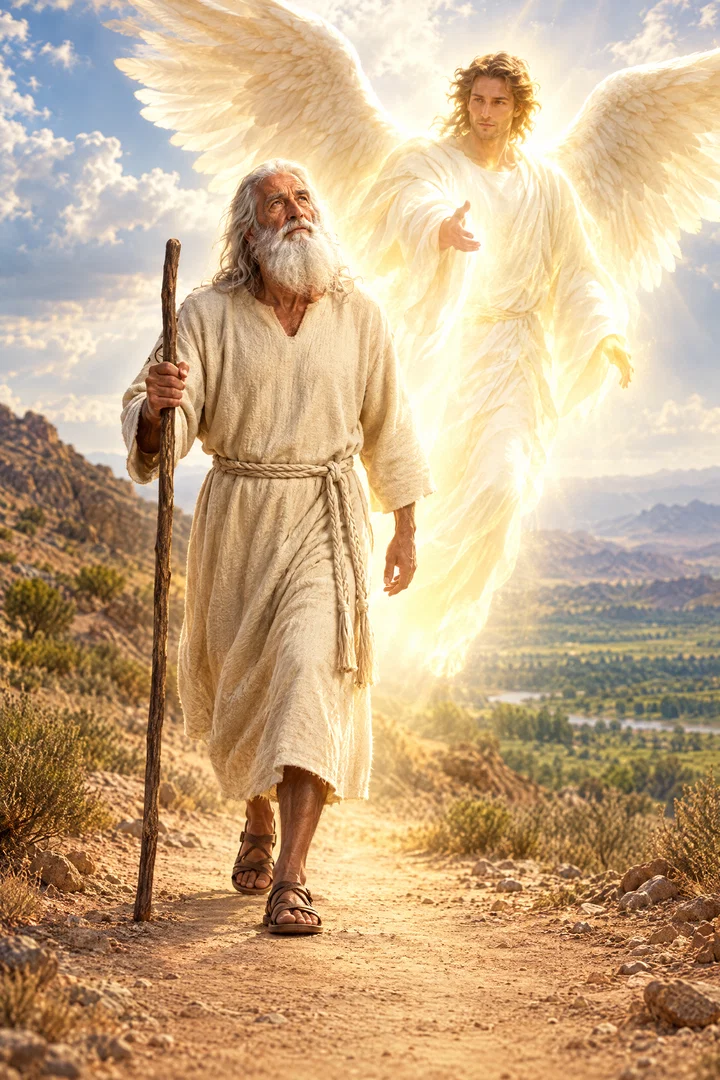
Cross-references
- Exodus 19:5
Now therefore, if ye will obey my voice indeed, and keep my covenant, then ye shall be a peculiar treasure unto me above all people: for all the earth is mine:
God conditions Israel’s covenant promise on obeying his voice.
- Exodus 24:7
And he took the book of the covenant, and read in the audience of the people: and they said, All that the LORD hath said will we do, and be obedient.
Israel pledges obedience to the covenant words, answering the promise of protection for obedience.
- Exodus 23:27-28
I will send my fear before thee, and will destroy all the people to whom thou shalt come, and I will make all thine enemies turn their backs unto thee.
God promises to turn back Israel’s enemies and drive them from the land.
- Acts 7:38
This is he, that was in the church in the wilderness with the angel which spake to him in the mount Sina, and with our fathers: who received the lively oracles to give unto us:
Identifies the Angel who spoke to Moses at Sinai.
- Exodus 32:34
Therefore now go, lead the people unto the place of which I have spoken unto thee: behold, mine Angel shall go before thee: nevertheless in the day when I visit I will visit their sin upon them.
God says his angel will go before Israel.
- Exodus 24:3
And Moses came and told the people all the words of the LORD, and all the judgments: and all the people answered with one voice, and said, All the words which the LORD hath said will we do.
Israel promises to obey all the words God spoke.
- Isaiah 63:9
In all their affliction he was afflicted, and the angel of his presence saved them: in his love and in his pity he redeemed them; and he bare them, and carried them all the days of old.
God’s presence saves and redeems his people.
- Exodus 19:7-8
And Moses came and called for the elders of the people, and laid before their faces all these words which the LORD commanded him.
people's pledge to do all God spoke
- Numbers 21:3
And the LORD hearkened to the voice of Israel, and delivered up the Canaanites; and they utterly destroyed them and their cities: and he called the name of the place Hormah.
God answered Israel’s prayer by giving them victory over their enemies.
- Exodus 34:10-27
And he said, Behold, I make a covenant: before all thy people I will do marvels, such as have not been done in all the earth, nor in any nation: and all the people among which thou art shall see the work of the LORD: for it is a terrible thing that I will do with thee.
The section records covenant commands given to Moses, echoing the call to obey God’s voice.
- Deuteronomy 15:5
Only if thou carefully hearken unto the voice of the LORD thy God, to observe to do all these commandments which I command thee this day.
Land blessing is conditional on hearkening to God.
Commentary
Each commentary is drawn from primary sources: the writings of Ellen G. White and Adventist pioneers and periodicals. Each commentary is separate. Its own words are not a quotation; follow the references to read the source passages.
Ellen G. White
25 sources
God sent His Son before Israel as the unseen Leader in cloud and fire to guide and guard them into the place He had prepared.SG3 268.2–269.1ST May 6, 1880ST Jan 22, 1880 That Leader bears God's name and speaks with God's authority, so His voice must be fully obeyed without defiance.ST Apr 8, 1875Ms 78, 1904, par. 4–7RH Apr 29, 1875 If they indeed listened and did all God commanded, He pledged to oppose their opposers, keep them in the way, fight for them with heaven's armies, and bring them safely into the land to cut off its idolatrous nations.Ms 78, 1904, par. 4–7Ms 80, 1903, par. 1–21MR 311.1–312.1 In giving those detailed statutes He did not set aside the law but spelled out love to God and love to neighbor contained in the commandments given from Sinai.ST Apr 8, 1875RH Apr 29, 1875ST Apr 15, 1875 The same Guide still leads His people today, so faithfulness brings protection and blessing while distrust, complaint, and rebellion bring affliction and ruin.Lt 335, 1904, par. 16–18RH Apr 29, 18751SP 318.1Ms 134, 1899, par. 10–11
Angel and Promised Protection
The Angel sent ahead of Israel is Jesus Christ, the Son of God, the invisible Leader who went before Moses and the people from Egypt to Sinai and through the wilderness to guide, guard, lead and protect them into the prepared place.SG3 268.2–269.1ST May 6, 1880ST Jan 22, 1880ST Apr 2, 1894ST Apr 8, 1875 He led the travels of the children of Israel in the pillar of cloud and fire, extending His care and guardianship over the church in the wilderness toward the land and bringing judgment on its inhabitants as they entered Canaan.ST May 6, 1880ST Jan 22, 1880ST Apr 2, 1894ST Apr 8, 1875Lt 335, 1904, par. 16–18
He bears God's name and speaks with God's authority as God's agent in revealing His will, and therefore He must be obeyed without provocation, for He will not pardon transgression.ST Apr 8, 1875Ms 78, 1904, par. 4–7RH Apr 29, 1875PP 761.6–762.1Lt 98, 1893, par. 4–5 His voice spoke the law from Sinai when He conducted Israel from Egypt to Sinai, and He stands between sinful people and God as Advocate with the Father, claiming erring Israel as purchased by His own blood, though Israel in terror did not discern Him nor recognize His voice.ST Apr 8, 1875PP 761.6–762.1ST Mar 7, 1878
God's opposition to Israel's enemies is strictly conditional on indeed obeying the Angel's voice and doing all that God speaks, a condition belonging to His covenant with Israel as the church in the wilderness redeemed from Egypt.Ms 126, 1901, par. 48–51Ms 93, 1908, par. 31–35Lt 98, 1893, par. 4–5Ms 58, 1900, par. 20–22Ms 126, 1901, par. 46–47 Obedience to His commandments is the condition for His promised favor and blessing, and the same condition applies to those who seek His reward.Ms 126, 1901, par. 48–51Ms 185, 1907, par. 13–16Ms 126, 1901, par. 46–47
When the condition is met God pledges to be an enemy to enemies and an adversary to adversaries, to keep Israel in the way, bring them safely into the promised land, go before them and fight for them.Ms 78, 1904, par. 4–7Ms 93, 1908, par. 31–35Ms 80, 1903, par. 1–21MR 311.1–312.1PP 436.4 The armies of heaven would fight their battles, and hornets would be sent to drive out the inhabitants of the land.PP 436.4Ms 134, 1899, par. 10–11Ms 119, 1898, par. 6–7 While they remained faithful they would not know defeat, for their safety and victory depended on obeying His voice and doing what He commanded.Ms 134, 1899, par. 10–11Ms 119, 1898, par. 6–7
The promise was given on the mount as part of the instruction in Exodus 19-24 after the law was proclaimed from Sinai and after Israel pledged to do all God said and be obedient.Lt 160, 1906, par. 3–9Ms 78, 1904, par. 4–7Ms 80, 1903, par. 1–2 Moses was told to explain the law more fully so the people would have no excuse for disobeying its precepts, and that instruction must be presented before the people now just as verily as the children of Israel needed it in the days of Moses.Lt 160, 1906, par. 3–9Ms 78, 1904, par. 4–7
The promise pointed to bringing Israel to the Amorites, Hittites, Perizzites, Canaanites and Jebusites to cut them off.Ms 78, 1904, par. 4–7 It required serving the Lord alone and rejecting idolatry by not bowing to their gods nor serving them nor following their works but utterly overthrowing them and breaking down their images, with service bringing blessing on bread and water and removal of sickness from among them.SG3 268.2–269.1Ms 78, 1904, par. 4–7 The first advance into Canaan would have been easier because enemies were then less alert and less prepared to resist.PP 436.4
Law and Continuing Covenant
The angel sent before Israel to keep them in the way and bring them into the prepared place was Christ Himself, who went before Moses and guided the travels of the children of Israel in the wilderness.ST Apr 8, 1875RH Apr 29, 1875 His voice was to be obeyed without provocation, for He would not pardon transgression because God's name was in Him and He bore God's authority to require obedience.ST Apr 8, 1875RH Apr 29, 1875 Obedience to His voice and doing all that God speaks carried the promise that God would be an enemy to enemies and an adversary to adversaries.ST Apr 8, 1875RH Apr 29, 1875 This proves Jesus did not supplant the law or detract from its dignity or lessen its claims.ST Apr 8, 1875RH Apr 29, 1875 He Himself gave Moses the ceremonies and ordinances of the Jewish law and the particular precepts to be repeated to the people, and His teachings and miracles and works were in strict accordance with both the moral and the ceremonial law.ST Apr 8, 1875RH Apr 29, 1875
Those particular precepts make the principles of morality and religion more clear by spelling out in detail the duty of man to God embraced in the first four commandments and the duty of man to his fellow man embraced in the last six.ST Apr 15, 1875 Together they express the two great principles of love to God and love to neighbor dating back to creation.ST Apr 15, 1875 These specific statutes protect life and guard God's sacred moral law so it would not be entirely forgotten in the midst of an apostate world.ST Apr 15, 1875 Rebellion against that law and authority brought destruction, and the honor of being conducted by God's Son increased Israel's sin.RH Apr 29, 1875
The promise was given after Israel pledged at Mount Sinai to do all God said and be obedient, making God's opposition to their enemies strictly conditional on loyalty and obedience to the voice of the Angel and to all He spoke.Ms 80, 1903, par. 1–21MR 311.1–312.1 In return God would bring them safely into the promised land and prosper them above all nations.Ms 80, 1903, par. 1–21MR 311.1–312.1 The promise held true during the forty years of wilderness wandering, when those who were obedient received the promised blessings.Ms 80, 1903, par. 1–21MR 311.1–312.1 The covenant is still in force, so through obedience people can still receive heaven's richest blessings.Ms 80, 1903, par. 1–21MR 311.1–312.1
Faithfulness and Present Application
The same Christ who led Israel through the wilderness still leads His people today, showing them where to labor and how to carry the work forward, even to giving the warning to Washington as the capital of the nation.Lt 335, 1904, par. 16–18 Those joined to His work are to thank Him for His guidance and to show confidence in His keeping power.Lt 335, 1904, par. 16–18 They are to remember that they are children of God and to live out the principles of truth in both word and deed.Lt 335, 1904, par. 16–18
The promise guards human dealings against injustice and directs how people are to treat one another, calling for all contention to cease and for loving as brethren with softened and subdued hearts.Lt 160, 1906, par. 3–9Lt 335, 1904, par. 16–18 It requires cutting away from life all hereditary and cultivated tendencies to evil, using privileges and all that God gives to glorify Him, and being on guard to rebuke every evil course.Lt 335, 1904, par. 16–18Ms 134, 1899, par. 10–11 Professed children of God who do what He forbids aid the cause of the enemy and encourage the ungodly to continue in evil.Lt 335, 1904, par. 16–18 Israel's later turn to idolatry after agreeing to obey stands as proof of the danger of breaking that commitment, for obedience to the commandments remains the condition of promised favor for all who seek His reward.Ms 185, 1907, par. 13–16Ms 134, 1899, par. 10–11
While Israel remained faithful God fought for them and they would know no defeat.Ms 134, 1899, par. 10–11 The Angel who went before them sought to save them from destruction, so that if they responded to God's intervention and turned from rebellion they could be saved.PP 401.3 When they failed to trust and obey, their complaints exposed unbelief and God permitted affliction to come upon them, as with the serpents in the wilderness.1SP 318.1 Disobedience and refusal to receive God's word instead brought ruin, even to the destruction of Jerusalem.Ms 119, 1898, par. 6–7 Rebellion against that law and authority brought destruction, made greater by the honor of being conducted by God's own Son.RH Apr 29, 1875
Sources
Pioneers and periodicals
43 sources
The Angel sent before Israel to keep them in the way and bring them to the prepared place is Christ, the preexistent Son of God who led the Hebrews through the wilderness in the pillar of cloud.ST May 6, 1880ST Jan 22, 1880ST May 27, 1889 His help, protection and victory were conditional on indeed obeying his voice and doing all that God speaks.ST May 6, 1880ST Jan 1, 1894ST Mar 3, 1914 When obeyed, God himself becomes an enemy to their enemies and an adversary to their adversaries, deciding their conflicts and giving them success, while rebellion turns that opposition against the disobedient.ST May 6, 1880RH Apr 29, 1875ST Jan 1, 1894ST Mar 3, 1914ST Mar 26, 1902 The voice commanding obedience at Sinai was Christ's own voice, so he did not oppose or lessen the law but gave both its moral precepts and its ceremonies and ordinances to make its principles of love to God and neighbor clear.ST Apr 8, 1875RH Apr 29, 1875ST Jul 1, 1889ST Jun 4, 1894 The promise stands in the judgments of Exodus 21-23, which develop the Ten Commandments without adding or removing any moral principle and formed the book of the covenant ratified with blood, though those who held the narrower view teach that the terms of the covenant proper are the Ten Commandments alone.ST Dec 10, 1896RH Oct 22, 1861ST Aug 5, 1889ST Apr 15, 1886ST Dec 16, 1897
Setting in Exodus
Exodus 23:22 stands in the legislative second half of Exodus, chapters 19-40, where the ransomed people are bound to Jehovah by solemn covenant and provided with legal ordinances for guidance. It belongs with the Ten Commandments and other statutes proclaimed at Sinai and ratified over the book of the covenant in Exodus 20:1 to 24:8, under the covenant condition accepted by the people to preserve them as a peculiar treasure, a kingdom of priests, and a holy nation. It is part of the Exodus reading about the giving of the law at Sinai, belonging to the laws given to Israel after their deliverance from Egypt.ST Mar 3, 1914RH Jan 20, 1916
It was spoken privately to Moses alone when he drew near into the thick darkness where God was after the people removed and stood afar off, distinguished from the Ten Commandments that God spoke aloud to Israel and wrote on stone.ST May 16, 1878ST Apr 17, 1907ST Feb 6, 1879RH Jul 9, 1901ST Mar 1, 1883 It was spoken from the thick darkness to Moses, told by Moses to the people who answered that they would do them, and written by Moses in the book of the covenant included in a covenant ratified with blood.ST Apr 17, 1907ST Apr 15, 1886RH Jul 9, 1901 Those additional precepts in Exodus 21-23 are what Exodus 24:3 calls the judgments as distinct from the words of the Lord, dealing for the most part with rights between man and man and with what ought to be enforced judicially to rectify or check evil when the law is violated.ST Apr 15, 1886
The verse forms part of an epitome of civil and ceremonial laws found in the latter part of Exodus 20 and Exodus 21, 22, and 23 entire, where both the moral law and the law of ordinances are written out in full with the moral law first and the ordinances immediately after.ST May 16, 1878ST Feb 6, 1879ST May 6, 1875 These statutes and judgments partly define duty toward God but principally define duty toward fellow men, stating principles of justice among men, with some precepts of a ceremonial character included.ST May 16, 1878ST Feb 6, 1879ST Mar 1, 1883 The statutes of Exodus 21 to 23 reveal and apply the principles of the Ten Commandments spoken from Sinai, made clearer because Israel's minds, blinded and corrupted through slavery and heathenism, could not comprehend those principles.ST Apr 17, 1907
Identity of the Angel
The Angel sent before Israel to keep them in the way and bring them to the prepared place is Christ, the preexistent Son of God, one with the Father, given the work of emancipating, instructing, and leading the Hebrews. ST May 6, 1880ST Jan 22, 1880ST Apr 8, 1875RH Apr 29, 1875ST May 27, 1889 He went before Moses and guided the travels of the children of Israel through the wilderness toward the land, bringing judgment on its inhabitants, and his care and guardianship extended over the church in the wilderness to lead and protect them. ST May 6, 1880ST Jan 22, 1880ST Apr 2, 1894ST Apr 8, 1875RH Apr 29, 1875 He was present in the pillar of cloud that led Israel out of Egypt and continued with them through the wilderness. ST May 11, 1904
God's name is in the Angel, and through him Jehovah's mind was represented in Israel's deliverance. ST May 27, 1889ST Mar 4, 1889ST Sep 17, 1874ST Aug 14, 1901RH Aug 12, 1873 He is the speaker of God's commands, the Son of God through whom God reveals himself and gives his word to humanity, and his voice was the voice that spoke the law at Sinai. ST Jul 1, 1889ST Mar 4, 1889 He is God, called God by the Father, the Presence of God and the Angel of his presence, the same Lord who went before Israel in the pillar of cloud as the Angel of God. ST May 11, 1904ST Aug 14, 1901ST May 27, 1913 He works toward the results of the sacrifice that culminated at Calvary. ST May 27, 1913
The Angel bears God's name and authority to require obedience, and his voice was to be obeyed without provocation. ST Apr 8, 1875RH Apr 29, 1875ST Jul 1, 1889 He has power relating to sin, for he can forgive sins, which shows he is divine. ST Jul 1, 1889ST May 11, 1904 Yet he will not pardon transgression if provoked. ST Apr 8, 1875RH Apr 29, 1875
He came from the bosom of the Father to become an angel and be tested in that nature before becoming man, succeeding so fully that he became chief, or Archangel. ST May 11, 1904 He is captain of the host of the Lord and head over all the holy angels, leading the invisible armies of heaven against Israel's enemies, as at Jericho where the walls fell by the heavenly host while the ark containing the Ten Commandments was present. RH Aug 12, 1873 He is Michael, the Son of God before his incarnation, the covenant Angel in whom God's name is who speaks with divine authority, the Angel of God's presence and Angel of Jehovah who saved, redeemed, and carried Israel through affliction and later became Jesus of Nazareth, not a common angel. ST Apr 9, 1902RH Aug 12, 1873ST Apr 2, 1912
Promise and Its Condition
God's help, protection, safety and success under his leadership are conditional on indeed and truly obeying the Angel's voice and doing all that he speaks and commands.ST May 6, 1880ST Jan 22, 1880ST Apr 2, 1894ST Jan 1, 1894ST Mar 3, 1914 The Angel to be obeyed is Christ, who goes before his people to keep them in the way, lead them toward the prepared place, guard the church in the wilderness, and bring judgment on the inhabitants of the land.ST May 6, 1880ST Jan 22, 1880ST Apr 2, 1894ST Feb 17, 1890 When his people so obey, he becomes an enemy to their enemies and an adversary to their adversaries, acting against those who oppose them, deciding their conflicts, and giving protection and victory.ST May 6, 1880ST Jan 22, 1880ST Jan 1, 1894ST Mar 3, 1914ST Oct 28, 1897 Israel's safety therefore depended on faithfulness to his voice, for while they obeyed he opposed their enemies and when they turned to other gods he handed them over to the nations they chose to serve.ST Apr 2, 1894ST Oct 28, 1897ST Feb 17, 1890
Rebellion against that law and authority brought destruction, and the honor of being conducted by God's own Son increased the guilt of Israel's sin.RH Apr 29, 1875 The Angel bears God's name and will not pardon transgression if provoked, so obedience must be without provocation.RH Apr 29, 1875 God is thus an adversary to those who disobey him even as he is an enemy to the enemies of his obedient people, and Christ stands as the adversary of sin and of sinners who remain opposed to God.RH Apr 29, 1875ST Oct 28, 1897ST Mar 26, 1902
The promise was fulfilled when as Angel he delivered Israel from bondage and overcame their enemies, overthrew Pharaoh and led the people through the Red Sea by the Angel of the covenant, brought water from the rock when water failed, and fed them with bread from heaven for forty years.ST May 11, 1904RH Aug 12, 1873ST May 13, 1889 These past acts were sufficient evidence of his power, leaving Israel no reason to doubt that the fortified cities of Canaan could not prevent him from giving them the land.ST May 13, 1889 He aids his people as captain of the host of the Lord, head over all the holy angels leading the invisible armies of heaven against their enemies, as at Jericho where the walls fell by the heavenly host while the ark containing the Ten Commandments was present.ST May 11, 1904RH Aug 12, 1873
Christ Giver of Law
The voice that gave God's commands and spoke the law at Sinai was the voice of Jesus Christ, and the revelation of God's holiness and glory in that law was made by the Son.ST Apr 8, 1875ST Mar 7, 1878ST Jul 1, 1889ST Jun 4, 1894ST May 21, 1902 The Angel going before Israel to guide their travels through the wilderness to the prepared place was Christ, whose voice the people were commanded to obey and whose words they were to do, with protection from enemies depending on that obedience.ST Apr 8, 1875RH Apr 29, 1875ST Jul 1, 1889ST May 21, 1902 He bore God's name and authority to require obedience, with power to forgive sins showing he is divine, yet he would not pardon transgression if provoked.ST Apr 8, 1875RH Apr 29, 1875ST Jul 1, 1889 He went before Moses and Israel in the pillar of cloud that led them out of Egypt and continued with them through the wilderness, and he spoke through Moses to the children of Israel.ST Apr 8, 1875RH Apr 29, 1875ST Apr 15, 1875
This proves Christ is not opposed to the law, for he did not supplant it, detract from its dignity, or lessen its claims.ST Apr 8, 1875RH Apr 29, 1875ST Jul 1, 1889 His teachings and miracles were in strict accordance with both the moral and the ceremonial law.ST Apr 8, 1875RH Apr 29, 1875 Rebellion against that law and authority brought destruction, and the honor of being conducted by God's Son increased Israel's sin.RH Apr 29, 1875
The same Christ gave Moses the ceremonies and ordinances of the Jewish law to be repeated to the people.ST Apr 8, 1875RH Apr 29, 1875 He gave particular precepts that make the principles of morality and religion more clear, spelling out in detail the duty of man to God embraced in the first four commandments and the duty of man to fellow man embraced in the last six.ST Apr 8, 1875RH Apr 29, 1875ST Apr 15, 1875 Those two divisions together express the two great principles of love to God and love to neighbor dating back to creation.ST Apr 15, 1875 These specific statutes protect life and guard God's sacred moral law so it would not be entirely forgotten in the midst of an apostate world.ST Apr 15, 1875
His authority as the Angel who gave the law at Sinai supports the binding force of the Sabbath law.ST May 21, 1902 He is the one who commanded through Moses to keep his Sabbaths as a sign between him and Israel that he sanctifies them.
While Moses was shut in the mount with God, the plan of salvation dating from the fall of Adam was revealed to him in a most forcible manner, with the true significance of the sacrificial offerings and the gospel plan taught by Christ, whose gospel glory illuminated Moses' countenance.ST Mar 14, 1878 The Angel who conducted Israel from Egypt to Sinai stands between sinful people and God as their Advocate with the Father, claiming erring Israel as purchased by his own blood.ST Mar 7, 1878 Israel in terror at Sinai did not discern him and did not recognize his voice.ST Mar 7, 1878 That Angel was God's dear Son, one with the Father, to be revealed in the flesh as Christ to make all who believe on and trust in him one with God.ST Mar 14, 1878
Covenant Place of Verse
The verse belongs to the judgments in Exodus 21-23, which formed the basis of Israel's national law and regulated the Jewish theocracy as the ministration of the law in cases applying peculiarly to Israel while sojourning in Canaan.ST Dec 10, 1896RH Oct 22, 1861ST Dec 16, 1897RH Jul 9, 1901 Those judgments with the laws were written by Moses in a book and included in the book of the covenant, distinguished from the Ten Commandments that God spoke aloud and wrote on stone, and they were part of the further instruction in Exodus 20, 21 and 23 given after the reiteration of the covenant from the holy mount and before the sealing of the old covenant.ST Dec 10, 1896RH Oct 22, 1861RH Jul 9, 1901 The covenant agreement concerning the law was entered when Israel agreed to obey and do these words, answering that they would obey and perform them, and it was then ratified and sealed with blood in Exodus 24.ST Dec 10, 1896RH Oct 22, 1861ST Dec 16, 1897RH Jul 9, 1901
The judgments develop principles already present in God's law and grow out of the Ten Commandments, belonging to the covenant whose terms Israel agreed to keep.ST Dec 10, 1896ST Aug 5, 1889 They did not add any moral principle to that law nor remove any from it, and Israel's failure to keep the covenant did not change the law's nature or continuing obligation.ST Dec 10, 1896 What Exodus 24:3 calls the judgments, as distinct from the words of the Lord, deals for the most part with rights between man and man and with what ought to be enforced judicially to rectify or check evil when the law is violated.ST Apr 15, 1886 Though included in the book of the covenant to which the people answered that they would do it, on the distinction that limits the terms of the covenant to the Ten Commandments alone these additional precepts given privately through Moses do not properly constitute its terms.ST Apr 15, 1886
The prevailing reckoning counts these laws themselves as the terms of the Sinai covenant and not the covenant agreement itself.RH Oct 22, 1861ST Dec 16, 1897 Obedience to the Lord's commands, to indeed obey His voice and do all He spoke, was a condition of that old covenant, with the promise that the Lord would oppose Israel's enemies and be an enemy to their enemies.RH Oct 22, 1861 God would fulfill His promise to Abraham to give Israel Canaan, but not unconditionally and not while they lived in willful disobedience, and as a nation they could remain in the land only by obedience to His commandments.RH Oct 22, 1861 The verse is thus part of the law God gave through Moses at Sinai, included among the statutes and judgments and the commandments Moses was to teach and make known to Israel.ST Jan 27, 1909 God gave His law in love so that it would be written on the people's hearts and bring them into godly, fatherly nearness to Him.ST Jan 27, 1909
The ritual and judicial law communicated to Moses and written in a book was given because of Israel's transgression, after the worship of the molten image, to accord with the law written on stone.RH Feb 7, 1854 Exodus 23 is cited as part of the ceremonial system that included annual feasts and sabbaths tied to Israel's life in Canaan and abolished by Christ, contrasted with the seventh-day Sabbath made for all humanity at creation.RH Oct 14, 1873 The statutes and regulations of Exodus 23 stand to the Ten Commandments as statutes stand to a constitution, the Ten Commandments being the moral constitution and Exodus 23 a code of rules based upon those ten laws.ST Apr 15, 1886 No law or regulation in Exodus 23 can therefore conflict with the Ten Commandments, and its interpretation and ethics must be according to the ethics of that constitution.ST Apr 15, 1886
Fulfilment and Present Application
Israel's protection from enemies depended on obeying the angel's voice and doing all that God commanded, for when they obeyed God himself would oppose their enemies.RH Dec 8, 1874 As that Angel went before Israel to be obeyed for protection, so God's angels go before His servants to prepare people to receive the third angel's message.RH Dec 8, 1874 Obedience to the Lord's voice and commands still brings God's protection against enemies. In this passage that promise is joined to the assurance that follows it that God will bless food and water and remove sickness, showing that obedience to God's ways belongs together with health and well-being.
God is an adversary to those who disobey Him and an enemy to the enemies of His people.ST Mar 26, 1902 Christ is the adversary of sin and of sinners who remain opposed to God.ST Mar 26, 1902
Sources