Exodus 27:3
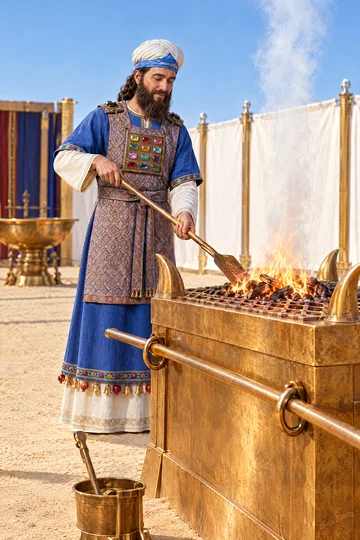
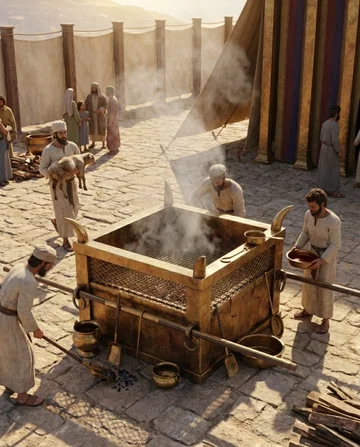
And thou shalt make his pans to receive his ashes, and his shovels, and his basons, and his fleshhooks, and his firepans: all the vessels thereof thou shalt make of brass.
Translations
And you shall make his pans to receive his ashes, and his shovels, and his basins, and his meat hooks, and his fire pans: all the vessels thereof you shall make of brass.
King James Version, KJV Cambridge Paragraph Bible
And thou shalt make his pans to receive his ashes, and his shovels, and his basons, and his fleshhooks, and his firepans: all the vessels thereof thou shalt make of brass.
And thou shalt make its pans to receive its ashes, and its shovels, and its basins, and its flesh-hooks, and its fire-pans: all its vessels thou shalt make of brass.
And thou shalt make its pots to take away its ashes, and its shovels, and its basons, and its fleshhooks, and its firepans: all the vessels thereof thou shalt make of brass.
And thou shalt make its pots to take away its ashes, and its shovels, and its basins, and its flesh-hooks, and its firepans: all the vessels thereof thou shalt make of brass.
And thou hast made its pots to remove its ashes, and its shovels, and its bowls, and its forks, and its fire-pans, even all its vessels thou dost make of brass.
And thou shalt make its pots to cleanse it of the fat, its shovels, and its bowls, and its forks, and its firepans; for all the utensils thereof thou shalt employ copper.
And thou shalt make its pans for removing its ashes, and its shovels and its sprinkling bowls, and its flesh-hooks and its fire-pans,—all its vessels, shalt thou make of bronze.
Berean Standard Bible, Majority Standard Bible
Make all its utensils of bronze— its pots for removing ashes, its shovels, its sprinkling bowls, its meat forks, and its firepans.
You shall make its pots to take away its ashes; and its shovels, its basins, its meat hooks, and its fire pans. You shall make all its vessels of bronze.
And make all its vessels, the baskets for taking away the dust of the fire, the spades and basins and meat-hooks and fire-trays, of brass.
Also thou shalt make his ashpannes for his ashes and his besoms, and his basens, and his flesh-hookes, and his censers: thou shalt make all the instruments thereof of brasse.
Douay-Rheims (Challoner revision)
And thou shalt make for the uses thereof pans to receive the ashes, and tongs and fleshhooks, and firepans: all its vessels thou shalt make of brass.
Pictures
Cross-references
- Hebrews 8:5
Who serve unto the example and shadow of heavenly things, as Moses was admonished of God when he was about to make the tabernacle: for, See, saith he, that thou make all things according to the pattern shewed to thee in the mount.
The sanctuary’s vessels were made according to the pattern shown to Moses.
- Acts 7:44
Our fathers had the tabernacle of witness in the wilderness, as he had appointed, speaking unto Moses, that he should make it according to the fashion that he had seen.
The wilderness tabernacle was made according to the pattern shown to Moses.
- Exodus 25:40
And look that thou make them after their pattern, which was shewed thee in the mount.
The vessels are made according to the pattern shown on the mount.
- Hebrews 9:23-24
It was therefore necessary that the patterns of things in the heavens should be purified with these; but the heavenly things themselves with better sacrifices than these.
The earthly sanctuary service foreshadows Christ’s ministry in the heavenly sanctuary.
- Exodus 38:3
And he made all the vessels of the altar, the pots, and the shovels, and the basons, and the fleshhooks, and the firepans: all the vessels thereof made he of brass.
Describes the altar vessels and their brass construction.
- Exodus 25:9
According to all that I shew thee, after the pattern of the tabernacle, and the pattern of all the instruments thereof, even so shall ye make it.
The tabernacle furnishings were made according to the pattern shown to Moses.
- Hebrews 7:27
Who needeth not daily, as those high priests, to offer up sacrifice, first for his own sins, and then for the people’s: for this he did once, when he offered up himself.
The sanctuary sacrifices pointed to Christ, who offered himself once.
- Exodus 40:6
And thou shalt set the altar of the burnt offering before the door of the tabernacle of the tent of the congregation.
Places the altar of burnt offering in the sanctuary court.
- Exodus 27:8
Hollow with boards shalt thou make it: as it was shewed thee in the mount, so shall they make it.
The altar was made according to the pattern shown to Moses.
Commentary
Each commentary is drawn from primary sources: the writings of Ellen G. White and Adventist pioneers and periodicals. Each commentary is separate. Its own words are not a quotation; follow the references to read the source passages.
Ellen G. White
1 source
The command concerning the utensils for the altar belongs to the detailed specifications God gave to Moses for constructing the tabernacle.Ms 97, 1899, par. 3–4 It directed that the containers to receive ashes, the implements for handling fire and offerings, and the bowls and trays for service should all be fashioned from brass.Ms 97, 1899, par. 3–4 The minuteness of such directions, together with the craftsmanship they required, shows that practical ability is not merely human invention.Ms 97, 1899, par. 3–4 Skill, ingenuity, and wisdom exercised in manual work are gifts from God, entrusted to people to be employed for His glory.Ms 97, 1899, par. 3–4
Sources
Pioneers and periodicals
31 sources
The verse gives part of the minute instructions for the sanctuary and its furnishings shown to Moses on the mount, commanding him to make everything exactly according to the pattern so that God might dwell among Israel.ST Oct 29, 1894ST Jun 10, 1908ST Mar 25, 1889ST Jan 27, 1909 It requires that all the vessels of the altar — pans to receive ashes, shovels, basins, fleshhooks and firepans — be made of brass, with the pans set beneath its open grate to catch the ashes sifted through while the brass network held the fire and let air reach it.ST Mar 25, 1889ST Jan 27, 1909ST May 1, 1901ST Dec 29, 1909RH Sep 19, 1912 Those vessels belonged to the brazen altar of burnt offering standing in the open court just inside the eastern entrance, a hollow box of acacia wood overlaid with brass where whole burnt offerings and other offerings were burned and their blood poured out at its base.RH Jan 6, 1853ST Jun 19, 1907ST Nov 14, 1892RH Mar 28, 1854 As ceremonial ordinances for the sanctuary given through Moses, they added no new moral principle beyond the Ten Commandments written on stone, but developed principles already contained in them until the reformation.ST Mar 3, 1914ST Apr 15, 1886ST Dec 10, 1896RH Jun 21, 1864 They formed part of the earthly object-lesson by which God taught the plan of salvation, a figure and shadow of the heavenly sanctuary where Christ ministers as High Priest, whose pattern was shown by Jesus Christ as minister of the true tabernacle.ST Jun 26, 1907ST May 27, 1889ST Jun 19, 1907 The altar service thus signified how the sinner finds peace and forgiveness by the shedding of blood, fulfilled when Christ gave His own life as the spotless Lamb foreordained from the foundation of the world, ending the ministry of animal sacrifices when He died once for all.ST Jan 24, 1911ST Apr 1, 1897ST May 16, 1878RH Aug 12, 1873RH Aug 3, 1916
Setting and Details
Exodus 27:3 belongs to the minute, detailed instructions for the tabernacle and its furnishings given to Moses during his forty days on the mount.ST Oct 29, 1894RH Dec 31, 1861ST Jan 31, 1911 It falls within the legislative section of Exodus, part of the very minute description in Exodus 25 to 40 of the sanctuary built in the days of Moses.ST Oct 29, 1894ST Jan 31, 1911 Moses was commanded to make everything exactly according to the pattern shown him in the mount so that God might dwell among Israel, a pattern shown by Christ as minister of the true tabernacle, and the tabernacle and its furnishings were later prepared, fitted and built according to those instructions.ST Oct 29, 1894RH Dec 31, 1861ST Sep 17, 1874 The verse is one of the exact details of that careful pattern, specifying brass utensils for the altar — ash pans, shovels, basins, fleshhooks and firepans — and it belongs to the instructions Moses received concerning the building of the sanctuary and the instruments used in its service, including the sanctuary pattern ordained for priestly ministry before the ark.ST Jun 10, 1908RH Dec 31, 1861ST Jan 31, 1911
All the vessels of the altar were to be made of brass, with pans to receive ashes, shovels, basins, fleshhooks and firepans named in full.ST Mar 25, 1889ST Jan 27, 1909ST Dec 29, 1909 The exact directions for the sanctuary's equipment and construction show how particular God was about what pertained to His worship.ST Mar 25, 1889ST Jan 27, 1909 That worship and its services were intended to bring people into harmony with God's holy law.ST Mar 25, 1889
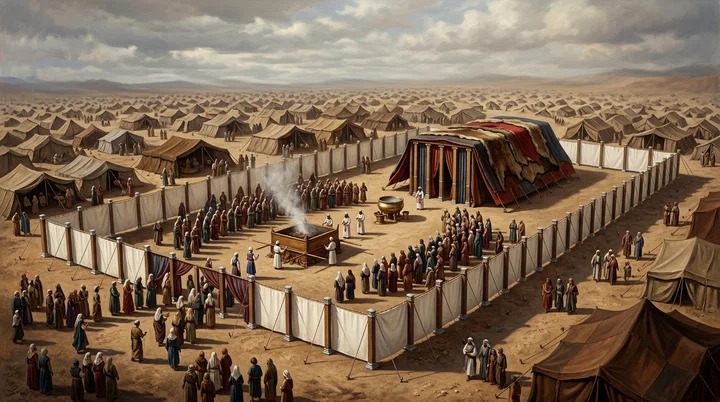
The vessels belong to the brazen altar of burnt offering in the open court at the eastern entrance, just inside the gate as the first thing met on entering.STST Aug 19, 1913ST Apr 1, 1897 The altar was placed without the door of the tabernacle before the sanctuary where sacrificial victims were slain, near the laver where the priests washed.RH Mar 28, 1854STST Aug 19, 1913 It was a hollow box of shittim or acacia wood overlaid with brass, about nine feet square and five and a half feet high, with a square top and horns at each corner and a brass network in its center.RH Jan 6, 1853RH Mar 28, 1854ST Apr 1, 1897 It was used the year round for whole burnt offerings, peace offerings, meat offerings and other offerings, with certain offerings burned upon it and their blood poured out at its base on the ground around it.RH Jan 6, 1853RH Mar 28, 1854ST Apr 1, 1897 The tabernacle, and later Solomon's temple, were the earthly centers of worship, whose services revolved around the holy of holies where the law of God rested beneath the mercy seat.ST Jun 19, 1907
The court around the tabernacle was a larger enclosed space, a double square fifty by one hundred cubits, or seventy-five by one hundred and fifty feet.ST Nov 14, 1892 It was enclosed by hangings or canvas screens of fine-twined linen suspended from pillars of brass five cubits high with sockets of brass and hooks and fillets of silver, the pillars set five cubits apart.ST Nov 14, 1892 The enclosure was continuous except on the east where a twenty-cubit entrance was provided with curtains of gorgeous colors.ST Nov 14, 1892 All important dimensions were five cubits or multiples of five, constructed with strict regard to proportion and beauty and of material to impress beholders with the importance, purity and sacredness of the worship connected therewith.ST Nov 14, 1892
The pans were placed beneath the altar's openwork grate to catch the ashes sifted through it.ST May 1, 1901 The brass vessels and tools were for handling the ashes and offerings.RH Sep 19, 1912 The altar itself was a hollow acacia-wood box overlaid with brass, with a brass network in its center that held the fire while letting air reach it and allowing ashes to fall beneath.RH Sep 19, 1912
The verse is among the ceremonial laws and ordinances for the sanctuary and its vessels given through Moses, including laws about offerings and sacrifices, distinct from the Ten Commandments spoken by God at Sinai and written on the stone tablets.ST Apr 15, 1886 In order it comes after the covenant and judgments of Exodus 19-23 and the instruction of Exodus 25-31 given in the mount, and before the building and setting up in Exodus 33-40.ST Dec 10, 1896 It adds no new moral principle beyond the agreement, the ten words and the judgments written in the book Moses sprinkled with blood, but develops principles already contained in them.ST Dec 10, 1896 Such ceremonial requirements included burdensome practices imposed until the time of reformation, and they help reveal the types from which the substance of the new dispensation can be traced.ST Apr 15, 1886
The verse belongs to the instructions establishing the Aaronic priesthood, whose priestly rites and service before the ark were to be carried out by Aaron and his sons and not by others unless the Lord specially directed.ST Mar 3, 1914 The arrangement placed the law of the Ten Commandments in the ark in the most holy place, while the daily and yearly services in the two apartments addressed the people's transgressions of that law, with the high priest making atonement and cleansing the sanctuary.RH Jun 21, 1864 The full description of the sanctuary and its furnishings from Exodus 25 through the end of Exodus must be studied to learn how the two kinds of service met error and pointed to the remedy.ST Mar 10, 1898
Type and Teaching
The directions for the courtyard altar and its vessels formed part of the explicit instructions given in Exodus 25-31 for building the sanctuary and preparing its services, an earthly object-lesson by which God taught Israel the plan of salvation and set forth His plan of government in dealing with those who sought to dethrone Him. That plan was devised from eternity for salvation from sin and is carried out as Priest upon the throne, still King while executing the priest's office toward sinners. God's people are so intimately related to the sanctuary that they cooperate with Him in His work through Christ in the sanctuary, the divine and the human working together at every step under the word, Let them make me a sanctuary, that I may dwell among them.
The sanctuary, its vessels and services were a figure, pattern, shadow and type of the heavenly sanctuary or temple, which has two holy places, made according to the directions and pattern shown on the mount so that God might dwell among Israel and priests might minister in His presence.ST Jun 26, 1907ST Jun 19, 1907ST May 16, 1878RH Jan 4, 1870 They point to Christ and His power to forgive sin and transform character, and to Christ's priestly service therein as High Priest and Minister of the sanctuary in heaven.ST Jun 26, 1907ST Jun 19, 1907 As Scripture profitable for doctrine, for reproof, for correction, for instruction in righteousness to make the man of God perfect, written for learning that through patience and comfort of the Scriptures hope may be had, study of the earthly sanctuary and its service gives clearer views of the Saviour and His work in behalf of men and reveals God's way, power and glory.ST Jun 19, 1907 The wilderness sanctuary where the worship of the true God has centered since the days of Moses is thus an object-lesson teaching concerning the temple of God in heaven.ST Jun 19, 1907RH Jan 4, 1870
The pattern of the typical sanctuary, altar and vessels shown to Moses on Sinai, including the altar and its pans, shovels, basins, fleshhooks and firepans of Exodus 27:1-8, was shown by Jesus Christ as minister of the true, heavenly tabernacle.ST May 27, 1889ST Sep 17, 1874RH Aug 12, 1873 Moses was commanded to make everything according to the pattern shown to him on the mount.ST Sep 17, 1874RH Aug 12, 1873 These furnishings belonged to the earthly sanctuary made according to that pattern of the true, heavenly sanctuary.ST May 27, 1889
The vessels belonged to the ministry of sacrifices and offerings that ended when Christ came and died once for all, and the sanctuary typified the heavenly temple where Jesus now ministers.ST Jan 24, 1911 The altar service in the court, at the brass altar with its utensils where sacrifices were offered, began the ordered sanctuary ministry that typified Christ's ministration.RH Aug 3, 1916
The altar signifies how a sinner finds peace and forgiveness, whether sinning ignorantly or knowingly, by bringing an animal to the door of the tabernacle, confessing sins on its head, shedding its blood with the knife, and having the priest lay it on the altar where fire from God out of heaven consumes and accepts it.ST Apr 1, 1897 The sins are transferred to the animal and its life is taken, for blood represents life, and the blood is poured on the ground all around the altar and covered with dust and not eaten.ST Apr 1, 1897 The animals have a double meaning, representing the forfeited life of the man and the life of the spotless Lamb to take away the sins of the world, foreordained before the foundation of the world and slain from the foundation of the world.ST Apr 1, 1897 This is fulfilled in Christ freely giving His life and being offered on God's altar as the sacrifice for man, brought as a lamb to the slaughter and beheld as the Lamb of God which takes away sin, offering Himself upon the altar of service in always doing what pleases the Father with the fire of God's love and the voice, This is my beloved Son, showing acceptance.ST Apr 1, 1897 He poured out His blood or life freely as water for humanity instead of using it for Himself, pouring out His soul unto death, giving Himself for sins and being made sin for us who knew no sin, so that through His offering sinners can offer their own lives to God and be cleansed, purified, made the righteousness of God and acceptable to God.ST Apr 1, 1897
God's sanctuary instruction calls for examination of the attitude of the heart toward His sanctuary.RH Jan 27, 1916
Sources