Exodus 40:6
And thou shalt set the altar of the burnt offering before the door of the tabernacle of the tent of the congregation.
Translations
And you shall set the altar of the burnt offering before the door of the tabernacle of the tent of the congregation.
King James Version, KJV Cambridge Paragraph Bible
And thou shalt set the altar of the burnt offering before the door of the tabernacle of the tent of the congregation.
And thou shalt set the altar of the, burnt-offering before the door of the tabernacle of the tent of the congregation.
And thou shalt set the altar of burnt offering before the door of the tabernacle of the tent of meeting.
And thou shalt set the altar of burnt-offering before the door of the tabernacle of the tent of meeting.
and hast put the altar of the burnt-offering before the opening of the tabernacle of the tent of meeting,
And thou shalt set the altar of burnt-offering before the entrance of the tabernacle of the tent of meeting.
and thou shalt place the altar for the ascending-sacrifice,—before the opening of the habitation of the tent of meeting;
Berean Standard Bible, Majority Standard Bible
Place the altar of burnt offering in front of the entrance to the tabernacle, the Tent of Meeting.
“ You shall set the altar of burnt offering before the door of the tabernacle of the Tent of Meeting.
And put the altar of burned offerings before the doorway of the House of the Tent of meeting.
Moreouer, thou shalt set the burnt offering Altar before the doore of the Tabernacle, called the Tabernacle of the Congregation.
Douay-Rheims (Challoner revision)
And before it the altar of holocaust:
Pictures
Cross-references 20 of 25
- Hebrews 8:5
Who serve unto the example and shadow of heavenly things, as Moses was admonished of God when he was about to make the tabernacle: for, See, saith he, that thou make all things according to the pattern shewed to thee in the mount.
The earthly sanctuary and its service were a pattern of heavenly things.
- Exodus 40:29
And he put the altar of burnt offering by the door of the tabernacle of the tent of the congregation, and offered upon it the burnt offering and the meat offering; as the LORD commanded Moses.
The altar stands at the tabernacle entrance, where burnt and meat offerings are made.
- Exodus 40:34-35
Then a cloud covered the tent of the congregation, and the glory of the LORD filled the tabernacle.
God’s glory fills the completed tabernacle at its inauguration.
- Hebrews 9:1-5
Then verily the first covenant had also ordinances of divine service, and a worldly sanctuary.
Describes the earthly sanctuary and its furnishings.
- Exodus 25:8
And let them make me a sanctuary; that I may dwell among them.
God commands the sanctuary’s construction so he may dwell among Israel.
- Leviticus 4:7
And the priest shall put some of the blood upon the horns of the altar of sweet incense before the LORD, which is in the tabernacle of the congregation; and shall pour all the blood of the bullock at the bottom of the altar of the burnt offering, which is at the door of the tabernacle of the congregation.
Locates the altar at the tabernacle entrance and describes pouring sacrificial blood at its base.
- Leviticus 4:30
And the priest shall take of the blood thereof with his finger, and put it upon the horns of the altar of burnt offering, and shall pour out all the blood thereof at the bottom of the altar.
Blood is placed on the altar’s horns and poured at its base.
- Exodus 25:9
According to all that I shew thee, after the pattern of the tabernacle, and the pattern of all the instruments thereof, even so shall ye make it.
The sanctuary was made according to the pattern shown to Moses.
- Leviticus 4:18
And he shall put some of the blood upon the horns of the altar which is before the LORD, that is in the tabernacle of the congregation, and shall pour out all the blood at the bottom of the altar of the burnt offering, which is at the door of the tabernacle of the congregation.
Blood is placed on the altar’s horns and poured at its base.
- Leviticus 6:25
Speak unto Aaron and to his sons, saying, This is the law of the sin offering: In the place where the burnt offering is killed shall the sin offering be killed before the LORD: it is most holy.
Connects the altar with the sin offering service.
- Leviticus 1:11
And he shall kill it on the side of the altar northward before the LORD: and the priests, Aaron’s sons, shall sprinkle his blood round about upon the altar.
Burnt offerings were killed beside the altar.
- Leviticus 7:2
In the place where they kill the burnt offering shall they kill the trespass offering: and the blood thereof shall he sprinkle round about upon the altar.
The altar is where the trespass offering is sacrificed.
- Leviticus 1:3
If his offering be a burnt sacrifice of the herd, let him offer a male without blemish: he shall offer it of his own voluntary will at the door of the tabernacle of the congregation before the LORD.
Both place the burnt offering at the tabernacle entrance.
- Exodus 27:1-8
And thou shalt make an altar of shittim wood, five cubits long, and five cubits broad; the altar shall be foursquare: and the height thereof shall be three cubits.
Gives the altar’s construction and design.
- Exodus 31:9
And the altar of burnt offering with all his furniture, and the laver and his foot,
Both texts identify the altar of burnt offering among the sanctuary furnishings.
- Acts 7:44
Our fathers had the tabernacle of witness in the wilderness, as he had appointed, speaking unto Moses, that he should make it according to the fashion that he had seen.
Both describe the wilderness sanctuary made according to God’s appointed pattern.
- Exodus 30:18
Thou shalt also make a laver of brass, and his foot also of brass, to wash withal: and thou shalt put it between the tabernacle of the congregation and the altar, and thou shalt put water therein.
Places the laver between the altar and the tabernacle.
- Exodus 39:32-43
Thus was all the work of the tabernacle of the tent of the congregation finished: and the children of Israel did according to all that the LORD commanded Moses, so did they.
The altar is included among the completed tabernacle furnishings and service.
- Hebrews 9:11
But Christ being come an high priest of good things to come, by a greater and more perfect tabernacle, not made with hands, that is to say, not of this building;
Christ’s perfect tabernacle contrasts with the earthly tabernacle and its altar.
- Hebrews 9:21-24
Moreover he sprinkled with blood both the tabernacle, and all the vessels of the ministry.
Contrasts the earthly tabernacle with the true sanctuary in heaven.
Commentary
Each commentary is drawn from primary sources: the writings of Ellen G. White and Adventist pioneers and periodicals. Each commentary is separate. Its own words are not a quotation; follow the references to read the source passages.
Pioneers and periodicals
28 sources
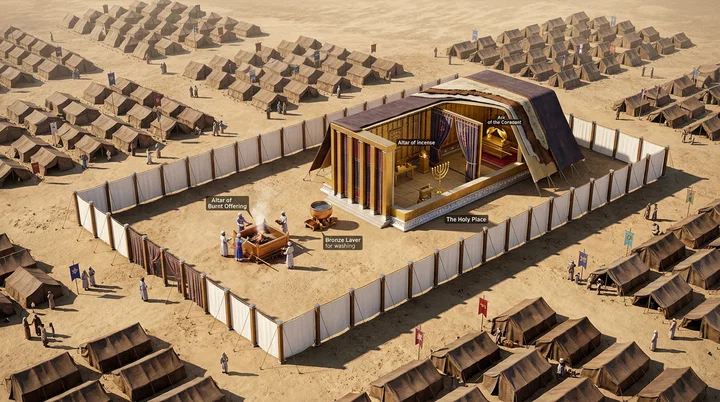
The verse directs that the altar of burnt offering be set outside the tabernacle building in the courtyard directly before its entrance door.RH Apr 13, 1876RH Feb 11, 1858ST Sep 17, 1902 It stood in line between the entrance to the court and the entrance to the tabernacle, nearer the court entrance so it was first reached on entering, with the brazen laver between it and the tabernacle door within the linen-curtained court.RH Aug 21, 1856ST Nov 5, 1894ST May 1, 1901 The altar was made of brass, about nine feet square and five and a half feet high, for offering burnt offerings and grain offerings and other sacrifices to God.RH Jan 6, 1853ST Jan 14, 1886 When the tabernacle was reared up on Abib 1 of the second year after leaving Egypt and the offerings were presented upon the altar as commanded, the cloud covered the tent and the glory of the Lord filled the tabernacle in token of His dwelling among Israel and His acceptance of the people.RH Apr 13, 1876RH Feb 11, 1858ST May 20, 1880 The altar and its daily offerings were a type of Christ the Lamb of God, representing both the sinner and the sinner's sacrifice and Israel's constant dependence on His atoning blood, in a service that pointed forward to the great Sacrifice until it ended at His death.ST Nov 19, 1894ST Jun 26, 1907
Altar's Position and Setting
The command sets the altar of burnt offering outside the tabernacle building itself, in the courtyard directly before its entrance or door.RH Apr 13, 1876RH Feb 11, 1858ST Sep 17, 1902ST May 20, 1880RH Aug 4, 1863 It belongs to the outer court, not to the service carried on inside the first apartment nor to the inner apartments with their furnishings.RH Feb 11, 1858 Within that court it stood in line between the court entrance and the tabernacle entrance, nearer the court entrance.RH Aug 21, 1856ST Nov 5, 1894ST May 1, 1901 It was therefore the first thing reached on entering the court.ST May 1, 1901ST May 1, 1901 The brazen laver stood between the altar and the tabernacle door, both inside the court enclosed by curtains of fine twined linen.RH Aug 21, 1856ST Nov 5, 1894
The altar was made of brass, about nine feet square and five and a half feet high.RH Mar 28, 1854 It was used for offering burnt offerings and grain or meat offerings and other sacrifices to God.RH Jan 6, 1853ST Jan 14, 1886RH Mar 28, 1854 The verse belongs to the detailed instructions and account for building, furnishing, preparing and setting up the sanctuary according to the pattern shown on the mountain.ST Oct 29, 1894ST Feb 17, 1890ST Jun 4, 1885ST Dec 10, 1896 What was directed was carried out as commanded, for the sanctuary was a sacred place where worship was to center.ST Oct 29, 1894ST Feb 17, 1890ST Jan 27, 1909
The tabernacle was reared up and fitted on Abib 1, the first day of the first month of the second year after the departure from Egypt.ST Jul 17, 1879RH Aug 21, 1856 The table and showbread were also set in place at that time.ST Jul 17, 1879 The sanctuary was made from willing offerings of gold, silver, brass, blue, purple, scarlet, fine linen, goats' hair, skins, shittim wood, oil, spices and stones, with dimensions, material and furnishings exactly as directed.ST Jun 4, 1885ST Jun 26, 1907 It was part of the established worship given after the deliverance, when Israel became an organized nation.RH Jan 20, 1916ST Jun 26, 1907
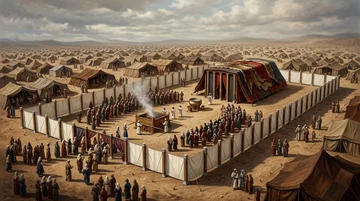
When the tabernacle was set up and dedicated, the burnt offering and grain or meat offering were presented on this altar as commanded.RH Apr 13, 1876RH Feb 11, 1858ST May 20, 1880RH Aug 21, 1856RH Aug 4, 1863 Afterward the cloud covered the tent of the congregation and the glory of the Lord filled the tabernacle.RH Apr 13, 1876RH Aug 21, 1856ST Jan 27, 1909 This brought God's blessing upon the congregation and building, marking His taking possession of His dwelling among Israel.RH Apr 13, 1876ST Jan 27, 1909 It showed His acceptance of the people's repentance.RH Apr 13, 1876ST Jan 27, 1909 The setting up of the tabernacle and the showbread then placed does not prove Abib 1 was a weekly Sabbath, because the ceremonial command to set out the showbread every Sabbath was given later.ST Jul 17, 1879ST Jul 17, 1879
Meaning Typology and Application
The altar belonged to the tabernacle that was built so that God might dwell among His people in order to reveal more fully His great love, and that tabernacle became the center of earthly worship whose services revolved around the holy of holies where the law of God rested beneath the mercy seat.ST Sep 17, 1902ST Jun 19, 1907ST Jul 8, 1930ST Oct 25, 1905 Its building particulars, with dimensions, material and furnishings exactly as directed, made it the movable dwelling-place first pitched in the wilderness after Israel was brought out of Egypt.ST Oct 25, 1905ST Jun 26, 1907 The tabernacle and its service were types of Christ's ministry in the heavenly sanctuary, and its furnishings served as lessons in spiritual truths.ST Sep 17, 1902ST Jun 26, 1907 The laws given through Moses concerning offerings and sacrifices preserve the types of the old dispensation from which the substance of the new dispensation can be traced, for the earthly sanctuary served unto the shadow of heavenly things.ST Sep 17, 1902ST Jun 26, 1907 The altar where sacrificial victims were offered symbolized the sacrifice of Christ, the Lamb of God who takes away the sin of the world. It represented both the sinner and the sinner's sacrifice in Jesus Christ, set in the courtyard before the entrance to the tabernacle. The daily burnt offerings made upon it in the court before the tabernacle entrance symbolized Israel's consecration to God and constant dependence on Christ's atoning blood.ST Nov 19, 1894
Moses placed the tables of the law in the ark in the Most Holy Place and established the Levitical priesthood to minister before it, and this typical sanctuary service continued throughout the Old Testament period.RH Dec 12, 1854 That dwelling-place of God among Israel remained through the wilderness and through the time of the judges, Samuel, Saul and David until Solomon built the temple after the same pattern, which from the day the glory of the Lord filled it was God's dwelling-place among Israel.ST Jun 4, 1885 The sanctuary so described in Exodus 25-31 and 35-40 and summed up in Hebrews 9:1-5 was made from willing offerings of gold, silver, brass, blue, purple, scarlet, fine linen, goats' hair, skins, shittim wood, oil, spices and stones.ST Jun 4, 1885 Its sacrifices could not take away sin but pointed penitent sinners forward to Christ the great Sacrifice and to the coming Messiah and His power to forgive sin and transform character.RH Dec 12, 1854ST Jun 26, 1907 With its typical service it foreshadowed the true tabernacle which the Lord pitched and not man, and it passed away entirely and forever at the death of Christ when the temple veil was rent.RH Dec 12, 1854ST Jun 26, 1907
The placing of the altar carries forward the unfolding of the plan of redemption as revealed in the Old Testament from the very simple service from Eden to the Exodus, in which a lamb for sin was offered upon an altar made of rough stones with the father of each family acting as priest, or mediator, between his family and God.ST Jul 8, 1930 It belongs to the last division of Exodus, which covers worship as part of the established form of worship given to Israel after their great deliverance from Egypt as they became a nation with thorough organization, efficient leadership, and a complete code of laws.ST Jul 8, 1930RH Jan 20, 1916 The book containing it is named from the Greek meaning going out, referring to the departure of Israel from Egypt.RH Jan 20, 1916 Once sanctified the sanctuary could not be used as an ordinary house, illustrating that what God has made holy is set apart for His service and must not be treated as ordinary.RH Jul 16, 1861 The direction for the altar is part of a separate set of laws given for the regulation of worship, distinct from the set of laws given for civil government in Exodus 21 to 23.ST Sep 3, 1896 It shows that civil government and religion have essentially different purposes and entirely separate lines of operation to go side by side in the world without commingling, with civil government ordained to control men and regulate their relations toward each other in this life only, and worship designed to bring men back to God.RH Jul 16, 1861ST Sep 3, 1896
Sources