Translations
American King James Version, King James Version, KJV Cambridge Paragraph Bible, Webster Bible
And the third row a ligure, an agate, and an amethyst.
Revised Version, American Standard Version, World English Bible
and the third row a jacinth, an agate, and an amethyst;
and the third row [is] opal, agate, and amethyst;
and the third row, an opal, an agate, and an amethyst;
and the third row an opal, an agate, and an amethyst;
Berean Standard Bible, Majority Standard Bible
in the third row a jacinth, an agate, and an amethyst;
The third, a jacinth, an agate, and an amethyst;
And in the third rowe a turkeis, an achate, and an hematite.
Douay-Rheims (Challoner revision)
In the third a ligurius, an agate, and an amethyst:
Pictures
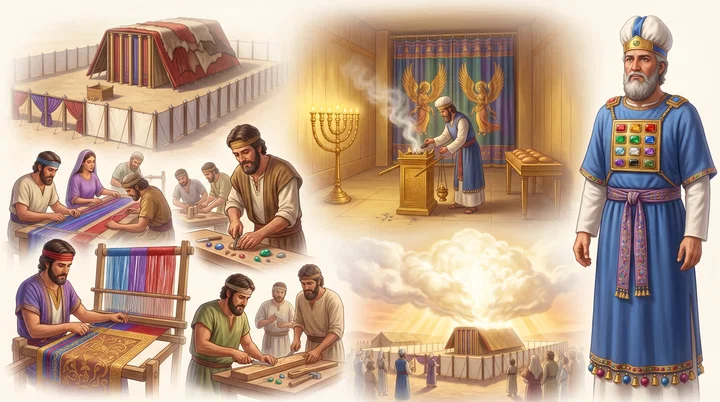
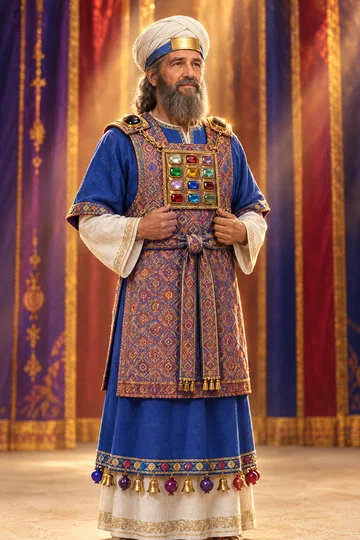
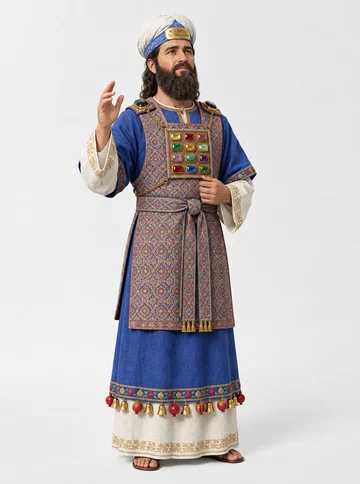
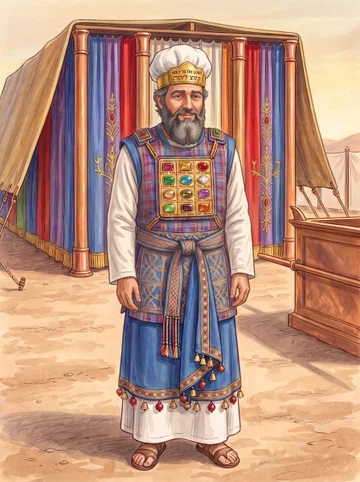
Cross-references
- Revelation 21:19-20
And the foundations of the wall of the city were garnished with all manner of precious stones. The first foundation was jasper; the second, sapphire; the third, a chalcedony; the fourth, an emerald;
The city’s foundations are adorned with precious stones also found on the priestly breastplate.
- Exodus 28:30
And thou shalt put in the breastplate of judgment the Urim and the Thummim; and they shall be upon Aaron’s heart, when he goeth in before the LORD: and Aaron shall bear the judgment of the children of Israel upon his heart before the LORD continually.
The breastplate bears Israel’s names on the high priest’s heart and is used for divine guidance.
- Exodus 28:2-4
And thou shalt make holy garments for Aaron thy brother for glory and for beauty.
Gives the purpose and description of Aaron’s sacred garments.
- Leviticus 16:4
He shall put on the holy linen coat, and he shall have the linen breeches upon his flesh, and shall be girded with a linen girdle, and with the linen mitre shall he be attired: these are holy garments; therefore shall he wash his flesh in water, and so put them on.
Describes the high priest’s garments for the atonement service.
Commentary
Each commentary is drawn from primary sources: the writings of Ellen G. White and Adventist pioneers and periodicals. Each commentary is separate. Its own words are not a quotation; follow the references to read the source passages.
Ellen G. White
15 sources
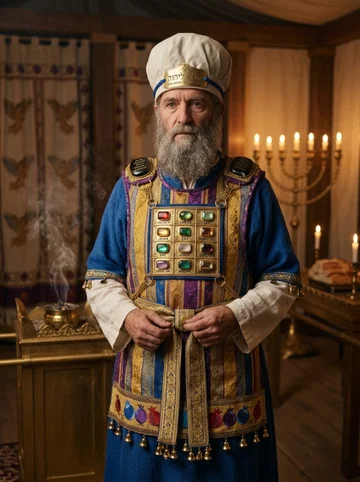
Exodus 28:19 names the ligure, agate, and amethyst as the three stones forming the third row of the high priest's breastplate, which bore the names of the twelve tribes of Israel engraved on precious stones set in gold.SG4 101.1EW 213.11SP 398.2–399.11SP 398.1 It belongs to God's detailed directions for the dress of those who minister before Him in the holy place, showing that He is honored by order, cleanliness, and reverence in sacred service.GW92 161.1GW92 162.22T 610.3–612.1Ms 56, 1900, par. 11–12 The breastplate was sacred because the high priest alone wore it to seek answers from Jehovah, whose approval or disapproval was shown by His glory upon its stones.1SP 398.2–399.1ST Jul 28, 1881ST Feb 21, 1911ST Oct 7, 1886 Its heavenly counterpart is worn by Jesus as He ministers in the heavenly sanctuary, for after Christ's death God's glory no longer shone upon the earthly stones nor His disapproval shadowed them.EW 213.1SG1 158.13SP 166.2–167.1ST Oct 7, 1886 Its stones are of the same kinds as the twelve foundations of the city of God, each with its own light and meaning, showing how people of distinct character are united in one family whose dress and appearance represent Him.SG4 101.11SP 398.1Ms 56, 1900, par. 11–12Ms 105, 1900, par. 6Lt 53, 1900, par. 9–12
Breastplate Stones and Setting
The third row of the high priest's breastplate held a ligure, an agate, and an amethyst.SG4 101.1EW 213.11SP 398.2–399.11SP 398.1ST Feb 21, 1911 That same row belongs to the breastplate's heavenly counterpart worn by Jesus, with its engraved names glittering as He ministers in the heavenly sanctuary and enters the second apartment.EW 213.1SG1 158.1 The breastplate was bordered and set with precious stones of different materials, bearing the names of Israel's twelve tribes engraved on stones set in gold.SG4 101.11SP 398.2–399.11SP 398.1
It was a sacred object because it was used in God's appointed service, and the high priest alone was authorized to wear it when going before the Lord.ST Jul 28, 1881 It served as a means for receiving messages from Jehovah, with two larger stones at its sides giving signs of approval or refusal when the priests sought His answer.1SP 398.2–399.1ST Feb 21, 1911 God's glory and His disapproval were shown upon its precious stones in the earthly sanctuary.ST Oct 7, 1886
That heavenly counterpart is worn by Jesus as He enters the second apartment and ministers in the heavenly sanctuary, with its engraved names glittering.EW 213.1SG1 158.1 After Christ's death, when the temple veil was torn, God's glory no longer shone upon the earthly breastplate stones and His disapproval no longer shadowed them.3SP 166.2–167.1ST Oct 7, 1886 Its stones were of the same materials and kinds as those forming the twelve foundations of the city of God.SG4 101.11SP 398.1
Sacred Dress and Unity
The ligure, agate, and amethyst of the third row belong to God's special, detailed directions to Moses about everything connected with His service.GW92 161.1GW92 162.22T 610.3–612.1 Those directions specified the dress of those who minister before Him, with a particular style suited to service in the holy place.GW92 161.1GW92 162.22T 610.3–612.1 The breastplate itself was a sacred object because it was used in God's appointed service, and the high priest alone was authorized to wear it when going before the Lord.ST Jul 28, 1881 The minuteness of the instructions for Aaron's robes shows that God cared about the clothing of those who served Him, and his dress was symbolic.Ms 56, 1900, par. 11–12 God may be honored or dishonored by the apparel of those who officiate before Him, for He requires order in everything and especially cleanliness.GW92 161.12T 610.3–612.1 Sacred service was to be carried out with order, cleanliness, and reverence, so that the people would recognize His holiness and the sacredness of His work.2T 610.3–612.1
Those who serve before God must therefore be careful and exact in their appearance.GW92 162.2 As Aaron's dress was symbolic, so the dress of Christ's followers should likewise represent Him.Ms 56, 1900, par. 11–12 Each stone in the breastplate had its own light and significance, contributing to the beauty, meaning, and message of the whole.Ms 105, 1900, par. 6Lt 53, 1900, par. 9–12 The many distinct stones thus illustrate how people with distinct characteristics and different ways of expressing truth can belong to one united family.Ms 105, 1900, par. 6Lt 53, 1900, par. 9–12
Sources
Pioneers and periodicals
45 sources
Exodus 28:19 names the three stones set in the third row of the high priest's breastpiece.ST May 13, 1897ST May 13, 1908 It belongs to the minute instructions given to Moses in the mount for the tabernacle and for the garments of Aaron and his sons, made exactly after the pattern of the heavenly sanctuary.ST Oct 29, 1894RH Dec 31, 1861ST Mar 10, 1898RH Jan 4, 1870 The twelve stones in four rows bore the names of the twelve tribes of Israel over the high priest's heart when he went in before the Lord.ST May 13, 1908ST Aug 12, 1880RH Feb 2, 1911ST Sep 6, 1910 Worn in the earthly sanctuary and its yearly cleansing, that bearing of the names typified the judgment work and the cleansing of the heavenly sanctuary.ST Dec 17, 1912RH Apr 8, 1858 In the antitype Christ as the great High Priest bears over His heart the name of every repentant believing soul and presents them before the Father in the final judgment.RH Aug 19, 1851RH Feb 2, 1911ST Dec 10, 1912RH Dec 1850
Sanctuary Pattern and Setting
The verse belongs to the very minute description of the sanctuary built in the days of Moses found in Exodus 25 to 40.ST Oct 29, 1894ST Mar 10, 1898 That full account begins with Exodus 25 and continues to the end of the book, giving the sanctuary and its furnishings.ST Oct 29, 1894ST Mar 10, 1898 Moses was instructed to make it exactly according to the pattern shown him in the mount.ST Oct 29, 1894RH Jan 4, 1870 That tabernacle system consisted of two holy places and with its sacred vessels was made according to the pattern shown in the mount, the pattern of the heavenly temple.RH Jan 4, 1870 It belongs to the commands God gave Moses on the mount to make a sanctuary so He might dwell among Israel and priests might minister in His presence.RH Jan 4, 1870
The verse is part of the detailed instructions for the construction of the Tabernacle and its furniture given by God to Moses during his forty days stay in the mountain.RH Dec 31, 1861ST Dec 10, 1896 Those instructions were given before the sanctuary was built and set up.ST Dec 10, 1896 Then He provided the pattern for the sanctuary and ordained the priesthood that would minister there.RH Dec 31, 1861 They belonged to the system of legal ordinances by which the ransomed people were bound to Jehovah as a peculiar treasure, a kingdom of priests, and a holy nation.
The verse is part of the wonderfully itemized instructions in Exodus 25 to 31 for the tabernacle and for the priestly attire for Aaron and his sons, with profuse use of gold, silver, costly gems, and fine linen.ST Jun 10, 1908 Its extreme exactness and minute detail carry a multitude of invigorating and instructive ideas, suggestions, and lessons.ST Jun 10, 1908 The depths of its meaning cannot be fully seen, the reasons for its exactness and detail cannot be fully fathomed, and the complete motive for the costly gems cannot be fully appreciated.ST Jun 10, 1908 Careful, thoughtful study of it gives vitalizing food to strengthen famishing hearts and water of life to refresh worn spirits through long days.ST Jun 10, 1908
The sanctuary was a marvelously beautiful sanctuary given to Moses in the mount as a divine pattern, with directions for building and description. It was a great, multiple object-lesson by various forms and rites comprehending in its teaching the great plan of salvation. It served as an earthly object lesson of God's plan for dealing with sin and salvation through Christ. It was given because Israel's hundreds of years of slavery had unfitted them to comprehend God's great salvation and the character He required. It was built from free-will offerings of the children of Israel so that God might dwell among them, with workmen specially endowed by God to build it. In the wilderness sanctuary worship centered on the holy of holies, with God's law beneath the mercy seat.ST Jun 19, 1907
Breastplate Stones and Arrangement
The third row of the high priest's breastpiece consisted of a ligure, an agate, and an amethyst.ST May 13, 1897ST May 13, 1908RH Aug 19, 1851ST Aug 12, 1880 That row belonged to a breastpiece bearing the names of Israel's twelve tribes arranged in four rows.ST Dec 17, 1912RH Aug 19, 1851ST Aug 12, 1880RH Feb 2, 1911 The breastpiece was connected with the high priest's sanctuary ministry of atonement.ST Dec 17, 1912ST Aug 12, 1880
The breastpiece held twelve stones in all, in four rows with three stones in a row, not twenty-four.ST May 13, 1908 The twelve stones named in Exodus 28 are the stones on which the names of the children of Israel were written.ST May 13, 1908 They were set in gold and engraved with the names of Israel's tribes, one tribe on each stone.RH Feb 2, 1911ST Dec 17, 1912 Whether any border surrounded them is unknown.ST May 13, 1908
The breastplate was made of the same material as the ephod.ST Dec 17, 1912 It was square and measured a span.ST Dec 17, 1912 It was the crowning feature of the gorgeous robe, worn over the high priest's heart as he officiated in the holy of holies before the Lord.ST Dec 17, 1912 The description in Exodus 28:4-39 compares the high priest's many-colored robe to the clothing described for Israelite priests.ST Oct 4, 1899
The exact colors of the ligure, agate, and amethyst cannot be known with certainty.ST May 13, 1897 Historical authorities give varying descriptions, and these stones occur in many shades and mixtures.ST May 13, 1897 The ligure is described as reddish or crimson, sometimes mixed with yellow.ST May 13, 1897 Agates vary in color, and amethysts range from purple and dove-colored to white.ST May 13, 1897
The stones in the breastplate served as mementos of the tribes. What more they represented is not stated. The descriptions of the garments prepared for the priests and of the high priest's holy garments, including the breastplate of judgment which bore the people's names, do not explain the meaning of the three stones individually.ST Nov 12, 1894RH Sep 16, 1852
Priestly Garments and Service
The verse belongs to the description of the garments prepared for the priests, special clothing suited to their office. Their approach to God required putting away defilement.ST Nov 12, 1894 The priests' white linen garments signified the purity of their priestly character and work, and the breastplate with its ligure, agate, and amethyst in the third row was part of Aaron's distinctive priestly equipment, which included the Urim and Thummim.ST Nov 12, 1894RH Dec 8, 1910
The priesthood was committed to Aaron and his sons in Exodus 27-30, after which no one else was to perform a priest's rites unless especially directed by the Lord.ST Mar 3, 1914 The breastplate was a sacred object because it was used in God's appointed service.ST Jul 28, 1881 The high priest alone was authorized to wear it when going before the Lord.ST Jul 28, 1881ST Mar 3, 1914
The verse is part of the law prescribing the splendid dress the high priest wore on other occasions.RH Jan 11, 1870ST Jun 6, 1878 That splendid dress he laid aside on the Day of Atonement when he entered the most holy place in the plainest and humblest dress.RH Jan 11, 1870ST Jun 6, 1878 The chapter's holy garments are thus connected with entering the Holy of Holies on the Day of Atonement, including the breastplate of judgment which bore the people's names.RH Sep 16, 1852 The breastplate was worn during the Day of Atonement service as the high priest entered the second apartment with the blood of the Lord's goat, bearing the names of Israel's twelve tribes over his heart and officiating in the holy of holies before the Lord.RH Sep 16, 1852RH Oct 10, 1912
Even the arrangement of the breastplate's stones was specified, with the third row to contain a ligure, an agate, and an amethyst.RH Oct 30, 1913ST Mar 15, 1883 No detail of sacred service was too small to escape God's notice.ST Mar 15, 1883 The careful specification of what the priests should wear and how they should appear before Him shows reverence for God and the holiness of His service.RH Oct 30, 1913ST Mar 15, 1883
Judgment Work Foreshadowed
The breastplate described in Exodus 28:19 is the breastplate of judgment, giving the third row of its stones.ST Dec 17, 1912 That breastplate contained the names of the twelve tribes and was worn over the high priest's heart as he performed the work which typified the judgment work.ST Dec 17, 1912 Exodus 28:15-30 describes that breastplate worn as he ministered in the most holy place as part of the earthly sanctuary service and its annual cleansing, when atonement was made for the sanctuary and the people.RH Apr 8, 1858
That earthly service prefigured the final judgment and cleansing of the heavenly sanctuary, where sins are blotted out and people's cases are decided.RH Apr 8, 1858 The ligure, agate, and amethyst of the third row belong to that sanctuary ministry of atonement.ST Aug 12, 1880 In that ministry Aaron bore the twelve tribes, represented by the twelve stones, on his breast over his heart when he goes in before the Lord continually.ST Aug 12, 1880ST Sep 6, 1910 Aaron in the type and Jesus Christ in the antitype bear the sins of all God's people upon the heart before the Lord continually, never forgetting them, as one graven on the palms of the hands and continually before Him.ST Sep 6, 1910
Christ Bears His People
The third row of ligure, agate, and amethyst belonged to a breastplate that represented the names of Israel's tribes, and in the heavenly sanctuary the Great High Priest bears over His heart in the same way the names of God's true Israel.RH Aug 19, 1851 The twelve stones were set in gold and engraved with the names of the tribes, and they show how Christ as the great High Priest bears the name of every repentant, believing soul.RH Feb 2, 1911 The names on the stones show Him thinking of people individually and confessing their names before God as they come up in review, presenting Israel's names before the Father in the final judgment.ST Dec 10, 1912RH Dec 1850 The breastplate bore the names of all twelve tribes to represent their shared interest in the sanctuary services, and its continued use after the captivity shows that the tribes remained represented among those who worshiped the true God.ST Jun 12, 1884
Law Covenant and Fulfilment
The verse is part of the law of Moses commanded in Horeb with statutes and judgments, including the Ten Commandments together with all other moral, civil, health, sacrificial and ceremonial precepts. It belongs among the laws in which offerings, sacrifices and types were revealed, so that the substance of the new dispensation may be traced from the shadows of the old. In the last days attention is called to it with the rest of the law set forth in Exodus 20 to 40 and Leviticus.
It is an example of the priestly regulations associated with the Levitical priesthood, in contrast to the Ten Commandments, which were given before that priesthood was appointed.ST Mar 22, 1883 It falls within the section in which the moral law and the law of ordinances are written out, belonging to the ordinances that follow the moral law.ST May 6, 1875 It belongs to the added instruction God gave through Moses rather than spoke directly to the people from Sinai, found in Exodus 25 to 30.ST May 6, 1875ST Jul 8, 1886
The instruction was given to Moses in the mount during forty days for the people, recorded chiefly in Exodus 25 to 30 and Leviticus and delivered by the hand of Moses.ST Apr 15, 1886 It is not part of the Ten Commandments that God spoke directly to the assembly from Sinai, to which He added no more and which alone He wrote on the two tables of stone.ST Apr 15, 1886 It belongs with the additional precepts, statutes and laws that include burdensome ceremonies, diverse washings and carnal ordinances imposed until the time of reformation, a yoke which neither the fathers nor their children were able to bear.ST Apr 15, 1886 Exodus 28 shows the appointment of the Levitical priesthood, which came after the giving of the Ten Commandments in Exodus 20, and this timing proves the Ten Commandments are distinct from the faulty law that was received under the Levitical priesthood.ST Feb 20, 1879
The verse belongs to the instructions for setting apart the Levitical priesthood to minister in the typical sanctuary before the ark.RH Dec 12, 1854 That priestly service continued while that sanctuary stood, and its offerings could not remove sin but pointed penitent sinners forward to Christ the great Sacrifice.RH Dec 12, 1854 The ancient tabernacle, sanctuary and priests in Exodus 25 to 31 have no likeness to modern churches, having been constructed for ministration in sacrifices and offerings, all of which passed away when Christ came and suffered and died once for all.ST Jan 24, 1911 The ancient sanctuary typified the great temple on high where Jesus now ministers.ST Jan 24, 1911 When Christ died and the temple veil was torn, God's glory no longer shone upon the breastplate's precious stones and His disapproval no longer shadowed them.ST Oct 7, 1886
Guidance Glory and Future
The third row — ligure, agate, and amethyst — belongs to four rows of three stones that carry assurance of light and truth for all the tribes of Israel.RH Dec 15, 1910 The breastplate set with precious stones was part of the sanctuary service for receiving messages from Jehovah.ST Jun 3, 1886ST Feb 21, 1911 As the breastplate of judgment bearing the names of Israel's twelve tribes, it served as a means of divine guidance, a type of divine aid and direction that continued in the Christian era.ST Jun 3, 1886RH Jul 16, 1872
It was part of Aaron's distinctive priestly equipment, which included the Urim and Thummim by which the mind of the Lord could be ascertained through the high priest.RH Dec 8, 1910ST Dec 17, 1912 Light encircling the precious stone at the right gave an affirmative answer to questions asked, and light encircling the stone at the left gave a negative answer.ST Dec 17, 1912 The breastplate was attached to the ephod, which is why David when undecided what course to pursue called for the priest to bring the ephod, that he might know the mind of the Lord.ST Dec 17, 1912
These same varieties of precious stones become foundations of the wall of the heavenly city, the same as those forming the foundation of the New Jerusalem.ST Dec 17, 1912RH May 7, 1901 With sardius as the first stone and jasper as the last in the twelve-stone breastplate worn over his heart, in the symbolism connected with Revelation 4 these two stones together represent the breastplate's message.ST Jan 24, 1911 That message is God's merciful remembrance of all His people and the perfect blending of justice with mercy, truth with love, and righteousness with peace.ST Jan 24, 1911
The wonderfully itemized instructions for tabernacle and priestly attire, with profuse use of gold, silver, costly gems, and fine linen, show extreme exactness and minute detail carrying a multitude of invigorating and instructive ideas, suggestions, and lessons.ST Jun 10, 1908 The depths of meaning cannot be fully seen, the reasons for exactness and detail cannot be fully fathomed, and the complete motive for the costly gems cannot be fully appreciated.ST Jun 10, 1908 Careful thoughtful study gives vitalizing food to strengthen famishing hearts and water of life to refresh worn spirits through long days.ST Jun 10, 1908
Sources