Ezekiel 20:48
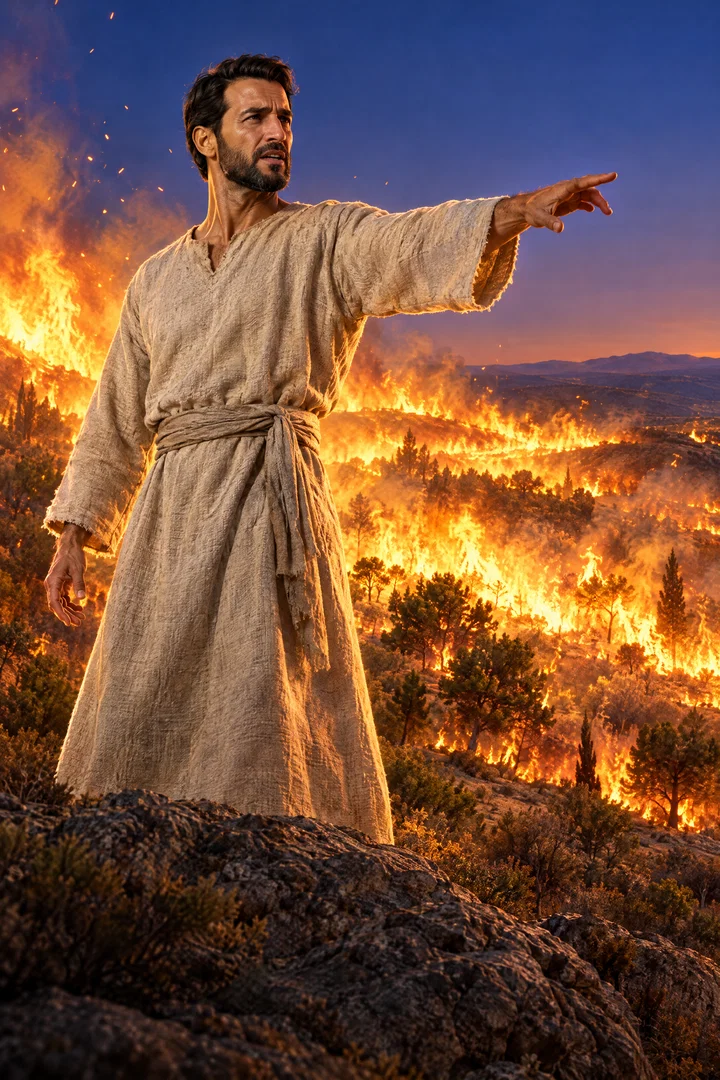
And all flesh shall see that I the LORD have kindled it: it shall not be quenched.
Translations
American King James Version, King James Version, Webster Bible, Revised Version
And all flesh shall see that I the LORD have kindled it: it shall not be quenched.
And all flesh shall see that I the Lord have kindled it: it shall not be quenched.
And all flesh shall see that I, Jehovah, have kindled it; it shall not be quenched.
And seen have all flesh, that I, Jehovah, have kindled it — it is not quenched.'
And all flesh shall see that I Jehovah have kindled it: it shall not be quenched.
And all flesh shall see that I. Yahweh have kindled it,- It shall not be quenched.
Berean Standard Bible, Majority Standard Bible
Then all people will see that I, the LORD, have kindled it; it will not be quenched.”
All flesh will see that I, the LORD, have kindled it. It will not be quenched.”’”
And all flesh will see that I the Lord have had it lighted: it will not be put out.
And all flesh shall see, that I the Lord haue kindled it, and it shall not bee quenched. Then saide I, Ah Lord God, they say of me, Doeth not he speake parables?
Douay-Rheims (Challoner revision)
And all flesh shall see, that I the Lord have kindled it, and it shall not be quenched.
Pictures
Cross-references
- Jeremiah 17:27
But if ye will not hearken unto me to hallow the sabbath day, and not to bear a burden, even entering in at the gates of Jerusalem on the sabbath day; then will I kindle a fire in the gates thereof, and it shall devour the palaces of Jerusalem, and it shall not be quenched.
Both describe the Lord’s consuming fire as unquenched.
- Isaiah 66:24
And they shall go forth, and look upon the carcases of the men that have transgressed against me: for their worm shall not die, neither shall their fire be quenched; and they shall be an abhorring unto all flesh.
Both describe the dead transgressors’ destruction with unquenched fire.
- Matthew 3:12
Whose fan is in his hand, and he will throughly purge his floor, and gather his wheat into the garner; but he will burn up the chaff with unquenchable fire.
Both describe fire kindled by the Lord that cannot be quenched.
- Mark 9:44
Where their worm dieth not, and the fire is not quenched.
Both describe fire that is not quenched.
- Isaiah 34:10
It shall not be quenched night nor day; the smoke thereof shall go up for ever: from generation to generation it shall lie waste; none shall pass through it for ever and ever.
Both describe fire that cannot be quenched.
- Malachi 4:3
And ye shall tread down the wicked; for they shall be ashes under the soles of your feet in the day that I shall do this, saith the LORD of hosts.
Both describe the wicked burned to ashes in the day of judgment.
- Mark 9:46
Where their worm dieth not, and the fire is not quenched.
The unquenched fire echoes the prophets’ imagery of consuming judgment.
- Jeremiah 7:20
Therefore thus saith the Lord GOD; Behold, mine anger and my fury shall be poured out upon this place, upon man, and upon beast, and upon the trees of the field, and upon the fruit of the ground; and it shall burn, and shall not be quenched.
Both describe the LORD’s fire as burning without being quenched.
- Luke 3:17
Whose fan is in his hand, and he will throughly purge his floor, and will gather the wheat into his garner; but the chaff he will burn with fire unquenchable.
Both describe destruction by unquenchable fire.
- Isaiah 33:12
And the people shall be as the burnings of lime: as thorns cut up shall they be burned in the fire.
The wicked are burned like lime and thorns in fire.
- Malachi 4:1
For, behold, the day cometh, that shall burn as an oven; and all the proud, yea, and all that do wickedly, shall be stubble: and the day that cometh shall burn them up, saith the LORD of hosts, that it shall leave them neither root nor branch.
Both describe the wicked burned like stubble on the day of the Lord.
- Matthew 13:40-42
As therefore the tares are gathered and burned in the fire; so shall it be in the end of this world.
At the end of the world, evildoers are gathered and burned.
- Psalms 37:20
But the wicked shall perish, and the enemies of the LORD shall be as the fat of lambs: they shall consume; into smoke shall they consume away.
Fire consumes the wicked until they are destroyed.
- 2 Thessalonians 1:8
In flaming fire taking vengeance on them that know not God, and that obey not the gospel of our Lord Jesus Christ:
Christ is revealed in flaming fire to punish the wicked.
Commentary
Each commentary is drawn from primary sources: the writings of Ellen G. White and Adventist pioneers and periodicals. Each commentary is separate. Its own words are not a quotation; follow the references to read the source passages.
Pioneers and periodicals
17 sources
When the Lord kindles a fire and declares it shall not be quenched, no outside power puts it out but it is left to burn until it has entirely devoured what it preys upon and accomplished its work, not that it burns forever without end.ST Feb 2, 1882RH Dec 24, 1872RH Sep 29, 1859 It burns everything, green tree and dry tree alike, with all faces from the south to the north scorched therein, so that all flesh sees and knows that the Lord Himself kindled it.ST Jul 26, 1910ST Feb 2, 1882RH Sep 27, 1853 It stands among the dreadful curses God connects with disobedience to and profaning of the Sabbath, in a history where idolatry joined with Sabbath desecration and wandering from God brought trouble, exile and the destruction of Jerusalem.ST Oct 6, 1914ST Apr 27, 1904ST Mar 4, 1889RH Aug 19, 1851ST Feb 20, 1893 Unquenchable fire is the symbol of complete consumption and total destruction, proving that the wicked are utterly destroyed rather than endlessly tormented, and denying their immortality and eternal burning or preservation alive.ST Aug 30, 1877RH Sep 29, 1859RH Oct 17, 1854RH Dec 19, 1854 It gives the true sense of Christ's words about the fire that is not quenched, and applies to the destruction of the wicked at His coming, which all people will see that the Lord has brought.RH Aug 17, 1916ST Jul 26, 1910RH Sep 27, 1853RH Sep 29, 1859
Fire's Meaning and Setting
When the Lord kindles a fire and declares it shall not be quenched, no outside power puts it out but it is left to burn on until it has entirely devoured everything it preys upon and has accomplished its work and done its office-work, not that it burns forever without end.ST Feb 2, 1882RH Dec 24, 1872RH Sep 29, 1859RH Oct 17, 1854RH Dec 19, 1854 Not quenched does not mean burning without end or preservation alive, but not being stopped or put out before it consumes what it was sent to destroy and fulfills the purpose for which it was kindled, after which it goes out.ST Feb 2, 1882RH Dec 24, 1872RH Sep 29, 1859RH Oct 17, 1854RH Dec 19, 1854 Unquenchable fire is therefore the symbol of complete consumption and total destruction, and this gives the true sense of Christ's words about the fire that is not quenched.RH Sep 29, 1859
The fire burns everything, every green tree and every dry tree, with all faces from the south to the north burned therein as it spreads across the land, and all flesh sees and recognizes that the Lord Himself kindled it.ST Jul 26, 1910ST Feb 2, 1882RH Sep 27, 1853RH Dec 24, 1872RH Sep 29, 1859 That judgment kindled by the Lord is visible to all people and will not be extinguished before its work is complete, and all people recognize Him as the one who brought it.ST Jul 26, 1910RH Sep 27, 1853ST Aug 13, 1896 Its threatened fulfillment is real, not merely figurative.RH Sep 27, 1853
The language is figurative for sore calamities upon the land called the forest of the south field, burning through all faces from south to north.ST Feb 2, 1882RH Dec 24, 1872 The calamities it describes fell upon that generation, that generation perished long ago and those judgments ceased and ended long ago.ST Feb 2, 1882RH Dec 24, 1872
The verse stands in Ezekiel's account of the transgressions that brought Israel into trouble and exile and dispersion and Jerusalem's destruction.ST Oct 6, 1914ST Apr 27, 1904ST Mar 4, 1889 Idolatry joined with Sabbath desecration brought the people into trouble and exile, for Israel wandered from God, forgot His Sabbath and turned to idolatry and to pagan times, and in consequence Jerusalem was destroyed.ST Oct 6, 1914ST Apr 27, 1904ST Mar 4, 1889
Sabbath Apostasy and Judgment
Disobedience to the Sabbath and profaning of it bring dreadful curses and judgment from God, which reveals the importance of the Sabbath and the punishment for breaking it.RH Aug 19, 1851ST Feb 20, 1893 God made the Sabbath a sign for Israel so that they might know the Lord who sanctifies them and know that their God is the Creator, not as a mark imposed because of their unrighteousness and that of their fathers.RH Aug 19, 1873 The Lord kindles a fire that shall not be quenched and all people shall recognize that He kindled it, and in this connection the chapter is profitable for understanding how departing from God leads to false worship.RH Aug 19, 1851ST Aug 13, 1896 The chapter belongs to the Dark Ages of the Jewish church, a time of apostasy into idolatry in which the faithful were persecuted and which was followed by the captivity of the Jews, forming the parallel to the Dark Ages of the Christian church when the apostate church persecuted and slew the conscientious.ST Jan 30, 1896
Final Destruction of Wicked
Sin must be forgiven or it will be consumed, for the Lord Himself kindles a fire of judgment that all flesh shall see to be His doing and that shall not be extinguished.RH Aug 17, 1916ST Jul 26, 1910 That fire of judgment kindled by the Lord will be visible to all people and will not be put out by any outside power.RH Aug 17, 1916ST Jul 26, 1910 Unquenchable fire is the symbol of complete consumption and total destruction, not of endless burning or eternal torment.ST Aug 30, 1877RH Sep 29, 1859RH Oct 17, 1854RH Dec 19, 1854 It continues until what it burns is consumed, not forever as an ongoing process of torment, but is left to burn on till it has entirely devoured everything it preys upon, every green tree and every dry tree, with all faces from the south to the north burned therein, while all flesh sees that the Lord kindled it.ST Aug 30, 1877RH Sep 29, 1859 An unquenched fire is one that cannot be put out before it has consumed what it burns.ST Aug 30, 1877RH Sep 29, 1859RH Oct 17, 1854RH Dec 19, 1854
Not quenched does not mean burning forever without end; it means not put out before it consumes what it is preying upon.RH Sep 29, 1859RH Oct 17, 1854RH Dec 19, 1854 The fire continues until it devours and burns up everything it kindles upon and accomplishes the purpose for which it was kindled, doing its office-work, and then it goes out.RH Sep 29, 1859RH Dec 19, 1854 So the verse proves the complete destruction of the wicked rather than their eternal burning, eternal torture, or eternal preservation alive, and denies their immortality, showing that the wicked are utterly destroyed rather than endlessly tormented.ST Aug 30, 1877RH Sep 29, 1859RH Dec 19, 1854 It gives the true sense of Christ's words about the fire that is not quenched.RH Sep 29, 1859 The verse applies to the destruction of the wicked at Christ's coming, describing a fire kindled by the Lord that spreads across the land, burns the wicked, and cannot be quenched before its work is complete, so that all people will see that the Lord has brought this judgment, and its threatened fulfillment is real, not merely figurative.RH Sep 27, 1853
Sources