Ezekiel 28:2
Son of man, say unto the prince of Tyrus, Thus saith the Lord GOD; Because thine heart is lifted up, and thou hast said, I am a God, I sit in the seat of God, in the midst of the seas; yet thou art a man, and not God, though thou set thine heart as the heart of God:
Translations
Son of man, say to the prince of Tyrus, Thus says the Lord GOD; Because your heart is lifted up, and you have said, I am a God, I sit in the seat of God, in the middle of the seas; yet you are a man, and not God, though you set your heart as the heart of God:
Son of man, say unto the prince of Tyrus, Thus saith the Lord GOD; Because thine heart is lifted up, and thou hast said, I am a God, I sit in the seat of God, in the midst of the seas; yet thou art a man, and not God, though thou set thine heart as the heart of God:
Son of man, say unto the prince of Tyrus, Thus saith the Lord God; Because thine heart is lifted up, and thou hast said, I am a God, I sit in the seat of God, in the midst of the seas; yet thou art a man, and not God, though thou set thine heart as the heart of God:
Son of man, say to the prince of Tyre, Thus saith the Lord GOD; Because thy heart is lifted up, and thou hast said, I am a god, I sit in the seat of God, in the midst of the seas; yet thou art a man, and not God, though thou settest thy heart as the heart of God:
Son of man, say unto the prince of Tyre, Thus saith the Lord GOD: Because thine heart is lifted up, and thou hast said, I am a god, I sit in the seat of God, in the midst of the seas; yet thou art man, and not God, though thou didst set thine heart as the heart of God:
Son of man, say unto the prince of Tyre, Thus saith the Lord Jehovah: Because thy heart is lifted up, and thou hast said, I am a god, I sit in the seat of God, in the midst of the seas; yet thou art man, and not God, though thou didst set thy heart as the heart of God;—
'Son of man, say to the leader of Tyre: Thus said the Lord Jehovah: Because thy heart hath been high, And thou dost say: A god I [am], The habitation of God I have inhabited, In the heart of the seas, And thou [art] man, and not God, And thou givest out thy heart as the heart of God,
Son of man, say unto the prince of Tyre, Thus saith the Lord Jehovah: Because thy heart is lifted up, and thou hast said, I am a god, I sit [ in] the seat of God, in the heart of the seas, ( and thou art a man, and not God,) and thou settest thy heart as the heart of God:
Son of man Say to the Prince of Tyre. Thus, saith My Lord. Yahweh— Because lofty, is thy heart and thou hast said A GOD, am I, In the seat of God, have I taken my seat In the heart of the seas; Whereas thou art a man, and not a GOD, But hast set thy heart as the heart of God:
Berean Standard Bible, Majority Standard Bible
“ Son of man, tell the ruler of Tyre that this is what the Lord GOD says:
Your heart is proud,
and you have said,
‘ I am a god;
I sit in the seat of gods
in the heart of the sea.’
Yet you are a man and not a god,
though you have regarded your heart
as that of a god.“ Son of man, tell the prince of Tyre, ‘ The Lord GOD says:
“ Because your heart is lifted up,
and you have said, ‘ I am a god,
I sit in the seat of God,
in the middle of the seas;’
yet you are man,
and no god,
though you set your heart as the heart of a god—Son of man, say to the ruler of Tyre, This is what the Lord has said: Because your heart has been lifted up, and you have said, I am a god, I am seated on the seat of God in the heart of the seas; but you are man and not God, though you have made your heart as the heart of God:
Sonne of man, say vnto the prince of Tyrus, Thus saieth the Lord God, Because thine heart is exalted, and thou hast said, I am a God, I sit in the seat of God in ye mids of the sea, yet thou art but a man and not God, and though thou didest thinke in thine heart, that thou wast equall with God,
Douay-Rheims (Challoner revision)
Son of man, say to the prince of Tyre: Thus saith the Lord God: Because thy heart is lifted up, and thou hast said: I am God, and I sit in the chair of God in the heart of the sea: whereas thou art a man, and not God: and hast set thy heart as if it were the heart of God.
Pictures
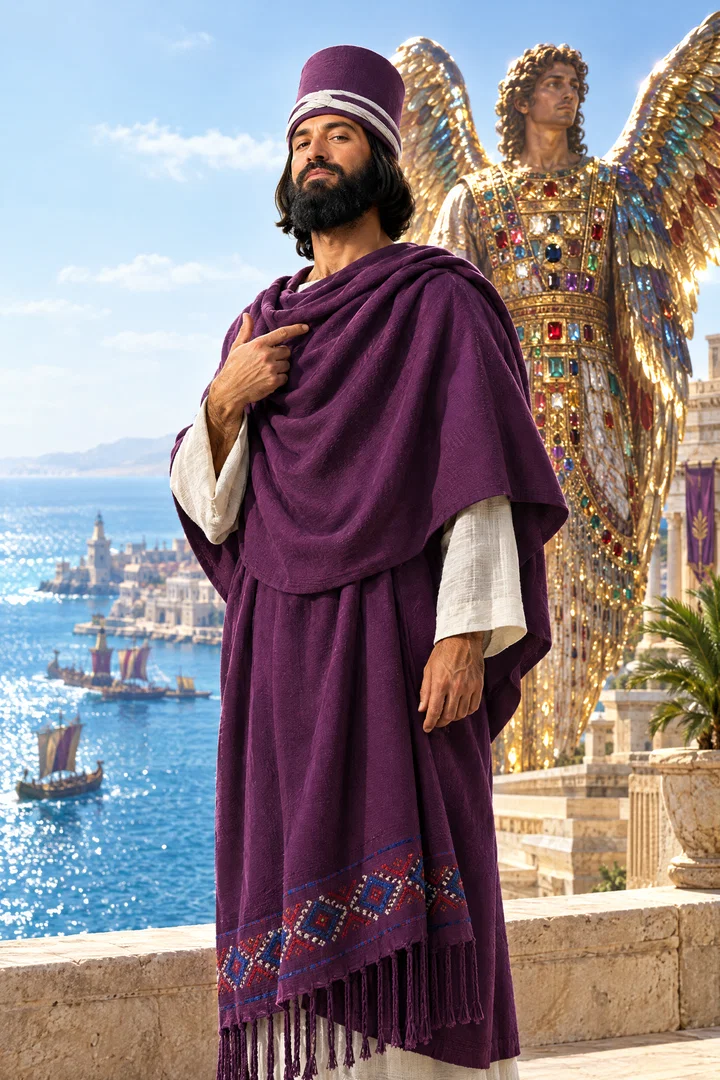
Cross-references
- Ezekiel 28:12-19
Son of man, take up a lamentation upon the king of Tyrus, and say unto him, Thus saith the Lord GOD; Thou sealest up the sum, full of wisdom, and perfect in beauty.
The proud king’s corrupted wisdom leads to his casting down and destruction.
- Isaiah 14:13-14
For thou hast said in thine heart, I will ascend into heaven, I will exalt my throne above the stars of God: I will sit also upon the mount of the congregation, in the sides of the north:
Both describe prideful self-exaltation and the desire to become like God.
- Ezekiel 28:12-15
Son of man, take up a lamentation upon the king of Tyrus, and say unto him, Thus saith the Lord GOD; Thou sealest up the sum, full of wisdom, and perfect in beauty.
The king of Tyre is portrayed as a covering cherub, perfect until iniquity arose.
- Ezekiel 28:6-10
Therefore thus saith the Lord GOD; Because thou hast set thine heart as the heart of God;
The prince’s self-exaltation brings judgment and death.
- Ezekiel 26:5
It shall be a place for the spreading of nets in the midst of the sea: for I have spoken it, saith the Lord GOD: and it shall become a spoil to the nations.
Tyre is foretold to become a place for spreading nets.
- Revelation 3:17
Because thou sayest, I am rich, and increased with goods, and have need of nothing; and knowest not that thou art wretched, and miserable, and poor, and blind, and naked:
Its description of human wretchedness counters claims of self-divinity.
- Ezekiel 28:9-10
Wilt thou yet say before him that slayeth thee, I am God? but thou shalt be a man, and no God, in the hand of him that slayeth thee.
The verses declare the destruction and death of the one who claimed to be God.
- Ezekiel 27
The word of the LORD came again unto me, saying,
Also foretells their destruction.
- Isaiah 14:13
For thou hast said in thine heart, I will ascend into heaven, I will exalt my throne above the stars of God: I will sit also upon the mount of the congregation, in the sides of the north:
Both describe a boast of self-exaltation to divine status.
- Isaiah 23
The burden of Tyre. Howl, ye ships of Tarshish; for it is laid waste, so that there is no house, no entering in: from the land of Chittim it is revealed to them.
It is cited among prophecies concerning Tyre.
- Ezekiel 28:12-13
Son of man, take up a lamentation upon the king of Tyrus, and say unto him, Thus saith the Lord GOD; Thou sealest up the sum, full of wisdom, and perfect in beauty.
Describes Lucifer’s former splendor before his fall.
- 2 Thessalonians 2:4
Who opposeth and exalteth himself above all that is called God, or that is worshipped; so that he as God sitteth in the temple of God, shewing himself that he is God.
Both describe a ruler exalting himself and claiming to be God.
- Ezekiel 28:18-19
Thou hast defiled thy sanctuaries by the multitude of thine iniquities, by the iniquity of thy traffick; therefore will I bring forth a fire from the midst of thee, it shall devour thee, and I will bring thee to ashes upon the earth in the sight of all them that behold thee.
The proud king of Tyre is reduced to ashes and ceases to exist.
- Amos 1:9
Thus saith the LORD; For three transgressions of Tyrus, and for four, I will not turn away the punishment thereof; because they delivered up the whole captivity to Edom, and remembered not the brotherly covenant:
It is cited among prophecies concerning Tyre.
- Ezekiel 28:15
Thou wast perfect in thy ways from the day that thou wast created, till iniquity was found in thee.
Both describe Satan’s origin and the discovery of iniquity.
- Isaiah 14:4
That thou shalt take up this proverb against the king of Babylon, and say, How hath the oppressor ceased! the golden city ceased!
both use an earthly king to introduce Satan
- Revelation 12:9
And the great dragon was cast out, that old serpent, called the Devil, and Satan, which deceiveth the whole world: he was cast out into the earth, and his angels were cast out with him.
Both describe the prideful fall of an exalted being.
- 1 Timothy 6:15-16
Which in his times he shall shew, who is the blessed and only Potentate, the King of kings, and Lord of lords;
Affirms that God alone possesses immortality.
- Luke 10:18
And he said unto them, I beheld Satan as lightning fall from heaven.
Christ says Satan fell from heaven.
Commentary
Each commentary is drawn from primary sources: the writings of Ellen G. White and Adventist pioneers and periodicals. Each commentary is separate. Its own words are not a quotation; follow the references to read the source passages.
Ellen G. White
12 sources
The word is spoken to the prince of Tyre as a human ruler and not God, whose heart is lifted up to say he is a God and to sit in the seat of God in the midst of the seas in a place of power among the gods, though he sets his heart as the heart of God.STB 705.2–707.2Lt 46, 1911, par. 4–96MR 76.5–77.1Ms 126, 1908, par. 9Ms 67, 1910, par. 2–7 His heart was lifted up by wealth and power and by wisdom and riches, until riches and wisdom inflated him to regard himself as divine.STB 705.2–707.2Lt 46, 1911, par. 4–9 That self-exalting claim to divine status and to divine wisdom and authority is false, and his arrogant claim is followed by God's judgment.Lt 385, 1904, par. 7Ms 87, 1897, par. 10–12
Beyond the prince, the portrayal reaches to and refers primarily to Lucifer and the fallen angels who sought to be above Christ, with Satan represented as Tyre's actual king because he fully controlled that government and acted through it.STB 705.2–707.2Lt 46, 1911, par. 4–9Lt 46, 1911, par. 1–36MR 76.5–77.1GC88 679.3–680.3 Lucifer set his heart to be as the heart of God, and little by little indulged desire for self-exaltation because of his beauty and brightness until his wisdom was corrupted.Lt 60, 1893, par. 10–14ST Nov 11, 1913 Instead of seeking to make God supreme in the affections and allegiance of heavenly beings, he endeavored to win their service and homage to himself, coveting the honor the infinite Father had bestowed upon His Son and aspiring to power that was the prerogative of Christ alone to wield.ST Nov 11, 1913
Lucifer and the strange spirits expelled from heaven for rebellion now exercise that same subtle power that plotted rebellion among holy beings through people who resist God, working to deceive people, to hinder God's work and advancement, and to fulfill purposes of evil.Lt 46, 1911, par. 1–36MR 76.5–77.1Lt 189, 1909, par. 21 That working can appear disguised as a beautiful angel from heaven, as Satan did to Christ.Ms 126, 1908, par. 9 The verse thus describes a general movement of lifted-up human hearts claiming the place and prerogatives of God that will be witnessed in the last days, producing many false gods and false claims of Christ here and there.STB 705.2–707.2Lt 46, 1911, par. 1–3 That movement involves the coming conflict of the man of sin, so that history repeats this pattern of prideful opposition to God.Ms 87, 1897, par. 10–12Lt 189, 1909, par. 21
As warning and protection, the verse calls one who has not heeded warnings given to leave spiritualistic problems and to cut loose from influences long followed in carrying things according to his own mind.Lt 385, 1904, par. 7 It exposes the same spirit working minds to exalt human wisdom, to pick flaws, to bring in nonessential jots and tittles and differences of opinion that are not a testing question, and to magnify disagreement.Ms 67, 1910, par. 2–7 Lucifer watches every movement for a place, disguised, to divert minds from the special light and the work of saving perishing souls, to bring confusion into the ranks, to confuse believers and unbelievers, to hinder advancement, and to give rejoicing in the camp of the enemy.Ms 67, 1910, par. 2–7 Faithful study of the chapter leads those seeking truth to walk in all the light God has given His people so they are not deceived by the deceptions of the last days, and silence on such unimportant questions is wisdom and eloquence.Lt 46, 1911, par. 1–3Ms 67, 1910, par. 2–7
Sources
Pioneers and periodicals
41 sources
The verse rebukes the human ruler of wealthy, commercial Tyre on the sea as a mere mortal man and not God, despite his claim to be God sitting in God's seat in the midst of the seas.ST Dec 3, 1874ST Oct 7, 1930ST Jul 17, 1879 His sin was a lifted-up heart in pride and self-exaltation, setting his heart as God's heart to claim divine status, authority and wisdom belonging to God alone.RH Jul 21, 1853ST Mar 30, 1888ST Apr 22, 1897 The human prince of verses 1-10 is distinguished from the king of Tyre of verses 11-19, the covering cherub, who is Satan himself, the real spiritual king and power behind Tyre's wickedness working through the earthly ruler as his agent.ST Oct 14, 1908ST Jul 17, 1879ST Jul 24, 1884ST May 15, 1907ST Mar 30, 1888 That covering cherub was once perfect and highly exalted next to the Son of God, but corrupted his wisdom through his beauty and brightness and aspired to be like the Most High to win worship to himself, and for that iniquity he was cast out and is destined for utter destruction to ashes.ST Jul 24, 1884ST Mar 10, 1881ST Jan 6, 1904ST Mar 24, 1914 The same rebuke falls on all who claim divinity or infinite power and life in themselves, for the lifted-up heart of selfish ambition is greed and the root of rebellion against God.ST Apr 27, 1904RH Oct 10, 1912RH Oct 10, 1912ST Jan 25, 1905
Human Prince of Tyre
The word is spoken to the prince of Tyre as a mere human being, not God, and it condemns his prideful claim to divine status and authority.ST Oct 27, 1914ST Oct 7, 1930ST Jul 17, 1879ST Mar 30, 1888 His heart was lifted up to claim divine status and a seat belonging to God, although he remained a man and not God.ST Dec 3, 1874ST Oct 27, 1914ST Oct 7, 1930ST Jul 17, 1879ST Mar 30, 1888 It is a message of threatening that exposes him as merely human rather than divine despite his lifted-up heart and his claim to sit as God in the seat of God in the midst of the seas.ST Oct 27, 1914ST Oct 7, 1930ST Jul 17, 1879ST Mar 30, 1888 His wealth and power had lifted up his heart, but he wrongly claimed divine status and a place among the gods while remaining a man, not God.ST Oct 27, 1914ST Oct 7, 1930ST Jul 17, 1879ST Mar 30, 1888RH Nov 18, 1862
Tyre was a wealthy heathen city on the Mediterranean, the great commercial city of the world.ST Dec 3, 1874ST Aug 1, 1911ST Jan 16, 1901 Its wealth and commercial power helped foster the ruler's conceit, lifting up his heart to claim to be God.ST Dec 3, 1874ST Aug 1, 1911RH Nov 18, 1862ST Jan 16, 1901 Though he was only a man, he exalted himself and claimed divine status, saying he sat in God's place amid the seas.ST Dec 3, 1874ST Aug 1, 1911RH Nov 18, 1862ST Jan 16, 1901
The message belongs to instruction given through Ezekiel during twenty-two years pleading with Israel to turn to God.ST Aug 1, 1911 It uses the kingdoms on all sides of Israel as illustrations of how God has brought down their pride and will bring down pride that remains.ST Aug 1, 1911 God brings down Tyre's pride, and the prophecy moves from Tyre's destruction to utter wiping out of existence.ST Oct 14, 1908ST Aug 1, 1911 The very place on which she stood would become a place for the spreading of nets in the midst of the sea, with Nebuchadnezzar capturing Tyre and from Tyre conquering Jerusalem.ST Aug 1, 1911
The word pronounces God's judgment on Tyre as the type for all time of proud commercial prosperity. It rebukes a heart lifted up in pride that says, I am a god, and claims to sit in the seat of God in the midst of the seas, declaring that he is only a man and not God though he sets his heart as the heart of God. The word is awful in severity and penetrating in satire. It leads to the taunt that he is wiser than Daniel with no secret hidden from him.
Pride Claiming Godhood
The prince's sin was pride and self-exaltation, his heart lifted up to claim divine status and authority and wisdom and a place belonging to God, though he was only a created being and a man and not God.RH Jul 21, 1853ST Mar 30, 1888ST Apr 22, 1897RH Nov 18, 1862ST Jan 16, 1901 His wealth and power and the wealth and commercial power of his city helped foster that conceit, lifting up his heart until he wrongly claimed a place among the gods.RH Nov 18, 1862ST Jan 16, 1901 In doing so he acted under the influence of Satan, the spiritual and real king working through wicked earthly rulers who are only nominally king.ST Mar 30, 1888ST Apr 22, 1897
He said he was a god and claimed to sit in the seat of God in the midst of the seas, sitting in God's place amid the seas.ST Dec 3, 1874ST Jan 16, 1901ST Dec 24, 1896 The threatening message exposes him as merely human rather than divine despite his lifted-up heart, distinct from the king of Tyre described in the same chapter, which does not fit any man that ever lived but identifies Satan as the anointed covering cherub highly exalted in Eden and on the holy mountain of God until iniquity was found in him.ST Dec 3, 1874ST Dec 24, 1896 The boast of being a god introduces that wider identification, with Satan appearing under Tyre's name from a wealthy heathen city on the Mediterranean, and the prince's claim reflects the self-exaltation that characterizes Lucifer and Babylon in putting man in God's place.ST Dec 3, 1874ST Dec 24, 1896 The judgment pronounces him only a man and not God though he sets his heart as the heart of God, as the type for all time of proud commercial prosperity, awful in severity and penetrating in satire, leading to the taunt that he is wiser than Daniel with no secret hidden from him.
Though a man, he set his heart as the heart of God, with the ambition to be like God and to be as God.ST Nov 11, 1913ST Sep 24, 1894RH Jul 21, 1853ST Jan 25, 1905 Little by little Lucifer indulged desire for self-exaltation because of his beauty and brightness and exalted position, corrupting his wisdom by reason of his brightness, and instead of seeking to make God supreme in the affections and allegiance of heavenly beings he endeavored to win their service and homage to himself.ST Nov 11, 1913ST Sep 24, 1894 He coveted the honor the infinite Father had bestowed upon His Son and aspired to power that was the prerogative of Christ alone to wield, seeking equality with God.ST Nov 11, 1913ST Sep 24, 1894 Through that desire for self-aggrandizement sin originated and gained access to this world, for the lifted-up heart that sets itself as the heart of God is selfish ambition, which is greed under another name and the root of rebellion against the law of God and against all right principle, since sin is the fruit of the spirit of self-serving, lust being the desire to gratify selfish purposes which when conceived brings forth sin.ST Jan 25, 1905 His claim to divine authority ends in humiliation and destruction, as he is cast down and brought to ashes.ST Sep 24, 1894
Satan Behind the Prince
The address to the prince of Tyre in verses 1-10, or verses 2-11, is distinct from the lament over the king of Tyre in verses 11-19, or verses 12-17, and the latter describes a covering cherub who is Satan or Lucifer before and after his fall.ST Jul 17, 1879ST Jul 24, 1884ST Mar 30, 1888ST Dec 8, 1887 The prince is declared to be a human being and not God despite his claim to divine status, while the king is identified as the anointed covering cherub highly exalted in Eden and on the holy mountain of God until iniquity was found in him.ST Jul 17, 1879ST Jul 24, 1884 The earthly ruler is called prince while the following prophecy figures Satan himself as king, the great adversary of God and the church, once Lucifer the highest created being next to the Son of God, created perfect and beautiful in an exalted position but fallen through pride.ST Jul 24, 1884ST Dec 8, 1887ST May 23, 1911 The human prince is therefore subordinate to Satan, who controlled him.ST Dec 8, 1887
The prophecy moves from the destruction of Tyre to Satan as the power behind Tyre's wickedness, introducing him under Tyre's name.ST Oct 14, 1908ST Dec 3, 1874ST Oct 15, 1896 The proud ruler's claims to divine status and a seat belonging to God are set against his mere humanity as a man of a wealthy heathen Mediterranean city, and that contrast exposes the arrogance at the heart of Satan's rebellion.ST Oct 14, 1908ST Dec 3, 1874ST Oct 15, 1896 The boast of being a god introduces the identification of Satan appearing under Tyre's name, who though once a covering cherub had fallen and is destined for utter destruction.ST Oct 14, 1908ST Dec 3, 1874 Through the earthly king called its prince the prophet thus brings forward Satan as the king of Tyre.ST Oct 14, 1908ST Oct 15, 1896
The earthly ruler is only nominally king, a servant and agent subordinate to Satan as the real and spiritual king, and Satan works through wicked earthly powers to carry out his purposes.ST Jul 17, 1879ST Jul 24, 1884ST Mar 30, 1888ST Nov 17, 1909ST Dec 8, 1887 The selfish pride by which the prince exalts himself as God and claims divine authority and wisdom is inspired by Satan, acting under his influence as the spiritual king of Tyre represented in the following verses.ST Jul 17, 1879ST Jul 24, 1884ST May 15, 1907ST Apr 22, 1897 His claim to godhood reflects and was prompted by the pride associated with Satan's fall.ST Jul 17, 1879ST May 15, 1907 Behind the visible human prince in the days of Tyre's supremacy stood the real king of Tyre, the apostate covering cherub, locating his throne and headquarters at the capital of the ruling power of earth at that time and ruling through its earthly ruler as his agent.ST Dec 3, 1902 Tyre in its earthly splendor and glory was then his chief agent on earth, as pagan Rome was some centuries afterward, for what Tyre did Satan did and what Rome did in wickedness were Satan's deeds because he instigated them and controlled the affairs of the nation through wicked rulers who did his will without knowing they had a ruler over them directing affairs as he pleased.ST Dec 3, 1902
Those who held the other reading took the prince himself under the figure of Tyre to be Satan, appearing under Tyre's name with the verse's boast introducing that identification.ST Dec 3, 1874ST May 26, 1909ST Mar 18, 1875 In that application he is the rebel who opposed God and persecuted God's people, the true head and ruler behind Tyre, lifted up because of his beauty and corrupted in wisdom by reason of his brightness until in pride he fell.ST May 26, 1909ST Mar 18, 1875 His power is thus broken and he is bound on the desolate earth, where the saints witness his sentence and taunt his defeat.ST Mar 18, 1875
Lucifer's Fall and End
Behind the prince addressed in the verse stands the king of Tyre described later in the chapter, the anointed covering cherub who was created perfect and beautiful in an exalted position for God's glory.ST Jul 24, 1884ST Dec 10, 1896 He had been highly exalted in Eden and on the holy mountain of God among the stones of fire, in the garden of God.ST Jul 24, 1884ST Mar 10, 1881 He was Lucifer, the highest created being next to the Son of God, distinct from the earthly prince who is merely a man claiming divine status and sitting in God's place.ST May 23, 1911ST Dec 24, 1896 He was once an obedient servant of the God of heaven who long since raised the standard of revolt against Him.ST May 27, 1880ST Oct 11, 1877
Endowed by God with brightness, beauty, power, and high rank among heavenly beings, he trusted in those gifts and became presumptuous and rebellious.ST Nov 11, 1913ST Feb 24, 1898 Little by little he indulged desire for self-exaltation because of his beauty and brightness, and he corrupted his wisdom by reason of his brightness.ST Nov 11, 1913ST Sep 24, 1894ST Feb 24, 1898ST May 26, 1909 His beauty and exalted position lifted up his heart until pride led him to seek equality with God.ST Sep 24, 1894ST May 26, 1909 Moved only by pride without reason, an exalted angel who stood next to Christ in heaven lifted up his heart and set himself as God.ST Jan 6, 1904ST Mar 24, 1914
He aspired to be like the Most High, to exalt himself and claim God's place, setting his heart to be as the heart of God.ST Nov 11, 1913ST Mar 10, 1881ST Mar 24, 1914 Instead of seeking to make God supreme in the affections and allegiance of heavenly beings, he endeavored to win their service and homage to himself.ST Nov 11, 1913 He coveted the honor the infinite Father had bestowed upon His Son and aspired to power that was the prerogative of Christ alone to wield.ST Nov 11, 1913 His rebellion arose from envy over the Son's supremacy and involved a desire to destroy Christ's kingdom.ST Oct 19, 1915ST May 21, 1902 After removal from his office in the heavenly courts through rebellious envy he came to Eden and through the flying serpent as medium deceived Eve into disbelieving God's word that transgression would bring death.ST Oct 19, 1915
God, who is love, created angels and men to have an object for love and to receive voluntary love in return, giving free will that made it possible to refuse to love.ST Jul 24, 1884ST Jan 6, 1904 God never planned or caused this choice, so He is not the cause or author of sin, sickness, and evil.ST Jan 6, 1904 Created beings have freedom to choose evil and are accountable for how they use their powers.ST Jul 24, 1884ST Jan 6, 1904 Iniquity was found in him, and his aspiration to exalt himself and claim God's place as the root of selfishness and sin made it necessary for him to be cast out of heaven from among the stones of fire.ST Mar 10, 1881ST Mar 24, 1914 Removed from his heavenly office, his claim to divine authority ends in humiliation and destruction, as he is cast down and brought to ashes.ST Sep 24, 1894ST Oct 19, 1915
His power is broken and he is bound on the desolate earth, where the saints witness his sentence and taunt his defeat.ST Mar 18, 1875 He who had once been a covering cherub but had fallen is destined for utter destruction, which the prophecy predicts as the end of the great instigator of Tyre's wickedness.ST Sep 24, 1894ST Oct 14, 1908ST Aug 19, 1913 The chapter speaks of Satan under the figure of the king of Tyre and gives his origin and final destiny, showing where and with whom sin originated.ST Feb 12, 1894ST Mar 24, 1914 Sin originated through Lucifer's desire for self-aggrandizement, and through that desire gained access to this world, for selfishness is its root and sin is the fruit of self-serving.ST Mar 24, 1914ST Jan 25, 1905 This includes the origin of his self-serving confederation in heaven, a movement aimed at controlling God's kingdom.ST Feb 12, 1894
Rebuke to Self-Exaltation
The rebuke to the prince who exalts himself as God, though he is a human being and not God, treats the king of Tyre as a symbol of Satan, whose self-exaltation brought rebellion and sin.ST Apr 27, 1904RH Oct 10, 1912ST Apr 27, 1904 That same rebuke applies to people who claim divine power for themselves, who say that human beings are divine or possess infinite power and omnipotence in themselves.ST Apr 27, 1904RH Oct 10, 1912RH Oct 10, 1912 It applies likewise to the claim that people can make themselves omnipotent or can be their own source of life and power, and such self-exaltation repeats the pride that led to rebellion and sin.RH Oct 10, 1912RH Oct 10, 1912ST Apr 27, 1904 The king's desire for wealth, treasure, gold, and glory parallels the pursuit of opulence and of wealth and freedom from labor.ST Apr 27, 1904RH Oct 10, 1912
The chapter describes the character of the cruel, subtle being who tempted Christ in the wilderness.ST Jul 3, 1907 Even a powerful man like Mr. Morgan, whom people treat as supernatural and marvelous, constantly talk about, wonder about, and fear as if he will do something awful, is still human and not divine.ST Oct 1, 1902 He is mortal clay who in one moment may die.ST Oct 1, 1902 Men would worship men far less if they could once look upon God.ST Oct 1, 1902
The proud claim to be God is persisted in by Satan, the leader of rebellion once created bright and beautiful for God's glory, who still cries I am God before the Creator even as the final penalty for sin is carried out.ST Dec 10, 1896 He persists in defying God after others have confessed God's justice.ST Dec 10, 1896 The lifted-up heart that sets itself as the heart of God is selfish ambition, which is greed under another name and the root of rebellion against the law of God and against all right principle.ST Jan 25, 1905 Through Lucifer's desire for self-aggrandizement sin gained access to this world, for sin is the fruit of self-serving, and lust to gratify selfish purposes brings forth sin when conceived.ST Jan 25, 1905
Sources