Ezra 8:24
Then I separated twelve of the chief of the priests, Sherebiah, Hashabiah, and ten of their brethren with them,
Translations
Then I separated twelve of the chief of the priests, Sherebiah, Hashabiah, and ten of their brothers with them,
King James Version, KJV Cambridge Paragraph Bible, Webster Bible
Then I separated twelve of the chief of the priests, Sherebiah, Hashabiah, and ten of their brethren with them,
Then I separated twelve of the chiefs of the priests, even Sherebiah, Hashabiah, and ten of their brethren with them,
Then I set apart twelve of the chiefs of the priests, even Sherebiah, Hashabiah, and ten of their brethren with them,
And I separate from the heads of the priests, twelve, even Sherebiah, Hashabiah, and with them of their brethren ten,
And I separated twelve of the chiefs of the priests, Sherebiah, Hashabiah, and ten of their brethren with them,
Then I separated, from among the rulers of the priests, twelve,—even Sherebiah, Hashabiah, and, with them, from among their brethren, ten;
Berean Standard Bible, Majority Standard Bible
Then I set apart twelve of the leading priests, together with Sherebiah, Hashabiah, and ten of their brothers,
Then I set apart twelve of the chiefs of the priests, even Sherebiah, Hashabiah, and ten of their brothers with them,
So I put on one side twelve of the chiefs of the priests, Sherebiah, Hashabiah, and ten of their brothers with them,
Then I separated twelue of the chiefe of the Priests, Sherebiah, and Hashabiah, and ten of their brethren with them,
Douay-Rheims (Challoner revision)
And I separated twelve of the chief of the priests, Sarabias, and Hasabias, and with them ten of their brethren,
Pictures
Cross-references
- Ezra 8:28-30
And I said unto them, Ye are holy unto the LORD; the vessels are holy also; and the silver and the gold are a freewill offering unto the LORD God of your fathers.
The priests are charged to guard the holy treasure until it reaches Jerusalem.
- Ezra 7:28
And hath extended mercy unto me before the king, and his counsellors, and before all the king’s mighty princes. And I was strengthened as the hand of the LORD my God was upon me, and I gathered together out of Israel chief men to go up with me.
Ezra gathers Israel’s leaders for the journey after receiving the king’s favor.
- Ezra 7:6-10
This Ezra went up from Babylon; and he was a ready scribe in the law of Moses, which the LORD God of Israel had given: and the king granted him all his request, according to the hand of the LORD his God upon him.
They describe Ezra’s journey to Jerusalem.
- Ezra 8:31
Then we departed from the river of Ahava on the twelfth day of the first month, to go unto Jerusalem: and the hand of our God was upon us, and he delivered us from the hand of the enemy, and of such as lay in wait by the way.
God protected the appointed group on their journey to Jerusalem.
Commentary
Each commentary is drawn from primary sources: the writings of Ellen G. White and Adventist pioneers and periodicals. Each commentary is separate. Its own words are not a quotation; follow the references to read the source passages.
Ellen G. White
1 source
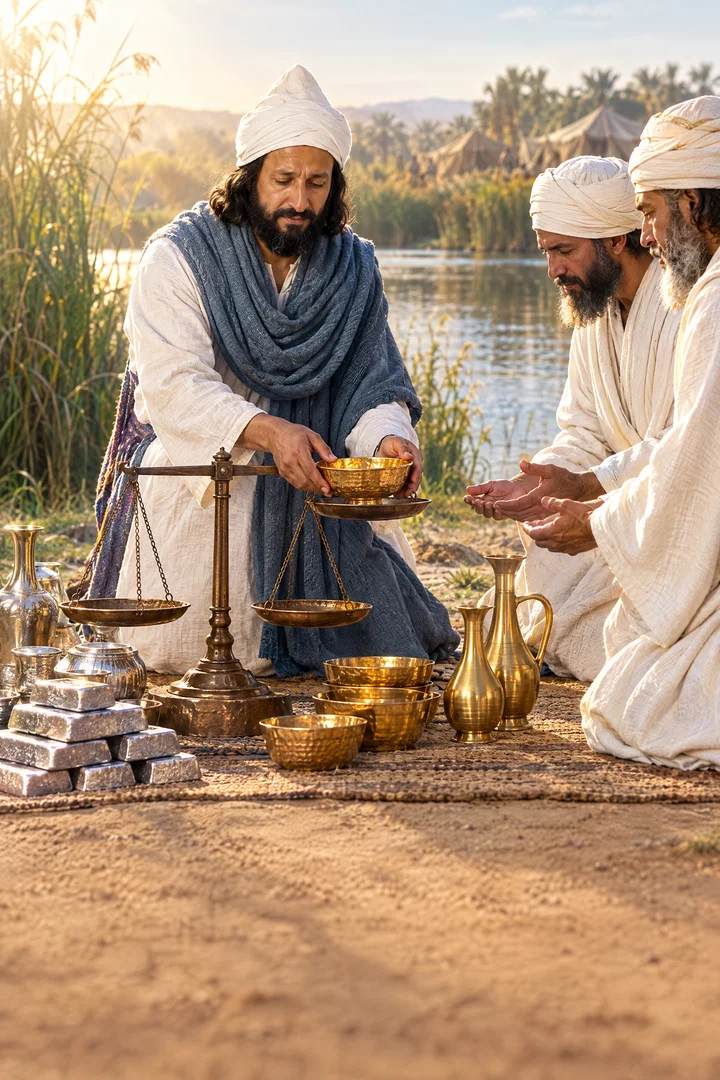
God's blessing does not set aside the need for prudence and forethought.PK 616.2–617.1 As a special precaution to safeguard the treasure for the house of God, twelve of the chief priests whose faithfulness and fidelity had been proved were separated, together with ten of their brethren, to receive it.PK 616.2–617.1 The silver and the gold and the vessels offered by the king and his counselors and lords and all Israel present were weighed out to them.PK 616.2–617.1 They were solemnly charged to act as vigilant stewards over what was entrusted to them, because they were holy to the Lord and the vessels were holy and the silver and gold were a freewill offering to the Lord God of their fathers, to watch and keep them until weighing them again before the chief priests and Levites and chief fathers of Israel at Jerusalem in the chambers of the house of the Lord.PK 616.2–617.1
Only those whose trustworthiness has been proved should be chosen to handle the Lord's goods, so that sacred resources are placed in proven hands.PK 616.2–617.1 Those entrusted must be plainly instructed about the responsibility resting on them, so the charge is managed with clear responsibility.PK 616.2–617.1 Appointing faithful officers as treasurers recognizes the necessity and value of order and organization in connection with God's work.PK 616.2–617.1
Sources
Pioneers and periodicals
10 sources
Ezra 8:24 belongs to the account of the second company going up from Babylon to Jerusalem, organized by Ezra the Jewish priest and scribe highly favored by Artaxerxes Longimanus, numbering about 1,800 Israelite men and leaving Babylon for Jerusalem in 457 B.C. under the decree of Artaxerxes for the rebuilding of Jerusalem and the restoration of the commonwealth, where the decree of Daniel 9:25 and the 2,300 days of Daniel 8:14 begin. The journey party met at the river Ahava before setting out, where Ezra consulted the assembled captive Jews, and this account helps place the decree around January 457 B.C., before the party left on the first day of Nisan.RH Apr 9, 1908 The verse stands after the renewed and greatly enlarged decree of Artaxerxes Longimanus in the seventh chapter of Ezra, continuing the decrees of Cyrus and Darius, and belongs to the record of the experiences of the Jews at Jerusalem, their backsliding, their humility, their seeking of God, and the faithful reproofs given by Ezra and others.ST Jun 2, 1909
The book of Ezra is wholly the history of the great decree covering seventy-nine years from the first year of Cyrus in 536 B.C. to the seventh year of Artaxerxes in 457 B.C., and chapter eight records the carrying of its third and last portion given in chapter seven, with Ezra mentioning himself only as connected with carrying out the decree, having no personal part in the work until the last of the seventy-nine years, when he had the honor of carrying the last portion up to Jerusalem.RH Feb 7, 1907 The verse belongs to B.C. 458, after the story of Esther in the middle of the reign of Xerxes, about threescore years after the first return and two-score years after the completion of the temple.ST Sep 20, 1899 The verse records that Ezra separated twelve of the chief priests, Sherebiah, Hashabiah, and ten of their brethren with them, to serve as treasurers to receive, carry, and guard the silver, gold, and vessels offered for the house of God on the journey to Jerusalem.ST Oct 4, 1899ST Dec 20, 1899ST Oct 4, 1899
To those priests he weighed the silver, gold, and vessels offered for the house of God, with the charge that they were holy unto the Lord and must watch and keep the treasure until they weighed it again before the leaders at Jerusalem in the chambers of the house of the Lord.ST Oct 4, 1899 The twelve leading priests with ten fellow priests were chosen as trustworthy men and entrusted with a solemn responsibility before God to safeguard the temple treasure, which teaches that reliance on God's blessing does not replace prudence, so that sacred resources should be placed in proven hands and managed with clear responsibility and orderly care. The verse stands in the account of fasting and prayer by the river Ahava by which the helpless band of Israelites passed safely through the dreaded land of robbers, showing that united and whole-hearted seeking of God is honored with great blessing and protection, for the hand of God is upon all them for good that seek him but his power and wrath is against all them that forsake him, and when his people fasted and besought him for safe passage he was entreated of them.RH Nov 14, 1912
The verse is part of the lists in Ezra and Nehemiah of the leading ones who went up from the captivity, and consists of names of persons rather than an expressed precious promise to God's people, showing that not every verse in the Bible is a promise.RH May 1, 1900 The verse is part of the Bible narrative about Babylonian life in the days of Ezra and Nehemiah, confirmed by discoveries in ancient lands adjoining Israel that had dealings with Israel.ST Mar 10, 1909
Sources