Ezra 7:6
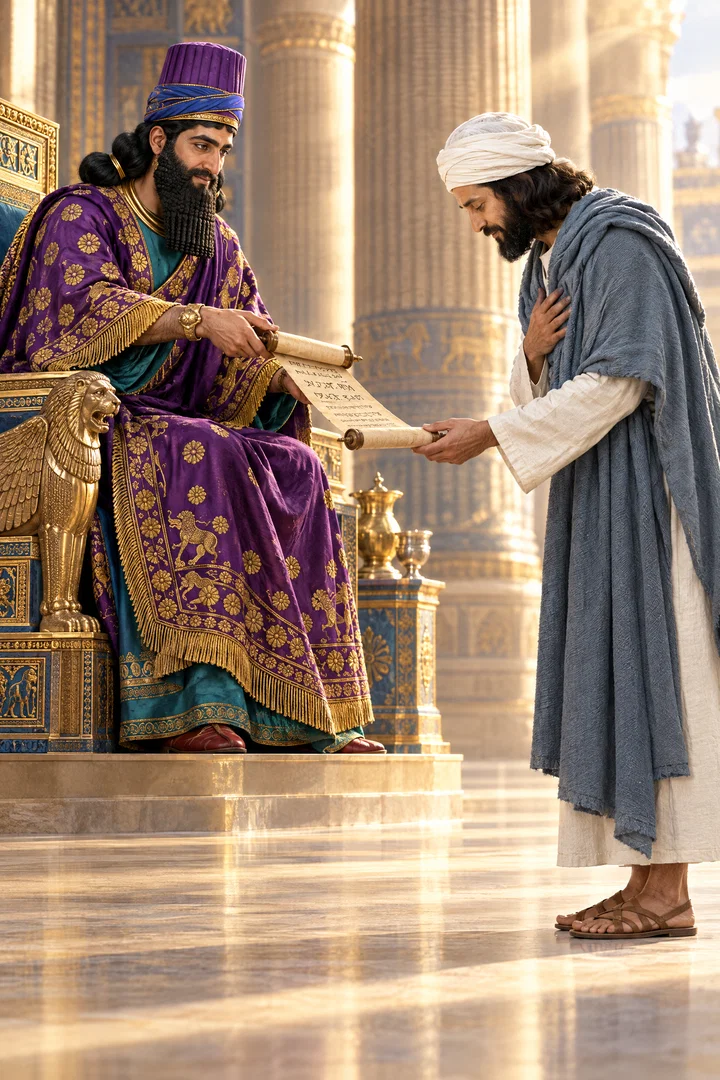
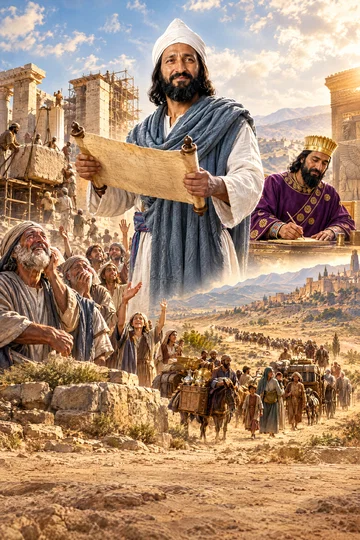
This Ezra went up from Babylon; and he was a ready scribe in the law of Moses, which the LORD God of Israel had given: and the king granted him all his request, according to the hand of the LORD his God upon him.
Translations
This Ezra went up from Babylon; and he was a ready scribe in the law of Moses, which the LORD God of Israel had given: and the king granted him all his request, according to the hand of the LORD his God on him.
This Ezra went up from Babylon; and he was a ready scribe in the law of Moses, which the LORD God of Israel had given: and the king granted him all his request, according to the hand of the LORD his God upon him.
this Ezra went up from Babylon; and he was a ready scribe in the law of Moses, which the Lord God of Israel had given: and the king granted him all his request, according to the hand of the Lord his God upon him.
This Ezra went from Babylon; and he was a ready scribe in the law of Moses, which the LORD God of Israel had given: and the king granted him all his request, according to the hand of the LORD his God upon him.
this Ezra went up from Babylon; and he was a ready scribe in the law of Moses, which the LORD, the God of Israel, had given: and the king granted him all his request, according to the hand of the LORD his God upon him.
this Ezra went up from Babylon. And he was a ready scribe in the law of Moses, which Jehovah, the God of Israel, had given; and the king granted him all his request, according to the hand of Jehovah his God upon him.
Ezra himself hath come up from Babylon, and he [is] a scribe ready in the law of Moses, that Jehovah God of Israel gave, and the king giveth to him — according to the hand of Jehovah his God upon him — all his request.
— this Ezra went up from Babylon; and he was a ready scribe in the law of Moses, which Jehovah the God of Israel had given. And the king granted him all his request, according to the hand of Jehovah his God upon him.
this Ezra, came up out of Babylon, he, being a ready scribe in the law of Moses, which Yahweh God of Israel had given,—and the king gave him, according to the hand of Yahweh his God upon him, all his request.
Berean Standard Bible, Majority Standard Bible
this Ezra came up from Babylon. He was a scribe skilled in the Law of Moses, which the LORD, the God of Israel, had given.The king had granted Ezra all his requests, for the hand of the LORD his God was upon him.
this Ezra went up from Babylon. He was a skilled scribe in the law of Moses, which the LORD, the God of Israel, had given; and the king granted him all his request, according to the LORD his God’s hand on him.
This Ezra went up from Babylon; and he was a scribe, expert in the law of Moses which the Lord, the God of Israel, had given: and the king, moved by the Lord his God, gave him whatever he made request for.
This Ezra came vp from Babel, and was a Scribe prompt in the Lawe of Moses, which the Lord God of Israel had giuen, and the King gaue him all his request according to the hande of the Lord his God which was vpon him.
Douay-Rheims (Challoner revision)
This Esdras went up from Babylon, and he was a ready scribe in the law of Moses, which the Lord God had given to Israel: and the king granted him all his request, according to the hand of the Lord his God upon him.
Pictures
Cross-references
- Ezra 7:11-26
Now this is the copy of the letter that the king Artaxerxes gave unto Ezra the priest, the scribe, even a scribe of the words of the commandments of the LORD, and of his statutes to Israel.
Artaxerxes’ decree authorizes Ezra’s mission and provides resources for Jerusalem’s restoration.
- Ezra 1:1-4
Now in the first year of Cyrus king of Persia, that the word of the LORD by the mouth of Jeremiah might be fulfilled, the LORD stirred up the spirit of Cyrus king of Persia, that he made a proclamation throughout all his kingdom, and put it also in writing, saying,
Cyrus’s earlier decree began the return and temple rebuilding.
- Ezra 7:24-26
Also we certify you, that touching any of the priests and Levites, singers, porters, Nethinims, or ministers of this house of God, it shall not be lawful to impose toll, tribute, or custom, upon them.
The decree protects temple ministers and authorizes Ezra to enforce the law.
- Ezra 7:10
For Ezra had prepared his heart to seek the law of the LORD, and to do it, and to teach in Israel statutes and judgments.
Ezra is described as devoted to studying, practicing, and teaching God’s law.
- Daniel 9:25
Know therefore and understand, that from the going forth of the commandment to restore and to build Jerusalem unto the Messiah the Prince shall be seven weeks, and threescore and two weeks: the street shall be built again, and the wall, even in troublous times.
Its starting point is Artaxerxes’ decree to restore Jerusalem, fulfilled in Ezra 7.
- Nehemiah 8:8
So they read in the book in the law of God distinctly, and gave the sense, and caused them to understand the reading.
The law of Moses is read distinctly and explained to the people.
- Isaiah 44:28
That saith of Cyrus, He is my shepherd, and shall perform all my pleasure: even saying to Jerusalem, Thou shalt be built; and to the temple, Thy foundation shall be laid.
Cyrus is appointed to rebuild Jerusalem and its temple.
- Ezra 8:1
These are now the chief of their fathers, and this is the genealogy of them that went up with me from Babylon, in the reign of Artaxerxes the king.
It continues the account of Jews who returned to Jerusalem with Ezra.
- Ezra 7:21
And I, even I Artaxerxes the king, do make a decree to all the treasurers which are beyond the river, that whatsoever Ezra the priest, the scribe of the law of the God of heaven, shall require of you, it be done speedily,
The king’s decree refers to the law of God.
- Ezra 7:27-28
Blessed be the LORD God of our fathers, which hath put such a thing as this in the king’s heart, to beautify the house of the LORD which is in Jerusalem:
Ezra praises God for moving the king to show him favor.
- Ezra 7:12-13
Artaxerxes, king of kings, unto Ezra the priest, a scribe of the law of the God of heaven, perfect peace, and at such a time.
Identifies the decree to Ezra as part of the commandment.
- Jeremiah 29:10
For thus saith the LORD, That after seventy years be accomplished at Babylon I will visit you, and perform my good word toward you, in causing you to return to this place.
The seventy-year prophecy provides context for the return from exile.
- Ezra 7:14
Forasmuch as thou art sent of the king, and of his seven counsellors, to enquire concerning Judah and Jerusalem, according to the law of thy God which is in thine hand;
Ezra carried the law from Babylon to guide his inquiry about Judah and Jerusalem.
- Ezra 7:15
And to carry the silver and gold, which the king and his counsellors have freely offered unto the God of Israel, whose habitation is in Jerusalem,
The king provides gifts for the Jerusalem temple.
- Nehemiah 10:29
They clave to their brethren, their nobles, and entered into a curse, and into an oath, to walk in God’s law, which was given by Moses the servant of God, and to observe and do all the commandments of the LORD our Lord, and his judgments and his statutes;
Ezra teaches the law of Moses, and the people pledge to obey it.
- Isaiah 45:1
Thus saith the LORD to his anointed, to Cyrus, whose right hand I have holden, to subdue nations before him; and I will loose the loins of kings, to open before him the two leaved gates; and the gates shall not be shut;
Cyrus is named as an instrument in God’s purpose.
- Luke 2:22-24
And when the days of her purification according to the law of Moses were accomplished, they brought him to Jerusalem, to present him to the Lord;
Jesus’ family observes the law of Moses.
- Ezra 6:14
And the elders of the Jews builded, and they prospered through the prophesying of Haggai the prophet and Zechariah the son of Iddo. And they builded, and finished it, according to the commandment of the God of Israel, and according to the commandment of Cyrus, and Darius, and Artaxerxes king of Persia.
The later Persian decree completes the work begun under Cyrus.
Commentary
Each commentary is drawn from primary sources: the writings of Ellen G. White and Adventist pioneers and periodicals. Each commentary is separate. Its own words are not a quotation; follow the references to read the source passages.
Ellen G. White
14 sources
Ezra was a ready and skilled scribe and teacher in the law of Moses which the Lord God of Israel had given, a man of extraordinary learning whose qualifications made him eminent in the Medo-Persian kingdom.PK 609.1Lt 100, 1907, par. 2–3RH Feb 6, 1908 He was a priest descended from Aaron, learned and devout, whose piety and zeal fitted him to do good to Israel and to restore honor to the priesthood eclipsed in the captivity.PK 609.1RH Jan 30, 1908Lt 100, 1907, par. 4 He went up from Babylon to Jerusalem to revive the study of Scripture and educate Israel in God's commandments, having first learned the law and lived by it so that his example and teaching carried influence with the Spirit of God upon him.RH Feb 6, 1908RH Jan 30, 1908PK 609.4 The king granted him all his requests for the return and the work because the hand and favor of God was upon him, providing gifts, means, and authority for the temple service and rebuilding after seventy years of captivity.Lt 100, 1907, par. 2–3RH Feb 6, 1908PK 609.4 The chapter records the decree to restore and build Jerusalem in the seventh year of Artaxerxes in 457 B.C., which begins the seventy weeks and the 2300 days and years, reaching because of its late-year date to the fall of 1844 at the appointed time.LS 48.4–5ST May 2, 1878CET 49.2ST Mar 30, 18761T 52.2–53.2
Ezra's Identity and Mission
Ezra is identified as a ready, skilled scribe and teacher in the law of Moses, which the Lord God of Israel had given, a man of extraordinary learning whose qualifications made him eminent and distinguished in the Medo-Persian kingdom.PK 609.1Lt 100, 1907, par. 2–3RH Feb 6, 1908RH Jan 30, 1908PK 609.4 He was a priest descended from Aaron, a learned and devout man whose piety and zeal as well as learning fitted him for service.PK 609.1RH Jan 30, 1908Lt 100, 1907, par. 4 God chose him to do good to Israel and to restore honor to the priesthood, whose glory had been greatly eclipsed and diminished during the captivity.PK 609.1RH Jan 30, 1908Lt 100, 1907, par. 4
He went up from Babylon to Jerusalem to renew interest in God's word, revive the study of Scripture, and help restore the city.RH Feb 6, 1908RH Jan 30, 1908PK 609.4 Having first learned the law and lived by its principles before teaching it, he educated Israel in God's commandments, statutes, and judgments and urged obedience.RH Jan 30, 1908 His example and teaching carried influence because the Spirit of God was with him and helped others gain knowledge of enduring truth.RH Jan 30, 1908
The king granted him all his requests for the journey and its work because the hand and favor of God was upon him.Lt 100, 1907, par. 2–3RH Feb 6, 1908PK 609.4Lt 98, 1907, par. 2 Ezra's trust in God's protection impressed the king, moving him to favor Ezra with gifts for the temple, generous provision for the return and temple service, authority to carry out his purpose, and abundant means for rebuilding.RH Feb 6, 1908PK 609.4Lt 98, 1907, par. 2 This opened opportunity for the Jews to return after seventy years of captivity and serve God again in their own country.Lt 98, 1907, par. 2 The granted return shows God's forbearance toward His wayward people in giving them another opportunity to serve Him.Lt 98, 1907, par. 2
Prophetic Countdown from 457
Ezra 7 records the decree to restore and build Jerusalem, issued in the seventh year of Artaxerxes and dated to 457 B.C.LS 48.4–5ST May 2, 1878CET 49.2ST Mar 30, 18761T 52.2–53.2 That decree is the commandment to restore Jerusalem that begins the seventy weeks, and it supplies the shared starting point for the 2300 days and years of Daniel 8:14.LS 48.4–5ST May 2, 1878CET 49.2ST Mar 30, 1876LSEGW 57.3–58.1 Counting from 457, 2300 minus 457 fixes the close of the prophetic period.LS 48.4–5CET 49.2LS 185.2–3
The reckoning was by a calculation so simple and plain that even children could understand it.LS 48.4–5CET 49.2LS 185.2–3 Counted in that way, the 2300 years were held to terminate at the close of 1843.LS 48.4–5CET 49.2LS 185.2–3 That year was looked for as the time for the coming of the Lord.LS 48.4–5CET 49.2LS 185.2–3
Because the decree went forth near the end of 457 B.C., the full 2300-year period reaches to the fall of 1844 rather than ending in 1843.ST May 2, 1878ST Mar 30, 18761T 52.2–53.2LSEGW 57.3–58.1LS 185.2–3 The apparent delay did not mean the vision would fail, for it was for an appointed time and would surely come.ST May 2, 1878LS 185.2–3 In this accounting the vision did not tarry.ST May 2, 1878LS 185.2–3
Sources
Pioneers and periodicals
78 sources
Ezra went up from Babylon to Jerusalem at the head of a large second company of returning exiles who accepted the invitation to leave captivity.ST Apr 19, 1883RH Jul 21, 1868 He was a ready scribe in the law of Moses, meaning a skilled, learned and devoted priestly teacher of the law whose learning brought him distinction.RH Apr 30, 1901RH Jan 14, 1858RH Jan 7, 1858 The king granted him all his request according to the hand of the Lord his God upon him, in royal favor and generous provision for the return and the temple service.RH Mar 2, 1876ST Feb 23, 1882RH Sep 13, 1870 The decree authorizing him, preserved in the chapter, restored the Jewish state in civil and religious order according to God's law, and it is the commandment to restore and to build Jerusalem that begins the seventy weeks of Daniel 9 and the twenty-three hundred days of Daniel 8:14.RH Feb 22, 1870ST Jan 24, 1878ST Feb 23, 1882RH Sep 13, 1870 It was issued in the seventh year of Artaxerxes Longimanus, in B.C. 457, and reckoned from its going forth in autumn the 483 years reach to the anointing of Messiah in the autumn of A.D. 27, the 490 years to the autumn of A.D. 34, and the 2,300 years to the cleansing of the heavenly sanctuary in the autumn of A.D. 1844.RH Jan 14, 1858RH Mar 20, 1856RH Jul 9, 1908RH Oct 27, 1904ST Feb 18, 1913
Ezra's Identity and Favor
This Ezra went up from Babylon to Jerusalem at the head of a large second company of returning exiles who accepted the invitation to leave captivity.ST Apr 19, 1883RH Jul 21, 1868 He organized the second group of Israelites returning from Babylon to Jerusalem as a Jewish priest and scribe favored by Artaxerxes Longimanus.ST Apr 19, 1883 He conducted a second colony back after the city had lain desolate for half a century following its destruction by Nebuchadnezzar.RH Jul 21, 1868
He was born about 495 B.C. and lived in Babylon under the Persian king Artaxerxes Longimanus, and nearly eighty years after the first year of Cyrus in 536 B.C. he brought another company of exiles to Jerusalem.ST Dec 19, 1892 He wrote the book of Ezra, and died at Jerusalem about 420 to 410 B.C.ST Dec 19, 1892 He led the second colony seventy-nine years after Zerubbabel had led back 52,000 of the captives and rebuilt the temple with a portion of the dwellings, and thirteen years before Nehemiah guided the third return and rebuilt the walls.RH Jul 21, 1868
He was a ready scribe in the law of Moses, meaning a skilled, learned, and devoted teacher of the law whose learning brought him distinction in the Medo-Persian kingdom.RH Apr 30, 1901RH Jan 14, 1858RH Jan 7, 1858RH Feb 7, 1907 He was a Jewish priest of the tribe of Levi, a good and faithful man.ST Dec 19, 1892 He went from Babylon to Jerusalem as a skilled scribe of the law of Moses, which God had given to Israel.RH Feb 6, 1908RH Jan 14, 1858RH Jan 7, 1858RH Feb 7, 1907
The law in which he was skilled was the law of Moses which the Lord God of Israel had given, and it is God's law.RH Feb 6, 1908RH Jan 7, 1858ST Sep 3, 1912 Its being called God's law shows that God's commands beyond the Ten Commandments also carry moral obligation and cannot simply be treated as nonmoral.ST Sep 3, 1912 The king granted him all his request according to the hand of the Lord his God upon him, showing God's favor, his trust in God, and royal favor and generous provision for the return and temple service.RH Feb 6, 1908RH Mar 2, 1876ST Feb 23, 1882RH Sep 13, 1870RH Jul 28, 1863 This favor led to the decree that authorized him to restore and build Jerusalem and to regulate the affairs of the Jewish people in civil and religious order according to God's law and ancient customs.RH Mar 2, 1876ST Feb 23, 1882RH Sep 13, 1870RH Jul 28, 1863ST Feb 23, 1882 That decree is presented as the starting point of Daniel's seventy weeks, rather than the decrees of Cyrus or Darius.ST Jul 25, 1878
Wisdom stirred his love for Zion and enabled him to lead the return from Babylon.RH May 9, 1865 He is the pattern for Spirit-filled Bible reading with light and understanding and joy and peace, making the Bible one's business, profession, and joy.RH Oct 8, 1872 Such reading means studying to understand the times and events and to make them practical, so as to meditate joyfully and profitably and to reap rich fruit daily and hourly, finding the words of Holy Writ delicious and sweet beyond expression when properly understood and appreciated.RH Oct 8, 1872 Lists of names like those in Ezra and Nehemiah of the leading ones who went up from the captivity and of those who had married strange wives are not precious promises to God's people.RH May 1, 1900
Decree's Scope and Record
The chapter preserves the written decree that authorized Ezra, with its letter recorded from Ezra 7:11 onward.RH Feb 22, 1870ST Feb 23, 1882RH Sep 13, 1870ST Nov 1, 1877ST Nov 1, 1877 Its original text is in Eastern Aramaic, the language used at Babylon.ST Feb 23, 1882RH Sep 13, 1870ST Nov 1, 1877ST Nov 1, 1877 That decree authorized far more than rebuilding structures or the temple.RH Feb 22, 1870ST Feb 23, 1882RH Sep 13, 1870ST Nov 1, 1877ST Nov 1, 1877
It restored the Jewish state in civil and religious order according to God's law and ancient customs.ST Feb 23, 1882RH Sep 13, 1870ST Nov 1, 1877ST Nov 1, 1877 It empowered Ezra to govern the people, establish laws, and appoint magistrates and judges with authority to punish offenders.RH Feb 22, 1870ST Feb 23, 1882ST Nov 1, 1877 It regulated worship and temple service.ST Feb 23, 1882RH Sep 13, 1870ST Nov 1, 1877 It reestablished ordered worship, exempted the priesthood from taxes, and provided tribunals and justice under the law of Moses.RH Dec 24, 1861RH Apr 30, 1901 It supplied broad authority and resources for the work, with generous royal provision for the return and temple service.RH Feb 6, 1908RH Jul 28, 1863ST Mar 26, 1912
Ezra's going up followed the completion of the temple, so the decree from which the 2300 days are dated began when the sanctuary was already standing.RH Jan 20, 1853 He went up from Babylon in the seventh year of Artaxerxes, fifteen years after the events dated to Xerxes' twelfth year.ST May 7, 1902 Xerxes is the Ahasuerus of the book of Esther, the Hebrew Ahashverosh being identical with the Persian Khshayarsha, and the whole book of Esther therefore stands chronologically between Ezra 6 and Ezra 7, with Ezra 7 following the reign of Xerxes.ST Apr 23, 1902 Those who place the events in Esther afterward put them roughly sixty years after Ezra's first return and between the periods marked by Ezra 7 and Ezra 8.ST Sep 20, 1899 After Ezra's arrival thirteen years passed with moral and religious reform but without rebuilding Jerusalem's wall and city.ST May 14, 1902 Under this decree of Artaxerxes in 457 B.C. Jerusalem was fully restored, 130 years after its destruction in 587 B.C.ST May 9, 1878
The chapter continues the history after the close of the kingdom of Judah recorded in 2 Kings 25, with the laying waste of Jerusalem, the despoiling of the temple, the slaying of captives at Riblah, the capture of Zedekiah, the appointment and slaying of Gedaliah, the flight of the remnant to Egypt, and the kind treatment of Jehoiachin in Babylon.ST Jun 10, 1913 Babylonian life in the days of Ezra and Nehemiah in the ancient lands adjoining Israel is confirmed by discoveries made there.ST Mar 10, 1909
Date Fixed to 457
The decree belongs to the seventh year of Artaxerxes Longimanus, who began to reign in B.C. 464, so his seventh year was B.C. 457, as given in the margin of Ezra 7.RH Jan 14, 1858RH Mar 20, 1856RH Jul 9, 1908RH Nov 26, 1857ST Jan 22, 1880 That seventh year is the date of Ezra's commission to go up from Babylon for the restoration of Jerusalem, when as a skilled scribe in the law of Moses given by the Lord he received the king's grant because the Lord his God was with him.RH Jan 14, 1858RH Mar 20, 1856RH Nov 26, 1857ST Apr 15, 1880ST Jan 22, 1880 The seventh year is fixed from undisputed history anchored by astronomy, where Ptolemy's Canon places it.ST Oct 25, 1883ST Apr 15, 1880
The date 457 B.C. is one of the best established dates in ancient history, proved correct by the concurrent agreement of more than twenty eclipses.ST Jun 26, 1907ST Apr 15, 1880RH Oct 27, 1904 Those eclipses are God's infallible clock that fixes ancient dates to the very day, and the canon's accuracy is demonstrated by their agreement.ST Apr 15, 1880 The reckoning runs from an eclipse of the moon in the seventh year of Cambyses, calculated to the night after July 16 in year 4191 of the Julian period, or B.C. 523.ST Apr 15, 1880 Cambyses reigned one year after that eclipse, followed by Darius who reigned thirty-six years, followed by Xerxes who reigned twenty-one years, bringing the first year of Artaxerxes to B.C. 464 and his seventh year to B.C. 457.ST Apr 15, 1880 Preaching of the advent message from 1838 to 1844 based on these dates moved the world, with even the bitterest opposers acknowledging the correctness of the dates while denying the events expected.
The decree was given in spring but did not take effect until Ezra arrived, since it was directed to officials in the lands beyond the Euphrates.RH Dec 1, 1904ST Sep 16, 1886 Ezra set out from Babylon with the decree in the first month and reached Jerusalem in the fifth month, so its going forth is reckoned to about the middle of 457 B.C. when the work of restoration actually commenced and the decree was made public and carried out.RH Dec 1, 1904ST Sep 16, 1886RH Nov 12, 1901 It is therefore reckoned as 456 and a half B.C. because half the year had passed, or as given near the end of that year.ST May 2, 1878ST Mar 30, 1876LS 185.2–3RH Dec 1, 1904RH Oct 27, 1904 For that reason 2,300 minus 457 first fixes the close in 1843, but with six months of the year passed the 2,300 full years run six months into 1844 to the fall of 1844, ending with the midnight cry when the virgins arose on the tenth day of the seventh month.ST May 2, 1878ST Mar 30, 1876LS 185.2–3RH Dec 1, 1904 The calculation was so plain even children could understand it, and the apparent delay did not mean the vision would fail, for it was for an appointed time and would surely come.ST May 2, 1878LS 185.2–3
The date 457 B.C. in the margin of Ezra 7 supplies an indispensable key to understanding the prophetic periods in Daniel 8 and 9.ST Aug 17, 1904 The decree to restore and rebuild Jerusalem marks an epoch in world history.ST Aug 17, 1904 It gives the autumn of B.C. 457 as the beginning of the 2,300 years, which therefore ends in the autumn of A.D. 1844.ST Aug 17, 1904ST Nov 7, 1916
Chosen Prophetic Starting Point
The decree recorded in Ezra 7 is the commandment to restore and to build Jerusalem that begins the seventy weeks of Daniel 9 and therefore the twenty-three hundred days of Daniel 8:14.LS 48.4–5ST Jan 24, 1878ST Mar 11, 1889RH Mar 12, 1901 It is the only decree that has all the specifications of the prophecy, embracing all the features of the earlier decrees, and it alone fits the prophecy and its chronology.ST Mar 11, 1889RH Mar 12, 1901 Its date is 457 B.C., established by more than twenty eclipses, and reckoning the seventy weeks and the 2,300 days starts from that date.LS 48.4–5ST Mar 11, 1889 The preaching of the advent message from 1838 to 1844 based on these dates moved the world, with even the bitterest opposers acknowledging the correctness of the dates while denying the events expected. With the decree dated to 457 B.C., the period was calculated to end in 1843.LS 48.4–5ST Jan 24, 1878
Taken together with the decree of Cyrus in 536 B.C. permitting the rebuilding of the temple and the decree of Darius in 519 B.C. confirming it, the decree of Artaxerxes constitutes the threefold commandment of the God of Israel to restore and build Jerusalem.ST Mar 11, 1889ST Jun 26, 1907 This last decree was fuller in scope, greater in power, and more complete than the first two, supplying what was lacking in them and making the commandment full and complete.ST Jun 26, 1907RH Apr 18, 1912ST Dec 19, 1892 Its date, 457 B.C., is one of the best established dates in ancient history, and reckoning must date from this last decree because the seventy weeks and with them the twenty-three hundred days could not begin until this point.ST Jun 26, 1907ST Dec 19, 1892 Carried out, it thoroughly restored the Jewish state.
This written decree, whose letter is preserved in Ezra 7:11 and onward, rather than Nehemiah's later verbal permission, is the effective starting point for the seventy weeks.RH Feb 22, 1870 Unlike the decrees of Cyrus and Darius, which provided only for building the temple and restoring its worship, this decree is a complete charter for the full restoration of Jerusalem.ST Mar 11, 1889RH Jul 21, 1863ST Dec 19, 1892 It is as broad and ample as could be given without granting entire independence, providing for the full reestablishment of religion, polity, and policy, including restoring civil government and religious worship, governing the people, appointing magistrates and judges, and restoring the civil state and secular government.RH Feb 22, 1870RH Mar 12, 1901RH Jul 21, 1863ST Dec 19, 1892 The other proposed decrees were either too limited or were not decrees, so this decree supplied the starting point because it met the prophecy's requirements.RH Mar 12, 1901
The seventy weeks are the first 490 years cut off from the 2,300 days, so both periods share the common starting point in 457 B.C., with the 2,300 years running from 457 before Christ to 1844.GSAM 109.2–110.1ST Mar 27, 1879ST Feb 7, 1884ST Dec 3, 1874 The first 490 years were allotted especially to the Jews, marking the transition from the Jewish dispensation to the Gentile or Christian dispensation.ST Mar 27, 1879RH Nov 3, 1874 That date is proved by counting back 490 years from the close of the seventy weeks and 483 years from Christ's anointing, leaving 1810 years from A.D. 34 to 1844.RH Oct 27, 1904 The restoration work is dated to the fall of 457 B.C., reckoned as 456 and a half B.C. because half the year had passed.ST Mar 27, 1879RH Oct 27, 1904
The decree to Ezra is listed among four acts considered as the possible command to restore Jerusalem, and it is the date Gabriel gives for the commencement of the seventy weeks.RH Jan 7, 1858RH Oct 13, 1863 From that date in 457 B.C. the 483 prophetic days of Daniel's sixty-nine weeks are reckoned as 483 years, reaching to Messiah and confirming both the year-day reckoning and the decree's date.ST May 11, 1876RH Mar 10, 1874 Carried out, it began the work whose final reformation by Nehemiah came 49 years later.
Periods Reckoned to Fulfillment
Reckoned from 457 B.C., 2,300 minus 457 first fixes the close in 1843.LS 48.4–5ST Jan 24, 1878 Because the decree went forth near the end of that year and six months of the year had passed before it took effect, the 2,300 full years run six months into 1844 to the fall of 1844.ST May 2, 1878ST Mar 30, 1876RH Dec 1, 1904 Dated in this fuller reckoning as from 457 to 456 B.C. to A.D. 1844, the period is counted as years by the day-year rule.RH Dec 1, 1904RH Oct 27, 1904ST Mar 25, 1897 With full effect in 457 B.C., that same date also begins the 490 years allotted especially to the Jews.ST Mar 27, 1879RH Jun 2, 1874
Beginning in the autumn of B.C. 457, the sixty-nine weeks or 483 prophetic days-years reach to the baptism or anointing of Messiah the Prince in the autumn of A.D. 27.ST Nov 5, 1912RH Sep 16, 1902ST Aug 8, 1878 Then Jesus was anointed with the Holy Ghost and began His ministry, and Ezra's arrival in Jerusalem in the fifth month of 457 B.C. is used to date the beginning of the 483 years leading to that anointing.RH Aug 24, 1916ST Nov 5, 1912RH Sep 16, 1902 That reckoning is proved by counting back 483 years from Christ's anointing and 490 years from A.D. 33 and a half, and by the seven historical facts in Luke 3 fixing when John began to preach six months before Jesus entered His ministry.RH Oct 27, 1904 The full seventy weeks or 490 years reach to the autumn of A.D. 34 when the scattered disciples went everywhere preaching the word, leaving 1,810 years from A.D. 34 to 1844.RH Oct 27, 1904ST Feb 18, 1913
The prophetic period is not reckoned from Ezra's spring departure from Babylon.RH Feb 22, 1870RH Dec 23, 1852 It begins in autumn, when the work of restoring Jerusalem actually commenced and the decree was made public and carried out.RH Feb 22, 1870RH Dec 23, 1852 Its first seven weeks, or 49 years, belong to restoration in troublous times, the work whose final reformation by Nehemiah came 49 years later.RH Feb 22, 1870RH Dec 23, 1852 This places the end of the seventy weeks in autumn A.D. 34 and the end of the 2,300 years in the seventh month of 1844.RH Feb 22, 1870
The end of the 2,300 years in 1844 brings the cleansing of the heavenly sanctuary.ST Mar 25, 1897RH Oct 29, 1901RH Jun 2, 1874 Then Christ the great High Priest began the closing judgment work and final atonement ministering in the most holy place.ST Mar 30, 1876 Counted from 457 B.C., the 2,300 days extend 1,810 years beyond A.D. 34 to A.D. 1844.RH Jun 2, 1874 The Day of Atonement type identifies October 22, ending with the midnight cry when the virgins arose and went forth to meet the Bridegroom on the tenth day of the seventh month.RH Dec 1, 1904RH Aug 11, 1904RH Oct 29, 1901
Preaching the advent message from 1838 to 1844 on these dates moved the world, with even the bitterest opposers acknowledging the correctness of the dates while denying the events expected. The calculation was so plain even children could understand it.LS 185.2–3 The apparent delay only meant the vision was for an appointed time and would surely come.ST May 2, 1878 A loose calculation expecting the close of all earthly things and Christ's eternal reign in the autumn of 1843 ended in disappointment.LS 185.2–3RH Aug 11, 1904
Reform Work and Example
God chose Ezra to restore honor to the priesthood and to make him an instrument of good to Israel.RH Jan 30, 1908 He was a skilled scribe and teacher of the law of Moses which God had given, whose learning brought him distinction in the Medo-Persian kingdom, and he went up from Babylon to Jerusalem to revive the study of Scripture and to help restore Jerusalem.RH Feb 6, 1908RH Jan 30, 1908 He learned the law and lived by its principles before teaching them, educating Israel in God's commandments, statutes, and judgments and urging obedience.RH Jan 30, 1908 His teaching and example carried influence because the Spirit of God was with him, and his work helped others gain knowledge of enduring truth.RH Jan 30, 1908 The king granted all his requests because the hand of the Lord his God was upon him, showing Ezra's trust in God together with royal favor and generous provision for the return and temple service.RH Feb 6, 1908
At his coming the Scriptures were in a manner lost, the people were in profound ignorance of the law, the worship of God was neglected, and everything in church and state was in disorder and confusion.RH Oct 20, 1874 As a ready scribe in the law of God he restored the Scriptures, instructed the people in the law, and brought the worship of God into due order.RH Oct 20, 1874 He worked a full reformation while his commission lasted and continued the same work afterward as priest and leader, standing as another Moses and second founder of the Jewish church and state.RH Oct 20, 1874 His coming therefore begins the age of the restored church.RH Oct 20, 1874
He laid the foundation of the Old Testament canon about the middle of the fifth century B.C. by taking with him from Babylon to Jerusalem the law which had fallen into disuse.ST Sep 26, 1895 His purpose was to lead the people to return to the practice of the laws and forms of worship enjoined by the writings of Moses.ST Sep 26, 1895 When the people entered into a solemn covenant to keep the law of Moses which he had brought home, the Pentateuch was established as the canonical and authoritative book of the Jews, which it has remained ever since without question.ST Sep 26, 1895
Although the Lord's hand was upon him, he sought the king's lawful authority as he went to Jerusalem to restore God's law and worship, and the king granted his request.RH Aug 28, 1860 His course is an example of serving God's cause while making use of civil authority.RH Aug 28, 1860
Sources