Genesis 11:2
And it came to pass, as they journeyed from the east, that they found a plain in the land of Shinar; and they dwelt there.
Translations
And it came to pass, as they journeyed from the east, that they found a plain in the land of Shinar; and they dwelled there.
King James Version, KJV Cambridge Paragraph Bible
And it came to pass, as they journeyed from the east, that they found a plain in the land of Shinar; and they dwelt there.
And it came to pass as they journeyed from the east, that they found a plain in the land of Shinar, and they dwelt there.
Revised Version, American Standard Version
And it came to pass, as they journeyed east, that they found a plain in the land of Shinar; and they dwelt there.
and it cometh to pass, in their journeying from the east, that they find a valley in the land of Shinar, and dwell there;
And it came to pass as they journeyed from the east, that they found a plain in the land of Shinar, and dwelt there.
And it came to pass as they brake away onwards, that they found a plain in the land of Shinar, and dwelt there.
Berean Standard Bible, Majority Standard Bible
And as people journeyed eastward, they found a plain in the land of Shinar and settled there.
As they traveled east, they found a plain in the land of Shinar, and they lived there.
And it came about that in their wandering from the east, they came to a stretch of flat country in the land of Shinar, and there they made their living-place.
And as they went from the East, they found a plaine in the land of Shinar, and there they abode.
Douay-Rheims (Challoner revision)
And when they removed from the east, they found a plain in the land of Sennaar, and dwelt in it.
Pictures
Cross-references
- Genesis 10:10
And the beginning of his kingdom was Babel, and Erech, and Accad, and Calneh, in the land of Shinar.
Nimrod’s kingdom begins at Babel in Shinar.
- Genesis 11:7-9
Go to, let us go down, and there confound their language, that they may not understand one another’s speech.
God confuses the builders’ language and scatters them from Babel.
- Revelation 18:2
And he cried mightily with a strong voice, saying, Babylon the great is fallen, is fallen, and is become the habitation of devils, and the hold of every foul spirit, and a cage of every unclean and hateful bird.
Babylon’s fall culminates the apostasy that began at Babel.
- Revelation 17:5
And upon her forehead was a name written, MYSTERY, BABYLON THE GREAT, THE MOTHER OF HARLOTS AND ABOMINATIONS OF THE EARTH.
Great Babylon carries forward Babel’s legacy as a symbol of religious corruption.
- Genesis 9:1
And God blessed Noah and his sons, and said unto them, Be fruitful, and multiply, and replenish the earth.
Settling in Shinar resisted God’s command to fill the earth.
- Genesis 11:8
So the LORD scattered them abroad from thence upon the face of all the earth: and they left off to build the city.
God scattered the people from where they had settled, stopping the city’s construction.
- Daniel 1:2
And the Lord gave Jehoiakim king of Judah into his hand, with part of the vessels of the house of God: which he carried into the land of Shinar to the house of his god; and he brought the vessels into the treasure house of his god.
Sacred vessels taken from Jerusalem are carried to Shinar.
- Revelation 14:8
And there followed another angel, saying, Babylon is fallen, is fallen, that great city, because she made all nations drink of the wine of the wrath of her fornication.
Babylon’s fall recalls Babel, built in the land of Shinar.
- Isaiah 13:19
And Babylon, the glory of kingdoms, the beauty of the Chaldees’ excellency, shall be as when God overthrew Sodom and Gomorrah.
Babylon’s glory is named before its foretold overthrow.
- Zechariah 5:11
And he said unto me, To build it an house in the land of Shinar: and it shall be established, and set there upon her own base.
both name Shinar as place woman is carried
- Genesis 11:6
And the LORD said, Behold, the people is one, and they have all one language; and this they begin to do: and now nothing will be restrained from them, which they have imagined to do.
Both describe the builders’ confidence that nothing would restrain them.
- Genesis 11:7
Go to, let us go down, and there confound their language, that they may not understand one another’s speech.
God stopped the Shinar settlement by confusing language.
- Revelation 16:19
And the great city was divided into three parts, and the cities of the nations fell: and great Babylon came in remembrance before God, to give unto her the cup of the wine of the fierceness of his wrath.
Names Babylon in the symbolism of Revelation.
- Genesis 14:1
And it came to pass in the days of Amraphel king of Shinar, Arioch king of Ellasar, Chedorlaomer king of Elam, and Tidal king of nations;
Amraphel, king of Shinar, reflects Babylon’s continued greatness.
- Genesis 10:9
He was a mighty hunter before the LORD: wherefore it is said, Even as Nimrod the mighty hunter before the LORD.
Nimrod’s settlement in Shinar is linked with his reputation as a mighty hunter.
- Acts 2:6-11
Now when this was noised abroad, the multitude came together, and were confounded, because that every man heard them speak in his own language.
Pentecost’s many languages contrast with the confounding of language at Babel.
- Daniel 5
Belshazzar the king made a great feast to a thousand of his lords, and drank wine before the thousand.
Records Babylon’s fall, the kingdom that began in Nimrod’s time.
- Revelation 18:21
And a mighty angel took up a stone like a great millstone, and cast it into the sea, saying, Thus with violence shall that great city Babylon be thrown down, and shall be found no more at all.
Connects the last Babylonian confederacy with Babylon’s final downfall.
- Genesis 10:25
And unto Eber were born two sons: the name of one was Peleg; for in his days was the earth divided; and his brother’s name was Joktan.
Peleg’s days are linked to the division of the earth.
Commentary
Each commentary is drawn from primary sources: the writings of Ellen G. White and Adventist pioneers and periodicals. Each commentary is separate. Its own words are not a quotation; follow the references to read the source passages.
Ellen G. White
22 sources
As they increased in number, Noah's descendants journeyed away from the east, with the unbelieving separating from the faithful worshipers of Jehovah, until they found a broad plain in the land of Shinar on the banks of the Euphrates and dwelt there, drawn by its beauty and fertility.ST Mar 20, 1879SG3 96.2Ms 94a, 1903, par. 1–2 Their departure was a deliberate apostasy by those who desired to forget their Creator and cast off the restraint of His law, annoyed by the teaching and example of their God-fearing associates.Ms 94a, 1903, par. 1–28MR 42.1Ms 94, 1903, par. 1–3 By dwelling together there they centralized in disobedience to God's direction to disperse to replenish and subdue the earth, determining to keep united in one body and found a monarchy embracing the whole earth.SG3 96.2Ms 94a, 1903, par. 1–2 That settlement became the setting for a city and a tower reaching unto heaven, built to secure safety against another deluge, to exalt the pride of the projectors, and to make themselves independent of God.SG3 97.1CE 208.2Ms 94a, 1903, par. 1–2 To bring their purpose to nothing and end the first great apostasy after the Flood, God sent angels to confound their language, stopping the work in confusion and scattering them across the earth.SG3 97.1PP 119.2
Journey to Shinar
Those who journeyed from the east were Noah's descendants as they increased in number, with the unbelieving separating from the faithful worshipers of Jehovah and traveling away to settle and live together.ST Mar 20, 1879SG3 96.2Ms 94a, 1903, par. 1–28MR 42.1 Their separation began the division that led to building a city and tower, where they hoped to avoid being scattered and to protect themselves from another flood.SG3 96.2Ms 94, 1903, par. 1–3 It was apostasy, a uniting in a plan for their own safety and self-exaltation in resistance to God's direction that they spread throughout the earth.Ms 94a, 1903, par. 1–2
They found a broad, large plain in the land of Shinar on the banks of the river Euphrates and dwelt there.ST Mar 20, 1879SG3 96.2Ms 94a, 1903, par. 1–28MR 42.1Ms 94, 1903, par. 1–3 They chose that plain as their place to live and established there the settlement that became the setting for their city and tower.ST Mar 20, 1879SG3 96.2ST Mar 20, 1879 They were drawn to make their home there by the beauty of the place and the fertility of the soil.Ms 94a, 1903, par. 1–2PP 118.4
For a time all the descendants of Noah lived together among the mountains where the ark had rested.PP 118.4 But as their numbers grew the departure became a deliberate apostasy by those who desired to forget their Creator and cast off the restraint of His law.Ms 94a, 1903, par. 1–28MR 42.1Ms 94, 1903, par. 1–3PP 118.4 They felt constant annoyance from the teaching and example of their God-fearing associates and decided to separate from the worshipers of God.PP 118.4
Their views of the Flood revealed the departure.SG3 96.11SP 91.1 Some denied God or explained the Flood by natural causes, while others acknowledged that God had sent it but rebelled against Him.SG3 96.2SG3 96.11SP 91.1 They resented His destruction of the antediluvian people and His curse upon the earth.1SP 91.1
Dwelling together in Shinar was centralization in disobedience to God's direction to disperse throughout the earth to replenish and subdue it.Ms 94a, 1903, par. 1–28T 213.2–215.1 For they determined to keep their community united in one body and to found a monarchy that should eventually embrace the whole earth.Ms 94a, 1903, par. 1–28T 213.2–215.1 In that united community and kingdom they hoped to avoid being scattered.SG3 96.2Ms 94a, 1903, par. 1–2
Defiant Tower Enterprise
The dwelling in Shinar became the site for building a city and in it a tower reaching unto heaven, intended to be the wonder of the world.SG3 97.1Ms 94a, 1903, par. 1–28MR 42.1Ms 94, 1903, par. 1–3 It was planned to be so high that no flood waters could ever rise to its top, and so massive that nothing could sweep it away.Ms 94a, 1903, par. 1–28MR 42.1Ms 94, 1903, par. 1–3 The unbelieving who had separated from the faithful chose that large plain as their place to live, and there their settlement grew into this city-and-tower enterprise.SG3 97.1ST Mar 20, 1879
They built to secure their own safety against another deluge by carrying the structure higher than the flood waters had reached.CE 208.2Ms 94a, 1903, par. 1–28T 213.2–215.1 They also meant to ascend to the region of the clouds to ascertain the cause of the flood, to exalt the pride of the projectors, and to make themselves independent of God.CE 208.2Ms 94a, 1903, par. 1–2 They refused to trust any refuge He provided, such as the ark He had provided as a boat of safety, and sought security on their own terms without Him.Ms 94a, 1903, par. 1–28T 213.2–215.1Ms 200, 1899, par. 9 Their uniting in one community and kingdom around this work was part of apostasy in resisting His direction to spread throughout the earth.8T 213.2–215.1
The undertaking was a confederacy born of rebellion against God to thwart His purposes.8MR 42.3Ms 94a, 1903, par. 3–4 They established their kingdom there for self-exaltation and not for the glory of God.8MR 42.3Ms 94a, 1903, par. 3–4 The great majority were fully united in this heaven-daring work, heeding not His counsel but striving to carry out their own purposes.Ms 94a, 1903, par. 3–4
Those dwellers disbelieved His promise not to bring another flood, with some denying His existence and others rebelling against Him.CE 208.2 They corrupted the sacrificial system established with Adam after his fall and taught to his descendants, having no faith in the Redeemer to come.1SP 266.3–4SG3 301.4 Instead they offered animals to idols and to gods of their own choosing, teaching that more costly and extravagant offerings won greater favor and brought greater national prosperity and riches.CE 208.21SP 266.3–4SG3 301.4 Their superstition grew until human beings were often sacrificed to senseless idols, and the laws they made were cruel in the extreme because they were made by hearts unsoftened by divine grace.1SP 266.3–4SG3 301.4
Among those drawn to Shinar and into their schemes were a few who feared God, who had been deceived by the pretensions of the ungodly and by wonderful representations and the grand outlook.Ms 94a, 1903, par. 3–48MR 42.2 These faithful ones refused to join the confederacy to thwart His purposes and refused to be further deceived.Ms 94a, 1903, par. 3–48MR 42.2 For the sake of these loyal ones He delayed His judgments and gave the people time to reveal their true character.Ms 94a, 1903, par. 3–48MR 42.2
Judgment and Lasting Significance
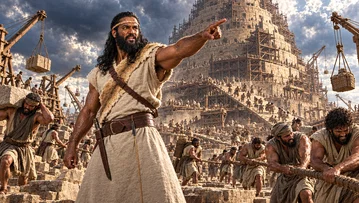
The dwelling in Shinar led to the first great apostasy after the Flood, and God intervened to bring the purpose of the builders to nothing.SG3 97.1 Angels were sent to confound their language and quench the ambitious project.PP 119.2Ms 200, 1899, par. 9Lt 232, 1903, par. 8–9 Because the tower had reached a lofty height, workmen at the top could not communicate directly with those at the base, so men were stationed at different points to receive and pass on orders for material and directions for the work.PP 119.2Lt 232, 1903, par. 8–9 Those orders were frustrated, so that material that was not needed was called for and directions were often the reverse of those intended.PP 119.2Lt 232, 1903, par. 8–9
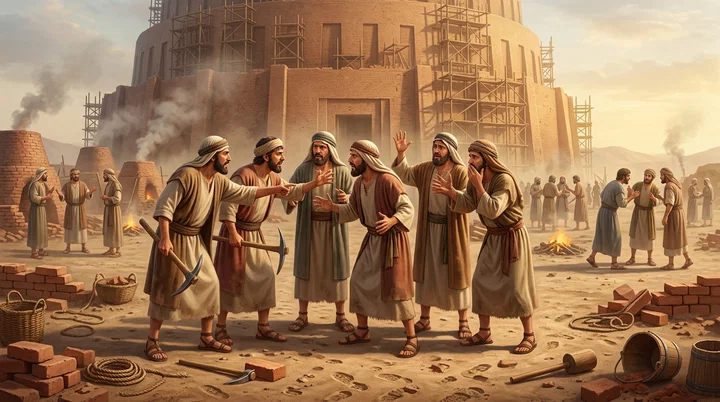
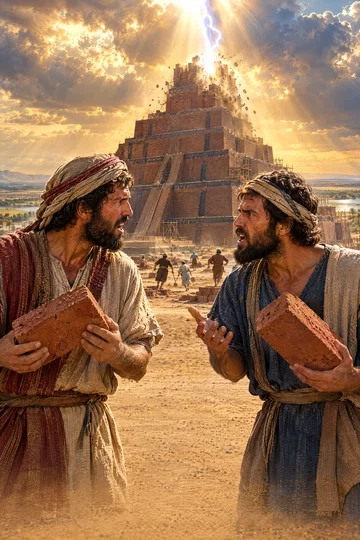
Confusion and dismay stopped all work and ended harmony and cooperation.PP 119.2Lt 232, 1903, par. 8–9 The builders could not explain the strange misunderstandings and reproached one another in rage and disappointment, until their confederacy ended in strife and bloodshed.PP 119.2Lt 232, 1903, par. 8–9 Lightnings from heaven as evidence of displeasure broke off the upper portion of the tower and cast it to the ground.PP 119.2Lt 232, 1903, par. 8–9 They were scattered across the earth, to make men feel that there is a God who rules in the heavens and to teach that human settlement in defiance of God ends in judgment.PP 119.2Lt 232, 1903, par. 8–9
The confusion of human speech was the result of sin, creating a barrier between people who cannot understand one another.HSFM 225.5 Ambitious movements born of distrust and refusal to trust the refuge God had provided like the ark gain nothing but confusion.Ms 200, 1899, par. 9 God is able to confuse and multiply confusion to teach men that they are only men.Lt 232, 1903, par. 8–9
Had the builders succeeded, a mighty power would have borne sway, banishing righteousness and demoralizing the world.8MR 42.3Ms 94a, 1903, par. 3–4 They would have inaugurated a new religion in which a mixture of religious ideas with erroneous theories, carried out and perfected, would have closed the door to peace, happiness, and security.8MR 42.3Ms 94a, 1903, par. 3–4 Minds would have been directed from allegiance to the divine statutes, so that the holy, just, and good law of Jehovah would have been ignored and forgotten.8MR 42.3Ms 94a, 1903, par. 3–4 In place of the divine precepts they would have substituted laws framed in accordance with selfish hearts to carry out their purposes, while determined men inspired and urged on by the first great rebel would have permitted nothing to interfere with their plans or stop their evil course.8MR 42.3Ms 94a, 1903, par. 3–4
Part of the partly finished tower was occupied as a dwelling for the builders, while other splendidly furnished and adorned apartments were set apart for idols.PP 119.2 The people rejoiced in their success and praised gods of silver and gold against the Ruler of heaven and earth.PP 119.2 Their work was meant to turn the minds of future generations away from God and lead them into idolatry, and it did turn later generations away from God toward idolatry.CE 208.2Lt 232, 1903, par. 8–9 The founding of Babel belongs to the time of this dispersion, and Nineveh was founded about that time.RH Dec 4, 1913
Sources
Pioneers and periodicals
91 sources
As they journeyed from the east Noah's descendants after the Flood found a plain in the land of Shinar and dwelt together there before building the city and tower.ST Dec 16, 1903 Those who settled were of Ham's line with Nimrod's people and followers, the unbelieving separating from the faithful to live together, about a hundred years after the Flood in the days of Peleg.ST Mar 20, 1893ST Mar 6, 1893RH Jul 26, 1864RH Jul 3, 1913ST Nov 8, 1905 Their dwelling together was deliberate defiance of God's command renewed after the Flood to multiply, scatter abroad, replenish the earth and cultivate the soil, done to make a name for themselves, to avoid being scattered, and to seek security, greatness and power.STST Feb 13, 1907ST Nov 25, 1897 On that plain they planned a city and a tower whose top might reach to heaven, meant as refuge against another flood in disbelief of God's promise sealed by the bow in the cloud, and as self-exaltation and salvation by works apart from God.STST Feb 13, 1907RH Jul 26, 1864RH Jul 19, 1906 God intervened and confounded their one language so they could no longer plan and labor together, made them leave off building and scattered them abroad, naming their work Babel-confusion, which began Babylon as the first organized apostasy and the prototype of spiritual Babylon in religious confusion and church-state union.STST Feb 13, 1907ST Dec 7, 1904ST Sep 5, 1911ST Dec 10, 1896
Journey and Settlement in Shinar
As they moved from the east after the Flood, mankind traveled together and came upon a plain in the land of Shinar, where they settled down in one place instead of spreading abroad to replenish the earth as commanded.ST Dec 16, 1903 Their gathering in one compact community with one language set them against the divine design for people to spread across the earth and work the soil.ST Dec 16, 1903ST Sep 4, 1907 On that plain they dwelt together and gathered around the base of the monument they meant to raise, preparing to build a city and a tower to make a name for themselves and keep from being scattered.ST Sep 4, 1907RH Dec 17, 1861RH Mar 10, 1859 Their settling there illustrated selfish congregating to resist God's plan and to seek security, greatness, and power for themselves, and their project ended in confusion.ST Sep 4, 1907RH Dec 17, 1861
Those who journeyed and dwelt there were Noah's descendants after the Flood, including Ham's descendants and Nimrod's people and followers.RH Jul 26, 1864RH Jul 3, 1913ST Nov 8, 1905 The unbelieving separated from the faithful worshipers, traveled away, and chose the large plain as their place to live together.ST Mar 20, 1879 There the followers of Nimrod, the mighty hunter of the East, settled as a primitive nation, and there the enterprise of Babel arose as his scheme of universal dominion.RH Jan 18, 1870ST Oct 31, 1916 The tower was intended, according to Nimrod, to withstand another flood and to avenge God for destroying their forefathers, to protect the people against future judgment, and to make the city a supposed gate to heaven giving its builders power over access to heaven.RH Jul 26, 1864RH Jul 3, 1913ST Nov 8, 1905RH Jan 18, 1870
Shinar is the land where Babylon was situated, so that to be carried to the land of Shinar is to be carried to Babylon.ST May 24, 1883ST Nov 28, 1911 It is the alluvial region later known as Chaldea or Babylonia in the Euphrates region, a lone, wide, boundless plain where Babylon stood as gem of the rich earth and glory of the proud Chaldee.ST May 20, 1880RH Jul 28, 1904ST Aug 24, 1904 There men dwelt and raised Babylon, Nimrod's proud city with its high-turreted temple beside the river, and the plain is identified with the historic Babylonian plain near the Tower of Babel and the mounds of Babylon, with the tower site lying south of them.ST Aug 24, 1904ST Jan 21, 1913 Daniel's account calls this same land Shinar when describing the vessels carried from Jerusalem to Babylon.ST Nov 28, 1911
The settlement took place soon after the Flood, about a hundred years after it in the days of Peleg and shortly after Noah's death.RH Dec 17, 1861 It belongs to the account that carries the generations from Genesis 10 through the confusion of tongues and dispersion to the origin of nations and languages, identifying Shinar as the place from which people departed to settle distant lands and giving the circumstances and time of their departure.ST Mar 20, 1893ST Mar 6, 1893RH Mar 4, 1862 Because they had fallen into apostasy before Abraham was called, God confounded their common language so they could no longer understand one another and scattered them across the earth, which accounts for the spread of early settlers to India and other lands.ST Mar 6, 1893RH Mar 4, 1862 Genesis 11 records the lives of eight generations between Noah and Terah in repeated form, giving each man's years before his son's birth and years afterward and presenting death as the end of life, and the generations after men began eating flesh show a much shorter average lifespan, the next nine generations averaging 332 years compared with 912 years for the nine generations in Genesis 5, a deterioration attributed partly to flesh foods hastening the wearing out of vital organs.RH Nov 2, 1869ST Oct 15, 1894
Refusal to Scatter Abroad
God had commanded at creation and renewed after the Flood to those saved in the ark that men should be fruitful and multiply, spread abroad, fill and replenish the earth, cultivate the soil and work it as an agricultural people, a life conducive to the strongest and purest existence.STST Dec 16, 1903ST May 5, 1898 After God swept away every human organization in the Flood, His purpose was that Noah's descendants should scatter across the earth instead of gathering in one place with one language.STST Feb 13, 1907ST Dec 16, 1903ST Aug 8, 1900 Genesis 11:2 shows them journeying together and settling down to dwell in a plain in the land of Shinar instead of spreading abroad to replenish the earth as directed, and that settling prepared the way for building a city and a tower.ST Feb 13, 1907ST Dec 16, 1903ST Aug 8, 1900
Their dwelling together there was deliberate defiance and rejection of that command, leaving God out and setting man's way of salvation against God's way.STST Feb 13, 1907ST Nov 25, 1897ST May 5, 1898 It was the first great organized apostasy and rebellion after the Flood, the first great public manifestation of the apostasy called Babylon, taking their own way in place of God's way to make themselves a name.STST Feb 13, 1907ST Sep 5, 1911ST May 5, 1898 Instead of glorifying God they sought to glorify themselves, thwarting His purpose and seeking glory to man instead of glory to God, establishing a supposedly better way whose human standards bring division and confusion.STST Feb 13, 1907ST Aug 8, 1900ST Nov 25, 1897 That system of confusion, rebellion and apostasy, having no life in itself, ever seeks the power of the state, and that union of religion with the state turns a political community into a religious one seeking control over both bodies and souls.ST Feb 13, 1907ST Sep 5, 1911
They conferred together to build a city and a tower whose top might reach to heaven and to make a name for themselves lest they be scattered abroad.STST Aug 8, 1900ST Nov 25, 1897 Their gathering illustrates selfish people congregating to resist God's plan, to avoid dispersion, to seek security and greatness for themselves, and to form a stable federation that would prevent scattering and suppress individualism.STST Feb 13, 1907ST Aug 8, 1900 Their departure from God's way, though it seemed a path to happiness and exaltation, brought confusion and led toward destruction.ST Aug 8, 1900ST Nov 25, 1897
Their rebellion involved forgetting God, joining together in defiance, plunging into sin, and turning from Him to idolatry and the apostasy of the Gentile nations.RH Dec 17, 1861ST Feb 15, 1883RH Mar 4, 1862ST Jan 23, 1879RH Jan 18, 1870 The builders turned from worship of the true God to sun-worship, shown in the eastward orientation of pagan holy places toward the rising sun in contrast with the westward orientation of the Jerusalem temple.ST Oct 14, 1908 Idolatry became the characteristic of that age, established as an incident of national power, corrupting the sacrificial system given to Adam, sacrificing to gods of their own choosing with extravagance and even human sacrifice under cruel laws, and deifying Noah and his sons.RH Jan 18, 1870 Because they had fallen into apostasy before Abraham was called and could no longer be held together in united rebellion, God confounded their language and scattered them, which checked their rebellion and helped preserve knowledge of God and true worship.RH Dec 17, 1861ST Feb 15, 1883RH Mar 4, 1862ST Jan 23, 1879
Nimrod led the enterprise, and the people forgot God and joined under him to build Babel.ST Feb 15, 1883ST May 20, 1913ST May 20, 1897ST Jan 23, 1879RH Jan 18, 1870 He is identified as a rebel against God, a mighty hunter of the East, builder of Babel's tower and founder of Babylon, whose ambition and the people's refusal to scatter led to the confusing of their common language and their scattering to India and other lands.ST Mar 6, 1893ST Feb 15, 1883ST May 20, 1897RH Jan 18, 1870 He appropriated the respect for divine authority taught by the recent Flood to sustain his own personal and despotic authority, causing the vast high tower to be erected to stand in the place of God as protection against a future flood.RH Jan 18, 1870 In him began the first earthly government and kingdom, the first to claim the title and prerogatives of king, in a despotic combine that enslaved its subjects and acknowledged no authority above itself.ST May 20, 1913ST May 20, 1897
City and Tower Enterprise
On the plain they planned and began a city and a tower whose top might reach to heaven, gathering in one place with one language around its base and laboring together in harmony until God stopped them.STST Feb 13, 1907ST Dec 16, 1903 The settlement prepared the way for that building, undertaken to make a name and to keep from being scattered, in a compact community opposed to spreading abroad to replenish the earth and work the soil.ST Dec 16, 1903ST Sep 4, 1907 Their gathering became the setting for an attempt to put themselves between people and their Maker, seeking security, greatness, and resistance to God's purpose to people the earth, and it ended in confusion and scattering to face hardship.ST Feb 13, 1907ST Sep 4, 1907
The tower was meant as a refuge and protection against another flood and any future divine judgment.STRH Jul 26, 1864RH Jul 3, 1913ST Nov 8, 1905RH Jul 19, 1906 It was built in disbelief of God's promise never again to destroy the earth by flood, of which the bow in the cloud was the token, and in defiance of His authority.STRH Jan 27, 1874 According to Nimrod it was to withstand another flood and to avenge God for destroying their forefathers.RH Jul 26, 1864
The project expressed self-exaltation and a claim to self-salvation, turning a political community into a religious one that sought control over both bodies and souls.STST Feb 13, 1907ST Sep 5, 1911ST Sep 12, 1911 It set man's way of salvation against God's way, seeking glory to man instead of glory to God, building to heaven by human power in place of simple faith in God and antagonistic to the Gospel of Christ.STST Sep 12, 1911 The tower was imagined as a way to reach heaven and regain paradise, to uncover divine mysteries, to discover the cause of the Flood, to make the city a supposed gate to heaven, and to give its builders power as gatekeepers controlling access to heaven.RH Jul 19, 1906RH Jul 3, 1913ST Nov 8, 1905RH Jul 19, 1906
They called their city and tower Bab-il or Bab-ilu, meaning Gate of God or Gate of Heaven.STST Feb 13, 1907ST Dec 7, 1904ST Sep 5, 1911ST Sep 12, 1911 They impressed that name on thoroughly burned bricks, naming their folly as the gate by which God would enter, though God did not enter by such a gate.STST Sep 5, 1911ST Sep 12, 1911 God called their work what it actually and inevitably was, Babel, meaning confusion, the name for every such human attempt to save self, thwart the divine plan, or pervert God's plan.STST Sep 12, 1911
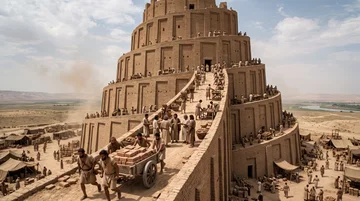
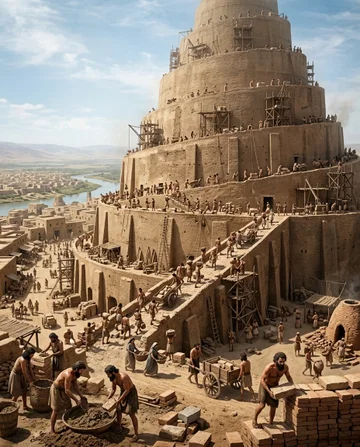
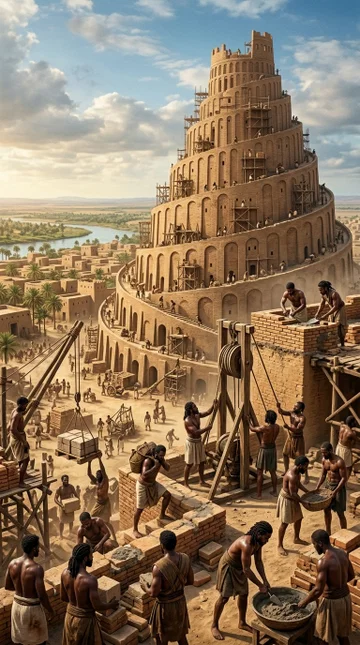
The work used burnt bricks and bitumen, confirmed by the ruins described by travelers, and also sun-dried clay, timber, rope, and masons' tools, formed as a stepped tower-temple with a shrine on a raised platform.RH Nov 12, 1861RH Jan 27, 1874ST Mar 14, 1911ST May 5, 1898 It is identified with the tower of Belus, later repaired by Belus II, with Belus I as Nimrod, and judged to be either Birs-Nimrod at ancient Borsippa, the more likely candidate, or another ruin called Babil.RH Nov 12, 1861ST Mar 14, 1911 In one account it was said to be six hundred feet high, while another holds that the pile of sun-dried clay had reached only one hundred and fifty-six feet when language was confounded.RH Jul 26, 1864RH Jan 27, 1874 After the tower was torn down by lightning and earthquakes, Nebuchadnezzar rebuilt it on the same site without changing the site or removing the foundation stone, exalting its summit as in former times, and a gold image was later placed on its top in his days.RH Jul 26, 1864ST May 5, 1898
Divine Judgment and Scattering
God came down against the impious undertaking and confounded the common language so that the workers could no longer understand one another's speech or plan and labor in concert, and of necessity they left off building the city and tower and were scattered abroad upon the face of all the earth.ST Mar 6, 1893ST May 5, 1898RH Dec 17, 1861RH Mar 4, 1862ST Apr 17, 1884 The settlement in the plain in the land of Shinar had been deliberate defiance of the command to multiply and spread abroad and fill the earth, first given at creation and renewed to those saved in the ark, and the design to make a name lest they be scattered did not fail because they changed their minds but because the Lord foiled it.STST Sep 5, 1911ST May 5, 1898 That confounding turned Babel, which originally meant the Gate of God, into the synonym of confusion, and Babylon comes from Babel as the name for the darkness and confusion filling the earth in the last days through continued rejection of light.STST Dec 7, 1904 The dispersal from Shinar accounts for the spread of early settlers to India and other distant lands, and places the starting point of the peoples' migrations from which the earth was peopled in different directions.ST Mar 20, 1893ST Mar 6, 1893ST Dec 17, 1902
God waited until the magnificent conception was rapidly advancing to completion and seemed close to success, and then suddenly frustrated it by wonderful divine power when He who loves a humble and contrite spirit severed the united family of man into fragments to stop it in its progress.RH Jan 27, 1874RH Jul 11, 1854 His just wrath came like a storm upon the builders, leaving them weak and heart-deprived and dismayed, so they forsook their purpose and like frantic fools scattered their stuff and tumbled down their tools.RH Dec 27, 1864 When speech was confused a call for a trowel brought a hammer, a command to hew brick led to cleaving a tree, a command to make fast a rope led to letting it flee, and calls for planks, mortar, spikes and saws brought stone, axe, spade and sieve, with vain prating and pointing while what one made another marred.RH Dec 27, 1864 God brought the race to a sense of their impotence by touching them where they never dreamed of difficulty, sending confusion into their speech so that enterprise met with ignominious failure when the pile of sun-dried clay had reached only one hundred and fifty-six feet.RH Jan 27, 1874 The people afterward abandoned the ancient tower associated with Babylon and Borsippa, and earthquake and lightning damaged it and its unfinished upper stories crumbled, the same tower of Belus whose construction with burnt bricks and bitumen is confirmed by heathen writers and by modern travelers who described its ruins, later repaired by Belus II with Belus I identified as Nimrod.RH Nov 12, 1861ST Jan 29, 1908ST Oct 9, 1901
God named their work what it actually and inevitably was, Babel, meaning confusion or mixture, exposing their promised gate to heaven as division, defeat, and confusion.STST Feb 13, 1907ST Nov 25, 1897ST Sep 5, 1911 They had called their city and tower Bab-il or Bab-Il, meaning the Gate of God or Gate of Heaven, and impressed the name on thoroughly burned bricks, intending by it to save themselves and to exalt self and claim self-salvation apart from God.STST Feb 13, 1907 That naming stamps every such human attempt to save self, thwart the divine plan, or pervert God's plan, and every dream of men contrary to His Word, as Babylon-confusion, with the confounding of tongues as the outward index of its inward confusion.STST Nov 25, 1897ST Sep 5, 1911 Human standards and departures from God's word bring division and confusion, turning a political community that sought control over both bodies and souls into a religious one of self-exaltation.ST Feb 13, 1907ST Nov 25, 1897
The scattering divided the one language into many distinct languages and dialects and peopled distant lands, for the Gentiles could no longer understand one another after falling into apostasy before Abraham was called.RH Mar 4, 1862ST Jan 23, 1879 Humanity spread outward from Babylon carrying confusion with them, making confusion Babylon's distinguishing and enduring character.RH Mar 28, 1912 The first perfect language given by God was thus broken into fragments that cannot be reconstructed by philosophers.RH Jan 27, 1874 Their settlement and scattering from that region, followed by the peopling of the earth in different directions, are used to locate a natural day-line in the Pacific Ocean, between the continents rather than through populated lands.ST Dec 17, 1902
The scattering and confusion of language checked their rebellion and helped preserve knowledge of God and true worship after they had forgotten Him and plunged into sin and defied Him.ST Jan 23, 1879 The result was division of the people into nations all going astray from the Lord, making necessary the separation of one family in Abraham to preserve the knowledge of God and to develop the plan of salvation and identify the promised seed of the woman.ST Apr 17, 1884 If Abraham had only believed the promises intellectually and had not acted on them by leaving home, he would have died in Haran, and the history of his descendants would have ended with Genesis 11.ST Apr 22, 1889
History Confirmed by Tradition
The settling on the plain in Shinar belongs to true sacred history and authentic Mosaic record, not fable, legend, parable, or borrowed tradition.ST Dec 7, 1915ST Feb 27, 1907RH Dec 30, 1902RH Nov 26, 1861 The Genesis account of Babel is the purest and least distorted form of primeval traditions carried by peoples as they spread from a common home, marking the limit of primitive history remembered in the traditions of different peoples.ST Dec 7, 1915ST Oct 14, 1908 It is part of Old Testament revelation of God's will learned by Jesus in childhood with childlike receptivity, and His treatment of Genesis affirms it, while the confusion of tongues and ideas and religions it records continues to the present.ST Aug 13, 1912RH Nov 26, 1861
Pagan histories preserve the same events in distorted form as giants waging war against the gods, who were dispersed and whose edifice was beaten down by a great wind.RH Nov 12, 1861 Another form tells of a family of giants after the Flood beginning a structure intended to reach the clouds until the gods opposed their presumption and sent fire from heaven to stop them.ST Jun 11, 1894 The legend about Cholula's pyramid near Puebla, built by survivors of a great flood who sought to raise it to heaven, resembles the biblical account of settling in Shinar and building a tower intended to reach heaven, and traces of the confusion of tongues are found in the mythology of the Aztecs of Mexico and Central America.ST Jun 11, 1894ST Jul 30, 1902RH Apr 30, 1901 The great Deluge was a real event before the scattering, proved by the consentient belief of all the great races who preserve traditions of it and of Babel shared by peoples spread from a common home.ST Dec 7, 1915ST Apr 12, 1905 The genetic tie uniting the Indo-European nations in one brotherhood and the wonderful early civilizations of Egypt, Babylon, Yucatan, Mexico, and Peru witness to mankind once living together in a previous common state of civilization and then being scattered abroad.ST Apr 12, 1905
The tower is the same as the tower of Belus, with Belus I identified as Nimrod, later repaired by Belus II.RH Nov 12, 1861 It is identified with either Birs-Nimrod at ancient Borsippa or another ruin called Babil, with Birs-Nimrod judged the more likely candidate, described with its dimensions and staged construction.ST Mar 14, 1911 The names Babel and Borsippa preserve traditions linking the tower with confused languages and the dispersion of tribes, with Babel meaning confusion and perpetuated in the Greek name Babylon, and Borsippa associated with the tower of tongues.ST Jan 29, 1908ST Oct 9, 1901ST Jun 10, 1889 Its builders abandoned it after their speech was confused, and afterward earthquake and lightning damaged it, its unfinished upper stories crumbled, and it was torn down by lightning and earthquakes.ST Jan 29, 1908ST Oct 9, 1901ST May 5, 1898 After the tower was torn down, Nebuchadnezzar rebuilt it on the same site without changing the site or removing the foundation stone, exalting its summit as in former and ancient times.ST May 5, 1898ST Nov 21, 1900 He said Merodach the great lord moved him to repair the house of the Seven Lights of the earth at Borsippa that a former king had built forty-two ages before without finishing its head and that had long lain abandoned with its words confused and its sun-dried clay dispersed and its bricks split.ST May 5, 1898
Its construction with burnt bricks and bitumen is confirmed by heathen writers and by modern travelers who described its ruins.RH Nov 12, 1861 The literal tower is also confirmed by Babylonian records, the name of Borsippa, and excavated ruins from which its outline could be reconstructed.ST Feb 27, 1907 The Chaldean Deluge tablets of at least 2000 B.C. prove the Flood before the scattering, and the history of languages confirms the record of Babel, since the scattering of peoples followed a common civilized beginning whose widely spread civilizations preserve traces of that shared origin.ST Apr 12, 1905ST Jan 18, 1905 Nebuchadnezzar recorded repairing the ancient monument of Babylon on that plain where the settlers dwelt.ST Nov 21, 1900
The finding of the plain in Shinar and dwelling there was the founding of Babylon by Belus, who is Nimrod of Scripture, about 2,232 years before Christ, with the tower of Babel built by his successors about sixteen years after the founding of the city.RH Apr 18, 1871 The tower was built shortly after Noah's death, when the confusion of languages resulted, and the Babel settlement became the center of Nimrod's first earthly government.RH May 9, 1907 That dwelling in the plain of Shinar where men dwelt founded Nimrod's Babylon, which God suffered to remain as a dominant city of earth as long as He could get glory even from her perverseness.ST Sep 11, 1901 The city made great in the days of Hammurabi continued with unquestioned supremacy as a center of power, wealth and culture for a vast period, then sank to ruins and vassalage to proud Nineveh with Assyria and Nineveh as capital becoming the ruling power of the Orient, before arising again under Nabopolassar and Nebuchadnezzar to greater glory when in religious zeal he repaired the decayed ancient tower and projected new public buildings and heathen temples on a larger scale.ST Sep 11, 1901
Prophetic Type of Babylon
The settling in the plain of Shinar was the first remarkable occurrence after the Flood and the first great public manifestation of the apostasy called Babylon.RH Nov 12, 1861ST Sep 5, 1911ST Nov 25, 1930 It was the world's first organized form of apostasy against God, growing out of the first great apostasy after the Flood and marking the earthly beginning of Nimrod's empire.ST Nov 25, 1930ST Dec 10, 1896ST Jun 3, 1897ST Jul 18, 1911 There men rebelled against God's plan and Word that they should scatter abroad, multiply and replenish the earth with happy homes, by journeying together and dwelling in Shinar to build a city and tower to make a name for themselves lest they be scattered.ST Jan 2, 1912ST Sep 5, 1911 They named it Bab-il, the Gate of God, but God named their folly Babel, confusion, stamping every human dream contrary to His Word as Babylon-confusion.ST Feb 13, 1907ST Sep 5, 1911 That system of confusion, rebellion and apostasy, having no life in itself, ever seeks the power of the State, and that union of religion with the State is fornication, making all who follow that plan children of the great mother of harlots and abominations of the earth.ST Sep 5, 1911
Historic Babylon is the older counterpart and prototype of spiritual or mystic Babylon.ST Dec 10, 1896ST Jul 18, 1911 The settlement in Shinar began an organized effort to oppose God's plan for spreading, expressing self-exaltation and a claim to self-salvation, and turning a political community into a religious one seeking control over both bodies and souls.ST Feb 13, 1907ST Jun 3, 1897 Its later religious and political union becomes the pattern for mystical Babylon, which is a corrupt church joining itself to earthly powers, trusting political power instead of God, persecuting dissent, and spreading confusion.ST Dec 10, 1896ST Jul 18, 1911 It is the beginning of the church-and-state system in which religion is established and controlled by the State.ST Jun 3, 1897 The ancient coming together to build for a name and power foreshadows the religious world seeking to build a high tower of a union creed to get a great name and to wield great power by civil power through union of church and state, with the same confusion because men do not agree what shall go into the union creed, each desiring to build it with his own material so his may be the great name and his the great power.ST
Babylon signifies confusion, from Babel where men in the impious attempt to build a tower to heaven had their language confounded.RH Feb 20, 1855RH Sep 8, 1853ST Jun 29, 1876 That history makes Babylon a most fitting designation for the great city of confusion, the professed church since the great apostasy.RH Feb 20, 1855 Contrary to the will of Christ that the church should be one as He and the Father are one, the majority of His professed followers have busied themselves attempting to climb up to heaven some other way, and have been confounded in the attempt and scattered with creeds as discordant as the languages of those dispersed at the ancient tower.RH Feb 20, 1855RH Mar 10, 1859RH Sep 8, 1853 The scattered people and their differing languages serve as a comparison for division into conflicting creeds, seen in several hundred sects with contradictory claims, varied arguments for Sunday, and discord even among professed Advent believers.RH Mar 10, 1859RH Sep 8, 1853ST Jun 29, 1876 The name Babel thus became the basis for the meaning mixture or confusion applied to religious confusion among divided denominations.RH Sep 8, 1853ST Jun 26, 1879
Babel's fall foreshadowed the fall of ancient Babylon and, in turn, of mystical Babylon.ST Feb 13, 1907 The tower in Shinar was built as a monument of human pride, and the Lord turned it into confusion, so Babel, which originally meant the Gate of God, became the synonym of confusion, and Babylon comes from Babel as the name given to the darkness and confusion filling the earth in the last days through continued rejection of light.ST Dec 7, 1904 Their defeat and confusion did not stop Nimrod from seeking to establish Babylon as a kingdom where he ruled absolutely and acknowledged no authority above himself while his subjects were enslaved.RH Aug 4, 1904 Babylon thus embodied Satan's effort to set up a rival kingdom and win the loyalty due to God, standing thereafter for rebellion against God's authority expressed in His law and for the confusion that follows rejection of heaven's counsel.RH Aug 4, 1904 That same principle of universal power first taking form at Babel later appeared in empires and, in a different form, in the papacy's attempt to command universal submission and crush gospel preaching, which Luther saw repeated in the attempt to establish one universal church, whose pride, revelry, sacrilege and arbitrary power bring sweeping destruction from which God's message delivers, typified also by the destruction of Jerusalem, with warning against a new tower of Babel by a dominant power in Palestine.ST Dec 7, 1904ST Oct 31, 1916ST Aug 8, 1916
The history beginning with Nimrod and the tower gives the essential historical setting for understanding the prophecies concerning Babylon and guarding against fanciful applications of the term to later spiritual or modern powers.RH Jul 30, 1908ST Mar 15, 1899 The land of Shinar is where Babylon was situated, so to be carried to the land of Shinar is to be carried to Babylon, signifying the carrying away of the Jewish nation into captivity in Babylon.ST May 24, 1883ST Nov 28, 1911 Daniel's account calls this land Shinar when describing the vessels carried from Jerusalem to Babylon, identifying Shinar as the land where Babylon was located.ST Nov 28, 1911 The plain of Shinar is the earthly beginning of Babylon, whose religious and political influence and eventual doom are traced through the Bible, with ancient Babylon's religious perversion and human self-exaltation as principles taught by Lucifer and its history as a prophecy of modern Babylon.ST Feb 13, 1907
Doctrinal Lessons for Life
The dwelling on the plain in Shinar began Babylon as deliberate defiance of God's command to multiply, spread abroad and fill the earth, first given at creation and renewed after the Flood swept away every human organization, by conferring together to build a city and tower to reach heaven and make a name lest they be scattered.STST Sep 5, 1911ST Sep 12, 1911 They called their work Bab-il or Bab-ilu, meaning Gate of God or Gate of Heaven, impressing the name on thoroughly burned bricks, intending by it to save themselves from a future flood God had promised would never come, of which the bow in the cloud was the token.STST Feb 13, 1907ST Sep 12, 1911 Their project expressed self-exaltation and self-salvation, turning a political community into a religious one seeking control over bodies and souls, setting man's way of salvation against God's way and seeking glory to man instead of glory to God.STST Feb 13, 1907 God called their work what it actually and inevitably was, Babel meaning confusion or mixture, the name for every human attempt to save self, thwart the divine plan or pervert His plan, so that the confounding of tongues was the outward index of its inward confusion.STST Sep 12, 1911 That dwelling began Babylon as men's effort to save themselves and to control or overcome evil by a tower as means of salvation in place of simple faith in God, another way antagonistic to the Gospel of Christ, for God cannot enter by such a gate because He cannot give His glory to another nor work out of harmony with His holy law whose transgression dooms to everlasting death.ST Sep 12, 1911 Babylon comes from Babel and is the name given to the darkness and confusion filling the earth in the last days through continued rejection of light, whose final destruction is typified by the destruction of Jerusalem, and that system having no life in itself ever seeks the power of the State, whose union of religion with the State is fornication making its followers children of the great mother of harlots.ST Dec 7, 1904ST Sep 5, 1911
The tower on that plain was built as a monument of human pride, and the Lord came down and turned it into confusion, so that what was meant as Gate of God became the synonym of confusion.ST Dec 7, 1904ST Aug 8, 1900ST Nov 25, 1897 Their departure from God's way to remain together and make a name for themselves seemed a path to happiness, exaltation and a supposedly better way, but human standards and departures from God's word bring division, confusion and destruction.ST Aug 8, 1900ST Nov 25, 1897 God will not give men time to perfect the arts, for the tower was a magnificent conception rapidly advancing to completion when He who loves a humble and contrite spirit severed the united family into fragments to stop it in its progress.RH Jul 11, 1854 Their pride and desire to cast off fear of God gathered around a city and tower meant to be their glory, safety and bond of unity, teaching by its downfall that safety is found in God alone, lasting home in the city of God, true glory in the Lord and enduring unity in shared faith under one Lord.RH Jul 2, 1867 Such prideful united ambition cannot rise beyond God's power or escape His reach.ST May 21, 1912
That compact settlement opposed God's design for people to spread across the earth, work the soil and become an agricultural people as conducive to the strongest, clearest and purest life with happy homes under one Creator, one Saviour Christ Jesus, one moral standard in the holy law and one saving life by regeneration through the Spirit by His Word.ST Dec 16, 1903ST Sep 12, 1911 God discouraged the beginnings of city building there and directed instead the settling of the countryside with agriculture as livelihood, to make the whole earth like the Garden of the Lord.ST Mar 25, 1903 The spirit that conceived the tower, the ambition that fostered it, the purpose of its building and the principles involved remain a type of human ambition and folly to this day, and its overthrow is a lesson for the ages against sinful men crowding together in compact masses.ST Mar 2, 1904 Packing people into cities, flats and tenements was inspired by Satanic cunning to frustrate God's commandments and thwart His purpose for every man to live happily under his own vine and fig tree, especially the command to love neighbor as self, because crowding gives opportunity to pry into one another's affairs and plot mischief, breeds crime, disease and rivalry between centers for prestige instead of love, with suffering aggravated by earthquake, fire and storm.ST Mar 2, 1904
The same Babel spirit appears where varied and contradictory speeches share one rebellious intention, as Sunday-keepers from rigid Scotch Presbyterians down to modern Disciples give varied and contradictory reasons for keeping Sunday while agreeing only on the intention to keep it, proving their Sabbath confusion is Babylon in which God, who is not the author of confusion, is not.ST Jun 21, 1883 Changing the Sabbath from the day God gave to another day and making it a sign of oppression instead of love and loyalty is the same kind of human replacement of God's institution, bringing confusion just as surely as the work at Babel did.RH Jul 8, 1909 The tower as a human-made way to heaven is likened to secret orders as rival counterfeit religion occupying attention and offering a self-made claim to spiritual reward instead of leading to God, and to Babel building as an unholy union God's people must not join.ST Mar 21, 1906ST Nov 25, 1903 It is also pictured in church federation and in church and state joining to pursue a common course based on human reasoning without shared principle, in teaching youth for citizenship without Christ, and in the doctrine that the gospel will renovate the world to millennial purity.RH Dec 30, 1915RH Dec 17, 1857
The builders' attempt to build and climb a brick structure to preserve their name ended with confused language, joyful plans turned to dismay, and abandonment of the place, showing human achievements cannot stand against God's purposes.RH Nov 11, 1858 Churches that stop seeking further truth remain on the plains of Shinar trying to build their tower instead of moving forward with the light God gives.RH Oct 16, 1855 The Babel experience at Shinar was confusing and trouble-breeding, warning that eager but fruitless attempts to reach God's dwelling-place or escape floods and foes would fail if the way were not hidden from mortal sight, and its discordant sounds cannot drown God's still voice.RH Jul 2, 1867ST Apr 17, 1884
Sources