Genesis 13:6
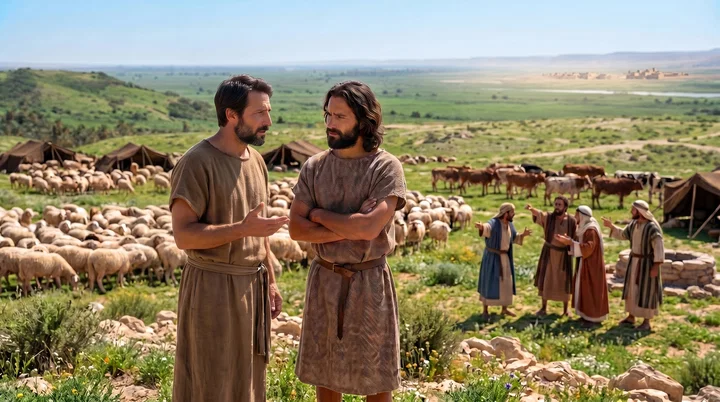
And the land was not able to bear them, that they might dwell together: for their substance was great, so that they could not dwell together.
Translations
American King James Version, King James Version, KJV Cambridge Paragraph Bible, Webster Bible, Revised Version, American Standard Version
And the land was not able to bear them, that they might dwell together: for their substance was great, so that they could not dwell together.
and the land hath not suffered them to dwell together, for their substance hath been much, and they have not been able to dwell together;
And the land could not support them, that they might dwell together, for their property was great; and they could not dwell together.
And the land suffered them not to dwell together,—because their substance had become, great, so that they could not dwell together.
Berean Standard Bible, Majority Standard Bible
But the land was unable to support both of them while they stayed together, for they had so many possessions that they were unable to coexist.
The land was not able to bear them, that they might live together; for their possessions were so great that they couldn’t live together.
So that the land was not wide enough for the two of them: their property was so great that there was not room for them together.
So that the land coulde not beare them, that they might dwell together: for their substance was great, so that they coulde not dwell together.
Douay-Rheims (Challoner revision)
Neither was the land able to bear them, that they might dwell together: for their substance was great, and they could not dwell together.
Pictures
Cross-references
- Genesis 13:14-17
And the LORD said unto Abram, after that Lot was separated from him, Lift up now thine eyes, and look from the place where thou art northward, and southward, and eastward, and westward:
After Lot separates, God promises Abram the land and a multitude of descendants.
- Genesis 14:14-16
And when Abram heard that his brother was taken captive, he armed his trained servants, born in his own house, three hundred and eighteen, and pursued them unto Dan.
Abraham rescues Lot after he is taken captive.
- Genesis 13:2
And Abram was very rich in cattle, in silver, and in gold.
Abraham's great wealth helped crowd the land
- Genesis 13:10
And Lot lifted up his eyes, and beheld all the plain of Jordan, that it was well watered every where, before the LORD destroyed Sodom and Gomorrah, even as the garden of the LORD, like the land of Egypt, as thou comest unto Zoar.
Lot inspected the well-watered Jordan plain after Abram offered him the choice of land.
- Genesis 12:2
And I will make of thee a great nation, and I will bless thee, and make thy name great; and thou shalt be a blessing:
God calls Abraham and promises to bless him and make him a great nation.
- Hebrews 11:13-16
These all died in faith, not having received the promises, but having seen them afar off, and were persuaded of them, and embraced them, and confessed that they were strangers and pilgrims on the earth.
Abraham’s descendants lived as pilgrims, seeking the promised heavenly country.
Commentary
Each commentary is drawn from primary sources: the writings of Ellen G. White and Adventist pioneers and periodicals. Each commentary is separate. Its own words are not a quotation; follow the references to read the source passages.
Ellen G. White
2 sources
Abraham and Lot could no longer continue dwelling together in the same place, because their possessions and herds had grown so great that the land was not able to bear them both.PP 132.3Ms 115a, 1897, par. 6 The resulting shortage of grazing ground strained their coexistence and led their herdsmen to quarrel.Ms 115a, 1897, par. 6 Their material prosperity thus brought a risk of conflict that set the scene for Abraham to propose a separation without strife.PP 132.3 His response teaches that peace and brotherly love should take priority over insisting on one's own rights and preferences.PP 132.3 His pursuit of peace meant seeking it actively and being willing to make personal sacrifices in order to glorify God.Ms 115a, 1897, par. 6
Sources
Pioneers and periodicals
18 sources
The land could not sustain Abram and Lot living together because their wealth was great, with large households and extensive flocks, herds and possessions.ST Jan 2, 1912ST Aug 19, 1880ST Jul 31, 1901 Bear means support or sustain rather than merely contain, for between Bethel and Ai there was not pasture and room for both together, with limited grazing and shared water made more crowded because the Canaanite and the Perizzite already dwelled in the land.ST Aug 19, 1880ST Jul 31, 1901ST Aug 29, 1895ST Jan 20, 1887 The crowded condition made it inconvenient to remain in one company and brought strife and quarreling between the herdsmen of Abraham's cattle and the herdsmen of Lot's cattle over property and pasture, so that separation and migration became wise and necessary.ST Jul 31, 1901ST Jul 31, 1901RH Aug 22, 1865 Though Abram was Lot's elder and uncle, he proposed the separation and sought peace by giving up his right to choose first and yielding the choice of land to Lot, showing unselfish conciliatory meekness that avoids hardship by yielding to prevent conflict.ST Jan 2, 1912ST Aug 19, 1880ST Oct 3, 1878 The account belongs to God's providential dealings with Abraham's family as the chosen line for the promised Seed, carrying the larger promise that comprehended the whole world in its renewal as a righteous and new earth to be inherited by Abraham and his children through Christ by the righteousness of faith.STST Nov 11, 1930ST Jan 28, 1903
Words and Circumstances
The land was not able to support Abram and Lot dwelling together because their substance was great, with large households and extensive flocks, herds, and possessions.ST Jan 2, 1912ST Aug 19, 1880ST Jul 31, 1901ST Jul 31, 1901RH Mar 18, 1915 Their combined wealth made it impossible for them to continue in one company, and the crowded condition itself produced difficulty.ST Jan 2, 1912ST Aug 19, 1880ST Jul 31, 1901ST Jul 31, 1901RH Mar 18, 1915 The word bear means support or sustain, not merely contain them packed together, since even a few animals per acre could exceed what the land could support.ST Aug 29, 1895
They were between Bethel and Ai, where there was not pasture and room for both households together.ST Aug 19, 1880ST Jul 31, 1901ST Jan 20, 1887 The great increase of flocks and herds created practical difficulties over limited pasture and shared water sources.ST Aug 19, 1880ST Jul 31, 1901ST Jan 20, 1887 The crowded condition was increased because the Canaanite and the Perizzite already dwelled in the land.ST Jul 31, 1901 Their wealth included Abraham being very rich in cattle, silver, and gold, and Lot having flocks, herds, and tents with a large household.ST Aug 19, 1880ST Jul 31, 1901RH Mar 18, 1915
The verse indicates that Lot already had great possessions at this time before his later departure from Sodom.
Strife and Separation
The growth of their substance into great flocks and herds and large households made the land unable to bear them dwelling together in one company, so that remaining together became inconvenient and crowded.ST Jul 31, 1901ST Jul 31, 1901ST Jul 31, 1901ST Jan 20, 1887ST Oct 17, 1900 With Abraham very rich in cattle, silver and gold and Lot also possessing flocks, herds and tents, there was not pasture and room for both households together between Bethel and Ai, a crowding increased because the Canaanite and the Perizzite already dwelled in the land.ST Aug 19, 1880ST Jul 31, 1901ST Jan 20, 1887 Out of that pressure over property and pasture came strife and quarreling between the herdmen of Abraham's cattle and the herdmen of Lot's cattle, as limited pasture and shared water sources set servants struggling against one another.ST Jul 31, 1901ST Jul 31, 1901RH Aug 22, 1865ST Jan 20, 1887RH May 26, 1863 Zeal in caring for a master's property does not justify such quarreling.RH Aug 22, 1865
Because they could no longer dwell together, separation and migration became wise, advisable and necessary.ST Aug 19, 1880ST Jan 20, 1887ST Oct 17, 1900 That separation sent Lot toward Sodom.ST Sep 1, 1898 Abram himself proposed that they separate, and though he was Lot's elder and uncle he sought peace by giving up his right to choose first and yielding the choice of land to Lot, offering him where to settle so they could avoid strife.ST Jan 2, 1912ST Aug 19, 1880ST Oct 3, 1878RH May 26, 1863
Abram's course was unselfish and conciliatory, a meekness that shows how yielding to prevent conflict can prevent hardship.ST Aug 19, 1880 His response and Lot's choice carried lasting results.ST Jan 2, 1912
Promise and Providence
The inability of the land to support Abraham and Lot together belongs to the account of God's providential dealings with Abraham's family as the chosen line through which the promised Seed would come.ST The surrounding account carries God's larger promise to Abraham, a promise that comprehended the whole world and pointed to its renewal as a righteous, rehabilitated earth and new earth to be inherited by Abraham and his children through Christ.ST Nov 11, 1930ST Jan 28, 1903 That inheritance comes through the righteousness of faith, not through the law.ST Nov 11, 1930 Abraham lived as a pilgrim in the promised land, waiting in faith for the inheritance and for the city God had prepared.ST Nov 11, 1930
The same Genesis account connected with the inability to dwell together includes Abraham's attempt to secure the promised heir through Hagar, a human scheme connected with bondage and trouble in contrast with God's promise.ST Sep 28, 1915 The separation of Abraham and Lot that followed the crowded condition came after Abraham's continued attachment to Lot, and it serves as one of the lessons through which Abraham learns faith in God's promise.ST Jun 15, 1904
Sources