Genesis 13:8
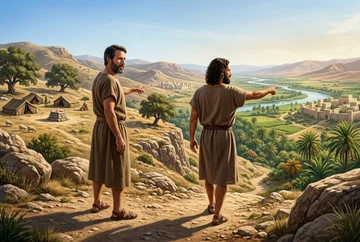
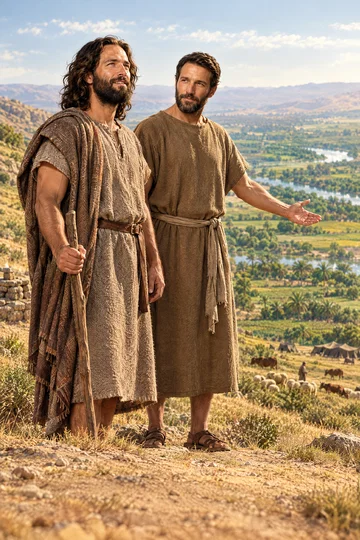
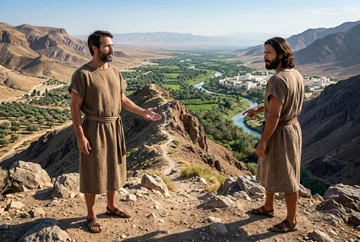
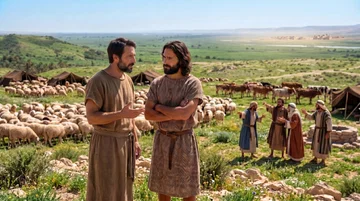
And Abram said unto Lot, Let there be no strife, I pray thee, between me and thee, and between my herdmen and thy herdmen; for we be brethren.
Translations
And Abram said to Lot, Let there be no strife, I pray you, between me and you, and between my herdsmen and your herdsmen; for we be brothers.
King James Version, KJV Cambridge Paragraph Bible
And Abram said unto Lot, Let there be no strife, I pray thee, between me and thee, and between my herdmen and thy herdmen; for we be brethren.
And Abram said to Lot, Let there be no strife, I pray thee, between me and thee, and between my herdmen and thy herdmen; for we are brethren.
And Abram said unto Lot, Let there be no strife, I pray thee, between me and thee, and between my herdmen and thy herdmen; for we are brethren.
And Abram said unto Lot, Let there be no strife, I pray thee, between me and thee, and between my herdsmen and thy herdsmen; for we are brethren.
And Abram saith unto Lot, 'Let there not, I pray thee, be strife between me and thee, and between my shepherds and thy shepherds, for we [are] men — brethren.
And Abram said to Lot, I pray thee let there be no contention between me and thee, and between my herdsmen and thy herdsmen, for we are brethren.
So then Abram said unto Lot Pray let not cause of strife arise betwixt me and thee, or betwixt my herdmen and thy herdmen; for brethren, are we.
So Abram said to Lot, “ Please let there be no contention between you and me, or between your herdsmen and my herdsmen. After all, we are brothers.
So Abram said to Lot, “ Please let there be no contention between you and me, or between your herdsmen and my herdsmen. After all, we are kinsmen.
Abram said to Lot, “ Please, let there be no strife between you and me, and between your herdsmen and my herdsmen; for we are relatives.
Then Abram said to Lot, Let there be no argument between me and you, and between my herdmen and your herdmen, for we are brothers.
Then saide Abram vnto Lot, Let there be no strife, I pray thee, betweene thee and me, neither betweene mine heardmen and thine heardmen: for we be brethren.
Douay-Rheims (Challoner revision)
Abram therefore said to Lot: Let there be no quarrel, I beseech thee, between me and thee, and between my herdsmen and thy herdsmen: for we are brethren.
Pictures

Cross-references
- Genesis 13:14-15
And the LORD said unto Abram, after that Lot was separated from him, Lift up now thine eyes, and look from the place where thou art northward, and southward, and eastward, and westward:
God renews the promise of the land to Abram after he yields to Lot.
- Genesis 14:14-16
And when Abram heard that his brother was taken captive, he armed his trained servants, born in his own house, three hundred and eighteen, and pursued them unto Dan.
Abram rescues his captured brother Lot.
- Romans 12:10
Be kindly affectioned one to another with brotherly love; in honour preferring one another;
Both call for brotherly love and putting others before oneself.
- Matthew 5:23-24
Therefore if thou bring thy gift to the altar, and there rememberest that thy brother hath ought against thee;
Reconciliation with a brother comes before offering worship.
- Genesis 15:1
After these things the word of the LORD came unto Abram in a vision, saying, Fear not, Abram: I am thy shield, and thy exceeding great reward.
God assures Abram of protection and reward after his unselfish choice.
Commentary
Each commentary is drawn from primary sources: the writings of Ellen G. White and Adventist pioneers and periodicals. Each commentary is separate. Its own words are not a quotation; follow the references to read the source passages.
Ellen G. White
10 sources
Increased prosperity had made the flocks and herds of both households so large that there was no longer sufficient pasture for them together, so disputes arose between their herdsmen over grazing land and created real danger of quarreling between Abraham and Lot themselves.PP 132.1–2Ms 115a, 1897, par. 6 Abraham himself took the lead in seeking harmony, pleading with humble courtesy that there be no strife between himself and Lot or between their herdsmen, because they were brethren, kindred and family, and he could not endure contention even among their servants.Ms 19, 1886, par. 9–11PP 132.1–2Ms 1, 1895, par. 48–49Lt 109, 1899, par. 24–26Ms 50, 1893, par. 20–22 Although he was the elder and the greater in family standing, wealth and position, although God Himself had given the whole land to him, and although he had the right to choose first, he relinquished his right and superiority, proposed a separation, and with courtesy and consideration for his younger nephew and relative gave Lot the first choice of direction and of the land before them, even the part that seemed most desirable.Ms 19, 1886, par. 9–11PP 132.1–2Lt 109, 1899, par. 24–26ST Nov 6, 1879Lt 49, 1875, par. 21–23 Though the separation was painful he judged it necessary, and he gave Lot the first choice so Lot would not think he was acting for his own advantage, being willing to sacrifice his own advantage to avoid contention and glorify God, and God was pleased with him for it.Ms 1, 1895, par. 48–49Ms 50, 1893, par. 20–22Ms 115a, 1897, par. 619MR 12.2–13.2
The plea that they were brethren means more than natural relationship; it means fellowship as worshipers of the true God, showing that the children of God the world over are one family to be governed by the same spirit of love and conciliation.PP 132.3 Dissension, jealousy and strife among brethren dishonor God, while clinging to individual rights and preferences to assert superiority tears households apart and divides churches into a byword and reproach among the wicked.Ms 1, 1895, par. 48–49PP 132.3 The verse therefore calls for a noble, unselfish spirit that refuses to insist on its own way, holding that regard for a fellow believer takes precedence over asserting one's own advantage; it requires being kindly affectioned with brotherly love and preferring one another in honor, cultivating uniform courtesy and doing to others as one would wish to be done by, which would remove half the ills of life, and it condemns the spirit of self-aggrandizement as the spirit of Satan in contrast to the love of Christ that seeks not its own and looks not only on its own things but also on the things of others.PP 132.319MR 12.2–13.2
Sources
Pioneers and periodicals
29 sources
After the return from Egypt toward Bethel their substance grew too great to dwell together, and strife broke out between their herdmen over wells and pasture while the Canaanite and Perizzite dwelled in the land, so Abram pleaded humbly that there be no quarrel between him and Lot and between their herdmen because they were brethren and kinsmen.RH Jan 7, 1915ST Jan 2, 1912ST Jul 31, 1901ST Sep 1, 1898ST Jan 20, 1887 Though he was the elder and uncle to whom the land had been promised, he waived his right and gave Lot, the younger who owed him much, the first choice of the whole land before them where to settle.RH Apr 10, 1866ST Jan 20, 1887ST Nov 8, 1899 He put courtesy and peace above his own right, and his faith toward God showed itself in meekness toward men, both to keep their bond and to keep their quarrel from harming their witness before the people of Canaan.ST Nov 6, 1879RH Jan 7, 1915ST Jul 31, 1901ST Sep 25, 1901RH Apr 10, 1866 His willingness to defer and make concession was generous, peaceable and unselfish trust in God rather than grasping for worldly advantage, and God's gracious visit afterward abundantly rewarded his mildness.ST Jan 2, 1912ST Aug 19, 1880ST Aug 20, 1902 So kinship calls brethren to set aside strife, to separate in peace rather than live together in alienation when conflict persists, and to give up rights rather than contend with the quarrelsome, since friendship with God and integrity of character are better than claiming the most fertile land.ST Aug 19, 1880ST Aug 20, 1902RH Sep 27, 1906ST Oct 3, 1878RH Jul 28, 1859
Setting and Wording
Genesis 13:8 belongs to the return from Egypt toward Canaan to the old encampment between Bethel and Hai.ST Jan 20, 1887 It stands within God's providential dealings with Abraham's family, whose line was chosen to bring the Seed.ST In chapter 13 it comes before Abraham's victory over the five kings and before the vision of God's promise to Abraham.ST Aug 7, 1901
Strife broke out between Abram's herdmen and Lot's herdmen because their substance was too great to dwell together while the Canaanite and Perizzite dwelled in the land.ST Jul 31, 1901 Their shared use of wells and limited pasture had caused disputes, and wealth and crowded grazing land brought tension between the two companies.ST Jan 20, 1887ST Jul 31, 1901 Abram therefore pleaded that there be no strife between himself and Lot and between their herdmen, and then offered Lot first choice of the whole land before them in order to separate.ST Jul 31, 1901ST Jan 20, 1887 This setting provides the comparison between Lot's choice to go into Sodom and his departure from it.ST Sep 1, 1898
The appeal for we be brethren means family kinship as relatives.ST Jan 2, 1912 It is also understood as sons of God, making the bond the chief reason not to strive.RH Jan 7, 1915 The margin's men brethren emphasizes that as men they should not behave like quarrelsome children.ST Mar 9, 1915 Abram was Lot's elder and uncle, yet he kindly asked rather than commanded.ST Aug 19, 1880
The account reveals the characters of Abram and Lot, showing Abram's unselfish choice for which God's providential favor is shown.ST Dec 20, 1910 It belongs to the promise to Abraham that includes the whole world as an inheritance.ST Jan 28, 1903 That promised inheritance is ultimately a renewed earth where righteousness dwells.ST Jan 28, 1903 It is distinct from earthly Canaan, whose borders and time of possession were specified elsewhere.ST Nov 11, 1930 Abraham understood the larger promise as including the new earth and lived as a pilgrim, awaiting its inheritance by faith.ST Nov 11, 1930
Abram's Unselfish Peacemaking
Abram sought to prevent quarreling between himself and Lot and between their herdsmen because they were brothers, acting with generosity and regard for Lot rather than selfishness or greed.ST Sep 25, 1901RH Mar 26, 1872 Though older and entitled to choose first, he put courtesy and peace above his right.ST Nov 6, 1879 Although he could have commanded peace, he humbly pleaded for it in words that fostered peace.RH Apr 10, 1866 His faith toward God showed itself in meekness toward people.RH Apr 10, 1866
He made their bond as brethren the chief reason they should not strive, treating that kinship as sons of God.RH Jan 7, 1915ST Jul 31, 1901 That appeal embodies doing to others as one would have them do to oneself.ST Jul 31, 1901 Their conduct mattered because they lived among people outside the covenant, so a quarrel over pasture could harm their witness to those neighbors.RH Jan 7, 1915 Even though he could have decided where Lot might live, his willingness to avoid strife set a peaceful example before the people of Canaan when wealth and crowded grazing land brought tension.ST Jul 31, 1901
To prevent strife he waived his own rights and offered to separate, giving Lot the first choice of the whole land before them and of where to settle.ST Jan 20, 1887ST Oct 3, 1878RH Sep 25, 1860 He did this although the land had been promised to him and God had given him the country.ST Jan 20, 1887ST Nov 8, 1899 He did it although he was older and the choice belonged to him to make, and although Lot was younger, indebted to him, and one over whom he could have claimed priority.ST Nov 6, 1879RH Apr 10, 1866 His response was a divinely unselfish solution to the conflict over shared wells and limited pasture.ST Jan 20, 1887ST Nov 8, 1899
He was generous and peaceable, trusting God rather than grasping for worldly advantage.ST Aug 20, 1902ST Sep 25, 1901 His willingness to defer to Lot, though he was Lot's elder and uncle, and to give up his own rights for Lot's good exemplifies conciliation and Christian meekness.ST Aug 19, 1880RH Dec 30, 1902 That willingness to make concession is the divine plan for reconciliation and an example of the gospel.RH Dec 30, 1902 It avoids bitter feelings, costly litigation, and domestic misery.ST Aug 19, 1880 God's gracious visit afterward abundantly rewarded his mildness and willingness to yield.RH Apr 10, 1866
Faced with clashing interests, he proposed that they separate rather than let the dispute cause alienation and let strife continue.ST Oct 3, 1878RH Sep 25, 1860RH Mar 26, 1872 When living together brings conflict it can be better to agree to live apart.ST Aug 20, 1902 He let the separation take place after continuing to cling to Lot.ST Jun 15, 1904 That separation did not cancel his concern for Lot, for he remained willing to help him in later need.ST Oct 1, 1902
Living Without Strife
Recognizing one another as kin is reason to set aside strife, for when disagreements are quieted and hearts draw near, differences seem small and people recognize their deeper bond as brothers.RH Sep 27, 1906 That bond holds even when serving God through distinct groups and pursuing different denominational interests, so brethren should avoid strife rather than compete.ST Nov 7, 1878 Seventh-day Baptists and Seventh-day Adventists, united in the work of Sabbath reform, should preserve fraternal feelings rather than compete for one another's members, since that would not increase the number of Sabbath keepers. Their differences on other points do not outweigh their agreement on God's commandments and moral character.
It is sometimes better to give up one's rights than to contend with a quarrelsome or covetous person.RH Jul 28, 1859 Abram sought peace when disputes arose over water and pasture, and although he was Lot's elder and uncle he kindly asked that there be no strife between them or their herdsmen.ST Aug 19, 1880 His willingness to defer to Lot exemplifies conciliation and Christian meekness, a way of avoiding bitter feelings, costly litigation, and domestic misery.ST Aug 19, 1880 In offering Lot the choice of the land to prevent strife, he showed that preserving friendship with God and integrity of character is better than claiming the most fertile land.ST Nov 21, 1892
Love and kinship call for generosity beyond what a statute specifically requires.ST Oct 1, 1902 Abraham sought peace with Lot and allowed him to choose first where to settle, and their separation did not cancel Abraham's concern for Lot, for he was willing to help him in later need.ST Oct 1, 1902 For the same reason brethren should be patient with one another's faults, seek to correct their own, and work in a way that helps rather than hinders one another.ST Nov 7, 1878
Sources