Genesis 13:9
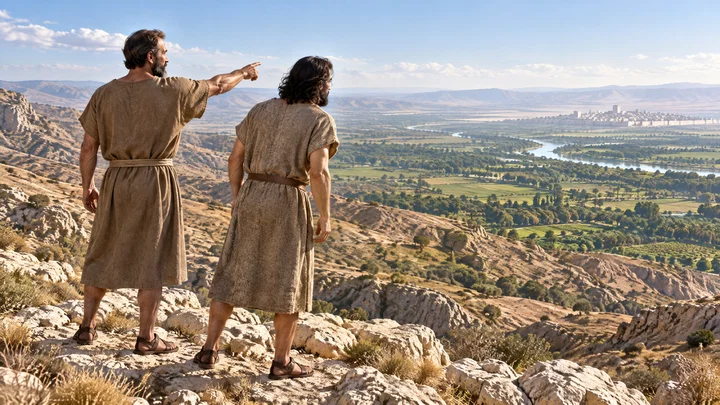
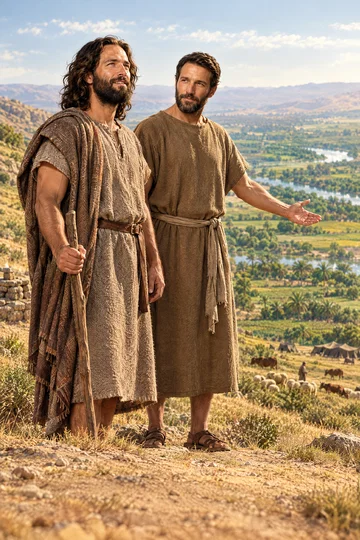
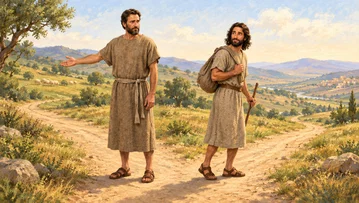
Is not the whole land before thee? separate thyself, I pray thee, from me: if thou wilt take the left hand, then I will go to the right; or if thou depart to the right hand, then I will go to the left.
Translations
Is not the whole land before you? separate yourself, I pray you, from me: if you will take the left hand, then I will go to the right; or if you depart to the right hand, then I will go to the left.
King James Version, KJV Cambridge Paragraph Bible
Is not the whole land before thee? separate thyself, I pray thee, from me: if thou wilt take the left hand, then I will go to the right; or if thou depart to the right hand, then I will go to the left.
Is not the whole land before thee? Separate thyself, I pray thee, from me: if thou wilt take the left hand, then I will go to the right; or if thou wilt depart to the right hand, then I will go to the left.
Revised Version, American Standard Version
Is not the whole land before thee? separate thyself, I pray thee, from me: if thou wilt take the left hand, then I will go to the right; or if thou take the right hand, then I will go to the left.
Is not all the land before thee? be parted, I pray thee, from me; if to the left, then I to the right; and if to the right, then I to the left.'
Is not the whole land before thee? Separate thyself, I pray thee, from me: if to the left, then I will take the right; and if to the right, then I will take the left.
Is not, all the land, before thee? I pray thee, separate thyself from me,—if to the left hand, then I will go to the right, if to the right hand, then I will go to the left.
Berean Standard Bible, Majority Standard Bible
Is not the whole land before you? Now separate yourself from me. If you go to the left, I will go to the right; if you go to the right, I will go to the left.”
Isn’t the whole land before you? Please separate yourself from me. If you go to the left hand, then I will go to the right. Or if you go to the right hand, then I will go to the left.”
Is not all the land before you? then let us go our separate ways: if you go to the left, I will go to the right; or if you take the right, I will go to the left.
Is not the whole land before thee? depart I pray thee from me: if thou wilt take the left hand, then I will goe to the right: or if thou goe to the right hand, then I will take the left.
Douay-Rheims (Challoner revision)
Behold the whole land is before thee: depart from me I pray thee: if thou wilt go to the left hand, I will take the right: if thou choose the right hand, I will pass to the left.
Pictures
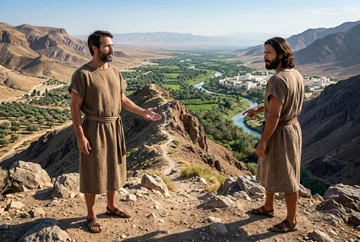
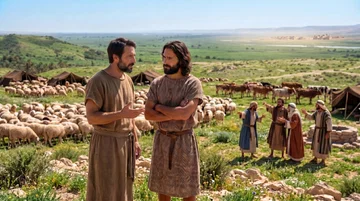
Cross-references
- Genesis 13:14-17
And the LORD said unto Abram, after that Lot was separated from him, Lift up now thine eyes, and look from the place where thou art northward, and southward, and eastward, and westward:
God expands the land and offspring promises after Lot separates from Abram.
- Genesis 14:12-16
And they took Lot, Abram’s brother’s son, who dwelt in Sodom, and his goods, and departed.
Lot is captured after settling near Sodom and rescued by Abraham.
- 2 Peter 2:7-8
And delivered just Lot, vexed with the filthy conversation of the wicked:
Describes Lot’s distress over Sodom’s conduct.
- Genesis 19:29
And it came to pass, when God destroyed the cities of the plain, that God remembered Abraham, and sent Lot out of the midst of the overthrow, when he overthrew the cities in the which Lot dwelt.
Lot’s choice near Sodom is paired with his rescue from its destruction.
- Genesis 19:16
And while he lingered, the men laid hold upon his hand, and upon the hand of his wife, and upon the hand of his two daughters; the LORD being merciful unto him: and they brought him forth, and set him without the city.
Lot’s choice near Sodom is contrasted with his rescue from its destruction.
- Genesis 15:1
After these things the word of the LORD came unto Abram in a vision, saying, Fear not, Abram: I am thy shield, and thy exceeding great reward.
God assures Abram after his unselfish choice and rescue of Lot.
- Genesis 19:17
And it came to pass, when they had brought them forth abroad, that he said, Escape for thy life; look not behind thee, neither stay thou in all the plain; escape to the mountain, lest thou be consumed.
Lot is warned to flee before Sodom’s destruction.
- Hebrews 11:9
By faith he sojourned in the land of promise, as in a strange country, dwelling in tabernacles with Isaac and Jacob, the heirs with him of the same promise:
Abraham dwells as a pilgrim in the promised land.
Commentary
Each commentary is drawn from primary sources: the writings of Ellen G. White and Adventist pioneers and periodicals. Each commentary is separate. Its own words are not a quotation; follow the references to read the source passages.
Ellen G. White
11 sources
The words were spoken to stop quarreling when the land could not sustain both households and strife had broken out between the herdsmen of the two camps, so a peaceful separation was proposed rather than continued contention.PP 132.1–2Lt 109, 1899, par. 24–26Ms 115a, 1897, par. 6Lt 49, 1875, par. 21–2319MR 12.2–13.2 Abraham took the initiative to prevent further conflict by urging that there be no strife between them and their men.PP 132.1–2Lt 109, 1899, par. 24–26Ms 115a, 1897, par. 6 Separation was chosen as the remedy that would preserve peace where crowding had made friction inevitable.PP 132.1–2Ms 1, 1895, par. 48–49Ms 115a, 1897, par. 6
Although Abraham was the elder and held the first right to choose, and although the whole land had been given to him by God, he deliberately set aside his claim.Ms 19, 1886, par. 9–11PP 132.1–2ST Nov 6, 1879 He did not assert seniority or divine grant as grounds for advantage.Ms 19, 1886, par. 9–11PP 132.1–2ST Nov 6, 1879 His refusal to stand on rightful priority opened the way for conciliation.Ms 19, 1886, par. 9–11PP 132.1–2ST Nov 6, 1879
He courteously gave Lot, his younger nephew, the first choice of the country in either direction, left or right, and bound himself to take the opposite direction from whatever Lot selected.Ms 19, 1886, par. 9–11PP 132.1–2Ms 115a, 1897, par. 12–13Ms 1, 1895, par. 48–49Lt 109, 1899, par. 24–26 Lot was permitted to choose the portion that appeared most desirable, while Abraham agreed to accept what remained.PP 132.1–2PP 132.3ST Nov 6, 1879 The offer was made so openly and fairly that no suspicion of self-interest could attach to it.ST Nov 6, 1879Ms 50, 1893, par. 20–22Lt 49, 1875, par. 21–2319MR 12.2–13.2
The act revealed a humble, noble, and unselfish spirit that waived personal rights and preferences with courtesy, generosity, consideration, and fairness, free from selfishness.Ms 19, 1886, par. 9–11PP 132.3ST Nov 6, 1879Lt 49, 1875, par. 21–2319MR 12.2–13.2 Even though parting from a kinsman was painful, Abraham preferred loss of companionship to continuance of discord.PP 132.3Ms 50, 1893, par. 20–22 His openness and equity made the transaction an example of true regard for another person.ST Nov 6, 1879Ms 50, 1893, par. 20–22Lt 49, 1875, par. 21–2319MR 12.2–13.2
He was willing to yield and to make personal sacrifice in order to preserve peace, putting reconciliation ahead of his own advantage and seeking to glorify God.Ms 19, 1886, par. 9–11Ms 115a, 1897, par. 12–13Ms 1, 1895, par. 48–49Lt 109, 1899, par. 24–26Ms 50, 1893, par. 20–22 He preferred separation to strife, and his willingness to suffer loss for peace was pleasing to the Lord.Ms 1, 1895, par. 48–49Ms 50, 1893, par. 20–22Ms 115a, 1897, par. 6 Peacemaking of this kind calls for generosity that accepts the lesser portion rather than contending for the greater.Ms 19, 1886, par. 9–11Ms 115a, 1897, par. 12–13Ms 1, 1895, par. 48–49
The plea of brotherhood meant more than natural kinship, pointing to fellowship as worshipers of the true God in one worldwide family governed by love, conciliation, uniform courtesy, kindly affection, and preferring one another.PP 132.3 That spirit is to keep distrust and rivalry from growing into dissension, jealousy, and strife that dishonors God.Ms 115a, 1897, par. 12–13Ms 1, 1895, par. 48–49PP 132.3 Clinging to self at all hazards tears households asunder and divides churches into a reproach, while practicing the golden rule and the love of Christ looks to the good of others rather than to self-aggrandizement, which is the spirit of evil.Ms 115a, 1897, par. 12–13Ms 1, 1895, par. 48–49PP 132.3
The same transaction frames the importance of choosing where to live, for Lot chose the land near Sodom for its apparent natural advantages without considering its morals, religion, and corrupting influences, while Abraham remained in Canaan.Lt 109, 1899, par. 24–26Ms 50, 1893, par. 20–22 Lot's selection was guided by worldly gain and outward promise rather than by spiritual welfare.Lt 109, 1899, par. 24–26Ms 50, 1893, par. 20–22 His later ruin warns that choices of residence made without regard to moral environment can endanger a family for eternity.Lt 109, 1899, par. 24–26Ms 50, 1893, par. 20–22
Sources
Pioneers and periodicals
28 sources
Abraham proposed a peaceful separation to end strife between his herdsmen and Lot's, pointing out that the whole land lay before them and giving Lot the first choice, agreeing himself to take the opposite way to the left or to the right.ST Jul 31, 1901ST Jul 31, 1901ST Dec 20, 1910 Though he was the elder with the first right to choose and the land had been promised to him by God, he waived his claim and let Lot select what seemed most desirable.RH Apr 10, 1866ST Jan 20, 1887ST Nov 8, 1899 His yielding came from faith in God's promise, being content with either portion because he did not seek his reward in this world but left the outcome to the Lord, preferring peace and friendship with God to the richest land.ST Sep 25, 1901ST Jul 31, 1901ST Nov 8, 1899 This stands in contrast to Lot, who selfishly grasped the offer and chose for gain the fertile, well-watered plain toward Sodom without regard for its wickedness and its influence on his family, to the loss of his possessions and character.ST Aug 20, 1902ST Dec 20, 1910ST Jul 31, 1901 The land thus opened before them reaches beyond earthly Canaan to the inheritance of the world and the new earth promised to Abraham and his children through Christ, and the account teaches that it is better to yield one's right than to contend, for God graciously visits and rewards the one who chooses unselfishly.ST Aug 20, 1902ST Feb 1, 1899ST Nov 11, 1930ST Jan 28, 1903RH Apr 10, 1866
Setting and Promised Land
Genesis 13:9 belongs to the return from Egypt to the old encampment between Bethel and Hai, after traveling slowly through the Negeb.ST Jan 20, 1887 Its occasion was insufficiency of pasture for both households and disputes over shared wells between Abraham's herdsmen and Lot's herdsmen, leading Abraham to offer Lot the choice of where to settle so they could separate peacefully, waiving his own rights though God had given the country to him and promising to take the opposite direction whether Lot went left or right.ST Jan 20, 1887 The passage belongs to the Genesis 12 to 15 account of a man of faith, together with tithing and the covenant.RH Dec 28, 1916 It belongs to God's providential dealings with the family of Abraham, the chosen progenitor of the promised Seed, as part of Genesis as a history of beginnings and of God's dealing with the Seed.ST
The land promise connected with the chapter reaches beyond earthly Canaan to the inheritance of the world, a restored earth and ultimately the new earth to be inherited by Abraham and his children through Christ, with those who belong to Christ by faith as Abraham's heirs.ST Nov 11, 1930ST Jan 28, 1903 The promise in Genesis 13:14-18 includes the kingdom.ST Feb 1, 1899 The specific borders and time for possessing earthly Canaan belong to the separate promise in Genesis 15:13-21, distinct from this first and larger promise of the land.ST Nov 11, 1930
The separation marks a lesson learned after Abraham had continued to cling to Lot.ST Jun 15, 1904 That clinging had persisted until this offer to divide the land.ST Jun 15, 1904 The separation itself was part of his education in faith and trust in God's promise.ST Jun 15, 1904
Generous Peacemaking and Contrast
Abraham proposed a peaceful separation to stop the strife between himself and Lot and between their herdsmen, pointing out that the whole land lay before them and giving Lot the first choice of where to go, agreeing himself to take the opposite direction — to go to the right if Lot took the left, and to the left if Lot went to the right.ST Jul 31, 1901ST Jul 31, 1901ST Dec 20, 1910RH Jan 6, 1916ST Mar 17, 1914 His offer gave Lot freedom to choose and put peace ahead of securing the most advantageous portion for himself.ST Oct 3, 1878RH Sep 25, 1860 Though Abraham was the elder with the first right to choose, and though God had given the country to him by promise, he waived his rights and nobly gave up his claim, letting Lot select the part that seemed most desirable.ST Nov 6, 1879RH Apr 10, 1866ST Jan 20, 1887ST Nov 8, 1899RH May 26, 1863
The offer illustrates unselfishness, meekness, courtesy, and conciliation rather than asserting seniority or claiming the first choice, showing freedom from selfishness and greed and regard for another person.ST Nov 6, 1879ST Jan 2, 1912ST Aug 19, 1880ST Dec 20, 1910 It was a practical way to prevent conflict, bitterness, lawsuits, and domestic misery by yielding instead of contending.ST Jan 2, 1912ST Aug 19, 1880 Abraham's yielding was produced by faith in God's promise: though greatly blessed, he was content with either portion because he did not seek his reward in this world.ST Sep 25, 1901ST Jul 31, 1901 He was not jealous of his rights but left the promised land to the Lord, fully persuaded God was able to perform what He had promised.ST Jul 31, 1901
He preferred integrity and friendship with God to the richest land, willing to yield earthly advantage rather than risk losing them, and he remained in the less fertile heights of the promised land.ST Nov 8, 1899ST Nov 21, 1892 He put peace and kinship as brethren ahead of his own advantage, gently asking that they not quarrel, to prevent a dispute from worsening.ST Jul 31, 1901RH Apr 10, 1866ST Oct 3, 1878 This mattered while the Canaanites and Perizzites dwelt in the land, for he knew strife in God's church over wealth would be a bad example where he lived as a missionary.ST Jul 31, 1901RH Apr 10, 1866
His generous offer contrasts with Lot's selfish, covetous, exacting disposition, which at once grasped the offer without customary refusal and chose what he deemed best for financial interest and pasture.ST Aug 20, 1902ST Dec 20, 1910ST Jul 31, 1901 Lot selected the fertile, well-watered Jordan plain and moved toward Sodom, whose people were exceedingly wicked, motivated by gain rather than concern for the spiritual influence on his family.ST Aug 20, 1902ST Jul 31, 1901RH Mar 26, 1872 That choice led him into a wicked community and to the loss of his possessions and character.ST Aug 20, 1902 The account teaches that separation can preserve peace when people cannot live together harmoniously, but the choice should be wise rather than selfish.ST Aug 20, 1902 It teaches that it can be better to give up one's own right and yield than to contend with someone quarrelsome or covetous, and that God's providential favor and gracious visit afterward are shown to one who chooses unselfishly, rewarding mildness and humility.ST Dec 20, 1910RH Apr 10, 1866RH Jul 28, 1859ST Nov 21, 1892
Sources