Genesis 38:16
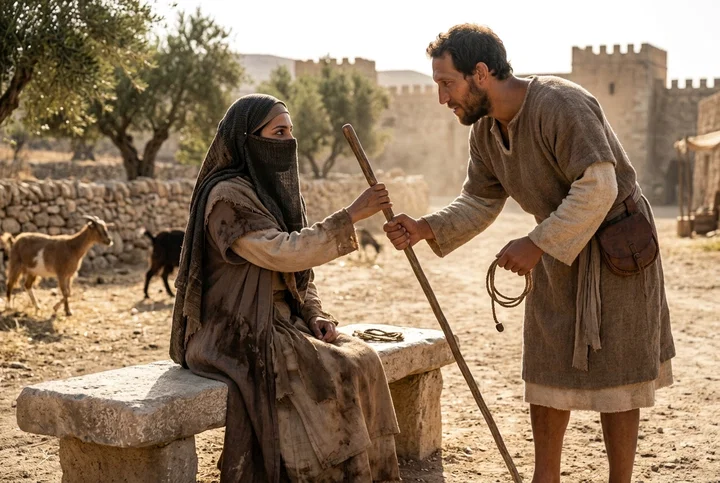
And he turned unto her by the way, and said, Go to, I pray thee, let me come in unto thee; (for he knew not that she was his daughter in law.) And she said, What wilt thou give me, that thou mayest come in unto me?
Translations
And he turned to her by the way, and said, Go to, I pray you, let me come in to you; (for he knew not that she was his daughter in law.) And she said, What will you give me, that you may come in to me?
And he turned unto her by the way, and said, Go to, I pray thee, let me come in unto thee; (for he knew not that she was his daughter in law.) And she said, What wilt thou give me, that thou mayest come in unto me?
And he turned unto her by the way, and said, Go to, I pray thee, let me come in unto thee; (for he knew not that she was his daughter in law:) and she said, What wilt thou give me, that thou mayest come in unto me?
And he turned to her by the way, and said, Come, I pray thee, let me have access to thee; (for he knew not that she was his daughter-in-law:) and she said, What wilt thou give me, that thou mayst have access to me?
And he turned unto her by the way, and said, Go to, I pray thee, let me come in unto thee: for he knew not that she was his daughter in law. And she said, What wilt thou give me, that thou mayest come in unto me?
And he turned unto her by the way, and said, Come, I pray thee, let me come in unto thee: for he knew not that she was his daughter-in-law. And she said, What wilt thou give me, that thou mayest come in unto me?
and he turneth aside unto her by the way, and saith, 'Come, I pray thee, let me come in unto thee,' (for he hath not known that she [is] his daughter-in-law); and she saith, 'What dost thou give to me, that thou mayest come in unto me?'
And he turned aside to her by the way, and said, Come, I pray thee, let me go in to thee; for he did not know that she was his daughter-in-law. And she said, What wilt thou give me, that thou mayest come in to me?
So he turned aside unto her. by the way, and said Grant it! I pray thee, let me come in unto thee! For he knew not that she was his daughter-in-law. And she said, What wilt thou give me, if thou shouldst come in unto me?
Berean Standard Bible, Majority Standard Bible
Not realizing that she was his daughter-in-law, he went over to her and said, “ Come now, let me sleep with you.”“ What will you give me for sleeping with you?” she inquired.
He turned to her by the way, and said, “ Please come, let me come in to you,” for he didn’t know that she was his daughter-in-law.She said, “ What will you give me, that you may come in to me?”
And turning to her by the roadside, he said to her, Let me come in to you; for he had no idea that she was his daughter-in-law. And she said, What will you give me as my price?
And he turned to the way towardes her, and saide, Come, I pray thee, let me lie with thee. (for he knewe not that she was his daughter in lawe) And she answered, What wilt thou giue me for to lie with me?
Douay-Rheims (Challoner revision)
And going to her, he said: Suffer me to lie with thee: for he knew her not to be his daughter in law. And she answered: What wilt thou give me to enjoy my company?
Pictures
Cross-references
- Matthew 1:3
And Judas begat Phares and Zara of Thamar; and Phares begat Esrom; and Esrom begat Aram;
Tamar and Pharez are named among Jesus’ ancestors.
Commentary
Each commentary is drawn from primary sources: the writings of Ellen G. White and Adventist pioneers and periodicals. Each commentary is separate. Its own words are not a quotation; follow the references to read the source passages.
Pioneers and periodicals
7 sources
Genesis 38:16 stands in chapters 37-44, the first part of the story of Joseph and his brethren, which presents Jacob as a loving but unwise father who made Joseph, the son of his favorite wife and the petted child of his old age, the object of special affection above his other sons.ST Jan 3, 1911 The surrounding account exposes the evils of plurality of wives in the jealousies that existed not only between Jacob's wives but between their families, out of which hatred grew in Joseph's brethren against him so that they first attempted to slay him and finally sold him as a slave into Egypt, showing the sad fruits of Jacob's having more than one wife in low standards of morality and crime.ST Jan 3, 1911ST The verse describes Judah turning aside to Tamar by the way and asking to come in to her because he did not know she was his daughter-in-law, she having unsettled herself and taken an unaccustomed path and apparel, showing that human knowledge and love can be estranged by ignorance and forgetfulness, since time, place, speech, or apparel can hide one person from another.ST Jan 21, 1889RH Nov 4, 1858 It belongs to the account of Judah's sin with Tamar, who acted as a harlot with her father-in-law, an account that exposes sin so that it may be shunned rather than indulged or excused, and that reveals God's love, mercy, and power as the remedy.STRH Oct 2, 1900
From this encounter Pharez was born, and Pharez was an ancestor of Christ according to the flesh, so the verse is part of the account of Christ's human ancestry, which included people marked by human weakness, sin, and fallenness, with Tamar named among his ancestors in Matthew's genealogy.RH Oct 2, 1900ST Oct 21, 1889ST Jan 21, 1889 That sinful birth, together with Jacob's selfish, crafty, and deceitful disposition passed to his sons, Rahab the unenlightened heathen, and the sin and idolatry of Solomon, Rehoboam, Abijah, Jehoram, Ahaz, Manasseh, Amon, and other kings of Judah, proves the human line from which Christ sprang tended to concentrate in him all the weaknesses of humanity.ST Oct 21, 1889ST Jan 21, 1889 Although his mother was pure and godly, his human nature was therefore more subject to the infirmities of the flesh and to sinful tendencies than if he had been born before the race had deteriorated physically and morally.ST Oct 21, 1889
Christ's coming through such fallen ancestry and taking sinful flesh was not accidental but a necessary part of the plan of redemption, because only by taking the flesh that brings death and by suffering temptation could he die and sympathize with and aid tempted men.ST Oct 21, 1889 His family history including fallen people offers hope to the fallen.RH Oct 2, 1900ST Oct 21, 1889 By contrast with human ignorance, the verse proves the Lord knows who are his, for time, place, speech, or apparel cannot obscure or darken his eye or ear, and he discerns and names his own everywhere.RH Nov 4, 1858
Sources