Genesis 44:11
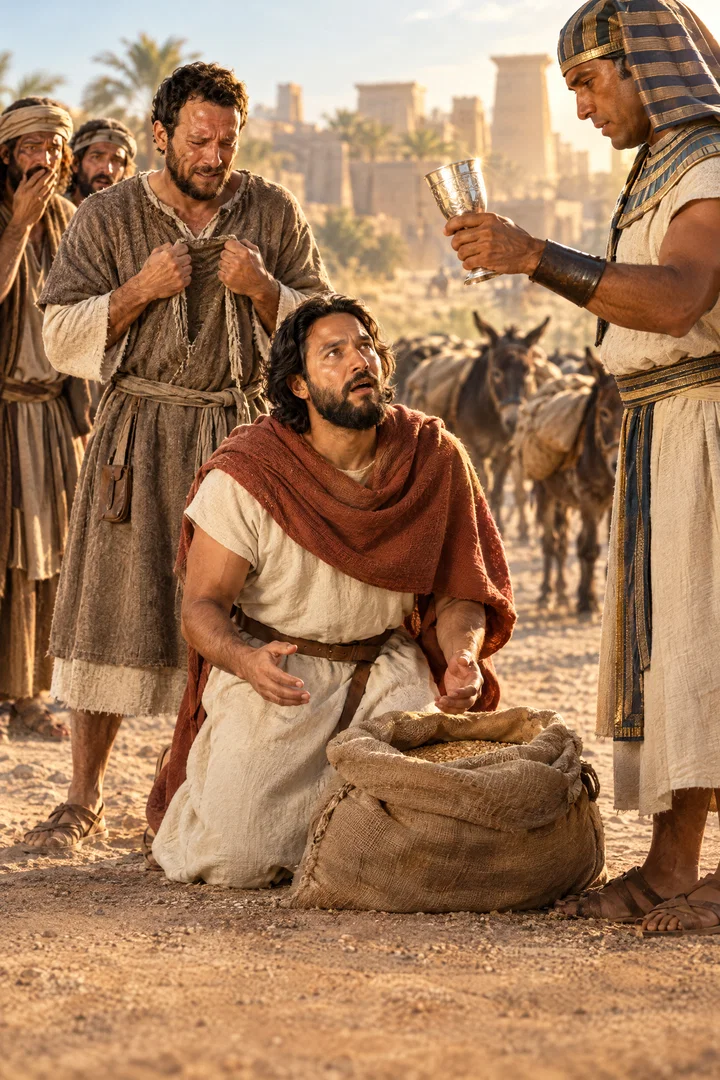
Then they speedily took down every man his sack to the ground, and opened every man his sack.
Translations
American King James Version, King James Version, KJV Cambridge Paragraph Bible, Webster Bible
Then they speedily took down every man his sack to the ground, and opened every man his sack.
Revised Version, American Standard Version
Then they hasted, and took down every man his sack to the ground, and opened every man his sack.
and they hasten and take down each his bag to the earth, and each openeth his bag;
And they hasted and laid down every man his sack on the ground, and opened every man his sack.
So they hastened and took down each man his sack to the ground,—and opened each man his sack.
Berean Standard Bible, Majority Standard Bible
So each one quickly lowered his sack to the ground and opened it.
Then they hurried, and each man took his sack down to the ground, and each man opened his sack.
Then every man quickly got his bag down and undid it.
Then at once euery man tooke downe his sacke to the grounde, and euery one opened his sacke.
Douay-Rheims (Challoner revision)
Then they speedily took down their sacks to the ground, and every man opened his sack.
Pictures
Cross-references
- Genesis 44:4-5
And when they were gone out of the city, and not yet far off, Joseph said unto his steward, Up, follow after the men; and when thou dost overtake them, say unto them, Wherefore have ye rewarded evil for good?
steward's accusation prompts the search
Commentary
Each commentary is drawn from primary sources: the writings of Ellen G. White and Adventist pioneers and periodicals. Each commentary is separate. Its own words are not a quotation; follow the references to read the source passages.
Ellen G. White
5 sources
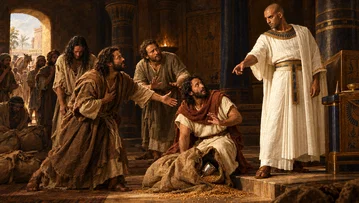
When accused of taking the cup, the brothers speedily lowered every man's sack to the ground and opened each one for searching.1SP 147.1–148.1ST Jan 29, 1880ST Mar 31, 1887PP 229.1–5SG3 162.1–2 The steward searched the sacks in order, beginning with Reuben the eldest and going down to the youngest.ST Jan 29, 1880PP 229.1–5SG3 162.1–2 The governor's silver cup was found in Benjamin's sack.1SP 147.1–148.1ST Jan 29, 1880ST Mar 31, 1887PP 229.1–5SG3 162.1–2
The discovery left them shocked, distressed and speechless, and in utter wretchedness they tore their garments and returned sadly to the city.1SP 147.1–148.1ST Jan 29, 1880 They felt the hand of God was against them, bringing their past wickedness upon them.1SP 147.1–148.1ST Jan 29, 1880 By their own promise Benjamin was liable to a lifetime of slavery, which they feared would fully realize their father's fears and cause him to lose his beloved son.1SP 147.1–148.1ST Jan 29, 1880PP 229.1–5
Sources
Pioneers and periodicals
8 sources
The verse belongs to the account of Joseph's reunion with his family during the famine in Egypt. When accused over Joseph's silver cup, the brothers confidently submit to an immediate search by the steward, speedily taking every man's sack down to the ground and opening every sack.ST Jan 29, 1880ST Mar 31, 1887ST Apr 16, 1894RH Oct 1, 1901 They quickly set each sack on the ground for the steward's search.ST Jan 29, 1880ST Mar 31, 1887RH Oct 1, 1901
Joseph had hidden the cup in Benjamin's sack in order to hold his brothers and to try them, to see what they would do in regard to Benjamin and whether they still held the same envy and jealousy toward him that they had held toward Joseph.ST Apr 16, 1894 So confident were they in the integrity of each one that they had promised that whoever had the cup should be Joseph's servant forever.ST Apr 16, 1894 By their own promise they afterward felt Benjamin was doomed to a life of slavery.ST Jan 29, 1880ST Apr 16, 1894
The steward examines the sacks in order, beginning with Reuben's as the eldest and going down to the youngest, and the cup is found in Benjamin's sack.ST Jan 29, 1880ST Mar 31, 1887ST Apr 16, 1894 At the discovery the brothers are speechless and rend their garments in utter wretchedness.ST Jan 29, 1880 Returning sadly to the city, they feel that the hand of God is against them for their past wickedness and that their father's fears will now be fully realized, after which Judah makes his plea on Benjamin's behalf.ST Jan 29, 1880ST Apr 16, 1894
The episode falls within the story in which the brothers' hatred led them to sell Joseph into slavery, Joseph developed integrity and purity, and the brothers later came before him and bowed, fulfilling his dreams.ST Jan 3, 1911 It belongs amid a series of apparently good or ill surprises in the lives of Jacob and his children during the universal famine.ST Nov 24, 1898 The testing of the brethren reveals traits of character in Judah, shows God held in high reverence by both Joseph and his brethren, and shows Joseph's influence among his brethren and among the people of Egypt and among the nations of the world.ST Nov 24, 1898
The history of Joseph, to which the verse belongs, is given as an example of God leading people by a roundabout path while guiding them rightly.RH Jan 19, 1860 It illustrates the truth that when Satan seems most successfully to have hidden the light burning in a soul loyal to God, then the flame bursts forth and the light is lifted up to be seen both near and afar off, even if every nation of the earth must be stricken with famine.ST Nov 24, 1898 Points in Joseph's life in this testing represent points in the life of Christ.ST Nov 24, 1898
In responding to the accusation the brothers recall that they had returned the money found in their sacks and insist they would not steal silver or gold, which shows that they knew theft was sinful and indicates an awareness that covetousness was sin.RH Aug 17, 1876 Theft was deemed a heinous offense in Joseph's time. That theft was treated as a heinous offense proves that the law forbidding stealing was already in force before Moses, as it was also in Abraham's day and in Jacob's time.
Sources