Genesis 50:21
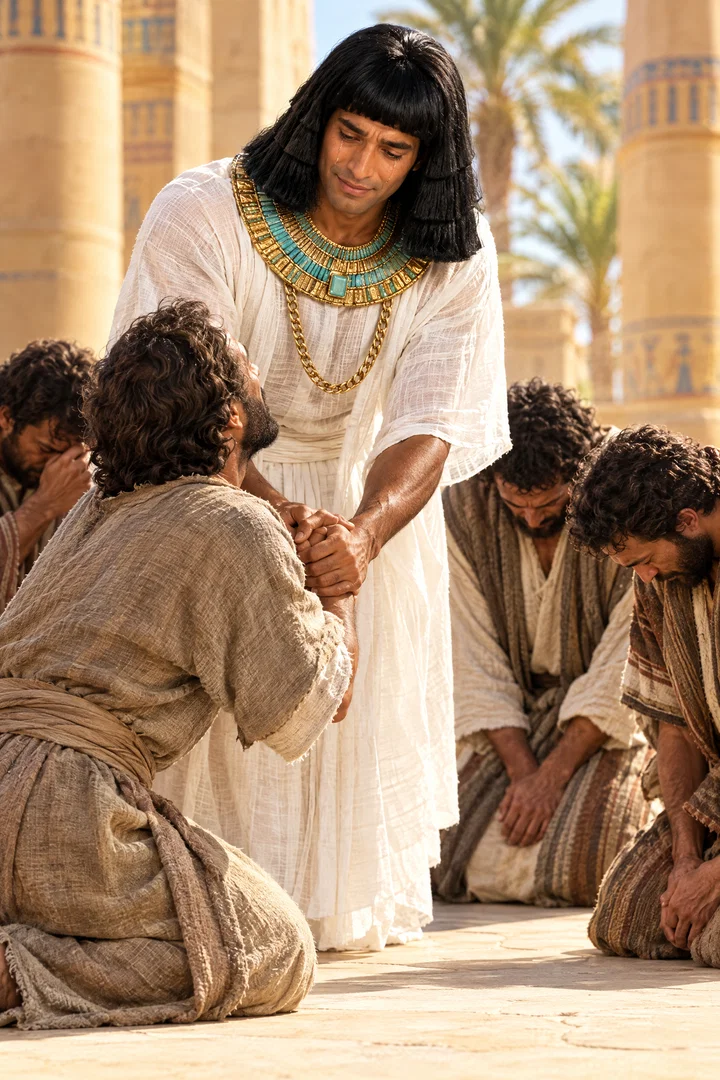
Now therefore fear ye not: I will nourish you, and your little ones. And he comforted them, and spake kindly unto them.
Translations
Now therefore fear you not: I will nourish you, and your little ones. And he comforted them, and spoke kindly to them.
King James Version, Revised Version, American Standard Version
Now therefore fear ye not: I will nourish you, and your little ones. And he comforted them, and spake kindly unto them.
Now therefore fear ye not: I will nourish you and your little ones. And he comforted them, and spake kindly unto them.
Now therefore fear ye not: I will nourish you, and your little ones. And he comforted them, and spoke kindly to them.
and now, fear not: I do nourish you and your infants;' and he comforteth them, and speaketh unto their heart.
And now, fear not: I will maintain you and your little ones. And he comforted them, and spoke consolingly to them.
Now, therefore do not fear! I will nourish you and your little ones. Thus he consoled them, and spake unto their heart.
Berean Standard Bible, Majority Standard Bible
Therefore do not be afraid. I will provide for you and your little ones.” So Joseph reassured his brothers and spoke kindly to them.
Now therefore don’t be afraid. I will provide for you and your little ones.” He comforted them, and spoke kindly to them.
So now, have no fear: for I will take care of you and your little ones. So he gave them comfort with kind words.
Feare not nowe therefore, I will nourish you, and your children: and hee comforted them, and spake kindly vnto them.
Douay-Rheims (Challoner revision)
Fear not: I will feed you and your children. And he comforted them, and spoke gently and mildly.
Pictures
Cross-references
- Genesis 45:5-7
Now therefore be not grieved, nor angry with yourselves, that ye sold me hither: for God did send me before you to preserve life.
Joseph nourishes his family as part of God’s provision to preserve their lives.
Commentary
Each commentary is drawn from primary sources: the writings of Ellen G. White and Adventist pioneers and periodicals. Each commentary is separate. Its own words are not a quotation; follow the references to read the source passages.
Ellen G. White
7 sources
After Jacob's death, Joseph's brothers feared that he still resented their former cruel conduct and would now take revenge for the wrong they had done him.1SP 156.2–157.1ST Feb 5, 1880SG3 173.1–174.1PP 239.1 The verse is his reassurance to them that they need not fear revenge from him.1SP 156.2–157.1ST Feb 5, 1880SG3 173.1–174.1PP 239.1 He promises to nourish and provide for them and their little ones and children.1SP 156.2–157.1ST Feb 5, 1880SG3 173.1–174.1PP 239.1SG3 174.2–176.1 He comforted them and spoke kindly to them.1SP 156.2–157.1ST Feb 5, 1880SG3 173.1–174.1PP 239.1SG3 174.2–176.1
He wept that they thought he had hidden resentment and would now repay their evil.SG3 173.1–174.1 His kind words and care express cordial, deep, unselfish love and freely given forgiveness, with no spirit of revenge or resentful feeling for their former cruelty.1SP 156.2–157.1ST Feb 5, 1880SG3 173.1–174.1PP 239.11SP 159.1 He freely forgave them when they acknowledged their sin before him, proving by acts of benevolence and love in nourishing them and their little ones that he harbored no resentment.SG3 174.2–176.1ST Feb 5, 18801SP 159.1
His forgiving spirit flowed from walking with God, meekly bearing imprisonment and suffering for his innocence without murmuring, with self-control, patience in adversity, and unwavering fidelity left on record for the benefit of all afterward.ST Feb 5, 1880 Like Joseph, Jesus was rejected by his own, suffered innocently, and meekly forgave his murderers while suffering cruel torture, and after rising and ascending received all power and authority.SG3 174.2–176.1 Joseph's benevolent pardon illustrates how Jesus receives into favor and freely pardons all who come to him repentant and confessing their sins, and if they remain true will exalt them to his throne and make them his heirs to the inheritance purchased with his blood.SG3 174.2–176.1ST Feb 5, 1880
Sources
Pioneers and periodicals
15 sources
After Jacob's death Joseph's guilty brothers feared he still resented their past cruelty and would take revenge on them.ST Feb 5, 1880ST Jan 28, 1913ST Jan 10, 1911 He told them not to fear harm from him, promised to nourish and provide for them and their little ones, and comforted them and spoke kindly to them.ST Apr 23, 1894ST Apr 23, 1894ST Sep 5, 1895 His answer of kindness and care showed pity, forgiveness and love rather than revenge, with love that subdued his brothers and removed their fear.ST Nov 29, 1905RH Jan 19, 1860RH Dec 5, 1865 He freely forgave his brethren when they acknowledged their sin and showed by benevolent acts that he harbored no resentment, a pardon greater than his work of filling the storehouses and patterning Jesus in freely receiving and pardoning the repentant.ST Feb 5, 1880RH Jun 30, 1903ST Dec 12, 1892 Through him God providentially preserved the family through whom the promised Seed would come, keeping the promised line alive.ST Jan 10, 1911
Words and Historical Setting
After the death of Jacob his brothers stood conscious of guilt and afraid that Joseph still remembered their former cruelty and would now turn against them in revenge.ST Feb 5, 1880ST Jan 28, 1913ST Jan 10, 1911RH Jan 19, 1860RH Dec 5, 1865 To that fear he answered that they had no cause to dread harm from him.ST Apr 23, 1894ST Apr 23, 1894ST Jan 28, 1913ST Jan 10, 1911 He pledged to nourish and supply them and their little ones.ST Apr 23, 1894ST Apr 23, 1894ST Sep 5, 1895ST Jan 28, 1913 He comforted them and addressed them with kindly speech.ST Apr 23, 1894ST Apr 23, 1894ST Sep 5, 1895RH Jan 19, 1860 Just before this his words read in the Greek as I am God's, owning that he belongs to God and stands under God's ownership, and thereby pledging that he will do them no injustice; and the saying stands in chapters 12-50, the second division of Genesis recounting God's dealings with the chosen race, as distinct from chapters 1-11 recounting His dealings with the human race.ST Sep 5, 1895ST Mar 17, 1914
Forgiving Character and Example
Joseph's answer of kindness and care to guilty, fearful brothers who expected revenge shows pity, forgiveness, and love rather than vengeance, revealing a character shaped by faith and mercy.ST Nov 29, 1905RH Jan 19, 1860ST Aug 15, 1916 His love subdued them and removed their fear as he reassured them, promised to provide for them and their children, comforted them, and spoke kindly to them.ST Nov 29, 1905RH Jan 19, 1860RH Dec 5, 1865ST Aug 15, 1916 His conduct in this reassurance illustrates trust in God's guidance through his whole history.RH Jan 19, 1860 His forgiveness of his brothers is greater than his work of filling the storehouses.RH Jun 30, 1903
His forgiveness is an example of freeing others from their past offenses and treating them as God treats those He forgives.ST Dec 12, 1892 He freely forgave his brethren when they acknowledged their sin before him, showing by benevolent acts of love in nourishing them and their little ones that he harbored no resentful feelings for their former cruel conduct toward him.ST Feb 5, 1880 That forgiveness flowed from walking with God, meekly bearing imprisonment and suffering for innocence without murmuring, with self-control, patience in adversity, and unwavering fidelity left on record for the benefit of all afterward.ST Feb 5, 1880
His benevolent pardon patterns Jesus in freely receiving and pardoning all who come repentant and confessing their sins and in exalting the faithful to His throne.ST Feb 5, 1880 Having declared in the preceding words that he belongs to God and acknowledges God's ownership, he assured his brothers that he would do them no injustice.ST Sep 5, 1895 The same principle applies to those who belong to Christ and have His Spirit, for God directs His servants toward mercy and love, so they will do one another no harm.ST Sep 5, 1895
Providence and Instructional Use
Joseph's reassurance after his father's death that his brothers need not fear him carries a promise to provide for them and their children and to comfort them with kind words.ST Jan 10, 1911 That provision reflects God's care in preserving the family through Joseph.ST Jan 10, 1911 Through that preservation the family through whom the promised Seed would come was kept alive, and the promised line was helped to continue.ST Jan 10, 1911
The familiar story of Joseph to which this reassurance belongs is suited to teach children from the earliest dawn of intelligence.RH Jul 2, 1908 It leads their infant minds up to God and the Saviour.RH Jul 2, 1908 It forms their tender minds in piety and the fear of God.RH Jul 2, 1908 It serves as part of daily home religious instruction.RH Jul 2, 1908
Sources