Genesis 50:20
But as for you, ye thought evil against me; but God meant it unto good, to bring to pass, as it is this day, to save much people alive.
Translations
But as for you, you thought evil against me; but God meant it to good, to bring to pass, as it is this day, to save much people alive.
King James Version, KJV Cambridge Paragraph Bible
But as for you, ye thought evil against me; but God meant it unto good, to bring to pass, as it is this day, to save much people alive.
But as for you, ye thought evil against me; but God meant it for good, to bring to pass, as it is this day, to save many people alive.
Revised Version, American Standard Version
And as for you, ye meant evil against me; but God meant it for good, to bring to pass, as it is this day, to save much people alive.
As for you, ye devised against me evil — God devised it for good, in order to do as [at] this day, to keep alive a numerous people;
Ye indeed meant evil against me: God meant it for good, in order that he might do as [ it is] this day, to save a great people alive.
Ye, indeed, planned against me, evil,—God, planned it, for good, for the sake of doing, as at this day, to save alive much people.
Berean Standard Bible, Majority Standard Bible
As for you, what you intended against me for evil, God intended for good, in order to accomplish a day like this— to preserve the lives of many people.
As for you, you meant evil against me, but God meant it for good, to save many people alive, as is happening today.
As for you, it was in your mind to do me evil, but God has given a happy outcome, the salvation of numbers of people, as you see today.
When ye thought euill against mee, God disposed it to good, that he might bring to passe, as it is this day, and saue much people aliue.
Douay-Rheims (Challoner revision)
You thought evil against me: but God turned it into good, that he might exalt me, as at present you see, and might save many people.
Pictures
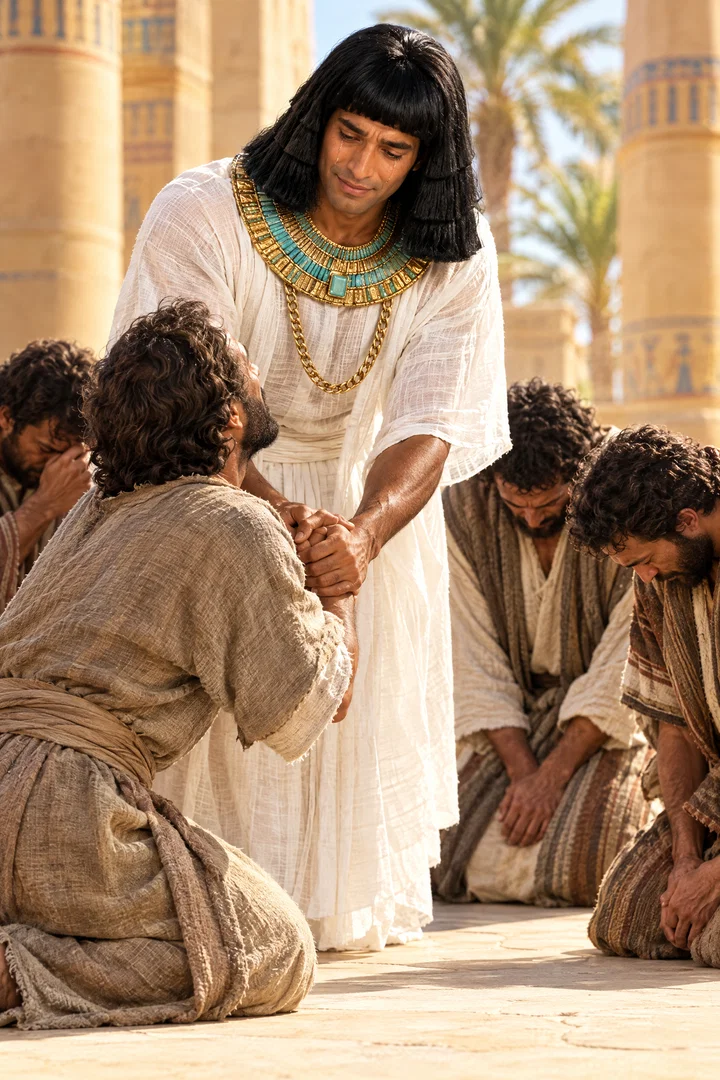
Cross-references 20 of 26
- Genesis 45:5-7
Now therefore be not grieved, nor angry with yourselves, that ye sold me hither: for God did send me before you to preserve life.
God sent Joseph ahead to preserve many lives.
- Romans 8:28
And we know that all things work together for good to them that love God, to them who are the called according to his purpose.
God works even evil and adversity for good for those who love him.
- Genesis 37:28
Then there passed by Midianites merchantmen; and they drew and lifted up Joseph out of the pit, and sold Joseph to the Ishmeelites for twenty pieces of silver: and they brought Joseph into Egypt.
Joseph’s brothers sell him into Egypt, beginning the course God turns toward good.
- Acts 2:23
Him, being delivered by the determinate counsel and foreknowledge of God, ye have taken, and by wicked hands have crucified and slain:
God fulfilled his purpose through a wrongful killing without excusing its perpetrators.
- Genesis 37:5-11
And Joseph dreamed a dream, and he told it his brethren: and they hated him yet the more.
Joseph’s dreams foretold the future his brothers’ cruelty could not prevent.
- Genesis 41:40-41
Thou shalt be over my house, and according unto thy word shall all my people be ruled: only in the throne will I be greater than thou.
Joseph rules in Egypt despite his brothers’ evil intent.
- John 11:49-52
And one of them, named Caiaphas, being the high priest that same year, said unto them, Ye know nothing at all,
The plot against Jesus serves God’s purpose of saving and gathering people.
- Acts 7:9-10
And the patriarchs, moved with envy, sold Joseph into Egypt: but God was with him,
God was with Joseph after his brothers sold him, delivering him and making him ruler.
- Genesis 37:20-24
Come now therefore, and let us slay him, and cast him into some pit, and we will say, Some evil beast hath devoured him: and we shall see what will become of his dreams.
His brothers’ evil intent began the path by which God raised Joseph to save many.
- Genesis 42:6
And Joseph was the governor over the land, and he it was that sold to all the people of the land: and Joseph’s brethren came, and bowed down themselves before him with their faces to the earth.
Joseph’s brothers bow before him, fulfilling his dreams.
- Genesis 39:20-23
And Joseph’s master took him, and put him into the prison, a place where the king’s prisoners were bound: and he was there in the prison.
Joseph is imprisoned, yet God remains with him and prospers his work.
- Acts 4:28
For to do whatsoever thy hand and thy counsel determined before to be done.
Enemies act against Jesus while fulfilling God’s purpose.
- Genesis 42:36
And Jacob their father said unto them, Me have ye bereaved of my children: Joseph is not, and Simeon is not, and ye will take Benjamin away: all these things are against me.
Jacob sees his losses as against him, though God is working events for good.
- Genesis 45:7
And God sent me before you to preserve you a posterity in the earth, and to save your lives by a great deliverance.
Joseph says God sent him to preserve a remnant.
- Genesis 45:8
So now it was not you that sent me hither, but God: and he hath made me a father to Pharaoh, and lord of all his house, and a ruler throughout all the land of Egypt.
Joseph says God sent him to Egypt, turning his brothers’ actions toward good.
- Psalms 105:17
He sent a man before them, even Joseph, who was sold for a servant:
Joseph was sent ahead as part of God’s plan to preserve many lives.
- Genesis 41:54-56
And the seven years of dearth began to come, according as Joseph had said: and the dearth was in all lands; but in all the land of Egypt there was bread.
The famine and Egypt’s grain supply set the events in motion.
- Genesis 37:31-35
And they took Joseph’s coat, and killed a kid of the goats, and dipped the coat in the blood;
Joseph’s brothers deceive Jacob with the bloodied coat, causing him to mourn Joseph as dead.
- Genesis 39:2-3
And the LORD was with Joseph, and he was a prosperous man; and he was in the house of his master the Egyptian.
God is with Joseph in Egypt and makes his work prosper.
- Genesis 37:9
And he dreamed yet another dream, and told it his brethren, and said, Behold, I have dreamed a dream more; and, behold, the sun and the moon and the eleven stars made obeisance to me.
Joseph’s dreams aroused envy, but God turned the outcome to good.
Commentary
Each commentary is drawn from primary sources: the writings of Ellen G. White and Adventist pioneers and periodicals. Each commentary is separate. Its own words are not a quotation; follow the references to read the source passages.
Ellen G. White
20 sources
Joseph's brothers meant evil when they plotted to kill him and then sold him as a slave to keep him from becoming greater than they were and to stop his dreams from coming true, but God meant it for good by raising him to power in Egypt as a saviour to preserve his father's family and keep many people alive from death.1SP 156.2–157.1ST Feb 5, 1880PP 239.1SG3 174.2–176.1SG3 143.1 He spoke these words after Jacob died, when his brothers feared he had only held back revenge for their father's sake and begged forgiveness offering themselves as servants, and he wept, refused to take the place of God, forgave them freely without resentment, and promised to nourish them and their little ones with kindness.ST Feb 5, 1880SG3 173.1–174.1PP 239.1 God overruled the very course they took to prevent his exaltation so that it fulfilled the dreams and brought dominion and deliverance for many, for He does not stop the plottings and false charges of wicked men but makes them work for good to His faithful servants, yet this purpose never excuses the heinous guilt of the wrongdoers.1SP 156.2–157.1SG3 174.2–176.1PP 239.2–48T 123.3SG3 143.1 As Joseph's suffering through revenge and humiliation prepared him and led to his becoming a saviour, so the chief priests and rulers sought to keep Christ from becoming king by condemning and murdering Him, yet by that murder brought about His becoming the Redeemer of the fallen race and ruler over the whole world.ST Feb 5, 1880SG3 174.2–176.1PP 239.2–4 The verse therefore calls for forgiving with benevolence and caring even for those who confessed cruel wrongs, as Jesus pardons the repentant, and for trusting fully in God rather than looking to men for sympathy when trusted supports fail and all seems dark.ST Feb 5, 1880SG3 173.1–174.1PP 239.1SG3 174.2–176.1GW 476.6–477.1
Context and Outcome
The verse belongs to the famine that drove the brothers down to Egypt, where they bowed before Joseph without knowing him, and their bowing recalled his earlier dreams.PP 224.3–225.1 The evil they meant was first to kill him and then to sell him as a slave, in order to keep him from becoming greater than themselves and to put an end to his dreams so they would never come true.SG3 174.2–176.1SG3 143.1 What God meant for good was Joseph's place and dominion in Egypt as a saviour to his father's family, by which many people were kept alive and saved from death.1SP 156.2–157.1ST Feb 5, 1880PP 239.1ST Feb 5, 18801SP 157.2–158.2 He overruled the very course taken against Joseph to bring about dominion over the brothers and preservation of the father's house, to save much people alive.SG3 174.2–176.1
It was spoken after Jacob died, when the brothers feared Joseph had only hidden resentment out of respect for their father and would now repay the evil done to him.SG3 173.1–174.1 In that fear they begged his forgiveness and offered themselves to him as servants.SG3 173.1–174.1 Joseph wept at their words, told them not to fear, and asked whether he was in the place of God.SG3 173.1–174.1 He then told them they had thought evil against him but God had meant it unto good, to bring to pass as it was that day, to save much people alive.SG3 173.1–174.1 He promised to nourish them and their little ones, comforting them and speaking kindly to them.SG3 173.1–174.1 Jacob himself had not suspected his sons of such cruelty until they made humiliating confession and asked forgiveness, and when he saw that God had turned their evil to good he forgave his erring sons and blessed them.SG3 168.1
Providence Over Human Evil
God overruled the very course the brothers pursued to bring about what they designed should never take place.SG3 174.2–176.1PP 239.2–4SG3 143.1 They acted cruelly to prevent Joseph from becoming greater than themselves and to put an end to his dreams so they would not come true.SG3 174.2–176.1SG3 143.1 Yet God controlled events and made their cruel course fulfill the very dreams they were working to frustrate, bringing Joseph to dominion over them and making him a saviour to his father's family as a means of saving many lives.SG3 174.2–176.1PP 239.2–4SG3 143.1
God does not prevent the plottings and devices of wicked men against His servants, but causes those devices to work for good to those servants.8T 123.3GW 476.6–477.1ST Sep 7, 1915MH 486.8–487.1Lt 8, 1886, par. 2 This includes false accusations and calumny turned to good for the one accused.1SP 133.1ST Jan 8, 1880 The turning to good comes when amid trial and conflict they preserve faith and loyalty.8T 123.3GW 476.6–477.1ST Sep 7, 1915MH 486.8–487.1Lt 8, 1886, par. 2 This same dealing is repeated for others who face the same kind of trial, as seen in the histories of Joseph and of Daniel.8T 123.3GW 476.6–477.1MH 486.8–487.1
Joseph's suffering through wicked revenge, humiliation, temptation, adversity, and hardship did not prevent God from later exalting him.1SP 133.1ST Jan 8, 1880 Providence turned the enemy's devices to deliverance and benefit for many in God's own time.1SP 133.1ST Jan 8, 1880 Those temptations, adversities, and hardships also prepared him for the position he would later fill.ST Jan 8, 1880
God's providential purpose in turning the act toward good did not excuse or lessen the brothers' guilt.1SP 156.2–157.1ST Feb 5, 1880PP 239.11SP 157.2–158.2SG3 174.2–176.1 Their wrongdoing and crime in intending evil and selling him remained evil, guilty, and heinous even though God overruled its outcome to bring Joseph to a position where he could keep many people alive and save them from death.1SP 156.2–157.1ST Feb 5, 1880PP 239.1ST Feb 5, 18801SP 157.2–158.2
Christ, Forgiveness, and Trust
Joseph freely forgave his brothers when they acknowledged and confessed their sin, holding no spirit of revenge or resentment for their cruel treatment but loving them with benevolence.ST Feb 5, 1880SG3 173.1–174.1SG3 174.2–176.1ST Feb 5, 18801SP 159.1 After Jacob died they feared he had only hidden resentment out of respect for their father and would now repay the evil they had done to him, so they begged forgiveness and offered themselves as servants, and Joseph wept and told them not to fear.SG3 173.1–174.1 He asked if he were in the place of God, spoke that they had thought evil against him but God had meant it unto good to bring to pass as it was that day to save much people alive, and promised to nourish them and their little ones, comforting them and speaking kindly to them.ST Feb 5, 1880SG3 173.1–174.1 His loving actions and care and provision for them and their children showed he cherished no resentful feelings.PP 239.1ST Feb 5, 18801SP 159.1
As the brothers sold Joseph to prevent his becoming greater than themselves, yet his suffering led to his becoming a saviour, so his story illustrates Christ.SG3 174.2–176.1PP 239.2–4 The chief priests and elders and Jews sought to prevent Christ from becoming king and exercising authority by hiring false witnesses and condemning and murdering him, yet by murdering the Son of God they brought about the very thing they sought to prevent.ST Feb 5, 1880SG3 174.2–176.1PP 239.2–4 By that death he was made the Redeemer of mankind, the Saviour of the fallen race and of the world, and ruler over the whole world, while their crime remains just as heinous though God's providential hand controlled events for His own glory and the good of man.ST Feb 5, 1880SG3 174.2–176.1PP 239.2–4 As Joseph with benevolence and love nourished those who acknowledged their sin, so Jesus meekly forgave while suffering cruel torture and freely pardons all who come repentant and confessing their sins.SG3 174.2–176.1
God does not prevent the plottings and devices of men against His servants, but causes those devices to work for good to those who preserve faith and loyalty amid trial and conflict, as seen in Joseph and in Daniel.GW 476.6–477.1 The verse therefore teaches not to look to fellow men for sympathy and uplifting, but to learn the folly of trusting in man and making flesh an arm when those trusted fail.GW 476.6–477.1 It calls for trusting fully, humbly, and unselfishly in God, who knows sorrows felt to the depths of being that cannot be expressed.GW 476.6–477.1 When all things seem dark and unexplainable, it teaches to remember that what He does will be known hereafter.GW 476.6–477.1
Sources
Pioneers and periodicals
64 sources
Joseph's brothers plotted against him and sold him into Egypt to harm him, but God directed those same events toward good to keep many people alive through famine.ST Apr 23, 1894ST Apr 23, 1894ST Oct 30, 1901ST Jan 23, 1912ST Mar 26, 1894 God in special providence overruled their wicked design and turned it to a good end, yet their deed remained evil and guilty and gives no leave to do evil that good may come.ST Feb 5, 1880ST Jun 11, 1894RH Jan 19, 1860RH Jan 30, 1872ST Apr 2, 1894 Joseph therefore would not take God's place to judge or repay them, but with pity and kindness forgave them, comforted them, and promised to provide for them and their children.ST Apr 23, 1894ST Apr 23, 1894ST Sep 5, 1895ST Dec 25, 1901ST Nov 29, 1905 Through being sold and imprisoned and then exalted to rule Egypt, he became the means of preserving his father's household and the family line from which the promised Seed would come.ST Sep 12, 1900RH Dec 7, 1911RH Nov 17, 1910ST Nov 29, 1905RH Feb 12, 1857 As his being sold to prevent his authority led to his saving his family, so Christ's enemies condemning Him to death to prevent His authority made Him the Redeemer of the world, and the secret of meeting trial is to recognize God's hand in it and trust that He means it unto good.ST Feb 5, 1880ST Sep 7, 1915RH Dec 30, 1902RH Oct 8, 1903
Setting and Wording
Joseph's brothers plotted against him and sold him into Egypt with evil intent, but God meant those very same events for good, to bring about the preservation of many people alive.ST Apr 23, 1894ST Apr 23, 1894ST Oct 30, 1901ST Oct 30, 1901ST Apr 2, 1894 His words comforted his brothers by showing that he recognized God's direction of the outcome and would not take God's place by exacting vengeance or acting as judge over them.ST Apr 23, 1894ST Apr 23, 1894ST Sep 5, 1895 God's providence thus worked through their harmful actions to accomplish a life-saving purpose, turning human wrongdoing toward good without making the wrongdoing itself good.ST Oct 30, 1901ST Jun 11, 1894
The saying belongs to Joseph reassuring his brothers after their father's death, at the close of his story.ST Sep 5, 1895ST Jan 28, 1913 That conclusion includes his meeting with his brothers, the fulfillment of his dreams, and the deaths of Jacob and Joseph.ST Jan 28, 1913 His acknowledgment that he belonged to God assured them he would not wrong them, for recognizing God's ownership and direction leads His servants to show mercy and love rather than harm one another.ST Sep 5, 1895
The brothers later acknowledged their wrongdoing and regarded selling Joseph as sin that had brought deep grief to their father.ST Jun 6, 1906 Joseph's dreams of sheaves bowing down and of sun, moon and stars bowing down had aroused his brothers' envy, so that they meant to kill him to see what would become of his dreams.RH Nov 17, 1910 While Jacob mourned Joseph as dead and the brothers lived with guilty consciences, the sale looked like the reverse of providence with nothing of God to be seen in it, yet seen whole afterward God's hand is plain.RH Jan 30, 1872 Christ who upholds all things turned their wickedness into providence for Joseph and even into blessing for themselves, so that when the brothers stood before him he remembered the dreams and declared that their evil intent had been meant by God for good.RH Nov 17, 1910 God purposed their evil deed toward a good outcome and overruled it for good, and that overruling does not justify them in their wrong.RH Jan 30, 1872
Joseph's path to that good outcome went through betrayal, anguish, being taken to Egypt, false accusation, and imprisonment.ST Sep 12, 1900 He spent at least two full years alone with God in Egypt's dungeon, and that hidden time was God's school that equipped him to teach Egypt's senators wisdom and then to step into public service to preserve life, for public usefulness for God comes only after secret time alone with Him.RH Dec 7, 1911 He kept sight of God's loving purpose through it all and trusted that adverse circumstances could serve God's good purpose.ST Sep 12, 1900 His suffering and humiliation, including calumny and false accusations, were followed in God's time by exaltation from prison to the throne as ruler of Egypt, and his temptations, adversity, and hardships prepared him for the position he would later fill.ST Jan 8, 1880RH Nov 17, 1910
The brothers unknowingly took the very steps that led to the outcome they had tried to prevent, and their plot became part of God's providence for His people.ST Apr 2, 1894 What they and Satan meant to ruin him instead became the beginning of the fulfillment of God's counsel and Joseph's dreams of future greatness.RH Mar 2, 1916 God's plan thus brought about what they meant to prevent, making their act a step toward Joseph's rise to rule in Egypt.RH Mar 2, 1916ST Nov 29, 1905 God can overrule even the wicked designs of those who oppose His people to accomplish good, and harmful designs against others may be turned by God to their best good.ST Apr 2, 1894ST Nov 29, 1905 His suffering in Egypt transformed his character and prepared him to serve as a statesman, while adversity changed his brothers, so that their later encounter with Joseph during the famine became part of the fulfillment they had once tried to prevent.RH Mar 2, 1916
Providence Overrules Evil
God's special providence guided events toward a good end even when the path was difficult and indirect.RH Jan 19, 1860RH Jan 30, 1872 The sale into Egypt looked like the reverse of providence with nothing of God to be seen in it, while Jacob mourned Joseph as dead and his brothers lived with guilty consciences, yet seen whole afterward God's hand is plain in it.RH Jan 30, 1872 He purposed the brothers' evil deed toward a good outcome and turned their actions toward good, bringing about the preservation of many people.RH Jan 30, 1872ST Apr 2, 1894 The brothers unknowingly took the very steps that led to the outcome they had tried to prevent, and their plot became part of God's providence for His people.ST Apr 2, 1894 God can overrule even the wicked designs of those who oppose His people to accomplish good.ST Apr 2, 1894
That overruling does not make the wrongdoing itself good and does not justify the brothers in their wrong.ST Jun 11, 1894RH Jan 30, 1872 Their plotting and selling remained evil when they intended evil against him, and their crime remained guilty even though God overruled its outcome for good to keep many people alive.ST Feb 5, 1880ST Feb 5, 1880ST Jun 11, 1894 The same holds where enemies sought to prevent authority by condemning to death, for God's providential purpose in bringing redemption through it did not lessen their guilt.ST Feb 5, 1880 This gives no permission to do evil so that good may come, because bringing good out of evil is God's work.ST Dec 24, 1896
God is not the author of evil but permits it for reasons beyond human understanding, while declaring and proving His power to restrain, control, and turn it to good.RH Dec 15, 1874 There is no chance because His sovereign will rules the universe and bends all things to fulfil it, with good understood by God alone.RH Jul 20, 1911 Man plans his sphere for what he deems good, but God may countermand man's schemes, and the counsel brought against Joseph, though thought for evil, was set at naught by Joseph's God and meant by God unto good, to save much people alive.RH Jul 20, 1911 His purpose in providence is manifold, like wheels within wheels, as seen where evil intended against Joseph was turned to bring about good.RH Nov 16, 1905
His supreme rule over the hearts and acts of all people makes even human wrath serve Him and praise Him.RH Dec 15, 1874 Terrible volcanoes and hurricanes are made to serve useful purposes in the earth, and so wrath is made useful.RH Dec 15, 1874 It is illustrated by Pharaoh king of Egypt, the accusers of Daniel, and the murderers of Jesus Christ.RH Dec 15, 1874 In darkness, uncertainty, and gathering storm this gives cheer, encouragement, and confidence that God still rules.RH Dec 15, 1874
Forgiveness Without Vengeance
Joseph would not take God's place by exacting vengeance or acting as judge over his brothers.ST Apr 23, 1894ST Apr 23, 1894 He recognized that God had directed the outcome toward good and the preservation of many lives, and therefore refused to usurp the divine place.ST Apr 23, 1894ST Apr 23, 1894 Belonging to God meant acknowledging God's ownership and direction, and those who belong to Him show mercy and love rather than harm one another.ST Sep 5, 1895 Vengeance belongs not to the one wronged but to the Lord, who will repay.ST Nov 29, 1905
When the circumstances were reversed and he had power to punish them for mistreating him, he refused revenge.ST Nov 29, 1905 Instead he showed exquisite pity and marvelous forgiveness with a Christlike attitude.ST Nov 29, 1905 He recognized both his brothers' evil intent and God's purpose to use the events for good to preserve many lives, and after being sold and unjustly imprisoned he kept integrity and faith until the test was passed and he became ruler of Egypt and a means of saving his family.ST Aug 15, 1916 His answer to his guilty, trembling brothers was love and kindness rather than retaliation, which comforted them, subdued them, and removed their fear, showing a character free of vengeance and marked by compassion.ST Aug 15, 1916RH Dec 5, 1865
He forgave his brothers for their evil and cruelty against him.RH Jun 30, 1903ST Dec 12, 1892 He freely forgave them when they confessed their sin and held no resentment for their cruelty.ST Feb 5, 1880ST Feb 5, 1880 He did not seek revenge but promised to provide for them and their children, and his kindness to his erring brothers with faithfulness to God reflected the good God had brought from their evil.ST Feb 5, 1880ST Dec 25, 1901 That forgiveness is greater than his filling the storehouses.RH Jun 30, 1903
A wrong suffered can exercise patience, and forgiving the doer exercises charity, so that the wrong becomes a means of good. When wrongs lead to self-examination, greater care in conduct, or a more sanctified temper, they have brought benefit through divine blessing turning injury toward good.RH Dec 11, 1856 That benefit is a reason to forgive the person who meant evil and not to hold resentment.RH Dec 11, 1856
Preservation of Many Lives
God sent Joseph to Egypt and turned the harm his brothers meant against him into deliverance and provision in the famine.ST Jan 23, 1912ST Mar 26, 1894 What looked to Jacob like everything set against him in the loss of Joseph and the peril of Simeon and Benjamin was part of God's care for his family and for many others besides.ST Mar 26, 1894 The evil of selling him became the means of saving his father's household in its trouble, so that Joseph whom they sold became their hope.ST Jan 23, 1912ST Feb 7, 1911 His loss and the famine that followed brought about his reunion with Jacob and helped save many thousands of people from death.ST Jan 9, 1912
Joseph became the means of keeping Israel's family alive, together with many people in Egypt and in other countries, through the seven-year famine.ST Mar 30, 1904 Through the brothers' act and the famine in Canaan, God brought the Hebrew people into being and preserved many lives.ST Dec 12, 1916
That wrongdoing served God's purpose of preserving the Seed and advancing His cause, preserving the family line from which the promised Seed would come.ST Jan 10, 1911 The act served Satan's purpose of trying to destroy Israel and cut off the promised Seed, but God overruled it and preserved the family.ST Mar 30, 1904
God turned the evil design toward Joseph's own good and his rise to rule in Egypt.ST Nov 29, 1905ST Nov 29, 1905 What the brothers meant to prevent was brought about by God's plan, making their act a step toward his exaltation.ST Nov 29, 1905 After being sold and unjustly imprisoned he kept integrity and faith, and when the test was passed he became ruler and a means of saving his family.ST Aug 15, 1916 He received blessings beyond his expectations and became in the end an instrument in saving the soul of the man who had sold him.RH Feb 12, 1857
The preservation of life was not only physical but spiritual, for Joseph proclaimed the true God and displayed in his life the principles and character of Christ.ST Dec 11, 1901 Though the brothers sold him because they were moved with envy, God turned their wrongdoing into blessing and salvation for many lives.RH Jan 7, 1904 This reveals God as easy to be entreated, willing to cooperate with and overrule even mistaken and inadvisable human courses so that benefit still comes from them.RH Jan 7, 1904
Christ and Other Parallels
As Joseph's brothers tried to block his future authority by selling him, yet he became the means of saving his family, so Christ's enemies tried to block His authority by condemning Him to death, yet His death made Him the Redeemer and Savior of the world.ST Feb 5, 1880 The evil intent remained guilty in both cases, for God's overruling of the outcome for good did not lessen the guilt of those who did the evil.ST Feb 5, 1880
The same power to turn evil to good is seen in Pharaoh king of Egypt, in the accusers of Daniel, and in the murderers of Jesus Christ.RH Dec 15, 1874 God is not the author of evil but permits it for reasons beyond human understanding, while declaring and proving His power to restrain, control, and turn it to good.RH Dec 15, 1874 His supreme rule over the hearts and acts of all people makes even human wrath serve Him and praise Him, just as terrible volcanoes and hurricanes are made to serve useful purposes in the earth.RH Dec 15, 1874 In darkness, uncertainty, and gathering storm this gives cheer, encouragement, and confidence that God still rules.RH Dec 15, 1874 Moses' unexpected deliverance and reunion with his family recalls Joseph in Egypt, who saw the harm intended against him turned by God to good for the preservation of many people.RH Feb 12, 1857
The story of Joseph shows God's wonderful dealing with mankind, to be repeated in the language of the people together with the creation, the flood, Abraham, Isaac and Jacob, Moses, and the deliverance of the children of Israel.RH Mar 12, 1901 Its life holds principles designed to guide dealing with the various contingencies of life.ST Nov 29, 1905 The underlying principles recognized in his case help those called to pass through similar experiences.ST Nov 29, 1905 Human experiences that have their counterpart in Bible narrative are to be known as familiarly as one's own name, for personal good and for counseling others in similar difficulties, as part of the Bible as a guidebook to trust with confidence to the very end.ST Nov 29, 1905
Trust and Application Today
Public usefulness for God comes only after secret time alone with Him, for at least two full years alone with God in Egypt's dungeon was the schooling that fitted Joseph to teach Egypt's senators wisdom and then to step into public service to keep many alive.RH Dec 7, 1911 Patient trust lets grief and hardship prepare a person for the work God has for him, and suffering and humiliation are followed in God's time by exaltation.ST Jan 8, 1880ST Jul 11, 1878 Temptations, adversity, and hardships prepare for the position to be filled later, even calumny and false accusation being turned toward good.ST Jan 8, 1880
The secret of character building is recognition of God in all experiences, in every trial and every affliction, whether good or ill befall.RH Oct 8, 1903 It is being able to say even when called to suffer evil that God meant it unto good, which is recognition of God's power instead of man's power.RH Oct 8, 1903 Where others see only Satan or evil men, such a one sees the King in His beauty, and seeing the Lord's hand controlling the affairs of life and that all things work after the counsel of His own will and for good removes fear, complaining, and murmuring and makes holiness and growth possible, while seeing only the dark waves causes sinking.RH Oct 8, 1903
One crucified with Christ has Christ's peace within when offenses and annoyances come, so wrongs do not mar his peace but increase it, and he forgives those who wrong him as Christ forgave, seeing their evil intent turned by God to good.RH Dec 30, 1902 God can sanctify even others' worst deeds and lead through hardship toward good, causing schemes meant for harm to work for good for those who remain faithful and loyal through trial and conflict.ST Sep 7, 1915 What appears to be affliction may be part of God's work for good and deliverance to preserve life, calling for trust, hope, and patience before the full purpose becomes clear.RH Aug 19, 1862 God can turn evil intended against His servants into good to advance His purposes and spread truth, so attempts to destroy them or silence their message can instead bring them good and help the message reach more people.ST Aug 7, 1893 Thus prosecution for Sunday labor brought the principles of truth and religious liberty before people who might not otherwise have encountered them, a young man's attempt to embarrass a preacher led instead to his conversion and later ministry, and disruption of missionary work and forced stay in Shanghai could be turned to God's glory though the trouble seemed only harmful.RH Apr 14, 1859RH Dec 25, 1913RH Feb 8, 1912
A calamity may hide a blessing not understood at the time, which God can use to protect His people and advance His work and later make His care clear.ST Jan 31, 1906 Painful strokes such as death and sorrow are permitted though Satan means them for evil, and God will turn them to the good of those who suffer, the blow being really aimed at Christ Himself in the controversy between Christ and Satan.RH Jul 14, 1904 Even when evil and loss come, including the death of a faithful servant who rests in Jesus, God knows best and means it unto good, and His will is right so believers bow in submission to it.RH Sep 3, 1903 When the mind is too weak and the heart too sore to grapple with the problem, the sufferer should be still and rest in the everlasting arms underneath until quietness brings confidence and light breaks through the darkness, rather than letting affliction make a complaining and rebellious heart that witnesses against God's character.RH Jul 14, 1904 In adversity Christians may see God's hand at work and learn that losses, sickness, cares, and other trials can serve a good purpose.RH Mar 8, 1864 Joseph kept sight of God's loving purpose through betrayal, anguish, being taken to Egypt, false accusation, and imprisonment, trusting that adverse circumstances could serve God's good purpose.ST Sep 12, 1900
What his brothers and Satan meant to ruin him became instead the beginning of the fulfillment of God's counsel and the dreams of his future greatness, his suffering in Egypt transforming his character and preparing him to serve as a statesman, while adversity also changed his brothers and their later encounter with him in the famine became part of the fulfillment they had once tried to prevent.RH Mar 2, 1916 His slavery and suffering did not prevent God from bringing good out of his circumstances, for he remained true amid temptation and sin and rose from the dungeon to become a leading statesman in Egypt.RH May 25, 1916 God can bring good from human evil without approving the evil or making it right, as Joseph's sale into slavery was used to preserve his father's household.RH Sep 27, 1906ST Oct 26, 1904 So He permitted the enslavement of Ethiopians in the United States that they might receive the gospel and carry its light to their people in Africa, and though the suffering and cruelty of the slave trade were wicked, He used its consequences to bring many Africans and their descendants to Christianity and to create opportunities for their improvement after emancipation.RH Sep 27, 1906ST Oct 26, 1904 Providence overrules the evil deeds of bad men and brings good out of evil, turning curse into blessing, as France's loss in driving out the Huguenots became gain to Switzerland, Germany, Holland, England, and North America, where refugees found hospitable homes and enriched those lands by industry, intelligence, virtue, piety, and refined manners.ST May 17, 1905 God is still anxious to save many lives from the coming destruction of sin, and the gospel message is a final appeal of mercy to a world like Noah's, offering Christ as an ark of safety.ST Oct 30, 1901
Sources