Habakkuk 3:17
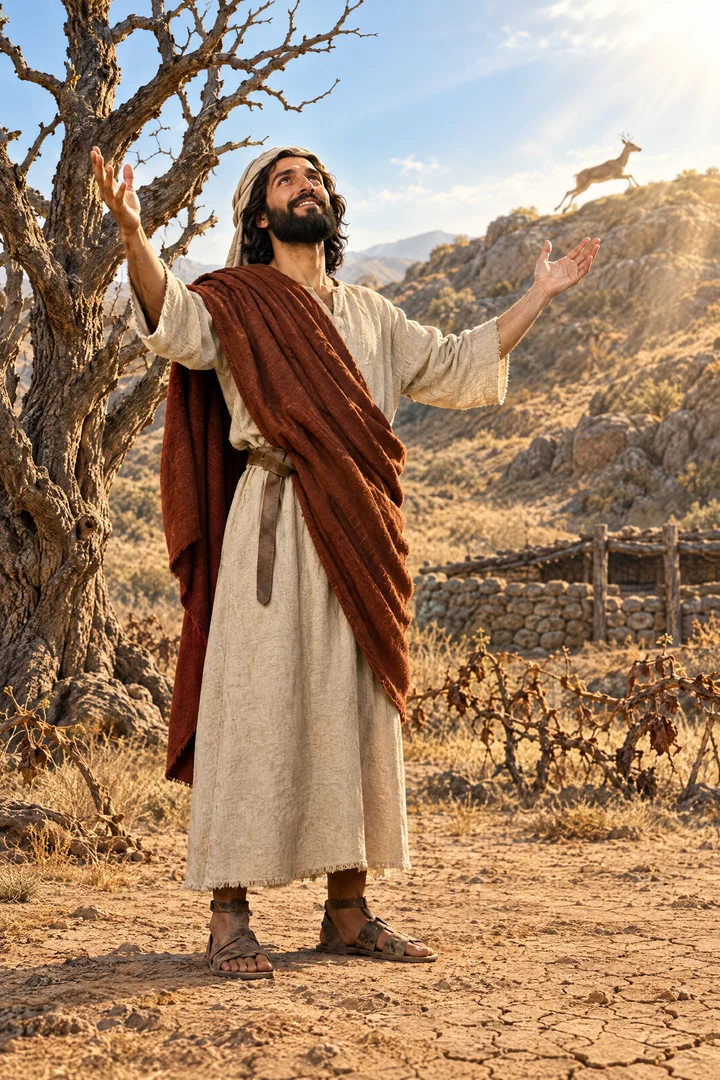
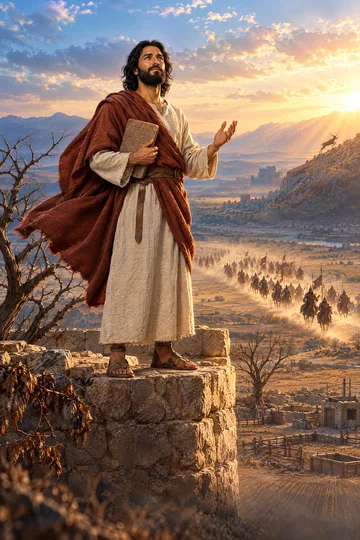
Although the fig tree shall not blossom, neither shall fruit be in the vines; the labour of the olive shall fail, and the fields shall yield no meat; the flock shall be cut off from the fold, and there shall be no herd in the stalls:
Translations
Although the fig tree shall not blossom, neither shall fruit be in the vines; the labor of the olive shall fail, and the fields shall yield no meat; the flock shall be cut off from the fold, and there shall be no herd in the stalls:
Although the fig tree shall not blossom, neither shall fruit be in the vines; the labour of the olive shall fail, and the fields shall yield no meat; the flock shall be cut off from the fold, and there shall be no herd in the stalls:
Although the fig tree shall not blossom,
Neither shall fruit be in the vines;
The labour of the olive shall fail,
And the fields shall yield no meat;
The flock shall be cut off from the fold,
And there shall be no herd in the stalls:Although the fig-tree shall not blossom, neither shall fruit be in the vines; the labor of the olive shall fail, and the fields shall yield no food; the flock shall be cut off from the fold, and there shall be no herd in the stalls:
For though the fig tree shall not blossom, neither shall fruit be in the vines; the labour of the olive shall fail, and the fields shall yield no meat; the flock shall be cut off from the fold, and there shall be no herd in the stalls:
For though the fig-tree shall not flourish,
Neither shall fruit be in the vines;
The labor of the olive shall fail,
And the fields shall yield no food;
The flock shall be cut off from the fold,
And there shall be no herd in the stalls:Though the fig-tree doth not flourish, And there is no produce among vines, Failed hath the work of the olive, And fields have not yielded food, Cut off from the fold hath been the flock, And there is no herd in the stalls.
For though the fig-tree shall not blossom, Neither shall fruit be in the vines; The labour of the olive-tree shall fail, And the fields shall yield no food; The flock shall be cut off from the fold, And there shall be no herd in the stalls:
Though, the fig-tree, should not blossom, and there be no sprouting in the vines, the yield of the olive, should have deceived, and, the fields, not have brought forth food,—the flock, have been consumed out of the fold, and there be no herd in the stalls,
Berean Standard Bible, Majority Standard Bible
Though the fig tree does not bud
and no fruit is on the vines,
though the olive crop fails
and the fields produce no food,
though the sheep are cut off from the fold
and no cattle are in the stalls,For even though the fig tree doesn’t flourish,
nor fruit be in the vines,
the labor of the olive fails,
the fields yield no food,
the flocks are cut off from the fold,
and there is no herd in the stalls,For though the fig-tree has no flowers, and there is no fruit on the vine, and work on the olive comes to nothing, and the fields give no food; and the flock is cut off from its resting-place, and there is no herd in the cattle-house:
For the figtree shall not flourish, neither shall fruite be in the vines: the labour of the oliue shall faile, and the fieldes shall yeelde no meate: the sheepe shalbe cut off from the folde, and there shalbe no bullocke in the stalles.
Douay-Rheims (Challoner revision)
For the fig tree shall not blossom: and there shall be no spring in the vines. The labour of the olive tree shall fail: and the fields shall yield no food: the flock shall be cut off from the fold, and there shall be no herd in the stalls.
Pictures
Cross-references
- Joel 1:17-20
The seed is rotten under their clods, the garners are laid desolate, the barns are broken down; for the corn is withered.
Both describe ruined crops and pastures, with livestock suffering from the devastation.
- Joel 1:11-12
Be ye ashamed, O ye husbandmen; howl, O ye vinedressers, for the wheat and for the barley; because the harvest of the field is perished.
Perished harvest and withered trees describe the same desolation.
- Malachi 3:11
And I will rebuke the devourer for your sakes, and he shall not destroy the fruits of your ground; neither shall your vine cast her fruit before the time in the field, saith the LORD of hosts.
God promises to protect the land’s fruits from destruction, contrasting with crop failure.
Commentary
Each commentary is drawn from primary sources: the writings of Ellen G. White and Adventist pioneers and periodicals. Each commentary is separate. Its own words are not a quotation; follow the references to read the source passages.
Ellen G. White
17 sources
Although every crop fails and no food comes from orchard, vineyard, olive grove, or grain field, leaving no harvest, livelihood, or visible provision.GW92 434.3PK 387.2RH Jul 15, 1915 Although every animal is gone from pasture and shelter, leaving no flock, no herd, and no pastoral food or security.GW92 434.3PK 387.2RH Jul 15, 1915 Such total loss of every ordinary supply creates severe want and trial, yet becomes the very setting for still trusting and rejoicing in the Lord as salvation, strength, joy, and security apart from material abundance.GW92 434.3PK 387.2RH Jul 15, 1915Lt 124, 1901, par. 7–9 In the famine, privation, and distress of the last days, and in personal affliction, pain, and discouragement, those who fear God are preserved by Him and refuse despair, holding to Jesus as life, consolation, and only hope and finding grace and companionship that sustain joy.GW92 434.3DA 122.1GC 629.1–4Lt 2, 1889, par. 13–15Lt 50, 1892, par. 16
Total Agricultural Collapse
The verse pictures a total failure of crops and harvests across every cultivated source.GW92 434.3PK 387.2RH Jul 15, 1915CT 317.3–47T 274.3 The fig tree does not blossom, the vines yield no fruit, the labor of the olive fails, and the fields yield no food for sustenance.GW92 434.3PK 387.2RH Jul 15, 1915DA 122.17T 274.3 No agricultural provision, food, or livelihood remains from tillage and harvest.GW92 434.3RH Jul 15, 1915CT 317.3–4DA 122.17T 274.3
It pictures likewise the total loss of livestock, with the flock cut off from the fold and no herd left in the stalls.GW92 434.3PK 387.2CT 317.3–4DA 122.17T 274.3 Sheep and cattle disappear together, so that pastoral provision, food, and security are gone.GW92 434.3PK 387.2RH Jul 15, 1915CT 317.3–47T 274.3
Taken together these failures describe complete material deprivation and the collapse of every visible and ordinary source of supply.GW92 434.3PK 387.2RH Jul 15, 1915CT 317.3–47T 274.3 Crops fail, fields produce nothing, and flocks and herds are gone, leaving no food or herds at all.GW92 434.3RH Jul 15, 1915CT 317.3–47T 274.3Ms 118, 1901, par. 2–3 Such a condition is one of severe trial, hardship, and want, in which every earthly support that could be seen and counted upon has failed.GW92 434.3DA 122.17T 274.3Ms 118, 1901, par. 2–3
Joy in God of Salvation
Although every field and tree fails and every flock and herd is gone, leaving no food, livelihood, or visible provision, that total loss becomes the setting for still trusting in divine promises.GW92 434.3PK 387.2RH Jul 15, 1915CT 317.3–47T 274.3 Even when fig, vine, olive, and grain yield nothing and fold and stall stand empty, faith answers with rejoicing in the Lord and joy in the God of salvation.PK 387.2RH Jul 15, 1915CT 317.3–4DA 122.17T 274.3 Apart from all material abundance, God Himself becomes strength, salvation, joy, and security, sustaining the faithful through famine, perils, trials, and the time of distress.GW92 434.3PK 387.2RH Jul 15, 1915DA 122.17T 274.3
It is the language of a child of God trusting in Jesus when the power of the destroyer presses surely and heavily.Lt 124, 1901, par. 7–9 Though no crop, food, flock, or herd remains, he still rejoices in the Lord and finds joy in the God of his salvation.Lt 124, 1901, par. 7–9 That joy is fed from inexhaustible springs in and through Christ Jesus.Lt 124, 1901, par. 7–9 It constantly breaks forth into refreshing abundance from the sense of His ever-present, abiding companionship.Lt 124, 1901, par. 7–9
Such rejoicing means refusal to become discouraged, depressed, despairing, or trampled by disappointments, trials, or the unconsecrated lives of others, and refusal to let go of Jesus.Lt 2, 1889, par. 13–15 Disappointments and trials are to bind the soul closer to His great heart of infinite love, for Christ is life, consolation, and only hope.Lt 2, 1889, par. 13–15 Perpetual grace flows in ever-flowing streams for all who thirst and come and drink.Lt 2, 1889, par. 13–15 Every child of God will be sifted as wheat and tried in the furnace, severely tempted yet never failing, not consumed but refined, because Christ lives and therefore they shall live, and Christ abiding in the soul will not allow it to be overcome.Lt 2, 1889, par. 13–15
Faith Sustained in Affliction
The verse portrays the perils, trials, famine and loss of earthly support belonging to the last days and the time of distress and trouble, when ordinary sources of food and livelihood completely fail and no agricultural or pastoral provision remains.GW92 434.3DA 122.1GC 629.1–4GC88 629.2–4 In that condition of severe deprivation the righteous endure famine and privation while God preserves and provides for them.DA 122.1GC 629.1–4GC88 629.2–4 Even then those who fear God still rejoice in the Lord and in the God of their salvation, finding joy, security and strength in Him rather than in material abundance.GW92 434.3DA 122.1GC 629.1–4GC88 629.2–4
The same deprivation becomes instruction for teachers facing discouragement, hardship and affliction, that trials need not drive them to murmur against God or forget His goodness.7T 274.36T 156.4 Material hardship and affliction do not remove the grounds for trust and joy in God, since faith can still rejoice in the Lord and in the God of salvation when crops fail, fields yield no food, and flocks and herds are gone.7T 274.36T 156.4 The verse is therefore used to rehearse God's promises when unbelief and discouragement make His word seem hard, for remembering His promises helps believers resist despair and remain confident in Him.Ms 10, 1890, par. 12–14Ms 117, 1907, par. 1–3 That remembering encourages trust and patient waiting for God amid financial and institutional difficulties, holding to rejoicing in the Lord even when every visible source of provision fails.Ms 10, 1890, par. 12–14Ms 117, 1907, par. 1–3
The verse also applies amid prolonged pain, sleeplessness, sadness, bodily pain, and hindered, fruitless work with no human strength, help, or outward remedy available.Lt 50, 1892, par. 16Ms 3, 1873, par. 14–16 Keeping hold on God and finding joy in Him as Savior in that state allows Christ's grace to sustain, and confidence in God's salvation prevents discouragement.Lt 50, 1892, par. 16Ms 3, 1873, par. 14–16 So faith can rejoice in God even when life is marked by severe affliction and loss, with faith supported by hope lightening burdens by looking toward the future rest in heaven.Lt 50, 1892, par. 16Ms 3, 1873, par. 14–16Lt 28, 1872, par. 18–20
Sources
Pioneers and periodicals
42 sources
The verse pictures the loss of every earthly means of living, with no fruit on tree or vine, no yield from olive or field, and no flock or herd left to sustain life.RH Oct 28, 1902ST Apr 27, 1904 Even when nothing remains to give comfort or reason for gladness, there is still ground to rejoice in the Lord as strength and Saviour and God of salvation.RH Jul 15, 1915RH Oct 28, 1902RH Apr 28, 1868 That joy does not rest on wealth, health, prosperity, or favorable outward conditions, so the failure of all earthly goods cannot take it away.RH Apr 28, 1868ST Jan 21, 1889RH Dec 22, 1863 Faith is shown to trust God in darkness as well as in plenty, and is proved most truly when daily necessities fail and distress is greatest.ST Jan 21, 1889ST Apr 3, 1893 It also foreshadows the desolation of the earth under the scorching heat of the fourth plague, when the harvest perishes and worldly joy withers, yet the righteous still rejoice in God.RH Jan 22, 1901ST Sep 4, 1901RH Nov 20, 1900
Wording and Original Setting
Although the fig tree does not blossom and the vines bear no fruit, the labor of the olive fails and the fields yield no food, while the flock is cut off from the fold and there is no herd in the stalls.RH Oct 28, 1902ST Apr 27, 1904RH Apr 28, 1868RH Oct 7, 1902 Fruit trees and vines produce nothing, fruit and olives are lost, crops fail and livestock disappear, so that every earthly provision fails and the usual sources of food, livelihood, and increase are gone.RH Oct 28, 1902ST Apr 27, 1904RH Oct 7, 1902RH Sep 17, 1914 These hardships form the setting for the trust and rejoicing expressed in the following verses, where faith and devotion do not depend on wealth, health, or other favorable circumstances.RH Oct 28, 1902RH Apr 28, 1868RH Sep 17, 1914
The words belong to the prayer of Habakkuk in chapter 3 that closes the short prophecy.ST Jun 14, 1910RH Mar 21, 1871ST Sep 9, 1913 It is a majestic and beautiful lyric poem, wonderfully eloquent and beautiful, possessing poetic beauty and standing among the sublimest passages of inspired literature.ST Jun 14, 1910ST Sep 9, 1913 The poem expresses much of the glory of God and the prophet's trust in His power, and presents him in a scene of desolation amid complete agricultural and pastoral loss and severe deprivation.ST Jun 14, 1910RH Nov 23, 1905RH Mar 21, 1871 The failure of crops and livestock, leaving no food or provision, is part of the calamity the prophet anticipates and sets the scene for his confidence in God despite impending destruction.RH Nov 23, 1905RH Mar 21, 1871
In its original setting the verse pictures the hardship accompanying the coming Babylonian invasion and the desolation amid war when crops fail and livestock are gone.RH Nov 23, 1905RH Aug 25, 1904RH Oct 24, 1885 Habakkuk was contemporary with Jeremiah, directed reproof against the oppressive and wealthy in Israel, warned of the coming of the Chaldeans, and exposed evil among God's people especially the strong oppressing the weak.ST Sep 9, 1913 The short prophecy was written in 625 or 626, and because human nature and oppression are always the same his times are a type of the present time and form a striking picture of the last days.ST Sep 9, 1913
Rejoicing and Trust in God
Although fig, vine, olive, field, flock and herd all fail together, leaving no ordinary food, livelihood or increase, the response set forth in the following words is still to rejoice in the Lord and find joy in the God of salvation.RH Jul 15, 1915RH Oct 28, 1902RH Apr 28, 1868RH May 10, 1860ST Jan 21, 1889 Even when every visible source of provision is gone and circumstances supply no reason for joy, that rejoicing remains possible because the Lord remains strength and the God of salvation remains hope, support and Savior to those who rely on Him.RH Jul 15, 1915RH May 10, 1860ST Jan 21, 1889RH Dec 22, 1863ST Apr 3, 1893 The calamity is the very setting for that trust, with outward gloom placed against inward joy in God.RH Oct 28, 1902RH May 10, 1860RH Dec 22, 1863
Faith and devotion of this kind do not depend on wealth, health, possessions, prosperity, outward comfort or any favorable circumstance.RH Apr 28, 1868ST Jan 21, 1889RH Nov 10, 1863 When crops and livestock are lost and no material provision or outward source of happiness is left, earthly reasons for joy disappear, yet lack of earthly goods does not remove the ground for joy in God.RH Dec 22, 1863RH Nov 10, 1863RH Aug 21, 1855ST Nov 22, 1899 Religion by itself can make a person happy.RH Nov 10, 1863
Faith of this kind trusts God in darkness as well as in prosperity.ST Jan 21, 1889 It waits on God without doubting in dearth and worst distress, even when afflictions cannot be understood.ST Apr 3, 1893ST Aug 5, 1889 It is tested most when daily necessities are scarce rather than when provision is plentiful, and a close walk with God can continue through sorrow and affliction with singing in sorrow.ST Oct 8, 1885
That rejoicing includes confidence that He will supply every need.ST Jun 20, 1900 It includes trust that what brings God glory is for the believer's good, and that God's people are lifted above discouraging outward conditions to a high place of victory.ST Mar 27, 1893RH Nov 23, 1911 Such losses do not diminish peace with God nor compare with its worth, for resolute faith finds joy in communion with God, and when cherished hopes fail the Saviour's love remains hope and refuge.RH May 17, 1864RH Dec 27, 1864ST Oct 8, 1885
Faith Tested by Adversity
The verse pictures a trial that strips away every visible means of living, with figs failing to blossom, vines bearing no fruit, olives yielding nothing, fields producing no food, and flocks and herds cut off and gone.RH Apr 28, 1868RH Apr 1, 1915ST Apr 3, 1893RH Jun 30, 1874RH Aug 21, 1856 In that condition of severe want, with crops failed, livestock lost, and no source of food or increase remaining, financial and material hardship presses even upon daily support.RH Apr 28, 1868RH Apr 1, 1915ST Apr 3, 1893RH Jun 30, 1874RH Aug 21, 1856 Such drought and failed harvest make prospects gloomy, and such affliction may come without any understood reason, yet faith can still hold confident and rejoice in God as salvation.RH Apr 28, 1868RH Apr 1, 1915ST Apr 3, 1893RH Jun 30, 1874RH Aug 21, 1856 These severities test sincerity and faith, but trust in God can outweigh their cost, and the furnace of trial can purify the heart.RH Apr 28, 1868ST Apr 3, 1893RH Jun 30, 1874
Trust in God does not rest on being spared temporal reverses, but stands firm even when they fall upon His work, including missions amid the destroying agencies of the latter days.RH Sep 17, 1914RH Jun 3, 1909RH Jun 16, 1904 Complete failure of fruit, olive, field, flock and herd does not prevent trust and rejoicing in God, for success in His work is His gift and does not depend on favorable temporal conditions.RH Sep 17, 1914RH Jun 3, 1909RH Jun 16, 1904RH Jul 28, 1910 Even where workers face drought, poor conditions, hardship and scarcity, with fruit trees and vines producing nothing and livestock disappeared, the picture remains one of want to be endured rather than a reason to abandon hope.RH Sep 17, 1914RH Aug 21, 1856RH Jul 28, 1910 In apparent failure and loss, when the fig does not blossom, the olive seems to fail and the vine withers, faith remains because new fruit is forming beneath the soil.RH Sep 17, 1914RH Jun 3, 1909RH Jun 16, 1904
Habakkuk rejoiced even in pinching want and famine, when crops failed and livestock perished, and did not wait for abundance before rejoicing.RH Oct 24, 1885RH Feb 21, 1865ST Oct 8, 1885RH Nov 20, 1860 That adversity, with earthly provision gone, does not destroy faith or joy in the Lord, for faith in the hope of heaven keeps earthly hardship from ruling the heart.RH Feb 21, 1865ST Oct 8, 1885RH Nov 20, 1860 A close walk with God can continue through sorrow and affliction and severe loss, so that those who walk with Him can sing in their sorrow.RH Feb 21, 1865ST Oct 8, 1885RH Nov 20, 1860 The same desolation, when war lays the land waste and crops and herds are gone, calls for consolation because redemption is near.RH Oct 24, 1885RH Feb 21, 1865ST Oct 8, 1885
Last-Day Prophetic Application
The failure of fig and vine, olive and field, flock and herd leaves no food, livelihood, or increase, and pictures the desolation of the earth under the fourth plague.RH Jan 22, 1901ST Sep 4, 1901RH Mar 19, 1901 At that time power is given to the sun to scorch men with fire and with great heat, the harvest of the field perishes, all the trees of the field wither, the land mourns, and joy is withered away from the sons of men.RH Mar 19, 1901 The worldly lose all joy at this ruin, while the righteous who have learned faith still rejoice in the Lord and trust in the God of their salvation despite their surroundings, finding in the following verses the setting for faith amid severe scarcity.RH Jan 22, 1901ST Sep 4, 1901
The same want of crops and livestock, with no cattle in the stalls, belongs among the scenes just before the end.RH Nov 20, 1900ST Jul 19, 1905 It is the day of God's wrath without mercy and the day of trouble just before the coming of the Lord.RH Nov 20, 1900ST Jul 19, 1905 In that trial God's people have assurance that they can still rejoice in the Lord and in the God of their salvation, trusting Him as strength and salvation.ST Sep 4, 1901ST Jul 19, 1905
Temporal reverses of this kind may come upon missions amid the destroying agencies of the latter days, and trust in God does not depend on being spared such losses but can remain firm even when they occur.RH Sep 17, 1914 Workers may face the same picture of hardship and scarcity in drought and poor conditions, and temporal disaster leads into the resolve to rejoice in God and trust Him even when earthly needs are unmet.RH Jul 28, 1910RH Mar 3, 1910 When the fields yield no food, business is paralyzed, wealth disappears, and the prosperity of the country declines.ST Dec 17, 1874RH Sep 29, 1874
Sources