Translations
American King James Version, King James Version, Webster Bible, Revised Version
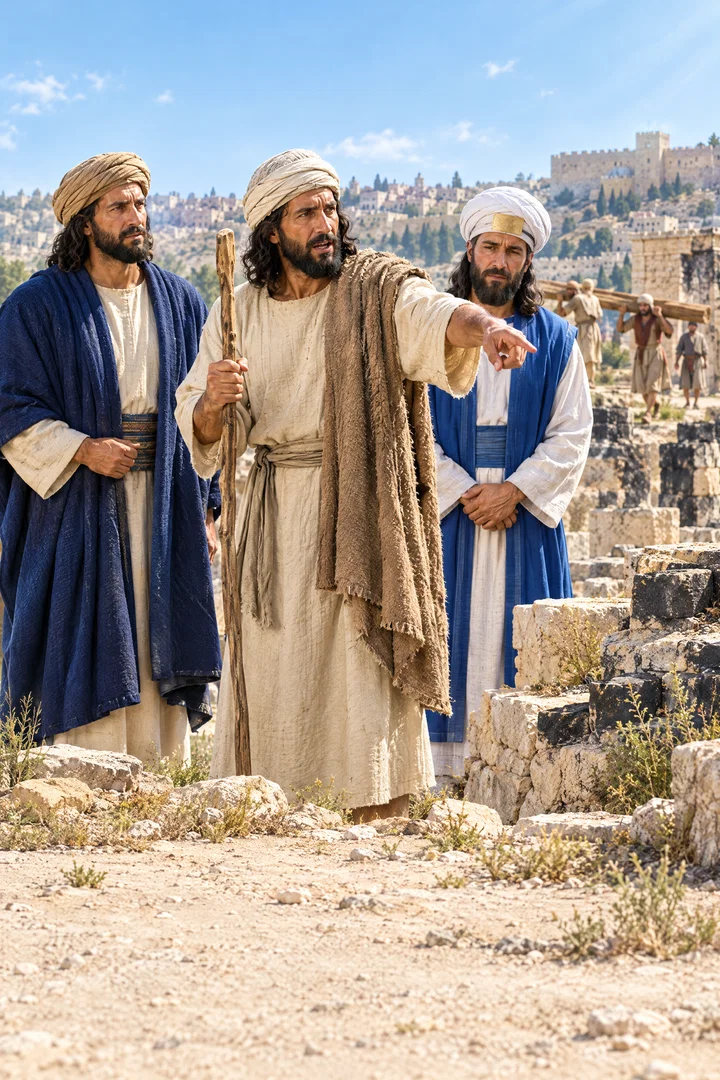
Then came the word of the LORD by Haggai the prophet, saying,
Then came the word of the Lord by Haggai the prophet, saying,
Then came the word of Jehovah by Haggai the prophet, saying,
And there is a word of Jehovah by the hand of Haggai the prophet, saying:
And the word of Jehovah came by Haggai the prophet, saying,
Therefore hath come the word of Yahweh by the hand of Haggai the prophet, saying:
Berean Standard Bible, Majority Standard Bible
Then the word of the LORD came through Haggai the prophet, saying:
Then the LORD’s word came by Haggai the prophet, saying,
Then the word of the Lord came by Haggai the prophet, saying,
Then came the worde of the Lord by the ministerie of the Prophet Haggai, saying,
Douay-Rheims (Challoner revision)
And the word of the Lord came by the hand of Aggeus the prophet, saying:
Pictures
Cross-references
- Ezra 5:1-2
Then the prophets, Haggai the prophet, and Zechariah the son of Iddo, prophesied unto the Jews that were in Judah and Jerusalem in the name of the God of Israel, even unto them.
Haggai and Zechariah urge the Jews to rebuild the temple, and the work resumes.
- Ezra 6:14
And the elders of the Jews builded, and they prospered through the prophesying of Haggai the prophet and Zechariah the son of Iddo. And they builded, and finished it, according to the commandment of the God of Israel, and according to the commandment of Cyrus, and Darius, and Artaxerxes king of Persia.
Haggai’s prophecy encouraged the returned Israelites as they completed the temple.
- Ezra 4:24
Then ceased the work of the house of God which is at Jerusalem. So it ceased unto the second year of the reign of Darius king of Persia.
A Persian order halted the temple work until Darius’s second year.
- Haggai 1:12-14
Then Zerubbabel the son of Shealtiel, and Joshua the son of Josedech, the high priest, with all the remnant of the people, obeyed the voice of the LORD their God, and the words of Haggai the prophet, as the LORD their God had sent him, and the people did fear before the LORD.
The people obeyed Haggai’s message and began the temple work.
- Ezra 1:2-3
Thus saith Cyrus king of Persia, The LORD God of heaven hath given me all the kingdoms of the earth; and he hath charged me to build him an house at Jerusalem, which is in Judah.
Cyrus proclaims God’s command to rebuild the temple in Jerusalem.
Commentary
Each commentary is drawn from primary sources: the writings of Ellen G. White and Adventist pioneers and periodicals. Each commentary is separate. Its own words are not a quotation; follow the references to read the source passages.
Ellen G. White
16 sources
The verse marks what follows as the word of the Lord given through Haggai the prophet.PP 527.2–528.1Ms 175, 1897, par. 67–69Ms 29, 1911, par. 52–53 It confronted the returned exiles for dwelling in finished and ceiled houses while the Lord's house lay waste and in ruins, excusing themselves that the time to rebuild had not yet come and running each to his own house with zeal for self and indifference toward God.PP 527.2–528.1Lt 56, 1897, par. 1–2Lt 162, 1897, par. 1–2 Their putting of self-interest first to escape poverty brought upon them the very want they feared, in sowing much and reaping little, eating and drinking without satisfaction, clothing without warmth, wages kept as in a bag with holes, and drought upon land, crops, cattle, men, and all the labor of their hands.PP 527.2–528.1Ms 116, 1897, par. 6–11RH Dec 5, 1907 It calls them to consider their ways carefully and to go up to the mountain, bring wood, and build the house, that God may take pleasure in it and be glorified.Lt 162, 1897, par. 1–2Lt 90, 1897, par. 1RH Dec 5, 1907 Building a house for the Lord is therefore to be made the first consideration rather than the last, with His service put first, His institutions faithfully supported from the means entrusted to His people, and His house kept free from neglect and debt by united sacrifice.Lt 56, 1897, par. 1–213MR 355.1–210MR 124.16T 457.3–458.3Lt 56, 1897, par. 9
Message and Its Setting
Then came the word of the Lord by Haggai the prophet, introducing what follows as the Lord's own message delivered through Haggai.PP 527.2–528.1Ms 175, 1897, par. 67–69Lt 56, 1897, par. 1–2Lt 162, 1897, par. 1–2Ms 97, 1897, par. 4–6 That message was addressed to the returned exiles and confronted their neglect of the temple while they cared for their own houses.PP 527.2–528.1Ms 29, 1911, par. 52–53Lt 56, 1897, par. 1–2Lt 162, 1897, par. 1–2Ms 116, 1897, par. 6–11 It challenged their claim that the time had not yet come to rebuild the Lord's house while they themselves dwelt in finished and ceiled houses and left His house waste and in ruins.PP 527.2–528.1Lt 162, 1897, par. 1–2Ms 116, 1897, par. 6–11Lt 90, 1897, par. 1RH Dec 5, 1907
They ran every man to his own house, feeling concern for their own buildings while unconcerned for the Lord's building.RH Dec 5, 1907 They had become passive and had done little, having lost the burning zeal they once had for the restoration of His house.RH Dec 5, 1907 Their neglect came from serving self and putting their own interests first, neglecting the temple from a desire to escape poverty at the sacrifice of the best interests of God's cause.Ms 116, 1897, par. 6–11RH Dec 5, 1907 That very neglect brought upon them what they feared, so that nothing prospered and they were brought to actual want.RH Dec 5, 1907
The message thus explains poor harvests and want as the consequence and punishment for leaving God's house waste and unfinished.PP 527.2–528.1Ms 116, 1897, par. 6–11RH Dec 5, 1907 They sowed much and brought in little, ate without having enough, drank without being filled, clothed themselves without warmth, and earned wages only to put them into a bag with holes.RH Dec 5, 1907 They looked for much and it came to little, for heaven was stayed from dew and earth was stayed from fruit, and drought was called upon the land and mountains, upon corn and wine and oil, upon what the ground brought forth, upon men and cattle, and upon all the labor of hands.RH Dec 5, 1907 The message calls them to consider their ways carefully and to go up to the mountain and bring wood and build the house, that God may take pleasure in it and be glorified.Lt 162, 1897, par. 1–2Lt 90, 1897, par. 1RH Dec 5, 1907
Building and Supporting God's Work
Building a house for the Lord must be made the first consideration, not left as the last consideration or delayed until last, so that God is honored and His service comes first.Lt 56, 1897, par. 1–213MR 355.1–2Lt 56, 1897, par. 9 The rebuke is that the Lord's house is left as the last while attention is given to people's own homes.Lt 56, 1897, par. 1–213MR 355.1–2
With chapter 1 and chapter 2 comes direction to proceed with building the meeting house.Ms 175, 1897, par. 67–69Lt 162, 1897, par. 1–2Ms 97, 1897, par. 4–6 The lesson is to provide an adequate, fitting place of worship rather than meeting in a place too small and unsuitable for bowing before God, a place where His people can worship Him humbly and in good order.Ms 175, 1897, par. 67–6913MR 355.1–2Lt 56, 1897, par. 9 Doing this work first on the school grounds would have shown reverence for God and met His approval.Lt 56, 1897, par. 9 The message calls attention to the need to build the Lord's house, rebukes living in finished homes while the house lies waste, and urges considering of ways as applied to building a house of worship.Lt 162, 1897, par. 1–2
In this application the time had come to build the Lord's house, applied to building a meetinghouse in Cooranbong.Lt 90, 1897, par. 1Lt 113, 1897, par. 1 The challenge to the claim that it was not yet time to rebuild while living in finished houses calls to consider ways and build.Lt 90, 1897, par. 1 The work is to be moved forward in faith rather than waiting for the means to be secured first.Lt 90, 1897, par. 1
The first chapter is called to bear on supporting and restoring God's work and institutions through faithful use of the resources entrusted to His people.6T 457.3–458.3 Those who realize the nearness of the Lord's coming are to act their faith, show interest when one of God's instrumentalities is languishing or in peril, be one in mind and heart with the heavenly intelligences, and unitedly take of the Lord's own substance to lift the burdens resting on His institutions, with the Lord cooperating with them.6T 457.3–458.3Ms 65, 1900, par. 9–11 A shortage of means in the treasury can result from work God cannot approve, including selfishly taking available funds for one's own institution and acting contrary to God's word.Ms 29, 1911, par. 52–53
The verse brings a direct rebuke when God's people neglect building and maintaining His house while giving priority to their own interests.10MR 124.1Ms 116, 1897, par. 35 It applies to churches burdened with debt through wrong management from beginning to end, borrowing, and too little sacrifice.10MR 124.1Ms 116, 1897, par. 35 God is dishonored when His people leave His house indebted, whether they think much of themselves and their own selfish interests and neglect to arise and build or they build on hired money and fail to give donations to free church buildings from debt.10MR 124.1 It calls for duty and sacrifice year by year to lessen the debt, instead of letting interest swallow the means that should pay the principal, for interest then consumes money that could reduce the principal.10MR 124.1Ms 116, 1897, par. 35
Sources
Pioneers and periodicals
16 sources
The word of the Lord came by Haggai the prophet to Judah's leaders and people, including Zerubbabel and the returned exiles.RH Nov 17, 1904RH Sep 16, 1902ST Apr 9, 1902 It was spoken after the return from Babylon under Cyrus, when the foundation of the temple had been laid and then the house was left unfinished and waste for years amid opposition, hindrance, drought and discouragement, until Haggai with Zechariah stirred the people to resume in the second year of Darius.ST Aug 30, 1883ST Jun 21, 1883ST Feb 20, 1893 It confronted their claim that the time had not come to build the Lord's house, rebuking them as slow, selfish and lacking faith for dwelling in ceiled and luxurious houses and running every man to his own house, fields and vineyards while the Lord's house lay waste.RH Nov 17, 1904ST Apr 9, 1902ST Aug 30, 1883 Their poverty and hardship were the consequence and punishment for that neglect, in sowing much and bringing in little, eating without enough, drinking without being filled, earning wages as into a bag with holes, with heaven stayed from dew and drought called upon land, corn, wine, oil, men, cattle and all labor of hands.RH Sep 16, 1902ST Apr 9, 1902ST Aug 30, 1883 Hard times and want of means were therefore not an excuse for not building but the judgment for not building, and they were called to consider their ways and go up to the mountain and bring wood and build the house before seeking prosperity for themselves, so that God would take pleasure in it and be glorified and would bless them from that time if they remained faithful.RH Dec 5, 1907ST Apr 9, 1902ST Aug 30, 1883RH Apr 14, 1910ST Jan 2, 1893
Setting and Rebuke
The word of the Lord came by Haggai the prophet to Judah's leaders and people, to Zerubbabel and the returned exiles from Babylon.RH Nov 17, 1904ST Apr 9, 1902ST Feb 20, 1893ST Jun 22, 1904 It was the Lord speaking through Haggai to confront and rebuke the people for leaving His house waste while attending to their own.RH Nov 17, 1904RH Sep 16, 1902RH Apr 14, 1910ST Sep 26, 1906ST Feb 20, 1893
Its setting was the restoration of the temple after the return from Babylon under Cyrus, when those who went up to Jerusalem to build had laid the foundation and then left the house unfinished and waste for years.ST Aug 30, 1883ST Jun 21, 1883ST Feb 20, 1893ST Jul 14, 1887ST Jun 22, 1904 The delay came amid opposition and hindrance from the Samaritans, severe drought cutting off crops and necessities, discouragement over hard times, and difficult circumstances after the foundation was laid.ST Aug 30, 1883ST Jun 21, 1883ST Feb 20, 1893ST Jul 14, 1887ST Jun 22, 1904 Haggai with Zechariah stirred the people to resume in the second year of Darius, urging Zerubbabel to rebuild, with rebuilding beginning in the autumn of 520 B.C.ST Apr 9, 1902ST Aug 30, 1883ST Feb 20, 1893ST Jul 14, 1887
The message confronted the people's claim that the time had not come to build the Lord's house.ST Apr 9, 1902ST Aug 30, 1883ST Jan 2, 1893ST Feb 7, 1884ST Feb 20, 1893 It rebuked them as slow, selfish, lethargic, passive, and lacking faith for dwelling in ceiled, finished, luxurious houses and running every man to his own house while the Lord's house lay waste.RH Nov 17, 1904ST Apr 9, 1902ST Aug 30, 1883ST Jan 2, 1893ST Sep 26, 1906 They had devoted themselves to their own homes, fields, and vineyards and pursued their own interests, having lost the burning zeal they once had and serving self at the sacrifice of God's cause.ST Apr 9, 1902ST Aug 30, 1883ST Jan 2, 1893ST Feb 7, 1884ST Feb 20, 1893
Judgment and Call to Build
The poverty and hardship that fell on the people are explained as the consequence and punishment for neglecting the temple while attending to their own houses.RH Dec 5, 1907RH Sep 16, 1902ST Apr 9, 1902ST Aug 30, 1883ST Jan 2, 1893 They sowed much and brought in little, they looked for much and it came to little, they ate without having enough, they drank without being filled, they clothed themselves without warmth, and he that earned wages put them into a bag with holes.RH Dec 5, 1907ST Aug 30, 1883ST Jan 2, 1893 Heaven was stayed from dew and earth was stayed from fruit, and drought and pestilence were called upon the land and the mountains, upon the corn and the wine and the oil, upon what the ground brought forth and upon men and cattle and upon all the labor of the hands.RH Dec 5, 1907ST Feb 20, 1893 Drought kept the land from producing fruit and showed displeasure at leaving His house in ruins while their own homes were luxuriously finished.ST Jan 2, 1893ST Feb 20, 1893
Hard times and want of means were therefore not an excuse for not building but the judgment for not building.ST Aug 30, 1883ST Jun 22, 1904 By neglecting the work from a desire to escape poverty they brought upon themselves what they feared, so that nothing prospered and they were brought to actual want.RH Dec 5, 1907ST Aug 30, 1883 The greatest obstacles were personal sin and lack of faith, and when these were corrected the way would open for the needed means.ST Jun 22, 1904 Blessings were withheld to teach them for their good that God must come first, since the silver and gold are His to give or withhold.ST Aug 30, 1883ST Jan 2, 1893
They are called to consider their ways carefully and to resume the work rather than defer it.RH Dec 5, 1907ST Apr 9, 1902ST Aug 30, 1883 They are to go up to the mountain and bring wood and building materials and build the house before seeking prosperity for themselves, so that God will take pleasure in it and be glorified.RH Dec 5, 1907ST Aug 30, 1883RH Apr 14, 1910 Their poor harvests and hardship came from leaving the house waste while tending to their own homes, and taking hold of the work would bring blessing from that time.ST Apr 9, 1902ST Aug 30, 1883
These are words of encouragement given after the foundation was laid, recalling former distress and fulfilled on condition of obedience.ST Jun 21, 1883 Returning to the work brought God's blessing and His promise from that time to bless them.ST Aug 30, 1883 Their experience shows He would bless them if they remained faithful and would bring affliction again if they returned to the sins that had caused their punishment.ST Jun 21, 1883 The message states the duty of God's people and includes occasional prophecies about the glory of Christ to come.
Application to Later Work
The word of the Lord by Haggai rebukes neglect of God's house while attending to one's own, warning that harvests and income come to little because His house is left waste, so offerings for His work should be given and not deferred.RH Sep 16, 1902 Those who attend to His work in His fear are blessed, so that nothing is lost even in money matters by leaving business in a busy season to gather with Him.RH Jul 28, 1868 God blows upon the business and gain of those who neglect their part in His work, so that however diligent in business they may be their labor is made vain.RH Sep 16, 1902RH Jul 28, 1868
The call to build is a call to build a house of worship, so that when a central place is needed for church meetings and the general interests of the work, the sister churches and scattered friends should lend a helping hand.RH Jan 30, 1879 That help should come with cash or pledges to be paid by a set time, and it is urgent because the work will soon wind up and opportunities of saving the perishing will be forever past.RH Jan 30, 1879 The returned exiles' discouragement over rebuilding the temple, concluding that the time for the work had not come, is the example for builders of a later work who need unity and courage to keep working.ST Feb 7, 1884ST Jun 22, 1904 God's promised work will succeed when they put their energies into it.ST Feb 7, 1884 Poverty from hard times and opposition is not accepted as an excuse for neglecting the work, for the greatest obstacles are personal sin and lack of faith, and when these are corrected the way will open for the needed means.ST Jun 22, 1904
Sources