Haggai 1:4
Is it time for you, O ye, to dwell in your cieled houses, and this house lie waste?
Translations
Is it time for you, O you, to dwell in your paneled houses, and this house lie waste?
Is it time for you, O ye, to dwell in your cieled houses, and this house lie waste?
Is it time for you, O ye, to dwell in your cieled houses,
And this house lie waste?Is it time for you, O ye, to dwell in your ceiled houses, and this house lie waste?
Is it a time for you yourselves to dwell in your cieled houses, while this house lieth waste?
Is it a time for you yourselves to dwell in your ceiled houses, while this house lieth waste?
Is it time for you — you! To dwell in your covered houses, And this house to lie waste?
Is it time for you that ye should dwell in your wainscoted houses, while this house lieth waste?
Is it a time that, ye yourselves, should be dwelling in your own paneled houses? and, this house, be in ruins?
Berean Standard Bible, Majority Standard Bible
“ Is it a time for you yourselves
to live in your paneled houses,
while this house lies in ruins?”“ Is it a time for you yourselves to dwell in your paneled houses, while this house lies waste?
Is it a time for you to be living in roofed houses while this house is a waste?
Is it time for your selues to dwell in your sieled houses, and this House lie waste?
Douay-Rheims (Challoner revision)
Is it time for you to dwell in ceiled houses, and this house lie desolate?
Pictures
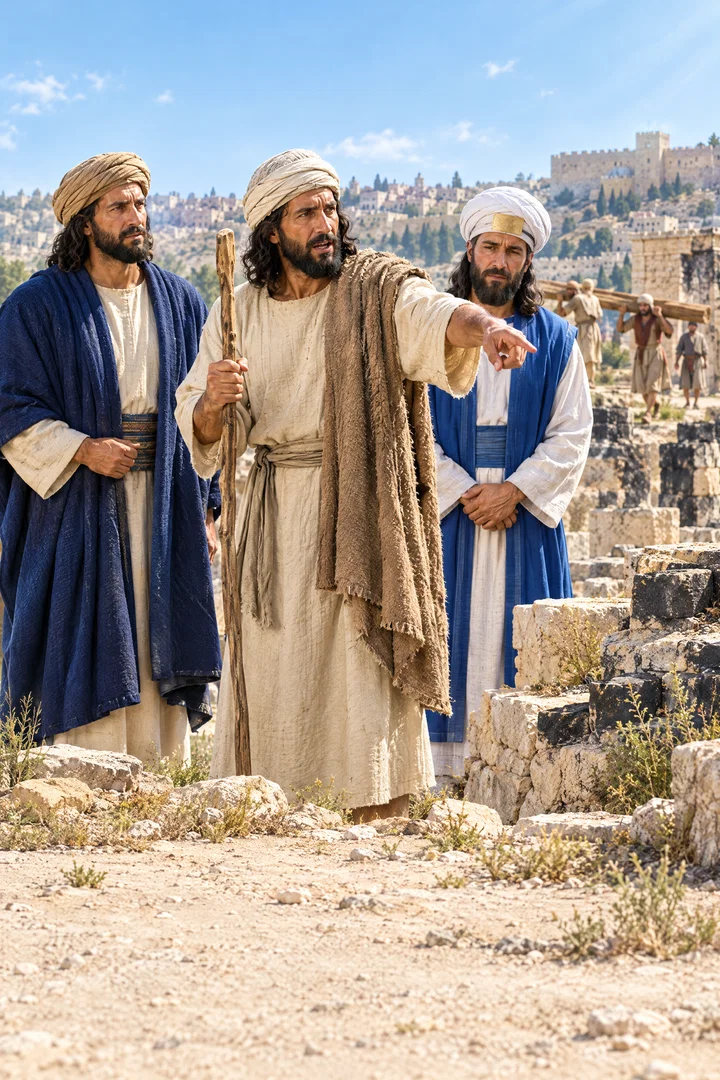
Cross-references 20 of 22
- Haggai 1:9-11
Ye looked for much, and, lo, it came to little; and when ye brought it home, I did blow upon it. Why? saith the LORD of hosts. Because of mine house that is waste, and ye run every man unto his own house.
Neglecting God’s house brings withheld harvests, drought, and hardship.
- Haggai 1:8
Go up to the mountain, and bring wood, and build the house; and I will take pleasure in it, and I will be glorified, saith the LORD.
The people are commanded to build the Lord’s house so he may be glorified.
- Haggai 2:18-19
Consider now from this day and upward, from the four and twentieth day of the ninth month, even from the day that the foundation of the LORD’s temple was laid, consider it.
God promises blessing as the people resume the temple work.
- Haggai 1:12-14
Then Zerubbabel the son of Shealtiel, and Joshua the son of Josedech, the high priest, with all the remnant of the people, obeyed the voice of the LORD their God, and the words of Haggai the prophet, as the LORD their God had sent him, and the people did fear before the LORD.
The people obey Haggai’s message and resume work on the temple.
- Haggai 2:4
Yet now be strong, O Zerubbabel, saith the LORD; and be strong, O Joshua, son of Josedech, the high priest; and be strong, all ye people of the land, saith the LORD, and work: for I am with you, saith the LORD of hosts:
Urges the people to work on the house of God.
- Ezra 5:1-2
Then the prophets, Haggai the prophet, and Zechariah the son of Iddo, prophesied unto the Jews that were in Judah and Jerusalem in the name of the God of Israel, even unto them.
Haggai’s preaching strengthened the people as they resumed rebuilding the temple.
- Zechariah 4:9
The hands of Zerubbabel have laid the foundation of this house; his hands shall also finish it; and thou shalt know that the LORD of hosts hath sent me unto you.
Zerubbabel is to finish the temple he began.
- Ezra 4:24
Then ceased the work of the house of God which is at Jerusalem. So it ceased unto the second year of the reign of Darius king of Persia.
The temple work had stopped during this period.
- Ezra 4:4-5
Then the people of the land weakened the hands of the people of Judah, and troubled them in building,
Opposition hindered the temple rebuilding, leaving it delayed.
- Haggai 1:11
And I called for a drought upon the land, and upon the mountains, and upon the corn, and upon the new wine, and upon the oil, and upon that which the ground bringeth forth, and upon men, and upon cattle, and upon all the labour of the hands.
Neglecting the temple brings drought on crops and cattle.
- Nehemiah 2:20
Then answered I them, and said unto them, The God of heaven, he will prosper us; therefore we his servants will arise and build: but ye have no portion, nor right, nor memorial, in Jerusalem.
The call to arise and build reinforces Haggai’s appeal to rebuild the Lord’s house.
- Zechariah 8:9-10
Thus saith the LORD of hosts; Let your hands be strong, ye that hear in these days these words by the mouth of the prophets, which were in the day that the foundation of the house of the LORD of hosts was laid, that the temple might be built.
Recalls hardship after the temple foundation was laid and encouragement to obey.
- Haggai 2:7
And I will shake all nations, and the desire of all nations shall come: and I will fill this house with glory, saith the LORD of hosts.
The restored temple is promised glory through the Messiah’s presence.
- Ezra 1:2-3
Thus saith Cyrus king of Persia, The LORD God of heaven hath given me all the kingdoms of the earth; and he hath charged me to build him an house at Jerusalem, which is in Judah.
Cyrus says God charged him to rebuild the temple.
- Ezra 6:14
And the elders of the Jews builded, and they prospered through the prophesying of Haggai the prophet and Zechariah the son of Iddo. And they builded, and finished it, according to the commandment of the God of Israel, and according to the commandment of Cyrus, and Darius, and Artaxerxes king of Persia.
It records the completion of the temple begun in Haggai’s time.
- Ezra 3:1-5
And when the seventh month was come, and the children of Israel were in the cities, the people gathered themselves together as one man to Jerusalem.
These chapters describe the stalled temple work in Jerusalem.
- Ezra 6:7-10
Let the work of this house of God alone; let the governor of the Jews and the elders of the Jews build this house of God in his place.
Darius orders the temple work to continue and provides support for its rebuilding.
- Nehemiah 2:17-18
Then said I unto them, Ye see the distress that we are in, how Jerusalem lieth waste, and the gates thereof are burned with fire: come, and let us build up the wall of Jerusalem, that we be no more a reproach.
Both call the people to rebuild what lies waste.
- Ezra 3:12
But many of the priests and Levites and chief of the fathers, who were ancient men, that had seen the first house, when the foundation of this house was laid before their eyes, wept with a loud voice; and many shouted aloud for joy:
discouragement at cornerstone led to neglect
- Ezra 3:10
And when the builders laid the foundation of the temple of the LORD, they set the priests in their apparel with trumpets, and the Levites the sons of Asaph with cymbals, to praise the LORD, after the ordinance of David king of Israel.
Describes worship when the temple’s foundation was laid.
Commentary
Each commentary is drawn from primary sources: the writings of Ellen G. White and Adventist pioneers and periodicals. Each commentary is separate. Its own words are not a quotation; follow the references to read the source passages.
Ellen G. White
26 sources
It rebukes people for dwelling in finished and paneled houses made comfortable and beautiful for themselves while the house of the Lord is left neglected, waste and in ruins.PK 574.1–575.1PP 527.2–528.1Ms 175, 1897, par. 67–69 It was spoken to the exiles restored to Judea to restore the temple and its worship, who after opposition and disappointment let the work lie neglected for over a year while they gave themselves to sowing and reaping and building for their own temporal prosperity.PK 573.1–2RH Dec 12, 1907RH Dec 5, 1907 Their plea that the time had not come to rebuild was no excuse, for the care and expense they gave to beautifying their own homes exposed that they had put personal interests first and looked with apathy and unconcern on God's building.PP 527.2–528.1Ms 116, 1897, par. 6–11Lt 90, 1897, par. 1RH Dec 5, 1907PK 573.1–2 By seeking to escape poverty through serving self and using His bountiful gifts of field and garden for themselves, they brought upon themselves the very want they feared, for the Lord withdrew blessing and sent wasting drought on crops and cattle so that nothing prospered however hard they worked.PK 574.1–575.1PP 527.2–528.1RH Dec 5, 1907PK 573.1–2RH Dec 5, 1907 It therefore requires making a suitable house for God and meeting with Him the first work without delay and not the last, for had they honored Him first they would have invited His presence and blessing to prosper their labor.Ms 175, 1897, par. 67–69Lt 56, 1897, par. 1–2Lt 162, 1897, par. 1–2Ms 116, 1897, par. 6–11Ms 65, 1900, par. 9–11
Words and Historical Setting
The question exposes a sharp contrast between dwelling in finished, paneled, comfortable and beautified houses of one's own and leaving the Lord's house to lie waste, neglected and in ruins.PK 574.1–575.1PP 527.2–528.1Ms 175, 1897, par. 67–69Lt 56, 1897, par. 1–2Lt 162, 1897, par. 1–2 To live at ease in one's own completed home while God's house remains neglected is to make self first and His building last.PK 574.1–575.1PP 527.2–528.1Ms 175, 1897, par. 67–69Lt 56, 1897, par. 1–2Ms 97, 1897, par. 4–6 The comfort, finishing and beautifying bestowed on private dwellings stand as the measure of the neglect shown to His house.PK 574.1–575.1PP 527.2–528.1Ms 175, 1897, par. 67–69Lt 162, 1897, par. 1–2Ms 97, 1897, par. 4–6
It was addressed to the returned exiles restored to Judea for the express purpose of restoring the temple and its services.PK 573.1–2RH Dec 12, 1907RH Dec 5, 1907 It met them in the early part of the reign of Darius Hystaspes, after the temple had been neglected and well-nigh forsaken for over a year.PK 573.1–2RH Dec 5, 1907 During that year they had given themselves to sowing and reaping and to building for temporal prosperity, dwelling in their own houses and striving for temporal gain while the Lord's house lay waste in ruins.PK 573.1–2RH Dec 12, 1907RH Dec 5, 1907
Their plea that the time had not come to rebuild did not excuse them.PP 527.2–528.1Ms 116, 1897, par. 6–11Lt 90, 1897, par. 1 That claim was contradicted by the care, building and beautifying they gave to their own homes.PP 527.2–528.1Ms 116, 1897, par. 6–11RH Dec 5, 1907 They had lost heart through opposition and through disappointment over the seeming inferiority of the second temple, questioned whether the time had come to rebuild, left the work, and turned to beautifying houses for themselves.RH Dec 5, 1907
Selfish Neglect and Judgment
The question exposes putting personal interests first while looking with apathy and spiritual dullness on God's house lying in waste.RH Dec 5, 1907PK 573.1–2RH Dec 12, 1907PK 573.3RH Dec 5, 1907 It is concern for one's own buildings joined with unconcern for the Lord's building, passivity that does little for Him after the burning zeal for restoring His house is lost.RH Dec 5, 1907RH Dec 12, 1907 That loss of zeal is serving self at the sacrifice of the best interests of His cause.RH Dec 5, 1907
His bountiful gifts of field and garden, corn and wine and oil, were given to the restored remnant as a token of favor, but were used selfishly for themselves.PK 573.1–2RH Dec 5, 1907 In so doing they lost sight of His purpose in restoring them to Judea to restore the temple and its services, and their delay hindered the work He had commanded.PK 573.1–2RH Dec 12, 1907RH Dec 5, 1907 This slothful disobedience stands in striking contrast to the prompt obedience of nature, which obeys His call to bring blessing or judgment.RH Dec 5, 1907
Their neglect sprang from a desire to escape poverty by laboring for temporal prosperity, yet by that very neglect they brought upon themselves what they feared.PK 574.1–575.1RH Dec 5, 1907RH Dec 5, 1907 Lack of temporal prosperity resulted from failing to put God's interests first, so that however hard they worked nothing prospered.PK 574.1–575.1RH Dec 5, 1907PK 573.1–2PK 573.3RH Dec 5, 1907 Work as they might they did not prosper, and their claim that the time to rebuild had not come was contradicted by the care given to their own homes.PP 527.2–528.1PK 573.1–2RH Dec 5, 1907
Because they let God's house lie waste the Lord removed the blessings bestowed as a token of favor and sent a wasting drought upon their substance.PK 574.1–575.1PK 573.1–2RH Dec 5, 1907 The drought fell upon all the fruits of the ground with meager harvests, and upon the living creatures as well, so that even the cattle suffered for the sins of men.PK 573.1–2RH Dec 5, 1907RH Dec 5, 1907 The very elements of nature seemed to conspire against them, leaving their condition deplorable both temporally and spiritually.RH Dec 5, 1907PK 573.1–2RH Dec 5, 1907
Had they honored Him with due respect by making the building of His house their first work, they would have invited His presence and blessing to cooperate with them.Ms 116, 1897, par. 6–11Ms 65, 1900, par. 9–11PK 573.3 When one of His instrumentalities is languishing or in peril, those who realize the nearness of His coming act their faith by unitedly taking His own substance to lift the burdens resting on His institutions.Ms 65, 1900, par. 9–11
Honoring God with Priority
Building a house for God must be made the first consideration and not left until last, proceeding without delay to provide a suitable place of worship and meeting with God rather than living in finished, paneled homes while His house lies neglected and in ruins.Ms 175, 1897, par. 67–69Lt 56, 1897, par. 1–2Lt 162, 1897, par. 1–213MR 355.1–2Lt 56, 1897, par. 9 Remaining in quarters too small for worship is not according to His will, so when there is no suitable place to secure and the present place of assembly has become too small, the house of the Lord is to be built without delay, a course whose neglect is to be regretted as avoidable by faith and whose fulfillment honors God and witnesses to the truth.Ms 175, 1897, par. 67–6913MR 355.1–2 Applied to the school grounds, making a place for worship and meeting with God the first work honors God, shows reverence for Him, makes Him the first consideration, and brings His approval.Lt 56, 1897, par. 9
Churches are to examine their priorities and faith when they spend freely improving their own premises yet accept an unsuitable place for worship, for providing comfortably for their own homes while leaving the Lord's house neglected calls for practical attention to building rather than delay.Lt 56, 1897, par. 1–2Ms 97, 1897, par. 4–65T 268.3–269.1 At Cooranbong this meant proceeding with the meeting house instead of delaying the work, and on the school grounds it meant making worship facilities the first work.Ms 97, 1897, par. 4–6Lt 56, 1897, par. 9
When humble or inconvenient places of worship are the best people can provide, worship in spirit and truth is not rejected nor His presence withheld, but when means to honor Him are spent on pleasing and glorifying self while accepting for worship a poorer place than would be accepted for self, God and His worship are made secondary and His blessing is forfeited.Ms 23, 1886, par. 6 The care, expense, and willingness given to a place of worship reflect how highly sacred things are valued, so willing and generous gifts and the best offering bring blessing in proportion, while grudging, meager, lame, or inferior offerings dishonor divine privileges and are not acceptable.1SP 270.2SG4 195.1–2 Those entrusted by the Master with the greatest capital as stewards to advance His work rob God and dishonor the Redeemer when they forget their stewardship and use means extravagantly in embellishing their own dwelling houses while thinking any place is good enough for worship and leaving His house neglected.Ms 47, 1900, par. 6 Gratitude for the truth is shown by using entrusted means to prepare a suitable, comfortable place of worship and offering the best rather than as little as possible, for spending means on a house for God is not a loss.1SP 270.2SG4 195.1–2
It is dishonoring for churches to be burdened with debt through wrong management from beginning to end, either by neglecting to arise and build or by building on hired, borrowed money without donations and year-by-year sacrifice to free buildings from debt, so that selfish interests and poor management leave interest swallowing means that should reduce the principal.Ms 116, 1897, par. 3510MR 124.1 All who realize the nearness of the Lord's coming must act their faith when one of His instrumentalities is languishing or in peril, unitedly taking the Lord's own substance to lift the burdens resting on His institutions and to relieve and restore them rather than leave His work to languish, with His cooperation assured.6T 457.3–458.3Ms 65, 1900, par. 9–11 Dearth of means in the treasury is the sure result of work He cannot sanction, as when human preferences and prejudices sway those confederating to sustain methods contrary to His Word and selfishly grasp all available means for the advantage of one office, such as the Review and Herald office, while claiming to do it for His cause and robbing brethren of their rights, with selfishness leading those who ought to be true to principle to make crooked paths for their feet.Ms 29, 1911, par. 52–53
Sources
Pioneers and periodicals
40 sources
It asks whether it is fitting and timely to live in finished and well-furnished homes in comfort and luxury while the Lord's house lies in ruins, neglected and unfinished.RH Nov 17, 1904ST Dec 22, 1914ST May 21, 1912ST Jan 29, 1885RH Jul 28, 1868 It was spoken to exiles returned from Babylon at the command of Cyrus to restore the temple, its services and Jerusalem, who after the foundation was laid grew discouraged by opposition, left the work halted and well-nigh forsaken, and needed Haggai's plain call to resume and finish building.RH Dec 12, 1907ST Aug 30, 1883ST Jun 21, 1883ST Sep 26, 1906ST Jun 21, 1883 It rebukes putting personal comfort, homes and interests first while God's house and work are neglected, exposing selfishness, loss of first love, and spiritual apathy, and the plea that the time had not come and that hard times excused delay was false, since the hardship came solely because they did not go ahead.RH Nov 17, 1904RH Sep 16, 1902ST Apr 9, 1902ST Aug 30, 1883ST Sep 12, 1878 Because every man ran to his own house while His house lay waste, the Lord withheld blessing and sent drought upon land, corn and wine and oil and living creatures, so that sowing much brought in little, eating and drinking did not satisfy, clothing did not warm, and wages fell as into a bag with holes.RH Dec 5, 1907ST Apr 9, 1902ST Aug 30, 1883ST Jan 2, 1893RH Dec 17, 1903 It therefore calls to consider ways, gather materials and rise and build, with promise that God will take pleasure, be present and bless from that time, and it requires consecration of means and self-denial after Christ, making His work the principal object and delight of life rather than withholding offerings for personal interests.RH Sep 16, 1902ST Aug 30, 1883RH Apr 14, 1910RH Oct 5, 1911RH Apr 7, 1903
Words and Contrast
The ceiled houses are finished, paneled houses, well furnished and lived in with comfort and luxury.RH Nov 17, 1904ST Dec 22, 1914ST Apr 9, 1902RH Apr 14, 1910ST May 21, 1912 To dwell in them is to put personal comfort first and to give careful attention to one's own home.RH Nov 17, 1904ST Apr 9, 1902ST Sep 9, 1913 The Lord's house, by contrast, lies in ruins, waste, neglected, unfinished and well-nigh forsaken.RH Dec 5, 1907RH Nov 17, 1904ST Dec 22, 1914ST Feb 20, 1893ST Jan 9, 1893
That contrast is deliberate: concern for personal buildings set against unconcern for the Lord's building, improving and adorning private homes while leaving His temple in ruins.RH Dec 5, 1907RH Nov 17, 1904ST Dec 22, 1914ST Feb 20, 1893ST Jan 9, 1893 It is working for self-interest at the sacrifice of the best interests of His cause, serving self while doing little for Him.RH Dec 5, 1907ST Sep 9, 1913 The plea that hard conditions excused the delay is insufficient, for the neglect itself brought poverty, drought, hardship and loss of faith.RH Dec 5, 1907ST Feb 20, 1893ST Jan 9, 1893
The question is asked as rebuke: whether it is fitting and whether it is time to dwell so while God's house lies waste.ST May 21, 1912ST Jan 29, 1885RH Jul 28, 1868 It exposes putting private interests first and withholding support from God's cause under the claim that the time to build has not come.ST Apr 9, 1902ST Jan 29, 1885 To put business, property-getting and personal comfort before His work brings loss rather than gain.RH Apr 14, 1910RH Jul 28, 1868
Historical Setting
The verse belongs to the returned exiles after the temple had been destroyed, who went up from Babylon at the command of Cyrus to build the temple and to restore its services and Jerusalem.RH Dec 12, 1907RH Dec 5, 1907ST Aug 30, 1883ST Sep 26, 1906 God had commanded the temple to be rebuilt, yet the people were slow and selfish about the work while caring for their own houses.RH Dec 12, 1907ST Sep 26, 1906 After returning to Judea they put effort into beautifying their own homes while neglecting God's house, letting concern for personal interests hinder the work God had commanded in restoring them.RH Dec 12, 1907RH Dec 5, 1907
Soon after the foundation was laid the people fell into a deplorable condition, discouraged by opposition and abandoning the work for years.ST Aug 30, 1883ST Jun 21, 1883ST Jun 21, 1883 Opposition from the Samaritans halted the work for about two years, and the appeal to resume building came around 520 B.C. under Zerubbabel, with Zerubbabel and Ezra urged to rebuild.ST Jul 14, 1887 For over a year the temple was neglected and well-nigh forsaken while the people returned to sowing and reaping and to building and beautifying houses for themselves.RH Dec 5, 1907ST Aug 30, 1883 They lost heart through opposition and through disappointment over the seeming inferiority of the second temple, questioning whether the time had come to rebuild.RH Dec 5, 1907ST Aug 30, 1883
Haggai was the prophet of the restoration, giving a plain declaration of duty and encouraging Zerubbabel and Ezra in building the temple and restoring Jerusalem.ST Dec 15, 1909 His words of encouragement were given on condition of obedience and were fulfilled when the people obeyed God.ST Jun 21, 1883ST Jun 21, 1883 His message rebuked neglect of God's work and stirred the returned Jews to resume building despite renewed efforts to stop them, after which God blessed them.ST Jun 21, 1883ST Jul 14, 1887 That great reformation movement is a type of the last reformation.ST Dec 15, 1909
Rebuke for Selfish Neglect
The verse is a rebuke for putting personal comfort, homes and interests first while God's house and work lie neglected.RH Nov 17, 1904RH Sep 16, 1902ST Sep 12, 1878ST Jan 29, 1885RH Apr 7, 1903 The people lived in finished houses and gave careful attention to their own homes while the Lord's house lay in ruins, in contrast to the care they gave their own dwellings.RH Dec 12, 1907RH Nov 17, 1904ST Jan 29, 1885 They beautified their own homes and made comfortable houses a priority while God's house remained neglected, languishing and waste.RH Dec 12, 1907RH Sep 16, 1902ST Sep 12, 1878ST Jan 29, 1885 That neglect of the house of God is neglect of duty to consecrate means to His cause rather than withhold offerings for personal interests, and it is linked with wasted effort, material loss, and labor and prosperity coming to little.RH Sep 16, 1902ST Sep 12, 1878 Material blessings are given so they can be shared in offerings needed for God's work, and God's house is also a spiritual structure of living stones in which character is developed.RH Sep 16, 1902 The same rebuke applies to enjoying comfortable homes while leaving the work among colored people undone, assuming someone else will do it, or criticizing those who work instead of supporting and taking part in that work.RH Apr 7, 1903
The verse exposes selfishness and covetousness, with the people working for their own interests but neglecting God's.ST Jan 2, 1893ST Jan 9, 1893ST Sep 9, 1913 Their selfish pursuits had displaced their first love for God, showing loss of faith and loss of the burning zeal they once had for restoring His house.RH Dec 5, 1907ST Jan 2, 1893ST Jan 9, 1893 They became passive and did little for Him, feeling concern for their own buildings and unconcern for the Lord's building, serving self at the sacrifice of the best interests of His cause.RH Dec 5, 1907 Their concern for personal interests reflected spiritual dullness, and their building and improving of their own houses while leaving God's house in ruins showed apathy, self-interest, and seeking their own glory.RH Dec 12, 1907ST Jan 2, 1893ST Jan 9, 1893 They looked well after their own things while failing to provide for the support of the worship of the Lord, the same condition that existed when Nehemiah began his work until study of the Word showed duty.RH Dec 5, 1907RH Dec 5, 1907 They neglected the temple from a desire to escape poverty, and by that very neglect brought upon themselves what they feared, so that nothing prospered and God withheld blessings so they would learn that He must come first.RH Dec 5, 1907ST Jan 2, 1893
Their plea that the time had not come to build was contradicted by their attention to their own finished, paneled houses, and excused putting their own interests first and withholding support from God's cause.ST Apr 9, 1902ST Jan 29, 1885ST Oct 13, 1909 That excuse for delaying the temple work was false and not sufficient in God's sight, and their claim of being unable through hard times and drought that cut off crops to give time and means was false.ST Aug 30, 1883ST Feb 20, 1893 The hard times came solely because they had not gone ahead with the building, and God had allowed drought and pestilence to show His displeasure at misplaced priorities.ST Aug 30, 1883ST Feb 20, 1893 Their sowing much and bringing in little with poor harvests and hardship was connected with neglect of the temple, and they were slow and selfish about rebuilding while caring for their own houses after God had commanded the destroyed temple to be rebuilt.ST Apr 9, 1902ST Sep 26, 1906 Personal sin and lack of faith were the chief obstacles, showing they needed to learn dependence on God and to turn from sin and devote themselves wholly to Him.ST Jan 9, 1893
Judgment and Promised Blessing
Because His house lay waste while every man ran to his own house, the Lord removed blessing and sent wasting drought upon the land and upon all substance, upon the fruits of field and garden, upon corn and wine and oil, and upon living creatures so that even the cattle suffered because of the sins of men.RH Dec 5, 1907ST Aug 30, 1883 He stayed heaven from dew and earth from fruit and called for drought, blowing upon what they brought home.ST Aug 30, 1883 Sowing much and bringing in little, eating without enough, drinking without fill, clothing without warmth, and wages put into a bag with holes was His doing.ST Aug 30, 1883 The same working is seen when a farmer who withheld tithe reaped less than he sowed while neighboring fields yielded well, with a later good harvest following his decision to give the Lord what was due.RH Dec 17, 1903 Their plea that hard times and drought cutting off crops made them unable to give time and means was false, for the hard times came solely because they had not gone ahead with the building.RH Dec 5, 1907ST Aug 30, 1883
Neglect of the temple was connected with poor harvests and hardship, with wasted effort, material loss, and loss even in diligent business.ST Apr 9, 1902RH Apr 14, 1910RH Jul 28, 1868ST Nov 19, 1902 They sought their own glory yet were not prospered, and could not prosper in their own interests until they restored it.ST Jan 2, 1893RH Apr 14, 1910 God withholds blessings and blows upon business when His work is neglected, so they would learn He must come first and love of the truth must be first with all else secondary to its prosperity.ST Jan 2, 1893RH Jul 28, 1868 Attending His work in His fear brings blessing so that nothing is lost even in money, but obtaining property without faithful service is useless.RH Jul 28, 1868
The verse introduces the call to consider ways and to gather building materials and rise and build.RH Apr 14, 1910RH Oct 5, 1911ST Nov 19, 1902 Haggai's message stirred them to resume the work, after which God blessed them, promising to take pleasure in them, to be with them, and to bless from that time when they took Him into calculation and took hold of His work.ST Aug 30, 1883ST Nov 19, 1902 Material blessings are given to be shared, for offerings are needed for His work, and the silver and the gold are His, proving His power to give and withhold prosperity and His right to receive homage.RH Sep 16, 1902ST Aug 30, 1883 God's house is also a spiritual structure of living stones in which character is developed.RH Sep 16, 1902
Duty and Present Application
The verse requires consecration of means to God's cause instead of withholding offerings to serve personal interests, for material blessings are entrusted to be shared in offerings needed for His work.RH Sep 16, 1902ST Sep 12, 1878ST Jan 29, 1885 Surplus wealth, especially by those who expect the close of probation to be near, is not to remain tied up in worldly investments but to support the proclamation of the message and meet the needs of missionaries, since earthly property will have value only insofar as it helps bring people to salvation.RH Dec 17, 1903 Neglect of that duty is linked with wasted effort and material loss, while faithful giving advances the cause and brings spiritual blessing, and God's house is also a spiritual structure of living stones in which character is developed.RH Sep 16, 1902ST Sep 12, 1878ST Sep 12, 1878 Giving up a personal aim to meet a need of the church and pay a church debt in full shows that one's own interests are not counted more important than the Lord's work.ST Mar 13, 1884
The verse calls for self-denial after Christ, who allowed Himself only meager necessities and put His Father's business before all else, sustained by a power that will sustain His followers.RH Oct 5, 1911 Those who believe the Lord will come in this generation are to live with that as an ever-present thought, to make the Lord's work the principal object and delight of life, to stop speaking with the lips what actions deny, and to separate from self-indulgence in order to be true sons and daughters of God and point clearly to Christ.RH Oct 5, 1911 It rebukes spending on self while missionaries lack hygienic surroundings and return home at large expense with retardation of the work, while the Macedonian cry for foreign missions is sounding.RH Oct 5, 1911 Believers are to examine whether their supposed sacrifices are real when measured against Christ's sacrifice and the urgent need to carry the gospel to others.ST Feb 13, 1912 That same rebuke falls on leaving the work among colored people undone on the assumption that someone else will do it, or criticizing those who are working instead of helping, for the verse requires supporting and sharing in that work rather than leaving it to others.RH Apr 7, 1903 Hard times, personal sin and lack of faith do not excuse neglecting the rebuilding, but are the chief obstacles to be overcome.ST Jun 22, 1904
The verse applies directly to helping build a house of worship in Nebraska and to using present opportunities to save others before they pass.RH Jan 30, 1879 It forbids putting business, haying, and getting property before God's work, teaching that God blesses those who attend His gatherings in His fear so that nothing is lost even in money by attending, whereas neglect brings loss and God blows upon even diligent business, for obtaining property without faithful service is useless since riches profit nothing in the day of wrath but righteousness delivers from death, so love of the truth must be first and all else secondary to its prosperity.RH Jul 28, 1868 It was met when believers rallied after calamity to rebuild Tract Society work and building rather than let work and building lie waste, accepting the effort required to avoid further loss and reproach.ST Apr 3, 1884 It was met when believers invested sacrificially to relieve the Pacific publishing Press debt rather than run to their own houses and leave the work of spreading truth crippled.ST Sep 12, 1878
The weight of teaching holds that preaching Sabbath after Sabbath in comfortable houses to the same congregation while Christendom lies in awful apostasy under the cloud of vengeance is little better than mockery, and that the age instead calls for crying aloud day and night.ST Apr 17, 1893RH Dec 6, 1853 The same teaching condemns outdoing others in splendid extravagant church building and spending thousands on gay costly ornaments to gratify pride and wicked ambition, when those means should go to redeem perishing millions.ST Apr 17, 1893 Erecting splendid monuments that virtually exclude the poor for whom Christ died and came specially to preach brings God's withholding of holy influences, leaving the heavens as brass and the earth as iron.ST Apr 17, 1893 Those who held the sterner application taught that letting the fathers' house stand moss-grown and dilapidated while enriching its destroyers brings a terrible change from prosperity and happiness to homeless, shiftless, uneducated children, bright lives gored and carried to infamous graves, and brothers and nephews killed or mortally wounded as a warning to others.ST Jun 15, 1882 In another setting the verse describes how building for God's house may be stopped when war forces abandonment of stations and takes school and station buildings for forts, government use, hospitals, and supply bases, while the mission work of winning souls is still carried on as usual.RH Dec 28, 1916
Sources