Translations
Thus says the LORD of hosts; Consider your ways.
King James Version, Webster Bible
Thus saith the LORD of hosts; Consider your ways.
Thus saith the Lord of hosts; Consider your ways.
Thus saith the LORD of hosts: Consider your ways.
American Standard Version, Darby Translation
Thus saith Jehovah of hosts: Consider your ways.
Thus said Jehovah of Hosts: Set your heart to your ways.
Thus, saith Yahweh of hosts,—Apply your heart to your own experience:
Berean Standard Bible, Majority Standard Bible
This is what the LORD of Hosts says:
“ Consider carefully your ways.“ This is what the LORD of Armies says: ‘ Consider your ways.
This is what the Lord of armies has said: Give thought to your ways.
Thus sayth the Lord of hostes, Consider your owne wayes in your hearts.
Douay-Rheims (Challoner revision)
Thus saith the Lord of hosts: Set Your hearts upon your ways:
Pictures
Cross-references
- Haggai 2:16-19
Since those days were, when one came to an heap of twenty measures, there were but ten: when one came to the pressfat for to draw out fifty vessels out of the press, there were but twenty.
Past neglect brought scarcity and affliction; God promises blessing from the day the temple foundation is laid.
- Haggai 1:12-14
Then Zerubbabel the son of Shealtiel, and Joshua the son of Josedech, the high priest, with all the remnant of the people, obeyed the voice of the LORD their God, and the words of Haggai the prophet, as the LORD their God had sent him, and the people did fear before the LORD.
The people obey Haggai’s message and begin rebuilding the temple.
- Jeremiah 7:3
Thus saith the LORD of hosts, the God of Israel, Amend your ways and your doings, and I will cause you to dwell in this place.
Both call the people to amend their ways.
- Lamentations 3:40
Let us search and try our ways, and turn again to the LORD.
Both urge people to examine their ways and turn to the Lord.
- Isaiah 55:8
For my thoughts are not your thoughts, neither are your ways my ways, saith the LORD.
Contrasts human ways with God’s ways.
- Psalms 119:9
Wherewithal shall a young man cleanse his way? by taking heed thereto according to thy word.
A person’s way is cleansed by heeding God’s word.
- Haggai 1:2
Thus speaketh the LORD of hosts, saying, This people say, The time is not come, the time that the LORD’s house should be built.
Records the people’s excuse for delaying the Lord’s house.
- Ezra 5:1-2
Then the prophets, Haggai the prophet, and Zechariah the son of Iddo, prophesied unto the Jews that were in Judah and Jerusalem in the name of the God of Israel, even unto them.
Haggai and Zechariah encourage the Jews to resume building the temple.
- Haggai 2:19
Is the seed yet in the barn? yea, as yet the vine, and the fig tree, and the pomegranate, and the olive tree, hath not brought forth: from this day will I bless you.
Promises blessing from the day the people resume the temple work.
Commentary
Each commentary is drawn from primary sources: the writings of Ellen G. White and Adventist pioneers and periodicals. Each commentary is separate. Its own words are not a quotation; follow the references to read the source passages.
Ellen G. White
21 sources
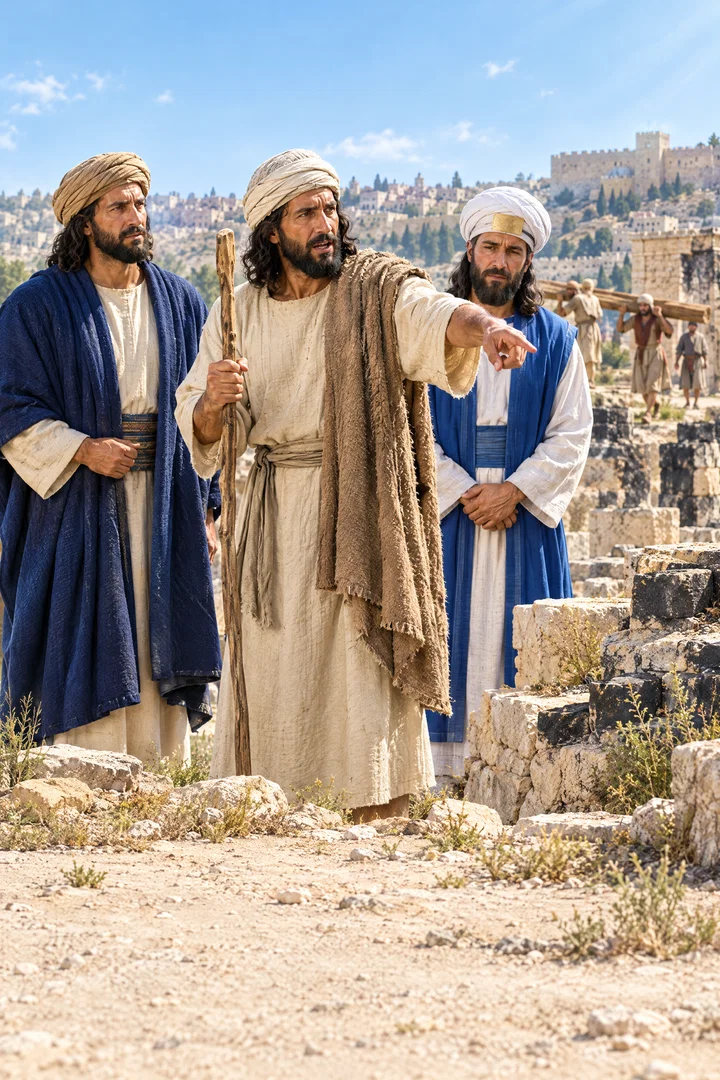
Thus saith the Lord of hosts is His command to His people to carefully examine their conduct and condition, pressed home by repetition.RH Dec 5, 1907 It was spoken to the returned Israelites who for over a year left His temple neglected, unfinished and almost forsaken while they dwelt in their own ceiled houses and ran each to his own house.PP 527.2–528.1PK 574.1–575.1Ms 116, 1897, par. 6–11 Their putting of their own homes, buildings and personal interests first came from seeking temporal prosperity and escaping poverty, yet it brought upon them the very want they feared so that nothing prospered despite hard work.PK 574.1–575.1RH Dec 5, 1907PK 573.1–2 That hardship was God's own doing in judgment, withholding dew and fruit and sending futile labor, diminished harvests and drought upon land, corn, wine, oil, men, cattle and all the labor of the hands because His gifts were used selfishly and His house was neglected.ED 143.1–2PP 527.2–528.1RH Dec 5, 1907 The call therefore summons them to honor Him at once without further waiting by putting His interests first and building His house that He may take pleasure in it and be glorified, and it still demands making a proper place of worship the first consideration rather than lavishly improving one's own home, with financial faithfulness as stewards in tithes and offerings and in examining duty and management when His work is burdened with debt.Ms 175, 1897, par. 67–69PP 527.2–528.1PK 574.1–575.113MR 355.1–210MR 124.1
Israel's Neglect and Rebuke
Thus says the Lord of hosts, commanding His people to carefully examine their conduct and condition, and the command is repeated to press it home.RH Dec 5, 1907 It was spoken to the returned Israelites in the early reign of Darius Hystaspes, who for over a year had left the temple neglected, unfinished, waste and almost forsaken.PP 527.2–528.1RH Dec 5, 1907PK 573.1–2 All the while they dwelt in their own ceiled houses and ran each to his own house.PP 527.2–528.1PK 574.1–575.1Ms 116, 1897, par. 6–11RH Dec 5, 1907PK 573.1–2
It rebukes them for putting their own homes, buildings and personal interests first, for passivity and doing little, and for concern for their own buildings with unconcern for the Lord's building.RH Dec 5, 1907PK 573.1–2PK 573.3 It rebukes them for losing the burning zeal once shown for restoration, and for serving self at the sacrifice of God's cause.RH Dec 5, 1907 Long murmuring, doubting and apathy toward the ruined temple had made many lose sight of God's purpose in restoring them to Judea.PK 573.1–2
Their neglect came from desire to escape poverty and seek temporal prosperity in their own homes.PK 574.1–575.1RH Dec 5, 1907PK 573.1–2 But that neglect brought upon them what they feared, so that nothing prospered despite hard work.PK 574.1–575.1RH Dec 5, 1907PK 573.1–2 They were left in deplorable and pitiable condition spiritually and temporally.PK 573.1–2
Their want and hardship were God's doing and divine judgment for that neglect.RH Dec 5, 1907PK 573.1–2 He had given corn and wine and oil as a token of favor but removed the blessings because the gifts were used selfishly.PK 573.1–2 Neglecting His house and withholding tithes and offerings brought futile labor and diminished harvests, so that what was earned and gathered did not meet need and expected abundance came to little.ED 143.1–2PP 527.2–528.1RH Dec 5, 1907 They sowed much but brought in little, ate without enough, drank without being filled, clothed without warmth, and earned wages put into a bag with holes, with heaven stayed from dew and earth stayed from fruit.RH Dec 5, 1907 Drought was called upon land, mountains, corn, new wine, oil, ground produce, men, cattle and all the labor of the hands, with a wasting drought sent upon their substance.RH Dec 5, 1907PK 573.1–2
The call summons them to honor God at once without further waiting, putting His interests first.Ms 175, 1897, par. 67–69Ms 116, 1897, par. 6–11RH Dec 5, 1907 They were to go up to the mountain, bring wood and build the house.Ms 175, 1897, par. 94–95RH Dec 5, 1907 They were to prepare it quickly and dedicate it as a place to worship Him in humbleness of mind, to kneel before Him and to serve Him fittingly and in order.Ms 175, 1897, par. 67–69 Doing so would honor Him and invite His presence, so that He may take pleasure in it and be glorified, after which He promised to bless them.PP 527.2–528.1PK 574.1–575.1Ms 175, 1897, par. 94–95Ms 116, 1897, par. 6–11RH Dec 5, 1907
Present Call to Faithfulness
To consider ways is to face delay and want of faith and to honor God at once without further waiting by rising up and building a house for Him.Ms 175, 1897, par. 67–69 It means making the building of a proper house for God the first consideration and not leaving it to the last, providing quickly an adequate, accessible place of worship with suitable room and seating to bow before Him in humbleness of mind, to kneel before Him, and to serve Him fittingly and in order, rather than continuing in a place that is too small and unsuitable.Ms 175, 1897, par. 67–6913MR 355.1–2Lt 56, 1897, par. 1–2 On school grounds this means building a place for worship before other work, so that He is honored and reverenced.Lt 56, 1897, par. 9 When finished and dedicated to Him, that house stands as a witness to the truth held by those who built it where He directed them to settle.Ms 175, 1897, par. 67–69
Those who set their hand cheerfully to that work and go forward bringing wood and erecting the house have angels present on the ground to direct the work and guide their judgment.Ms 175, 1897, par. 94–95 The work is to be pushed forward earnestly with prayer for wisdom and a heart to understand every impression of His Spirit, and He takes pleasure in the building and is glorified by it.Ms 175, 1897, par. 94–95 The result is rejoicing and praise to God with singing and shouting.Ms 175, 1897, par. 94–95
The call exposes neglecting to build or maintain houses of worship while pursuing own interests, lavishly improving one's own home while leaving the place of worship neglected, and giving grudgingly to prepare a house for God.Ms 116, 1897, par. 35Ms 47, 1900, par. 6ST Mar 4, 1903 Such treatment of the place of worship shows how much sacred things and His presence are valued, and such misplaced priorities show little regard for Him and dishonor Christ.Ms 47, 1900, par. 6ST Mar 4, 1903 Blessing and spiritual strength correspond to care for His work, and withholding what belongs to Him brings affliction and loss in proportion to unwillingness to give.ST Mar 4, 1903 As stewards entrusted with His gifts, neglecting His house and withholding tithes and offerings brings futile labor and diminished harvests, so that what is earned and gathered does not meet need and expected abundance comes to little.ED 143.1–2 Scarcity in the treasury comes from work He cannot approve, and selfishly taking resources from others to advance an institution cannot be justified as service to Him, because it violates His Word and leads away from principle.Ms 29, 1911, par. 52–53
When churches are burdened with debt the call means examining conduct, duty and management, for debt dishonors Him and shows wrong management from beginning to end, rooted in thinking much of self and selfish interests.10MR 124.1 It applies both to neglecting to arise and build and to building with borrowed money while failing to donate to free church buildings from debt, letting year after year pass with very little sacrifice while interest swallows up means that should pay the principal.10MR 124.1Ms 116, 1897, par. 35 What duty requires must be asked, and sacrifice made to lessen and remove the debt.10MR 124.1 Those who realize the nearness of the Lord's coming consider their ways by acting faith with heart and soul interest when one of His instrumentalities is languishing or in peril, being one in mind and heart with heavenly intelligences so as to be worked by them, and unitedly taking of the Lord's own substance to lift the burdens resting on His institutions, with assurance that He will cooperate with them.6T 457.3–458.3Ms 65, 1900, par. 9–11 The same examination is demanded of workers in His service who corrupt truth and righteousness by working on principles He cannot sanction, depending on human effort instead of His power and bringing in presumption and human wisdom, who must stop and examine their course because they are not in harmony with Him and their spirit is not one with His Spirit, and of a leader urged to stop, repent and change a course He cannot endorse.17MR 284.1Ms 188, 1901, par. 3–4
Sources
Pioneers and periodicals
36 sources
Thus saith the Lord of hosts to His people after Babylon, soon after the temple foundation was laid, is a repeated command to thoughtfully examine conduct, heart, motives and daily walk and to amend what is not excusable.ST Apr 9, 1902ST Oct 13, 1909ST Jun 21, 1883RH Oct 3, 1854ST Dec 15, 1909 They had settled into comfortable ceiled houses and run every man to his own fields, vineyards and interests, while saying the time for the Lord's house had not come and leaving His building in ruins through selfishness, love of the world and loss of zeal.ST Aug 14, 1879ST Oct 13, 1909ST Sep 26, 1906 Putting self first and neglecting God's house caused Him to withhold blessing and frustrate their labor, so that diligence in sowing, reaping and business did not ensure gain but ended in sowing much and bringing in little, eating without enough, drinking without being filled, clothing without warmth, wages lost as in a bag with holes, and drought upon land, corn, wine, oil, men, cattle and all the labor of the hands.RH Nov 17, 1904ST Aug 14, 1879RH May 21, 1914ST Jan 2, 1893ST Mar 9, 1915 When they returned and went up to gather materials and build, He promised to take pleasure in the house and in them, to be with them and stir them to work, and to bless them from that day on condition of continued faithfulness.RH Nov 17, 1904ST Jan 29, 1885RH Apr 14, 1910ST Oct 8, 1885 The same word warns those who feel too poor to pay tithes and offerings that withholding God's portion brings affliction and loss and that self-seeking fails even for temporal gain, and it commands professed Sabbath-keepers to consider whether their ways please God, to repent of sins, make confessions, bear crosses and honor His house and work.RH May 21, 1914RH Feb 25, 1904RH Dec 17, 1903RH Apr 23, 1861ST Apr 17, 1907
Context and Command
The command belongs to the restoration after Babylon, about 520 B.C., soon after the foundation of the temple was laid when the condition of the people was deplorable.ST Jun 21, 1883ST Jul 14, 1887 Haggai with Zechariah encouraged Zerubbabel and Ezra to resume rebuilding the temple and restoring Jerusalem after opposition and a decree had stopped the work.ST Dec 15, 1909ST Jul 14, 1887 That encouragement was given amid hard times and opposition while rebuilding Jerusalem and restoring worship, and fulfillment was conditioned on obedience.ST Jun 21, 1883ST Jun 22, 1904 That restoration movement is a type of the last reformation.ST Dec 15, 1909
The people had settled in Jerusalem in comfortable ceiled houses while saying the time for the Lord's house had not come.RH Dec 5, 1907ST Oct 13, 1909 Filled with selfishness and love for this world, they pursued their own comfort, homes, fields, vineyards, orchards and interests, and ran every man to his own house while the Lord's house lay waste.RH Dec 5, 1907ST Oct 13, 1909ST Sep 9, 1913 They had lost the burning zeal once shown for restoration and had become slow, passive and unconcerned about the Lord's building, concerned for their own buildings.RH Dec 5, 1907ST Sep 26, 1906ST Feb 20, 1893 They treated sacrifice as a burden and religion as lifeless ceremony, putting their own interests before the work of God and serving self at the sacrifice of His cause.RH Dec 5, 1907ST Aug 14, 1879 Their excuses did not justify leaving His house in ruins while their own homes were finished.ST Feb 20, 1893
The word is God's repeated call to consider ways, pressed home by repetition before commanding them to rebuild.RH Dec 5, 1907ST Apr 9, 1902ST Oct 13, 1909 It means careful, thoughtful examination of conduct, heart, motives, choices, condition and daily walk.RH Dec 5, 1907ST Apr 9, 1902ST Dec 15, 1909 Such consideration invites reasoned and willing service and good judgment rather than ignorance or unquestioning submission.ST Dec 15, 1909 It shows ways may not be excusable and must be amended rather than defended as simply one's own way.RH Oct 3, 1854ST Aug 14, 1884ST Oct 19, 1888
Considering ways meant acting even amid financial hardship and lack of faith that were pleaded as obstacles.ST Jan 29, 1885ST Oct 8, 1885ST Jun 22, 1904 They were to go up to the mountain, gather wood and bring building materials, and build the house.RH Dec 5, 1907ST Jan 29, 1885RH Apr 14, 1910ST Oct 8, 1885 If they went forward and undertook the work, God would take pleasure in it and be glorified and take pleasure in them.RH Dec 5, 1907ST Oct 8, 1885ST Nov 19, 1902 They could not prosper in their own affairs until they restored the fallen temple.ST Jan 29, 1885RH Apr 14, 1910
Judgment and Blessing
Putting self first and leaving God's house and work neglected caused Him to withhold blessing and frustrate effort, so that harvests and earnings came to nothing because prosperity was withdrawn in response to pursuing private homes while His house lay waste.RH Nov 17, 1904ST Aug 14, 1879ST Jan 2, 1893RH Feb 17, 1874ST Feb 20, 1893 Diligence in business, sowing and reaping and caring for fruit did not ensure gain, for what was brought home was blown upon, heaven was stayed from dew and earth from fruit, and drought, pestilence, poor crops and lack of rain were allowed to show displeasure with misplaced priority.ST Aug 14, 1879ST Jan 2, 1893ST Mar 9, 1915RH Jul 28, 1868ST Feb 20, 1893 The hardship was meant to lead to recognition that He must come first, with sacrifice no longer treated as a burden and religion no longer left as lifeless ceremony, but with His kingdom sought first and His house rebuilt.RH Nov 17, 1904ST Aug 14, 1879ST Jan 29, 1885RH Feb 17, 1874
The resulting want is described in detail as God's doing because His house was waste while every man ran to his own house.RH Dec 5, 1907RH May 21, 1914ST Mar 9, 1915 There was sowing much but bringing in little, looking for much but getting little, eating without enough, drinking without being filled, clothing without warmth, and wages put as into a bag with holes and quickly gone, so that food and drink and clothing and wages did not satisfy or warm or last.RH Dec 5, 1907ST Oct 13, 1909RH May 21, 1914RH Feb 17, 1874ST Mar 9, 1915 Fruit and oil were spoiled, heaven was stayed from dew and earth stayed from fruit, and drought was called upon land, mountains, corn, new wine, oil, ground produce, men, cattle and all the labor of the hands.RH Dec 5, 1907ST Oct 13, 1909RH May 21, 1914 The same condition is pictured as barren fields and fruitless labor longing for plenteous rain, with money and purchases yielding little benefit and with crop failure following when what belongs to God is retained for private use, as when a farmer who stopped bringing all his tithe reaped less than he sowed for two years while neighbors' crops were abundant, then had a good harvest after resuming giving the Lord His due.RH Dec 17, 1903ST Apr 9, 1902ST Jun 28, 1905
Self-seeking failed even for temporal gain and brought what was feared, for the desire to escape poverty led to neglecting the temple, but that neglect brought poverty upon them so that nothing prospered.RH Dec 5, 1907ST Oct 13, 1909ST Jun 22, 1904 Busy sowing and reaping and planting vineyards and orchards and caring for fruit while sparing neither time nor means for the Lord's work left God's blessing absent, showing it would have been better in every way to seek God's work more and their own less in order to receive blessing instead of curse.RH Dec 5, 1907ST Oct 13, 1909RH Jul 28, 1868 Personal sin and lack of faith were the greatest obstacles amid hard times and opposition, and putting these right would open the way for needed means.RH Jul 28, 1868ST Apr 9, 1902ST Jun 22, 1904
God's encouragement and promise of peace and prosperity were fulfilled on condition of obedience and would continue if the people remained faithful, contrasting the troubles endured after the foundation was laid with the blessing promised thereafter.RH Nov 17, 1904RH Feb 17, 1874ST Jun 21, 1883 When they returned to the work and undertook it, even amid financial hardship, He promised to be with them and stir them to work and to bless them from that day.RH Nov 17, 1904ST Jan 29, 1885RH Feb 17, 1874 They could not prosper in their own affairs until they restored the fallen temple by going up to the mountain, gathering wood and bringing building materials, and building the house.RH Nov 17, 1904ST Jan 29, 1885RH Apr 14, 1910
Stewardship and Self-Examination
The call to consider ways warns those who hold back tithes and freewill offerings because they feel too poor to pay that they cannot afford to keep robbing God and keeping His portion for their own use.RH May 21, 1914RH Feb 25, 1904 Such want — sowing much but bringing in little, looking for much but getting little, eating without enough, drinking without being filled, clothing without warmth, and wages lost as in a bag with holes — comes because each runs to his own house while God's house lies waste, so He blows upon what is brought home and stays heaven from dew and earth from fruit until what is possessed is gone.RH May 21, 1914 Withholding what belongs to God brings affliction and loss in proportion to unwillingness to give.ST Mar 4, 1903RH Feb 25, 1904 This was shown when a farmer who stopped bringing all his tithe to the storehouse reaped less than he sowed for two years while his neighbors' crops were abundant, then had a good harvest after he resumed giving the Lord His due.RH Dec 17, 1903
Delaying offerings for God's work risks having the work of the hands come to little, for neglect of God's house while pursuing one's own interests makes effort yield little.RH Sep 16, 1902 Harvests and good prices are to be seen as gifts meant to support the spread of the gospel and the growth of Christian character.RH Sep 16, 1902 In this appeal the call supports helping provide a house of worship in Nebraska while there is still time to serve others and save the perishing.RH Jan 30, 1879 Willingness to give up personal plans to pay a church debt shows the Lord's work must be treated as more important than one's own, and puts the question whether one's own interests are being put ahead of the Lord's work.ST Mar 13, 1884
Poverty and hard times with opposition while rebuilding Jerusalem and restoring worship are not accepted as an excuse to neglect the work.ST Feb 20, 1893ST Jun 22, 1904 Excuses did not justify delaying rebuilding God's temple while giving priority to own homes and fields, and leaving His house in ruins while own homes were finished.ST Feb 20, 1893 The message reproved lack of faith, lethargy, selfishness and sin, connected those sins with the famine and want suffered, and urged the people to rise and build.ST Feb 20, 1893ST Aug 23, 1899 Drought and pestilence were allowed to show displeasure with that neglect.ST Feb 20, 1893 Personal sin and lack of faith were the greatest obstacles, and putting these right would open the way for the needed means.ST Jun 22, 1904
The verse commands professed Sabbath-keepers who spend little time considering their ways and rest content with a name to live to examine heart, motives and daily walk to know whether their ways please God.RH Apr 23, 1861 It exposes sins yet to be repented of, confessions to be made, crosses to be borne and victories to be gained which should long since have been done.RH Apr 23, 1861 Treatment of the place of worship and grudging giving to prepare a house for God show how much sacred things are valued, and God's blessing and spiritual strength correspond to care for His work.ST Mar 4, 1903 The call to think carefully about conduct is an invitation to thoughtful, reasoned response and willing service grounded in consideration and good judgment, not ignorance or unquestioning submission.ST Apr 17, 1907
Sources