Hebrews 11:38
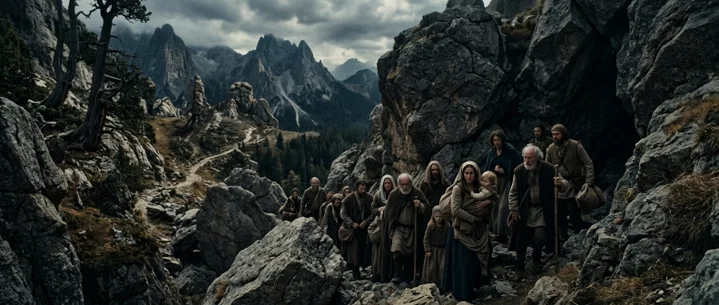
(Of whom the world was not worthy:) they wandered in deserts, and in mountains, and in dens and caves of the earth.
Translations
American King James Version, King James Version, Webster Bible
(Of whom the world was not worthy:) they wandered in deserts, and in mountains, and in dens and caves of the earth.
(of whom the world was not worthy:) they wandered in deserts, and in mountains, and in dens and caves of the earth.
Revised Version, American Standard Version
( of whom the world was not worthy), wandering in deserts and mountains and caves, and the holes of the earth.
of whom the world was not worthy; in deserts wandering, and [in] mountains, and [in] caves, and [in] the holes of the earth;
( of whom the world was not worthy,) wandering in deserts and mountains, and [ in] dens and caverns of the earth.
Of whom the world, was not worthy—upon deserts, wandering, and mountains, and in caves,—and in the caverns of the earth.
Berean Standard Bible, Majority Standard Bible
The world was not worthy of them. They wandered in deserts and mountains, and hid in caves and holes in the ground.
of whom the world was not worthy— wandering in deserts, mountains, caves, and the holes of the earth.
Wandering in waste places and in mountains and in holes in the rocks; for whom the world was not good enough.
Whom the world was not worthie of: they wandered in wildernesses and mountaines, and dennes, and caues of the earth.
Douay-Rheims (Challoner revision)
Of whom the world was not worthy; wandering in deserts, in mountains, and in dens, and in caved of the earth.
Pictures
Cross-references
- Hebrews 11:13-16
These all died in faith, not having received the promises, but having seen them afar off, and were persuaded of them, and embraced them, and confessed that they were strangers and pilgrims on the earth.
The faithful died without receiving the promises, confessing themselves strangers and seeking a heavenly country.
- Hebrews 12:1
Wherefore seeing we also are compassed about with so great a cloud of witnesses, let us lay aside every weight, and the sin which doth so easily beset us, and let us run with patience the race that is set before us,
Hebrews 11’s faithful people are the cloud of witnesses, encouraging believers to run with patience.
- 2 Timothy 3:12
Yea, and all that will live godly in Christ Jesus shall suffer persecution.
Those who live godly in Christ Jesus will suffer persecution.
- Hebrews 11:33-34
Who through faith subdued kingdoms, wrought righteousness, obtained promises, stopped the mouths of lions,
The ancient faithful overcame danger through faith and were delivered in battle.
- Hebrews 11:1
Now faith is the substance of things hoped for, the evidence of things not seen.
Defines the faith illustrated by Hebrews 11’s examples.
- Hebrews 11:16
But now they desire a better country, that is, an heavenly: wherefore God is not ashamed to be called their God: for he hath prepared for them a city.
The faithful sought the better heavenly country God prepared for them.
- 1 Kings 18:4
For it was so, when Jezebel cut off the prophets of the LORD, that Obadiah took an hundred prophets, and hid them by fifty in a cave, and fed them with bread and water.)
Obadiah hid the Lord’s prophets in caves from Jezebel’s killing.
- John 15:19
If ye were of the world, the world would love his own: but because ye are not of the world, but I have chosen you out of the world, therefore the world hateth you.
The world hates those who are not its own.
- Matthew 5:12
Rejoice, and be exceeding glad: for great is your reward in heaven: for so persecuted they the prophets which were before you.
Both texts connect persecution of the faithful with the prophets’ suffering.
- 1 Corinthians 4:13
Being defamed, we intreat: we are made as the filth of the world, and are the offscouring of all things unto this day.
Both describe believers rejected and treated with contempt by the world.
- Hebrews 11:32
And what shall I more say? for the time would fail me to tell of Gedeon, and of Barak, and of Samson, and of Jephthae; of David also, and Samuel, and of the prophets:
quoted as continuation of the roll of heroes
- 1 Kings 18:13
Was it not told my lord what I did when Jezebel slew the prophets of the LORD, how I hid an hundred men of the LORD’s prophets by fifty in a cave, and fed them with bread and water?
Obadiah hid a hundred prophets in caves from persecution.
- Hebrews 11:23-29
By faith Moses, when he was born, was hid three months of his parents, because they saw he was a proper child; and they were not afraid of the king’s commandment.
Moses is named among the examples of faith.
- Hebrews 10:35-39
Cast not away therefore your confidence, which hath great recompence of reward.
Urges patience and faith while awaiting the promised reward.
- Acts 7:51-52
Ye stiffnecked and uncircumcised in heart and ears, ye do always resist the Holy Ghost: as your fathers did, so do ye.
grouped together as Israel's treatment of servants
- Revelation 12:11
And they overcame him by the blood of the Lamb, and by the word of their testimony; and they loved not their lives unto the death.
Both describe martyrs who did not love their lives unto death.
- Matthew 23:34-37
Wherefore, behold, I send unto you prophets, and wise men, and scribes: and some of them ye shall kill and crucify; and some of them shall ye scourge in your synagogues, and persecute them from city to city:
Jesus speaks of prophets being persecuted and killed.
- Acts 7:54-60
When they heard these things, they were cut to the heart, and they gnashed on him with their teeth.
Stephen is killed as a Christian witness.
Commentary part 1 of 2
Each commentary is drawn from primary sources: the writings of Ellen G. White and Adventist pioneers and periodicals. Each commentary is separate. Its own words are not a quotation; follow the references to read the source passages.
Ellen G. White
58 sources
The verse declares that the world was unworthy of God's faithful sufferers, not that they were unworthy, for though rejected, despised and driven out as unfit to live, they are valued by God and worthy of the highest honor and eternal glory.RH Mar 7, 1912ED 158.2–3ST Apr 3, 1879 Their wandering in deserts and mountains and dwelling in dens and caves means being stripped of possessions, driven from homes, hunted like beasts of prey, and forced by persecution to hide in desolate and solitary places in destitution, affliction and torment.Ms 62, 1886, par. 57GC88 39.2GC 39.2 It describes prophets and messengers in Israel and Judah who were beaten, imprisoned, stoned, sawn asunder and slain, Christians of the first centuries driven to mountains, deserts and dungeons under Rome, and later the Waldenses, Wycliffe's followers and Reformers who fled to mountains, forests, dens and caves rather than renounce truth.Ms 166, 1898, par. 22–25GC88 39.21T 371.14SP 89.2Ms 134, 1902, par. 7 Their faith strengthened them to endure torture without accepting deliverance, to prize God's favor and eternal reward far above earthly ease, wealth and honor, and to count it joy to suffer for Christ.6MR 296.1–2Ms 166, 1898, par. 22–25Ms 62, 1886, par. 571T 371.1SG4 273.1 Their earthly rejection and suffering did not lessen their worth to God or prove Him to have forsaken them, and their example is meant to strengthen believers for service now and to comfort God's people in the coming time of trouble.ST Apr 3, 18795T 213.1CET 188.2SLP 332.2RH Jan 4, 1912
Meaning of the Words
The declaration that the world was not worthy turns the judgment around: it is not the sufferers who are unworthy, but the world that proved unworthy of them when people of faith were rejected, despised, driven from society, and treated as unworthy of life.RH Mar 7, 1912ED 158.2–34SP 182.3 Even in persecution and deprivation their wandering and suffering do not make them unworthy before God, for heaven records them as His children and registers them among His faithful sufferers.RH Mar 7, 1912ED 158.2–34SP 182.3 Though their names are cast out as evil on earth, they are honored in the heavenly records and counted worthy of the highest honor and of eternal glory.RH Mar 7, 19124SP 182.3 Their faith was genuine like Abraham's, and their earthly rejection did not lessen their worth to God, who valued them even when they were despised and driven from place to place.ST Apr 3, 1879
To wander in deserts and mountains and to dwell in dens and caves of the earth is to be stripped of possessions, driven from homes, and refused the right to abandon truth only at the cost of flight.Ms 62, 1886, par. 57GC88 39.2GC 39.2 It is to be hunted like beasts of prey wherever refuge is sought and forced by persecution to seek concealment in desolate and solitary places.GC 40.2 That life is lived destitute, afflicted, and tormented, with many killed for their testimony, showing that the world was unworthy of them.GC88 39.2ED 158.2–3GC 39.2 In the first centuries this was fulfilled beneath the hills outside Rome, where long galleries tunneled through earth and rock in a dark intricate network extending for miles gave shelter to thousands of suspected and proscribed believers, serving both to bury their dead and as a home.GC 40.2
Scorn, suffering, and displacement do not prove that God has forsaken His people, for God is with them even when they are forced from public worship to gather in secret and lonely places to pray and praise God, and their testimony cannot be silenced.GC88 251.3–252.1 Their steadfast witness from places of suffering proclaims that God is true and that the One they trust, Jesus the Son of God and Saviour, is able to save completely, so their suffering does not make their faith a failure.SLP 332.2RH Jan 4, 1912 This was seen when dissenters forbidden on pain of fines, imprisonment, and banishment to meet except as sanctioned met in dark alleys, obscure garrets, and in woods at midnight with the forest as temple, enduring crowded jails, broken families, banishment, and flight across the ocean while persecution spread their witness.GC88 251.3–252.1
The wandering and dwelling in deserts, dens, and caves does not make choosing isolation or inactivity a model of piety.Lt 5a, 1891, par. 8–9 Christ's example was active, diligent work, and His followers are to serve in the duties of life.Lt 5a, 1891, par. 8–9 They grow spiritually through doing their Master's work rather than treating withdrawal from society as a virtue.Lt 5a, 1891, par. 8–9
People and Times Described
In Israel and Judah the verse describes prophets and messengers sent at appointed times during the Jewish economy to receive the Lord's portion from His husbandmen and to warn against unfaithfulness and misappropriation of what belonged to God.Ms 166, 1898, par. 22–25 Though convicted of their unrighteous course the people would not yield but grew more stubborn and hated reproof, beating one servant, killing another, and stoning another.Ms 166, 1898, par. 22–25 They suffered torture without accepting deliverance that they might obtain a better resurrection, cruel mockings and scourgings, bonds and imprisonment, stoning, being sawn asunder, temptation, and death by the sword, wandering about in sheepskins and goatskins, destitute, afflicted, tormented, wandering in deserts and in mountains and in dens and caves of the earth, because the world was not worthy of them.Ms 166, 1898, par. 22–25 They were heaven's acknowledged nobility whom the world did not deserve, and when national apostasy had almost completed Israel's ruin every indignity was heaped upon them, with messengers despised, prophets killed, and servants humiliated, beaten, and thrown into prison.Ms 134, 1902, par. 7
It describes faithful witnesses in Judah under Manasseh who endured severe persecution for bearing witness to truth and righteousness in a corrupt society that sought to silence them, forced to wander in deserts and mountains and take shelter in dens and caves because the world was unworthy of them.RH Jul 8, 1915PK 381.2–382.1 This included Isaiah during Manasseh's reign, sawn asunder for reproving the nation's sins, and Jeremiah persecuted by his own countrymen for delivering God's message, treated cruelly and driven from society as destitute and afflicted.RH Jul 8, 1915ST Feb 17, 1898 It illustrates how those who warned Israel of sin could be rejected and killed by its leaders and driven to wander in desolate places and shelter in caves.4RED 8.2–9.1
It applies to the Christian witnesses killed by the Jewish authorities, including Stephen and James, and to Stephen, Paul, Peter and other Christians whom persecutors killed.DA 629.1–630.1ST Feb 20, 1901 Their persecution and death amounted to crucifying the Son of God afresh, and harming them was an offense against Christ in the person of His saints, whose judges condemned them to death rather than allow them to serve God though they were worthy.DA 629.1–630.1Ms 78, 1897, par. 38–39 Their lives and deaths showed the world was unworthy of them, serving as a witness to Christ and a final opportunity for the Jewish people to repent.ST Feb 20, 1901
It describes Christians of the first centuries under Roman pagan persecution, stripped of possessions, driven from homes, hunted like beasts of prey wherever they sought refuge, and forced to hide in desolate and solitary places in deserts and mountains and dens and caves of the earth, destitute, afflicted and tormented.GC88 39.24SP 39.2–40.1GC 40.2 Many were killed for their testimony, exiled to mountains and deserts, and left in dungeons to die of hunger, cold and torture, with martyrdom as the only way out of distress.GC88 39.2CET 188.2 They had eagerly accepted light from heaven as the first disciples accepted it from the lips of Jesus, and rejoiced that they were counted worthy to suffer for Christ who was crucified for them.CET 188.2
Its wandering in deserts and mountains and dwelling in dens and caves was fulfilled in the catacombs beneath the hills outside Rome, long galleries tunneled through earth and rock in a dark intricate network extending for miles beyond the walls, subterranean excavations where thousands of suspected and proscribed believers found shelter and buried their dead.4SP 39.2–40.1GC 40.2GC88 40.2 From those gloomy caverns many martyrs for Christ will come forth when the Life-giver awakens the dead.4SP 39.2–40.1GC 40.2GC88 40.2
It describes the Waldenses who studied the word of God and lived up to the light they had, and for their religion were persecuted and driven from homes, despoiled of possessions gained by hard labor, with houses burned and lands and dwellings destroyed.1T 371.1SG4 273.1GC 76.3 Pursued across mountains and hunted in secluded valleys among forests and rocks, they fled to the mountains where they suffered hunger, fatigue, cold and nakedness with only skins of animals for clothing.1T 371.1GC 76.3 Though scattered and homeless they assembled to sing and praise God that they were accounted worthy to suffer for Christ's name, encouraged and cheered one another, were grateful even for miserable retreats, prized God's love and favor far above earthly ease, comfort, wealth or worldly riches, would not yield their religion even when children sickened and died from cold and hunger, received consolation from God, and looked forward with pleasing anticipation to the recompense of reward.1T 371.1SG4 273.1
It was lived again by Wycliffe's followers, the Wycliffites and Lollards, who kept his doctrines and accepted the Bible as guide and standard and carried the gospel through England and to other lands after their leader was removed.4SP 89.2GC 94.3–95.1 Hunted as foes of the church and traitors to the realm, proscribed and tortured after English monarchs secured Rome's support and decreed the stake against disciples of the gospel, with martyrdom succeeding martyrdom in a pitiless storm of persecution, they poured their suffering cries into the ear of the Lord of Sabaoth.4SP 89.2GC 94.3–95.1 As hunted reformers they preached in secret places, found shelter as best they could among the lower classes and in the humble homes of the poor, hiding away in dens and caves and often in massive dungeons and Lollard towers, gladly sheltering banished brethren while permitted to dwell in homes and cheerfully accepting the lot of the outcast when driven forth.4SP 89.2GC 94.3–95.1GC88 94.1
It describes the United Brethren who held to the ancient faith when former brethren made compact with Rome and took in her errors, cursed by all classes for forming themselves into a distinct church though the world was not worthy of them.GC 119.1 Driven to find refuge in woods and caves their firmness was unshaken, and they still assembled there to read God's word and unite in His worship.GC 119.1 It describes seventeenth-century godly pastors and faithful souls in England persecuted by the established church following Rome, expelled from positions and forbidden on pain of heavy fines, imprisonment and banishment to attend any religious meetings except those sanctioned by the church.4SP 174.1GC88 251.3–252.1 Compelled to gather to worship God in dark alleys, obscure garrets and at some seasons in the woods at midnight, making the sheltering depths of the forest a temple for prayer and praise, they showed that scorn and suffering do not prove God has forsaken them, for God was with them so persecution could not prevail to silence their testimony.4SP 174.1GC88 251.3–252.1 Despite all precautions many suffered with crowded jails, broken-up families and banishment to foreign lands, and driven across the ocean to America they laid there the foundations of civil and religious liberty, showing persecution drives God's scattered children to hidden worship yet spreads their witness.4SP 174.1GC88 251.3–252.1
It describes faithful builders of God's temple through centuries of fierce persecution after the establishment of the Christian church, never wanting men who counted the work dearer than life itself and continued the work begun by the apostles.AA 597.3–598.2 They had trial of cruel mockings and scourgings, bonds and imprisonment, were stoned, sawn asunder, tempted, slain with the sword, wandered about in sheepskins and goatskins being destitute, afflicted, tormented, of whom the world was not worthy, wandering in deserts and in mountains and in dens and caves of the earth.AA 597.3–598.2 Workers were raised up to defend the faith including the Waldenses, John Wycliffe, Huss and Jerome, Martin Luther and Zwingle, Cranmer, Latimer, and Knox, the Huguenots, John and Charles Wesley, and later promoters of the circulation of God's word and missionaries in heathen lands, so that though workmen were slain the building went steadily forward.AA 597.3–598.2 The persecuted believers of the Reformation were people the world did not deserve, whom religious and civil powers tried in vain to crush by imprisonment, torture, fire and sword, and though thousands died the work kept going forward, persecution only spread truth farther, and the fanaticism Satan tried to join to the movement only made the contrast between Satan's work and God's work clearer.GC 196.3 This includes Reformers who opposed papal power and idolatry and through God's grace resisting darkness endured scorn, derision, hatred and persecution even to death rather than renounce faith, and faithful witnesses driven into dens, mountains and caves because they honored God's law above Roman precepts.HSFM 176.2–45MR 283.2–3
Faith That Endures Hardship
Faith is shown in Hebrews 11 to have strengthened God's people to endure hardship, torture without accepting deliverance in order to obtain a better resurrection, and wandering without shelter in service to God through refusal to abandon truth.6MR 296.1–2Ms 166, 1898, par. 22–25Ms 62, 1886, par. 57 During the Jewish economy prophets and messengers were sent at appointed times to receive the Lord's portion from His husbandmen and to warn against unfaithfulness and misappropriation of what belonged to God.Ms 166, 1898, par. 22–25 Though convicted of their unrighteous course, the people would not yield but grew more stubborn and hated reproof, beating one servant, killing another, and stoning another.Ms 166, 1898, par. 22–25 They inflicted cruel mockings and scourgings, bonds and imprisonment, stoning, being sawn asunder, temptation, and death by the sword, leaving the faithful to wander in sheepskins and goatskins, destitute, afflicted, tormented, in deserts and mountains and dens and caves of the earth, because the world was not worthy of them.Ms 166, 1898, par. 22–25Ms 62, 1886, par. 57
Those faithful servants were worthy of more than the world could offer, yet they endured wandering, affliction, and hardship, proving earth is no resting place and rebuking desire for an easier, less self-denying life.GW92 56.1 They valued the promised future and eternal life, God's favor, and the recompense of reward far above earthly ease, comfort, wealth, riches, or honor, so that hope made sufferings seem small beside the reward.1T 371.1SG4 273.11T 656.3–658.2 Like the Waldenses who studied the word and lived up to the light they had, they were persecuted and driven from homes gained by hard labor, despoiled of possessions, with houses burned and lands laid waste, fleeing to mountains to suffer hunger, fatigue, cold, nakedness and deprivation with only animal skins for clothing.1T 371.1SG4 273.1 Though scattered and homeless, they assembled to sing and praise God for being counted worthy to suffer for Christ's name, encouraged and cheered one another, were grateful even for miserable retreats, prized God's love and favor above earthly comfort and wealth, and would not yield their religion even when children sickened and died from cold and hunger, receiving consolation from God while looking forward with pleasing anticipation to the reward.1T 371.1SG4 273.1
Willingness to endure hunger, thirst, torture, and death rather than renounce religion or surrender truth stands against compromising faith for convenience, while God counts such sufferers worthy of honor.4T 250.1 Their courage, fortitude, faith, and trust in God's power to save were gained by years of holy endeavor, firm adherence to the right, and firm resistance to numberless temptations, as seen in early Christians exiled to mountains and deserts and left in dungeons to die of hunger, cold, and torture with martyrdom as the only way out.CET 188.2 Having eagerly accepted heavenly light as the first disciples accepted it from the lips of Jesus, they rejoiced to suffer for Christ crucified for them.CET 188.2 Their fidelity to God and obedience to Christ made them heroes and examples of faithfulness from age to age, brought conspicuously before the world so their light shone before those in darkness and led others to glorify God.Ms 53, 1902, par. 320MR 41.4–52MR 302.2–303.118MR 138.1
Those who suffer for Christ are the most precious people on earth, too good for the world.Ms 9, 1898, par. 33–35 Saul of Tarsus caused such suffering and death by following Satan's track in unbelief, a cruel course done with false conscience, without moral right and without excuse, for which he afterward condemned himself without making excuse.Ms 9, 1898, par. 33–35
Prophecy Doctrine and Scripture
The verse describes what befell those who dared proclaim the sacred truths of the Bible when the papal power hid the word of truth, proscribed the Bible by religious and secular authority, perverted its testimony, set false witnesses against it, and used every invention of men and demons to turn minds from it.4SP 189.2GC88 267.2 They were hunted, betrayed, tortured, buried and shut in dungeon cells, martyred for their faith, or compelled to flee to mountain fastnesses and refuges and to hiding places in the earth and underground.4SP 189.2GC88 267.2 That hunted and hidden affliction and obscurity is the faithful witnesses prophesying in sackcloth through the whole period of 1260 years when God's witnesses were kept in obscurity.4SP 189.2GC88 267.2 In the darkest times God gave faithful men who loved His word and were jealous for His honor wisdom, power, and authority to keep declaring His truth.GC88 267.2
Their danger under bitter persecution by popes and priests, with the rack, the stake, and every torture that Satan and his evil angels could put into the mind of man, kept the church of God pure, because no one with a corrupt heart would dare declare faith when doing so brought such persecution.SG1 118.2 They were Christ's devoted followers and the precious of God who loved God and would not yield to Satan's delusions, while Satan's agents tried to kill them so that no true Christian would be left on earth.SG1 118.2 Angels ministered to and strengthened those suffering saints in suffering and agony and kept a faithful record of it all.SG1 118.2
The verse belongs to the record and chapter of the faithful and their experience, which is given as instruction to be applied.Ms 6, 1902, par. 14–15Ms 63, 1893, par. 26–27 The faithful are described as strangers and pilgrims on earth who sought a better, heavenly country and a city God has prepared and built.Ms 6, 1902, par. 14–15Ms 63, 1893, par. 26–27 The chapter calls believers to turn their minds from the common, discouraging things that are seen and dwell on the unseen.Ms 63, 1893, par. 26–27 The sufferers described are some of the great cloud of witnesses compassing believers, who met evils and difficulties in their way and in the name of the Lord braced themselves successfully against the opposing forces of evil.Ms 61, 1907, par. 1–3 They were sustained and strengthened, and the Lord held them by His hand.Ms 61, 1907, par. 1–3
Instruction for Believers Today
The record of the faithful to which this verse belongs is given as instruction for workers for God to apply in their own labor.RH Sep 30, 1902Ms 6, 1902, par. 14–15 City workers are to take that instruction by going forward in faith, doing their best, and trusting God to hear and answer prayer, and in doing that work they gain valuable experience for what follows.RH Sep 30, 1902 The faithful there described were strangers and pilgrims on earth who sought a better, heavenly country and a city that God has prepared.Ms 6, 1902, par. 14–15
The faith that worked in God's faithful servants of old can work in believers today and strengthen them for service.PK 175.2ED 256.1 God works through hearts of faith as channels of His power just as markedly now as in the past.ED 256.1 The firm principles of the ancient faithful were set forth as patterns for Christians, and those same principles can be lived out in later times, as Joseph Bates followed Christ and became a reformer while exposed to the corrupting conditions of seafaring life.CTBH 238.2
Their lives prove that earth is no resting place for Christians, and still less for ministers.1T 370.2GW92 56.1 They stand as a rebuke to preachers who complain that their lot is hard, dislike separation from their families, and want an easier, less self-denying position.1T 370.2GW92 56.1 Such complaining forgets Christ, who gave up heavenly riches and glory to come to earth and die and who commands love like His own, and it forgets the sufferers in animal skins who were oppressed and pained yet were worthy of more than the world could offer.1T 370.2GW92 56.1 God's servants in earlier times paid a high price to learn truth and give it to others, praying and weeping for clear understanding, accepting separation, lack of comfort and hard labor, and following God's leading step by step without seeking their own ease or drawing back from hardship.1T 370.2 Through them God opened the way and made truth plain to every honest mind.1T 370.2
Their self-denying homelessness, hardship, affliction and torment, including wandering in wilderness places and finding refuge in mountains while the world was unworthy of them, exemplify the self-denial required of God's servants.SG4 272.3
Their example of counting suffering for Christ a joy is meant to comfort and encourage God's people who will be brought into the coming time of unprecedented trouble such as never was.5T 213.1CET 188.2 Their hardships included exile to mountains and deserts, imprisonment, hunger, cold, torture, being left in dungeons to die, and martyrdom.5T 213.1CET 188.2 They had eagerly accepted light from heaven, rejoiced that they were counted worthy to suffer for Christ who was crucified for them, and would not yield.CET 188.2 Their courage, fortitude, faith and trust in God's power to save had been gained by years of holy endeavor, firm adherence to the right, and firm resistance to numberless temptations.CET 188.2
Sources