Hebrews 11:37
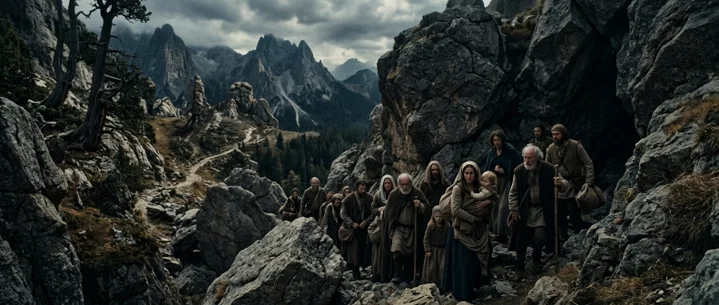
They were stoned, they were sawn asunder, were tempted, were slain with the sword: they wandered about in sheepskins and goat skins; being destitute, afflicted, tormented;
Translations
They were stoned, they were sawn asunder, were tempted, were slain with the sword: they wandered about in sheepskins and goatskins; being destitute, afflicted, tormented;
They were stoned, they were sawn asunder, were tempted, were slain with the sword: they wandered about in sheepskins and goat skins; being destitute, afflicted, tormented;
they were stoned, they were sawn asunder, were tempted, were slain with the sword: they wandered about in sheepskins and goatskins; being destitute, afflicted, tormented;
They were stoned, they were sawn asunder, were tempted, were slain with the sword: they wandered about in sheep-skins, and goat-skins; being destitute, afflicted, tormented;
they were stoned, they were sawn asunder, they were tempted, they were slain with the sword: they went about in sheepskins, in goatskins; being destitute, afflicted, evil entreated
they were stoned, they were sawn asunder, they were tempted, they were slain with the sword: they went about in sheepskins, in goatskins; being destitute, afflicted, ill-treated
they were stoned, they were sawn asunder, they were tried; in the killing of the sword they died; they went about in sheepskins, in goatskins — being destitute, afflicted, injuriously treated,
They were stoned, were sawn asunder, were tempted, died by the death of the sword; they went about in sheepskins, in goatskins, destitute, afflicted, evil treated,
They were stoned, were pierced through, were sawn asunder, by murder, with a sword, died, went about in sheep-skins, in goat-hides,—being in want, suffering tribulation, enduring ill-treatment:
They were stoned, they were sawed in two, they were put to death by the sword. They went around in sheepskins and goatskins, destitute, oppressed, and mistreated.
They were stoned, they were sawed in two, they were put to the test, they were put to death by the sword. They went around in sheepskins and goatskins, destitute, oppressed, and mistreated.
They were stoned. They were sawn apart. They were tempted. They were slain with the sword. They went around in sheep skins and in goat skins; being destitute, afflicted, ill-treated—
They were stoned, they were cut up with knives, they were tested, they were put to death with the sword, they went about in sheepskins and in goatskins; being poor and in pain and cruelly attacked,
They were stoned, they were hewen asunder, they were tempted, they were slaine with the sworde, they wandred vp and downe in sheepes skinnes, and in goates skinnes, being destitute, afflicted, and tormented:
Douay-Rheims (Challoner revision)
They were stoned, they were cut asunder, they were tempted, they were put to death by the sword, they wandered about in sheepskins, in goatskins, being in want, distressed, afflicted:
Pictures
Cross-references 20 of 22
- Hebrews 12:1-2
Wherefore seeing we also are compassed about with so great a cloud of witnesses, let us lay aside every weight, and the sin which doth so easily beset us, and let us run with patience the race that is set before us,
The faithful who endured hardship are a cloud of witnesses encouraging patient endurance and looking to Jesus.
- Hebrews 11:13
These all died in faith, not having received the promises, but having seen them afar off, and were persuaded of them, and embraced them, and confessed that they were strangers and pilgrims on the earth.
The faithful died in faith, confessing themselves strangers on earth and awaiting the promises.
- 2 Timothy 3:12
Yea, and all that will live godly in Christ Jesus shall suffer persecution.
Both describe persecution endured by those who live godly lives.
- Matthew 5:11-12
Blessed are ye, when men shall revile you, and persecute you, and shall say all manner of evil against you falsely, for my sake.
The persecuted endure mistreatment with hope of reward in heaven.
- Acts 7:59-60
And they stoned Stephen, calling upon God, and saying, Lord Jesus, receive my spirit.
Stephen was stoned for his faith and died praying to the Lord.
- Hebrews 11:32
And what shall I more say? for the time would fail me to tell of Gedeon, and of Barak, and of Samson, and of Jephthae; of David also, and Samuel, and of the prophets:
Names faithful people whose lives included the sufferings described.
- James 5:10
Take, my brethren, the prophets, who have spoken in the name of the Lord, for an example of suffering affliction, and of patience.
Prophets are examples of suffering and patience.
- 2 Corinthians 11:23-27
Are they ministers of Christ? ( I speak as a fool) I am more; in labours more abundant, in stripes above measure, in prisons more frequent, in deaths oft.
Paul’s beatings and stoning illustrate the severe trials endured by faithful servants.
- Hebrews 11:1
Now faith is the substance of things hoped for, the evidence of things not seen.
Defines the faith that enables endurance.
- Romans 8:35-39
Who shall separate us from the love of Christ? shall tribulation, or distress, or persecution, or famine, or nakedness, or peril, or sword?
Both list sufferings that cannot separate believers from Christ’s love.
- Acts 7:52
Which of the prophets have not your fathers persecuted? and they have slain them which shewed before of the coming of the Just One; of whom ye have been now the betrayers and murderers:
Both describe the persecution and killing of God’s prophets.
- Acts 12:2
And he killed James the brother of John with the sword.
James was killed by the sword, an example of early suffering.
- Hebrews 11:33
Who through faith subdued kingdoms, wrought righteousness, obtained promises, stopped the mouths of lions,
The faithful who suffered also subdued kingdoms and obtained promises through faith.
- Matthew 23:34-37
Wherefore, behold, I send unto you prophets, and wise men, and scribes: and some of them ye shall kill and crucify; and some of them shall ye scourge in your synagogues, and persecute them from city to city:
Jesus describes Jerusalem’s rejection and killing of God’s messengers.
- Revelation 6:9-11
And when he had opened the fifth seal, I saw under the altar the souls of them that were slain for the word of God, and for the testimony which they held:
Slain witnesses await God’s vindication and are promised rest.
- Acts 7:4-5
Then came he out of the land of the Chaldæans, and dwelt in Charran: and from thence, when his father was dead, he removed him into this land, wherein ye now dwell.
Abraham received no inheritance in the land during his lifetime.
- 1 Corinthians 4:11-13
Even unto this present hour we both hunger, and thirst, and are naked, and are buffeted, and have no certain dwellingplace;
Both describe faithful servants enduring deprivation, persecution, and contempt.
- Matthew 21:35-36
And the husbandmen took his servants, and beat one, and killed another, and stoned another.
Both describe servants beaten, killed, and stoned.
- Revelation 12:11
And they overcame him by the blood of the Lamb, and by the word of their testimony; and they loved not their lives unto the death.
both honor martyrs who loved not their lives
- Genesis 22:1-18
And it came to pass after these things, that God did tempt Abraham, and said unto him, Abraham: and he said, Behold, here I am.
Abraham’s tested faith is compared with the martyrs’ faith.
Commentary
Each commentary is drawn from primary sources: the writings of Ellen G. White and Adventist pioneers and periodicals. Each commentary is separate. Its own words are not a quotation; follow the references to read the source passages.
Ellen G. White
46 sources
The verse describes those who trusted God enduring violent suffering — stoning, being sawn apart, threats, killing by the sword, mockings, scourgings, bonds and imprisonment — and destitute wandering in animal skins, homeless and tormented in deserts, mountains, dens and caves.RH Mar 7, 1912RH Jul 8, 1915Ms 166, 1898, par. 22–25GC88 39.21T 371.1
It portrays God's prophets under Jewish apostasy and under Manasseh where Isaiah was sawn asunder, the first Christians hunted and stripped by pagan powers, the Waldenses driven to the mountains, and later Reformers and dissenters robbed and tortured for refusing to renounce faith.RH Jul 8, 1915Ms 166, 1898, par. 22–25GC88 39.21T 371.1SG1 118.2
They refused deliverance at the price of truth, enduring in Christ's strength with eyes fixed on the heavenly country and eternal reward, esteeming His reproach greater riches than the world.Ms 63, 1893, par. 26–27Ms 62, 1886, par. 571T 656.3–658.24T 250.1CET 188.2
Though condemned by human tribunals as unworthy of life, they are heaven's nobility of whom the world was not worthy, to be raised by the Life-giver, clothed in white robes and glory with all pain ended.RH Mar 7, 19124SP 39.2–40.1GC88 40.2GC 650.1COL 179.3
As heroes of faith surrounding believers as witnesses, their steadfast testimony declares God able to save completely and calls believers to lay aside sin, run with patience, and accept hardship rather than yield principle.Ms 6, 1902, par. 14–15RH Jan 4, 1912Ms 53, 1902, par. 3Ms 61, 1907, par. 1–3AA 511.2–512.1
Words and Sufferings Described
The verse lists violent sufferings endured for trust in God: being stoned, being sawn asunder, being tempted or threatened, and being slain with the sword.RH Mar 7, 1912RH Jul 8, 1915Ms 166, 1898, par. 22–25AA 597.3–598.2 It describes God's prophets and messengers sent at His appointed time to receive His portion and to warn against unfaithfulness and misappropriation, who were hated for reproof and grew stubborn against entreaty and argument rather than yield when convicted of wrong, and toward whom God looked with patience and forbearance for centuries despite cruel treatment.Ms 166, 1898, par. 22–25 It describes faithful builders of God's temple who counted the work dearer than life itself, so that though many fell at their post the building went steadily forward through workers raised up in every age to defend the faith.AA 597.3–598.2 Though the world counted these faithful people unworthy of life, they are honored in heaven as God's children and await eternal glory.RH Mar 7, 1912
The verse also lists destitute wandering: wandering about in sheepskins and goatskins, being destitute, afflicted and tormented, homeless, poor, and without possessions or resources.RH Mar 7, 1912RH Jul 8, 1915Ms 166, 1898, par. 22–25SG4 273.1 It pictures the persecuted driven from homes with hard-earned possessions taken and houses burned, fleeing to the mountains to suffer hunger, fatigue, cold and nakedness with only skins of animals for clothing.1T 371.1SG4 273.1 Even as scattered and homeless ones they assembled to sing and praise God that they were counted worthy to suffer for Christ's name, encouraging and cheering one another, grateful for even a miserable retreat, receiving consolation from God and looking forward with pleasing anticipation to the recompense of reward.1T 371.1SG4 273.1 They prized the love and favor of God far above earthly ease and worldly riches, and saw children sicken and die from cold and hunger without yielding their religion.1T 371.1SG4 273.1
Its sufferings include cruel mockings and scourgings, bonds and imprisonment, stripes, the rack and the stake and every torture that could be invented and put into the mind of man, hunger, thirst, cold, fatigue, nakedness, and being hunted like beasts of prey wherever refuge was sought.GC88 39.2AA 597.3–598.24SP 39.2–40.1SG1 118.24T 250.1 Christians were stripped of possessions, driven from homes, mocked, scourged, imprisoned and killed, with people of every social class among those slain.GC88 39.2 Servants of God suffered hunger, thirst, torture and death rather than renounce religion or yield the principles of truth, even to laying down life for the faith.4T 250.1 Under increased satanic power and artfulness, popes and priests exalted themselves and stirred up bitter persecution to destroy those who would not yield to delusion, bringing suffering and agony upon God's precious ones while angels kept faithful record and the adversary exulted that none would be left, and this danger of torment kept the church pure since no corrupt heart would dare declare true faith at such cost.SG1 118.2
Its wandering means flight to desolate and solitary places — deserts and mountains, dens and caves of the earth, forests, valleys and rocky places — forced into concealment without resources, suffering and cruelly treated, with only animal skins for clothing and miserable retreats for shelter.4SP 39.2–40.11T 371.1GC 40.2GC 76.3 In Rome this meant long subterranean galleries tunneled through earth and rock for building material and extending for miles beyond the walls, where thousands of suspected and outlawed Christians found shelter and home and buried their dead.4SP 39.2–40.1GC 40.2 From those catacombs, which served both as burial places and as homes, many martyrs will come forth when the Life-giver awakens those who fought the good fight and raises those who died for Christ.4SP 39.2–40.1GC 40.2 The flight of the Waldenses, driven into hiding and hunted through mountains, valleys, forests and rocky places for a pure faith, is an example of this destitute, afflicted and tormented wandering.GC 76.3
People and Times in History
The verse describes God's prophets and messengers during the Jewish economy and the long apostasy and backsliding of Israel.Ms 166, 1898, par. 22–254RED 8.2–9.1Ms 134, 1902, par. 7 Sent at God's appointed time to receive the Lord's portion from His husbandmen and to warn the people against unfaithfulness and misappropriation, they were hated for reproof and grew more stubborn against entreaty when convicted of wrong.Ms 166, 1898, par. 22–254RED 8.2–9.1 They were despised, humiliated, beaten and cast into prison with every indignity heaped upon them, and were stoned and slain at the instigation of the leaders because they denounced sin in those in authority.Ms 166, 1898, par. 22–254RED 8.2–9.1Ms 134, 1902, par. 7 God looked with patience and forbearance for centuries on this cruel treatment of His ambassadors, who though rejected were heaven's acknowledged nobility.Ms 166, 1898, par. 22–25Ms 134, 1902, par. 7
It is applied to the persecution of faithful witnesses for truth and righteousness under Manasseh, when some were killed and others endured cruel treatment, deprivation, imprisonment and homelessness.RH Jul 8, 1915PK 381.2–382.1ST Feb 17, 1898 They were killed, driven from society, and left to wander deprived and afflicted while remaining witnesses for God and the right.RH Jul 8, 1915PK 381.2–382.1ST Feb 17, 1898 Isaiah was among the first to fall, sawn asunder because he faithfully reproved the sins of the nation.RH Jul 8, 1915PK 381.2–382.1ST Feb 17, 1898
It describes Christians in the first centuries when pagan powers tried to destroy Christianity.GC88 39.24SP 39.2–40.1GC 39.2 Stripped of possessions and driven from homes, mocked, scourged, imprisoned and killed, they were hunted like beasts of prey wherever they sought refuge and forced into concealment without resources.GC88 39.24SP 39.2–40.1GC 39.2 People of every social class were among those slain without mercy.GC88 39.2GC 39.2
In Rome this meant the long subterranean galleries tunneled through earth and rock for building material and extending for miles beyond the walls.4SP 39.2–40.1GC 40.2GC88 40.2 There thousands of suspected and outlawed Christians found shelter and home when driven to wander in deserts and mountains and hide in dens and caves, and there they buried their dead.4SP 39.2–40.1GC 40.2GC88 40.2 Many martyrs buried there in obscurity will come forth when the Life-giver awakens those who fought the good fight and raises those who died for Christ.4SP 39.2–40.1GC 40.2GC88 40.2
It describes the Waldenses driven from homes with hard-earned possessions taken and houses burned, fleeing to the mountains and hunted through valleys, forests and rocky places for a pure faith.1T 371.1SG4 273.1GC 76.3 They suffered hunger, fatigue, cold and nakedness with only skins of animals for clothing, grateful even for a miserable retreat, with children sickening and dying from cold and hunger without yielding religion.1T 371.1SG4 273.1 Yet as scattered and homeless ones they assembled to sing and praise God that they were counted worthy to suffer for Christ's name, encouraging and cheering one another.1T 371.1SG4 273.1 They prized the love and favor of God far above earthly ease and worldly riches, received consolation from God, and looked forward with pleasing anticipation to the recompense of reward.1T 371.1SG4 273.1
Its picture of scorn, hatred, persecution and death applies to the Reformers who would not renounce faith and suffered for Christ's sake while opposing papal power and idolatry.SG1 118.25MR 283.2–3 It applies to dissenters from the popular faith in the Dark Ages when religious intolerance triumphed, robbed of goods and tortured for religious principle.SG1 118.2Lt 30, 1894, par. 4–5 Under popes and priests exalting themselves, Satan increased in power and artfulness to stir up bitter persecution to destroy devoted followers who would not yield to delusion, bringing suffering and agony by the rack, the stake and every torture that Satan and evil angels could invent and put into the mind of man.SG1 118.2
It was fulfilled in seventeenth-century England when the Church of England following Rome persecuted dissenters, expelling thousands of godly pastors and forbidding on pain of heavy fines, imprisonment and banishment any religious meetings except those sanctioned by the church.4SP 174.1GC88 251.3–252.1 Those who could not refrain from gathering to worship God according to conscience met in dark alleys, in obscure garrets, and at midnight in the woods, in the sheltering depths of the forest as a temple of God's own building to pour out souls in prayer and praise.4SP 174.1GC88 251.3–252.1 Many suffered in want, pain and torment while remaining true in worship and testimony, jails were crowded, families were broken up, and many were banished to foreign lands.4SP 174.1GC88 251.3–252.1 Many were driven across the ocean to America where they laid the foundations of civil and religious liberty, for God was with His people and persecution could not prevail to silence their testimony.4SP 174.1GC88 251.3–252.1
It describes the faithful builders of God's temple through the centuries of fierce persecution that followed the establishment of the Christian church.AA 597.3–598.2Lt 86, 1907, par. 3–5GC 196.3 In every age workers were raised up to defend the faith and hold truth in its purity, counting the work dearer than life itself, so that though many fell at their post the building went steadily forward.AA 597.3–598.2Lt 86, 1907, par. 3–5GC 196.3 Prophets sent to bear firm testimony and ministers sent to do a special work were attacked and imprisoned, and under Satan's deceptive influence men invented every cruelty to force abandonment of faith.AA 597.3–598.2Lt 86, 1907, par. 3–5 When ecclesiastical and civil authorities tried to crush truth by imprisonment, torture, fire and sword, many sealed faith with blood yet persecution only extended the truth.AA 597.3–598.2Lt 86, 1907, par. 3–5GC 196.3
Faith That Endured Persecution
Hebrews 11:37 belongs to the chapter on faith, which records the experience of the faithful and urges its instruction to be taken to heart.Ms 63, 1893, par. 26–27Ms 6, 1902, par. 14–15 That chapter calls believers to turn away from discouraging things seen and to seek a better country, the heavenly city built by God.Ms 63, 1893, par. 26–27
Those sufferers refused deliverance when it required abandoning truth, valuing truth above life lived in disobedience and sin.Ms 62, 1886, par. 57 They suffered hunger, thirst, torture and death rather than renounce their religion or yield the principles of truth, even to laying down life for the faith.Ms 62, 1886, par. 574T 250.1 They endured in the strength and grace of Jesus, sustained and strengthened with the Lord holding them by the hand.Ms 62, 1886, par. 57Ms 61, 1907, par. 1–3 In His name they braced themselves successfully against opposing evils and difficulties in their way, and their faith was tested and purified.Ms 62, 1886, par. 57Ms 61, 1907, par. 1–3
With the eye of faith fixed on the glorious future, eternal life and the recompense of the reward, they esteemed the reproach of Christ greater riches than worldly riches and honor.1T 656.3–658.2 The richest things earth can offer appeared valueless to them, and sustained by hope and faith they could call these sufferings light afflictions and account them small in comparison with that reward.1T 656.3–658.2 The early believers rejoiced to be counted worthy to suffer for Christ who had been crucified for them, trusting God, and their endurance comforts and encourages God's people facing the future time of trouble.CET 188.2 Their steadfast endurance in destitution, affliction and torment, and their fearless testimony even while willing to give up life, declares that the One they trust is able to save completely.RH Jan 4, 1912AA 511.2–512.1
The stoning, beating and slaying of the Lord's chosen centuries ago reveals the principle and spirit underlying all persecution of God's servants.4RED 65.12SP 212.1–213.1 Its outward character changes with the times but its spirit stays the same, so reproach, falsehood, imprisonment, stripes and death still follow those faithful in duty while the great work moves on.4RED 65.12SP 212.1–213.1 When ecclesiastical and civil authorities use imprisonment, torture, fire and sword to crush truth, the work still goes forward because persecution only extends the truth and makes clearer the contrast between the work of Satan and the work of God.GC 196.3 Under Satan's deceptive influence men invented every cruelty to force abandonment of faith, with Satan increasing in power and artfulness to stir his representatives to destroy the devoted who would not yield to delusion.SG1 118.2Lt 86, 1907, par. 3–5 Prophets sent to bear firm testimony against cruel satanic workings and ministers sent to do a special work and give a special message were attacked and imprisoned, and many died under what they endured to keep the truth pure in every age.Lt 86, 1907, par. 3–5 Angels kept faithful record of suffering and agony by rack, stake and every torture put into the mind of man, while Satan and evil angels exulted that none would be left, yet the very danger of torment kept the church pure since no corrupt heart would dare declare true faith at such cost.SG1 118.2
Their faith shows that faith can work in believers today with the same power wherever hearts of faith become channels for God.PK 175.2ED 256.1 Continuing to trust God and follow the marked path He outlines strengthens faith through trials and prepares for service.PK 175.2
Vindication and Eternal Reward
Though the world counted these faithful sufferers unworthy of life, they are honored in heaven as God's children and await eternal glory.RH Mar 7, 1912 Though rejected while grace was resisted, they were heaven's acknowledged nobility whom the world did not deserve.Ms 134, 1902, par. 7 Condemned by human tribunals as the vilest criminals, their earthly disgrace does not stand, for their vindication reverses that verdict.GC 650.1
Many martyrs buried in obscurity will come forth when the Life-giver awakens those who fought the good fight and raises those who died for Christ.4SP 39.2–40.1GC 40.2 This belongs to Christians in the first centuries when pagan powers tried to destroy Christianity, who were stripped of possessions, driven from homes, hunted like beasts of prey wherever they sought refuge, left without resources, suffering and cruelly treated.4SP 39.2–40.1 Forced into concealment, they wandered destitute, afflicted and tormented in deserts and mountains and hid in dens and caves of the earth.4SP 39.2–40.1GC 40.2GC88 40.2 In Rome this meant the miles-long subterranean galleries tunneled through earth and rock for building material beyond the walls, where thousands of suspected and outlawed Christians found shelter and home and buried their dead.4SP 39.2–40.1GC 40.2GC88 40.2
Their earthly lot before deliverance was from garrets, hovels, dungeons, scaffolds, mountains, deserts, caves of the earth and caverns of the sea, as poor, suffering and mistreated millions going down to disgraceful graves because they steadfastly refused to yield to Satan's deceptive claims.GC 650.1COL 179.3 That condition is reversed at their vindication: they are no longer feeble, afflicted, scattered and oppressed, but are ever with the Lord, standing before the throne in robes richer than the most honored of earth and crowns more glorious than earthly monarchs, with pain and weeping forever ended and every cause of grief removed.GC 650.1 God will judge them rightly, reverse the verdicts of earth, gather them to Christ and give them white robes as His redeemed people.COL 179.3
The early Christians rejoiced to be counted worthy to suffer for Christ who had been crucified for them, trusting God and remaining faithful through exile in mountains and deserts, imprisonment, hunger, cold, torture and martyrdom.CET 188.25T 213.1 Their endurance and faith comfort and encourage God's people who will face the future time of trouble.CET 188.25T 213.1 Their suffering, in which faithful people were killed in cruel ways, driven from home and left destitute and afflicted, with Christians of every social class slain without mercy, fulfilled Jesus' warning that His followers would suffer for their testimony.GC 39.2
Call to Follow Their Example
Their faithfulness to God made them heroes of faith whose lives were set before the world as examples, that their light might shine upon those in darkness.Ms 53, 1902, par. 32MR 302.2–303.120MR 41.4–518MR 138.1 That faithful example led others to glorify God.2MR 302.2–303.120MR 41.4–5 They belong to the great cloud of witnesses surrounding believers.Ms 61, 1907, par. 1–3
As witnesses they breasted the evils and difficulties in their way and in the Lord's name braced themselves successfully against opposing forces, sustained and strengthened with the Lord holding them by the hand.Ms 61, 1907, par. 1–3 Their recorded experience carries instruction that readers are to take to heart.Ms 6, 1902, par. 14–15 Their example calls believers to lay aside every weight of evil habit and practice formed by following natural disposition, and the easily besetting sin, and to run with patience the race set before them while magnifying the truth before a watching world.Ms 61, 1907, par. 1–3
Their wandering in affliction and torment, unworthy as the world was of them, shows that privation, hardship, separation from family, and much self-denial belong to carrying truth to others as God leads step by step, without studying personal convenience or shrinking from hardship.GW92 56.11T 370.2SG4 272.3 That life rebukes ministers who complain that preaching separates them from families and makes their lot hard, who study their own convenience, shrink at hardships, and seek an easier lot and a less self-denying position.GW92 56.11T 370.2 It rebukes forgetting that this earth is no resting-place for Christians, much less for chosen ministers.GW92 56.11T 370.2SG4 272.3 It rebukes forgetting Christ who left His riches and glory in heaven to come to earth to die, and forgetting the command to love one another even as He loved.GW92 56.11T 370.2 It also rebukes forgetting those who wept and prayed over the truth and step by step made it plain.1T 370.2
The robbing of goods and torturing for religious principle that dissenters from the popular faith suffered when religious intolerance triumphed in the Dark Ages is repeated in the same spirit and actions in prosecution for working on Sunday.Lt 30, 1894, par. 4–5
Sources
Pioneers and periodicals
124 sources
The verse lists those who were put to violent death for faith by stoning, sawing asunder and the sword, and those who were driven to wander homeless in sheepskins and goatskins, destitute, afflicted and tormented.RH Jul 25, 1871ST Jun 17, 1886ST Aug 8, 1906 It stands in the second half of Hebrews 11 after the turning point in Hebrews 11:35, where those who were delivered from fire, lions and sword give way to those who endured every hardship and excruciating death.ST Jan 16, 1907ST Aug 24, 1904RH Dec 30, 1915 Their endurance is as much the victory and triumph of faith as subduing kingdoms, stopping lions' mouths, quenching fire and raising the dead.RH Feb 21, 1907ST Jan 27, 1904RH May 2, 1912 They refused deliverance and accepted torture and death to obtain a better resurrection, yet though commended for faith they died without receiving the promises and rest unconscious until all are made perfect together at Christ's appearing.RH Apr 17, 1900RH Apr 14, 1874RH May 29, 1855ST Feb 24, 1881 Persecution has been the portion of God's people in every age, calling believers to choose obedience over ease and goods, to stand loyal unto blood as strangers with no lasting home here, and to take courage from their steadfastness.ST Jan 29, 1880RH Jul 1, 1873RH Sep 18, 1866ST Oct 24, 1895
Sufferings the Verse Lists
The verse lists violent deaths suffered for faith: being stoned, being sawn asunder, being tempted or tried and tested, and being slain with the sword.RH Mar 7, 1912RH Jul 25, 1871RH Feb 5, 1861 These were not isolated cruelties but brutal persecution and hardship endured by faithful people who remained witnesses even while destitute, afflicted and mistreated.RH Mar 7, 1912RH Jan 1, 1914 Their suffering did not mean the world was worthy of them, nor did it prevent their acceptance with God or their certainty of a better resurrection, which rested on faith rather than feeling.RH Feb 5, 1861 It stands as an example that those who live godly lives should expect persecution in every age, and as a measure of the cost of seeking heavenly riches even unto threats, oppression and death.RH Mar 7, 1912RH Jan 1, 1914
Alongside violent death the verse lists destitute wandering in sheepskins and goatskins, being destitute, afflicted and tormented, homeless and lacking necessities and a settled home.ST Jun 17, 1886ST Aug 8, 1906ST Aug 8, 1906RH Apr 18, 1912ST Sep 21, 1904 Skins were the material for their rough garments, and going about in them marked poverty, affliction, contempt and earthly trial rather than ease or riches as a sign of divine favor.ST Jun 17, 1886RH Apr 18, 1912ST Sep 21, 1904 Some gave up possessions for Christ and were counted fools in this world, yet they belong with those taught by Christ and the apostles, whose sacrifice advances God's cause.RH May 20, 1858 Such deprivation without miraculous deliverance was not in vain, for it tested, developed character and purified love and service in preparation for the everlasting inheritance.ST Aug 8, 1906ST Aug 8, 1906
Being sawn asunder refers to Isaiah's martyrdom under Manasseh's reign amid imprisonment and homelessness, and being stoned includes Stephen.RH Jul 8, 1915ST Jun 17, 1886 Tradition says Isaiah was sawn asunder during Manasseh's reign, though the historical basis for that tradition is uncertain.RH Jun 29, 1916 He was the prophet who in a long life uttered and wrote burning rebukes for sin and thrilling prophecies of Zion's glory beyond any other human lips, and his violent death did not end his hope of living again in the resurrection.RH Sep 9, 1862RH Jul 1, 1858 He was sawn asunder because he faithfully reproved the nation's sins.ST Feb 17, 1898
The verse describes Israel's treatment of the servants, prophets and faithful witnesses God sent to them, and of His trusted messengers in all ages carrying messages of mercy and peace to rebellious sinners.ST Feb 5, 1902ST Nov 27, 1901ST May 13, 1908 They were hated, reviled, beaten, killed, driven from society and into hiding, hunted at peril of their lives, imprisoned and tortured while calling people to leave sin and serve God.ST Feb 17, 1898ST Apr 4, 1911ST Jun 28, 1877ST May 13, 1908 Their offers of peace were rejected and trampled underfoot by the very people they were sent to save, yet God still pitied the suffering rebels and afterward sent His only-begotten Son with the same offer of love and salvation.ST Nov 27, 1901 That they spoke at the cost of all things stands in contrast to the wealth and influence of those who dismiss their message, and such persecution distinguishes true prophets, who may be hated and put to death, from false prophets who are tolerated or praised by the wicked.ST Apr 4, 1911ST Jun 28, 1877
Their sufferings in mockery, imprisonment, violence, poverty and wandering without shelter illustrate the opposition Satan directs against God's way of communicating with people through prophets.
Place Within Hebrews Eleven
The verse belongs to the triumphal roll, memorial roll and great cloud of witnesses in Hebrews 11, the roll-call of the dead from Abel, Enoch, Noah and Abraham through Gideon, Barak, Samson, Jephthah, David, Samuel and the prophets, recording what faith accomplished in the lives of ancient believers.RH Jan 5, 1860ST Oct 16, 1884RH Oct 15, 1857ST Aug 30, 1877RH Apr 17, 1900 In that roll faith is shown as a great worker that makes unseen and future realities vivid and practically powerful as though present and visible, girds a man with strong conviction, nerves him to put forth all energy to fashion the world, and moves him to active obedience rather than mere believing without acting.RH Jan 5, 1860ST Oct 16, 1884RH Oct 15, 1857ST Aug 30, 1877 The same chapter shows their faith associated with divine power and supernatural signs, and shows that as a whole they died without receiving the promises and will be made perfect together.RH Apr 17, 1900RH Jan 29, 1861 Their suffering and hardship therefore illustrate saving faith that remains effective for believers now, with the same victories to be entered into in present personal experience.RH Oct 15, 1857RH Feb 21, 1907
The verse stands in the second half after the turning point in Hebrews 11:35, where the earlier verses show men of faith delivered from fire, lions and sword, while these suffered all manner of hardships and died most excruciating deaths.ST Jan 16, 1907ST Aug 24, 1904RH Dec 30, 1915 The contrast teaches that enduring faith is as necessary as conquering faith, and it takes as much faith to endure a trial as to be saved from it, for all died in faith.ST Jan 16, 1907ST May 28, 1896ST Jan 11, 1899 What is needed and should be prayed for is oftentimes not so much deliverance from trouble as grace to endure it, trusting God's will through trial even unto death as Jesus did in submitting to the Father's will.ST Jan 16, 1907ST Aug 24, 1904 Faith's victory is shown not only in deliverance but also in remaining faithful amid persecution, deprivation and suffering, and faith is needed not only to win battles or gain victories over danger but also to endure hardship while living a Christian life, even wandering in deserts cold, hungry and naked.RH Dec 30, 1915ST Jan 11, 1899 So faith does not always bring deliverance from suffering or death, yet suffering in respect to God's will can develop a more precious faith and teach the sufficiency of grace, as with the three Hebrew men whose refusal to disobey God is honored among those who quenched the violence of fire though their faithfulness did not depend on knowing they would be delivered.ST Sep 10, 1885ST May 28, 1896
Being stoned, sawn asunder, tempted or tried, slain with the sword, and wandering about in sheepskins and goatskins being destitute, afflicted and tormented are victories and triumphs of faith just as much as subduing kingdoms, working righteousness, obtaining promises, stopping the mouths of lions, quenching fire, escaping the sword, being made strong out of weakness, waxing valiant in fight, turning armies to flight, and receiving the dead raised to life.RH Feb 21, 1907ST Jan 27, 1904RH Nov 5, 1914 Faith knows only victory, so suffering, torture, cruel mockings and scourgings, bonds and imprisonments, poverty and homelessness are triumph, and wherever there is anything else than victory it is from lack of faith.RH Feb 21, 1907RH May 2, 1912 The verse belongs to a roll of honor of people who through faith endured suffering and death as conquerors, sustained through persecution and hardship, and by faith triumphed over the world, the flesh and the devil and walked in freedom.ST Jan 27, 1904RH May 2, 1912 God's faithful people may suffer violence, torture, poverty and wandering in rough clothing, yet remain spiritual victors through faith even when they die, for apparent defeat by earthly force does not undo triumph in Christ and they will be honored among heaven's victors.RH Nov 5, 1914RH Aug 23, 1864 They are Christ's dead loved ones who did great exploits and bore scoffs and tortures for his name, now resting from toil and pain while he looks on them with pity and yearns to clasp them to his breast, having through faith in his blood overcome and won his righteousness as white raiment, with their deeds brought into judgment in the temple of Christ as Priest and Lord where he owns them as friends and gives a great sure reward that may also be the lot of all faithful now.RH Feb 6, 1913
The chapter commends men for faith, not for wisdom, and not for faults or sins, so the honorable mention of those killed or tortured, driven into poverty and hardship and forced to wander in rough clothing is commendation of faith rather than approval of every fault or sin in their lives.ST Apr 11, 1906ST Sep 24, 1902ST Apr 11, 1906 The stoned, sawn asunder, slain with the sword, destitute, afflicted, tormented wanderers were deeply imperfect people, yet they are counted righteous and honored because of faith, and every other quality that commends them to God is built upon and added to faith.ST Apr 11, 1906ST Sep 24, 1902 God does not regard sin lightly, but in mercy commends faith.ST Apr 11, 1906
Nature and Power of Faith
Faith makes unseen and future realities vivid and practically powerful, as though present and visible, and makes what is hoped for so certain on God's authority that it is as real and influential as what the senses perceive.RH Jan 5, 1860RH Feb 27, 1900 It rests on God's word and promises, believing without visible evidence of fulfillment and trusting Him for the result, not believing something will happen merely because it is strongly wished.RH Jun 22, 1916RH Feb 6, 1900 It is proved by practical believing and acting and obedience rather than by mere listening, feeling, wishing, outward joining, or copying another's experience.RH Feb 5, 1861RH Jun 22, 1916RH Feb 6, 1900 Joyous emotions are no measure of acceptance with God, for those who were stoned, sawn apart, tempted, slain with the sword, and left to wander in poverty, affliction and torment still rested in certainty of a better resurrection through faith in God.RH Oct 15, 1857RH Feb 5, 1861 The word preached does not profit unless mixed with faith in the hearers, as seen when of the vast throng that left Egypt only two entered the Promised Land, when Moses himself did not enter but only saw it from the mountaintop, and when many who heard Noah's warnings were lost.RH Jun 22, 1916 Noah entered the ark at God's command seven days before rain began, while others believed only when the storm came and begged too late to enter, and so it will be now.RH Jun 22, 1916
Faith is a great worker by which men of strong conviction fashion the world, girding a person and nerving every energy, inspiring courage, constancy, endurance, moral heroism and freedom in spirit.ST Oct 16, 1884RH Feb 27, 1900RH Apr 5, 1870 Its roll includes Abel, Enoch, Noah, Abraham, Gideon, Barak, Samson, Jephthah, David, Samuel and the prophets, with deeds such as subduing kingdoms, stopping lions' mouths and quenching fire, continuing through heroes and martyrs whose fortitude in suffering came from faith.ST Oct 16, 1884RH Feb 27, 1900 Living, personal faith sustains through persecution, suffering, torture and death, so that without it courage to endure may fail but with it courage does not fail.RH Feb 16, 1905RH Apr 5, 1870RH Jun 14, 1867 Through holy faith the severely afflicted were made free in spirit, showing that frightening circumstances need not enslave the soul, for under God a person can rule over opposition and triumph.ST May 12, 1909 Even the weakest saint prevails by such faith, which encourages believers facing the same conditions to the end of time.RH Feb 27, 1900
Faith was present from the beginning since Abel, by which people found freedom, and patriarchs, prophets and apostles shared the same religion of Christ.ST Aug 3, 1882ST Mar 1, 1899 The patriarchs were justified by faith, trusting to be made right with God through the promised and foreshadowed Redeemer, though they could not fully understand the plan before He came and died.RH Mar 14, 1854RH Jan 13, 1852 Adam, Abel, Abraham and the other faithful accepted the gospel promise of restored rest, in contrast to unbelieving Israelites who failed to enter God's rest through unbelief.ST Dec 19, 1900 Abel, Enoch, Noah, Abraham, Isaac, Jacob, Joseph, Moses and the prophets stand as representatives of all ages, and their faith brought them to Christ as truly as believers are brought to Christ today.ST Sep 4, 1901 After exercising faith in Christ they were no more under the tutor and condemnation of the law than believers now, having no condemnation while walking after the Spirit, because the faith of Jesus Christ is always in harmony with the law.ST Sep 4, 1901
That same faith connects with God's power, submits to His will, works through love, leads to willing obedience, and is shown in good works made complete by action.ST May 21, 1896 Christ dwelling within turns people from darkness to God and sustains them through temptation and trial, which no human criticism can explain away.RH Jun 2, 1904 Perfect faith implies perfect worship, humility, lowliness of self, and perfect willingness to do whatever God requires, like Abraham believing a seemingly impossible promise, as confidence in another that gives up one's own ideas and will to one acknowledged superior, like a child's trust in a parent's word that draws tenderness, far more from God.ST Dec 8, 1887 Such trust secures pardon daily, for the cleansing of a sinner from defilement is the greatest of all miracles, so that nothing asked is denied where God sees such trust.ST Dec 8, 1887 The lives of the faithful, regulated by the moral precepts proclaimed at Sinai, were not compatible with idolatry, blasphemy, lying, murder, Sabbath-breaking or disobedience, showing holiness and obedience to God's moral law required in the former dispensation as well as later, and teaching that serving God is worth sacrifice of comfort, work, home and security even when obedience brings suffering and death.ST Aug 31, 1888ST Aug 13, 1885ST Mar 17, 1887
The types of the Old Testament, especially of the priesthood, and the promises and experiences recorded before Christ was manifested in the flesh, all center in Jesus Christ.ST Nov 10, 1909ST Apr 23, 1902 The destitute, afflicted, tormented sufferers are examples of what faith accomplishes in ordinary flesh subject to like passions, but dwelling on them or trying to copy them imparts nothing, for the same experience comes only from Jesus the leader and perfecter of faith by His gift of Himself and indwelling life creating and completing faith.RH Apr 29, 1902 The heroes of faith benefit the church as witnesses, yet they are not to be idolized or taken as leaders and patterns, for the church is to look to Jesus, and unbelief remains the easily besetting sin set against their example of Enoch, Noah and Abraham.RH Aug 5, 1873RH Dec 1, 1874 Above the long list stands the faith of Jesus.ST Aug 20, 1902
Faith perceives God's work across the ages, so that what is visible in one age does not reveal the more glorious development He is bringing about in future ages.ST Jan 16, 1896
Resurrection and Promised Inheritance
Through faith they refused deliverance and accepted torture and death in order to obtain a better resurrection, trusting what God had promised rather than what they could see.RH Apr 14, 1874RH May 29, 1855ST Feb 24, 1881ST Jan 18, 1905 Their hope was resurrection from the dead at Christ's appearing, not going to heaven at death, and they endured mocking, scourging, imprisonment, stoning, being sawn apart, temptation, death by the sword, and wandering without secure shelter or necessities rather than turn away.RH Apr 14, 1874RH May 29, 1855ST Feb 24, 1881ST Jan 18, 1905 Worldly comfort and reputation could have spared them hardship, but only at the cost of eternal life, for their faith was founded on the promise of life as a reward seen afar off to the resurrection.ST Jan 18, 1905RH Feb 23, 1860 That recompense was a better resurrection, a resurrection unto life, joined to an incorruptible inheritance and to possessing the heavenly country and the city which has foundations, when the vile body is changed and made like Christ at His appearing, for which believers groan while waiting for the redemption of the body.RH Feb 23, 1860ST Jul 22, 1875 Even sufferers as faithful as these did not receive their reward in this life or at death, but remain without the promise until God gives the future reward to all His people together at once at the second coming of Christ, when Christ appears unto salvation.ST Jan 18, 1905ST Jul 22, 1875
Though they obtained a good report through faith, recorded in heaven to meet them when all Christ's followers together receive the eternal promise, they died without receiving the promises.RH Apr 17, 1900ST Jan 18, 1916RH Mar 25, 1915RH Feb 23, 1860 They have not yet received the promised entry into the heavenly city, but will be made perfect and enter with the living saved together, God’s faithful dead with the living made perfect together.RH Apr 17, 1900ST Jan 18, 1916 They remain unconsciously resting and sleeping, not watching the living or watching those who now run the race, for the dead know nothing of what happens on earth.ST Feb 15, 1883 Their recorded deeds still encourage others by showing that faith can make the race a success, and their suffering did not mean the world was worthy of them; they remained witnesses to faith even though they had not yet received the promise.ST Feb 15, 1883 Their endurance was the faith of martyrs, as loyal to God as Christians of the Dark Ages, by which with Gideon, Barak, Samson, Jephthah, David, Samuel and the prophets they subdued kingdoms, wrought righteousness and obtained promises.RH Mar 25, 1915
The promise they saw afar embraced more than the literal land of Canaan, for even faithful people who lived in Canaan did not receive the promise, because the promised rest and inheritance remain future and are given to God’s people together.RH Sep 11, 1856RH Apr 23, 1857RH Jun 8, 1869 Abraham looked in faith for a city with foundations whose builder and maker is God, which proves the promise to Abraham embraced more than literal Canaan and is to be realized in the whole world after it is restored to Eden beauty and glory.RH Apr 23, 1857RH Dec 8, 1859 Then the meek inherit the earth and the New Jerusalem comes down from God with God dwelling with men, and those who belong to Christ by faith are Abraham’s heirs according to that promise.RH Apr 23, 1857ST Apr 23, 1912 Their promised inheritance includes the city God prepared for them and the world made new, where the righteous will dwell, while Israel’s possession of Canaan was a type of the final, glorious inheritance.RH Jun 8, 1869RH Dec 8, 1859 That heritage is the New Jerusalem, also called Zion, whose maker and builder is also its husband, and Abraham, Isaac and Jacob with the other faithful worthies and servants of the Lord sought a better country and died without receiving the full promise, though they saw it from afar.RH Jun 8, 1869RH Apr 7, 1859ST Apr 23, 1912
Wandering in sheepskins and goatskins, destitute, afflicted and tormented did not mean they lacked faith, that God disapproved of them, that they had acted in rebellion, or that truth had failed.ST Aug 24, 1904RH Nov 26, 1857RH May 18, 1869 Many faithful people did not receive riches as a sign of God’s favor, for riches are no sign of favor and earthly hardship is no certain measure of a person’s standing before God.ST Sep 21, 1904RH May 18, 1869ST Jul 24, 1901 Faith does not always bring deliverance from suffering or death, but still respects God’s will through trial even unto death, as Jesus did when He submitted to the Father’s will.ST Aug 24, 1904ST May 28, 1896 Trials and infirmities according to God’s will can develop a more precious faith and teach the sufficiency of God’s grace, even in suffering unto death.ST Aug 24, 1904ST May 28, 1896 The poorest faithful child of God, even while partaking of grace, holding companionship with God and Christ, and being freed from sin, may be persecuted, maligned, cast out, forced to wander destitute and afflicted, and die prematurely as a martyr to faith, yet that suffering lasts only a little while, and grace is supplied according to need to develop in him a character worthy of a better world, where beyond this world’s ills he will keep learning more and more of the exceeding riches of God’s grace in kindness through Jesus Christ.ST Jul 24, 1901
History and Later Parallels
The stoning, sawing asunder, tempting or trying, killing with the sword, and wandering in sheepskins and goatskins destitute, afflicted and tormented belong to the persecution of the faithful under Manasseh's reign, including imprisonment and homelessness and the death of Isaiah by sawing, who remained witnesses for God and the right.RH Jul 8, 1915 In Ahab's time those who worshiped the true God were hunted by Baal worshipers, with some hiding in caves and others living as wanderers through mountains and deserts with only animal skins for clothing.RH Apr 7, 1910 That driving of faithful worshipers into hiding serves as a type of a future time when a small faithful remnant will be driven out by the majority and worship of a sun-worship relic will be enforced by law.RH Apr 7, 1910
The same stoning and sawing asunder and tempting and slaying with the sword and wandering in sheepskins and goatskins destitute, afflicted and tormented, together with cruel mockings and scourgings and bonds and imprisonment and wandering in deserts and mountains and dens and caves of the earth, describe the faith and fortitude of Christians under Nero, the first Roman emperor to begin systematic persecution. That record was written for learning from the experience of those who lived in days of old and is worthy of frequent contemplation as a memorial of that period. The language of brutal deaths, loss of homes and possessions, and wandering in hardship and concealment applies to early Christians who were hunted for faith and sought refuge in remote places and in underground passages near Rome, where many were buried, fulfilling the pattern of humiliation and persecution faced by Christ's followers who died faithful to rise when Christ awakens the dead.ST Jun 18, 1885 Early Christians likewise faced wild beasts and burning agonies rather than deny the cross, and carried the gospel throughout the known world.RH Dec 22, 1904 Their willingness to face killing and poverty and suffering in the early church contrasts with the easier path of gaining converts through religious institutions and ceremonies.ST Dec 18, 1893 These sufferings of stoning, sawing, threats or trials, death by the sword, poverty, affliction, torment and wandering in rough clothing continued through the centuries of persecution after the Christian church was established, yet did not stop the church's growth, since new workers carried on the work when others fell.ST Jun 2, 1914
The driving into mountain fastnesses, slaying by the sword, destitution, affliction and torment describe God's faithful people during the 1,260 years of papal persecution, who though persecuted and at times corrupted continued to witness that God sustains His people, of whom the world was not worthy.ST Apr 22, 1903 The stoning, being sawn apart or killed with the sword, and living in poverty, affliction and torment while wandering in rough clothing were endured by people persecuted and killed by the Papacy, whose sacrifice and fortitude show the cost of seeking heavenly riches.RH Jan 1, 1914 After Constantine's Edict of Milan granting religious freedom to all was repudiated in practice by his sons and abandoned by the church he established, Christ's true followers for fourteen hundred years were scattered flocks living in mountains and deserts and wild places, where alone the principles of religious liberty laid down by Jesus Christ found expression.RH Jan 21, 1909 In those later ages believers hid in dens and caves, and their path was marked by the blood of the faithful and the fires of martyrdom, from which the Reformation brought the Church partial deliverance.RH Nov 21, 1854 The same violent persecution and death is reflected in the church's witnesses through the centuries, including thousands put to death during the Inquisition, when spiritual power gave men and women courage to face execution and wild beasts.RH Jun 5, 1913
The suffering and persecution of the faithful, with its same features of violent persecution, massacre, imprisonment, and being driven into destitution and affliction, was also endured by the Waldenses, whose history illustrates the record of severe trials and serves as an inspired model for accounts of martyrs.ST Oct 11, 1883ST Mar 27, 1884ST Dec 9, 1913 Their suffering and displacement in the valleys of Piedmont reflected the persecution described, and their trials bore its same features.ST Oct 11, 1883ST Dec 9, 1913 Faithful people may suffer murderous persecution and be driven from settled homes into woods, mountains, dens and caves, as seen in the United Brethren hunted by the Calixtines and Roman Catholics and forced to hide in remote places.ST Nov 25, 1886 Faithful people may likewise endure severe persecution and hardship rather than abandon faith, as seen in the Huguenots who fled France in danger and suffering while those captured were sent to prisons and galleys, yet offers of favor did not persuade them to accept the Roman Catholic faith.ST Jun 16, 1887
The same severe persecution and hardship parallels Russian believers who had not suffered its most extreme forms of violence, but some had gone about in sheepskins and goatskins, endured poverty and affliction, been despised for faith, and lacked a settled home, which was reason to remain steadfast and rejoice.RH Apr 18, 1912 Two early Russian Spiritual Christian leaders, M. S. Uklay and S. M. Dalmatoff, were sawn asunder amid persecution for opposing church customs and refusing to bear arms, showing that faithful people may suffer violent persecution and death for light received.RH Oct 1, 1908 The account of suffering including being stoned applies to young men stoned for selling the Word of God in Catholic Mexico, as in earlier times of religious persecution.RH Sep 9, 1909 Being sawn asunder among sufferings endured by the faithful was literally fulfilled when the two Chinese statesmen who altered an edict during the Boxer uprising to protect missionaries were sawn asunder for saving hundreds of lives.RH Mar 2, 1905 Early missionaries were likewise persecuted, driven from place to place, mobbed and killed, some even eaten by the people they were trying to help, illustrating the dangers missionaries may face.
Call to Faithful Endurance
Persecution and tribulation have been the portion of God's church in every age, and those who live godly lives should expect it because the world lies under the power of the prince of darkness.RH Nov 23, 1869RH Jan 21, 1875 The record of being stoned, sawn asunder, tempted or tried, slain with the sword, and wandering destitute, afflicted and tormented in sheepskins and goatskins shows that the way of faith has included tribulation rather than an earthly age of ease.ST Jan 29, 1880RH Jan 21, 1875 It refutes any expectation of universal triumph and millennial peace before Christ's return, for God's dealings are not unequal as to give later believers a sinless thousand-year ease while earlier faithful people suffered mockings, scourgings, imprisonments, violent deaths, poverty and wandering as those of whom the world was not worthy.ST Jan 29, 1880ST Jun 4, 1874 Though they obtained a good report through faith they did not yet receive the promised reward, but will be made perfect together with later believers.ST Jun 4, 1874 The religion of Christ and the faith of God's people are the same in every age, set forth as an example of suffering affliction and patience.
Such trials are not in vain, for through them God's people are tested, character is developed, and love and service are purified in preparation for the everlasting inheritance.ST Aug 8, 1906ST Aug 8, 1906 They belong to the school of trial and furnace of affliction in which patience follows Christ's example while looking to the glory to come, teaching abhorrence of sin and gratitude for forgiveness.RH Mar 27, 1866ST Jul 24, 1901 Even the poorest faithful child, partaking of grace and companionship with God and Christ and freed from sin, may be persecuted, maligned, cast out, forced to wander destitute and afflicted, and die prematurely as a martyr, yet that suffering lasts only a little while and grace is supplied according to need to form a character worthy of a better world where the exceeding riches of grace in kindness through Christ will unfold forever.ST Jul 24, 1901 Those who endured kept faith and obtained a good report, yet did not receive the promise alone but wait until all who believe afterward receive the fullness of blessing together, none being made perfect without the rest.ST Aug 7, 1901 Abraham's children must not expect to escape such trials, for living faith is strengthened through severe adversity rather than smooth and easy lives and remains firm under hardship.ST Aug 7, 1901
The sufferers accepted stoning, sawing asunder, temptation, death by the sword, and wandering without secure shelter or necessities rather than turn away from the Lord, choosing obedience, truth and duty over worldly favor, ease, home, friends and goods for a better and lasting inheritance.ST Jan 18, 1905ST May 20, 1889RH Jan 15, 1867 They loved and held to truth and righteousness and did not count disobedience to God acceptable merely to avoid hardship or inconvenience, walking the narrow path God chose rather than following the world.ST May 20, 1880ST May 20, 1889RH Jan 15, 1867 Neither pain nor gain should receive a moment's consideration when weighed against truth and eternal life, but believers are to stand firmly and loyally for truth, for principle, for Christ and humanity unto death rather than falter and surrender.RH Jan 6, 1910 Their hope of reward rested in the resurrection of the just, and with the other faithful they had a good report through faith while awaiting promised perfection together.ST Jan 18, 1905 Duty to God comes first even when obedience costs business, comforts and life itself, and God blessed them in enduring it, so keeping the seventh-day Sabbath, which will bring no such whipping and stoning, being driven from society, destitution and torment, leaves interference with business and fear of not making a living no excuse for disobedience.ST Jun 27, 1878
Their example calls those awaiting Christ's return to remain faithful and praise God even when threatened with death rather than deny Christ to save life, to be loyal even unto blood when rulers assume authority in religious matters as with Daniel, the three Hebrew children, the apostles and later martyrs who sealed testimony with blood.RH Jul 1, 1873ST Oct 24, 1895 Believers must prepare to be tried and made pure and to stand without fault before God in a final conflict, clinging to God by faith through adversity and continuing to hope in Him.RH Dec 19, 1871RH May 25, 1916 Ancient believers who were stoned, sawn asunder, tempted and slain with the sword and wandered in sheepskins and goatskins destitute, afflicted and tormented had no settled home and lived as strangers in this sinful world with no lasting place here.RH Sep 18, 1866RH Jul 23, 1901 The promise that Christ is preparing a place and will return to take them home gives courage to endure to the end in trust of a home untouched by sin, and that record with Hebrews 12:1-3 gives strength to the remnant facing the dragon's wrath in the closing conflict, assuring that those loyal to Christ will be delivered and stand at last on Mount Zion.ST Oct 24, 1895RH Jul 23, 1901RH May 25, 1916
Remembering them nerves present courage, for people who trusted God endured stoning, sawing asunder, threats, death by the sword, homelessness, poverty, affliction and torment, steadfast under torture, flames, lions and banishment with joyful songs and fearless testimony declaring God able to save completely.RH Mar 7, 1912 Though the world counted them unworthy of life and dishonored them as lacking homes, fame, ease and status, they are honored in heaven as God's children, regarded as faithful, and await eternal glory, their worth not measured by worldly possessions.RH Mar 7, 1912RH Nov 23, 1916 Their endurance was the faith of martyrs, as loyal as Christians of the Dark Ages, including Gideon, Barak, Samson, Jephthah, David, Samuel and the prophets suffering to escape torment and cruel imprisonment, and by that same faith they subdued kingdoms, wrought righteousness and obtained promises, gaining a good report recorded in heaven to meet them when all Christ's followers together receive the eternal promise.RH Mar 25, 1915 These records are given to encourage obedience even when truth is unpopular and brings opposition, as Noah building the ark amid a wicked age and Abraham leaving an idolatrous family not knowing where he went show that faithfulness does not depend on majority approval.ST Nov 18, 1889 Old Testament believers reaching back to Abel saw Jesus by faith and willingly submitted to trials and persecutions in defense of the faith, showing Christ's work as Redeemer did not begin with New Testament history for He is the Lamb slain from the foundation of the world, and they will eventually see their Lord in the everlasting kingdom prepared from the foundation of the world.ST Oct 17, 1895 The martyrs' labors and sufferings are for the admonition of God's people, who will be gathered with the saints coming through great tribulation when Jesus returns, and their white robes and crowns rebuke fear of loss.RH May 30, 1865
The faithful are as stars and lights shining through spiritual gloom to light weary pilgrims on the way, preserving a light for others by faith in God's life that made His people distinct from other nations.ST Apr 2, 1902 Their witness stands in contrast to powerless formal religion such as that of the scribes and Pharisees.ST Apr 2, 1902
Sources