Isaiah 1:7
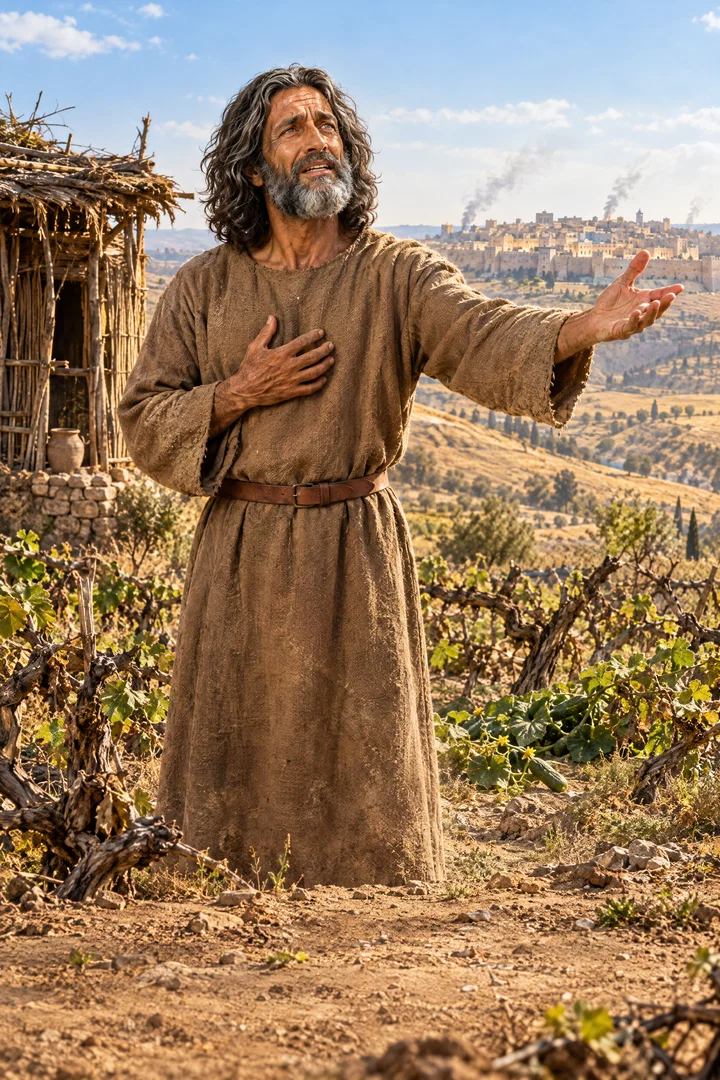
Your country is desolate, your cities are burned with fire: your land, strangers devour it in your presence, and it is desolate, as overthrown by strangers.
Translations
American King James Version, King James Version, Webster Bible
Your country is desolate, your cities are burned with fire: your land, strangers devour it in your presence, and it is desolate, as overthrown by strangers.
Your country is desolate,
Your cities are burnt with fire:
Your land, strangers devour it in your presence,
And it is desolate, as overthrown by strangers.Revised Version, American Standard Version
Your country is desolate; your cities are burned with fire; your land, strangers devour it in your presence, and it is desolate, as overthrown by strangers.
Your land [is] a desolation, your cities burnt with fire, Your ground, before you strangers are consuming it, And a desolation as overthrown by strangers!
Your country is desolate; your cities are burned with fire; your land, strangers eat it up in your presence, and it is desolate, as overthrown by strangers.
Your country—is a desolation, Your cities—are consumed with fire,—Your soil—right before your eyes, foreigners are devouring it, And it is a desolation a very overthrow by foreigners;
Berean Standard Bible, Majority Standard Bible
Your land is desolate;
your cities are burned with fire.
Foreigners devour your fields before you—
a desolation demolished by strangers.Your country is desolate.
Your cities are burned with fire.
Strangers devour your land in your presence
and it is desolate,
as overthrown by strangers.Your country has become waste; your towns are burned with fire; as for your land, it is overturned before your eyes, made waste and overcome by men from strange lands.
Your land is waste: your cities are burnt with fire: strangers deuoure your lande in your presence, and it is desolate like the ouerthrowe of strangers.
Douay-Rheims (Challoner revision)
Your land is desolate, your cities are burnt with fire: your country strangers devour before your face, and it shall be desolate as when wasted by enemies.
Pictures
Cross-references
- Matthew 23:38
Behold, your house is left unto you desolate.
Jesus says the temple is left desolate as judgment.
Commentary
Each commentary is drawn from primary sources: the writings of Ellen G. White and Adventist pioneers and periodicals. Each commentary is separate. Its own words are not a quotation; follow the references to read the source passages.
Ellen G. White
5 sources
The verse portrays utter physical ruin, with the country lying desolate, the cities consumed by fire, and the land devoured by strangers directly before the eyes of its owners until it stands waste as though overturned by foreigners.Ms 127, 1899, par. 32–37Ms 29, 1911, par. 4–5Ms 108, 1905, par. 1–7STB 351.1–352.1MWISDAP 8.3–9.1 This devastation fell upon Judah and Israel as chastisement for rebellion and iniquity, exposing the condition of a people once favored by God.Ms 127, 1899, par. 32–37Ms 108, 1905, par. 1–7MWISDAP 8.3–9.1 Though professing to serve Him, they walked in forbidden paths, and the wasted country and burned cities marked the outcome of that course.Ms 127, 1899, par. 32–37Ms 29, 1911, par. 4–5Ms 108, 1905, par. 1–7
The burning of the two largest institutions at Battle Creek stands in parallel with this desolation and is to be understood as reproof and judgment from God recalling the verse's warning.Ms 108, 1905, par. 1–7STB 351.1–352.1MWISDAP 8.3–9.1 As the land was laid waste and its cities burned under divine judgment upon a rebellious people, so those two burnings were a divine judgment upon Battle Creek.Ms 108, 1905, par. 1–7STB 351.1–352.1MWISDAP 8.3–9.1 The verse therefore serves as a warning to Battle Creek that to deny God's judgments is to risk persisting in rebellion and meeting its consequences.STB 351.1–352.1
Sources
Pioneers and periodicals
14 sources
The verse pictures a country laid waste, its cities burned with fire and its land devoured by strangers before its owners' eyes until ruin is everywhere like a land overthrown by foreigners, sent as judgment for apostasy, disobedience and corrupt hollow religion.RH Dec 15, 1868ST Sep 22, 1909RH Jan 10, 1871 It opens Isaiah's rebuke of Judah in the days of Uzziah, Jotham, Ahaz and Hezekiah for keeping temple forms while breaking God's moral law and neglecting the poor and needy, so their worship was not acceptable.ST Aug 2, 1899RH Dec 15, 1868ST May 31, 1910RH Jun 29, 1916 It exposes the natural spiritual condition as wholly unsound and corrupted by sin, with sick head and faint heart and unhealed wounds, and rejects sacrifices, new moons and feasts when turned into instruments of selfishness and hypocrisy, with neglect of the Sabbath among the fatal sins bringing condemnation.ST Aug 4, 1898ST Jun 1, 1904ST Apr 22, 1889RH Jul 9, 1901 It names apostate Israel Sodom and likens its overthrow to Sodom and Gomorrah, and its backsliding is a type of apostasy in the last days when irreligion and social iniquity ripen toward catastrophe.ST May 31, 1910ST Sep 22, 1909RH Feb 20, 1855ST Jun 29, 1876RH Jan 10, 1871 Even amid such chastening the Lord pleads with rebels to return, wash, be made clean and learn duty, offering pardon to the worst offenders so that sins though scarlet and crimson shall be white as snow and as wool to the willing and obedient.ST Dec 7, 1904ST Aug 4, 1898ST May 31, 1910
Land Laid Waste
The country lies desolate, its cities burned with fire, its soil devoured by strangers directly before the eyes of its own inhabitants.ST Sep 22, 1909RH Jan 10, 1871 Foreign people consume the land while its people watch, and the ruin is compared to a country overturned and laid waste by invading strangers.ST Sep 22, 1909RH Jan 10, 1871
The words stand in the opening of Isaiah concerning Israel's sins in chapters 1 to 6, addressed to the kingdom of Judah.ST May 31, 1910RH Jun 29, 1916 They describe the condition of God's people in stormy times about 760 B.C., in the days of Uzziah, Jotham, Ahaz, and Hezekiah, kings of Judah.ST May 31, 1910
The desolation came as judgment for apostasy and disobedience, when enemies invaded and strangers robbed, pillaged, and plundered the land in the people's sight until ruin was evident everywhere.RH Dec 15, 1868 That suffering shows how far the nation had fallen through its apostasy, its disobedience to God's moral law bringing national ruin.RH Dec 15, 1868 It is the threatened consequence of evil and corruption, and the retributive result of hollow religious profession, excess, and immorality.RH Jan 10, 1871ST May 8, 1884
Sin Rebuked and Pardon Offered
The verse lays bare the natural spiritual state of humanity as wholly tainted by sin, with hearts hardened like adamant and darkened by a veil, with no soundness from sole of foot to head but only unclosed, unbound and unmollified wounds and bruises and putrefying sores, with sick head and faint heart, like a disease spreading through the whole person that remains and ripens toward death even where outward signs appear less visible.ST Aug 4, 1898ST Jun 1, 1904 In that condition worship is vain, yet the rebellious are still creatures of his hand whom divine love calls to turn, wash, be made clean, learn duty, confess sin, feel need, receive change of heart and be clothed in righteousness.ST Aug 4, 1898 Sins though scarlet and crimson are made white as snow and as wool, and the willing and obedient share the good of the land by wondrous grace offered to a fallen race in which each has part.ST Aug 4, 1898
The verse stands in a reproof of God's professed people for clinging to religious forms and trusting in temple worship while breaking God's moral law and neglecting practical care for the poor and needy, teaching that such formal service does not make them acceptable to God.ST Aug 2, 1899RH Dec 15, 1868 Their disobedience brought national ruin, and the desolation described belongs to that rebuke.ST Aug 2, 1899RH Dec 15, 1868 With it God rejects perverted worship as purposeless and loathsome, including sacrifices, new moons and feasts, for ordinances he himself instituted could no longer be owned as his when turned into instruments of selfishness and hypocrisy.ST Apr 22, 1889 Offerings and worship separated from the spiritual truth they were meant to teach were empty, having no power or value apart from that lesson, because the people no longer served him faithfully.ST Apr 22, 1889RH Jul 9, 1901
The desolate country, burned cities and land devoured by strangers in the sight of its inhabitants is Jehovah's condemnation falling upon Israel for its fatal sins, among which those who held this teaching counted neglect of the Sabbath. The passage calls apostate Israel Sodom, showing God's people had become corrupt and unfaithful like a condemned city, and sets the country's fate alongside the overthrow of Sodom and Gomorrah as the threatened consequence of evil and corruption.RH Feb 20, 1855ST Jun 29, 1876RH Jan 10, 1871
The backsliding portrayed in chapters 1 to 5 is a type of apostasy in the last days, and the picture of desolated land and burned cities applies accurately to modern society when irreligion, hollow profession, excess, immorality and social iniquity ripen toward catastrophe.ST Sep 22, 1909ST May 8, 1884 It sets forth the last days when times, false prophets and sins will be like those then, so its warning is needed now.ST May 31, 1910ST Sep 22, 1909 The verse belongs to God's plea after repeated chastening for his people to return and find mercy and cleansing, showing the severe consequences of rebellion and the need for repentance, yet even amid judgment pardon is offered to the worst offenders, for the One mighty to save then is mighty to save now.ST Dec 7, 1904ST Aug 4, 1898ST May 31, 1910
Sources