Isaiah 1:8
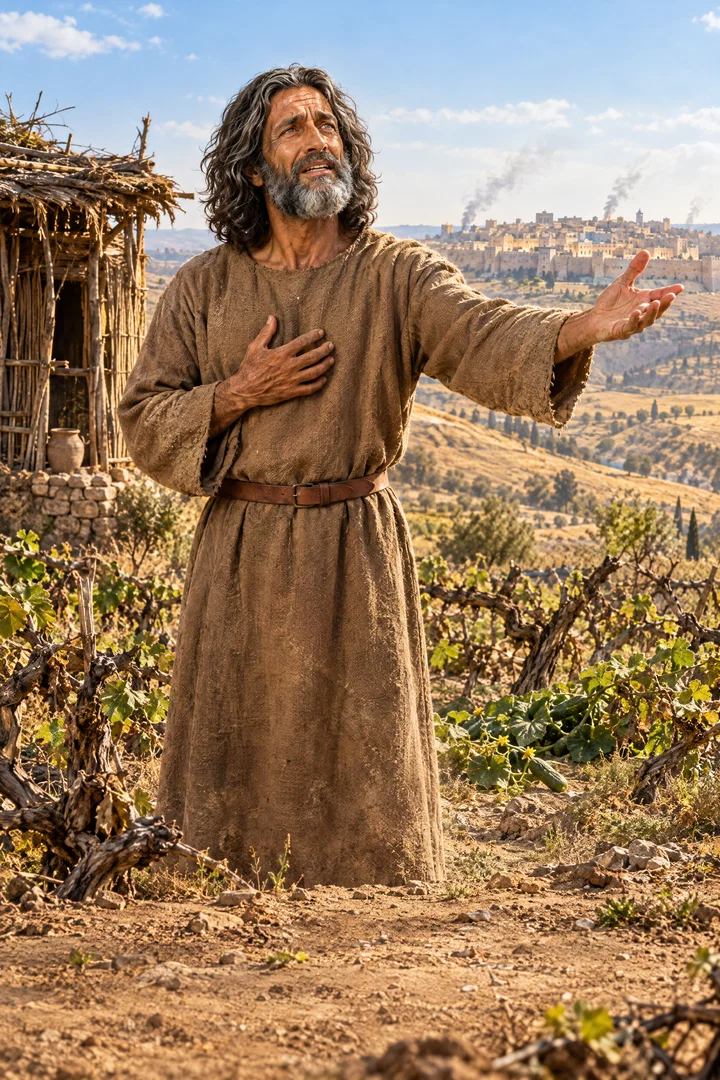
And the daughter of Zion is left as a cottage in a vineyard, as a lodge in a garden of cucumbers, as a besieged city.
Translations
American King James Version, King James Version, Webster Bible
And the daughter of Zion is left as a cottage in a vineyard, as a lodge in a garden of cucumbers, as a besieged city.
And the daughter of Zion is left as a cottage in a vineyard,
As a lodge in a garden of cucumbers,
As a besieged city.Revised Version, American Standard Version
And the daughter of Zion is left as a booth in a vineyard, as a lodge in a garden of cucumbers, as a besieged city.
And left hath been the daughter of Zion, As a booth in a vineyard, As a lodge in a place of cucumbers — as a city besieged.
And the daughter of Zion is left, as a booth in a vineyard, as a night-lodge in a cucumber-garden, as a besieged city.
And left is the Daughter of Zion, Like a hut in a vineyard,—Like a lodge in a gourd-plot Like a city besieged.
Berean Standard Bible, Majority Standard Bible
And the Daughter of Zion is abandoned
like a shelter in a vineyard,
like a shack in a cucumber field,
like a city besieged.The daughter of Zion is left like a shelter in a vineyard,
like a hut in a field of melons,
like a besieged city.And the daughter of Zion has become like a tent in a vine-garden, like a watchman's house in a field of fruit, like a town shut in by armies.
And the daughter of Zion shall remaine like a cotage in a vineyarde, like a lodge in a garden of cucumbers, and like a besieged citie.
Douay-Rheims (Challoner revision)
And the daughter of Sion shall be left as a covert in a vineyard, and as a lodge in a garden of cucumbers, and as a city that is laid waste.
Pictures
Cross-references
- Jeremiah 6:2
I have likened the daughter of Zion to a comely and delicate woman.
Both liken the daughter of Zion to a woman.
- Isaiah 52:2
Shake thyself from the dust; arise, and sit down, O Jerusalem: loose thyself from the bands of thy neck, O captive daughter of Zion.
Both texts use the name daughter of Zion.
- Jeremiah 4:31
For I have heard a voice as of a woman in travail, and the anguish as of her that bringeth forth her first child, the voice of the daughter of Zion, that bewaileth herself, that spreadeth her hands, saying, Woe is me now! for my soul is wearied because of murderers.
Both texts call God’s people the daughter of Zion.
- Micah 4:10
Be in pain, and labour to bring forth, O daughter of Zion, like a woman in travail: for now shalt thou go forth out of the city, and thou shalt dwell in the field, and thou shalt go even to Babylon; there shalt thou be delivered; there the LORD shall redeem thee from the hand of thine enemies.
Both describe Zion’s distress and use the name daughter of Zion.
- Zechariah 2:7
Deliver thyself, O Zion, that dwellest with the daughter of Babylon.
Both texts use the name daughter of Zion.
- Lamentations 1:6
And from the daughter of Zion all her beauty is departed: her princes are become like harts that find no pasture, and they are gone without strength before the pursuer.
Both describe Zion as God’s people.
- Isaiah 62:11
Behold, the LORD hath proclaimed unto the end of the world, Say ye to the daughter of Zion, Behold, thy salvation cometh; behold, his reward is with him, and his work before him.
Both verses refer to the daughter of Zion.
- 2 Kings 19:21
This is the word that the LORD hath spoken concerning him; The virgin the daughter of Zion hath despised thee, and laughed thee to scorn; the daughter of Jerusalem hath shaken her head at thee.
Both texts call God’s people the daughter of Zion.
- Jeremiah 4:11
At that time shall it be said to this people and to Jerusalem, A dry wind of the high places in the wilderness toward the daughter of my people, not to fan, nor to cleanse,
Both call God’s people the daughter of Zion.
- Isaiah 37:22
This is the word which the LORD hath spoken concerning him; The virgin, the daughter of Zion, hath despised thee, and laughed thee to scorn; the daughter of Jerusalem hath shaken her head at thee.
Both texts call God’s people the daughter of Zion.
- Jeremiah 6:23
They shall lay hold on bow and spear; they are cruel, and have no mercy; their voice roareth like the sea; and they ride upon horses, set in array as men for war against thee, O daughter of Zion.
Another prophetic use of the name.
- Jeremiah 8:11
For they have healed the hurt of the daughter of my people slightly, saying, Peace, peace; when there is no peace.
Uses the name for God’s people.
- Ezekiel 16:15
But thou didst trust in thine own beauty, and playedst the harlot because of thy renown, and pouredst out thy fornications on every one that passed by; his it was.
Jerusalem’s unfaithfulness is portrayed as harlotry.
Commentary
Each commentary is drawn from primary sources: the writings of Ellen G. White and Adventist pioneers and periodicals. Each commentary is separate. Its own words are not a quotation; follow the references to read the source passages.
Ellen G. White
2 sources
The daughter of Zion is Judah and Jerusalem, the once-favored people called to hold universal dominion with the scepter given to the seed of David.Ms 127, 1899, par. 32–37 She is left as a cottage in a vineyard, as a lodge in a garden of cucumbers, as a besieged city, a small, isolated, wasted and solitary shelter standing amid ruin.Ms 127, 1899, par. 32–37Ms 29, 1911, par. 4–5 Around her the country lies desolate, the cities are burned, and the land is devoured by strangers.Ms 127, 1899, par. 32–37 The image belongs to utter spiritual desolation, a remnant hut left alone after harvest and a city cut off under siege.Ms 127, 1899, par. 32–37Ms 29, 1911, par. 4–5
This condition belongs to a people who profess to serve God while walking in forbidden paths.Ms 29, 1911, par. 4–5 It comes through rebellion against the Lord, iniquity, forsaking Him, and going backward.Ms 127, 1899, par. 32–37 Profession without obedience leaves them solitary and wasted rather than protected and fruitful.Ms 127, 1899, par. 32–37Ms 29, 1911, par. 4–5
The verse gives the reason for their chastisement and presents them as a people to be utterly destroyed for their iniquities.Ms 127, 1899, par. 32–37 The same condition delineates those Christ drove out of the temple courts.Ms 127, 1899, par. 32–37 In this it shows how the Lord regards those who claim to be righteous while transgressing His holy law.Ms 127, 1899, par. 32–37
Sources
Pioneers and periodicals
13 sources
The verse pictures Zion left desolate and exposed, like a lone booth in a vineyard or cucumber field after harvest and like a city under siege, cut off from help and barely standing.ST Dec 7, 1904ST Sep 22, 1909 The daughter of Zion is God's people, His true church symbolized as a woman, not wholly pure yet not wholly corrupt or apostate like the daughter of Babylon.ST Jul 18, 1911ST Dec 10, 1896ST May 16, 1911ST Oct 8, 1896ST Apr 29, 1903 It belongs to God's rebuke of a wounded and spiritually sick but still His people, with a plea to turn from sin and find pardon and cleansing, for the One mighty to save then is mighty to save now.ST Dec 7, 1904ST Aug 4, 1898ST May 31, 1910 It denounces trust in temple worship, sacrifices, meetings, offerings and prayers when separated from obedience to God's moral law and from practical care for the poor and needy.ST Aug 2, 1899RH Dec 15, 1868RH Jul 9, 1901 Judah's backsliding then is a type of last-day apostasy, for the times, false prophets, and sins then were like those of the last days, so the warnings needed then are needed now.ST Sep 22, 1909ST May 31, 1910
Zion Left Desolate
The daughter of Zion is Judah brought into a desolate and exposed condition, left like a lone shelter standing in a vineyard or in a garden of cucumbers after the harvest, and like a city under siege.ST Dec 7, 1904ST Sep 22, 1909RH Jul 9, 1901 The loneliness of the shelter and the straits of the besieged city show Judah and Jerusalem left desolate and vulnerable amid the destruction of the land.ST Sep 22, 1909RH Jul 9, 1901 The image belongs to the prophet's appeal to a people repeatedly chastened for rebellion, while pardon is still offered even to the worst offenders.ST Dec 7, 1904
The booth in the vineyard, the lodge in the cucumber garden, and the besieged city are bare and barely standing dwellings, isolated and cut off from supplies and from help. As a guard's hut left after its use is past, they picture a spiritual home reduced to a bare, isolated dwelling. In that weakened and abandoned condition, with its separation from sources of help and supply, is seen how little remained of the secure and settled condition of the people.
That condition was the state of God's people in Judah and Jerusalem about 760 B.C., in the stormy times of Uzziah, Jotham, Ahaz, and Hezekiah, kings of Judah.ST Dec 7, 1904ST May 31, 1910 It was the fruit of repeated chastening for rebellion.ST Dec 7, 1904 The same isolation and exposure describes the condition of the church as Judah went into Babylonian captivity, when protection was withdrawn because of the people's wickedness.ST May 16, 1911
Daughter of Zion Identified
The phrase daughter of Zion denotes God's people, the true church, the body of God's people symbolized by a woman.ST Jul 18, 1911ST Dec 10, 1896ST May 16, 1911ST Oct 8, 1896ST Apr 29, 1903 She is also called Jerusalem and the daughter of Jerusalem.ST Dec 10, 1896 The title does not always mean a wholly pure church, but one that is not wholly corrupt or wholly apostate.ST May 16, 1911ST Oct 8, 1896ST Apr 29, 1903 It stands distinct from the wholly apostate church called the daughter of Babylon.ST Apr 29, 1903
In this same chapter the name Sodom is applied to the Jewish church when it has apostatized from God.ST Jun 29, 1876
Rebuke and Last-Day Warning
Isaiah 1:8 stands within God's rebuke of a people repeatedly chastened for rebellion yet still His handiwork, wounded and spiritually unwell and left desolate and exposed like a lone shelter in a vineyard or cucumber garden and like a city under siege.ST Dec 7, 1904ST Aug 4, 1898 The daughter of Zion named there is Judah, called to turn from sin and be cleansed, with pardon held out even to the worst offenders.ST Dec 7, 1904ST Aug 4, 1898 That plea to return and find mercy and cleansing belongs to stormy days about 760 B.C. under Uzziah, Jotham, Ahaz, and Hezekiah, kings of Judah, and the same One mighty to save then is mighty to save now.ST Dec 7, 1904ST May 31, 1910
The chapter denounces reliance on temple worship while disobeying God's moral law, showing that religious observance without obedience is not enough.RH Dec 15, 1868RH Jul 9, 1901 Sacrifices, meetings, offerings, and prayers are unacceptable when separated from obedience and from the spiritual truth they were meant to teach, leaving Israel isolated and exposed like a shelter in a harvested vineyard or cucumber garden, or a besieged city.ST Aug 2, 1899RH Jul 9, 1901 That failure included living selfishly while neglecting practical care for the poor and needy, though professing to observe religious ceremonies.ST Aug 2, 1899
Judah's backsliding pictured as Zion left isolated and vulnerable like a lone shelter after harvest or a city under siege is a type of last-day apostasy and sets forth the last days.ST Sep 22, 1909ST May 31, 1910 The times then were like the times of the last days, the false prophets then like the false prophets of the last days, and the sins then similar to the sins of the last times, so the warnings needed then are warnings needed now.ST May 31, 1910 The temporary booth or hut also shows how easily a person without a firm foundation can be swept away, as with a religion held by family custom rather than grounded in God's word and understood belief.
Sources