Isaiah 44:16
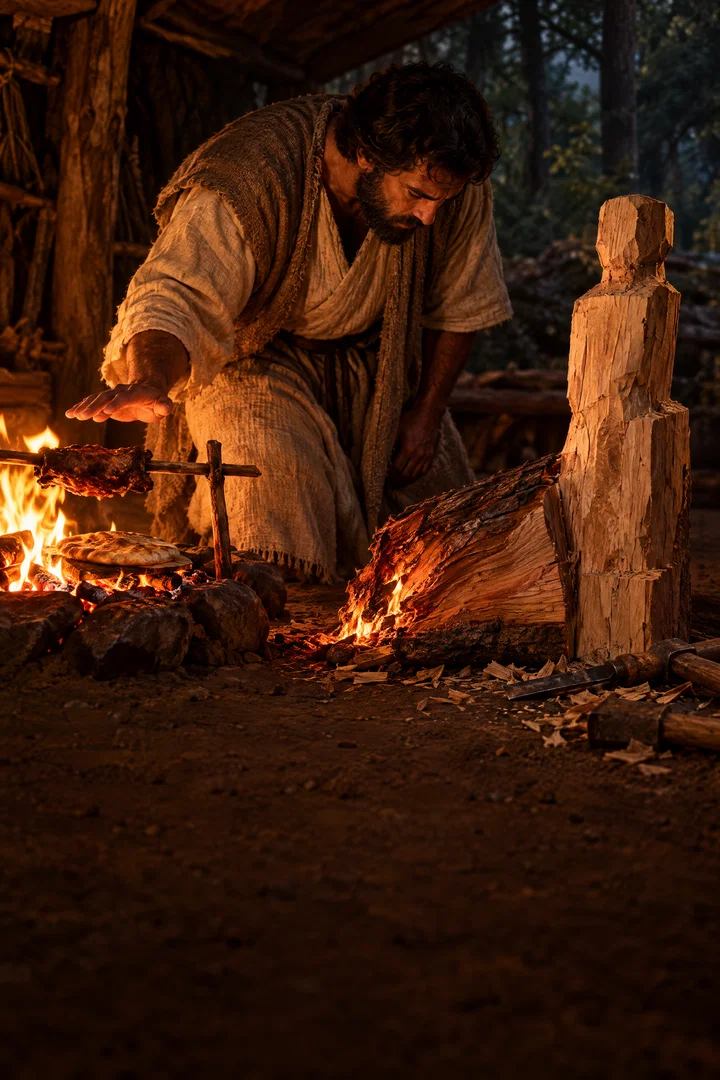
He burneth part thereof in the fire; with part thereof he eateth flesh; he roasteth roast, and is satisfied: yea, he warmeth himself, and saith, Aha, I am warm, I have seen the fire:
Translations
He burns part thereof in the fire; with part thereof he eats flesh; he roasts roast, and is satisfied: yes, he warms himself, and says, Aha, I am warm, I have seen the fire:
King James Version, Revised Version
He burneth part thereof in the fire; with part thereof he eateth flesh; he roasteth roast, and is satisfied: yea, he warmeth himself, and saith, Aha, I am warm, I have seen the fire:
He burneth part thereof in the fire;
With part thereof he eateth flesh;
He roasteth roast, and is satisfied:
Yea, he warmeth himself, and saith, Aha,
I am warm, I have seen the fire:He burneth part of it in the fire; with part of it he eateth flesh; he roasteth meat, and is satisfied: yes, he warmeth himself, and saith, Aha, I am warm, I have seen the fire:
He burneth part thereof in the fire; with part thereof he eateth flesh; he roasteth roast, and is satisfied; yea, he warmeth himself, and saith, Aha, I am warm, I have seen the fire.
Half of it he hath burnt in the fire, By [this] half of it he eateth flesh, He roasteth a roasting, and is satisfied, Yea, he is warm, and saith: 'Aha, I have become warm, I have enjoyed the light.
He burneth part thereof in the fire; with part thereof he eateth flesh, he roasteth roast, and is satisfied; yea, he is warm, and saith, Aha, I am become warm, I have seen the fire.
The half thereof, hath he burned in the fire, Over half thereof, he eateth flesh, He roasteth roast, that he may be satisfied,—Also he warmeth himself, and saith, Aha, I am warm, I have seen a blaze;
Berean Standard Bible, Majority Standard Bible
He burns half of it in the fire,
and he roasts meat on that half.
He eats the roast and is satisfied.
Indeed, he warms himself and says,
“ Ah! I am warm; I see the fire.”He burns part of it in the fire.
With part of it, he eats meat.
He roasts a roast and is satisfied.
Yes, he warms himself
and says, “ Aha! I am warm. I have seen the fire.”With part of it he makes a fire, and on the fire he gets meat cooked and takes a full meal: he makes himself warm, and says, Aha! I am warm, I have seen the fire:
He burneth the halfe thereof euen in the fire, and vpon the halfe thereof he eateth flesh: he rosteth the roste and is satisfied: also he warmeth himselfe and sayth, Aha, I am warme, I haue bene at the fire.
Douay-Rheims (Challoner revision)
Part of it he burnt with fire, and with part of it he dressed his meat: he boiled pottage, and was filled, and was warmed, and said: Aha, I am warm, I have seen the fire.
Pictures
Cross-references
- Isaiah 44:20
He feedeth on ashes: a deceived heart hath turned him aside, that he cannot deliver his soul, nor say, Is there not a lie in my right hand?
Describes feeding on ashes in the idol-maker’s folly.
- Jeremiah 16:20
Shall a man make gods unto himself, and they are no gods?
Both say man-made gods are no gods.
- Isaiah 44:9
They that make a graven image are all of them vanity; and their delectable things shall not profit; and they are their own witnesses; they see not, nor know; that they may be ashamed.
both expose makers of images as vain
- Psalms 115:4-8
Their idols are silver and gold, the work of men’s hands.
Both describe the uselessness of idols made by human hands.
Commentary
Each commentary is drawn from primary sources: the writings of Ellen G. White and Adventist pioneers and periodicals. Each commentary is separate. Its own words are not a quotation; follow the references to read the source passages.
Ellen G. White
3 sources
Isaiah 44:16 stands within a larger disclosure in which God makes known His purpose for His people by reproving those who fashion idols out of created things and then worship the work of their own hands.Ms 73, 1907, par. 8–9STE 63.3SG3 62.1 It pictures a man taking one piece of wood and burning part of it in the fire, using that fire to cook flesh for eating and to roast food until he is satisfied, and warming himself with it while exulting in its heat.Ms 73, 1907, par. 8–9STE 63.3SG3 62.1 That ordinary use of the very same material exposes the folly of treating as divine an object shaped by human hands when it serves such common purposes.STE 63.3SG3 62.1 Such idols are powerless things, set in direct contrast to the true God as the Maker of heaven and earth.STE 63.3 Coming to know God through His works enables a person to discern this difference between the Creator and the manufactured god, and that knowledge prepares the mind to grasp the spiritual truths of Scripture.STE 63.3 The description of burning wood for food and warmth belongs to this rebuke of idolatry, and it is not a direction to turn away from God in order to seek wisdom from finite things.Ms 73, 1907, par. 8–9
Sources
Pioneers and periodicals
24 sources
The verse describes a man who takes one tree and burns part of its wood in the fire to cook flesh and eat roast until he is satisfied and to warm himself, while he fashions what is left into an object of worship.RH Jul 6, 1916ST Aug 29, 1911ST Apr 22, 1889 That wood comes from a tree that was planted and nourished by rain, which he cuts down and shapes with tools and skill.ST Dec 29, 1887ST Feb 10, 1904RH Oct 22, 1903 With scathing irony the verse lays bare the folly, blindness, and vanity of idolatry in contrast with the power and wisdom of God.RH Jul 6, 1916ST Aug 29, 1911ST Apr 22, 1889 For the idol is only ordinary material of wood and stone made by human hands into human form, with no will or spirit in itself, so it cannot hear prayer, heal sickness, help, save, or deliver its worshiper.ST Apr 22, 1889ST Feb 10, 1904ST Aug 20, 1894RH May 4, 1905ST Jan 13, 1887 The rain that made the tree grow and the other gifts of God should have led the maker to recognize and worship the Power who gave them, so that failing to use the reason available in nature leaves him without excuse.ST Dec 29, 1887
Wood for Fire and Worship
The same tree or wood serves both common use and worship, for a man burns part of it in the fire, cooks flesh with part of it and eats roast until satisfied, and warms himself by it, while he fashions what remains into an object of worship as a god.RH Jul 6, 1916ST Aug 29, 1911ST Apr 22, 1889RH May 6, 1909ST Dec 29, 1887 The one part becomes fuel for cooking food and baking bread and for warmth, and the other part is treated as a god to be worshiped, which lays bare the foolishness, blindness, and absurdity of trusting a graven image made from ordinary material.ST Aug 29, 1911ST Apr 22, 1889RH May 6, 1909ST Dec 29, 1887ST Jun 25, 1912 The contrast exposes the folly and weakness of idolatry set against the power and wisdom of God.RH Jul 6, 1916ST Aug 29, 1911ST Jun 25, 1912
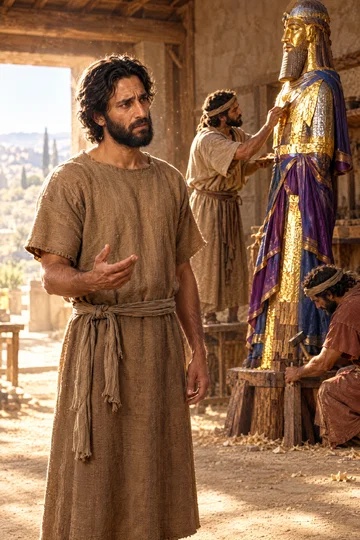
The wood comes from a tree that was planted and grown and nourished by rain, which the man cuts down for timber.ST Dec 29, 1887ST Feb 10, 1904RH Oct 22, 1903 He then shapes the timber with implements and skill to express his idea of God, and the work is finished by the goldsmith overlaying it with gold.ST Feb 10, 1904RH Oct 22, 1903 In doing this he worships as superior to himself a thing he himself has made.ST Feb 10, 1904RH Oct 22, 1903
The use of the tree also extends to burning the remaining wood and leaves and then using the ashes in medicine or carrying them and sometimes eating them as charms, which is the feeding on ashes described by Isaiah.ST Jun 27, 1911 This belongs to the open, gross, manifest heathenism that marked opposition to God before He was revealed in the flesh in His Son as the Son of man on earth.RH Oct 22, 1903 Forgetting that the same tree warmed him and baked his food, the maker worships not the material wood itself but his own conception of God set forth in the work of his hands.RH Oct 22, 1903
Idols Exposed as Powerless
With scathing irony the verse exposes the folly, absurdity, blindness, weakness and vanity of idolatry in contrast with God's power and wisdom.RH Jul 6, 1916ST Aug 29, 1911ST Apr 22, 1889ST Dec 29, 1887ST Jun 25, 1912 It shows a man burning some of the wood for warmth and cooking and then treating a wooden image made from the remainder as a god, which lays bare the folly of worshiping something made from the same material used for ordinary purposes.RH Jul 6, 1916ST Aug 29, 1911RH May 6, 1909 The same wood the idol-maker burns for cooking and warmth is fashioned into an object of worship, exposing the absurdity of honoring ordinary material as divine.ST Aug 29, 1911ST Dec 29, 1887ST Feb 10, 1904RH May 4, 1905RH Apr 23, 1901 A person uses one part of the wood for fuel to cook food and warm himself, yet treats another part as a god, which reveals blindness because the image is only material with no power of will.ST Apr 22, 1889RH May 6, 1909ST Dec 29, 1887
Replacing the true God with a false god puts a lie in place of the truth and is an abomination.RH May 6, 1909RH Jun 15, 1911 People make false gods and put them in the place of the one God despite the simplicity and unity of His purpose.RH May 6, 1909RH Jun 15, 1911 The Bible in this passage reveals the true God and exposes false gods and the vanity of other gods and of those who trust in them.ST Jul 22, 1875RH Mar 30, 1869 It exposes the folly of idol worship and of trusting powerless idols made from things used for ordinary purposes.RH May 6, 1909ST Jul 22, 1875RH Mar 30, 1869
An idol is only ordinary material used for common purposes, burned in the fire and used to cook food and to warm and to bake bread, whether wood or brick and stone.ST Feb 10, 1904RH May 4, 1905HM Jun 1889RH Apr 23, 1901ST Aug 6, 1894 It is a bundle of sticks, mud and stones or wood, brick and stone fashioned into human form, sometimes carved into a frightful image, with no more power to help as an image than as a tree out in the woods.ST Aug 20, 1894HM Jun 1889ST Aug 6, 1894 An object made and used by human hands cannot truly be God.ST Feb 10, 1904RH May 4, 1905RH Apr 23, 1901ST Aug 6, 1894 The man worships as a god superior to himself a thing he himself has made, falling down before another part of the same planted and grown tree he cut for common fuel.ST Feb 10, 1904ST Aug 20, 1894
The image has no power of will and no spirit or power in itself.ST Apr 22, 1889RH Apr 23, 1901ST Aug 6, 1894 It cannot hear prayer, know about pain, or cure sickness, so asking the wood to heal a cut hand or other ills is believing wrong.HM Jun 1889RH Apr 23, 1901ST Aug 6, 1894 It cannot help or save anyone, nor deliver him who trusts in what human hands have made.ST Jan 13, 1887HM Jun 1889RH Apr 23, 1901 It cannot grant remission of sins, though worshipers honor it as able to do so and lay before it cloth, money, fruit, flowers and the blood of slain goats, trusting the merit of blood spilt before it to take away sin.ST Aug 20, 1894ST Aug 6, 1894 Right faith is not only really believing something but believing the right way that the Bible teaches.HM Jun 1889
Turning Idolaters to Truth
The rain that fed the tree, with all the other gifts bestowed on the idol-maker, ought to turn his mind to acknowledge and worship the Power that sends the rain.ST Dec 29, 1887 The light of reason and understanding to be gained from nature is already at hand, so neglect to use it leaves the worshiper without excuse.ST Dec 29, 1887
The same folly is seen wherever people bow to wood and stone in place of the Creator, whether they kneel before religious images representing Buddha, a saint, or even Jesus.RH Nov 3, 1910 It is seen in the Hindu gods enshrined in the temple and honored instead of the Maker.RH Mar 7, 1907 It is seen in Ceylon, where men bow down to wood and stone though surrounded by divine gifts and though the same timber serves common needs like cooking and warming. It is seen at the Tokyo temple, where worshipers bow before images of wood and stone with prayers and money.RH Jul 22, 1915 It is seen where cloth, money, fruit, flowers, and the blood of slain goats are laid before an idol fashioned from sticks, mud, and stones into human form, trusted to grant remission of sins through the merit of blood shed before it.ST Aug 20, 1894 It is seen where the temple idol is nothing more than a block of wood cut from a tree that was supposed to have become sacred, having no spirit or power in itself though the same wood might warm or feed.ST Nov 7, 1892
Once it is known that the idol is only lifeless material that can neither hear nor help, faith in idols is broken.ST Aug 6, 1894 That knowledge led one worshiper to refuse to bow at the pagoda even before embracing Christianity.ST Aug 6, 1894 It likewise upholds a little girl's refusal to believe that trees, wood, or stone can save her, since the same wood that is burned for cooking and warmth is then carved and treated as a god.ST Jun 17, 1886 The blindness that bows to wood and stone cannot be fully realized without being seen face to face.RH Jul 8, 1902 Seeing it stirs a willingness to make any sacrifice to tell idolaters of Jesus and His love.RH Jul 8, 1902 Priests who know better yet uphold the delusion for gain will receive their portion in the judgment day.ST Aug 20, 1894
To ask the wood to heal is to believe wrongly, for the carved image has no more power to hear prayer, to know pain, or to cure sickness than the tree standing in the woods.HM Jun 1889 Right faith is not merely believing something sincerely, but believing in the right way as the Bible teaches.HM Jun 1889
Sources