Isaiah 7:15
Butter and honey shall he eat, that he may know to refuse the evil, and choose the good.
Translations
American King James Version, King James Version, Webster Bible
Butter and honey shall he eat, that he may know to refuse the evil, and choose the good.
Butter and honey shall he eat,
That he may know to refuse the evil, and choose the good.Revised Version, American Standard Version
Butter and honey shall he eat, when he knoweth to refuse the evil, and choose the good.
Butter and honey he doth eat, When he knoweth to refuse evil, and to fix on good.
Butter and honey shall he eat, that he may know to refuse the evil, and to choose the good.
Curds and honey, shall he eat, by the time that he knoweth to refuse the bad and choose the good;
Berean Standard Bible, Majority Standard Bible
By the time He knows enough to reject evil and choose good, He will be eating curds and honey.
He shall eat butter and honey when he knows to refuse the evil and choose the good.
Butter and honey will be his food, when he is old enough to make a decision between evil and good.
Butter and hony shall he eate, till he haue knowledge to refuse the euill, and to chuse the good.
Douay-Rheims (Challoner revision)
He shall eat butter and honey, that he may know to refuse the evil, and to choose the good.
Pictures
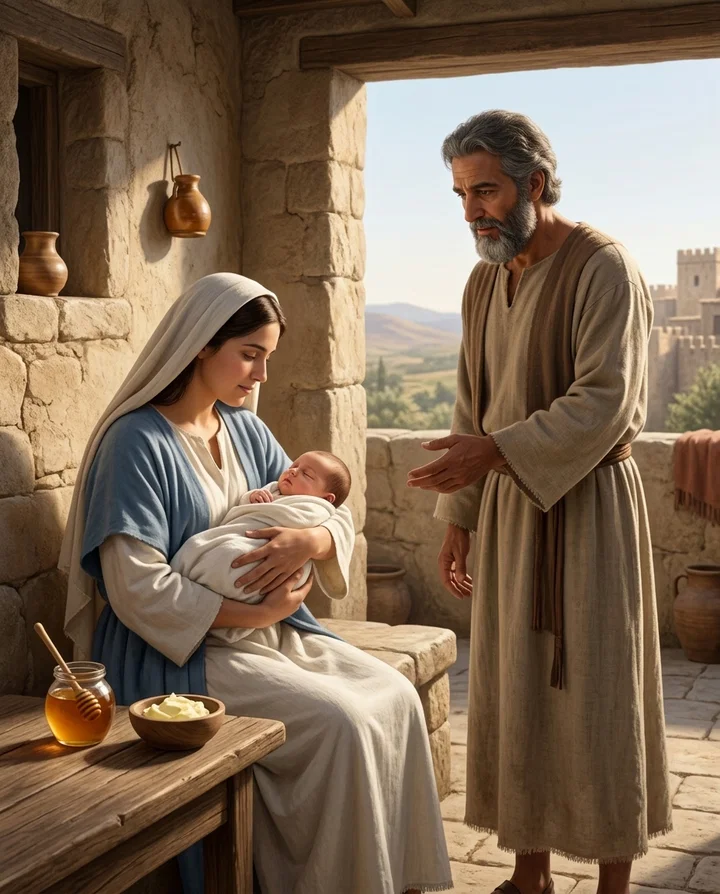
Cross-references
- Romans 12:9
Let love be without dissimulation. Abhor that which is evil; cleave to that which is good.
Urges rejection of evil and commitment to good.
- 2 Kings 16:1-8
In the seventeenth year of Pekah the son of Remaliah Ahaz the son of Jotham king of Judah began to reign.
Shows the conditions during Ahaz’s reign.
- Hebrews 5:14
But strong meat belongeth to them that are of full age, even those who by reason of use have their senses exercised to discern both good and evil.
Connects maturity with distinguishing good from evil.
- Isaiah 11:2-5
And the spirit of the LORD shall rest upon him, the spirit of wisdom and understanding, the spirit of counsel and might, the spirit of knowledge and of the fear of the LORD;
Describes the Spirit-filled ruler who judges righteously.
- Matthew 4:3-4
And when the tempter came to him, he said, If thou be the Son of God, command that these stones be made bread.
Christ triumphs over the test of appetite where the first parents failed.
Commentary
Each commentary is drawn from primary sources: the writings of Ellen G. White and Adventist pioneers and periodicals. Each commentary is separate. Its own words are not a quotation; follow the references to read the source passages.
Ellen G. White
15 sources
The verse points to the promised son Immanuel as the one who would eat butter and honey while learning to turn from evil and choose good, the promised Seed through whom deliverance would come to Zion.PK 695.1–3 The ability to tell right from wrong and to reject the wrong and choose the right comes only to each person who depends on God individually, learns from Him through His word, and uses the reasoning powers He gave, and He gives wisdom for that choice to those who rely on Him.ED 231.1 Refusing evil and choosing good is a deliberate, personal decision no one can make for another, to seek the Lord, repent, give oneself wholly to God, and depart from all iniquity rather than continue in disobedience.2T 396.4–397.1Lt 236, 1903, par. 21–22Ms 13, 1897, par. 10 It is the mark of a people turned back to God, and as the church humbly seeks Him, stands on eternal truth, and lays hold by faith on what is prepared for it, it will be healed, freed from earthly entanglements, and restored to simplicity and purity.Ms 32, 1903, par. 11 Children are to be taught this lesson from infancy, to separate evil from their lives and remain pure and spotless amid corruption, and those lessons will stay with them.Ms 6, 1905, par. 10–11Ms 177, 1897, par. 115–118
Immanuel and Moral Discernment
The promised son Immanuel eats butter and honey and knows to refuse evil and choose good.PK 695.1–3 He is the promised Seed through whom deliverance would be brought to Zion.PK 695.1–3
The power to tell right from wrong and to reject the wrong and choose the right belongs to each person individually and to no one by proxy.ED 231.1 It belongs only to the one who depends on God personally, learns from God through His word, and uses the reasoning powers God gave to be exercised.ED 231.1 To those who so rely on Him, God gives wisdom for making that choice.ED 231.1
The principle of refusing evil and choosing good requires clear spiritual discernment.17MR 238.4 Such discernment rejects teachings that confuse the understanding and holds to what is good.17MR 238.4 Those governed by self-indulgence and earthly desires and worldly tastes lack the moral willingness to reject evil and choose good.5T 402.2–403.1CEv 51.2–52.1 Their conduct shows they are following their own desires rather than choosing what is good.5T 402.2–403.1CEv 51.2–52.1
Choosing good and refusing evil is a work of the mind.Ms 177, 1897, par. 96 Thoughts kept upon God enrich and ennoble the mind, while unholy thoughts degrade it and lead on to impure actions.Ms 177, 1897, par. 96 A person's choices also set an example that others may follow.Ms 177, 1897, par. 96 Since the life lived determines eternal destiny, God's Word must be heeded.Ms 177, 1897, par. 96
Repentance and Church Restoration
Isaiah 7 is to be read together with the warnings against perpetual backsliding and false peace and with the call to amend ways and doings and to hearken diligently so the soul may live.Lt 43, 1898, par. 8–12 To refuse evil and choose good is a deliberate decision to seek the Lord, to repent, and to give oneself wholly to God rather than to continue in disobedience.Lt 236, 1903, par. 21–22 That choice stands against the disobedience of Adam and Eve, which cost them their Eden home, for choosing disobedience likewise forfeits a place in Eden restored.Lt 236, 1903, par. 21–22
Refusing evil and choosing good is the mark of a people turned back to God.Ms 32, 1903, par. 11 For the church this choice follows repentance and conversion from backsliding.Ms 32, 1903, par. 11 As the church seeks God humbly, stands upon eternal truth, and lays hold by faith on what is prepared for it, it will be healed, freed from earthly entanglements, and restored to simplicity and purity.Ms 32, 1903, par. 11
Everyone who names the name of Christ is required to depart from all iniquity by learning to refuse what is evil and choose what is good.2T 396.4–397.1 The prosperity of the church depends on this, and backsliding must be put away before prosperity can come.2T 396.4–397.1 Learning this requires watching and praying without ceasing, because a snare is set in the path and Satan will bring some device when and where it is least expected.2T 396.4–397.1 Anyone not watching unto prayer at that time will be taken by the enemy and suffer decided loss.2T 396.4–397.1
Personal Choice and Instruction
Every person is given the opportunity to choose the good and refuse the evil, and that choice is strictly personal, for no one can make it for another.Ms 13, 1897, par. 10 It must be weighed seriously and followed by decided action, a definite break from merely going on as before.Ms 13, 1897, par. 10 Simply remaining where good influence is present brings no advantage without that change, and while a person may choose to stay on a low level, the matter is urgent because his individual case is pending in the courts of heaven and he himself will soon make the final decision.Ms 13, 1897, par. 10 Refusing evil and choosing good is the aim of those of settled and substantial mind, who set their standard high and make decided efforts in faith through the grace freely given to all who truly seek it.Lt 132, 1896, par. 12–14 They hold fast to correct principles regardless of the practice or example around them, employing all powers of brain, bone, and muscle — every physical power and mental faculty — in the service of the Lord.Lt 132, 1896, par. 12–14
Choosing good and refusing evil is essential because corrupting influences can damage the thoughts and defile the soul.Ms 119, 1902, par. 7–11 For this reason young people are to be placed in quiet settings surrounded by nature, away from city temptations and harmful speech.Ms 119, 1902, par. 7–11 Children are to learn to refuse evil and choose good, and like the water lily drawing nourishment up through weeds and rubbish while remaining pure, they are to separate evil from their lives so that their characters may be pure and spotless.Ms 6, 1905, par. 10–11 Such lessons will remain with them.Ms 6, 1905, par. 10–11 Rejecting evil and choosing good is a lesson to be taught from infancy, with parents teaching it through patient continuance in well doing and by helping their children to know God, through whom, in Christ, people are brought into fellowship with the Father.Ms 177, 1897, par. 115–118
Sources
Pioneers and periodicals
13 sources
The child foretold would grow up as a man among men eating butter and honey while learning to refuse what is evil and choose what is good.RH Apr 2, 1914ST Mar 2, 1915RH Oct 17, 1912 His eating of wholesome food in moderation and in proper amounts trained his power to discern, resist temptation, and keep mind and body strong and clear.RH Apr 2, 1914RH Oct 17, 1912 To know evil and good and prefer the good is more than innocence that has never known evil, and the power to choose between them makes every person morally responsible to God.RH Aug 19, 1858ST Apr 16, 1885 That power is learned early through self-control of appetite and through doing the Father's will, which is the richest nourishment of life, and children can be taught obedience and right from wrong before they become personally accountable so they will choose the good when responsibility comes.RH Apr 2, 1914RH Apr 2, 1914ST Apr 16, 1885
Historical Setting and Prophecy
The prophecy was spoken during the reign of King Ahaz, when God's people were in a condition of sin and darkness, yet even then it held rays of hope for the future.ST Dec 14, 1904 Its chapter belongs to the account of Ahaz's stubbornness and to the prophecy of the coming Deliverer, the Child called Wonderful, Counselor, Mighty God, Everlasting Father, and Prince of Peace.ST Jun 4, 1912 The verse stands among Isaiah's prophecies that connect the prospect of deliverance from Babylonian exile with deliverance from sin and error through the Messiah.RH Jul 6, 1916 It shows that the Messiah was to first appear as a man among men to die for the sins of the world.ST Mar 2, 1915
It foretells the childhood diet of Jesus of butter and honey as part of his training to refuse evil and choose good.RH Apr 2, 1914RH Oct 17, 1912 Butter and honey illustrate wholesome food, and eating good food in moderation and in proper amounts trained him in self-control, developing spiritual discernment, strength, health, and a clear mind.RH Apr 2, 1914RH Oct 17, 1912 Mastery of appetite is thus linked with moral judgment and resistance to temptation, and his victory over appetite began before the wilderness temptation.RH Apr 2, 1914 His example shows that children can be taught self-control from an early age, and that controlling appetite helps preserve health and a clear mind.RH Apr 2, 1914RH Oct 17, 1912
Moral Meaning of Choice
Mere innocence does not know evil, while knowing the difference between evil and good and deliberately choosing the good belongs to Christian saintliness, which knows both and prefers the good.RH Aug 19, 1858 The capacity to refuse evil and choose good is learned as children grow, before they reach the age of accountability when they become personally responsible to God.ST Apr 16, 1885 During that time parents stand in God's place to teach obedience and right from wrong, and faithful instruction in truth and right prepares children to choose good once they bear responsibility for their own choices.ST Apr 16, 1885
The power to refuse evil and choose good makes human beings morally responsible for their conduct, opening two paths of either obeying God and developing or following selfishness and bringing misery upon themselves. Refusing evil and choosing good comes through spiritual discernment, and the church must turn from backsliding and worldliness, repent, seek God humbly, and choose good before it can be healed and made ready to receive the fullness of the Holy Spirit.RH Jul 1, 1915 That freedom to choose good and refuse evil is served by a form of government in which true and false religion have a free field and no favors, so that every soul is left free to choose.ST Oct 8, 1896
Appetite, Health, and Training
Butter and honey illustrate wholesome food, and the childhood diet they describe was part of a training to refuse evil and choose good.RH Apr 2, 1914RH Oct 17, 1912 Eating good food in moderation and in proper amounts developed spiritual discernment and strength, preserving health and a clear mind.RH Apr 2, 1914RH Oct 17, 1912 Mastery of appetite is thus linked with moral judgment and resistance to temptation, and victory over appetite began long before the wilderness temptation.RH Apr 2, 1914
Refusing evil and choosing good is learned through what sustains and nourishes life.RH Apr 2, 1914 Doing the Father's will and finishing the work He gives is the richest and sweetest thing on earth, and this alone teaches a person to refuse evil and choose good.RH Apr 2, 1914 Choosing good over evil can be learned in bodily life as well as in moral and religious life.RH Mar 5, 1872RH Mar 5, 1872 Even tastes that have been spoiled can be trained to prefer wholesome food and healthful habits, and health reform supports a clear mind able to appreciate truth.RH Mar 5, 1872RH Mar 5, 1872
Refusing what harms the body and present life is a step toward forsaking sin and repentance.RH Mar 5, 1872 The example shows that children can be taught self-control from an early age.RH Apr 2, 1914ST Apr 16, 1885 Before they reach the age of accountability and become personally responsible to God, parents stand in God's place in teaching them obedience and right from wrong.ST Apr 16, 1885 Faithful instruction in truth and right prepares children to choose good when they become responsible for their own choices.ST Apr 16, 1885
Sources