Isaiah 8:2
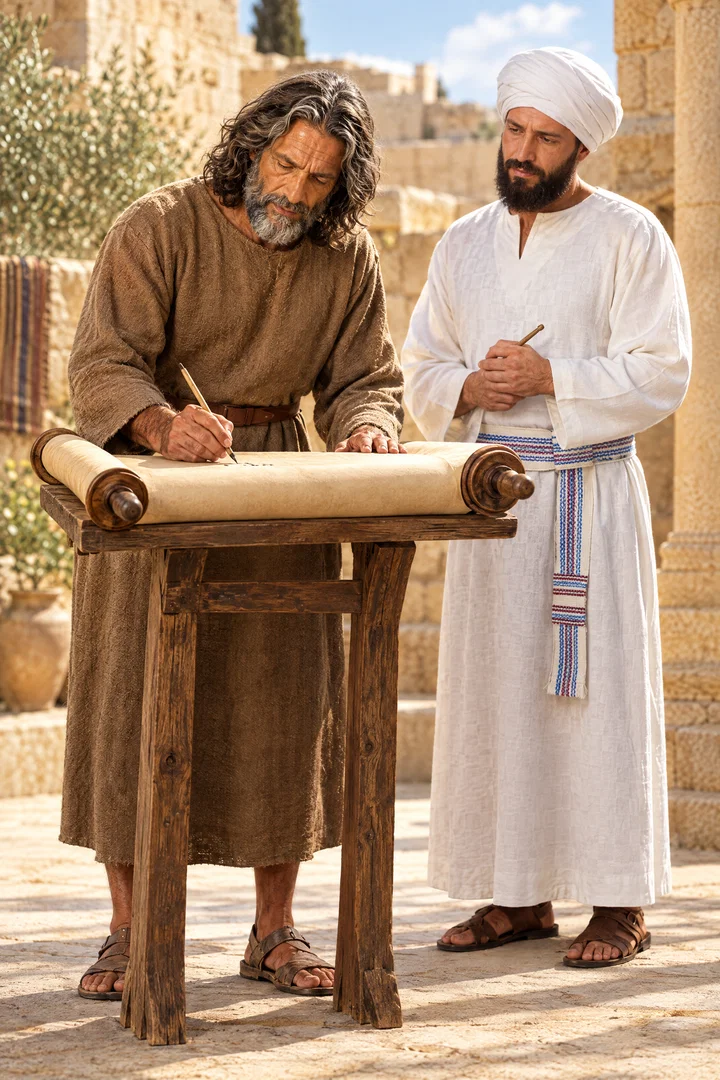
And I took unto me faithful witnesses to record, Uriah the priest, and Zechariah the son of Jeberechiah.
Translations
American King James Version, Webster Bible
And I took to me faithful witnesses to record, Uriah the priest, and Zechariah the son of Jeberechiah.
King James Version, KJV Cambridge Paragraph Bible
And I took unto me faithful witnesses to record, Uriah the priest, and Zechariah the son of Jeberechiah.
Revised Version, American Standard Version
and I will take unto me faithful witnesses to record, Uriah the priest, and Zechariah the son of Jeberechiah.
And I cause faithful witnesses to testify to me, Uriah the priest, and Zechariah son of Jeberechiah.
And I took unto me to witness, sure witnesses, Urijah the priest, and Zechariah the son of Jeberechiah.
That I may take in attestation, faithful witnesses,—even Uriah the priest, and Zechariah son of Jeberechiah.
Berean Standard Bible, Majority Standard Bible
And I will appoint for Myself trustworthy witnesses—Uriah the priest and Zechariah son of Jeberekiah.”
and I will take for myself faithful witnesses to testify: Uriah the priest, and Zechariah the son of Jeberechiah.”
And take true witnesses to the writing, Uriah the priest, and Zechariah, the son of Jeberechiah.
Then I tooke vnto me faithfull witnesses to recorde, Vriah the Priest, and Zechariah the sonne of Ieberechiah.
Douay-Rheims (Challoner revision)
And I took unto me faithful witnesses, Urias the priest, and Zacharias the son of Barachias.
Pictures
Cross-references
- 2 Chronicles 26:5
And he sought God in the days of Zechariah, who had understanding in the visions of God: and as long as he sought the LORD, God made him to prosper.
Both texts name Zechariah, associated with understanding visions of God.
Commentary
Each commentary is drawn from primary sources: the writings of Ellen G. White and Adventist pioneers and periodicals. Each commentary is separate. Its own words are not a quotation; follow the references to read the source passages.
Pioneers and periodicals
8 sources
Isaiah took Uriah the priest and Zechariah the son of Jeberechiah as faithful witnesses to attest the prophetic message.RH Jul 6, 1916 The taking of witnesses belonged to the time of King Ahaz, a time of sin and moral and physical darkness when God's people were on the verge of destruction.ST Dec 14, 1904 Even in that dark condition there were rays of light and hope for the future.ST Dec 14, 1904
The appointment of the witnesses belonged to a prediction of the ruin of Damascus and Samaria by the king of Assyria.ST Jan 18, 1899 That ruin was expected within about three years, before the child could say My father or My mother.ST Jan 18, 1899 It stands in the account of the naming of Maher-shalal-hash-baz, a Bible name of the kind Puritans gave to their children when rejecting heathen names.ST Aug 17, 1876
The Zechariah son of Jeberechiah named as witness was a faithful witness in Isaiah's day, earlier than Zechariah the prophet of the restoration contemporary with Haggai in 520 and 518 B.C.ST Sep 16, 1913 That earlier Zechariah wrote Zechariah 9 to 14, which have a different historical setting and a different style from Zechariah 1 to 8.ST Sep 16, 1913 He was probably the same Zechariah who understood visions of God in Uzziah's time.RH Jun 8, 1911 This earlier Zechariah may have written prophecies later attributed to the prophet Zechariah, including passages quoted under Jeremiah's name, with the similar names confused by a careless transcription of the verse.RH Jun 8, 1911
The verse belongs to the account of a conspiracy against Judah, and the conspiracies of that time serve as types of conspiracies that will arise in the last days.ST Sep 22, 1909 It is part of Isaiah 8's emphatic warning against religious confederacies.ST Dec 8, 1914 That warning is connected with the religious world's preparation for Armageddon.ST Dec 8, 1914
Sources