James 2:6
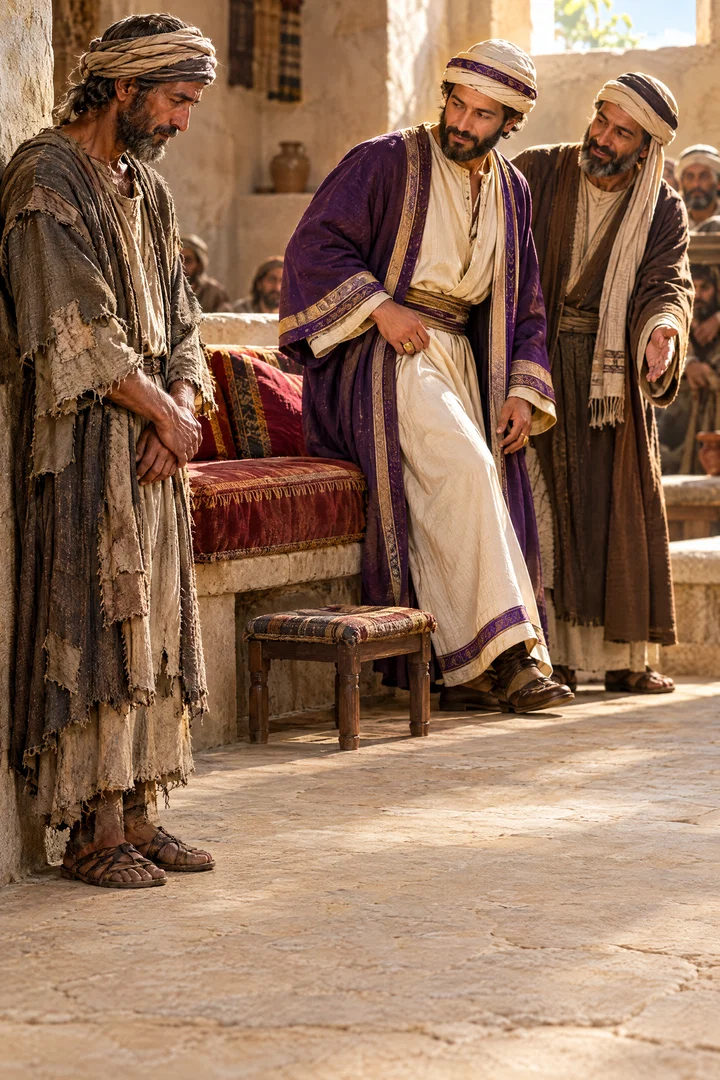
But ye have despised the poor. Do not rich men oppress you, and draw you before the judgment seats?
Translations
But you have despised the poor. Do not rich men oppress you, and draw you before the judgment seats?
King James Version, KJV Cambridge Paragraph Bible
But ye have despised the poor. Do not rich men oppress you, and draw you before the judgment seats?
But ye have despised the poor. Do not rich men oppress you, and draw you before the judgment-seats?
But ye have dishonoured the poor man. Do not the rich oppress you, and themselves drag you before the judgment-seats?
But ye have dishonored the poor man. Do not the rich oppress you, and themselves drag you before the judgment-seats?
and ye did dishonour the poor one; do not the rich oppress you and themselves draw you to judgment-seats;
But ye have despised the poor [ man]. Do not the rich oppress you, and [ do not] they drag you before [ the] tribunals?
Whereas, ye, have dishonoured the destitute man! Do not, the rich, oppress you? and, themselves, drag you into courts of justice?
Berean Standard Bible, Majority Standard Bible
But you have dishonored the poor. Is it not the rich who oppress you and drag you into court?
But you have dishonored the poor man. Don’ t the rich oppress you and personally drag you before the courts?
But you have put the poor man to shame. Are not the men of wealth rulers over you? do they not take you by force before their judges?
But ye haue despised the poore. Doe not the riche oppresse you by tyrannie, and doe not they drawe you before the iudgement seates?
Douay-Rheims (Challoner revision)
But you have dishonoured the poor man. Do not the rich oppress you by might? and do not they draw you before the judgment seats?
Pictures
Cross-references
- Acts 10:34
Then Peter opened his mouth, and said, Of a truth I perceive that God is no respecter of persons:
God shows no partiality, unlike the rich who oppress the poor.
- Matthew 25:40
And the King shall answer and say unto them, Verily I say unto you, Inasmuch as ye have done it unto one of the least of these my brethren, ye have done it unto me.
Neglecting needy people is treated as neglecting Christ himself.
- James 5:4-6
Behold, the hire of the labourers who have reaped down your fields, which is of you kept back by fraud, crieth: and the cries of them which have reaped are entered into the ears of the Lord of sabaoth.
The rich oppress the poor, with withheld wages and persecution drawing divine judgment.
- James 1:9-10
Let the brother of low degree rejoice in that he is exalted:
The poor are exalted, while the rich are brought low.
- James 2:1
My brethren, have not the faith of our Lord Jesus Christ, the Lord of glory, with respect of persons.
Faith in Christ is incompatible with showing partiality.
- Psalms 140:12
I know that the LORD will maintain the cause of the afflicted, and the right of the poor.
God maintains the rights of the poor.
- James 2:15-17
If a brother or sister be naked, and destitute of daily food,
Withholding necessities from the needy shows faith without works is dead.
- Leviticus 19:18
Thou shalt not avenge, nor bear any grudge against the children of thy people, but thou shalt love thy neighbour as thyself: I am the LORD.
Partiality toward the rich breaks the command to love your neighbor.
- Isaiah 3:14-15
The LORD will enter into judgment with the ancients of his people, and the princes thereof: for ye have eaten up the vineyard; the spoil of the poor is in your houses.
God takes notice of those who oppress the poor.
- Amos 8:6
That we may buy the poor for silver, and the needy for a pair of shoes; yea, and sell the refuse of the wheat?
shows rich buying the poor and needy
- Luke 6:20-25
And he lifted up his eyes on his disciples, and said, Blessed be ye poor: for yours is the kingdom of God.
The poor are blessed, while the rich receive woe, reversing present fortunes.
- 1 Corinthians 1:26-28
For ye see your calling, brethren, how that not many wise men after the flesh, not many mighty, not many noble, are called:
Both describe believers who lack worldly status and are despised.
- 1 Corinthians 11:22
What? have ye not houses to eat and to drink in? or despise ye the church of God, and shame them that have not? What shall I say to you? shall I praise you in this? I praise you not.
Both rebuke despising and shaming the poor.
- 1 Timothy 6:17-19
Charge them that are rich in this world, that they be not highminded, nor trust in uncertain riches, but in the living God, who giveth us richly all things to enjoy;
Charges the rich to be humble and generous.
- Luke 16:19-25
There was a certain rich man, which was clothed in purple and fine linen, and fared sumptuously every day:
The rich man’s neglect of Lazarus contrasts their earthly fortunes and outcomes.
- Proverbs 19:17
He that hath pity upon the poor lendeth unto the LORD; and that which he hath given will he pay him again.
giving to the poor lends to the Lord
- Acts 10:28
And he said unto them, Ye know how that it is an unlawful thing for a man that is a Jew to keep company, or come unto one of another nation; but God hath shewed me that I should not call any man common or unclean.
both forbid calling any man common and favoring some
- James 1:27
Pure religion and undefiled before God and the Father is this, To visit the fatherless and widows in their affliction, and to keep himself unspotted from the world.
defines true religion against partiality
Commentary
Each commentary is drawn from primary sources: the writings of Ellen G. White and Adventist pioneers and periodicals. Each commentary is separate. Its own words are not a quotation; follow the references to read the source passages.
Ellen G. White
28 sources
To despise the poor is to show partiality by honoring the rich with the best place while putting the poor in a low place with coldness, contempt and neglect, becoming judges with evil thoughts against the law of love to neighbor.Ms 111, 1893, par. 2–4Ms 150, 1899, par. 30 The verse exposes this favoritism as folly, since it is the rich who oppress believers and drag them before courts and judgment seats while dishonoring the worthy name by which they are called.AA 157.1–2Lt 69, 1904, par. 5–6Ms 150, 1899, par. 30 God has chosen the poor to be rich in faith and heirs of the kingdom promised to those who love Him, so those who are slighted by men are not less regarded by Him.Ms 111, 1893, par. 2–42T 160.2 He recognizes no distinction of rank, wealth, color, learning or worldly honor, but values men by character, motive and oneness with Christ, judging impartially so that riches neither excuse injustice nor alter the final reckoning.GW 332.1–2RH Jul 21, 19109T 223.1 Therefore honoring the rich while slighting the poor is a crime in His sight, for the poor are dear and precious to Christ, and to neglect them is to neglect Christ in His people, while faith without practical care for the needy is dead and cannot save.Lt 16, 1868, par. 20–212T 160.2CH 231.2RH Jul 21, 19104T 551.1
Rebuke of Partiality
To despise the poor is to show partiality by giving the rich or favored a good place while putting the poor in a low place or hard place with coldness, contempt and neglect.Ms 111, 1893, par. 2–4 It is to become judges with evil thoughts and to break the command to love one's neighbor as oneself.Ms 111, 1893, par. 2–4 Such partiality to the rich while dishonoring the poor is sin that calls for repentance.Ms 150, 1899, par. 30
The verse states that rich men oppress believers and draw them before judgment seats and courts.AA 157.1–2Lt 69, 1904, par. 5–6Ms 150, 1899, par. 30RH Apr 26, 1906RH Nov 23, 1905 It exposes the injustice of favoring the rich who may oppress and bring others before the courts, which applies to excluding the despised from worship and fellowship.STA 159.2 That oppression is connected with blaspheming the worthy royal name by which believers are called.AA 157.1–2Lt 69, 1904, par. 5–6RH Apr 26, 1906RH Nov 23, 1905 That name is Christian, the royal name given to those who join themselves to Christ.AA 157.1–2Lt 69, 1904, par. 5–6RH Apr 26, 1906RH Nov 23, 1905
God has chosen the poor to be rich in faith and heirs of the kingdom promised to those who love Him, so those who are neglected are not less regarded by Him.Ms 111, 1893, par. 2–42T 160.2 Every worker is bought by Christ's blood, so forming a confederacy to give favors to a select few while neglecting and wounding others with hard burdens and a grieved spirit is the sin the verse condemns, and the guilt for the temptations that come upon those treated unjustly is charged to those who dealt partially with them.Ms 111, 1893, par. 2–4 Profession of faith without practical care for people in need cannot save and is dead.Lt 16, 1868, par. 20–212T 160.2 Holding tightly to worldly goods and eagerly grasping after them while neglecting the poor and hungry reveals selfishness, fails to live out the truth professed, and contradicts that profession.Lt 16, 1868, par. 20–212T 160.2
God's Impartial Standard
God recognizes no caste or color, no rank or wealth, no learning or worldly honor, and a rich man is counted of no more value for his riches, position, talent, or education.GW 332.1–29T 223.1Ms 129, 1902, par. 1Ms 53, 1899, par. 13–14Ms 92, 1893, par. 5 He estimates men as men, with character deciding worth, valuing them by character and motives and by oneness with Christ rather than by rank, wealth, or intellect.GW 332.1–29T 223.1Ms 129, 1902, par. 1Ms 53, 1899, par. 13–14Ms 92, 1893, par. 5 He judges impartially, and at the final judgment all are judged by purity, nobility, and love for Christ, so that wealth and position neither excuse injustice nor alter the judgment, and despising the poor for lack of wealth, learning, or worldly honor brings rebuke.GW 332.1–2RH Jul 21, 1910Ms 53, 1899, par. 13–14 Living in the atmosphere in which Christ lives teaches this estimate, requiring recognition of the Spirit of Christ in whomever it is revealed, whether white or black, with no shame in speaking with an honest black man in any place or in shaking him by the hand even though it is black.9T 223.1Ms 129, 1902, par. 1
Human worth is measured in light of Christ's sacrifice, for every worker is bought by His blood, and God gives blessings to rich and poor alike.Ms 111, 1893, par. 2–4STMW6 28.2 Therefore treating wealth as a reason for fear, deference, or favoritism, despising the humble, refusing their companionship for low status, and judging harshly and unkindly is contrary to the gospel, which gives no place to caste or unkind judgment toward those for whom Christ died.GW 332.1–2GW 333.3Ms 53, 1899, par. 13–14 Riches, position, talent, education, and gifts weigh nothing in the scale with God unless all are brought as tribute to lay at His feet with the whole being surrendered to cooperate with the divine agencies to become a vessel unto honor.Ms 92, 1893, par. 5 His design is that men regard themselves as part of the great web of humanity and help one another, pitying and sympathizing with and loving one another, with that impartial generosity guiding how they treat one another.STMW6 28.2Ms 92, 1893, par. 5
The sincere and humble poor are precious to God and dear to Christ, whose lives may be marked by struggle and need sympathy and loving attention.GW 332.1–2CH 231.2RH Jul 21, 1910 Honoring the rich while slighting and neglecting the poor with coldness or contempt, showing favor by social rank, is a crime in His sight.CH 231.24T 551.1 Neglecting and slighting them may mean neglecting and slighting Christ in His people, for slighting a brother for poverty or for color is slighting Christ.CH 231.2RH Jul 21, 19104T 551.14MR 100.2
Impartial Love in Practice
The poor are not to be oppressed or neglected in favor of the wealthy, relatives, or friends, but are to receive as much care, attention, courtesy, sympathy, love, and compassion as the rich.4T 551.1Ms 30, 1891, par. 3 Neglecting them in this way can mean neglecting Christ in His people, for they are dear to Him and slighting them is a slight to Him.4T 551.1 A poor person who belongs to God is blessed of the Lord and an heir of the immortal inheritance, so poverty is no reason for less care or respect, especially in the presence of the wealthy.Ms 30, 1891, par. 3Ms 181, 1898, par. 6 Means are to be used to relieve their poverty rather than leaving them slighted or neglected.4T 551.1Ms 181, 1898, par. 6
Despising people because they are poor is wrong, and the same principle condemns distinctions of color and social rank as well as wealth.9T 223.14MR 100.2Ms 7, 1896, par. 4–5 Despising Black people because of black skin, holding their minds in a kind of slavery, depressing and trampling them down, and treating them with contempt despises God's workmanship and reproaches God, since they are not responsible for their color and cannot change it.Lt 304, 1903, par. 9–11 The religion of the Bible recognizes no caste or color and ignores rank, wealth, and worldly honor, for God estimates men as men with character deciding worth.9T 223.1Ms 129, 1902, par. 1 Christians are to recognize the Spirit of Christ in whomever it is revealed without shame, whether white or black, even to speak with an honest black man in any place and shake him by the hand though it is black, living in the atmosphere in which Christ lives.9T 223.1Ms 129, 1902, par. 1 White and black are one free and equal brotherhood, and slighting a brother because of his color is slighting Christ.4MR 100.2Ms 7, 1896, par. 4–5
Colored people who love God are His property and of as much value in His sight as white people however educated and talented.STBk 163.2Lt 304, 1903, par. 9–11 They are Christ's people and are to be treated as fellow members rather than excluded from worship and church membership, and the wrong done to them should be remedied without extremes.STA 159.2STBk 163.2 Those who have received many favors from God must live in the light of His countenance and treat those less favored from the Bible standpoint rather than the world's standpoint.Ms 7, 1896, par. 4–5 This requires bringing Christian influence against prevailing customs and practices of partiality, opposing them by precept and example, treating the colored man just as respectfully as the white man, and acting nobly and courageously without cowardice and without regard to gain or loss to elevate the standard of character and win others to this course.Ms 7, 1896, par. 4–5 Those more highly favored must lift, educate, and restore as far as possible what was lost through years of privation and slavery, educating to clean, pure souls.Lt 304, 1903, par. 9–11
Forming a confederacy to give favors to a select few while neglecting and wounding others with hard burdens and a grieved spirit is the condemned partiality, becoming judges with evil thoughts and breaking the command to love one's neighbor as oneself, since every worker is bought by Christ's blood.Ms 111, 1893, par. 2–4 Having no interest in the hard Southern field at Nashville, working to keep away means that ought to go there, turning means into other channels, circulating adverse reports, and leaguing as critics to increase the discouragements of brethren doing the hard work instead of helping them, is despising the poor and robbery that displeases God.Ms 111, 1893, par. 2–4Lt 185, 1902, par. 19–21 Showing such partiality to the rich while dishonoring the poor when rich men oppress and bring others before courts is sin that calls for repentance and will be judged.Lt 185, 1902, par. 19–21Ms 150, 1899, par. 30 God has chosen the poor to be rich in faith and heirs of the kingdom promised to those who love Him, so the neglected are not less regarded by Him, and guilt for the temptations coming upon those treated unjustly is charged to those who dealt partially.Ms 111, 1893, par. 2–4 Those doing this must look at themselves in the divine mirror and not forget what manner of men they are, reason from cause to effect, cease hindering, act out the instruction of the Word by helping the work, and reform immediately.Lt 185, 1902, par. 19–21
God's people must draw a distinct line separating them from a world characterized by love for earthly things, selfish action, luxury, self-indulgence, selfish aggrandizement, respect of persons, and oppression.STA 163.1 They must manifest the self-sacrificing spirit of Christ heartily and not by halves in connection with every branch of the cause, not seeking their own aggrandizement nor showing respect of persons.STA 163.1 They cannot live in luxury and self-indulgence while suffering ones are around them, nor by practice sanction any phase of oppression or injustice to the least child of humanity.STA 163.1 They must be like Christ, relinquishing all selfish delights, unholy passions, and love of applause, willing to be humble and unknown and to sacrifice even life itself, and by a well-ordered life and godly conversation condemn worldly folly, impenitence, idolatry, and iniquitous practices.STA 163.1 Despising and oppressing the poor are unchristian evils threatening human well-being which the church is appointed to overcome.LSEGW 473.3
Sources
Pioneers and periodicals
72 sources
To despise the poor is to show partiality by honoring the well-dressed rich man with a good seat while telling the poorly clad poor man to stand aside or sit underfoot, becoming judges with evil thoughts.ST Jun 28, 1877RH Dec 17, 1901 Such favor is folly because it is the rich who commonly oppress believers and drag them before courts and judgment seats, and who blaspheme the worthy name of Christian by which they are called.RH Apr 26, 1906ST Jun 28, 1877RH Jan 10, 1854RH Jul 14, 1868 God has chosen the poor of this world to be rich in faith and heirs of the kingdom promised to those who love Him, and keeping the royal law, Thou shalt love thy neighbour as thyself, is doing well, while having respect of persons is sin convicting as transgressors.ST Jun 28, 1877ST Mar 23, 1888RH Nov 6, 1900 In the church this forbids buying honor with money in pew auctions and rented pews, lavishing means on costly buildings and dress that shame the poor away, and relegating the poor and uncultured to corners and mission chapels while the rich are welcomed and greeted.RH Jan 1, 1875ST Jun 4, 1885ST May 6, 1880RH Jun 25, 1867ST Nov 7, 1900 As a practical letter to Christians scattered abroad, it speaks with special force to the remnant looking for the near coming of the Lord in the last days, warning believers before Christ's coming to hold the faith without partiality and to treat rich and poor alike with love joined to humility.RH May 4, 1869RH Sep 8, 1853RH Jun 6, 1912
Letter Context and Setting
James writes a practical letter to Christians scattered abroad that held for the apostle's own day and reaches forward to the time when the Lord's coming is near.ST Dec 12, 1911 Within that letter the verse belongs to the treatment of character formed by actions after a person is justified by faith, not to the remission of past sins which works cannot earn.ST Mar 29, 1883 It speaks to the scattered remnant looking for the near coming of the Lord and speaks of the last days.RH Sep 8, 1853
Its questions expect yes for an answer, that rich men do oppress the poor and draw them before the judgment seats.RH Sep 8, 1853 In that last-days setting it stands as a warning addressed to believers, since despising the poor is a mean form of partiality that can take hold even in the church before Christ's coming. Such partiality is bound up with blaspheming Christ's worthy name and is sin against God's law, and the despising appears where the rich take all the seats in the synagogues and leave the poor to sit in a corner or stay at home.RH Sep 8, 1853
The verse rebukes the primitive church for despising the poor with the same contempt shown by the nominal Jewish church, which neglected and looked down on ordinary people.RH Jun 30, 1863 Those who follow Jesus in meekness and humility are not known for owning land or other signs of worldly wealth.ST Oct 12, 1904 As part of the instruction in James 2:1-9 against being a respecter of persons, it requires that a Sabbath-keeper show no partiality, but treat rich and poor alike as Christians, with love joined to humility in everyday life and with no neglecting of the poor nor treating them with less respect than the rich.RH May 4, 1869RH Jun 6, 1912ST Mar 12, 1894
Partiality Exposed and Rebuked
To seat the man with a gold ring and gay clothing in a good place while telling the poor man in vile raiment to stand or sit under a footstool is to despise the poor, to be partial, and to become judges of evil thoughts.ST Jun 28, 1877RH Dec 17, 1901 Such partiality is having the faith of Jesus Christ with respect of persons.RH Dec 17, 1901 It is forbidden to esteem the rich and great above the poor and unlearned, and to esteem the people of one nation above another, and to call any man common or unclean.RH Dec 17, 1901 No sect is to be favored or looked down on because it is popular, established, or socially respected, but all are to be treated with equal kindness and courtesy.RH Dec 17, 1901RH Jul 8, 1858
God has chosen the poor of this world to be rich in faith and heirs of the kingdom promised to them that love Him.ST Jun 28, 1877ST Mar 23, 1888 This stands in contrast to worldly rich men who oppress believers and bring them before the courts.ST Jun 28, 1877ST Mar 23, 1888 To keep the royal law, Thou shalt love thy neighbour as thyself, is to do well, but to have respect of persons is to commit sin and to be convicted of the law as transgressors.ST Jun 28, 1877RH Dec 17, 1901RH Nov 6, 1900 The faith of the Lord Jesus Christ cannot be held with respect of persons, but the faith of Jesus is manifested in works, and those works are the keeping of the law of God without conscious breaking of even a single point.ST Jun 28, 1877RH Dec 17, 1901RH Nov 6, 1900
Showing respect to people because of wealth while dishonoring the poor is sin.RH Sep 2, 1862RH Sep 2, 1862 This includes dishonoring poor people who are pious, and such respect for wealth and rank is idolatry of wealth.RH Sep 2, 1862RH Sep 2, 1862 This unequal treatment was common in the churches and needed sharp rebuke, and it cannot be excused by obedience in other matters.RH Sep 2, 1862RH Sep 2, 1862 Despising the poor is pride, devil-like in its disdain, that creates caste and fosters aristocracy and looks with supreme contempt on neighbors who are more virtuous and more honest solely because they are poor.RH Nov 20, 1866 The sin lives even in churches of Christ, to their shame.RH Nov 20, 1866
Human judging reverses right judgment by almost always suspecting the poor of vice while generally allowing the rich to be counted virtuous and innocent till proved guilty.RH Nov 20, 1866 Poverty itself is no disgrace to an honest person who has done what could be done to avoid it.RH Jul 17, 1860 Favoring either the rich or the poor is wrong.ST Dec 23, 1903 No man is to be stood for or against because he is rich or because he is poor, because of his occupation, or because he works with his brains or with his hands.ST Dec 23, 1903 Each man must be treated on his worth and merits as a man and given a square deal, because he is entitled to no more and should receive no less, with the law dominating all men alike so that no man is above it and no man below it.ST Dec 23, 1903 Each must be judged not as a member of a class but on personal worth, with the only distinction that of conduct between those who do well and wisely and those who do ill and foolishly, since there are good citizens and bad citizens in every class, and to make government for the poor as such or for the rich as such, for the benefit of one class instead of the people as a whole, breaks this rule and proves fatal.ST Dec 23, 1903
The same wrong appears when respect is granted only to those considered intellectually bright or refined.ST Treating people as inferior because of poverty, dress, or perceived ability is class prejudice and displeases God, who shows no partiality.STST Mar 8, 1883 Despising someone through partial treatment is wrong, as when the quiet, neglected child is given harder work and denied the kindness shown to the others.STST Mar 8, 1883 Such neglect can leave a heart starved for kindness and foster resentment.ST Mar 8, 1883
Rich Oppress and Blaspheme
To court the rich while despising the poor turns judgment upside down, for it is commonly rich men who oppress believers and drag them before judgment seats and courts, so that preferring them is folly and injustice.ST Jun 28, 1877RH Jan 10, 1854RH Jul 14, 1868ST Mar 23, 1888ST Mar 4, 1889 The poor followers of Jesus may be socially despised, yet honoring wealth as if it made men worthy of greater respect dishonors those God has chosen, and the contradiction is plain when their oppressors haul them into court.RH Jan 10, 1854RH Jul 14, 1868ST Mar 23, 1888 Despising the poor goes together with that oppression, a real hardship Christians may face when the powerful bring the weak before the courts.ST Mar 4, 1889RH Dec 18, 1900RH Mar 11, 1875
Those same rich oppressors also blaspheme the worthy name by which believers are called.RH Apr 26, 1906ST Mar 17, 1914 That name is the royal name Christian, belonging to those who join themselves to Christ.RH Apr 26, 1906ST Mar 17, 1914RH Nov 23, 1905 Such partiality is therefore sin against God's law, and it can take hold even in the church before Christ's coming.
God takes notice of those who oppress the poor.ST Mar 4, 1889 The tearful cry of the oppressed goes up to Him as a God of vengeance to be feared by the oppressor.ST Oct 2, 1879 Rich men despise the poor with hearts grown hard and cold like flinty stone in the selfish struggle after gold, oppressing and humbling the poor long, grudging their scanty hire, and crushing them with violence and wrong.ST Oct 2, 1879 God in kind compassion smiles upon His poor with tenderest love as His own, so for man made in God's own image to refuse his fellow creature aid is wrong.ST Oct 2, 1879 Freely giving to the poor lends to the blessed Lord and brings a full reward when the Master calls hence, a crown of life to those who treasure gold in heaven.ST Oct 2, 1879
The poor are dear to Christ, and neglecting them with coldness or contempt slights Him.RH Jul 21, 1910 Christ is friend of all without regard to rank or wealth, with deep compassion for those suffering from poverty, from despotic laws, and for suffering virtue.ST Nov 21, 1900 He is no respecter of persons, and He requires meekness and equity, courtesy, sympathy, compassion, and a helping hand to the downtrodden and oppressed.ST Nov 21, 1900 Wealth and social rank do not count before God.RH Jul 21, 1910 The earth is the kingdom the meek will inherit, but that inheritance is still future: the faithful may now suffer while the wicked prosper, and they will possess it after the wicked have had their day of prosperity.ST Mar 23, 1888 In this the verse exposes a justice system that favors the powerful, condemns the weak, and fails to protect the poor when the rich oppress them and bring them before the courts.RH Mar 11, 1875
Law Equality and Judgment
The chapter upholds the continuing authority of God's royal law, because treating some with favor and others with contempt is sin that leaves people answerable as transgressors, which could not happen if the law had been abolished. That royal law is the ten commandments, a perfect and complete moral code in itself, spoken by God with His own voice with nothing added, written alone by His finger on the two tables and placed alone under the mercy seat, remaining in force in every precept in contrast to the handwriting of ordinances in Colossians 2 which is abolished.
Equality of men as men is a principle of the gospel, meaning every person is equal before the law just as all are equal in the court of heaven.ST Jan 15, 1902 This does not mean all are born with the same talents, powers of intellect, inherited means, or bodily weight, but that all have equal rights and stand on equal footing before the law, so that a law or court granting to one favors withheld from another out of regard for wealth, birth, social position, or place does injustice, an equality opposed only by those who wish to lord it over neighbors.ST Jan 15, 1902 There is one law only, alike for rich and poor, great and small, and obedience must be required of both without asking anyone's permission.ST Dec 23, 1903 The person of great wealth least of all can afford to break the law even for financial advantage, for law is his prop and support, and failure to support equal enforcement is foolish and profoundly unpatriotic, while honesty, decency, fair dealing, and common sense are essential to handling the complex industrial questions of accumulation and still more of wise distribution of wealth.ST Dec 23, 1903
Despising the poor is unlawful partiality, requiring equal and exact justice to all, for the laws of God and of just government are enacted for the benefit of the whole people and cannot permit discrimination against some of them.ST Dec 16, 1903 No distinction is to be made for or against a person on account of creed, color, birthplace, occupation, or social condition, whether belonging to a union or not, whether Protestant or Catholic, Jew or Gentile, including in employment and dismissal.ST Dec 16, 1903 Riches and outward status do not determine standing before God, for at the final judgment the poor neat worshiper despised in this life stands among the saved while the proud richly dressed oppressor is lost, and a poor sinner saved is better off than a rich person lost.RH Mar 12, 1861RH Mar 26, 1872 All are judged then by purity, nobility, and love for Christ, not by position or riches, and favoring the wealthy while slighting the poor slights Christ Himself to whom the poor are dear.RH Jul 21, 1910
True religion treats others as one wishes to be treated and never produces pride, scorn, holding oneself above fellow men, or shunning the less fortunate.RH Dec 11, 1855RH Aug 3, 1869 It makes the true convert cheerful, hopeful, charitable, meek and humble, desirous to do good and kind to all, disposed to visit the widow and orphan and to keep unspotted from the world.RH Aug 3, 1869 Thinking more of a wicked rich man than of a pious poor one, excluding the poor, treating them as objects of patronage, or oppressing them has no place in the church and opposes the spirit of Jesus.ST Jul 15, 1886RH Aug 3, 1869 Despising the poor is forbidden and unselfish benevolent work for them is commanded as the test of true discipleship, meaning entering into the spirit of Jesus, breaking through selfishness, and refusing ease and luxury while a brother cries for help.RH Sep 12, 1871 Wrapping in the mantle of pride, shrinking from the lowly and unfortunate, and frowning upon the poor child of error denies love for Jesus, while kind labor for the Master shows the divine character of true religion and proves one has been with Jesus.RH Sep 12, 1871
Church Practice and Compassion
To despise the poor while favoring the rich is unrighteous judgment, for the poor are to be honored rather than looked down on, and the rich are not to be favored for status even though they may oppress believers and haul them before the courts.RH Jan 10, 1854RH Jul 14, 1868RH Aug 19, 1851RH Jan 15, 1857 Such preference is unjust and self-contradictory, since it honors as worthy of greater respect those who exercise power against the lowly.RH Jan 10, 1854RH Jul 14, 1868 Fear of losing status or acceptance must not keep anyone from joining the poor and socially despised followers of Jesus.RH Jan 10, 1854
To give rich men the best places in church while putting the poor in inferior places is to despise the poor and break faith.ST Jun 4, 1885ST Nov 7, 1900ST Aug 26, 1880 This is the sin of the annual pew auction where money buys seating and assigns the Lord's poor their place, of rented pews where an old poor stranger finds no welcome or seat to hear the gospel, and of giving honor or good seats by status while treating others as inferior.ST Jun 4, 1885ST May 6, 1880ST Aug 26, 1880ST Dec 17, 1885 Cold preference for wealth, cushioned pews for the rich while the poor sit outside, and a premium assurance of good company to the rich and well-to-do forcibly invite the masses to stay home until they can rent a pew.ST Jan 30, 1879ST Dec 17, 1885 Such monopoly makes attendance as impossible for the laboring classes as renting theater boxes, and a claimed welcome for the poor is false when pewholders will not keep welcoming newcomers who crowd rented seats.ST Dec 17, 1885 To classify people along the line of social status is respect of persons, which is not Christian and cannot expect to succeed in really Christian work in England, America, or any other country.ST Nov 7, 1900
Even courteous welcome fails when costly church surroundings make the poor feel unable to belong because they cannot contribute to the expense, turning the church in appearance into a club for the wealthy.RH Jun 25, 1867ST Oct 8, 1885RH Mar 12, 1914 Costly buildings and privileges that make them feel wealth is required to belong are a grave wrong, and lavishing money on costly buildings while poor and needy people are close by forgets that Jesus loved the poor as well as the rich.ST Oct 8, 1885RH Mar 12, 1914 Showing off costly clothing in church likewise shames the poor and drives them away instead of meeting them on equal terms.ST Feb 13, 1879
Honoring the rich and cultured while relegating the impoverished and uncultured to a distant corner or a mission chapel despises the poor.RH Jan 1, 1875ST May 7, 1885ST Feb 4, 1889 Leaving the average visitor unrecognized and ungreeted, reserving pews for owners and officials, and making the common person feel unwanted, distasteful, patronized and scorned is Pharisaic, cold, heartless pride and selfishness.ST May 7, 1885 Such course keeps tens of thousands from entering the sanctuary on the Sabbath and makes genuine conversion almost unknown, whereas greeting the poor with genuine Christian warmth and making them feel heartily welcomed would marvelously change congregations.ST May 7, 1885 Making poor people dependent on rich people's charity, or marking them out as a separate class, violates the principle that all are alike before God and valued by spiritual worth rather than wealth.ST Feb 4, 1889
To welcome the rich while leaving the poor outside is contempt for the poor and failure of charity and of Christ's example.ST Jun 29, 1882ST Jan 30, 1879ST May 9, 1878 Christians are to welcome and love others without regard to status, and rich and poor should not be separated by caste or status but the poor met with love and respect.ST Jun 29, 1882ST May 27, 1889 Turning the church away from poor worshipers and reserving seats for those who paid treats worship as a business and amounts to Mammon worship, not Christianity.ST Mar 4, 1889 Treating people by wealth breaks God's law, and refusal to welcome without partiality can drive people away from worship and faith and makes lives speak against Christ.ST Jun 29, 1882
The poor must not be despised but helped, so when a hungry man or one destitute of clothing comes to the door he must not be allowed to pass by until his wants are supplied.RH May 31, 1870 Giving costly gifts and banquets to wealthy people who do not need them, yet collecting every cent of legally permitted interest from poor fellow believers even when favors to the rich exceed what is taken from the poor, is condemned as despising the poor while favoring the rich.ST Sep 16, 1889 Professing to believe present truth while grasping after the world and withholding means from God's work is deception and neglect, for heart belief that the third angel's message is now being given cannot go with holding onto worldly gain.RH Dec 9, 1852
Despising the poor and favoring the rich appears in caste distinctions that separate people in congregations, schools, marriages, and burial places.ST Jun 21, 1905 It appears where pariahs are treated as less than beasts, barred from village wells and temples, and regarded as polluting by their presence, against which efforts to secure their dignity and welcome them to worship reflect Christianity's influence.ST Jun 21, 1905 It appears in the contrast between priestly pomp and a poor flock showing disparity between religious leaders and poor laborers, and in courting wealthy people with accommodating churches and preaching while neglecting to reach and rescue the poor with the gospel.ST Aug 27, 1894ST Mar 15, 1883
Christ's religion places rich and poor on equal ground and rejects unequal treatment such as Sunday laws that let rich people use carriages while restricting poor people's streetcars.ST Dec 12, 1892ST Feb 20, 1893 The same partiality appears where wealthy employers, railways, great manufacturing establishments, and large printing offices break Sunday laws unmolested, while poor peanut venders, news boys, and Sabbath-keeping farmers who employ no one suffer penalty with avidity and zeal in prosecution, so that the law is in effect made for restraint of the weak and poor while rich men oppress and draw the poor before judgment seats and themselves escape.ST Feb 20, 1893 Impartial treatment is required even toward hosts, benefactors, and allies rather than letting influence or kindness soften fairness, and pride in social rank and oppression in every form are contrary to God's way.RH Nov 20, 1860ST Feb 17, 1881 Giving wealth unfair preference and shutting the poor out of attention and sympathy is contrary to Christ's example and apostolic practice, in which the poor had equal access with the noble and great, for the poor suffer penury and heartless treatment while the rich enjoy luxury.RH May 16, 1865 Calamity exposes this vanity, as when earthquake brings rich and poor together in hunger and distress so the rich learn what hunger is and the poor learn that wealth cannot shield anyone from sorrow.ST Jun 27, 1906
Sources