Luke 16:19
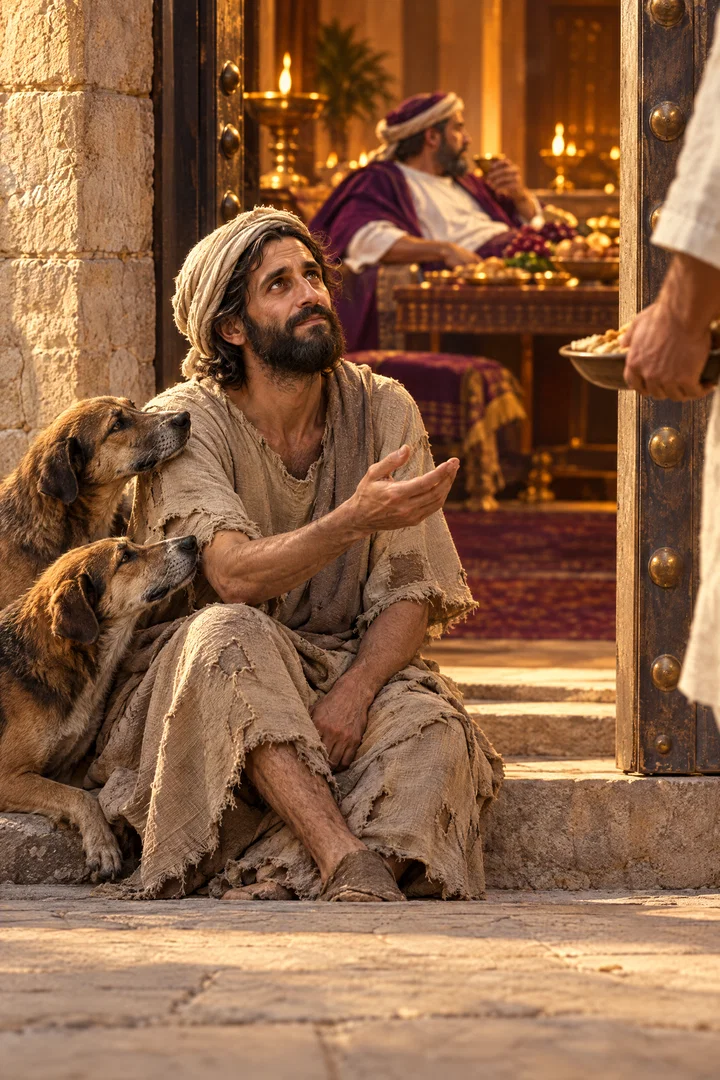
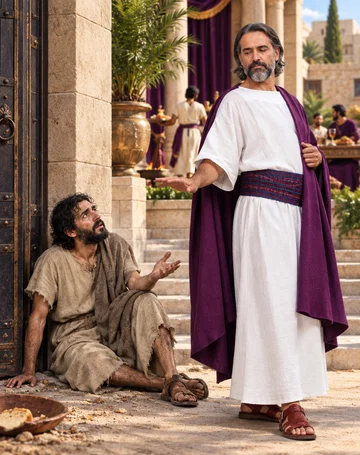
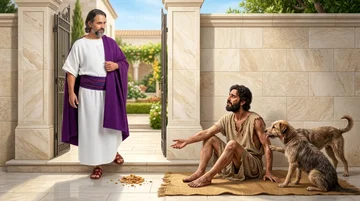
There was a certain rich man, which was clothed in purple and fine linen, and fared sumptuously every day:
Translations
American King James Version, King James Version, KJV Cambridge Paragraph Bible
There was a certain rich man, which was clothed in purple and fine linen, and fared sumptuously every day:
There was a certain rich man, who was clothed in purple and fine linen, and fared sumptuously every day:
Revised Version, American Standard Version
Now there was a certain rich man, and he was clothed in purple and fine linen, faring sumptuously every day:
'And — a certain man was rich, and was clothed in purple and fine linen, making merry sumptuously every day,
Now there was a rich man and he was clothed in purple and fine linen, making good cheer in splendour every day.
Now, a certain man, was rich, and he used to clothe himself with purple and fine linen, making merry day by day, brilliantly.
Berean Standard Bible, Majority Standard Bible
Now there was a rich man dressed in purple and fine linen, who lived each day in joyous splendor.
“ Now there was a certain rich man, and he was clothed in purple and fine linen, living in luxury every day.
Now there was a certain man of great wealth, who was dressed in fair clothing of purple and delicate linen, and was shining and glad every day.
There was a certaine riche man, which was clothed in purple and fine linnen, and fared well and delicately euery day.
Douay-Rheims (Challoner revision)
There was a certain rich man, who was clothed in purple and fine linen; and feasted sumptuously every day.
Pictures
Cross-references 20 of 24
- Luke 16:29-31
Abraham saith unto him, They have Moses and the prophets; let them hear them.
Moses and the prophets provide sufficient testimony, which rejecters would not heed even after a resurrection.
- Luke 16:25
But Abraham said, Son, remember that thou in thy lifetime receivedst thy good things, and likewise Lazarus evil things: but now he is comforted, and thou art tormented.
Abraham explains the reversal from the rich man’s earthly comfort to torment and Lazarus’s comfort.
- Luke 16:1
And he said also unto his disciples, There was a certain rich man, which had a steward; and the same was accused unto him that he had wasted his goods.
Both parables open with a certain rich man.
- Luke 16:14-15
And the Pharisees also, who were covetous, heard all these things: and they derided him.
The Pharisees’ love of money and esteem for wealth prompt the parable.
- Matthew 6:19-21
Lay not up for yourselves treasures upon earth, where moth and rust doth corrupt, and where thieves break through and steal:
Earthly wealth spent on self contrasts with treasure laid up in heaven.
- Luke 16:23
And in hell he lift up his eyes, being in torments, and seeth Abraham afar off, and Lazarus in his bosom.
Continues the rich man's story after death, depicting him in torment in hades.
- Luke 16:26
And beside all this, between us and you there is a great gulf fixed: so that they which would pass from hence to you cannot; neither can they pass to us, that would come from thence.
The impassable gulf shows that destiny is sealed after death.
- 1 Timothy 6:18-19
That they do good, that they be rich in good works, ready to distribute, willing to communicate;
The rich man wastes wealth instead of using it for good and sharing generously.
- Luke 6:24
But woe unto you that are rich! for ye have received your consolation.
The rich man illustrates the woe on those who find their consolation in wealth and worldly pleasures.
- Luke 12:21
So is he that layeth up treasure for himself, and is not rich toward God.
Contrasts earthly riches with being rich toward God.
- Luke 16:24
And he cried and said, Father Abraham, have mercy on me, and send Lazarus, that he may dip the tip of his finger in water, and cool my tongue; for I am tormented in this flame.
The rich man’s suffering and plea for water follow his luxurious life.
- John 12:10-11
But the chief priests consulted that they might put Lazarus also to death;
The leaders sought to kill Lazarus after his resurrection drew people to believe in Jesus.
- Matthew 19:24
And again I say unto you, It is easier for a camel to go through the eye of a needle, than for a rich man to enter into the kingdom of God.
Riches are shown as an obstacle to entering God’s kingdom.
- Revelation 19:8
And to her was granted that she should be arrayed in fine linen, clean and white: for the fine linen is the righteousness of saints.
Fine linen is identified with the saints’ righteousness.
- John 11:1
Now a certain man was sick, named Lazarus, of Bethany, the town of Mary and her sister Martha.
Distinguishes the raised Lazarus from the Lazarus in the parable.
- Luke 16:27
Then he said, I pray thee therefore, father, that thou wouldest send him to my father’s house:
The rich man's plea reflects the fate of the wicked in the parable.
- Luke 16:29
Abraham saith unto him, They have Moses and the prophets; let them hear them.
The living are directed to hear Moses and the prophets concerning the state of the dead.
- Psalms 49:16
Be not thou afraid when one is made rich, when the glory of his house is increased;
Both connect riches with a person’s glory.
- Matthew 25:35-40
For I was an hungred, and ye gave me meat: I was thirsty, and ye gave me drink: I was a stranger, and ye took me in:
Neglecting people in need carries responsibility before God.
- Luke 16:13
No servant can serve two masters: for either he will hate the one, and love the other; or else he will hold to the one, and despise the other. Ye cannot serve God and mammon.
The parable continues the teaching that one cannot serve God and mammon.
Commentary
Each commentary is drawn from primary sources: the writings of Ellen G. White and Adventist pioneers and periodicals. Each commentary is separate. Its own words are not a quotation; follow the references to read the source passages.
Ellen G. White
49 sources
Luke 16:19 opens the parable with a rich Jewish nobleman claiming to be a son of Abraham, clothed like kings in costly purple and fine linen and feasting lavishly every day as his settled custom.COL 260.2–3Ms 81, 1898, par. 1–2ST Jun 1, 1915 At his gate within his sight lay Lazarus, a friendless, homeless, suffering beggar without money or food, forming a sharp contrast to daily luxury.COL 261.21T 539.2–540.1COL 242 He did not drive Lazarus away, but selfishly left him unrelieved though he had ample means to help.ST Jun 1, 1915COL 261.1Ms 81, 1898, par. 3–4 Spoken to answer the covetous Pharisees who served mammon while judging men by wealth and honor, it teaches that eternal destiny is fixed in this life, with no further probation after wasted grace.COL 260.11T 539.2–540.1ST Jun 1, 1915 His riches were a trust lent by God for the good of others, and he is condemned not for being rich but for spending what was entrusted on himself instead of relieving need and laying up treasure in heaven.COL 266.1COL 261.4ST Jun 1, 1915ST Jun 1, 1915Ms 6, 1899, par. 22–24
Dress, Feasting and Setting
The verse pictures a rich man living in daily luxury, dressed in costly purple and fine linen and faring lavishly every day.COL 260.2–3Ms 81, 1898, par. 1–2ST Jun 1, 1915 That purple and fine linen were garments worn by kings and nobles.Ms 81, 1898, par. 1–2 His feasting was his usual custom, not an occasional celebration.COL 260.2–3Ms 81, 1898, par. 1–2ST Jun 1, 1915 He was a Jewish nobleman who claimed to be a son of Abraham.Ms 81, 1898, par. 1–2ST Jun 1, 1915Ms 81, 1898, par. 3–4
Over against him lay Lazarus, a poor suffering beggar without friends, home, money, or food, begging in abject poverty at his gate.COL 261.21T 539.2–540.1Ms 81, 1898, par. 5 He lay within the rich man's sight and hearing, where he could be seen, in sharp contrast to daily luxury and abundance with every want supplied.Ms 81, 1898, par. 1–2COL 261.2COL 242Ms 81, 1898, par. 5 At that time there were no hospitals, so the suffering and needy were brought to people entrusted with wealth that they might receive help and sympathy.COL 261.2Ms 81, 1898, par. 5
The rich man was not violent toward Lazarus and did not drive him away, but allowed him to remain at his gate.ST Jun 1, 1915COL 261.1Ms 81, 1898, par. 3–4 Yet he was selfishly indifferent and did nothing to relieve his severe need despite having ample means to do so.ST Jun 1, 1915COL 261.2COL 261.1Ms 81, 1898, par. 3–4 His own wants were met while the beggar beside him remained in need, so absence of overt cruelty did not excuse his neglect.COL 261.2Ms 81, 1898, par. 3–4Ms 81, 1898, par. 5
Parable Context and Probation
Luke 16:19 opens the parable of the rich man and Lazarus, spoken in answer to the covetous Pharisees who derided the warning that no man can serve God and mammon.COL 260.11T 539.2–540.1 Those hearers justified themselves before men while judging and valuing men by wealth and by the honors received from others.1T 539.2–540.1 The parable answers that false standard by showing outward standing does not decide standing before God.COL 260.11T 539.2–540.1
The parable teaches that people decide their eternal destiny during this present life, when God's grace is offered to every soul.COL 260.1ST Jun 1, 1915 Wasting those opportunities in self-pleasing cuts a person off from everlasting life, and there is no further probation afterward.COL 260.1ST Jun 1, 1915 By their own choice people fix an impassable gulf between themselves and God.COL 260.1ST Jun 1, 1915
The verse presents two classes whose true standing is revealed in the unseen world: the wealthy who do not depend on God and have not surrendered their lives to Him, and the poor who trust God and patiently endure suffering.COL 260.2–3ST Jun 1, 1915 Their positions will be reversed, for the patient poor who trust God are exalted above those holding the world's highest positions.COL 260.2–3ST Jun 1, 1915 So Dives, who lived in daily luxury in costly clothing and abundant food, is afterward tormented, while Lazarus, the poor beggar who feared God, is comforted.STBk 158.1STA 154.1SW 7.1 The story stands as a lasting lesson to rich and poor that earthly prosperity does not secure comfort in the life to come.STBk 158.1STA 154.1SW 7.1
Selfish pleasure is not the sum of happiness and does not bring lasting happiness.ST Jun 21, 1899Ms 22, 1898, par. 31 The rich man gave himself to intemperate, luxurious living while refusing his duty to help Lazarus from his abundance, and that course led to the loss of his soul.ST Jun 21, 1899Ms 22, 1898, par. 27 He later would have given all he possessed to exchange places with Lazarus, once poor and covered with sores.ST Jun 21, 1899Ms 22, 1898, par. 31 When sickness brought suffering he longed to call on Lazarus for relief, but the fixed gulf showed he could not cross over to obtain it.ST Jun 21, 1899
Daily luxury and earthly possessions could not relieve him when sickness came.Ms 22, 1898, par. 27Ms 81, 1898, par. 12–14 Because he had not laid up treasure in heaven and had neglected Lazarus suffering nearby, he faced suffering unprepared and found no comfort in wealth or former status.Ms 22, 1898, par. 27Ms 81, 1898, par. 12–14 His neglect left a gulf of disobedience and transgression between him and Abraham.Ms 81, 1898, par. 12–14 After death he is depicted as suffering with a burning fever, recalling his heartless treatment of Lazarus, yet having no knowledge of God.Ms 22, 1898, par. 27
Wealth as Sacred Trust
The abundance behind the daily luxury is not owned outright but held in trust, for everything a person has is lent by the Lord to be managed for Him rather than spent on self.COL 261.4ST Jun 1, 1915Ms 81, 1898, par. 8Ms 6, 1899 Means and abilities are placed in human hands so they can serve others, especially those in need, and the greater the resources the greater the obligation to use them for the good of others.COL 261.4ST Jun 1, 1915Ms 81, 1898, par. 8Ms 6, 1899 Accountability belongs to that trust, so the one who enjoys plenty remains answerable for how it is used and whether dependence on God is acknowledged.COL 261.4ST Jun 1, 1915Ms 81, 1898, par. 8Ms 6, 1899
That stewardship carries a definite duty to relieve suffering with food and clothing, with medical care and spiritual help, with sympathy and deeds of love and mercy.Ms 6, 1899, par. 1–5ST Jun 25, 1894Ms 81, 1898, par. 8 It includes returning the tithe and giving gifts and offerings for the relief of the needy, and to withhold from the hungry, the naked, and the homeless when means have been entrusted is a serious wrong.Ms 6, 1899, par. 1–5ST Jun 25, 1894Ms 81, 1898, par. 8 Those given wealth must share it and will answer for its use, since love to God and to neighbor is shown by what is done with what is lent.Ms 6, 1899, par. 1–5ST Jun 25, 1894Ms 81, 1898, par. 8
Being rich is not itself the ground of condemnation, for there is no sin in riches that are honestly acquired and not gained by injustice.COL 266.1ST Jun 1, 1915Ms 6, 1899, par. 22–24 Condemnation falls on spending entrusted means in selfishness and hoarding treasure for self instead of using it to do good and laying it up beside the throne of God.COL 266.1ST Jun 1, 1915Ms 6, 1899, par. 22–24 Earthly honor, wealth, and daily luxury do not give true riches, and their selfish use without tender sympathy and help for the sufferer at the gate dishonors God.COL 266.1ST Jun 1, 1915Ms 6, 1899, par. 22–24
Though the commands to love God and neighbor are known, blessings can still be turned to personal pleasure and honor until accountability is forgotten.COL 261.4Ms 81, 1898, par. 6Ms 81, 1898, par. 28–32 Knowledge, talents, and opportunities to understand and practice God's Word are then devoted to pleasure, while amusements and the praise and flattery of friends occupy time until God is forgotten.COL 261.4Ms 81, 1898, par. 6Ms 81, 1898, par. 28–32 In that forgetfulness the call of God and the claims of the suffering poor are neglected, yet possession of temporal blessings never removes the need to obey God.COL 261.4Ms 81, 1898, par. 6Ms 81, 1898, par. 28–32
To spend money entrusted by God extravagantly on selfish gratification instead of using it for God's work is unfaithful stewardship and neglect of God's heritage.Lt 21, 1898, par. 4–5STMW7 56.2ST Jun 6, 1900Ms 81, 1898, par. 28–32 It is the luxury of personal comfort and indulgence while others lack food, clothing, or shelter, and the enjoyment of life's good things while neglecting people in need.Lt 21, 1898, par. 4–5STMW7 56.2ST Jun 6, 1900 Those who so use their trust will face a reckoning and must answer for their stewardship.Lt 21, 1898, par. 4–5STMW7 56.2ST Jun 6, 1900
Death ends stewardship and probation, when by a power that cannot be questioned or resisted the manager is commanded to quit what was managed.COL 266.1ST Jun 1, 1915Ms 6, 1899, par. 22–24COL 267.1 Nothing is brought into the world and nothing can be taken out of it, so money cannot be carried into the next life.COL 266.1ST Jun 1, 1915Ms 6, 1899, par. 22–24COL 267.1 He who once wore the richest purple and finest linen is then reduced to nakedness and hopeless poverty without the robe of Christ's righteousness to cover him.COL 266.1ST Jun 1, 1915COL 267.1 Only what was laid up in heaven endures, for faithful service and good deeds done to win people to Christ are carried to heaven while hoarded treasure for self leaves its keeper poor toward God.COL 266.1ST Jun 1, 1915Ms 6, 1899, par. 22–24COL 267.1
True Worth Before God
Costly dress and daily feasting give a man no value in God's sight, and neither wealth nor the honor other people give can recommend anyone to heaven or secure divine favor.ST Mar 22, 18831T 539.2–540.1ST Jun 1, 1915 Men are not to be judged or valued by riches or by honors received from others, but by character, by true faith, and by true moral worth and soundness before God.ST Mar 22, 18831T 539.2–540.1 What is entrusted to a man is only lent by the Lord, so possessions do not determine worth, and the wealthy who misuse them can end worse off than the poorest person who loves and trusts God.ST Jun 1, 1915 Riches gained by oppression, deception, overreaching, fraud, or any other dishonest manner, and a life of ease without moral worth, cannot obtain God's favor.ST Mar 22, 18831T 539.2–540.1 All that is highly esteemed among men is abomination in the sight of God, leaving such a man worthless, corrupt, sinful, and abominable in His sight.ST Mar 22, 18831T 539.2–540.1
The one who is worthless in this sense is despised and rejected and cast out from God's presence and plunged into misery and woe unutterable.1T 539.2–540.1 By contrast the poor despised sufferer who has true faith and moral soundness is valuable to God.ST Mar 22, 18831T 539.2–540.1 He is taken by God and placed in the most exalted position and introduced into the society of refined holy angels as an heir of God and joint-heir with Christ.1T 539.2–540.1 Purple and fine linen mark worldly wealth and honor that can win people's applause for elegance, generosity, and hospitality.ST Jun 1, 1915GC88 385.2GC 385.2 Yet spending money on costly clothing and comforts to gratify pride or to gain human praise is a misuse that conflicts with humility and self-denial, for the honor that matters comes from God.ST Jun 1, 1915GC88 385.2GC 385.2
Riches and display do not commend to heaven.COL 259.1–2Ms 19, 1898, par. 16 Christ, though heaven's King, did not exalt Himself, build rich habitations, or wear purple and fine linen.Ms 19, 1898, par. 16 The sumptuous life did not secure the life that comes from God.COL 259.1–2 Genuine faith leads people to give up burdensome earthly accumulations and transfer treasure to heaven, for where treasure is the heart will be also.2T 196.2–197.1 Even the condition of Lazarus depending on crumbs is therefore preferable to that of professed believers who accumulate earthly wealth.2T 196.2–197.1
Nation, Church and Last Days
The man in purple and fine linen pictures the Jewish nation, favored with every temporal and spiritual blessing as depositaries of sacred truth and stewards of grace, called to cooperate with God by imparting those blessings and relieving temporal and spiritual suffering in deeds of love and mercy toward the poor among them, the stranger within the gates, and brethren fallen into decay.COL 269.2COL 267.3 That nation had great privileges and special instruction not to seek all for self and to use its God-given light to bless and enlighten the world, yet it was filled with pride as the chosen and favored people and used the Lord's goods for selfish gratification with no helping hand put forth.COL 269.2COL 267.3 Trusting in being children of Abraham instead of serving and worshiping God, it divorced itself from God and placed trust in Abraham as if he were God, preparing itself for the sentence of condemnation.COL 267.3 Though claiming to be Abraham's son, it was separated from Abraham by a gulf of disobedience, for Abraham served God in faith and obedience while the rich man ignored God and suffering people and put Abraham in the place belonging to God.COL 269.1COL 269.3COL 267.3 His love of worldly pleasure, display, and appetite showed a character formed in partnership with evil in spiritual ignorance amid abundant luxury.COL 269.1COL 269.3
His privileges could have been used under God's guidance to bless and enlighten others, but failure to live as a faithful steward brought ruin and national disaster.COL 269.1COL 269.2 At Jerusalem's destruction, starvation and suffering brought the warning of the parable to mind, for the people's ruin followed their neglect of that light and their neglect of their divine calling.COL 269.1COL 269.2 His history portrays the closing scenes of earth's history and represents people who may belong to the church yet remain unconverted.Ms 81, 1898, par. 34–36COL 269.3 Outward religious acts and words do not make such a one righteous when the heart does not praise God.Ms 81, 1898, par. 34–36 Self-love, appetite, and worldly pleasures shape this character during life, and though having knowledge, talents, and opportunities to understand and practice God's Word, he devotes them to pleasure amid amusements and friends' praise and flattery until he forgets God, neglecting duty and the final account he must give.Ms 81, 1898, par. 34–36COL 269.3Ms 81, 1898, par. 6 At death he can no longer choose or change that character but rises with the same unholy desires he cherished before, and the gulf between him and the righteous reflects the character he formed by refusing the opportunities God gave him to change.Ms 81, 1898, par. 34–36COL 269.3
Present Duty to Neighbors
The colored people of the South lie as Lazarus at the gate, while the white race stands in the place of Dives toward them.SBAWP 49.1–2 Dives is under heavy responsibility to bend a portion of his energies to the moral uplifting of Lazarus, lifting him to higher standards of education and home life.SBAWP 49.1–2 Woe comes to Dives if he does not heed Lazarus lying at his gate full of sores.SBAWP 49.1–2 Seeking supremacy as an end in itself by overriding justice loses what is sought, while honest, just effort to uplift brings uplifting in return.SBAWP 49.1–2
The rich man enjoying wealth and fine living while failing to use what God gave him for God's purposes warns those who claim to be sons and daughters of God against feeling at liberty to live in self-indulgence and enjoy life's good things while neglecting people in need.ST Jun 6, 1900Ms 87, 1898, par. 26–29 That warning applies while Satan is ruining souls around them, especially victims of intemperance allured to sell reason for rum.Ms 87, 1898, par. 26–29 Instead of looking on without power to counteract evil like the world, they must lift up a standard in the name of the Lord God of Israel.Ms 87, 1898, par. 26–29 They must not leave the Saviour's pitying tenderness for wretched, fallen, hopeless beings in vain for want of human channels, but must communicate His treasures of food and clothing and words fitly spoken.Ms 87, 1898, par. 26–29 His daily luxury in contrast to Lazarus's need at his gate teaches that God judges those who spend on self-gratification instead of sharing with the poor, and that God blesses and vindicates the suffering faithful represented by Lazarus.Lt 207, 1899, par. 714MR 57.3 The history introduced here shows how God deals with suffering believers and with those who use for self-gratification what they should share with the poor, commending Lazarus, not the rich man.Lt 207, 1899, par. 714MR 57.3
Sources
Pioneers and periodicals
173 sources
This verse opens the parable of the rich man and Lazarus, which runs through Luke 16:31 as the second parable in Luke 16, spoken to the covetous Pharisees who derided Christ.ST Nov 18, 1913RH Feb 8, 1912 It is a figurative word picture to impress moral truth, not literal history of actual persons, and a parable alone cannot found doctrine apart from plain Scripture.ST Feb 26, 1902ST Dec 4, 1884 It pictures earthly life before death, a man clothed in royal purple without and dazzling white linen within, feasting splendidly every day while the beggar lay in misery at his gate.ST Dec 4, 1884ST Mar 30, 1882RH Dec 27, 1855 The rich man stands for the Jews, rich in covenants, law, worship and promises, and his purple, fine linen and daily feast signify priestly privilege and spiritual wealth, while Lazarus stands for the Gentiles, poor in soul and without hope yet willing to receive grace.STST Apr 10, 1907ST Mar 6, 1907 Wealth and luxury do not prove righteousness or God's favor nor poverty his displeasure, for the rich man's ruin was living for self in covetous indulgence and leaving Lazarus unrelieved, and the account does not teach consciousness after death or immortality of the soul.ST Feb 26, 1902ST Dec 4, 1884ST Mar 30, 1882RH Aug 7, 1916ST Aug 19, 1880
Parable Form and Setting
Luke 16:19 opens the story of the rich man and Lazarus which runs through Luke 16:31.ST Nov 18, 1913ST Feb 11, 1897 It stands as the second parable in Luke 16 after the unjust steward, belonging to a discourse that begins in Luke 15 and continues through Luke 16.RH Apr 8, 1858ST Aug 13, 1894 That discourse is directed against covetousness, spoken to the Pharisees who derided Christ and complained that He received sinners, to reprove covetousness and self-righteousness and the notion that sickness, poverty and suffering prove God has forsaken a person.RH Feb 8, 1912ST Aug 13, 1894 It belongs to a series of figurative instructions given to hearers who would listen to parable when they would not endure literal teaching, to be meditated upon rather than turned into speculation and fancies.RH Feb 8, 1912ST Aug 13, 1894
The story is a parable, apologue, allegory, or figurative word picture told to impress moral truth, not literal history of actual events or persons.ST Feb 26, 1902ST Dec 4, 1884RH Jan 7, 1902RH Dec 27, 1855 Its opening with a certain rich man resembles the openings of other parables told to people taught in parables. Because it is a parable its imagery of conditions after death is symbolic rather than a literal account of conscious conversation after death, and it does not by itself teach the condition of the dead or the final reward of the righteous and wicked.ST Feb 26, 1902ST Dec 4, 1884RH Jan 7, 1902 A parable alone cannot found doctrine or overturn plain teaching, but must be read consistently with plain statements that the dead know nothing and their thoughts and feelings have perished, and understood in harmony with Scripture that life after death requires resurrection.ST Mar 28, 1906
The account is obscure on the state of the dead and the intermediate state, and is not plain like Old Testament teaching that the dead sleep unconscious until the resurrection.RH Dec 16, 1858 It is appealed to on both sides of the immortality question, while every application of it on that question presents difficulties.RH May 10, 1864 Whether man is immortal, the state of the dead, the end of the wicked, and the hope of the gospel belong to that larger question, together with Bible truth about man as mortal, the breath of life, the soul, Hades and Abraham's bosom, the kingdom of heaven, the Sabbath and present truth from the Bible alone apart from tradition, including the condition of the wicked dead.RH Mar 9, 1905RH Jan 23, 1908RH Feb 27, 1872
Wording and Earthly Scene
The verse opens before death with a picture of earthly luxury, a rich man dressed in purple and fine linen and feasting sumptuously every day.ST Dec 4, 1884ST Mar 30, 1882RH Dec 27, 1855ST Jul 15, 1913ST Dec 4, 1884 The purple was the outer garment, a royal color associated with pride, and the fine linen was the dazzling white Egyptian cloth worn underneath, while the daily fare was splendid merry-making set against the misery of the beggar Lazarus lying at his gate.ST Mar 30, 1882RH Dec 27, 1855ST Mar 20, 1879ST Jul 15, 1913ST Dec 4, 1884 The opening, there was a certain rich man, is the same kind of opening used for the preceding parables, and the clothing and feasting are details in a figurative apologue rather than a literal history of an individual or a teaching on the conscious condition of the dead and the final reward of the righteous and wicked.ST Dec 4, 1884ST Mar 30, 1882RH Dec 27, 1855ST Mar 20, 1879ST Dec 4, 1884 His fine clothing and daily luxury illustrate the earthly wealth prized as a mark of divine favor, yet riches do not show God’s favor or secure the future, and those who exalt themselves will be brought low; trusting in riches while neglecting preparation for the future brings danger, and covetousness ruling the soul sets forth the final punishment of the penurious wealthy.ST Mar 30, 1882RH Dec 27, 1855ST Jul 15, 1913
The clothing and daily feasting are circumstances of embodied life in this world, identifying an embodied person in earthly plenty, self-indulgence, wealth, honor, and comfort.ST Mar 15, 1877RH Mar 28, 1865ST Jun 23, 1881RH May 5, 1874RH Dec 12, 1854 His life appeared enviable to all beholders beside the poverty of Lazarus, while the beggar’s lot looked despised, with costly purple and fine linen and daily luxury set against Lazarus lying helpless in misery at his gate.ST Mar 15, 1877RH Mar 28, 1865ST Jun 23, 1881RH May 5, 1874ST Apr 9, 1896 He lived for himself and neglected the great preparation for the future, neglecting suffering Lazarus at his gate and failing to make friends of the mammon of unrighteousness.ST Mar 15, 1877RH Mar 28, 1865ST Jun 23, 1881RH May 5, 1874ST Apr 9, 1896 He died soon after Lazarus and was buried with all the earthly pomp and grandeur that wealth and pride could display but with no angels of God to bear him or take part in it, going down to hades in the nether parts of the earth as a lost man to wait until the resurrection to damnation, whose portion will be the lake of fire.ST Mar 15, 1877RH Mar 28, 1865ST Jun 23, 1881RH May 5, 1874 His being lifted up and asking for water and then for warning to his brethren is not present conscious reward or punishment in death, for hades is darkness and silence with no wisdom, knowledge, memory, device, or praise of God, but personification of dead men speaking and acting as though alive to illustrate the folly and vanity of riches, the worth of true piety though attended by deepest poverty, the certainty of future recompense and its great reversal, and the sufficiency of Moses and the prophets.RH Mar 28, 1865
Dives is not a proper name but the Latin word meaning rich or a rich man, corresponding to the Greek plousios, and the rich man in the verse is unnamed and identified only as rich.RH Jan 30, 1879ST Mar 30, 1882 The title became his customary label through Latin titles of pictures of the parable, not a name given in the Bible.ST Mar 30, 1882 Lazarus is a typical case and not the history of Lazarus the brother of Martha and Mary, for that Lazarus was the son of a wealthy Jew and was not poor and in the condition of the Lazarus of the parable.ST Mar 24, 1909 The name Lazarus was used because of its meaning, Whom God aids, Lazarus in Greek being the same as Eleazar in Hebrew.ST Mar 24, 1909
The rich robe of fine clothing points to the righteousness of Christ, with which God can clothe people more richly than Solomon’s robe.ST Aug 2, 1910
Figures Represent Jews and Gentiles
The rich man stands for the Jews, who were rich in spiritual privilege with the adoption, the glory, the covenants, the giving of the law, the worship, the promises, and entrusted truth, given the first opportunity to receive Christ so that through them the message could reach the nations.ST Apr 10, 1907ST Oct 1, 1894ST Mar 28, 1906 His purple and fine linen signify priestly clothing and spiritual riches, and his daily sumptuous feast depicts that wealth, while Lazarus stands for the Gentiles who were without Christ, without hope, and without the covenants of promise, poor in soul but willing to receive grace.ST Apr 10, 1907ST Mar 28, 1906ST Dec 14, 1904 The whole is a parable and not a record of historical events or a description of what happens after death, illustrating the relations between Jews and Gentiles and their attitudes toward God.STST Mar 6, 1907ST Dec 14, 1904 The Jews trusted in noble and faithful ancestry such as Abraham for salvation, holding a high opinion of themselves, while the poor and humble Lazarus sought God.ST Apr 10, 1907ST Mar 6, 1907
That favored nation had abundant temporal and spiritual blessings and sacred truth, the bread of eternal life, which God would have increased so they could bless and enlighten the whole world, but they would not respond to the divine call.ST Oct 14, 1913ST Oct 14, 1913RH Jul 16, 1901 Made covetous, proud, self-righteous and exclusive by those gifts, they boasted that they were rich and needed nothing, trusted in themselves rather than the living God and in lineal descent from Abraham, exalting him while separated from God.ST Oct 14, 1913ST Aug 2, 1910ST Oct 28, 1913 By misusing God's gifts in selfish indulgence they are placed below even the poorest person who loves and trusts God.ST Aug 2, 1910ST Oct 14, 1913 The parable is aimed particularly at the Jewish nation, describing its history and present rejection of Christ, yet it also rebukes covetousness among God's professed people in every age and gives every person a lesson about sin and the need for a personal Saviour.ST Oct 28, 1913ST Oct 14, 1913RH Jul 16, 1901
The rich man also figures the covetous Pharisees, who prized earthly wealth, fine clothing and daily luxury and counted riches in this life as signs of righteousness and divine favor securing blessing in the next.ST Mar 30, 1882RH Oct 10, 1912RH Dec 19, 1854 Christ uses that picture on their own ground to answer their derision and to correct their teaching about property, showing that wealth and worldly position have no meritorious value before God, do not prove that the possessor will be saved, and do not entitle him to happiness in the future state, while poverty does not prove a person is under heaven's curse.RH Oct 10, 1912ST Sep 9, 1880ST Aug 26, 1880RH Dec 19, 1854 His sumptuous sensual life of avarice, neglect and oppression of the poor, though exalting itself, will be brought low and end in judgment and wrath instead of favor, while the despised poor may attain the felicity figured by Abraham's bosom.ST Mar 30, 1882RH Sep 3, 1872 Its scenes are presented through personification as occurring in the grave while anticipating the fate that comes after the resurrection, using characters and places familiar to the Pharisees as elements of an argument rather than as proof that those people or places existed as described or that conscious souls enter bliss or woe at death.ST Sep 9, 1880RH Sep 3, 1872
The rich man and the beggar further represent two classes that continue in the world until the end of time, the one living for self and selfish pleasure and receiving its good things in this life in wealth and honor, the other denying self, living the life of Christ who gave himself for humanity, and laying hold of eternal life.RH Jan 7, 1902ST Oct 1, 1894RH Jan 7, 1902 Dives lived in luxury and worshiped himself while blind to truth, and God judges by character rather than self-estimate, so Dives is left to himself and perishes with those like him, while the beggar who suffered at his gate trusted God and is raised to a new estate where he shares Christ's reign and no longer suffers want.ST Aug 30, 1905RH Mar 12, 1857 Such earthly prosperity does not guarantee wealth or honor in God's kingdom nor spare from torment hereafter, for conditions are reversed in the life to come and in the final reckoning, so present prosperity is no reason for envy nor present affliction for offense.ST Oct 1, 1894RH Mar 12, 1857 The scene is an object lesson and warning lesson drawn from what will literally take place for the two classes, presented as though happening in the present, and not proof that the dead remain conscious.RH Jan 7, 1902RH Jan 7, 1902
In this scheme the rich man's five brothers represent the supposed lost tribes, each brother standing for two tribes to make up the twelve, and the rich man's death represents Israel's national death and the change of dispensations in which the Jewish people lost much as the Gentiles gained much.RH Mar 16, 1869RH Dec 12, 1854 One proposed reading held that the great gulf separates Jews and Gentiles during the present age but is to be bridged in a future time of visitation in the Age to Come.RH Mar 16, 1869 That reading is set aside as an attempt to resolve the difficulty of how the two groups could be blessed together.RH Mar 16, 1869 In one application the beggar lying at the rich man's gate represents Christ, and the gate signifies the place where the nation's judgment of him took place, so the parable portrays the nation's treatment of Christ and its consequences.ST Oct 14, 1913
Moral Lesson on Wealth
Fine clothing, daily luxury, worldly position and honor do not prove righteousness, divine favor or future salvation and have no meritorious value before God, while poverty, suffering and dishonor do not prove His displeasure or curse, for God judges character, faith and moral worth rather than what people highly esteem.ST Mar 22, 1883ST Mar 30, 1882ST Aug 19, 1880ST Aug 26, 1880ST Sep 16, 1880 Riches do not avail in the judgment unless they are used rightly and generously, and poverty does not keep a person out of heaven.RH Aug 7, 1916ST Aug 19, 1880ST Aug 26, 1880 The costly purple and dazzling white linen and sumptuous daily feasting illustrate worldly riches and status that people may prize and inordinately admire, but that do not secure eternal life, and the lesson concerns how riches should be regarded in this life.ST Mar 30, 1882ST Aug 19, 1880ST Aug 26, 1880 The wealthy man in enviable luxury and the beggar in despised misery show that outward prosperity may conceal subjection to divine wrath while the poorest and weakest, destitute of food and raiment, covered with sores and dependent on charity, may be highly esteemed in heaven.ST Mar 22, 1883ST Aug 26, 1880ST Sep 16, 1880
The rich man's sin was living for himself in selfish indulgence, covetousness, self-worship and indifference, enjoying his fortune while allowing the beggar to remain at his gate without relief despite ample means.ST Jun 1, 1915ST Mar 15, 1877RH Mar 28, 1865RH Jul 10, 1856ST Jan 26, 1915 His condemnation rests not on stated injustice or extortion but on using wealth for self while Lazarus suffered, on neglecting preparation for the future and failing to make friends of unrighteous mammon.ST Mar 15, 1877RH Mar 28, 1865RH Jul 10, 1856 Though claiming to be a son of Abraham, he was not violent toward Lazarus nor driven to remove him, yet he did nothing to relieve him, and such selfish uncharitable living leads to ruin and destruction.ST Jun 1, 1915ST Jan 26, 1915RH Aug 7, 1916 After death he was buried with all the earthly pomp that wealth and pride could display but with no angels to bear him, going down a lost man to await resurrection to damnation in the lake of fire.ST Mar 15, 1877RH Mar 28, 1865
Wealth and abilities are entrusted gifts lent by the Lord, and owners are accountable to recognize God as giver and use them rightly and generously for others as Christ did.RH Jun 9, 1859RH Oct 10, 1912RH Feb 7, 1907RH Oct 20, 1904 Possessions have no worth in God's judgment apart from faithful use, and spending entrusted means selfishly for pleasure can leave the wealthy worse off than the poorest who trusts God.ST Jun 1, 1915ST Jun 1, 1915RH Oct 10, 1912 Death ends stewardship and probation, so that a person brings nothing in and takes nothing out, left without the robe of Christ's righteousness, and worldly wealth rightly used may gain the friendship of God, Christ and holy angels who can receive into everlasting habitations.RH Jun 9, 1859RH Oct 10, 1912RH Feb 7, 1907 The contrast teaches that God regards the poor and unfortunate with pity and that His children must show them sympathy and practical care rather than using wealth only for self and friends.RH Feb 7, 1907RH Oct 20, 1904
The rich man was not lost simply because he was rich and Lazarus was not saved simply because he was poor, for wealth is not itself sinful and poverty has no merit in itself.ST Jun 1, 1915ST Feb 26, 1902ST Dec 18, 1879ST Aug 5, 1889 Living in a palace or possessing wealth does not by itself make a person forget God, just as being poor does not make a person worthy of heaven, and poverty was not what carried Lazarus to Abraham's bosom.ST Dec 18, 1879ST Aug 5, 1889 Riches alone are not identified as a specific wrongdoing, and great wealth and daily luxury do not by themselves condemn; condemnation rests on spending entrusted means selfishly rather than using them rightly.ST Jun 1, 1915ST Feb 26, 1902
Earthly plenty and self-indulgence fix eternal destiny, for there is no probation after death, and character formed in this life fixes an impassable gulf afterward with no crossing to obtain relief and no change of places.ST Jun 21, 1899ST Jun 1, 1915ST Oct 31, 1900ST Dec 4, 1884 Those who waste opportunities in self-pleasing cut themselves off from everlasting life by their own choices, and after death there is no further expectation or chance for the rich and the poor, pious man to change places.ST Jun 1, 1915ST Dec 4, 1884ST Sep 1, 1881 Those who reject truth in this life will not be persuaded after death even if someone rises from the dead, and the barrier fixed between righteous and wicked at judgment leaves the wicked no further opportunity to become holy or pass over.ST Oct 31, 1900ST Nov 14, 1900ST Sep 1, 1881 Selfish pleasure does not bring lasting happiness, for when suffering comes the self-indulgent long to exchange places and call for relief, yet the fixed gulf shows crossing over is impossible.ST Jun 21, 1899ST Jun 1, 1915
The verse warns against trusting riches as grace or spiritual help, putting off salvation until worldly affairs are satisfactory, and esteeming earthly wealth above character and faithfulness.RH Dec 27, 1855ST Jul 15, 1913ST Mar 30, 1882ST Aug 27, 1902 Such delay reverses the command to seek first the kingdom of God and His righteousness and exposes unbelief in the promise that needed things will be added to those who make that seeking their primary business.ST Mar 30, 1882ST Aug 27, 1902 It reproves covetousness, self-righteousness and the folly of pursuing earthly pleasures while neglecting the future and the instruction God has given, setting forth the final punishment of the penurious wealthy.ST Jul 15, 1913ST Aug 25, 1881RH Feb 8, 1912 It rebukes the belief that sickness, poverty and suffering prove God has forsaken a person, a belief that nurtures self-righteousness and heartlessness, and appeals also to Christians to make every effort to save the perishing.ST Aug 25, 1881RH Feb 8, 1912
A Christian prospered in worldly affairs can become a Dives in business yet a Lazarus in charity, rich in accumulation but a beggar in giving.RH Apr 24, 1879 Growing covetous and indolent in the measure of worldly prosperity, accumulating without proportionate charities induces selfishness until time becomes money with no time for personal activity in the cause of Christ.RH Apr 24, 1879 Wealth brings luxury and luxury breeds ease, and both engross time and heart until the giant dwindles into a pygmy, buried under mountains of gold.RH Apr 24, 1879
Dead Unconscious Until Resurrection
The story beginning here does not teach consciousness after death, the immortality of the soul, or that the righteous go at death to heaven and the wicked to burning hell.ST Feb 26, 1902ST Dec 4, 1884ST Mar 28, 1906RH Dec 15, 1868RH Sep 15, 1859 It does not use the words soul or spirit, and being parable, apologue or allegory rather than literal history it cannot by allegory prove immortality, which requires pointed and express evidence, but must be read consistently with plain statements that the dead know nothing and their thoughts and feelings have perished.ST Feb 26, 1902ST Dec 4, 1884ST Dec 4, 1884ST Mar 28, 1906RH Sep 15, 1859 Addressed to the Pharisees who derided covetousness reproved, it is not intended to teach the condition of the dead or the final reward of the righteous and wicked, and in discussion of immortality it shows what the story does not teach while recalling what Scripture has already established.ST Dec 4, 1884ST Dec 4, 1884ST Mar 28, 1906
What appears as dead men speaking and acting is personification, representing lifeless unconscious persons as speaking and acting as they would if alive and capable of thought and utterance, as parables give speech even to inanimate things like trees.ST Jun 30, 1881ST Mar 27, 1879ST Mar 15, 1877ST Jun 30, 1881ST Jun 30, 1881 God speaks of things existing only in His purpose as though already present because they shall surely exist, so the impenitent man destined for the lake of fire is represented as already in torment to illustrate the folly of riches spent on self, the worth of true piety though attended by deepest poverty, the certainty of future recompense and its great reversal, and the sufficiency of Moses and the prophets.RH Mar 28, 1865ST Mar 15, 1877ST Jun 30, 1881ST Jun 30, 1881 To the rich man himself there is not a moment between closing his eyes in death and opening them in the resurrection to damnation.ST Jun 30, 1881 Taken as literal teaching about converse across a gulf it becomes nonsense, for Jesus used ideas about the departed already in hearers' minds without correcting where wrong or endorsing where right, to teach that this life is probation and the life beyond is retribution and reward with this world and the beyond related, not that departed seers converse across an impassable gulf.ST Nov 3, 1881
Hades, identical with Old Testament sheol, is the unseen state and common place of all the dead beneath the earth in the interior of the earth, embracing every grave until the resurrection, a place of darkness, silence, secrecy, sleep, forgetfulness and death.ST Mar 15, 1877RH Mar 28, 1865ST Jun 30, 1881ST Jun 30, 1881ST Jun 30, 1881 It is a place of utter darkness and silence with no knowledge, wisdom, device, work, memory, remembrance, thanks, praise, thanksgiving, or hope in truth, where good and bad alike lie in deep sleep and utter forgetfulness.RH Mar 28, 1865ST Jun 30, 1881ST Jun 30, 1881ST Jun 30, 1881 The rich man in daily luxury, whose lot looked enviable while the beggar's looked despised, lived for himself neglecting preparation for the future and suffering Lazarus at his gate, failing to make friends of the mammon of unrighteousness.ST Mar 15, 1877RH Mar 28, 1865ST Jun 23, 1881 He died soon after Lazarus and was buried with all the earthly pomp and grandeur wealth and pride could display but with no angels of God to bear him, going down to hades a lost man waiting the resurrection to damnation.ST Mar 15, 1877RH Mar 28, 1865ST Jun 23, 1881
Reward and punishment come after judgment at the resurrection, not at death, so depicted torment and comfort personify certain future recompense as though already present.ST Mar 15, 1877RH Mar 28, 1865ST Jun 23, 1881RH May 5, 1874RH Aug 12, 1862 Lazarus rests in silence awaiting eternal life while the rich man awaits the resurrection to damnation in the lake of fire, and the scene places events before their actual time, after the day of judgment.RH Mar 28, 1865RH May 5, 1874RH Aug 12, 1862 Death and Hades give up their dead at the judgment, so any pre-judgment state is not final, and the question whether the rich man enters hell before judgment is answered by leaving punishment until the day of judgment in harmony with Moses and the prophets and Christ and the apostles without doing violence to a single text.RH Oct 31, 1865ST Jun 30, 1881
The scene depicts embodied whole persons with eyes, tongue, finger, fire and water, not disembodied immaterial souls living apart from the body.RH Dec 12, 1854RH Feb 2, 1864RH Jan 7, 1902RH Dec 12, 1854RH Apr 8, 1858 Taken literally it would require angels to carry Lazarus to Abraham and a dead buried man to speak across a literal impassable gulf, and it raises how material fire could burn an immaterial soul.RH Dec 12, 1854RH Apr 8, 1858 Lazarus could not warn the five brothers unless raised from the dead, which points to a state in which the body, or the whole person, has been raised.RH Feb 2, 1864RH Dec 12, 1854RH Dec 12, 1854 Even read as literal history it does not prove immortal souls or that the men were in heaven or hell, for those claims are assumed rather than established.RH Apr 8, 1858
Taken literally it would place heaven and hell within sight and speaking distance, with the saved forever seeing and hearing the suffering of the lost, contrary to heaven as a place where sorrow, death and pain are gone.RH Dec 12, 1854ST Nov 30, 1915ST Feb 25, 1875ST Apr 3, 1879 That reading makes God's dealings ridiculous and cruel and morally troubling, with the redeemed hearing curses and wailing.ST Feb 25, 1875ST Apr 3, 1879 The rich man's appeal to Abraham also shows praying to a fellow human being is futile, for Christ alone is Intercessor between God and humanity.ST Nov 30, 1915
The story teaches that the dead cannot return to earth to communicate with the living, so even if the dead were conscious their spirits, whether of good men or bad men, are not permitted to return to commune with or instruct the living.RH May 19, 1851RH Dec 23, 1851ST Apr 3, 1879 This leaves claimed modern communications with departed spirits to be the working of Satan to deceive the world, and supports that the dead are unconscious.RH May 19, 1851ST Apr 3, 1879
If read literally, Lazarus is carried to Abraham's bosom after his resurrection, an event still future, so the scene of the rich man in torment is also future.RH Mar 4, 1862 The righteous are not gathered to bliss or made perfect until Christ's coming and the resurrection, when probation has ended, and the scene of seeing Lazarus with the righteous belongs after that time, not proving conscious bliss or woe at death.RH Mar 4, 1862RH Feb 2, 1864RH Sep 15, 1859 The account is one of only two particular biblical cases cited as possible evidence that some wicked dead are now suffering punishment, but that mention does not explain or establish its meaning, and presenting one individual is not proof that the wicked dead are presently punished.ST Sep 29, 1881RH Jun 30, 1874RH Mar 28, 1865 Applied to the intermediate state between death and resurrection it conflicts with the claim that the dead are conscious but neither happy nor miserable.RH Sep 23, 1858 If placed after probation it describes the fate of the wicked after probation rather than proving greater wisdom among the dead.RH Sep 23, 1858
Borrowing Hearers Beliefs to Teach
The story draws on a Jewish account of the underworld much like that later preserved by Josephus, taking up ideas about the departed already resting in the minds of its hearers and employing a tale familiar to them for the sake of argument.RH Feb 8, 1912ST Aug 2, 1910ST Dec 9, 1897ST Nov 3, 1881ST Mar 29, 1905 It does not correct those ideas where they were wrong nor endorse them where they were right, and it affirms nothing about their literal truth.RH Feb 8, 1912ST Dec 25, 1901ST Nov 3, 1881 It belongs to a series of figurative instructions given because the hearers would not endure plain literal teaching, and it assumes for the moment the standpoint and belief of those addressed, just as the saying about the austere man who should have put money out to usury assumes the unfaithful servant's claim without endorsing it.RH Feb 8, 1912ST Nov 3, 1881 That assumed belief included the immortality of the soul derived from heathen sources, and a Jewish sect's teaching that the dead are detained underground.RH Feb 8, 1912ST Aug 2, 1910 Spoken immediately after the rebuke of the covetous Pharisees, its figurative lesson is true while striking at covetousness and at the notion that sickness, poverty, and suffering prove that God has forsaken a person or is displeased with him, a notion that nurtured self-righteousness, heartlessness, contempt for the poor and for Gentiles, pride, selfish indulgence, and exaltation of Abraham while separated from God.RH Feb 8, 1912ST Aug 2, 1910ST Mar 29, 1905 What it teaches by that borrowed machinery is that a man's life in this world and his life beyond are related, that this world is probation and beyond is retribution and reward, that character fixed in life cannot afterward be changed, and that even on the hearers' own view the selfish rich life ends in judgment; torment in this use means trial or testing, and national pride, exclusiveness, self-righteousness, and unbelief separate from Christ with no bridge over refusal to believe God's word.ST Nov 3, 1881ST Mar 29, 1905
The place described matches in every part the hades held by Pharisees and Jewish rabbis long before Christ, so that there is no conflict in any particular.ST Sep 2, 1880ST Sep 2, 1880 It is an immense subterranean prison-house for the souls of both good and bad during the ages from creation to the cross, with but one entrance, perpetual darkness where the sun never shines, Abraham's bosom as a region of light on the right hand where the righteous dwell, flame and torment on the left where the wicked are dragged by angels of punishment, angels conveying good souls to the one place and bad to the other, and a deep large chaos or gulf fixed between them that none can pass.ST Sep 2, 1880ST Sep 2, 1880ST Sep 2, 1880 The rabbinical account is older and more elaborate and circumstantial and therefore could not have been derived from Christ, who added nothing to its topography nor subtracted anything from it but simply borrowed such portions of the accepted notions of the time as were best adapted to enforce and illustrate the moral sentiment to be inculcated.ST Sep 2, 1880 Dives and Lazarus are therefore not literal persons who actually went to the places described, and the story does not establish those places as fact in the structure of the world.ST Sep 2, 1880ST Sep 2, 1880 To take them literally would require belief that God constructed such a cavern in the bowels of the earth, where even the blessed continually witness lurid flames, and where Adam, Enoch, Noah, Abraham, and other worthies were confined for long ages in a dismal sepulchral abode of horrid sights of torture, contrary to the character of God seen in stars, sunshine, flowers, groves, and beautiful vistas, who would have prepared some better thing for those who loved Him and were faithful.ST Sep 2, 1880ST Sep 2, 1880
For the time being the current Pharisaic notions about hades are accepted as correct and their own convictions are employed against them as an argument to the man, to put them on the defensive and confound them, without endorsing those errors as true.ST Sep 16, 1880ST Sep 16, 1880 It is the same method as employing the vilifiers' conviction that their children could expel demons when they were wholly incapable of it.ST Sep 16, 1880 The story is addressed to the peculiar circumstances, character, avowed opinions, and past conduct of the Jews, so its conclusion is relative and particular rather than absolute and general, meaning not that such and such is the fact but that this man is bound to admit it in conformity to his own principles of reasoning and consistency with his own conduct and situation; the premises drawn from Jewish opinion are not endorsed, but the conclusion reached from them is believed.ST Sep 16, 1880ST Sep 16, 1880 The method is honorable in conception and purpose, good beyond parallel in its fruits, and fully legitimate in logic, effective to silence cavils and to convince where weakness and prejudice would not allow fair general argument its due weight, and it exposes inconsistency in holding both that the rich man could go to torment and Lazarus to Abraham's bosom and other doctrines irreconcilable with those beliefs.ST Sep 16, 1880ST Sep 16, 1880
Whether those current notions were factual and whether they were endorsed is in one examination raised without decision.ST Sep 2, 1880 In other examinations the teaching is that familiar characters and beliefs about property and the intermediate state, including the imagined Hades as the place of departed souls with rewards for the good and punishment for the wicked, are used to correct teaching and to expose the failure of the claim that wealth showed divine approval, without affirming or denying those beliefs.ST Dec 25, 1901ST Aug 26, 1880 In that use the rich man's prosperity followed by loss and the poor Lazarus received into favor prove that fine clothing and daily luxury are no proof of God's favor.ST Aug 26, 1880
Sufficiency of Moses and Prophets
The story closes by sending the living to Moses and the prophets for instruction about death, hades, doctrine and warning, upholding the Hebrew Scriptures as the standard rather than traditions.RH Mar 28, 1865RH Aug 27, 1872RH Dec 22, 1868RH Mar 28, 1865ST Oct 1, 1894 Belief and obedience to the testimony already given is sufficient to guide, and when its truth is clear it is to be acted on without waiting for further supernatural light.RH Mar 28, 1865RH Mar 28, 1865RH Dec 27, 1855 Hades itself is the common place of all the dead, righteous and wicked alike, a nether place of darkness, silence, secrecy, sleep, forgetfulness and death, with no wisdom, knowledge, device, work, memory, thanks, praise or hope in truth.RH Mar 28, 1865RH Dec 22, 1868ST Jun 30, 1881RH Mar 28, 1865 The speaking and acting of the dead in the story is therefore personification, representing lifeless unconscious persons as speaking and acting as if alive to illustrate the folly of riches, the worth of true piety even in deepest poverty, the certainty of future recompense and its great reversal, and the sufficiency of Moses and the prophets.RH Mar 28, 1865RH Dec 22, 1868ST Jun 30, 1881RH Mar 28, 1865 The rich man in purple and fine linen faring sumptuously every day lived for himself in envied luxury while the despised beggar lay at his gate, failing to prepare for the future and failing to make friends of the mammon of unrighteousness by relieving suffering.RH Mar 28, 1865RH Dec 27, 1855 He dies and is buried with all the earthly pomp wealth and pride could display but with no angels to bear him, going down a lost man to await the resurrection to damnation whose portion will be the lake of fire.RH Mar 28, 1865RH Mar 28, 1865
Those who will not hear Moses and the prophets will not be persuaded even if someone rises from the dead.ST Jun 11, 1896ST Feb 17, 1904RH Sep 15, 1859 The word of God with its revelations is all sufficient to point men to Christ and to give sufficient warning of judgment, and no other means will be used if that word is rejected.ST Jun 11, 1896ST Feb 17, 1904RH Sep 15, 1859RH Dec 27, 1855 That refusal rebukes unbelief and hard-heartedness in Jews who had the Bible and in all who likewise remain unbelieving, exposing trust in having Abraham as father and in lineal descent from him as unable to save.RH Sep 15, 1859ST Oct 31, 1900ST Oct 1, 1894 More than descent is required, namely that the righteousness of Christ must be imputed to the one who would enter heaven, for Abraham himself could not help those who rejected God's word.ST Oct 31, 1900ST Oct 1, 1894 If those writings were believed, Jesus would be accepted as Messiah, and no further evidence would be given to those who make traditions the standard instead of Moses and the prophets.ST Jun 11, 1896ST Feb 17, 1904ST Oct 1, 1894
The call to remember does not teach that punishment after death leads sinners to repent and accept Christ, for divine judgments can instead harden the impenitent.ST Aug 25, 1881
Practical Warnings and Applications
The daily luxury of fine clothing and feasting set beside a sick beggar lying unfed at the gate condemns selfish indifference and violates the command to love one's neighbor.ST Jan 29, 1902RH Oct 20, 1904ST Jan 29, 1902ST Jul 3, 1907 Worldly comfort enjoyed for self and friends without gratitude to God or compassion for the poor brings torment afterward while the afflicted poor receive comfort, for God regards the unfortunate with pity.ST Jun 25, 1894RH Oct 20, 1904ST Oct 4, 1905 Those with abundance are accountable to share with the hungry, naked and homeless, to show sympathy and practical care, to offer hospitality, food and shelter, to uplift those in need, and to heed appeals for help and for the gospel.ST Jun 25, 1894ST Jan 29, 1902RH Oct 20, 1904ST Oct 4, 1905 Failing in this is a serious wrong, since wealth used only for self leaves the needy man beside the door without relief.ST Jun 25, 1894ST Jan 29, 1902ST Jan 29, 1902
Riches, costly garments and splendid living do not protect from the spiritual wounds left by evil use, and when life ends those wounds are what remain.RH Jun 30, 1863RH Dec 21, 1905RH Nov 20, 1856ST Apr 22, 1875 Outward prosperity without noble Christlike manhood loses all that is worthwhile, and pleasure and luxury do not prevent later judgment and reversal.ST Aug 27, 1902RH Dec 21, 1905ST Apr 22, 1875 Earthly wealth is temporary and left behind at death while the wounds of sin remain, and it cannot buy even a drop of water in the next life.RH Jun 30, 1863RH Nov 20, 1856RH Apr 22, 1915 Trusting riches as grace or spiritual help and putting off salvation until worldly affairs are satisfactory reverses the command to seek first the kingdom of God and His righteousness and shows unbelief in the promise that needful things will be added.ST Aug 27, 1902RH Apr 22, 1915
The same contrast pictures wealthy metropolitan churches with highly paid ministers, costly buildings, high-priced pews, rich carpets and elegant dress in broadcloth, satin and velvet, separated by a scarcely passable gulf from the workingman earning a dollar and a half a day in vile raiment, so that laboring people feel too poor and unwelcome to enter and the degraded masses who once heard Christ gladly are not reached.ST Sep 18, 1893ST Oct 8, 1885ST Oct 17, 1895 Purple, fine linen and sumptuous living are applied to wealthy religious leaders and formalists enjoying mansions and privilege while the poor lack necessities, to those who spend freely on themselves yet claim inability to give for the gospel, and to society honoring wealth on top without asking how it was gained.ST Feb 10, 1887ST Sep 18, 1893ST Oct 8, 1885ST Oct 17, 1895 The figure is also applied to popes in Vatican luxury not sharing Christ's humiliation, to liquor sellers and intemperate feasters growing rich by others' ruin, to daily rich eating and highly seasoned food harming children's self-control and morals, and to twentieth-century Dives piling colossal fortunes on heaped silver and gold and vast estates with bursting granaries while thousands lie neglected at the gate pleading only for work and bread.ST Apr 19, 1910ST Oct 17, 1895ST Jul 4, 1899 Such pride that spurns, mocks and shuts the gate, such servile bowing to money and power and forging of fetters in mammon's claims, proves bondage in limb, will and mind, shows conditions not of the Spirit of Christ, exposes covetousness and the dangerous haste to be rich, and fulfills prophecy that Christ is coming.ST Feb 10, 1887ST Sep 18, 1893ST Apr 19, 1910ST Jul 4, 1899
Lazarus lying unfed, fainting and afflicted stands as an example of honorable poverty, and though reduced to begging he could still have the peace of God in his soul.ST Mar 10, 1881RH Aug 24, 1869RH Feb 25, 1875 One who has earthly wealth but no family prayer is poorer than Lazarus, for true riches differ from material wealth.ST Mar 10, 1881RH Nov 20, 1856 His burdens and those of the unfed and afflicted are lifted when Christ the Burden-Bearer comes.RH Feb 25, 1875ST Mar 4, 1880 Wanting the righteous person's death while choosing to live as the rich man did is warned against by the same contrast.ST Mar 10, 1881
Poverty through being prostrated by disease, as in Lazarus, is the exception, for keeping the seventh-day rest with six days of industry does not bring poverty.ST Apr 15, 1875 Those who keep it have no disposition to spend money in dissipation, and through industrious labor, neatness and avoidance of dissipation live in comfortable circumstances rather than deep poverty.ST Apr 15, 1875
The plea to send Lazarus to warn the five brothers lest they come to torment expresses urgent concern that others be warned before suffering harm.ST Jul 25, 1878 Charity shown toward Lazarus as one deserving pity includes compassion for spiritual need and not only care for the body.ST Nov 15, 1899 Royal clothing and daily luxury win deference for the rich man whom the same people would despise when poor, while the beggar's need calls for compassion and exposes the stark inequalities and suffering of the present world.ST Aug 30, 1905ST Nov 20, 1901RH Apr 1, 1909
Contrary Uses Reported
The verse opens the account of the rich man and Lazarus in Luke 16:19-31 which is commonly treated as proof that departed spirits remain conscious, with the righteous happy in heaven and the wicked tormented in hell.RH May 5, 1874ST Jun 23, 1881RH Mar 4, 1862 It serves as a familiar illustration of immortality showing conscious existence after death and everlasting torment.RH May 5, 1874ST Jun 23, 1881ST Dec 17, 1896 The rich man's experience after death is treated as showing that the dead, whether good or evil, are not unconscious or annihilated.RH May 5, 1874ST Jun 23, 1881RH Mar 4, 1862 The same account is also said to raise serious difficulties for that doctrine of consciousness.RH May 5, 1874ST Jun 23, 1881
In some uses the account beginning with this verse is taken as narrative and factual history rather than parable.RH May 5, 1874ST Jun 23, 1881 As narrative it gives a lesson on doctrinal points of the highest importance about the outgoing and the incoming high priest, the resurrection of the dead, and the glory of the gospel. In another use it is cited as support for the claim that the wicked pass at death into a literal burning hell and are tormented, a claim to be examined in light of God's revealed plan.ST Dec 17, 1896 It belongs to the account associated with the belief that the dead remain conscious in Hades, divided into separate realms for the righteous and the wicked and aware of their eventual judgment, where the righteous continue in goodness and the wicked in wickedness and despair.RH Mar 4, 1862ST Dec 17, 1896ST Nov 4, 1880
The verse is part of a teaching in which, after death and before the resurrection, the rich man is in torment while Lazarus is comforted.RH Mar 1, 1860ST Jan 10, 1878 This is used to teach an intermediate state of suffering and comfort giving each a foretaste of the final reward, whether the account is read as history or as parable.RH Mar 1, 1860 The parable is also used to argue that the souls of good people do not go directly to heaven when they leave the body, a point the verse itself does not establish.ST Jan 10, 1878 That use allows for a conscious state beyond death but says its nature and location are unknown, and rejects the idea of an ante-chamber of Heaven as unscriptural.ST Jan 10, 1878
The verse presents a rich man in hades who can converse with Abraham across a great gulf, close enough to speak though separated.RH Apr 20, 1869ST Feb 20, 1912RH Jul 9, 1872 This scene is used to argue that if Abraham is in Paradise, Paradise must be within hades.RH Apr 20, 1869 The same conversation is cited to reject placing Hades simultaneously in the underworld and in heaven or Paradise, describing Hades instead as the state of death shared by both the righteous and the wicked.ST Feb 20, 1912 Taken literally, the language of the parable cannot be dismissed as nonsense, and it is used in an argument that Paradise is a real place, not merely a condition, and that Paradise and the tree of life will be restored when the whole person is redeemed at the resurrection.RH Apr 20, 1869ST Nov 3, 1881
Read literally, the verse introduces a story wrongly used to teach that the righteous go to heaven at death and the wicked go to hell, where the two groups can see and speak to each other.RH Jul 18, 1865ST Nov 16, 1876RH Jul 9, 1872 Taken literally alongside the souls under the altar in Revelation, this picture would have the martyrs seeing their persecutors already suffering torment in full view.RH Jul 18, 1865ST Nov 16, 1876RH Jul 9, 1872 Their plea for judgment and their being told to wait would then make no sense and would appear inconsistent with vengeance already in progress.RH Jul 18, 1865ST Nov 16, 1876RH Jul 9, 1872 Together the two passages are therefore said to refute the doctrines drawn from either account on its own when treated as literal descriptions of the dead's present condition.RH Jul 18, 1865ST Nov 16, 1876
The verse is part of the account in which a rich man in torment calls upon Abraham.ST May 6, 1880RH Dec 29, 1863 His appeal is an example of praying to a saint, made by a lost soul and without success.ST May 6, 1880 The verse also introduces the rich man in a use that challenges the claim that the human spirit is part of God.RH Dec 29, 1863 If the rich man's spirit is in hell, that claim would place God there too, and the gulf separating the rich man from Abraham would imply that God was condemned across it.RH Dec 29, 1863
Sources