Jeremiah 18:4
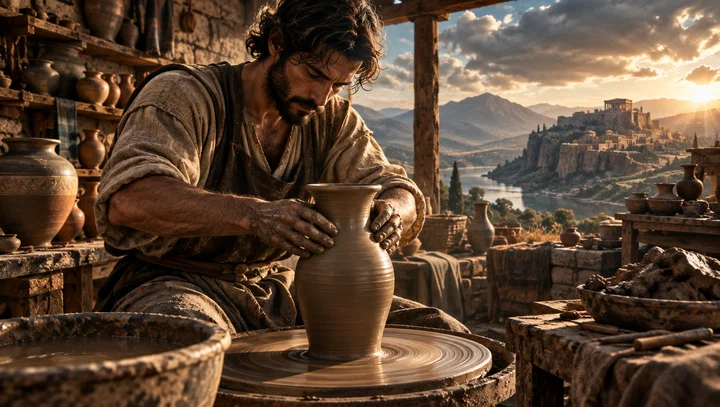
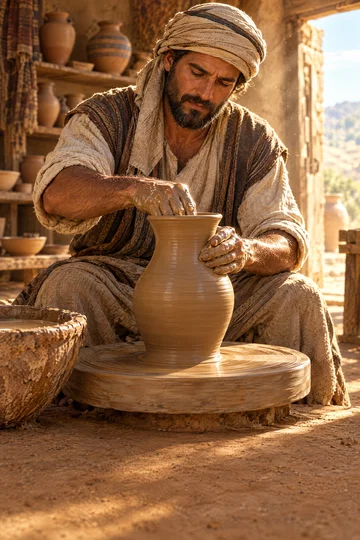
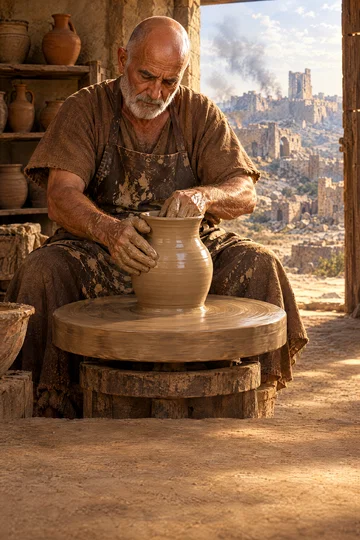
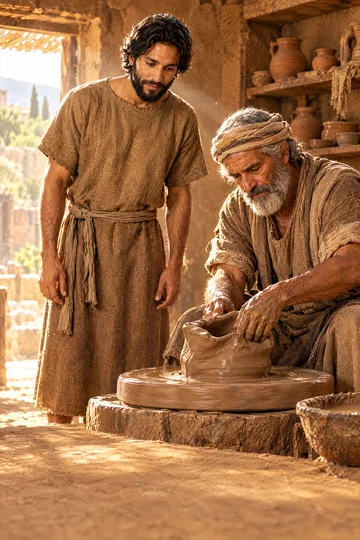
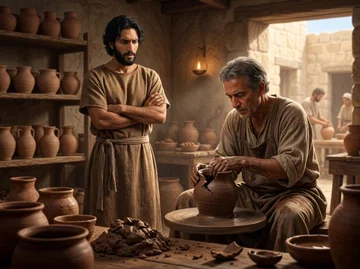
And the vessel that he made of clay was marred in the hand of the potter: so he made it again another vessel, as seemed good to the potter to make it.
Translations
American King James Version, King James Version, KJV Cambridge Paragraph Bible
And the vessel that he made of clay was marred in the hand of the potter: so he made it again another vessel, as seemed good to the potter to make it.
And the vessel that he made of clay was marred in the hand of the potter: so he made it again another vessel, as it seemed good to the potter to make it.
Revised Version, American Standard Version
And when the vessel that he made of the clay was marred in the hand of the potter, he made it again another vessel, as seemed good to the potter to make it.
and marred is the vessel that he is making, as clay in the hand of the potter, and he hath turned and he maketh it another vessel, as it was right in the eyes of the potter to make.
And the vessel that he made was marred, as clay, in the hand of the potter; and he made it again another vessel, as seemed good to the potter to make.
Then was marred, the vessel that he was making, while yet it was clay in the hand of the potter,—so he turned and made of it another vessel, as seemed right in the eyes of the potter to make it.
Berean Standard Bible, Majority Standard Bible
But the vessel that he was shaping from the clay became flawed in his hand; so he formed it into another vessel, as it seemed best for him to do.
When the vessel that he made of the clay was marred in the hand of the potter, he made it again another vessel, as seemed good to the potter to make it.
And when the vessel, which he was forming out of earth, got damaged in the hand of the potter, he made it again into another vessel, as it seemed good to the potter to make it.
And the vessell that he made of clay, was broken in the hand of the potter. so he returned, and made it another vessel, as seemed good to the potter to make it.
Douay-Rheims (Challoner revision)
And the vessel was broken which he was making with clay with his hands: and turning he made another vessel, as it seemed good in his eyes to make it.
Pictures
Cross-references
- Romans 9:21
Hath not the potter power over the clay, of the same lump to make one vessel unto honour, and another unto dishonour?
The potter’s authority over clay illustrates God’s authority to shape vessels for different purposes.
- Isaiah 64:8
But now, O LORD, thou art our father; we are the clay, and thou our potter; and we all are the work of thy hand.
God is the potter, and his people are clay shaped by his hand.
- 2 Timothy 2:21
If a man therefore purge himself from these, he shall be a vessel unto honour, sanctified, and meet for the master’s use, and prepared unto every good work.
A person may become a vessel fit for the Master’s use.
- Isaiah 29:16
Surely your turning of things upside down shall be esteemed as the potter’s clay: for shall the work say of him that made it, He made me not? or shall the thing framed say of him that framed it, He had no understanding?
The potter-and-clay image affirms God’s authority over what he made.
- Isaiah 45:9
Woe unto him that striveth with his Maker! Let the potsherd strive with the potsherds of the earth. Shall the clay say to him that fashioneth it, What makest thou? or thy work, He hath no hands?
Both compare the Creator’s authority over people to a potter’s authority over clay.
- Jeremiah 19:10-11
Then shalt thou break the bottle in the sight of the men that go with thee,
The marred vessel is broken beyond repair as judgment for the people’s sin.
- Romans 9:23
And that he might make known the riches of his glory on the vessels of mercy, which he had afore prepared unto glory,
God remakes marred vessels for glory.
- Romans 9:22
What if God, willing to shew his wrath, and to make his power known, endured with much longsuffering the vessels of wrath fitted to destruction:
God endures vessels of wrath fitted for destruction.
- Ephesians 2:10
For we are his workmanship, created in Christ Jesus unto good works, which God hath before ordained that we should walk in them.
Remade clay becomes God's workmanship.
- Romans 9:15
For he saith to Moses, I will have mercy on whom I will have mercy, and I will have compassion on whom I will have compassion.
God’s choice to remake the vessel illustrates his sovereign mercy.
Commentary
Each commentary is drawn from primary sources: the writings of Ellen G. White and Adventist pioneers and periodicals. Each commentary is separate. Its own words are not a quotation; follow the references to read the source passages.
Ellen G. White
10 sources
The marred clay remade into another vessel as seemed good to the potter declares God's sovereign authority as Potter to reshape Israel, nations, and His people when they go wrong, dealing with them differently as He chooses.Ms 92, 1891, par. 12–15Lt 34, 1899, par. 11–12 His dealing is conditional upon response: a nation warned of destruction that turns from evil will be spared, and those who abandon wrongdoing may avert threatened judgment, while a nation promised good that does evil will lose that good.Ms 92, 1891, par. 12–15Lt 34, 1899, par. 11–12 The same remaking shows His desire to save the marred, defective worker by shaping and refashioning individual workers and people according to His will and likeness.8T 186.1–2ST Dec 11, 1901Lt 84, 1886, par. 26–29 He knows what kind of vessel each person should become and what work and place best fit that person.Lt 63, 1898, par. 7–8
The potter's methods of kneading, tearing apart, pressing together, wetting, drying, shaping, trimming, and polishing until the clay suits him and becomes a fit vessel illustrate how God molds and purifies people to make them useful vessels.Lt 215, 1899, par. 22–2614MR 33.2 By grace and truth He fashions them into well-formed vessels that display His glory.Lt 48, 1888, par. 16–18 The verse therefore calls for submission: people must yield themselves, heed His instruction, surrender to His will, stay open to divine impressions, and be emptied of pride, self-sufficiency, and personal will and judgment.8T 186.1–2Lt 215, 1899, par. 22–26ST Dec 11, 190114MR 33.2Lt 48, 1888, par. 16–18 They are to let Him take away defects, seeing the imperfections shown to them and putting them away, including peculiar ways fastened upon the work, rather than trying to direct the work or do the potter's work themselves.8T 186.1–2Lt 215, 1899, par. 22–2614MR 33.2Lt 63, 1898, par. 7–8Lt 84, 1886, par. 26–29
Submission allows Him to remake the person into a fitting vessel of honor, united with Christ and bearing His likeness, reflecting His purpose with beauty and perfection.ST Dec 11, 1901Lt 48, 1888, par. 16–18Lt 63, 1898, par. 7–8Lt 78, 1901, par. 5–8 Thus yielded, the worker becomes more useful and triumphs with the truth.Lt 84, 1886, par. 26–29 Refusal lets wrong tendencies and defects deform character, spoils His work, and keeps them from the perfection and beauty He desires.ST Dec 11, 1901Lt 63, 1898, par. 7–8Lt 78, 1901, par. 5–8 If responsibility is thrown off and the remolding is resisted, what remains is a ruined man.Lt 84, 1886, par. 26–29
Sources
Pioneers and periodicals
24 sources
The clay was spoiled while still soft in the potter's hand, so he shaped it over again into another vessel as he chose.ST Oct 30, 1879ST Aug 18, 1909ST Nov 30, 1915 Israel was that clay, marred because it would not yield to God, yet able to be restored if it became submissive and turned back to Him.ST Aug 18, 1909ST Aug 18, 1909ST Aug 18, 1909 This lays down the general rule that a promised blessing or threatened judgment depends on its conditions and will be withheld or averted when conduct changes.ST Oct 30, 1879ST Mar 13, 1879ST Oct 1, 1896 As Maker, God has full right and power to shape character and settle the destinies of nations and individuals, preserving or destroying according as they are fit to continue.ST Jan 17, 1906ST Jan 31, 1906ST Mar 3, 1914 He does not arbitrarily destine any to be lost, but takes surrendered, broken and marred lives, even the most stubborn and self-willed, and through trial and discipline reshapes them into vessels of honor fitted for eternal life.ST Dec 8, 1914ST Oct 21, 1889ST Nov 30, 1915ST Sep 11, 1879ST Sep 11, 1879
Potter, Clay, and Israel
The vessel of clay is marred while still in the potter's hand, and the potter then makes it again into another vessel as seems good to him to make it.ST Oct 30, 1879ST Aug 18, 1909ST Nov 30, 1915ST Sep 11, 1879RH Jun 23, 1868 Israel is that clay vessel, marred because it would not submit to God, but God could remedy its calamity if the people became submissive and turned back to Him.ST Aug 18, 1909ST Aug 18, 1909ST Aug 18, 1909 The passage belongs to the prophecies of Jeremiah 3 through 21 that denounce sin with awful clearness, carry sorrow of heart over transgression, and make a touching appeal to return to God which the mass of the people fail to answer.ST Oct 20, 1909
The potter's work is shaping by hand upon the wheel, not by machinery or molds, with his hand everywhere round about the clay, within and without, forming, shaping, widening or narrowing.ST Sep 11, 1879 His eye is continually upon the work to see if it pleases him and to remake it as seems good to him.ST Sep 11, 1879
People are yielding clay in shaping hands, with God as the skilled artisan and Maker whose highest thought is true beauty of form, in contrast to weak, unskillful hands that make crude forms.RH May 14, 1901 Parents likewise hold their children as clay in their own hands to shape as they will and must seek aid from God to mold rightly, so that weak, willing hands may be taught and the Maker's highest thought unfold in true forms of beauty.RH May 14, 1901
Conditional Prophecy and Sovereignty
The marred vessel remade as seems good to the potter states the rule for conditional prophecies, that a promised outcome depends on meeting its conditions and will not be fulfilled if those conditions are not met.ST Oct 30, 1879 This is a general rule of God's working among men, always implied if not always stated, applying equally to Jeremiah and Ezekiel, and it is the key to the prophecies of restoration.ST Oct 1, 1896 All words concerning a nation and kingdom, to destroy it or to build and plant it, are conditional after this pattern.ST Oct 1, 1896
God may change His purpose toward a people when that purpose depends on a condition, withholding the good He said He would do for them if they turn from Him.ST Mar 13, 1879 He will repent of evil threatened if the nation turns from evil, and will repent of good promised to build and plant if it does evil and obeys not His voice, even scattering His people because of wickedness.ST Oct 1, 1896 Such change is not failure to keep an unconditional word, but response to changed conduct.ST Mar 13, 1879
As potter, God has the perfect right and power to preserve or destroy people according to whether they are fit to continue existing.ST Jan 17, 1906 People belong to Him and He has the right to direct them, for as their Creator and Redeemer He is their master and they owe Him obedience.ST Jan 31, 1906 He shapes character and determines the destinies of nations and individuals, as the potter reshapes marred clay into another vessel as he chooses.ST Mar 3, 1914ST Mar 3, 1914
God actively administers and executes His moral law, yet His judgments are governed by the law's inherent relation between obedience and reward and disobedience and penalty.ST Mar 3, 1914 The destinies of nations and individuals depend on their voluntary obedience or disobedience.ST Mar 3, 1914ST Mar 3, 1914 He is not an indifferent observer, and His administration is not arbitrary.ST Mar 3, 1914
After long endurance of vessels of wrath fitted for destruction not by Him but by their own sinfulness, He makes known the riches of His glory by taking broken and cracked and marred vessels and making them again into perfect vessels of mercy fitted for honor and glory and eternal life.ST Oct 21, 1889 In this He makes those His people who were not His people and those beloved who were not beloved, and makes His enemies and rejecters into children of the living God, and no one can reasonably object to His doing so.ST Oct 21, 1889 The image does not mean that God arbitrarily creates some for perdition, nor that anyone is foreordained to be lost, but that God makes the good possible and people choose whether to follow His way or reject it, while He can remake those who turn to Him.ST Oct 21, 1889ST Nov 30, 1915
Remaking Marred Lives
The human part is to yield to the divine work and submit to will and instruction rather than attempt to do the potter's shaping work upon oneself.ST Dec 8, 1914ST Dec 11, 1901ST Oct 15, 1902 No one can remove personal roughness or bring about the intended form by unaided effort, but by surrender the life can be shaped into a vessel reflecting the divine likeness and purpose.ST Dec 8, 1914ST Dec 11, 1901ST Oct 15, 1902 Such surrender allows rejoicing in being chosen for divine use, while refusal to be molded lets wrong tendencies deform the character and hold it back from the perfection intended for it.ST Dec 11, 1901ST Oct 15, 1902
God takes shapeless and worthless clay, even the hardest material of strong, rigid and unyielding wills, and reshapes it.ST Sep 11, 1879ST Sep 11, 1879 The bubbles of self-conceit, self-will and self-righteousness are beaten out and stubbornness is broken down, so that what would mar the work is removed.ST Sep 11, 1879ST Sep 11, 1879 From this material are made beautiful and chosen vessels to the divine praise.ST Sep 11, 1879
The remaking comes through disappointments, pain, trial and adversity, which serve as the potter's wheel on which love wounds and shapes lives to a divine mold and forms its own image in the soul.ST Sep 11, 1879ST Jan 25, 1910ST Sep 11, 1879ST Nov 6, 1893 Adversity in this work is a means of removing faults and freeing from self and idols to love and obey God alone, not evidence of anger.ST Sep 11, 1879ST Jan 25, 1910ST Sep 11, 1879 The severer process includes the furnace of trial, which for the present takes color and conscious grace out and reveals impatience and loss of virtues, in order to ground graces more deeply, remove conceit about them, engrave the divine pattern out of sight, and make the work lasting.ST Sep 11, 1879 A vessel put into the divine hands in this way carries refreshment and cheering to others, instead of remaining a clogging hindrance through living to self.ST Sep 11, 1879
What has been marred can be remade, whether unfinished, broken, or marred under the shaping hand.RH May 29, 1900RH Jun 23, 1868ST Nov 27, 1884 People are molded and bent as unfinished earthen vessels, and the work continues until the purpose is fulfilled and they bear the divine image and reflect perfection.RH May 29, 1900RH Jun 23, 1868ST Nov 27, 1884 All that is needed to shape them is thought of beforehand before they are sent to the furnace, with thoughts of peace and not of evil aimed at bringing each faithful one through the furnace and home at last without spot or blemish.ST Nov 27, 1884
A nation or person may turn from good and become marred while still being shaped, yet while the clay remains plastic it can be reshaped.ST Aug 18, 1909ST Aug 18, 1909ST Aug 18, 1909 The marring comes by refusal to submit, but the calamity can still be remedied if there is submission and turning back.ST Aug 18, 1909ST Aug 18, 1909ST Aug 18, 1909 If the clay hardens in that distorted condition it can only be broken, facing destruction and ruin that cannot be undone.ST Aug 18, 1909ST Aug 18, 1909ST Aug 18, 1909
The chosen vessels constitute the house of God, so the time of judgment beginning at the house of God means anticipatory searchings and trials now.ST Sep 11, 1879 Those present searchings take out everything that mars usefulness.ST Sep 11, 1879 By them the vessels are fitted to bear the divine name effectually before the world.ST Sep 11, 1879
Sources