Romans 9:21
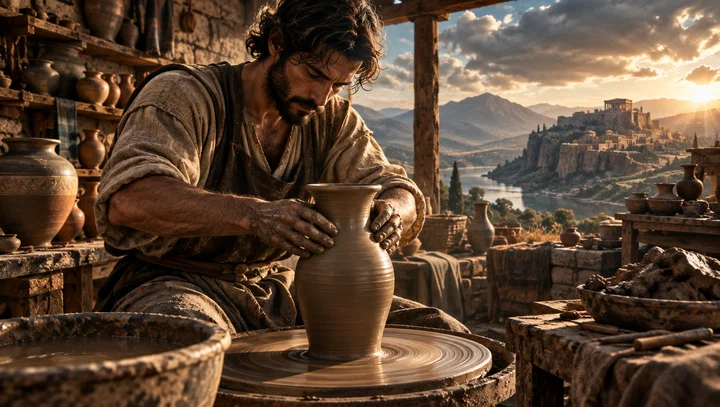
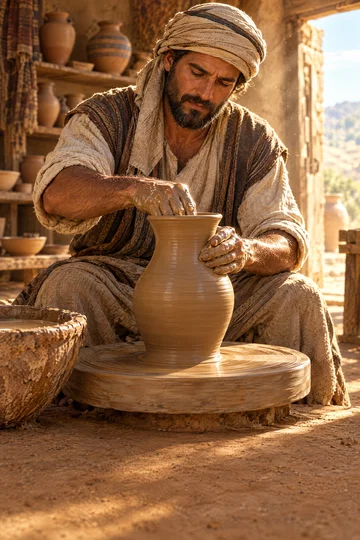
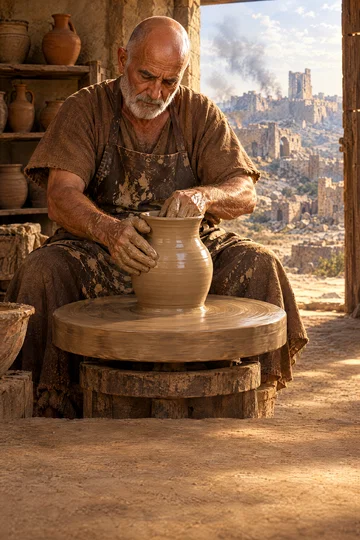
Hath not the potter power over the clay, of the same lump to make one vessel unto honour, and another unto dishonour?
Translations
Has not the potter power over the clay, of the same lump to make one vessel to honor, and another to dishonor?
King James Version, KJV Cambridge Paragraph Bible
Hath not the potter power over the clay, of the same lump to make one vessel unto honour, and another unto dishonour?
Hath not the potter power over the clay of the same lump to make one vessel to honor, and another to dishonor?
Or hath not the potter a right over the clay, from the same lump to make one part a vessel unto honour, and another unto dishonour?
Or hath not the potter a right over the clay, from the same lump to make one part a vessel unto honor, and another unto dishonor?
hath not the potter authority over the clay, out of the same lump to make the one vessel to honour, and the one to dishonour?
Or has not the potter authority over the clay, out of the same lump to make one vessel to honour, and another to dishonour?
Or hath not the potter a right over the clay—out of the same lump, to make some, indeed, into a vessel for honour, and some for dishonour?
Berean Standard Bible, Majority Standard Bible
Does not the potter have the right to make from the same lump of clay one vessel for special occasions and another for common use?
Or hasn’ t the potter a right over the clay, from the same lump to make one part a vessel for honor, and another for dishonor?
Or has not the potter the right to make out of one part of his earth a vessel for honour, and out of another a vessel for shame?
Hath not the potter power of the clay to make of the same lumpe one vessell to honour, and another vnto dishonour?
Douay-Rheims (Challoner revision)
Or hath not the potter power over the clay, of the same lump, to make one vessel unto honour, and another unto dishonour?
Pictures
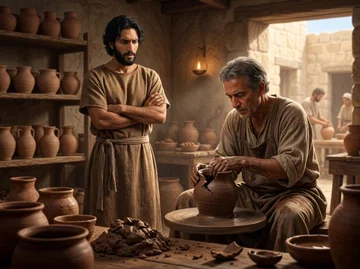
Cross-references
- Jeremiah 18:6
O house of Israel, cannot I do with you as this potter? saith the LORD. Behold, as the clay is in the potter’s hand, so are ye in mine hand, O house of Israel.
God compares his people to clay in the potter’s hand, whom he shapes as he chooses.
- 2 Timothy 2:20-21
But in a great house there are not only vessels of gold and of silver, but also of wood and of earth; and some to honour, and some to dishonour.
Describes vessels for honor and how cleansing prepares them for useful service.
- Isaiah 64:8
But now, O LORD, thou art our father; we are the clay, and thou our potter; and we all are the work of thy hand.
Both depict God as the Potter and people as clay shaped by his power.
- Romans 9:15
For he saith to Moses, I will have mercy on whom I will have mercy, and I will have compassion on whom I will have compassion.
God’s freedom to show mercy parallels the potter’s authority over the clay.
- Romans 9:17
For the scripture saith unto Pharaoh, Even for this same purpose have I raised thee up, that I might shew my power in thee, and that my name might be declared throughout all the earth.
Pharaoh illustrates God using a ruler to reveal divine power and serve his purposes.
- Isaiah 45:9-12
Woe unto him that striveth with his Maker! Let the potsherd strive with the potsherds of the earth. Shall the clay say to him that fashioneth it, What makest thou? or thy work, He hath no hands?
same potter power to preserve or destroy
- Jeremiah 18:4
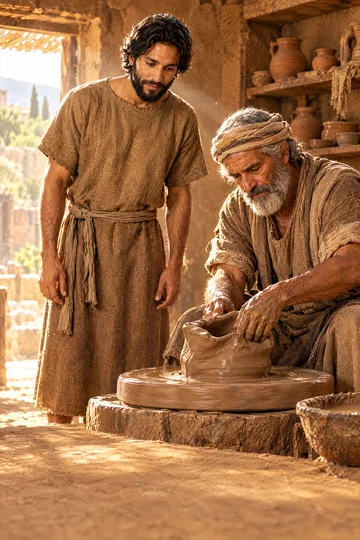
And the vessel that he made of clay was marred in the hand of the potter: so he made it again another vessel, as seemed good to the potter to make it.
The potter’s remaking of a vessel explains the image.
- Genesis 25:23
And the LORD said unto her, Two nations are in thy womb, and two manner of people shall be separated from thy bowels; and the one people shall be stronger than the other people; and the elder shall serve the younger.
God foretells that the elder son will serve the younger.
- Malachi 1:2-3
I have loved you, saith the LORD. Yet ye say, Wherein hast thou loved us? Was not Esau Jacob’s brother? saith the LORD: yet I loved Jacob,
The passage cites the contrast between God’s love for Jacob and hatred for Esau.
- Ephesians 1:11
In whom also we have obtained an inheritance, being predestinated according to the purpose of him who worketh all things after the counsel of his own will:
God works all things according to His will.
- Romans 9:6-8
Not as though the word of God hath taken none effect. For they are not all Israel, which are of Israel:
The clay illustration follows the distinction between natural descent and God’s children of promise.
- Psalms 115:3
But our God is in the heavens: he hath done whatsoever he hath pleased.
God does whatever pleases him.
- Ephesians 1:4-6
According as he hath chosen us in him before the foundation of the world, that we should be holy and without blame before him in love:
God’s sovereign choice in Christ brings adoption and displays the glory of his grace.
- Isaiah 46:10
Declaring the end from the beginning, and from ancient times the things that are not yet done, saying, My counsel shall stand, and I will do all my pleasure:
God’s counsel stands, and he accomplishes all his pleasure.
- Romans 8:28-30
And we know that all things work together for good to them that love God, to them who are the called according to his purpose.
God carries through those who yield to his plans.
Commentary
Each commentary is drawn from primary sources: the writings of Ellen G. White and Adventist pioneers and periodicals. Each commentary is separate. Its own words are not a quotation; follow the references to read the source passages.
Ellen G. White
16 sources
God as Maker has rightful authority over the people He formed, just as a potter has authority over the clay.Lt 69, 1896, par. 10–13ST Nov 28, 1911ST Jan 21, 1897 This claim rests on ownership by creation, since the material of humanity is His own work, and by redemption, since people have been bought with the precious blood of Christ and live in Him, so they are not their own and owe Him their whole willing service, including the use of their bodies.Lt 69, 1896, par. 10–13ST Nov 28, 1911ST Jan 21, 1897 He exercises this authority by actively molding those in His hands day by day as a potter shapes clay into a useful vessel, with wisdom, pity, and love, while their part is to yield, stay pliable, surrender self to His will, and cooperate rather than find fault or try to direct the work.Lt 215b, 1899, par. 15–1714MR 33.2Lt 54, 1894, par. 14Lt 45, 1886, par. 6–7 Those who submit are formed into vessels of honor in Christ's image, made humble, shapely, fruitful and useful, partakers of the divine nature and filled with His renewing grace, and are fitted and placed for the service where they can work in unity with Him and witness through unselfish lives.Lt 215b, 1899, par. 15–17Lt 54, 1894, par. 14Lt 63, 1898, par. 7–8Lt 45, 1886, par. 6–7Lt 177, 1901, par. 6–8
Potter's Authority Over Clay
God as Maker has rightful authority over the people He formed, just as a potter has authority over the clay.Lt 69, 1896, par. 10–13ST Nov 28, 1911ST Jan 21, 1897 This authority rests on ownership, for the dust and clay from which human beings are made is His own production by creation.Lt 69, 1896, par. 10–13ST Jan 21, 1897 By that creation He is the Master Artist and owner of the work of His hands.ST Jan 21, 1897 That claim of creation is joined by redemption, since people have been bought with the precious blood of Christ and live and move and have their being in Him.ST Nov 28, 1911ST Jan 21, 1897 Therefore by creation and redemption they are His property and not their own, and He rightfully claims their entire willing service, including the use of their bodies.Lt 69, 1896, par. 10–13ST Nov 28, 1911ST Jan 21, 1897
His authority as potter over the clay extends over both Israel and the Gentiles.AA 375.2–376.2 From either group He may call people to different purposes.AA 375.2–376.2 Those called include both Jews and Gentiles prepared for glory, to whom He reveals the riches of His glory, while He patiently endures those destined for destruction.AA 375.2–376.2
Molded into Vessels of Honor
The verse presents God as actively molding those in His hands day by day, as a potter shapes clay into a useful vessel fit for use.Lt 215b, 1899, par. 15–1714MR 33.2Lt 45, 1886, par. 6–7 That shaping includes kneading, tearing, pressing, wetting, drying, shaping, trimming, and polishing, until the servant is formed into Christ's image.Lt 215b, 1899, par. 15–17 In the hands of Jesus this molding is done with wisdom, pity, and love, working in surrendered people what pleases Him and transforming them into Christ's likeness.Lt 42, 1890, par. 5–6
The person's part is to yield and submit to the Lord's molding rather than find fault with it.Lt 215b, 1899, par. 15–1714MR 33.2Lt 54, 1894, par. 14Lt 45, 1886, par. 6–7 The clay is not to attempt to do the potter's work and direct it, but to be pliable in His hands.Lt 215b, 1899, par. 15–1714MR 33.2MYP 156.5 This means surrendering self to His will and heeding His instruction, so that His hand forms shapely vessels after His own likeness.Lt 78, 1901, par. 5–8 One who has begun the life of faith is to be willing to follow wherever He leads, trusting Him to carry out His designs while cooperating in working out salvation.MYP 156.5
Those who thus submit are worked into vessels of honor.Lt 215b, 1899, par. 15–17Lt 54, 1894, par. 14Lt 45, 1886, par. 6–7Lt 42, 1890, par. 5–6 They become humble and useful, made partakers of the divine nature and fruitful workers.Lt 215b, 1899, par. 15–17Lt 45, 1886, par. 6–7 They are filled with Christ's renewing, sanctifying grace.Lt 54, 1894, par. 14 Where submission is refused, defects and wrong tendencies mar the character and prevent the beauty and perfection God desires.Lt 78, 1901, par. 5–8
As vessels of honor they are fitted for His service and use and placed where they are best suited to work in unity with Christ.Lt 215b, 1899, par. 15–17Lt 63, 1898, par. 7–8Lt 177, 1901, par. 6–8 They are enabled to serve in their appointed place and to bear witness to Him through unselfish lives.Lt 177, 1901, par. 6–8 Resisting His guidance frustrates the work, while submitting to it allows a life joined together in harmony.Lt 63, 1898, par. 7–8 In particular, God draws young men into close relationship with Himself so He can claim their whole hearts and affections and mold them into vessels for honorable service.17MR 335.1–2Ms 28, 1885, par. 18 He thereby prepares them for work suited to them and for a special work, calling them to pursue holiness like Daniel.17MR 335.1–2Ms 28, 1885, par. 18
Human hearts are in God's hands as clay is in the potter's hands.GC88 189.3–4 People therefore cannot make others believe by force.GC88 189.3–4 God Himself works on the heart, and His Word can bring about what human efforts cannot.GC88 189.3–4
Sources
Pioneers and periodicals
40 sources
God as Maker has rightful power over mankind to form different vessels for different purposes and uses, as a potter forms vessels from the same common lump of clay.ST Jun 25, 1912ST Jul 1, 1908ST Oct 15, 1902 Vessels unto honour and unto dishonour mean different kinds, uses, and degrees of honor, not that He makes some people to be saved and others to be destroyed, for all are intended for use and He offers salvation freely to all.ST Oct 21, 1889ST Jul 16, 1896ST Oct 21, 1889 Those who become fitted for destruction do so by their own course of sin, resistance, and persistent rebellion, while He patiently endures them, gives time and opportunity, and still makes His power and mercy known.ST Jun 25, 1912ST Oct 21, 1889ST Jul 16, 1896RH May 23, 1854 In Paul's argument this shows that physical descent does not by itself decide who inherits the promise, but faithful Jews and Gentiles become His true people through faith in Christ, with former rejecters and enemies still able to be made vessels of mercy.ST Oct 21, 1889ST Jul 15, 1913ST Jul 9, 1896RH Jun 16, 1874RH Mar 13, 1856 The fitting response is therefore to yield to His shaping without murmuring or resistance, letting Him mold the whole life through its appointed trials into a vessel of honor in His image.ST Dec 8, 1914RH Sep 15, 1863RH Jun 15, 1916RH Dec 23, 1909ST Oct 15, 1902
Potter Clay Imagery
God has right and power to do as He wills with what He has made, just as a potter has power over clay to shape it into vessels for different uses and purposes according to His will.ST Jun 25, 1912ST Jul 1, 1908ST Jul 16, 1896ST Jul 16, 1896 His purpose is to make from the clay under His hand every good thing He can, so that those who yield to Him develop the character He intends, while those who resist His goodness and refuse His requirements become vessels fitted for destruction by their own course.ST Jun 25, 1912 Through His word and providence He prepared a remnant of the Jews and some Gentiles to receive the gospel and become vessels of honor, while patiently enduring others who were fitted for destruction.RH May 23, 1854 This forming of different kinds of vessels from the same lump does not fix each person's salvation or destruction without regard to response, nor is it an arbitrary preference for Jews over Gentiles, for all are chosen in Christ for adoption to show grace and glory and human standing gives no basis for challenging His authority.ST Jul 1, 1908ST Jul 16, 1896 God knows people's characters and works to help even those whose character He hates, so that if Esau had yielded as Jacob did He could have given him a righteous character too.ST Jul 1, 1908 When those He seeks to shape for honorable service prove incorrigible, He can use them for a humbler purpose and judgment rather than discard them, enduring the disobedient as vessels of wrath while believers, both Jews and Gentiles who answer His call, share His mercy as vessels of mercy.RH May 23, 1854
Of the same lump means a common human origin from which both kinds of vessels can be made.ST Jul 1, 1908ST Oct 15, 1902 The same humanity can yield vessels of honor or of dishonor, with a believing remnant from Israel and also some from the Gentiles prepared by the same means of word and providence to receive the gospel and become vessels of honor, while those who reject it are endured with patience and fitted for destruction. Each person is only a lump of earthen clay in the hands of an organized, all-wise, almighty and benign design, unable to break off his own rough edges or attain anything if passed by and left to lie.ST Oct 15, 1902
Unto honour and unto dishonour mean vessels of different kinds made for various purposes, uses and degrees of honor, not that some men were made to be saved and others to be destroyed.ST Jul 16, 1896ST Oct 21, 1889 No potter busies himself making vessels for the sole purpose of destroying them, and God never made any man for the purpose of destroying him, for all vessels are intended for use and not for destruction.ST Jul 16, 1896 A vessel made for less honor is still made for use.ST Oct 21, 1889
The potter has the right to reshape a marred vessel into one fit for honor.ST Oct 21, 1889 Vessels fit for destruction are made so by their own sin and not by God, who patiently endures them and makes known His power and glory by fitting vessels of mercy for honor, eternal life and glory.ST Oct 21, 1889 He can make His people out of those who were not His people, including former rejecters and enemies.ST Oct 21, 1889
Israel Promise Context
Romans 9:21 belongs to Paul's discussion of who inherits God's promise and how that promise is obtained.ST Jul 9, 1896 It stands within the argument that physical descent from Abraham, Jacob, and the ancient tribes does not by itself make anyone part of God's Israel.ST Jul 15, 1913RH Jun 16, 1874RH Mar 13, 1856RH Jan 19, 1860 Unbelieving descendants of Abraham and Jacob are not counted as Abraham's seed or the children of promise, while faithful Jews and Gentiles alike enter the gospel people through faith in Christ.ST Jul 15, 1913RH Jun 16, 1874RH Mar 13, 1856 To teach a difference in the purposes of God's grace between Israel and believing Gentiles, or to restore the tribes according to the flesh, would contradict this chapter and rebuild the middle wall that Christ in His gospel has broken down.ST Jul 15, 1913RH Jan 19, 1860
On this principle, Israel in Hosea's prophecy is not limited to the Jews by physical descent.RH Mar 25, 1873 Hosea's promise belongs to the gospel work of gathering Christ's true people from all nations and establishing Christ's kingdom, not to a national restoration of the Jews according to the flesh.RH Mar 25, 1873 Its setting describes fleshly Israel as accursed from Christ because, though following after the law of righteousness, they did not attain to righteousness, since they sought it not by faith but by works.ST Jul 23, 1896 The Gentiles gained precedence over them by seeking righteousness in the right way by faith, fulfilling that the publicans and harlots go into the kingdom before the self-righteous and that the kingdom shall be taken from those without fruit and given to a nation bringing forth its fruits.ST Jul 23, 1896 Yet God has not cast off His people because they stumbled, but endures with much longsuffering even the vessels of wrath fitted to destruction, still stretching forth His hands all day long to a disobedient people that they might be saved.ST Jul 23, 1896
In that setting the verse shows God's authority to form different kinds of vessels from the same lump of clay. This does not mean He fixes each person's salvation or destruction without regard to response, nor that He created some for salvation and others for damnation with their choices unable to affect their end. Through His word and providence He prepared a remnant of the Jews and also some Gentiles to receive the gospel and become vessels of honor. Those who reject it are patiently endured and, by the same means of His word and providence, are fitted for destruction.
Sovereignty Without Arbitrariness
The potter's right over the clay does not mean that God arbitrarily creates anyone for destruction, makes anyone wicked, prevents anyone from being saved, or fixes anyone's destiny irrevocably before birth.ST Oct 21, 1889ST Jul 16, 1896ST Jul 16, 1912ST Nov 30, 1915 Honor and dishonor mean vessels of different kinds made for various purposes and uses, not that some are made to be saved and others to be destroyed, for no potter makes vessels for the sole purpose of destroying them but intends all for use.ST Oct 21, 1889ST Jul 16, 1896 God has foreordained the good and made it possible for everyone to obtain it, freely offering salvation to all and working to lead all to accept it, calling every soul to a character that can be saved.ST Nov 30, 1915ST Oct 21, 1889 The same lump can yield vessels of honor or dishonor without making God's choice arbitrary, because through His word and providence He prepares a believing remnant from Israel and also some Gentiles to receive the gospel and become vessels of honor.ST Jul 1, 1908
God's election centers on character, for He knows people's characters and works to help even those whose character He hates, compelling no one to sin.ST Jun 25, 1912ST Jul 1, 1908 His purpose is to make from the clay under His hand every good thing He can, so that those who yield to Him develop the character He intends.ST Jun 25, 1912ST Jul 1, 1908 If Esau had yielded as Jacob did, God could have given him a righteous character too.ST Jul 1, 1908 Vessels fitted for destruction become so by their own course of sin, resistance, and persistent rebellion, not by God's making.ST Jun 25, 1912ST Oct 21, 1889ST Nov 30, 1915 Those who reject His way choose sin and death, and if they persist they reap the fruit of their choice, bringing their fate upon themselves.ST Jun 25, 1912RH May 7, 1872ST Nov 30, 1915
God patiently endures vessels of wrath, giving them time and opportunity rather than condemning arbitrarily.ST Oct 21, 1889RH May 23, 1854RH May 7, 1872 When they persist in rebellion and become hopelessly apostate or incorrigible, He gives them over to their own ways and orders events so that even their rebellion serves His honor and glory.RH May 23, 1854RH May 7, 1872RH May 23, 1854 In this way He makes known His power, wrath, and long-suffering toward vessels fitted for destruction, while making known the riches of His glory toward vessels of mercy.ST Oct 21, 1889ST Jul 16, 1896RH May 7, 1872 He fits vessels of mercy for honor, eternal life, and glory, and can make His people out of those who were not His people, including former rejecters and enemies.ST Oct 21, 1889 People may become vessels of mercy by accepting His grace, both Jews and Gentiles who answer His call and share His mercy.RH May 23, 1854RH May 7, 1872
The same authority shows that God's choice is not an arbitrary preference for Jews over Gentiles, for He has authority to offer the same mercy and gospel blessings to Gentiles as to Jews.ST Jul 16, 1896ST Oct 21, 1889 All are chosen in Christ for adoption to show His grace, and human standing gives no basis for challenging His authority.ST Jul 16, 1896 Pharaoh illustrates this, for God raised him to the Egyptian throne so that His power and glory could be shown through Pharaoh's submission and help to God's people, as with Nebuchadnezzar, but Pharaoh refused and God left him to his hardened heart.ST Jul 16, 1912RH May 23, 1854 God's power and glory were still shown in Pharaoh's fall, and God does not make men wicked but makes use of those whose wickedness fits them for a work that displays His power.ST Jul 16, 1912RH May 23, 1854 God's sovereign power serves grace and mercy rather than destruction, since salvation comes through favor and not by earning or deserving.ST Jul 16, 1896 A person makes the call to salvation through mercy and grace effective by choosing God's way so that God can use him, as He sought to use Israel and Pharaoh; Pharaoh's refusal removed him from God's purpose for him but could not ultimately defeat God's purpose, for God chooses no one to sin, condemnation, or wrath.
As Creator God has, like a potter among his vessels, the power and right to preserve or to destroy any person according to His own will, working all things after the counsel of His own will.ST Jan 17, 1906 That decision is always in strict accordance with fitness or unfitness for continued existence, so that those who submit to His revealed will continue to exist and those who reject it cease to exist.ST Jan 17, 1906 In contrast, those who held a predestinarian confession connected the same authority over clay with the claim that God predestines some people to eternal life and ordains the rest to death, passing them by and appointing them to dishonor and wrath for their sin.ST Oct 21, 1889
Creator Authority and Duty
As Creator, God has authority over those He made, as a potter has authority over clay, and He may determine their purpose and has the right to command them.ST Dec 3, 1874RH Dec 1, 1874 Because He made people and sustains them, He has the right to direct their conduct, and His creative power is the basis of their moral duty to obey Him.ST Dec 3, 1874RH Dec 1, 1874
As maker and ruler of His work, God has authority over what He has made and may order or change it according to His choice.RH May 23, 1854RH May 23, 1854RH Mar 14, 1865 He has the right to choose instruments for honor or judgment according to His will and wisdom.RH May 23, 1854RH May 23, 1854 The clay represents people whom He seeks to shape for honorable service, and when they prove incorrigible He can use them for a humbler purpose and judgment rather than discard them.RH May 23, 1854RH May 23, 1854 The vessels of wrath are the disobedient Jews, whom He has long endured and who are fitted for destruction, while the vessels of mercy are believers, both Jews and Gentiles, who answer His call and share His mercy and glory.RH May 23, 1854RH May 23, 1854 He does not make people wicked, but as with Pharaoh He makes use of those whose wickedness fits them for a work that displays His power, patiently bearing with the vessels of wrath and making His judgment and power known on them.RH May 23, 1854RH May 23, 1854
Because human beings belong to God by creation and redemption, they owe Him willing service.ST Nov 28, 1911ST Jan 21, 1897 The clay out of which humans are formed is His own production by creation, making Him the Master Artist and owner of the work of His hands, and this ownership gives Him a claim on willing service.ST Nov 28, 1911ST Jan 21, 1897 That creation claim is joined by redemption, since people have also been bought with the precious blood of Christ and live and move and have their being in Him, so they are not their own.ST Nov 28, 1911ST Jan 21, 1897
God has power as potter over human clay and uses it with merciful, all-wise love that knows one person from another.ST Jun 26, 1901 He gauges the strain of each soul's distress and measures strength or feebleness, so He does not treat all vessels alike, knowing the shock that only jars sturdy delf would shatter fragile porcelain.ST Jun 26, 1901 He handles His vessels mercy-gloved, delights to love while asking small return, and loves forever what He once loved.ST Jun 26, 1901 His making of mankind as the final work of the sixth day in His image hallows common clay, both delf and porcelain, keeps His care on it forever, and proves none of His works are in vain.ST Jun 26, 1901
Submission and Daily Living
The proper response to the potter's power is to yield to His shaping rather than try to do the potter's work. Molded clay cannot refuse the vessel made from it or demand a different lot, but accepts God's will without murmuring and does duty with meekness.ST Dec 8, 1914RH Sep 15, 1863 He has full power over human beings as clay of the same lump, to make each vessel according to organized, all-wise, almighty, benign design and gracious, sovereign will, while a person is only a lump of earthen clay and a rough ashlar unable to break off rough edges or attain anything if passed by and left to lie.ST Oct 15, 1902 The right course is to subserve His wisdom, skill and purpose, yield to His chisel, compass and square, let Him have His way and be fashioned and used, rejoicing to be an object of His choice.ST Dec 8, 1914ST Oct 15, 1902
The proud heart can yield and ask to be made as God wills, whether shaped as a finely adorned vase or a rude cup.ST Aug 20, 1894 In either form the vessel acknowledges that its form and the skill that made it belong to God, and even desolate places display His love and goodness.ST Aug 20, 1894 By consecrating the whole self and submitting to His wise leading through distinct trials and experiences suited to each need, He molds people into vessels of honor in His image that bring Him glory.RH Jun 15, 1916RH Dec 23, 1909 Persistent self-will, insubordination, impatience, murmuring, doubt and complaint hinder and mar His work, and if continued can make a person incorrigible and lost.RH Jun 15, 1916
Like clay before its potter, a person has no standing to put God on trial or claim a right against Him, since a right implies merit earned by actions.ST Mar 19, 1912 Even after doing all that is required, people remain servants who have only done duty, so joy and pain alike are to be met with acceptance of the Father's will.ST Mar 19, 1912 It is folly to fight with the Infinite and end by going under in the wrestle, while wisdom is to shape oneself into God's good plan as water shapes itself into a vessel.ST Aug 13, 1896 People are clay in God's hands and dependent on Him as potter, while toward other people they are to act as potters by actively giving and influencing lives.ST Dec 16, 1897
A nation at the crisis of its history and destiny is like plastic clay that can be shaped for dishonor as well as honor.ST Jan 3, 1905 Japan is such a people, ready to be molded yet liable to be marred, so if the Lord's agents procrastinate and leave the opening empty the devil's agents will enter and shape it for dishonor, sowing tares while they sleep.ST Jan 3, 1905 Therefore the most important work at such a crisis is to flood the land with the gospel of the Son of God before it is misshaped.ST Jan 3, 1905 Children lie in their parents' hands like yielding clay to be shaped as willed, and that molding reveals the thought of the maker.RH May 14, 1901 Weak, unskillful hands alone produce crude forms, but hands taught with skill from on high rightly mold the clay so true forms of beauty unfold the Maker's highest thought.RH May 14, 1901
Because the Lord is Judge and each person is but clay before Him, people must beware of harshness and be pitiful in all they do and say.ST Sep 12, 1895 The potter's power over clay does not give people power over others' hearts, for only God can take possession of the heart.ST Mar 20, 1907 Human beings may speak and preach but must not use force to compel faith, since coercion produces outward appearances and hypocrisy, not sincere faith, love or charity.ST Mar 20, 1907 The same image also shows how people can be shaped by another's power, as clay is in a potter's hands, when people weakened by their church's teachings are in the confessor's hands.
Sources