Job 1:16
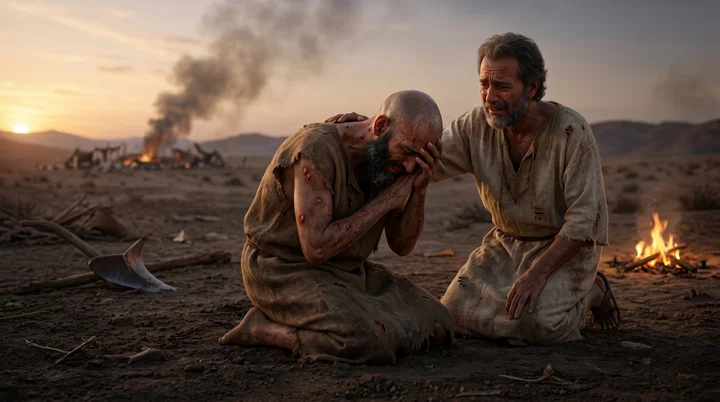
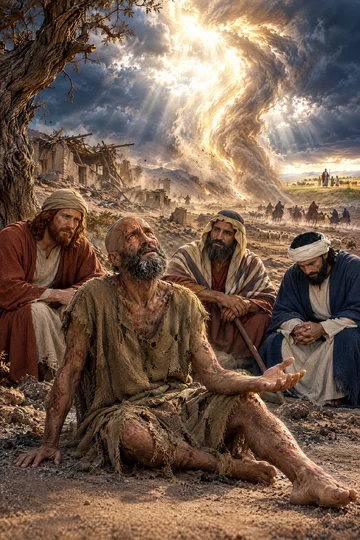
While he was yet speaking, there came also another, and said, The fire of God is fallen from heaven, and hath burned up the sheep, and the servants, and consumed them; and I only am escaped alone to tell thee.
Translations
While he was yet speaking, there came also another, and said, The fire of God is fallen from heaven, and has burned up the sheep, and the servants, and consumed them; and I only am escaped alone to tell you.
King James Version, Revised Version
While he was yet speaking, there came also another, and said, The fire of God is fallen from heaven, and hath burned up the sheep, and the servants, and consumed them; and I only am escaped alone to tell thee.
While he was yet speaking, there came also another, and said, The fire of God is fallen from heaven, and hath burnt up the sheep, and the servants, and consumed them; and I only am escaped alone to tell thee.
While he was yet speaking, there came also another, and said, The fire of God hath fallen from heaven, and hath burned up the sheep and the servants, and consumed them; and I only have escaped alone to tell thee.
While he was yet speaking, there came also another, and said, The fire of God is fallen from heaven, and hath burned up the sheep and the servants, and consumed them; and I only am escaped alone to tell thee.
While this [one] is speaking another also hath come and saith, 'Fire of God hath fallen from the heavens, and burneth among the flock, and among the young men, and consumeth them, and I am escaped — only I alone — to declare [it] to thee.'
While he was yet speaking, there came another and said, The fire of God fell from heaven and burned up the sheep and the servants, and consumed them; and I only am escaped, alone, to tell thee.
Yet was this one speaking, when, another, came in and said,—A fire of God, fell out of the heavens, and burned up the sheep and the young men, and consumed them; and escaped am, only I alone, to tell thee.
Berean Standard Bible, Majority Standard Bible
While he was still speaking, another messenger came and reported: “ The fire of God fell from heaven. It burned and consumed the sheep and the servants, and I alone have escaped to tell you!”
While he was still speaking, another also came and said, “ The fire of God has fallen from the sky, and has burned up the sheep and the servants, and consumed them, and I alone have escaped to tell you.”
And this one was still talking when another came, and said, The fire of God came down from heaven, burning up the sheep and the goats and the young men completely, and I was the only one who got away safe to give you the news.
And whiles he was yet speaking, another came, and sayde, The fire of God is fallen from the heauen, and hath burnt vp the sheepe and the seruants, and deuoured them: but I onely am escaped alone to tell thee.
Douay-Rheims (Challoner revision)
And while he was yet speaking, another came, and said: The fire of God fell from heaven, and striking the sheep and the servants, hath consumed them, and I alone have escaped to tell thee.
Pictures

Cross-references
- Job 1:12
And the LORD said unto Satan, Behold, all that he hath is in thy power; only upon himself put not forth thine hand. So Satan went forth from the presence of the LORD.
Satan is permitted to strike Job’s possessions.
- Job 1:20-22
Then Job arose, and rent his mantle, and shaved his head, and fell down upon the ground, and worshipped,
Job worships after his losses and does not sin against God.
- James 5:11
Behold, we count them happy which endure. Ye have heard of the patience of Job, and have seen the end of the Lord; that the Lord is very pitiful, and of tender mercy.
Job exemplifies endurance through suffering.
- Job 2:7
So went Satan forth from the presence of the LORD, and smote Job with sore boils from the sole of his foot unto his crown.
Satan’s permitted affliction of Job extends from his property to his body.
- Job 1:22
In all this Job sinned not, nor charged God foolishly.
Job did not sin or charge God foolishly amid these calamities.
- Job 2:6
And the LORD said unto Satan, Behold, he is in thine hand; but save his life.
God permits further affliction but limits Satan from taking Job’s life.
- Job 1:10
Hast not thou made an hedge about him, and about his house, and about all that he hath on every side? thou hast blessed the work of his hands, and his substance is increased in the land.
God’s protective hedge explains the destruction that follows its removal.
- Exodus 9:23-24
And Moses stretched forth his rod toward heaven: and the LORD sent thunder and hail, and the fire ran along upon the ground; and the LORD rained hail upon the land of Egypt.
Lightning is identified with the fire of God.
- Job 1:8
And the LORD said unto Satan, Hast thou considered my servant Job, that there is none like him in the earth, a perfect and an upright man, one that feareth God, and escheweth evil?
God describes Job as upright and faithful before his trials.
- Job 1:6
Now there was a day when the sons of God came to present themselves before the LORD, and Satan came also among them.
Satan appears before the Lord before calamity strikes Job’s household.
- Genesis 19:24
Then the LORD rained upon Sodom and upon Gomorrah brimstone and fire from the LORD out of heaven;
God rained fire and brimstone on Sodom and Gomorrah.
- Job 1:1
There was a man in the land of Uz, whose name was Job; and that man was perfect and upright, and one that feared God, and eschewed evil.
Job is described as perfect and upright.
- Job 42:10
And the LORD turned the captivity of Job, when he prayed for his friends: also the LORD gave Job twice as much as he had before.
Job’s faithfulness after loss is rewarded with restored blessings.
- Revelation 20:9
And they went up on the breadth of the earth, and compassed the camp of the saints about, and the beloved city: and fire came down from God out of heaven, and devoured them.
Fire comes down from God and devours the wicked.
Commentary
Each commentary is drawn from primary sources: the writings of Ellen G. White and Adventist pioneers and periodicals. Each commentary is separate. Its own words are not a quotation; follow the references to read the source passages.
Ellen G. White
14 sources
The report that fire fell from heaven and consumed the sheep and the servants describes destruction wrought by Satan through the elements when God permitted him to afflict Job, not an act of God against His servant.Lt 74, 1910, par. 1–5ED 155.5CH 492.2 The name given it hides its true author, for Satan brings such calamity and leads men to believe that God is afflicting them.CH 492.24SP 407.1–2GC88 589.1–590.1 It is God who shields His creatures and hedges them from the destroyer, who has studied the secrets of nature and controls the elements only as far as he is allowed, and who has power only over those whom God does not especially guard.CH 492.24SP 407.1–2GC88 589.1–590.1 What was done to Job in sweeping away flocks, servants, possessions and children in swift succession is done still, and with increasing power in disasters by land and sea, in fire and storm and pestilence, when God withdraws His protecting care from those who rebel against His law.ED 155.5CH 492.24SP 407.1–2GC88 589.1–590.1GC 589.2–3 Yet such sudden loss is a proving and not proof of sin or of being forsaken, and Job's steadfast integrity under it bears witness that faith can rest in God in the darkest hour until He lifts up and rewards His faithful servant with an eternal weight of glory.ST Jun 21, 1899Ms 22, 1898, par. 29RH Sep 12, 1912GW92 25.2–26.2Lt 77, 1902, par. 7–8
Satan's Permitted Destruction
The burning up of the sheep and the servants by fire fallen from heaven was Satan's doing through the elements when permitted by God, not God afflicting Job, and such violence in showing indignation against God's servant is not to be regarded as unexpected when God's work advances.Lt 74, 1910, par. 1–5ED 155.5ST Jun 21, 18994SP 407.1–2GC88 589.1–590.1 The phrase fire of God misattributes the destruction to God, for Satan brings trouble and leads men to believe it is God who is afflicting them.CH 492.24SP 407.1–2GC88 589.1–590.1GC 589.2–3 Satan has studied the secrets of the laboratories of nature and uses all his power to control the elements as far as God allows.CH 492.24SP 407.1–2GC88 589.1–590.1GC 589.2–3
When suffered to afflict Job, he swept away in a moment all that he possessed, with one trouble succeeding another as in a moment.ED 155.5CH 492.24SP 407.1–2GC88 589.1–590.1GC 589.2–3 Flocks and herds, sheep, servants, houses, sons and daughters and children were quickly swept away, the enemy taking all he possessed, breaking family ties and taking his children from him.ED 155.5CH 492.2ST Jun 21, 18994SP 407.1–2GC88 589.1–590.1 The attack on the father was connected with the purpose of destroying the children as well.Lt 4, 1866, par. 5
After taking Job's possessions, he then struck his body with painful, loathsome sores and boils and great suffering from the sole of his foot to his crown.ED 155.5ST Jun 21, 1899
Protection Withdrawn Today
It is God who shields His creatures and hedges them in from the power of the destroyer, and Satan has control only of all whom God does not especially guard.CH 492.24SP 407.1–2GC88 589.1–590.1GC 589.2–3 When men show contempt for the law, rebel against it, and teach and force others to do the same, God withdraws His blessings from the earth and removes His protecting care from rebels.CH 492.2GC88 589.1–590.1GC 589.2–3 Then, to further his own designs and garner his harvest of unprepared souls, Satan favors and prospers some while bringing trouble, disease and disaster upon others whom God does not especially guard.CH 492.2GC88 589.1–590.1GC 589.2–3
While appearing as a benefactor and great physician healing disease, he brings disease and disaster.GC88 589.1–590.1 What he did to Job he does now and will do with increasing power.4SP 407.1–2GC88 589.1–590.1GC 589.2–3 These visitations will become more frequent and disastrous upon man and beast, in accidents and calamities by sea and by land, in great conflagrations, tornadoes, hailstorms, tempests, floods, cyclones, tidal waves and earthquakes.4SP 407.1–2GC88 589.1–590.1GC 589.2–3 He sweeps away the ripening harvest so famine and distress follow and taints the air so thousands perish by pestilence, until populous cities are reduced to ruin and desolation.4SP 407.1–2GC88 589.1–590.1GC 589.2–3
Integrity Under Sudden Loss
The burning of the sheep and servants was a sudden, devastating stroke in which Job was stripped of worldly possessions and children, and that loss belonged to a proving and testing permitted for him.GW92 25.2–26.2Lt 77, 1902, par. 7–8 Close connection with God does not secure prosperity in this life, but may bring sore trial and affliction joined to bodily suffering so severe that the sufferer is abhorred by relatives and friends.GW92 25.2–26.2 That disaster and those severe losses were no evidence of a perverted life or of a sinful course deserving punishment, nor did they mean that God had forsaken him.ST Jun 21, 1899Ms 22, 1898, par. 29Lt 10, 1879, par. 4–9
His friends wrongly charged him with guilt and blamed his afflictions upon his own sin, and by so doing they became miserable comforters who placed God in a false light and misrepresented Him.ST Jun 21, 1899Ms 22, 1898, par. 29 Though deprived of worldly goods and afterward afflicted in body, Job denied the charge, did not swerve from loyalty, and preserved virtue, integrity, faithfulness and steadfastness in the might of divine power.ST Jun 21, 1899Ms 22, 1898, par. 29RH Sep 12, 1912AA 575.1GW92 25.2–26.2 He maintained his integrity even when exposed to reproach and persecution for the truth's sake as one of God's appointed witnesses.RH Sep 12, 1912AA 575.1
God did not prevent the plottings of wicked men against him, but He causes their devices to work for good to one who in trial and conflict maintains faith and loyalty.RH Sep 12, 1912 In His own time He lifted Job up, rewarded His faithful servant, and showed him greater favor than before.ST Jun 21, 1899Ms 22, 1898, par. 29Lt 10, 1879, par. 4–9 That steadfastness bears witness to the faithfulness of God's promises and to His abiding presence and sustaining grace, showing the power of faith to withstand the powers of the world, to calmly repose and rest in God in the darkest hour, and to look beyond time and sense to eternal riches.RH Sep 12, 1912GW92 25.2–26.2
The furnace of trial and affliction is worth more than all the pain it costs, for thus God brings His children near to Him to show them their weakness and His strength, teaches them to lean on Him, and prepares them to meet emergencies, to fill positions of trust, and to accomplish the great purpose for which their powers were given them.RH Sep 12, 1912 Though the world cannot discern his moral value with God, such a sufferer has promise of an inheritance of greater value than earthly riches that will satisfy the soul, enrollment as a citizen in the record books of heaven, and a final reward of exalted greatness and enduring eternal weight of glory as an heir of all things.GW92 25.2–26.2
Sources
Pioneers and periodicals
66 sources
The report describes lightning fallen from heaven that utterly consumed the flocks and the servants, leaving a single survivor to carry the news.ST Jun 21, 1899RH May 19, 1851RH May 13, 1858RH Dec 23, 1851RH Feb 24, 1916 Though the messenger called it the fire of God, its true agent was Satan and his fallen angels, working by supernatural power over the elements to ruin Job and his possessions.ST Sep 17, 1912ST Feb 22, 1877ST Sep 6, 1883ST May 27, 1880 He could do this only because God permitted it and removed the protective hedge, yet even then his power was held under strict limit and he was forbidden to take Job's life.ST Sep 17, 1912ST Jul 4, 1906ST Apr 17, 1907 The blow was not punishment for sin but a permitted test of loyalty, in which Job did not sin or charge God foolishly but worshiped, blessed His name, and held fast his integrity.ST Jun 21, 1899RH Aug 16, 1906RH Aug 4, 1903ST Apr 17, 1907ST Aug 12, 1875 The same power to bring fire from heaven and then to remove affliction remains his means of working seeming miracles to deceive.RH Jan 27, 1874ST Feb 22, 1877RH Jan 27, 1874RH Jul 21, 1853
Words and Narrative Setting
The verse stands in the prologue of Job in chapters 1 and 2, written in prose like the epilogue in chapter 42:7-17 and distinct from the poetical debate between Job and his three friends in chapters 4 to 31, the speeches of Elihu in chapters 32 to 37, and the speeches of the Lord out of the storm-cloud.ST Its force and beauty are best understood in the connection of the whole book rather than by reading the opening chapter as an isolated fragment.ST Sep 22, 1890
The book containing it is the oldest book in the Bible and the oldest poetical book that has come down, written by Moses in the land of Midian.ST It addresses human destiny and God's ways with people on earth, and this verse contributes to its portrayal of profound sorrow and eventual reconciliation.ST Mar 13, 1879
The verse belongs to a factual account of Job as a real person, narrating his uprightness, trial, and patience.ST Mar 27, 1893 That account shows that Job knew of Satan, supporting that Satan existed before Israel's residence in Babylon.RH Sep 4, 1866 The Hebrew term auvadh behind servants is used for both Job's servants and his sons, showing that it could describe servants as people and not as chattel property.RH Oct 1, 1861 The words burned and burned up mean to destroy completely, as the fire consumed the sheep.ST May 2, 1878ST Apr 15, 1875 What is burned up is totally destroyed and reduced to ashes.ST Apr 17, 1879
Satan as Real Destroyer
The verse records a real act of destruction by a real, personal, cruel being distinct from corrupt human nature, not a figure of speech or a mere principle of evil.RH Jun 26, 1856ST Jul 3, 1907 The fire that burned the sheep and servants is his work, and the phrase fire of God is the messenger's description of the fire reported, while the surrounding account attributes the calamity to him.RH Jun 26, 1856 It proves he has power to bring calamity upon men and their possessions.
The fire that burned the sheep and servants, with one servant escaping to report it, was brought by him and his fallen angels as part of their efforts to bring ruin on mankind.ST May 27, 1880ST Oct 11, 1877 It illustrates his immense power to trouble God's people and his destructive power in human affairs, leaving one survivor to tell of livestock and servants destroyed.ST Sep 6, 1883ST May 27, 1880ST Oct 11, 1877
He used supernatural power over the elements, including lightning and cyclones, to bring the fire. He caused lightning to fall from heaven and burn up property and life, exercising power beyond human ability and even counteracting the laws of nature to serve his purpose.RH Jul 21, 1853 He used destructive forces of nature to destroy the sheep and servants while acting only as God permits, with one servant escaping to report the disaster.
The destruction was his work, not evidence that God caused the calamity.ST Nov 28, 1900 Though Job said the Lord gives and takes away, he was the agent of this destruction when God permitted him to exercise power against Job, so that fire fell from heaven and consumed the sheep and the servants, with one servant escaping to report it.RH Sep 11, 1860 Destructive disasters can therefore be the devil's work rather than an act of God. The fire was a supernatural act permitted to take possessions and children to test faithfulness, not merely an effect of natural forces.RH Jul 21, 1853
The calamities came in rapid succession and left Job childless and penniless, and he had to endure them without knowing their true source.RH Mar 14, 1912 He claimed dominion over the earth after overcoming Adam and stood as governor of this world, but his rule was that of a usurper, not a rightful ruler.ST May 1, 1901 God challenged that claim by pointing to Job as His loyal servant.ST May 1, 1901
God's Permission and Restraint
An evil spirit cannot afflict a person's body or property without God's permission, and the burning of the sheep and servants came only after God permitted Satan to afflict Job's property, following the removal of the protective hedge around him and his household.ST Jul 4, 1906ST Apr 17, 1907 After man fell Satan still had access to the assemblies in heaven where the sons of God came together, the representatives of the different worlds and inhabitants of other worlds, appearing in God's presence in their councils.ST Jul 6, 1915ST Aug 27, 1902
In those assemblies, having overcome Adam the first ruler of the earth, he stood representing himself as governor of this world, accusing God of injustice and lack of wisdom and accusing God's servants with charges and temptations from which even those other worlds were not free.ST Jul 6, 1915ST Aug 27, 1902 That accusing work continued until Christ conquered him by death and resurrection.ST Jul 6, 1915 The war in heaven reflected in the first chapter of Job is spiritual warfare not fought with weapons of flesh, begun before man could witness it about the time of the foundation of this world and extended down to the time Christ came to this earth and became man.ST Jun 12, 1907
Satan's power is limited by God, and in Job's trial he was expressly forbidden to take Job's life, though the destructive fire was called the fire of God while Satan was the one permitted to afflict.ST Sep 17, 1912 The sudden successive sweeping away of flocks, servants, household, and children shows how devastating affliction could come when Satan was permitted to act, while God ordinarily shields His creatures and restrains the destroyer. God allowed that first permitted destruction of property and servants without cause while keeping close watch over every detail, and Job's discreet humble trust holding fast his integrity honored that trust, vindicated God's confidence in his integrity before all, and defeated Satan.RH Mar 21, 1912
Satan can bring temporary harm through destructive events while God permits his power to operate, and such ills are not necessarily caused by God, for God will not let Satan destroy or injure those who trust in Him. He can use the forces of nature to bring destruction and desolation, while those same calamities are also judgments of God, yet his power remains limited and he cannot dethrone God as King of the universe.RH Aug 30, 1906
Fire from Heaven Explained
The fire of God is lightning literally brought down from heaven, fire falling from heaven that burns up the sheep and the servants and consumes them.RH May 19, 1851RH May 13, 1858RH Dec 23, 1851RH Apr 3, 1855
The messenger called the destructive fire the fire of God, but Satan permitted to afflict Job was its true agent.ST Sep 17, 1912ST Feb 22, 1877 Fire falling from heaven and destroying people and property can thus be attributed to God even when Satan is the agent, and Satan's power to bring such a wonder explains how miracles can deceive.ST Feb 22, 1877ST Feb 22, 1877 His power was limited by God, for in Job's trial he was expressly forbidden to take Job's life.ST Sep 17, 1912
The verse is an example of God's fire acting as a consuming fire, identified with His lightning and linked to the fire that will destroy the ungodly in the day of judgment.RH May 13, 1858 It supplies the name for lightning, which people in the present age have learned to send as a messenger and make obey their will.RH Apr 3, 1855 This modern use of lightning is a striking wonder but not the fulfillment of the prophecy about fire coming down from heaven in Revelation 13:13, though the verse's language is used alongside that prophecy to illustrate the wonders attributed to the two-horned beast.RH Dec 23, 1851RH Apr 3, 1855
Job's Trial of Faith
The fire that consumed the sheep and the servants, with one alone escaping to report it, was one blow in the first permitted destruction of property and servants, part of sudden successive losses in which flocks, servants, household and children were swept away in rapid succession.RH Feb 24, 1916RH Dec 23, 1858 It belonged to the stripping in which all possessions were taken, family ties broken and children taken, followed by loathsome sores on the body and great suffering, bringing the sufferer from affluence to poverty, grief and severe distress.ST Jun 21, 1899RH Feb 24, 1916ST Aug 24, 1915 The loss formed part of a great trial through which faith remained unshaken, showing how devastating affliction could come when permission was given, while ordinarily creatures are shielded and the destroyer restrained.RH Dec 23, 1858RH Aug 29, 1907
The calamity came when the adversary came among those presenting themselves before the Lord, and it formed part of the trial in which everything was taken away before everything is found again in God.ST Feb 22, 1877RH Jun 10, 1875RH Jan 23, 1913 It tested whether loyalty would remain despite severe loss and suffering, illustrating the kind of trial in which evil befalls the righteous through harm permitted to be brought.ST Feb 22, 1877RH Jun 10, 1875RH Jan 23, 1913
Such loss was not punishment for wrongdoing and does not prove a perverted life or a sinful course deserving punishment.ST Jun 21, 1899RH Aug 16, 1906ST Aug 12, 1875 Calamity alone does not prove its victim has sinned or that God is punishing, and the sufferer stands as example of a perfect and upright man used to God's glory through loss rather than through public success.ST Jun 21, 1899RH Aug 16, 1906ST Aug 12, 1875
Friends wrongly treated such suffering as proof of sin, and thereby placed God in a false light.ST Jun 21, 1899ST Jun 17, 1913 The charge of guilt was denied, those who pressed it were called miserable comforters, and loyalty was not abandoned.ST Jun 21, 1899 The setting reflects the belief that bodily affliction was the direct result of personal or parental sin, under an overruling providence through which discipline raises the problem of suffering.ST Jun 17, 1913ST Mar 8, 1905
Fire from heaven consuming flocks and killing servants added sudden loss to the calamities that tested patience, together with bodily pain and the sense that God had withdrawn.RH Oct 24, 1854RH Apr 8, 1858ST Aug 23, 1883 Despite these losses and further suffering that followed, there was no sin, no curse, no foolish charge against God and no rebellion, but worship without charging wrongdoing, blessing of the name, trust, praise, and discreet humble holding fast of integrity.ST Apr 17, 1907RH Oct 24, 1854ST Aug 23, 1883 Faith looked beyond pain and poverty to the day of judgment, to the Redeemer, to a future heavenly inheritance and enduring riches.RH Oct 24, 1854RH Apr 8, 1858ST Jan 7, 1903 The afflictions were intended to make the sufferer curse, yet the answer was blessing, showing how trying circumstances become occasions for being molded into likeness to Christ by believing.RH Aug 4, 1903
The distress was an hour when fierce temptation assailed one already bowed down with grief.ST Jan 8, 1885 The trick was to throw doubt into the mind that God had forgotten, while God allowed the loss without cause yet kept close watch over every detail.RH Mar 21, 1912 Meeting the blow with humble trust vindicated the confidence placed in integrity before all and defeated the tempter.RH Mar 21, 1912
Such suffering, rather than unbroken prosperity, made the story a pattern of faith that drew attention to faith and encouraged believers.ST Nov 13, 1884 Faithful service may involve loss of every earthly treasure, and patient trust through such trials brings deeper knowledge of God. Patience is gained only by being tried, for tribulation works patience, and trouble that tempts to impatience is sent to give experience and blessing; trials test and purify as fire purifies gold.RH Aug 29, 1907ST Jul 13, 1904
Faith and trust through calamity were followed by greater mercies and riches, for the faithful servant was rewarded and loss did not mean love had ceased.RH Feb 7, 1907 Steadfastness under reproach, persecution, deprivation of worldly possessions and bodily affliction so severe as to bring abhorrence from relatives and friends bears witness to the faithfulness of the promises, to abiding presence and sustaining grace, and to the power of faith to withstand the powers of the world and to rest in the darkest hour.RH Sep 12, 1912 The devices plotted against the loyal in trial and conflict are made to work for good, and the furnace of trial brings children near to show weakness and strength, teaches leaning, and prepares for emergencies, positions of trust, and the great purpose for which powers were given.RH Sep 12, 1912 The record was given to refute the accuser's claims and to encourage firm standing under permitted tests.
The crushing darkness and woe of riven hopes, when the choicest ideal was shattered into fragments and the inmost expectation felt the rod of death, is the real weight that proves professed unworldliness and trust.ST Feb 26, 1894 Bravery under that loss is the measure inexperienced believers claim before trial comes and must show when it comes.ST Feb 26, 1894
Warning and Comfort Today
The fire that fell from heaven and burned up the sheep and the servants stands as proof that Satan can work miracles and perform supernatural wonders to deceive people.RH Jan 27, 1874ST Feb 22, 1877RH Jan 27, 1874 That wonder could be attributed to God even when Satan was its agent, which explains how miraculous power can mislead.RH Jan 27, 1874ST Feb 22, 1877 The same power shown in bringing fire from heaven extends to healing the sick for deceptive ends.RH Jan 27, 1874 Satan's power to send lightning to burn up property and life, together with cyclones, proves he can also remove the affliction he himself causes.RH Jul 21, 1853 When he withdraws what he inflicted the removal has the appearance of a real miracle, preparing the relieved sufferer to receive false doctrine from the medium as truth, even believing the work was done by God's power, to the destruction of the soul. He can still afflict people and then withdraw the affliction to bring healing when it serves his deceptive purpose.RH Jul 21, 1853 It is better for a Christian to keep suffering and wait for the Lord's time than to be healed by Satan.
Christians are not spared trials and trouble, for the devastating loss by fire from heaven that consumed sheep and servants belongs to the troubles God allowed to come upon Job.ST Aug 8, 1906ST Aug 8, 1906 Faithful service may involve the loss of every earthly treasure and profound distress, yet patient trust through such trials brings a deeper knowledge of God. The distinction of Christians lies in how they receive trials, rising from them stronger through their relationship with God.ST Aug 8, 1906ST Aug 8, 1906
The sudden calamity striking possessions and servants while Job was being tested is a calamity permitted to test faith, and the destruction of the Pacific Press is a similar severe trial.ST Aug 8, 1906ST Aug 8, 1906 Such loss does not mean God has abandoned His people or stopped loving them, for Job's loss did not mean the Lord had stopped loving him.ST Aug 8, 1906RH Feb 7, 1907 The fire at the Pacific Press, like the fire destroying Job's sheep and servants, is to be read as a lesson in calamity rather than as proof that a disaster is God's judgment.ST Aug 8, 1906ST Nov 7, 1906 Confidence remains that God lives, reigns, loves His children, and can bring blessing from calamity, with faith and trust followed by greater mercies and riches, and the call is to rise and build again.ST Aug 8, 1906ST Aug 8, 1906RH Feb 7, 1907ST Nov 7, 1906 In the same way Naomi's misfortunes are compared with the afflictions the Lord permitted Job to endure as a test, though their cause is not clearly stated.ST Oct 3, 1895
Sources