Job 1:20
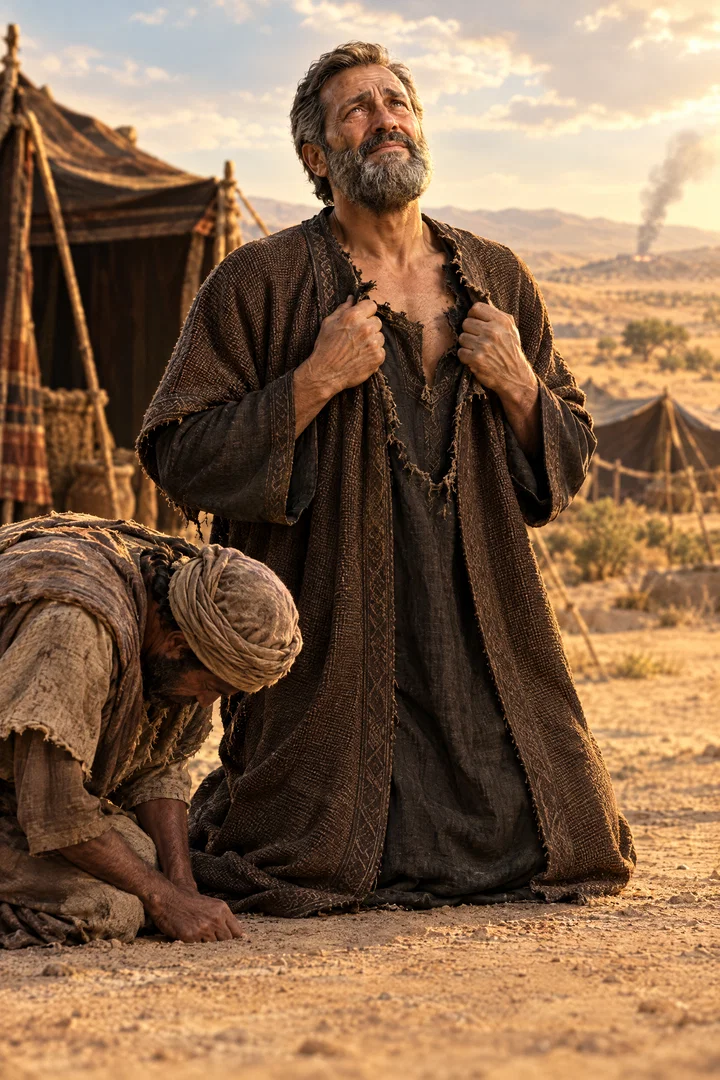
Then Job arose, and rent his mantle, and shaved his head, and fell down upon the ground, and worshipped,
Translations
Then Job arose, and rent his mantle, and shaved his head, and fell down on the ground, and worshipped,
King James Version, KJV Cambridge Paragraph Bible
Then Job arose, and rent his mantle, and shaved his head, and fell down upon the ground, and worshipped,
Then Job arose, and rent his mantle, and shaved his head, and fell upon the ground, and worshiped,
Then Job arose, and rent his mantle, and shaved his head, and fell down upon the ground, and worshipped;
Then Job arose, and rent his robe, and shaved his head, and fell down upon the ground, and worshipped;
And Job riseth, and rendeth his robe, and shaveth his head, and falleth to the earth, and doth obeisance,
And Job rose up, and rent his mantle, and shaved his head, and fell down on the ground, and worshipped;
Then Job arose, and rent his robe, and shaved his head, and fell to the earth and worshipped;
Berean Standard Bible, Majority Standard Bible
Then Job stood up, tore his robe, and shaved his head. He fell to the ground and worshiped,
Then Job arose, and tore his robe, and shaved his head, and fell down on the ground, and worshiped.
Then Job got up, and after parting his clothing and cutting off his hair, he went down on his face to the earth, and gave worship, and said,
Then Iob arose, and rent his garment, and shaued his head, and fel downe vpon the ground, and worshipped,
Douay-Rheims (Challoner revision)
Then Job rose up, and rent his garments, and having shaven his head fell down upon the ground and worshipped,
Pictures


Cross-references
- Job 2
Again there was a day when the sons of God came to present themselves before the LORD, and Satan came also among them to present himself before the LORD.
Continues Job’s afflictions after his faithful response to the first test.
- Job 1:6-12
Now there was a day when the sons of God came to present themselves before the LORD, and Satan came also among them.
Satan converses with God about Job before calamity befalls him.
- James 5:11
Behold, we count them happy which endure. Ye have heard of the patience of Job, and have seen the end of the Lord; that the Lord is very pitiful, and of tender mercy.
Points to Job’s endurance as a lesson.
- Ezekiel 14:14
Though these three men, Noah, Daniel, and Job, were in it, they should deliver but their own souls by their righteousness, saith the Lord GOD.
Names Job as an example of righteousness.
Commentary
Each commentary is drawn from primary sources: the writings of Ellen G. White and Adventist pioneers and periodicals. Each commentary is separate. Its own words are not a quotation; follow the references to read the source passages.
Ellen G. White
8 sources
The verse shows open grief after calamity struck, for Job tore his robe and shaved his head, yet fell to the ground and worshiped God.Lt 74, 1910, par. 1–5 Its setting is God's testing of Job through unexpected dealings, in which He permitted Job to be stripped of earthly possessions and children and to be afflicted in body.Lt 28, 1859, par. 7–9AA 575.1Lt 10, 1879, par. 4–9Lt 77, 1902, par. 7–8 That stripping went so far that he was deprived of worldly possessions and so afflicted in body that he was abhorred by relatives and friends.RH Sep 12, 1912GW92 25.2–26.2
Amid devastating loss and suffering he remained loyal and preserved his integrity, faith and faithfulness to God.Ms 22, 1898, par. 29AA 575.1RH Sep 12, 1912GW92 25.2–26.2 He stands as one of God's appointed witnesses who exposed himself to reproach and persecution for truth's sake.RH Sep 12, 1912 His afflictions were not proof that he had lived sinfully or deserved punishment, nor that God had forsaken him, for severe suffering can coexist with God's care.Ms 22, 1898, par. 29Lt 10, 1879, par. 4–9 Close connection with God does not bring prosperity in this life but brings sore trial and affliction.GW92 25.2–26.2
Such steadfastness witnesses to the faithfulness of God's promises, to His abiding presence and sustaining grace, and to the power of faith to withstand the powers of the world.RH Sep 12, 1912GW92 25.2–26.2 In the darkest hour it calmly reposes in God in the might of divine power, feeling however sorely tried and tempest-tossed that the Father is at the helm.RH Sep 12, 1912GW92 25.2–26.2 With the eye of faith alone it looks beyond time and sense, beyond the things of time, to estimate aright the worth of eternal riches and the promise of an inheritance greater than earthly riches that satisfies the soul.RH Sep 12, 1912GW92 25.2–26.2 God did not prevent the plotting of wicked men against him but caused their devices to work for his good, and in God's time Job was lifted up and shown greater favor than before, showing that suffering may be followed by victory.RH Sep 12, 1912Lt 10, 1879, par. 4–9 Profound loss and grief can thus coexist with worship and faithfulness, and his being stripped of everything warns against making possessions and income a reason to avoid sacrifice for God's work.Lt 74, 1910, par. 1–5Lt 28, 1859, par. 7–9
Sources
Pioneers and periodicals
40 sources
Job arose in sudden loss of possessions and children to tear his mantle, shave his head, fall to the ground and worship, joining deep mourning with worship so that grief did not keep him from God.ST Sep 17, 1912RH Jun 26, 1856RH Aug 16, 1906RH Dec 30, 1915 He did not reject God in his sorrow but acknowledged God's sovereignty over giving and taking away, blessed God's name, and made no foolish charge against Providence.RH Mar 14, 1912ST Aug 24, 1915ST Apr 17, 1907 His endurance under the most fearful successive calamities makes him the lesson in patience, showing that faith can remain alive, trust God in the darkest hour, and stand firm when outward circumstances are as unfavorable as imaginable.RH Jul 21, 1874RH Jan 14, 1904ST Jul 13, 1904ST Jun 17, 1903ST Jan 30, 1901 The calamity came from Satan as a real, cruel, living agent and not a figure of speech, yet only by God's permission as a test of faith and loyalty.ST Jul 4, 1906ST Jul 3, 1907RH Sep 11, 1860ST Oct 3, 1895 That test did not mean God had abandoned him, for God can turn affliction into blessing for the servant who humbles himself, holds fast to integrity, and rises stronger through God's power.ST Aug 8, 1906ST Aug 8, 1906ST Aug 8, 1906RH Mar 21, 1912ST Aug 8, 1906
Verse's Words and Setting
Job arose, tore his mantle or robe, shaved his head, fell down upon the ground, and worshiped, joining outward mourning with worship so that grief did not keep him from worship and did not become rejection of God.ST Sep 17, 1912RH Aug 16, 1906RH Mar 14, 1912ST Apr 17, 1907RH Sep 11, 1860 His grief over the loss of children and possessions remained faithful, acknowledging that possessions came from the Lord and were taken away, blessing the Lord's name and acknowledging God's sovereignty, with trust in God despite suffering under calamity God had permitted Satan to bring.RH Aug 16, 1906RH Mar 14, 1912ST Apr 17, 1907RH Sep 11, 1860 The following verses affirm that he did not sin and made no foolish charge against Providence or accusation against God foolishly.RH Mar 14, 1912ST Aug 24, 1915
The response follows sudden successive loss of possessions and children, including news that children had died, met by falling down and worshiping God.ST Sep 17, 1912ST Aug 24, 1915ST Apr 17, 1907ST Mar 1, 1905 The losses were the oxen taken by the Sabeans, the sheep destroyed by fire fallen from heaven, and the children killed when wind threw down the house, brought by raiders, fire, and wind after converse concerning Job in the presence of God, with sore boils from head to foot afterward.RH Jun 26, 1856 These real calamities and worship under them show the destroyer was no figure of speech, metaphor, or personification of evil, but a living agent doing savage deeds as a real, personal spiritual being. In that profound grief Job blessed God's name with faith, trust, submission, and patience.ST Aug 24, 1915
The verse stands in the prologue of the book, chapters 1 and 2, which is written in prose.ST It belongs to the narrative of Job's uprightness, trial, and patience, presented as a real account of an upright, tried, and patient man that offers a lesson for those who suffer.ST Mar 27, 1893 The book portrays in a universal, deeply human way profound sorrow and reconciliation and the enduring problem of human destiny and God's ways with people on earth.ST Mar 13, 1879 It belongs to the book's treatment of providence, sin, and suffering, in which Job's affliction is described as God's discipline, while his friends wrongly attributed his suffering to sin, in keeping with the belief in Job's day that bodily affliction was the direct result of personal or parental sin.ST Jun 17, 1913ST Mar 8, 1905
Faithful Worship Amid Grief
Job tore his robe and shaved his head in real grief over his losses, yet he fell to the ground in worship instead of turning away from God.RH Mar 14, 1912ST Aug 24, 1915ST Apr 17, 1907 He acknowledged that what he had possessed came from the Lord and that the Lord had taken it away, and he blessed the Lord's name rather than bringing any foolish charge against Providence.RH Mar 14, 1912ST Aug 24, 1915ST Apr 17, 1907 What follows confirms that in this he did not sin and did not accuse God foolishly.RH Mar 14, 1912
His endurance of the most fearful successive calamities on record, borne patiently, is why he is called the most patient man who ever lived, not because he had no trouble.RH Jul 21, 1874ST Jul 13, 1904 His story therefore stands as a lesson in patience.RH Jul 21, 1874ST Jul 13, 1904 Faith can stay alive under affliction, for amid severe trial he remained faithful and trusted God in the darkest hour.RH Jan 14, 1904ST Jun 17, 1903ST Jan 30, 1901 Even when outward circumstances became as unfavorable as could be imagined, suffering did not keep him from standing firm for God.RH Jan 14, 1904ST Jun 17, 1903ST Jan 30, 1901
Hardship did not lead him to abandon his integrity nor did it excuse him from serving God.RH Mar 21, 1912RH Oct 22, 1872 His humble, trusting worship through the first trial honored God and showed that he held fast to his integrity.RH Mar 21, 1912RH Oct 22, 1872 He met overwhelming loss by humbling himself before God and worshiping in joyful resignation to follow God's leading wherever it should take him.ST Aug 8, 1906 Christians are not spared affliction, but his example shows trial is to be met by coming low before God and rising from it stronger through God's power.ST Aug 8, 1906
True service is its own reward in heaven or on earth, gained not by a momentary acceptance for the sake of a future reward but through disappointment, loss, and chastening that bring a person nearer to God. Chastenings are sweet to the one who waits patiently upon God for Him to reveal Himself, and only after being tried and found faithful was Job permitted to see God. As one of God's appointed witnesses he exposed himself to reproach for truth's sake, and when deprived of worldly possessions and so afflicted in body that he was abhorred by relatives and friends, he still maintained integrity, faith, and loyalty.RH Sep 12, 1912 That steadfastness bears witness to the faithfulness of God's promises and to God's abiding presence and sustaining grace, showing faith resting in God in the darkest hour, tempest-tossed yet assured that the Father is at the helm, with the eye of faith alone looking beyond the things of time to estimate aright the worth of eternal riches.RH Sep 12, 1912
His worship displays the bravery that stands when crushing darkness and woe come, when choicest ideals are shattered into fragments and the inmost and sweetest expectation feels the rod of death.ST Feb 26, 1894 Confident professions of entire unworldliness and trust made beforehand belong to the exuberance and confidence of inexperience, and only the coming of riven hopes proves whether a person will be as brave as Job in worship.ST Feb 26, 1894 His mourning joined to worship illustrates that some are brought through severe loss before they find their all in God.RH Jun 10, 1875 When the future brings sadness the right response is to fall down and worship and bow to God's word, just as when it brings gladness the right response is to praise the Lord.RH Jun 10, 1875RH Sep 12, 1865
Divine Permission in Testing
Harm from an evil spirit comes only with God's permission.ST Jul 4, 1906RH Sep 11, 1860ST Oct 3, 1895 Though Satan brought the calamity upon Job, God had permitted Job to come under Satan's power.ST Jul 4, 1906RH Sep 11, 1860 That permission made the afflictions a test and a lesson, which Job met by mourning, falling to the ground, and worshiping God in trust despite suffering.ST Jul 4, 1906RH Sep 11, 1860ST Oct 3, 1895
The account is a God-permitted test of faith in which affliction is allowed to come upon His servant.ST Aug 8, 1906ST Aug 8, 1906 Such calamity can ultimately be turned into a blessing.ST Aug 8, 1906ST Aug 8, 1906 The servant who trusts that God lives and reigns and loves His children need not be discouraged when calamity strikes even amid prosperity and faithful service.ST Aug 8, 1906ST Aug 8, 1906
Job's trials did not mean God had abandoned him.ST Aug 8, 1906ST Aug 8, 1906 Christians are not spared affliction and God's people may face severe trials.ST Aug 8, 1906ST Aug 8, 1906 The Christian difference is not freedom from trouble but taking the trial to heart, humbling oneself low before God in worship under overwhelming loss, and rising from trial stronger through God's power.ST Aug 8, 1906ST Aug 8, 1906
Calamity should not automatically be treated as God's judgment.ST Nov 7, 1906 Fiery trial is not a strange happening but God's proving of His beloved.ST Nov 7, 1906 Satan's trick is to plant doubt that God has forgotten them, and Job met that trick in a God-permitted testing trial by falling down and worshiping instead of complaining and rebelling. His experience refutes Satan's claims and calls believers to stand the test God permits without complaining or rebelling, so as to be partakers of Christ's sufferings that they may also be partakers in His rejoicing, a faithful response shown when devastating loss by fire was met with the resolve to build again.ST Nov 7, 1906
Satan's Person and Opposition
The losses behind the worship — oxen taken by Sabean raiders, sheep destroyed by fire fallen from heaven, children killed when wind threw down the house, followed by sore boils from head to foot — were caused by the devil acting as a real, personal spiritual being who appeared in the presence of God and conversed with God concerning Job.RH Jun 26, 1856 That destroyer under real calamity was no figure of speech, metaphor, or personification of evil, but a living agent doing savage deeds. He is a real cruel personal being distinct from corrupt human nature, the same being described in Ezekiel 28 who tempted Christ in the wilderness.ST Jul 3, 1907
Job knew that Satan existed as a real person, contrary to the claim that knowledge of Satan arose only after the Babylonian exile.RH Sep 4, 1866 The afflictions ending in grief and worship illustrate Satan's power to trouble those who fear and love God.ST Sep 6, 1883RH Sep 4, 1866 The record shows Satan having access to the heavenly assemblies where the sons of God as representatives of different worlds came together.ST Jul 6, 1915 He used that access to accuse God of injustice and lack of wisdom and to accuse God's servants, continuing that accusing work from the fall of man until Christ conquered him by going down the road of righteousness to the cross and the tomb and rising again.ST Jul 6, 1915
Job 1 gives some idea of the war in heaven, which was spiritual warfare not fought with weapons of flesh.ST Jun 12, 1907 The account shows that God had a loyal servant on earth, so Satan's implied claim to dominion over the earth was not rightful or uncontested.ST Jun 12, 1907ST May 1, 1901 The account of Satan's actions bringing disaster on Job and his family stands joined with the account of righteous people presenting themselves before the Lord and suffering evil.RH Jun 26, 1856ST Feb 22, 1877 In that connection it supports the warning that wine can become an instrument through which evil befalls worshipers.ST Feb 22, 1877
Help for Today's Sufferers
Job's worship in the midst of devastating loss belongs to a God-permitted test of faith in which affliction coming upon His servant can ultimately be turned into blessing.ST Aug 8, 1906ST Aug 8, 1906 Calamity can therefore strike even amid prosperity and faithful service, yet those who trust that God lives and reigns and loves His children need not be discouraged.ST Aug 8, 1906 Such loss is not to be automatically treated as God's judgment, but calls for a faithful response, as when the loss of the Pacific Press by fire was met with resolve to build again.ST Aug 8, 1906ST Nov 7, 1906
Job's losing money, children, land, and health to painful sores, yet refusing to swear and instead praising and worshiping God, gives practical help for daily frustrations.ST Jan 7, 1903 A quick-tempered believer overcomes anger and the urge to swear when work is spoiled by remembering Job.ST Jan 7, 1903 The right course is to praise God instead and cheerfully wash the work clean and do it again.ST Jan 7, 1903
Sources