Job 1:17
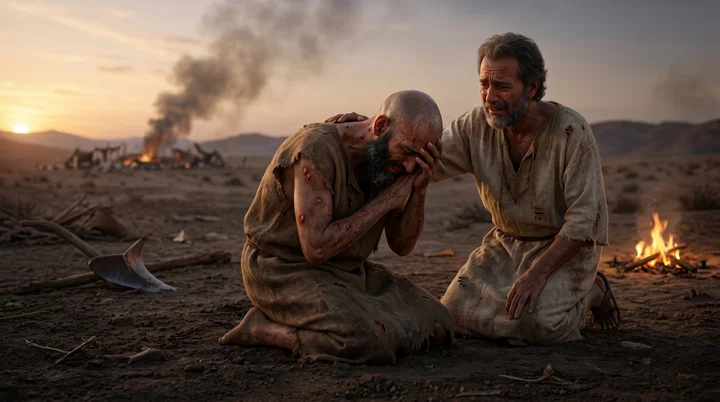
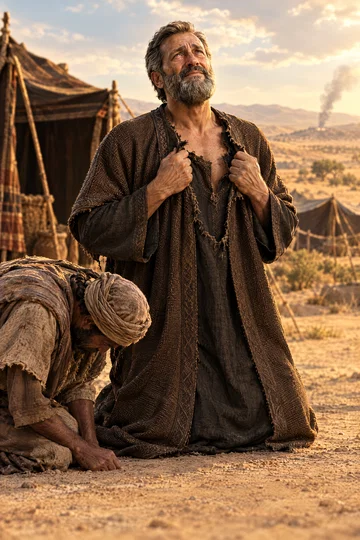
While he was yet speaking, there came also another, and said, The Chaldeans made out three bands, and fell upon the camels, and have carried them away, yea, and slain the servants with the edge of the sword; and I only am escaped alone to tell thee.
Translations
While he was yet speaking, there came also another, and said, The Chaldeans made out three bands, and fell on the camels, and have carried them away, yes, and slain the servants with the edge of the sword; and I only am escaped alone to tell you.
King James Version, KJV Cambridge Paragraph Bible
While he was yet speaking, there came also another, and said, The Chaldeans made out three bands, and fell upon the camels, and have carried them away, yea, and slain the servants with the edge of the sword; and I only am escaped alone to tell thee.
While he was yet speaking, there came also another, and said, The Chaldeans made three bands, and fell upon the camels, and have carried them away, yes, and slain the servants with the edge of the sword; and I only have escaped alone to tell thee.
Revised Version, American Standard Version
While he was yet speaking, there came also another, and said, The Chaldeans made three bands, and fell upon the camels, and have taken them away, yea, and slain the servants with the edge of the sword; and I only am escaped alone to tell thee.
While this [one] is speaking another also hath come and saith, 'Chaldeans made three heads, and rush on the camels, and take them, and the young men they have smitten by the mouth of the sword, and I am escaped — only I alone — to declare [it] to thee.'
While he was yet speaking, there came another and said, The Chaldeans made three bands, and fell upon the camels and took them, and the servants have they smitten with the edge of the sword; and I only am escaped, alone, to tell thee.
Yet was this one speaking, when, another, came in and said, The Chaldeans, appointed three chiefs, and spread out against the camels, and took them, and, the young men, smote they with the edge of the sword; and escaped am, only I alone, to tell thee.
Berean Standard Bible, Majority Standard Bible
While he was still speaking, another messenger came and reported: “ The Chaldeans formed three bands, raided the camels, and took them away. They put the servants to the sword, and I alone have escaped to tell you!”
While he was still speaking, another also came and said, “ The Chaldeans made three bands, and swept down on the camels, and have taken them away, yes, and killed the servants with the edge of the sword; and I alone have escaped to tell you.”
And this one was still talking when another came, and said, The Chaldaeans made themselves into three bands, and came down on the camels and took them away, putting the young men to the sword, and I was the only one who got away safe to give you the news.
And whiles he was yet speaking, another came, and sayd, The Caldeans set on three bands, and fell vpon the camels, and haue taken them, and haue slayne the seruantes with the edge of the sworde: but I onely am escaped alone to tell thee.
Douay-Rheims (Challoner revision)
And while he also was yet speaking, there came another, and said: The Chaldeans made three troops, and have fallen upon the camels, and taken them, moreover they have slain the servants with the sword, and I alone have escaped to tell thee.
Pictures


Cross-references
- Job 1:12
And the LORD said unto Satan, Behold, all that he hath is in thy power; only upon himself put not forth thine hand. So Satan went forth from the presence of the LORD.
God permits Satan to attack Job’s possessions but forbids him to harm Job himself.
- James 5:11
Behold, we count them happy which endure. Ye have heard of the patience of Job, and have seen the end of the Lord; that the Lord is very pitiful, and of tender mercy.
Job is presented as an example of patience under suffering.
- Job 1:21
And said, Naked came I out of my mother’s womb, and naked shall I return thither: the LORD gave, and the LORD hath taken away; blessed be the name of the LORD.
Job blesses the Lord after losing his possessions and servants.
- Job 2:1-7
Again there was a day when the sons of God came to present themselves before the LORD, and Satan came also among them to present himself before the LORD.
Satan’s second test follows his first attack on Job.
- Job 42:10
And the LORD turned the captivity of Job, when he prayed for his friends: also the LORD gave Job twice as much as he had before.
God restored Job and gave him twice as much as he had before.
- Job 1:10
Hast not thou made an hedge about him, and about his house, and about all that he hath on every side? thou hast blessed the work of his hands, and his substance is increased in the land.
God’s protective hedge was removed before Job’s calamities began.
- Ezekiel 14:14
Though these three men, Noah, Daniel, and Job, were in it, they should deliver but their own souls by their righteousness, saith the Lord GOD.
Names Job as an example of a real, righteous person.
- Job 1:8
And the LORD said unto Satan, Hast thou considered my servant Job, that there is none like him in the earth, a perfect and an upright man, one that feareth God, and escheweth evil?
God describes Job as upright and faithful before his trial.
- Job 1:11
But put forth thine hand now, and touch all that he hath, and he will curse thee to thy face.
The calamities tested whether Job would curse God.
- Job 1:22
In all this Job sinned not, nor charged God foolishly.
Job’s response to his losses is described as not sinning or charging God foolishly.
Commentary
Each commentary is drawn from primary sources: the writings of Ellen G. White and Adventist pioneers and periodicals. Each commentary is separate. Its own words are not a quotation; follow the references to read the source passages.
Ellen G. White
14 sources
The Chaldeans fell upon Job's camels, carried them away, slew the servants with the sword, and left one alone escaped to tell him.Lt 74, 1910, par. 1–5CH 492.2Ms 22, 1898, par. 29 It was one of swift successive blows in which his flocks and herds, servants, houses and children were swept away in a moment, Satan venting anger and violence through human agents only as God permitted and did not prevent it.Lt 74, 1910, par. 1–5CH 492.2ST Jun 21, 1899ED 155.54SP 407.1–2 The stripping of all he possessed shows that earthly wealth can be taken away, and that it is God who hedges His creatures from the destroyer, while Satan has control only over those God does not especially guard.Lt 28, 1859, par. 7–9CH 492.24SP 407.1–2AA 575.1RH Sep 12, 1912 The calamity was no proof that Job had lived a sinful and perverted life, though his friends charged that he deserved punishment and thereby placed God in a false light.ST Jun 21, 1899Ms 22, 1898, par. 29 Amid loss, bodily affliction, and reproach from those close to him, Job maintained his virtue, integrity, faith and loyalty and rested in God in the darkest hour, and as one of God's appointed witnesses his steadfastness bears witness to the faithfulness of God's promises and His abiding presence and sustaining grace.ST Jun 21, 1899Ms 22, 1898, par. 29AA 575.1RH Sep 12, 1912
The Chaldean Raid Described
The Chaldeans fell upon the camels, carried them away, slew the servants with the edge of the sword, and left one servant escaped alone to tell the tidings.Lt 74, 1910, par. 1–5CH 492.2Ms 22, 1898, par. 29Lt 4, 1866, par. 5 That stroke came as one of swift, successive blows in which flocks and herds, menservants and maidservants, houses, sons and daughters, and children were swept away.CH 492.2ED 155.54SP 407.1–2GC88 589.1–590.1GC 589.2–3 One trouble followed another in a moment, messenger crowding upon messenger while he was yet speaking.CH 492.24SP 407.1–2GC88 589.1–590.1GC 589.2–3
The attack was Satan expressing his anger and violence against Job through human agents and the plotting of wicked men.Lt 74, 1910, par. 1–5GC88 589.1–590.1GC 589.2–3 He swept away what Job owned only as he was allowed, only as God permitted him and did not prevent him.Lt 74, 1910, par. 1–5ST Jun 21, 1899ED 155.54SP 407.1–2Ms 22, 1898, par. 29 By that permitted affliction Job was tested.ST Jun 21, 1899Ms 22, 1898, par. 29GC88 589.1–590.1 The calamity struck his household and broke his family ties, smiting the father in order to destroy the children.ST Jun 21, 1899ED 155.5Lt 4, 1866, par. 5
What the Loss Reveals
The Chaldean seizure of the camels and slaying of the servants stripped Job of all he possessed, depriving him of worldly possessions and earthly wealth and showing that temporal possessions can be taken away.Lt 28, 1859, par. 7–9AA 575.1RH Sep 12, 1912Lt 10, 1879, par. 4–9GW92 25.2–26.2 It is God who shields His creatures and hedges them in from the power of the destroyer, and Satan has control only over those whom God does not especially guard.CH 492.24SP 407.1–2GC88 589.1–590.1GC 589.2–3 When God withdraws His blessings and removes His protecting care from those rebelling against His law and showing contempt for it, trouble breaks through and Satan can bring affliction upon them.CH 492.24SP 407.1–2GC88 589.1–590.1GC 589.2–3
Satan has studied the secrets of nature, even the laboratories of nature, and uses all his power to control the elements and human agents as far as God allows.4SP 407.1–2GC88 589.1–590.1GC 589.2–3 He works as a destroyer to gather unprepared souls while appearing as a benefactor, favoring and prospering some to further his designs and bringing trouble on others to lead men to believe that God is afflicting them.4SP 407.1–2GC88 589.1–590.1GC 589.2–3 The same work reaches to the last days, when he will incite war to excite the base passions and sweep victims into eternity.GC88 589.1–590.1 He will then bring disease and disaster by accidents, conflagrations, tornadoes, hailstorms, tempests, floods, cyclones, tidal waves, earthquakes, ruined harvests, famine and pestilence until populous cities are ruined, to divert minds from preparation to stand in the day of God.GC88 589.1–590.1
The loss was not proof that Job had lived a sinful or perverted life or followed a sinful course.ST Jun 21, 1899Ms 22, 1898, par. 29 Though his friends charged that he deserved punishment for sin, brought a grievous test upon him, and placed God in a false light, Job denied the charge.ST Jun 21, 1899 Amid loss, severe suffering, bodily affliction, and rejection and reproach from relatives, friends, and those close to him that made him appear forsaken and abhorred, he maintained his virtue, integrity, faith and loyalty and rested in God in the darkest hour.ST Jun 21, 1899AA 575.1RH Sep 12, 1912Lt 10, 1879, par. 4–9GW92 25.2–26.2 God had not abandoned him, but causes such devices of wicked men to work for good to those who maintain faith and loyalty, and He later showed him greater favor and rewarded His faithful servant.ST Jun 21, 1899Ms 22, 1898, par. 29RH Sep 12, 1912Lt 10, 1879, par. 4–9 As one of God's appointed witnesses exposed to reproach and persecution for the truth's sake, Job's steadfastness bears witness to the faithfulness of God's promises, His abiding presence and sustaining grace, and to the power of faith to withstand the powers of the world.RH Sep 12, 1912
Sources
Pioneers and periodicals
53 sources
The verse reports the third blow against Job, in which raiders from Chaldea formed three bands, fell upon the camels, carried them away, and killed the servants with the sword.ST Apr 17, 1907RH Jul 21, 1853 Only one servant escaped alone to bring the news, arriving while the previous messenger was still speaking.RH Jun 26, 1856RH Aug 16, 1906RH Sep 4, 1866 The raid was the work of Satan and his fallen angels to ruin mankind, permitted by God only within set limits and not from God Himself.ST Sep 17, 1912ST Jul 4, 1906ST Sep 6, 1883ST May 27, 1880 It came upon a perfect and upright man without cause as a test of faith, loyalty and integrity, to make him curse God and to plant doubt that God had forgotten him.RH Aug 4, 1903RH Jul 21, 1853RH Feb 24, 1916ST Aug 8, 1906ST Aug 8, 1906 Yet amid sudden, successive losses Job trusted God, did not accuse Him foolishly, and held fast his integrity, so that God was honored and Satan was defeated.RH Sep 11, 1860RH Dec 23, 1858ST Aug 23, 1883RH Mar 21, 1912
Words and Literary Setting
The report is that the Chaldeans formed three bands, fell upon the camels, carried them away, and slew the servants with the edge of the sword.ST Apr 17, 1907RH Jul 21, 1853ST Aug 23, 1883 Only one servant escaped alone to tell Job, coming while the previous messenger was yet speaking.RH Jun 26, 1856RH Aug 16, 1906RH Sep 4, 1866RH Sep 11, 1860RH Feb 7, 1907 That lone escape and overlapping report is part of the same raid in which the camels were carried off and the servants killed.RH Jan 14, 1904
The verse is the third in a rapid, successive series of disasters that stripped Job of possessions, servants, children, and finally health.RH Dec 30, 1915RH Jul 21, 1853RH Oct 24, 1854 One trouble followed another in rapid succession, with sudden blows adding loss to loss until he was left penniless and poor.ST Aug 24, 1915RH Apr 8, 1858 The Chaldean raid contributed to his sudden fall from affluence and influence into poverty and disrespect.ST Aug 24, 1915
The verse stands in the prose prologue in chapters 1 and 2.ST That prologue is distinct from the poetical debate in chapters 4 to 31, the speeches of Elihu in chapters 32 to 37, the speeches of the Lord out of the storm-cloud, and the prose epilogue in chapter 42:7-17.ST It belongs to the opening account of Job's calamities, part of the book's universal presentation of human destiny and God's ways with people on earth.ST Mar 13, 1879
The book containing the verse is the oldest book in the Bible and the oldest poetical book preserved.ST It was conjectured to have been written by Moses while in Midian, though this is not known.ST That writing took place about the time Moses fled from Egypt to sojourn in Midian.RH Mar 14, 1912
The verse uses the Hebrew term auvadh for servants, the same term used for Job's sons.RH Oct 1, 1861 This shared wording shows servants were regarded as people, not chattels.RH Oct 1, 1861
Satan's Agency and Limits
The Chaldean raid on the camels belongs to the devil's doings and proves he is a real, personal, cruel being, not a mere personification of evil and not merely corrupt human nature, a reality Job himself knew.RH Jun 26, 1856RH Sep 4, 1866ST Jul 3, 1907 The sudden seizure of the camels and slaying of the servants is one instance of the mighty effort of the devil and the vast body of fallen angels who through the whole history of the race labor to involve mankind in ruin.ST Sep 6, 1883ST May 27, 1880ST Oct 11, 1877 Here that ruinous work took the form of war through the Chaldeans, with Satan as prince of the power of the air exercising power over men and elements whose sole object is destruction.ST Nov 28, 1900
The destruction was not unchecked, for Satan brought this calamity upon Job's possessions only after receiving permission, and he could not afflict Job's body without further permission, all subject to God's limit that Job's life not be taken.ST Jun 21, 1899ST Sep 17, 1912ST Jul 4, 1906ST Apr 17, 1907RH Sep 11, 1860 The calamities came from Satan, not from God, coming through the plotting of wicked men which God did not prevent, yet such permitted destruction can also serve as judgments of God without overthrowing God's sovereignty.RH Sep 12, 1912RH Mar 14, 1912RH Aug 30, 1906 Job's losses under that permission included the stripping of all he possessed, the breaking of family ties and taking of children, leaving him penniless and nearly friendless, though he did not know their source.ST Jun 21, 1899RH Sep 12, 1912RH Mar 14, 1912
From the fall of man until Christ conquered the devil on the cross, Satan still had access to the great assemblies held in heaven when the representatives of the different worlds called sons of God came together.ST Jul 6, 1915ST Aug 27, 1902 Having overcome Adam the first ruler of the earth, he there presented himself as governor of this world, bringing aspersions against God and continuing to accuse God of injustice and lack of wisdom and to accuse God's servants, until the Lord Himself conquered and Satan was fully cast out.ST Jul 6, 1915ST Aug 27, 1902 The inhabitants of other worlds were likewise not free from his visits and temptations until Christ died on the cross and unmasked his character before the universe and assured salvation to believers.ST Aug 27, 1902
The first chapter gives a picture of the war in heaven, a spiritual warfare not fought with weapons of flesh between Michael, who is the Son of God and chief of the angelic host in His first step downward for the salvation of men, and the dragon, who is Satan, chief of all the rebellious hosts.ST Jun 12, 1907 That war cannot be located chronologically, began before man could witness it about the time of the foundation of this world, and extended until Christ came to this earth as man and died on the cross and was raised triumphant over the dragon.ST Jun 12, 1907 When Christ triumphed the heavens rejoice but woe comes to the earth because the devil has come down having great wrath, and he now devotes his energies wholly to this earth where he had set up his kingdom of darkness.ST Jun 12, 1907ST Aug 27, 1902
Satan's purpose in the loss was to test Job's fidelity and loyalty, to make him childless and penniless and to make him curse God.RH Aug 4, 1903RH Jul 21, 1853 He aimed to plant doubt that God had forgotten him, to add grief and distress as temptation, and especially to destroy the souls for whom Christ died by luring them to disobedience and consequent death, for the wages of sin is death, knowing Christ will finally defeat him.ST Nov 28, 1900ST Jan 8, 1885 That afflicting power has not ceased, and when it serves his deceptive purpose he can also withdraw it and bring healing.RH Jul 21, 1853 The evil befalling Job's household after Satan came among those presenting themselves before the Lord warns that Satan can bring harm among people who gather to worship.ST Feb 22, 1877
Testing and Divine Providence
The seizure of the camels and the killing of the servants was a test of faith, loyalty and integrity amid the loss of property and children, permitted by the Lord as a first test by destruction of children and property.RH Feb 24, 1916ST Aug 8, 1906ST Aug 8, 1906RH Jan 23, 1913ST Oct 3, 1895 It was one blow among sudden afflictions of material blessings taken away and sons and daughters slain, one part of the loss of earthly treasure through which faithfulness remained and only after being tried was sight of God permitted.RH Feb 24, 1916ST Aug 8, 1906ST Aug 8, 1906RH Jan 23, 1913
The calamity came without cause, permitted by God because Satan moved Him against Job after the protective hedge around him was removed.RH Mar 21, 1912 The peace and plenty enjoyed under that hedge were themselves a constant miracle of God's care, showing how quickly distress came when that protection was gone.RH Mar 21, 1912
God's love for a faithful person does not mean calamity will be prevented, for Christians may suffer affliction and severe loss, and calamity alone does not show punishment for sin or a perverted life and should not automatically be regarded as God's judgment.ST Jun 21, 1899RH Aug 16, 1906RH Feb 7, 1907ST Aug 8, 1906ST Nov 7, 1906 The raid while one messenger was still speaking, leaving only one survivor to bring the news, helps explain that God's people may be tested through such loss without condemnation or reproach from others without clear evidence from God.ST Jun 21, 1899RH Aug 16, 1906RH Feb 7, 1907ST Aug 8, 1906ST Aug 8, 1906
God allowed the estate to be swept away and wealth to vanish to make an example of a perfect and upright man who suffered because he was better than other men, not worse, even as Jesus suffered and died on the shameful cross.ST Aug 12, 1875ST Nov 13, 1884 Those losses and trials brought faith into view and encouraged others in a way prosperity alone would not have done, calling those who pray to be used for God's glory to be ready to serve God better in poverty than with wealth, with no reservation and pure character though made of no reputation in the world's estimation.ST Aug 12, 1875ST Nov 13, 1884
The Christian's distinction lies not in escaping trials but in meeting them in a way that leaves them stronger, trusting that God knows and will not forsake even when great wealth and family are swept away in a day.ST Aug 8, 1906RH Aug 29, 1907ST Aug 8, 1906 Like Job, some must lose everything, possessions and servants, before finding all things again in God, and God causes such devices of wicked plotting, which He did not prevent, to work for good to those who maintain faith and loyalty.RH Sep 12, 1912RH Jun 10, 1875 In the test integrity was held fast and grief was borne discreetly with humble trust in God, seeking and receiving God's grace and strength, by which God's confidence in integrity was fully vindicated before all, God was honored, and Satan was defeated.RH Sep 12, 1912RH Mar 21, 1912
Job's Faithful Endurance
Amid sudden, successive blows that stripped him of possessions and servants and tore his children from him, Job trusted God and did not accuse Him foolishly, recognizing God's sovereignty over the loss.RH Sep 11, 1860RH Dec 23, 1858ST Aug 23, 1883 The Chaldeans divided into three bands, fell upon the camels, carried them away, and slew the servants with the edge of the sword while one escaped alone to tell, yet Job regarded God as ordering his troubles and said the Lord gives and takes away and blessed be the name of the Lord.RH Sep 11, 1860ST Aug 23, 1883RH Dec 11, 1856 This affliction came by Satan with permission, and Satan is credited with the destructive work, but Job's response was blessing rather than foolish charge.RH Sep 11, 1860ST Aug 23, 1883
Though stripped of possessions and servants, torn from children, covered with sores, and left with every reason for anger, Job endured without turning against God, remaining patient and faithful.ST Apr 17, 1907RH Oct 24, 1854ST Jan 7, 1903 The raid that carried off the camels and killed the servants was one sudden blow added to the loss of earthly possessions, forming part of the severe adversity in which he exercised faith.ST Apr 17, 1907RH Apr 8, 1858RH Jan 14, 1904 His suffering and loss did not destroy his integrity or faithfulness, and though his great wealth and family were swept away in a day his faith remained unshaken, showing that a person may suffer greatly while trusting that God knows and will not forsake him.RH Jan 14, 1904RH Aug 29, 1907
Though friends charged that he deserved punishment for sin, placed God in a false light, and brought a grievous test upon him, Job denied the charge and did not swerve from loyalty, and God rewarded His faithful servant.ST Jun 21, 1899 All suffering is not the result of a perverted life or sinful course, for the taking of camels and servants with the breaking of family ties belonged to a permitted affliction by which Satan stripped him of all he possessed.ST Jun 21, 1899 He did not seek revenge on the Chaldeans or Sabeans, and though left with every reason for anger he never swore but praised God.ST Jan 7, 1903RH Dec 11, 1856
Job is called most patient not because he had no trouble but because he patiently endured fearful calamities one after another, when property was taken and servants were slain, proving that tribulation worketh patience and that patience is learned only when tried.ST Jul 13, 1904 Professions of entire unworldliness such as Though he slay me yet will I trust in him are often the confidence of inexperience until crushing darkness comes that rives hopes, shatters the choicest ideal, and lays the rod of death upon inmost expectation.ST Feb 26, 1894 Job was brave when the trial actually came, and those who now profess confidence may prove as brave as Job and Abraham when their own test comes, so it is best to wait before making many expressions of confidence.ST Feb 26, 1894
Job is one of God's appointed witnesses exposed to reproach and persecution for truth's sake, deprived of worldly possessions through the plotting of wicked men which God did not prevent, yet God causes such devices to work for good to those who maintain faith and loyalty.RH Sep 12, 1912 Though afflicted in body and abhorred by relatives and friends, he maintained virtue, integrity, faith and loyalty and rested in God in the darkest hour.RH Sep 12, 1912 His steadfastness bears witness to the faithfulness of God's promises, His abiding presence and sustaining grace, and to the power of faith to withstand the powers of the world.RH Sep 12, 1912
Encouragement and Present Application
Calamity alone does not prove punishment for sin, and the afflicted should not be condemned or reproached without clear evidence from God.RH Aug 16, 1906 A sudden disaster should not automatically be regarded as divine judgment.ST Nov 7, 1906
In terrible loss the right course is to trust Christ and see God's shaping work in the believer rather than fixing attention on the devil.RH Aug 4, 1903 Those who ask to be used for God's glory must be ready to be used as Job was, serving God better in poverty than with wealth.ST Aug 12, 1875 That readiness means holding back nothing, consenting to be wholly spent and to become of no reputation in the world's estimation, while maintaining pure character, since reputation is not character.ST Aug 12, 1875 When hard work is spoiled and temper rises toward swearing, the example to remember is Job's refusal to curse and his choice to praise God, putting away anger and cheerfully doing the work over again.ST Jan 7, 1903
The permitted test stands on record to refute Satan's claims and to encourage believers to stand firm under trial and not doubt that God has forgotten them. The same sudden loss of camels and servants through the Chaldean raid applies to the destruction of the Pacific Press by fire, showing that affliction can come even to the faithful to test faith.ST Aug 8, 1906 The lesson drawn from that experience is that the Press should rebuild.ST Aug 8, 1906ST Nov 7, 1906 The book containing this account was handed down with important lessons for those who live prior to the coming of the Lord.RH Mar 14, 1912
Sources