Translations
American King James Version, Webster Bible, Darby Translation, Douay-Rheims (Challoner revision)
And there were born to him seven sons and three daughters.
King James Version, KJV Cambridge Paragraph Bible, Revised Version, American Standard Version, Rotherham's Emphasised Bible
And there were born unto him seven sons and three daughters.
And there are borne to him seven sons and three daughters,
Berean Standard Bible, Majority Standard Bible
He had seven sons and three daughters,
There were born to him seven sons and three daughters.
And he had seven sons and three daughters.
And he had seue sonnes, and three daughters.
Pictures
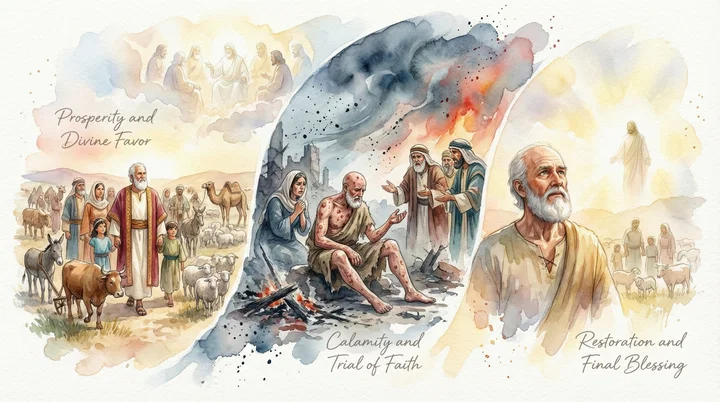
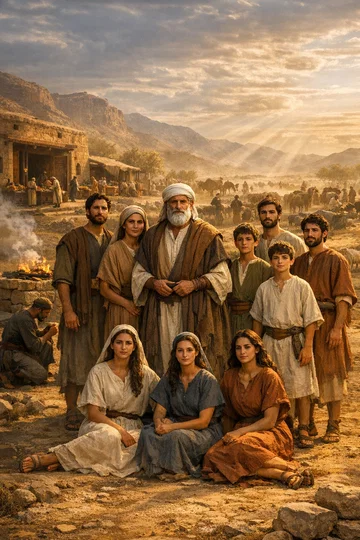
Cross-references
- Job 1:13-19
And there was a day when his sons and his daughters were eating and drinking wine in their eldest brother’s house:
Describes the disasters that made Job’s story notable.
- Job 42:13
He had also seven sons and three daughters.
Job later has seven sons and three daughters, after receiving greater blessings.
- Ezekiel 14:14
Though these three men, Noah, Daniel, and Job, were in it, they should deliver but their own souls by their righteousness, saith the Lord GOD.
Job is named as a righteous person who could deliver only himself.
Commentary
Each commentary is drawn from primary sources: the writings of Ellen G. White and Adventist pioneers and periodicals. Each commentary is separate. Its own words are not a quotation; follow the references to read the source passages.
Ellen G. White
1 source
Job stands among God's appointed witnesses, men who willingly exposed themselves to reproach and persecution for the sake of truth.RH Sep 12, 1912 The mention of his seven sons and three daughters presents the fullness of his family blessing at the opening of his test.RH Sep 12, 1912 That blessing formed the background for what followed, when he was stripped of his worldly possessions and afflicted in body until he was abhorred by his own relatives and friends.RH Sep 12, 1912 Even under that combined loss, disease, and rejection, he maintained his integrity and did not surrender his loyalty to God.RH Sep 12, 1912
His steadfastness in suffering bears witness that God's promises are faithful and unfailing.RH Sep 12, 1912 It bears witness also to God's abiding presence with His people and to His sustaining grace in trial.RH Sep 12, 1912 It shows the power of faith to withstand the powers of the world, for true faith rests in God even in the darkest hour.RH Sep 12, 1912
Sources
Pioneers and periodicals
25 sources
It records that Job at the beginning of his story had a household of seven sons and three daughters.RH Aug 16, 1906ST Sep 6, 1883 He and his children were real historical persons, who truly lived and truly died when wind brought the house down upon them.RH Jun 26, 1856ST Mar 27, 1893 Their loss belongs to the permitted trial in which God allowed Satan to trouble Job's family and life but forbade him to take Job's life, proving Satan is a real personal being who brings calamity and ruin.ST Sep 17, 1912ST Sep 6, 1883ST Oct 11, 1877ST Nov 21, 1895 Job was God's upright servant on earth, and he suffered as a perfect and upright example because he was better than others and not worse, so that his severe trials and deliverance made his faith a pattern and encouragement ending in restoration.ST May 1, 1901ST Aug 12, 1875ST Dec 22, 1887RH Feb 24, 1916ST Nov 13, 1884 God gave this real testing to refute Satan, to prove His beloved, and to teach believers that devastating loss does not mean His judgment or displeasure, encouraging them to stand without complaining when Satan works to make them doubt they are forgotten.ST Nov 7, 1906ST Jun 17, 1886
Family and Narrative Setting
Job had seven sons and three daughters, and the verse establishes the size, makeup and family life of his household at the beginning of the story.RH Aug 16, 1906ST Sep 6, 1883ST Oct 11, 1877ST Mar 13, 1879 Those children were part of the blessings of his prosperity before his trial, and they were slain when that trial came.RH Aug 16, 1906ST Sep 6, 1883RH Feb 24, 1916 Their loss belongs with the calamities of chapters 1 and 2, placing his afflictions in the setting of a family and life that Satan was able to trouble, as part of Satan's efforts to bring ruin upon people.ST Sep 6, 1883ST Oct 11, 1877 The first chapter sheds light on God's dealings with His people, and this detail belongs to the book's account of human destiny and God's ways with people on earth.RH Aug 16, 1906ST Mar 13, 1879
The verse stands in the prologue of the book, covering chapters 1 and 2.ST That prologue is written in prose, like the closing part in chapter 42:7-17.ST It is distinct from the debate between Job and his three friends in chapters 4 to 31, from the speeches of Elihu in chapters 32 to 37, and from the speeches of the Lord out of the storm-cloud.ST
The opening narrative presents Job and his children as real historical persons, and it is to be accepted as fact and its lesson learned.RH Jun 26, 1856ST Mar 27, 1893ST Sep 5, 1900ST Jan 7, 1913 It is not myth, fiction, or merely a dramatic story presenting the problem of evil, despite being treated as myth by Higher Criticism.ST Mar 27, 1893ST Sep 5, 1900ST Jan 7, 1913 The children were real people who died when Satan brought down the house upon them by wind, after he conversed with God about Job, brought the Sabeans upon the oxen, caused the fire of God to fall on the sheep, and smote Job with boils from crown to soles.RH Jun 26, 1856
The account of Job's experience belongs to the time when Moses was forced to flee from Egypt to sojourn in the land of Midian.RH Mar 14, 1912 It was written by Moses while a fugitive in Midian.RH Mar 14, 1912 It was handed down in the Book of God to give important lessons to those living before the coming of the Lord.RH Mar 14, 1912
Trial, Doctrine, and Encouragement
The verse belongs to the account in which God permits Satan to afflict Job yet sets a bound to that power by forbidding him to take Job's life.ST Sep 17, 1912 It gives the number and sex of his children as seven sons and three daughters, and together with the afflictions in chapters 1 and 2 it places those trials in the setting of a family and life that Satan was able to trouble.ST Sep 6, 1883
The account proves the devil is a real personal spiritual being and not a mere principle or personification of evil. He appeared in the presence of God and conversed with God concerning Job, then brought the Sabeans upon the oxen to take them away, caused the fire of God to fall from heaven and burn up the sheep, caused wind to blow down the house upon the seven sons and three daughters and kill them, and finally smote Job with sore boils from the crown of his head to the soles of his feet, which a mere principle could not do. It belongs to the record of Satan's efforts to bring ruin upon people and their possessions, showing that calamities and destruction can come through Satan's activity rather than being directly caused by God.ST Oct 11, 1877ST Nov 21, 1895
Job is presented in it as God's upright servant on earth, and his loyal presence shows Satan's claim to dominion over the earth was not rightful or complete.ST May 1, 1901 His testing came as afflicting trials rather than enticing offers of profit or pleasure, because he had already proved too strong for those temptations.ST Dec 22, 1887 He suffered as a perfect and upright example because he was better than others, not worse, as Jesus also suffered, so that to be used to God's glory can mean consenting to have estate swept away, health undermined, powers of speech paralyzed, and good name stained by malignant or careless tongues while private life remains pure, answering vanishing wealth and blasted reputation without reservation and holding pure character though reputation is lost, since reputation is not character.ST Aug 12, 1875
His children and possessions were blessings of his prosperity before the trial, later lost when his sons and daughters were slain.RH Feb 24, 1916 Those possessions alone would not have made him a pattern of faith or drawn the world's attention to his story, but his severe trials and deliverance made his faith an encouragement to others.ST Nov 13, 1884 The household of seven sons and three daughters introduces a man later afflicted and then restored to peaceful possession of sevenfold blessings, as light arising from darkness.RH Aug 21, 1856 His deprivation of worldly possessions and severe bodily affliction that made him abhorred by relatives and friends shows the cost of loyalty under trial, yet he maintained his integrity through loss, pain, and rejection as one of God's appointed witnesses suffering reproach and persecution for truth's sake.RH Feb 8, 1912
The first chapter sheds light on God's dealings with His people, and the book belongs to the account of human destiny and God's ways with people on earth.RH Aug 16, 1906ST Mar 13, 1879 Job's life is presented as a mirror exposing human weakness, and his severe losses and suffering show he retained integrity through patience and humility, rebuking those who murmur under trial.RH Aug 27, 1872 He was deprived of worldly possessions and so afflicted in body that he was abhorred by relatives and friends, yet he maintained his integrity and steadfastness, bearing witness to the faithfulness of God's promises, to God's abiding presence and sustaining grace, and to the power of faith to withstand the powers of the world and rest in God in the darkest hour.RH Sep 12, 1912RH Feb 8, 1912 He is an example of bravery when cherished hopes are shattered and grief comes.ST Feb 26, 1894
God gave the record of Job's real, permitted testing trial to refute Satan's claims, to prove His beloved, and to make them partakers of Christ's sufferings that they may share His joy. In that trial Satan worked to throw doubt into Job's mind that God had forgotten him, as he does with every child of God under trial, and the account encourages believers to stand the test God permits instead of complaining and rebelling. Devastating loss should not automatically be regarded as God's judgment, and the account therefore supports rebuilding after loss such as fire.ST Nov 7, 1906 A pious man afflicted almost beyond conception shows suffering does not prove God is displeased or that the person lacks faith.ST Jun 17, 1886 Those who held the belief of Job's time that bodily affliction resulted directly from personal or parental sin appealed to this history as an example of that belief.ST Mar 8, 1905
Sources