Job 1:13
And there was a day when his sons and his daughters were eating and drinking wine in their eldest brother’s house:
Translations
And there was a day when his sons and his daughters were eating and drinking wine in their oldest brother’s house:
King James Version, KJV Cambridge Paragraph Bible
And there was a day when his sons and his daughters were eating and drinking wine in their eldest brother’s house:
And there was a day when his sons and his daughters were eating and drinking wine in their eldest brother's house:
Revised Version, American Standard Version
And it fell on a day when his sons and his daughters were eating and drinking wine in their eldest brother’s house,
And the day is, that his sons and his daughters are eating, and drinking wine, in the house of their brother, the first-born.
And there was a day when his sons and his daughters were eating and drinking wine in the house of their brother, the firstborn.
And there came a certain day,—when his sons and his daughters were eating, and drinking wine, in the house of their eldest brother.
Berean Standard Bible, Majority Standard Bible
One day, while Job’s sons and daughters were eating and drinking wine in their oldest brother’s house,
It fell on a day when his sons and his daughters were eating and drinking wine in their oldest brother’s house,
And there was a day when his sons and daughters were feasting in the house of their oldest brother,
And on a day, when his sonnes and his daughters were eating and drinking wine in their eldest brothers house,
Douay-Rheims (Challoner revision)
Now upon a certain day when his sons and daughters were eating and drinking wine in the house of their eldest brother,
Pictures
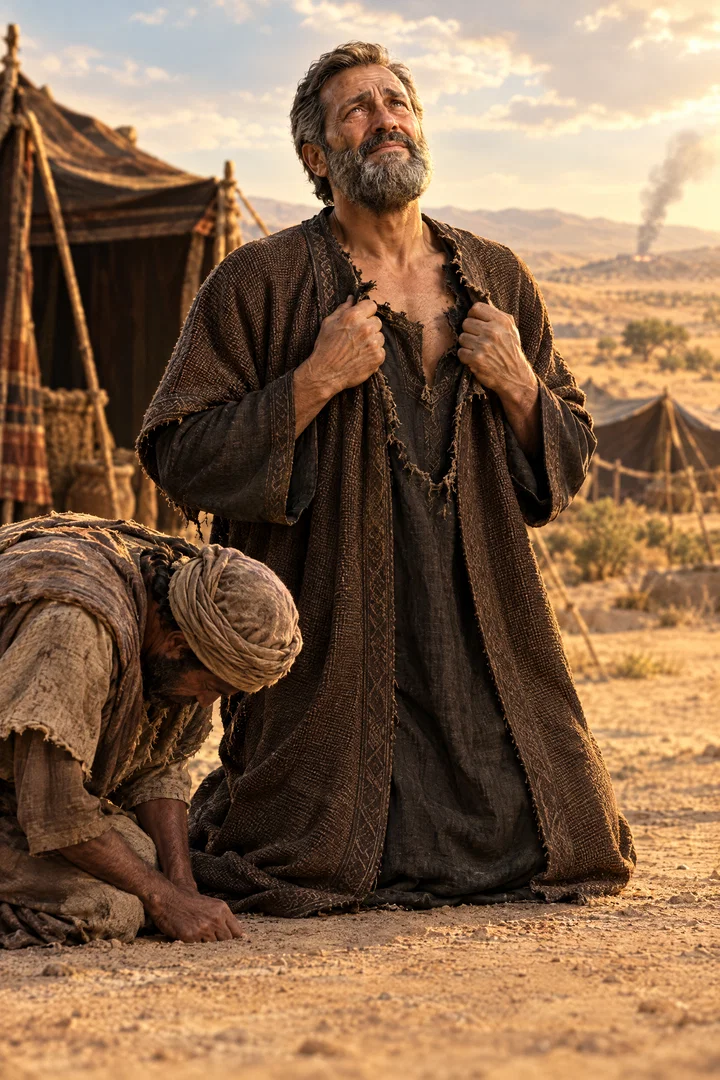


Cross-references
- Job 1:19
And, behold, there came a great wind from the wilderness, and smote the four corners of the house, and it fell upon the young men, and they are dead; and I only am escaped alone to tell thee.
A great wind destroys the house and kills Job’s children.
- Job 1:21
And said, Naked came I out of my mother’s womb, and naked shall I return thither: the LORD gave, and the LORD hath taken away; blessed be the name of the LORD.
Job blesses God after losing his children and possessions.
- Job 2:1-7
Again there was a day when the sons of God came to present themselves before the LORD, and Satan came also among them to present himself before the LORD.
Job’s integrity after the first calamity is tested as Satan seeks to afflict him further.
- Job 42:12-13
So the LORD blessed the latter end of Job more than his beginning: for he had fourteen thousand sheep, and six thousand camels, and a thousand yoke of oxen, and a thousand she asses.
Job’s later blessings included abundant possessions and children after his trial.
- Job 1:8
And the LORD said unto Satan, Hast thou considered my servant Job, that there is none like him in the earth, a perfect and an upright man, one that feareth God, and escheweth evil?
God’s description of Job frames the test of his loyalty.
Commentary
Each commentary is drawn from primary sources: the writings of Ellen G. White and Adventist pioneers and periodicals. Each commentary is separate. Its own words are not a quotation; follow the references to read the source passages.
Ellen G. White
13 sources
There was a day when Job's sons and daughters were together eating and drinking in their eldest brother's house, and on that day disaster fell upon them there as the beginning of Job's trials.Ms 22, 1898, par. 29GC88 589.1–590.1Lt 4, 1866, par. 5 With the Lord's permission Satan then began to strip Job of all he possessed, breaking family ties and taking his children with flocks and herds and servants in rapid succession, with one trouble following another as in a moment.Lt 74, 1910, par. 1–5ST Jun 21, 1899CH 492.2 Satan worked through the elements to do this destruction, using his studied power over nature as far as God allowed, for God ordinarily hedges His creatures from the destroyer and Satan can harm only those He does not especially guard.CH 492.24SP 407.1–2GC88 589.1–590.1 The loss of his children was not proof that Job had lived sinfully, and though deprived of possessions, afflicted in body, and rejected by relatives and friends, he maintained his integrity and loyalty.ST Jun 21, 1899Ms 22, 1898, par. 29AA 575.1 God had not forsaken him but in time lifted him up with greater favor than before, making his steadfastness a witness that faith can rest in God in the darkest hour and look beyond time to eternal riches.ST Jun 21, 1899RH Sep 12, 1912Lt 10, 1879, par. 4–9
Setting of Job's Calamity
There was a day when Job's sons and his daughters were gathered together eating and drinking wine in their eldest brother's house, and that gathering marks the day and setting in which Job's trials began when disaster struck them there.Ms 22, 1898, par. 29GC88 589.1–590.1Lt 4, 1866, par. 5GW92 25.2–26.2 It was the scene of feasting together as a family at the eldest brother's house when calamity fell.Ms 22, 1898, par. 29Lt 4, 1866, par. 5GW92 25.2–26.2
The verse belongs to Satan's permitted affliction of Job to reveal hostility toward God's servant, and with the Lord's permission Satan began through that calamity to manifest that hostility.Lt 74, 1910, par. 1–5ST Jun 21, 1899 He stripped Job of all he possessed, broke his family ties, took his children from him, and afflicted him in body.ST Jun 21, 1899GW92 25.2–26.2 Children were swept away together with flocks and herds, servants and houses in rapid succession, with one trouble succeeding another as in a moment and with terrible speed.CH 492.24SP 407.1–2GC88 589.1–590.1GC 589.2–3
That sweeping away came only when he was suffered to afflict Job, showing that the destruction could proceed only under divine permission.CH 492.24SP 407.1–2GC88 589.1–590.1GC 589.2–3 Satan's attack on the father was also an effort to destroy the children as well.Lt 4, 1866, par. 5
Satan's Power Through Elements
Satan works through the elements to carry out such destruction, having studied the secrets of the laboratories of nature and using all his power to control the elements as far as God allows.CH 492.24SP 407.1–2GC88 589.1–590.1 When he was suffered to afflict Job, he swept away flocks and herds, servants, houses, and children while they were feasting together, with one trouble succeeding another as in a moment and with terrible speed.CH 492.24SP 407.1–2GC88 589.1–590.1 That permitted attack shows power over the elements turned to ruin in a single day of gathering and feasting.4SP 407.1–2GC88 589.1–590.1
God ordinarily shields His creatures and hedges them in from the power of the destroyer.CH 492.24SP 407.1–2GC88 589.1–590.1GC 589.2–3 Satan can cause destruction only within the limits God allows, and has control only of those whom God does not especially guard.GC88 589.1–590.1GC 589.2–3 The sweeping away of Job's household came only under that permission, in rapid succession of troubles.CH 492.2GC 589.2–3
The sudden destruction of the children proves that calamity comes from Satan as destroyer while he appears as benefactor.GC88 589.1–590.1 It reveals what happens when God withdraws His blessings and protecting care from those who rebel against His law, bringing disease, disaster, ruin, famine, pestilence, and destruction upon man and beast.GC88 589.1–590.1
The same work continues to garner the harvest of unprepared souls through accidents and calamities by sea and by land.CH 492.24SP 407.1–2GC88 589.1–590.1 It operates by great conflagrations, tornadoes, hailstorms, tempests, floods, cyclones, tidal waves and earthquakes, by ruined harvests with famine and distress following, and by tainted air and pestilence.4SP 407.1–2 These visitations are to become more frequent and disastrous until destruction is upon the world, while Satan favors and prospers some to further his designs, brings trouble on others, and leads men to believe God is afflicting them.4SP 407.1–2
Faithfulness Tested and Vindicated
This day begins the account of Job's testing, which shows that God could quickly strip a person of everything, warning that possessions and income are not secure grounds for avoiding sacrifice.Lt 28, 1859, par. 7–9 His suffering and the loss of his children when disaster struck them gathered at their eldest brother's house were not proof that he had lived sinfully.ST Jun 21, 1899Ms 22, 1898, par. 29 With the Lord's permission Satan began to afflict him, stripping him of all he possessed, breaking his family ties, and taking his children from him, which proves that all suffering is not the result of a perverted life, even when friends falsely charged that his sin caused his afflictions.ST Jun 21, 1899
On the day his sons and daughters were eating and drinking wine at their eldest brother's house he began to be deprived of his worldly possessions, and afterward was so afflicted in body that he was abhorred and rejected by relatives and friends.AA 575.1RH Sep 12, 1912GW92 25.2–26.2 Yet though deprived of worldly possessions and afflicted in body, he remained loyal and faithful to God and maintained his integrity, faith and loyalty.ST Jun 21, 1899Ms 22, 1898, par. 29AA 575.1RH Sep 12, 1912GW92 25.2–26.2 His children died and his earthly possessions were taken from him, yet God had not forsaken him.Lt 10, 1879, par. 4–9 In His time God lifted him up and showed him greater favor than before and rewarded His faithful servant, illustrating that a faithful person may be afflicted without seeing outward signs of God's favor while God's purposes and eventual vindication remain unseen.ST Jun 21, 1899Lt 10, 1879, par. 4–9
This day marks the onset of the trial of one of God's appointed witnesses exposed to reproach and persecution for truth's sake.RH Sep 12, 1912 God did not prevent the plotting of wicked men against him but caused their devices to work for his good.RH Sep 12, 1912 He was brought near to be shown his weakness and God's strength, to be taught to lean on God, and to be prepared to meet emergencies, to fill positions of trust, and to accomplish the purpose for which his powers were given, an experience in the furnace of trial and affliction worth more than all its pain.RH Sep 12, 1912 His steadfastness bears witness to the faithfulness of God's promises, to God's abiding presence and sustaining grace, and to the power of faith to withstand the powers of the world, to rest in God in the darkest hour, to feel however sorely tried and tempest-tossed that the Father is at the helm, with the eye of faith looking beyond time to the worth of eternal riches.RH Sep 12, 1912
Sources
Pioneers and periodicals
44 sources
The verse places Job's sons and daughters together eating and drinking wine in their eldest brother's house on the day disaster struck, supplying the setting for the attack on the family.RH Jun 26, 1856RH Aug 16, 1906ST Sep 6, 1883 It belongs to the prose prologue in Job 1-2 presenting his trial as real historical events, with the main body of the book in poetry.STST Mar 27, 1893 Satan had challenged Job's faith and was permitted to afflict him, with power over all he had, and caused the wind that brought the house down on the children.ST Sep 17, 1912RH Jun 26, 1856ST Nov 28, 1900RH Mar 14, 1912 God allowed the affliction as a test of faith, loyalty, and integrity, not as punishment for badness, showing that all suffering is not the result of a perverted life.ST Jun 21, 1899ST Jun 17, 1913RH Sep 11, 1860ST Aug 8, 1906ST Aug 12, 1875 Bereft of children and possessions, Job did not blame God foolishly but praised Him, saying The Lord giveth and the Lord taketh away, and maintained his integrity.RH Sep 12, 1912RH Sep 11, 1860ST Jan 7, 1903ST Aug 23, 1883RH Mar 21, 1912
Words and Narrative Setting
Job 1:13 places the sons and daughters together eating and drinking wine in their eldest brother's house on the day disaster struck, supplying the setting for the attack on the family.RH Jun 26, 1856RH Aug 16, 1906ST Sep 6, 1883RH Feb 24, 1916RH Apr 8, 1858 The children were gathered together when the swift successive calamities that began the trial came, and the wind brought the house down upon them and killed them.RH Jun 26, 1856RH Feb 24, 1916ST Aug 24, 1915RH Apr 8, 1858 Their loss was real and final, unlike Jacob's supposed loss of Joseph, and with it came the loss of earthly possessions and material blessings, painful disease and bodily agony, and a sense that God had withdrawn.RH Feb 24, 1916ST Aug 24, 1915RH Apr 8, 1858 In that darkness the sufferer remained faithful, trusting God and looking by faith to a heavenly inheritance and lasting riches, displaying patience under severe trial.RH Feb 24, 1916ST Aug 24, 1915RH Apr 8, 1858 The chapter thus shows Satan's power to trouble God's people through the destruction of the children.ST Sep 6, 1883
The gathering describes a time of peace and plenty and prosperity before sudden calamity, when constant protecting care surrounded the household.ST May 15, 1901RH Feb 8, 1912 The sons and daughters were feasting together at a meal at the point when the trial began, and when that protection was removed misery and loss came upon them.ST May 15, 1901RH Feb 8, 1912 The deprivation of worldly possessions and affliction in body until abhorred by relatives and friends tested loyalty, integrity and faith.ST May 15, 1901RH Feb 8, 1912
The verse belongs to the prose opening narrative and prologue in Job 1-2, with an epilogue in prose in Job 42:7-17 and the main body of the book in poetry.STST Mar 27, 1893 It presents the trial and patience as real historical events rather than figure of speech or mere evil principle, including the actions attributed to the devil in the destruction of the children.ST Mar 27, 1893 The book is the oldest book in the Bible and the oldest of all poetical books come down to us, written by Moses when he was in the land of Midian, though its authorship is not known.ST It has four parts: the prose prologue, the debate between Job and his three friends on his afflictions in Job 4 to 31 in three circles of speeches on the part of each, the speeches of Elihu in Job 32 to 37, and the speeches of the Lord out of the storm-cloud.ST
The book addresses God's ways with humanity on earth and His destiny, with universal scope, portraying sorrow and reconciliation with deep simplicity and sincerity.ST Mar 13, 1879 Within the assigned reading of Job 1 it addresses divine providence, sin, and suffering, describing the affliction as discipline though friends wrongly blame it on sin.ST Jun 17, 1913 The gathering and meal in themselves draw no blame.RH Aug 16, 1906 The wine at the feast is part of the setting in which evil came upon the righteous, warning that wine can serve as an instrument of Satan and should be kept from worship and sacred ordinances.ST Feb 22, 1877
Satan's Attack and Power
The day of feasting in the eldest brother's house belongs to the account in which Satan challenges Job's faith and is permitted to afflict him, with power given over all that Job has but with his life forbidden to be taken.ST Sep 17, 1912RH Mar 14, 1912 The swift series of disasters begins on that day, stripping Job in quick succession and leaving the great man of the East childless, penniless, and nearly friendless.RH Mar 14, 1912 Those calamities are Satan's work, not God's, though God permits them without any fault in Job, and Satan brings them to make Job curse God to His face and lingers to hear it.RH Mar 14, 1912
Satan is a real, cruel, personal being, distinct from corrupt human nature and not merely an evil principle or figure of speech, the same being who tempted Christ in the wilderness.ST Jul 3, 1907 The destruction of Job's children while eating and drinking wine together is attributed to the devil as a real event. Satan and the vast body of fallen angels have been engaged during the whole history of the human race in mighty efforts to involve mankind in ruin, and the attack on Job and his household is evidence of that work.ST Oct 11, 1877
After his first casting down from where God dwells, Satan still had access to the heavenly assemblies where the sons of God, the representatives of the different worlds, came together.ST Jul 6, 1915 From the fall of man until Christ conquered, he came to those assemblies and appeared in God's councils, presenting himself as governor of the world after overcoming Adam and implicitly claiming dominion over the earth.ST May 1, 1901ST Aug 27, 1902 There he accused God of injustice and lack of wisdom and accused God's servants, while also visiting other worlds, accusing God there, and tempting their inhabitants.ST Jul 6, 1915ST Aug 27, 1902 That accusing work continued until the death and resurrection of Christ finally cast Satan out so his place was found no more in heaven.ST Jul 6, 1915 God's reference to Job in that setting shows Satan's claim was not rightful or uncontested, because God still had a loyal servant on earth.ST May 1, 1901
The verse supplies the setting for Satan's attack on the family, placing the sons and daughters together before the disaster that killed them, for Satan caused the wind that brought the house down on the children.RH Jun 26, 1856 That destruction of Job's property proves Satan as prince of the power of the air has power over the elements.ST Nov 28, 1900 The disaster that fell on them while gathered feasting together proves that terrible tornadoes and cyclones are the work of the devil and not the act of God or a dispensation of Providence. Satan can use forces of nature to bring devastation while God permits it and can make the same events serve His purposes as judgments, but Satan's power does not displace God as King of the universe.RH Aug 30, 1906
Knowing the certainty of his eventual defeat by Christ, his sole object is destruction, especially to destroy the souls for whom Christ died by luring them to disobedience unto death because the wages of sin is death.ST Nov 28, 1900 Job had to bear the injustice as if from God without knowing of the heavenly council.RH Mar 14, 1912 Satan used that permitted trial to throw doubt into Job's mind to make him think God had forgotten him.RH Mar 14, 1912
God's Permission and Purpose
God permitted Job to come under Satan's power and allowed the afflictions that began on the feasting day as a test of faith, loyalty and integrity, not as punishment for badness.RH Sep 11, 1860ST Aug 8, 1906ST Aug 12, 1875ST Oct 3, 1895ST May 15, 1901 The sweeping away of his estate and children while his sons and daughters were feasting together shows suffering coming because he was better than other men, not worse, as with Jesus.ST Aug 12, 1875 The account proves that all suffering is not the result of a perverted life, for Job remained loyal and was rewarded though his friends falsely charged that his sin caused his afflictions.ST Jun 21, 1899ST Jun 17, 1913 His affliction is described as discipline, though his friends wrongly blamed it on his sin.ST Jun 17, 1913
God's love for Job did not cease when destruction came upon him, and Job's faith and trust amid calamity were followed by greater mercy and riches.RH Feb 7, 1907 The trial was not a strange accident but had God's purpose to prove His beloved, to refute Satan's claims, and to make them partakers of Christ's sufferings that they may also share His rejoicing. God gave the record of Job's experience beginning on that day to encourage believers to stand the test He permits without complaining and rebelling.
The day marks the onset of trial for one of God's appointed witnesses in all ages who expose themselves to reproach and persecution for truth's sake, beginning to be deprived of worldly possessions and afterward so afflicted in body as to be abhorred by relatives and friends, yet maintaining integrity, faith and loyalty.RH Sep 12, 1912RH Feb 8, 1912 God did not prevent the plottings of wicked men against him but caused their devices to work for good to those who in trial maintain faith and loyalty.RH Sep 12, 1912RH Feb 8, 1912 He thereby brings His children near to show them their weakness and His strength, to teach them to lean on Him, and to prepare them to meet emergencies, to fill positions of trust, and to accomplish the purpose for which their powers were given.RH Sep 12, 1912RH Feb 8, 1912 The experience gained in the furnace of trial and affliction is worth more than all its pain.RH Sep 12, 1912RH Feb 8, 1912
His steadfastness bears witness to the faithfulness of God's promises, to God's abiding presence and sustaining grace, and to the power of faith to withstand the world, to rest in God in the darkest hour, to feel however sorely tried and tempest-tossed that the Father is at the helm, and to look with the eye of faith beyond time to eternal riches.RH Sep 12, 1912 A devastating fire or loss should not automatically be treated as God's judgment, but can instead be a lesson calling for renewed faithfulness and work.ST Nov 7, 1906
Job's Loyalty Under Loss
That day opened the swift series of fearful calamities that fell one after another, more fearful than those of any other man, in which home and children and wealth were swept away in a day while the children were together in their eldest brother's house.RH Feb 7, 1907RH Aug 29, 1907ST Jul 13, 1904 In that loss were money and land and afterward health, when painful disease and sores came upon the body, so that everything was lost and all things had to be found again in God.RH Feb 7, 1907RH Jun 10, 1875ST Jan 7, 1903 The destruction of the children while gathered together was real and final, unlike Jacob's supposed loss of Joseph, and it began the severe trials of the first test.ST Aug 24, 1915RH Dec 23, 1858RH Mar 21, 1912
Bereft of children and possessions, suffering bodily agony with a sense that God had withdrawn, there was no swearing but praise, saying the Lord gives and the Lord takes away and blessed be the name of the Lord, without blaming God foolishly.RH Sep 11, 1860ST Jan 7, 1903ST Aug 23, 1883 Amid overwhelming trouble, bowed down with grief and later tempted in distress, loyalty remained firm through trust in God.RH Jan 23, 1913RH Apr 8, 1858ST Jan 8, 1885 That faith meant resting calmly in God even in the darkest trials and looking by faith to a heavenly inheritance and lasting riches.RH Apr 8, 1858RH Jan 14, 1904
The grief was borne with humble trust, and integrity and faith and loyalty were maintained.RH Sep 12, 1912RH Mar 21, 1912RH Feb 8, 1912 Such faithfulness defeated the accusation brought against the tried servant.RH Mar 21, 1912 The endurance was patient endurance, for which the sufferer is called the most patient man who ever lived.ST Jul 13, 1904 Patience comes only by being tried by trouble, for tribulation works patience and not by everything moving along smoothly, and trouble is sent to gain the experience and blessing of patience and a deeper knowledge of God.ST Jul 13, 1904
Instruction and Encouragement for Believers
The chapter presents the character of a righteous man and the trial that follows, a trial that leads on into despair and rebellion.RH Dec 30, 1915 The day when the sons and daughters were eating and drinking wine in their eldest brother's house is the day the afflictions that test him begin, and the chapter stands as an example of Satan's power to trouble God's people.RH Dec 30, 1915ST Sep 6, 1883
Christians are not spared trials, troubles, or afflictions, for the trials God allowed to come upon Job belong to the same lot that falls on believers.ST Aug 8, 1906ST Aug 8, 1906 The feasting day introduces those trials, and the distinction of Christians lies not in escaping them but in how they meet them, by relying on God and rising from trial stronger.ST Aug 8, 1906ST Aug 8, 1906 A person may suffer severe loss of possessions while remaining faithful to God, as shown when the children were together eating and drinking before the possessions were taken, for faith means resting calmly in God even in the darkest trials.RH Jan 14, 1904 Faithful service may itself involve loss and despair, as shown when the children were together at the eldest brother's house before earthly possessions were lost and severe trial came, and patient trust through such trial brings a deeper knowledge of God.RH Jan 14, 1904
Real trial is what proves professed unworldliness and trust, bringing crushing darkness and woe, riven hopes, shattered choicest ideals, and the rod of death upon the inmost and sweetest expectation.ST Feb 26, 1894 Bold declarations that nothing can move faith belong to the exuberance and confidence of inexperience, and bravery like Job's appears only when the weight is actually laid on.ST Feb 26, 1894 God holds up Job as an example of a perfect and upright man, and the sweeping away of his estate on the feasting day shows suffering coming because he was better than other men, not worse, as with Jesus, and not as punishment for badness.ST Aug 12, 1875 God may answer the prayer to be used to His glory in the same way, by allowing extreme distress and vanishing wealth, requiring readiness to serve Him better in poverty than with wealth and to be used up in the world's estimation while maintaining pure character.ST Aug 12, 1875 In losing his children together with his money, his land, and afterward his health when he became sick with sores all over, Job did not swear but praised God, giving believers an example for turning anger and frustration in hard daily work into praise to God.ST Jan 7, 1903
Sources