Job 1:19
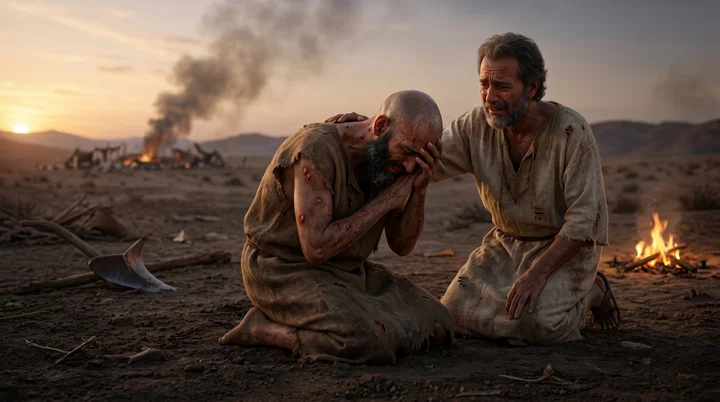
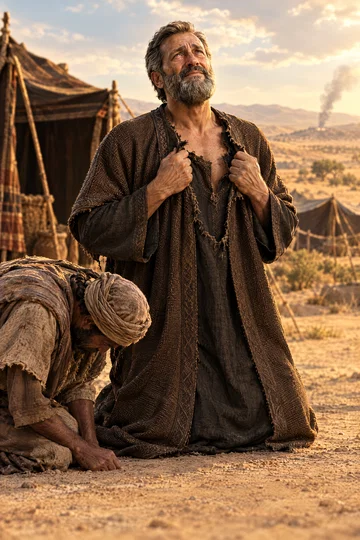
And, behold, there came a great wind from the wilderness, and smote the four corners of the house, and it fell upon the young men, and they are dead; and I only am escaped alone to tell thee.
Translations
And, behold, there came a great wind from the wilderness, and smote the four corners of the house, and it fell on the young men, and they are dead; and I only am escaped alone to tell you.
And, behold, there came a great wind from the wilderness, and smote the four corners of the house, and it fell upon the young men, and they are dead; and I only am escaped alone to tell thee.
and behold, there came a great wind from the wilderness, and smote the four corners of the house, and it fell upon the young men, and they are dead; and I only am escaped alone to tell thee.
And behold, there came a great wind from the wilderness, and smote the four corners of the house, and it fell upon the young men, and they are dead; and I only have escaped alone to tell thee.
Revised Version, American Standard Version
and, behold, there came a great wind from the wilderness, and smote the four corners of the house, and it fell upon the young men, and they are dead; and I only am escaped alone to tell thee.
And lo, a great wind hath come from over the wilderness, and striketh against the four corners of the house, and it falleth on the young men, and they are dead, and I am escaped — only I alone — to declare [it] to thee.'
and behold, there came a great wind from over the wilderness, and smote the four corners of the house, and it fell upon the young men, and they died; and I only am escaped, alone, to tell thee.
when lo! a great wind, came from over the desert, and smote the four corners of the house, and it fell upon the young men, and they died,—and escaped am, only I alone, to tell thee.
Berean Standard Bible, Majority Standard Bible
when suddenly a mighty wind swept in from the desert and struck the four corners of the house. It collapsed on the young people and they are dead, and I alone have escaped to tell you!”
and behold, there came a great wind from the wilderness, and struck the four corners of the house, and it fell on the young men, and they are dead. I alone have escaped to tell you.”
When a great wind came rushing from the waste land against the four sides of the house, and it came down on the young men, and they are dead; and I was the only one who got away safe to give you the news.
And behold, there came a great wind from beyonde the wildernesse, and smote the foure corners of the house, which fel vpon the children, and they are dead, and I onely am escaped alone to tell thee.
Douay-Rheims (Challoner revision)
A violent wind came on a sudden from the side of the desert, and shook the four corners of the house, and it fell upon thy children and they are dead, and I alone have escaped to fell thee.
Pictures

Cross-references
- Job 1:12
And the LORD said unto Satan, Behold, all that he hath is in thy power; only upon himself put not forth thine hand. So Satan went forth from the presence of the LORD.
God permits Satan to afflict Job’s possessions within limits, leading to the disasters.
- Job 1:10
Hast not thou made an hedge about him, and about his house, and about all that he hath on every side? thou hast blessed the work of his hands, and his substance is increased in the land.
God hedges creatures from the destroyer
- Job 1:1
There was a man in the land of Uz, whose name was Job; and that man was perfect and upright, and one that feared God, and eschewed evil.
Job is described as upright before his losses.
- Job 2:7
So went Satan forth from the presence of the LORD, and smote Job with sore boils from the sole of his foot unto his crown.
Both describe Satan’s permitted strikes on Job.
- James 5:11
Behold, we count them happy which endure. Ye have heard of the patience of Job, and have seen the end of the Lord; that the Lord is very pitiful, and of tender mercy.
Job is named as an example of patience in suffering.
- Job 1:6
Now there was a day when the sons of God came to present themselves before the LORD, and Satan came also among them.
Satan appears among the sons of God before disaster strikes Job’s family.
- Jonah 1:4
But the LORD sent out a great wind into the sea, and there was a mighty tempest in the sea, so that the ship was like to be broken.
The same Hebrew word is translated “wind.”
- 1 Kings 19:11
And he said, Go forth, and stand upon the mount before the LORD. And, behold, the LORD passed by, and a great and strong wind rent the mountains, and brake in pieces the rocks before the LORD; but the LORD was not in the wind: and after the wind an earthquake; but the LORD was not in the earthquake:
The same Hebrew word is translated “wind.”
- Jeremiah 4:11-12
At that time shall it be said to this people and to Jerusalem, A dry wind of the high places in the wilderness toward the daughter of my people, not to fan, nor to cleanse,
The same Hebrew word is translated “wind.”
- Job 42:10
And the LORD turned the captivity of Job, when he prayed for his friends: also the LORD gave Job twice as much as he had before.
God rewarded Job’s faithfulness under affliction.
- Ezekiel 14:14
Though these three men, Noah, Daniel, and Job, were in it, they should deliver but their own souls by their righteousness, saith the Lord GOD.
Job is named as an example of righteousness.
- Psalms 18:10
And he rode upon a cherub, and did fly: yea, he did fly upon the wings of the wind.
The same Hebrew word is translated “wind.”
- Ezekiel 37:9
Then said he unto me, Prophesy unto the wind, prophesy, son of man, and say to the wind, Thus saith the Lord GOD; Come from the four winds, O breath, and breathe upon these slain, that they may live.
The same Hebrew word is translated “wind.”
Commentary
Each commentary is drawn from primary sources: the writings of Ellen G. White and Adventist pioneers and periodicals. Each commentary is separate. Its own words are not a quotation; follow the references to read the source passages.
Ellen G. White
15 sources
The verse describes a sudden wind striking the house where Job's sons and daughters were gathered, killing them all while a single messenger escaped to bring the news, as one blow in a swift series that stripped Job of flocks, servants and children before he himself was afflicted with disease.Lt 74, 1910, par. 1–5Lt 28, 1859, par. 7–94SP 407.1–2
Satan sent the destroying wind through his knowledge of nature, yet he could act only as far as God permitted, for it is God who hedges His creatures and restrains the destroyer.4SP 407.1–2CH 492.2GC 589.2–3
The death of the children was not proof of sin in Job, but affliction the Lord allowed Satan to bring upon a righteous man, though his friends falsely charged that his losses proved his guilt and thereby misrepresented God.ST Jun 21, 1899Ms 22, 1898, par. 29
Despite grievous bereavement, bodily suffering and rejection by relatives and friends, Job held fast his integrity and loyalty to God, showing the power of faith to rest calmly in God in the darkest hour.ST Jun 21, 1899Ms 22, 1898, par. 29RH Sep 12, 1912
The same agency is still at work in tornadoes, tempests, floods, earthquakes, famine and ruin of cities, and these visitations will become more frequent and disastrous, yet God has not forsaken His faithful servant and will at last restore, favor and glorify him with an inheritance of far greater worth than earthly riches.Lt 74, 1910, par. 1–54SP 407.1–2ST Jun 21, 1899GC88 589.1–590.1RH Sep 12, 1912
The Calamity and Its Cause
The verse describes a sudden disaster in which a great wind from the wilderness struck the house where Job's sons and daughters were gathered, smote its four corners, and caused it to fall upon the young men so that they died, with only one messenger escaping alone to report it.Lt 74, 1910, par. 1–5Lt 28, 1859, par. 7–9ED 155.5 It was one of a rapid succession of losses that stripped Job of possessions and security, sweeping away flocks and herds, men-servants and maidens, servants, houses and children with one trouble succeeding another as in a moment.Lt 28, 1859, par. 7–94SP 407.1–2ED 155.5 These blows took flocks, herds, servants and children before Job himself was smitten with sore boils from the sole of his foot unto his crown.4SP 407.1–2ED 155.5
Satan sent the wind, for having studied the secrets of nature and of the laboratories of nature he uses all his power to control the elements as far as God allows.4SP 407.1–2GC88 589.1–590.1 It is God who shields His creatures and hedges them in from the power of the destroyer, keeping that power in check.4SP 407.1–2CH 492.2GC88 589.1–590.1 Satan's power to bring ruin through the elements, swiftly collapsing a house and destroying life and property, is therefore limited by God's permission and protecting care.4SP 407.1–2CH 492.2GC 589.2–3GC88 589.1–590.1
When blessings and protecting care are withdrawn Satan gains control of all whom God does not especially guard.4SP 407.1–2GC88 589.1–590.1 When men rebel against God's law God withdraws His blessings and protecting care.GC88 589.1–590.1 Satan then brings disease and disaster, tempest, famine and ruin, while leading men to believe it is God who is afflicting them.4SP 407.1–2GC88 589.1–590.1 The attack on Job as father was aimed at destroying his children as well, as part of Job being tested and tried.Lt 4, 1866, par. 5Lt 77, 1902, par. 7–8
The same agency is still at work bringing disease and disaster, accidents and calamities by sea and by land, great conflagrations, tornadoes, hailstorms, tempests, floods, cyclones, tidal waves, earthquakes, ruined harvests, famine, pestilence and ruin of cities.4SP 407.1–2GC88 589.1–590.1 These visitations are to become more and more frequent and disastrous.4SP 407.1–2 Such permitted violence against God's servants should not be treated as inexplicable surprises.Lt 74, 1910, par. 1–5
Innocent Suffering and Faithfulness
The sudden taking of Job's children shows that all suffering is not the result of a perverted life.ST Jun 21, 1899 It was part of an affliction the Lord permitted Satan to bring upon a righteous man, when Satan stripped Job of all he possessed, broke his family ties, and took his children from him, and for a time his body was covered with loathsome sores so that he suffered greatly.ST Jun 21, 1899Ms 22, 1898, par. 29 Their deaths were not proof that Job had brought suffering on himself by sin.Ms 22, 1898, par. 29
His friends charged that his afflictions proved he was guilty before God and deserving punishment.ST Jun 21, 1899 Job denied the charge and called them miserable comforters.ST Jun 21, 1899 By trying to prove him guilty they brought a grievous test upon him and placed God in a false light.ST Jun 21, 1899
Despite grievous loss and severe bereavement, followed by bodily affliction so severe that he was abhorred by relatives and friends, Job maintained his integrity, loyalty and faithfulness to God and did not swerve.ST Jun 21, 1899Ms 22, 1898, par. 29RH Sep 12, 1912AA 575.1GW92 25.2–26.2 As one of God's appointed witnesses he was exposed to reproach and persecution for the truth's sake through being deprived of his worldly possessions.RH Sep 12, 1912 A faithful servant may suffer severe bereavement and appear forsaken, yet God has not abandoned him and may later restore and favor him, as He rewarded His faithful servant.ST Jun 21, 1899Lt 10, 1879, par. 4–9
God does not always prevent the plottings of wicked men but causes their devices to work for good to those who in trial and conflict maintain faith and loyalty.RH Sep 12, 1912 He brings His children near to Him in such trials to show them their weakness and His strength.RH Sep 12, 1912 Close connection with God does not bring prosperity in the things of this life but may bring sore trial and affliction through deprivation of worldly possessions.RH Sep 12, 1912GW92 25.2–26.2 Job's steadfastness in the might of divine power is a witness to the faithfulness of God's promises and to His abiding presence and sustaining grace, testifying to the power of faith to withstand the powers of the world and to calmly repose and rest in God in the darkest, tempest-tossed hour.RH Sep 12, 1912GW92 25.2–26.2 Though the world cannot discern his moral value with God, he has promise of an inheritance of greater value than earthly riches that will satisfy the longings of the soul, is enrolled as a citizen in the record books of heaven, and will receive exalted greatness and an enduring eternal weight of glory.GW92 25.2–26.2
Sources
Pioneers and periodicals
59 sources
The verse records the final blow of Job's trial, when a great wind from the wilderness struck the house at its four corners and collapsed it upon his feasting children, killing them while one messenger alone escaped to tell him.RH Aug 16, 1906ST Feb 22, 1877RH Jul 21, 1853RH Feb 24, 1916 That wind and death were the work of Satan, showing his terrible power over the air and the forces of nature to afflict even the righteous with real destruction.RH Jun 26, 1856ST Sep 6, 1883ST Nov 29, 1905 He could do it only by God's permission and within limits set by God, for God did not cause the wind and is not its direct agent though He allowed the hedge of protection to be removed for a purpose.ST Sep 17, 1912ST Jul 4, 1906RH Sep 11, 1860 The calamity was a permitted test of Job's fidelity and integrity, to see whether grief and sudden loss of children, possessions, and blessing would make him curse God.RH Jul 21, 1853RH Aug 4, 1903RH Jan 23, 1913ST Jan 8, 1885 Bowed with grief Job did not sin or charge God foolishly but worshiped, blessed the name of the Lord, and remained patient, proving that such suffering does not by itself prove sin or God's displeasure.RH Aug 16, 1906ST Mar 27, 1893ST Apr 17, 1907RH Oct 24, 1854ST Aug 23, 1883
Words and Literary Setting
The term rendered wind denotes actual wind, the great rushing wind that struck the house.ST Mar 14, 1878 The same Hebrew term is applied alike to the servants and to the sons, the young men on whom the house fell, so that servant and young man are used synonymously and equally for servants and free persons, proving servants were always regarded as men and never as chattels or property.RH Oct 1, 1861 The verse stands in the prologue in chapters 1 and 2, written in prose like the epilogue in chapter 42:7-17.ST That prologue is distinct from the debate with the three friends in chapters 4 to 31 in three circles of speeches, from the speeches of Elihu in chapters 32 to 37, and from the speeches of the Lord out of the storm-cloud.ST The book of Job is the oldest book in the Bible and the oldest poetical book come down to us.ST
The opening narrative presents the trial as a real event in the life of a real person.ST Mar 27, 1893 Job lived about the time Moses fled from Egypt to sojourn in Midian, and Moses wrote the account while a fugitive in Midian.RH Mar 14, 1912 The verse records the final calamity of the trial.RH Aug 16, 1906ST Feb 22, 1877ST Apr 17, 1907ST Nov 13, 1884 A great wind from the wilderness struck the house at its four corners, causing it to collapse and kill the children and young men inside, while one messenger alone escaped to report it.RH Aug 16, 1906ST Feb 22, 1877ST Apr 17, 1907RH Feb 7, 1907
The children were gathered and feasting in the house when it fell.RH Jul 21, 1853RH Aug 4, 1903 Their deaths were part of Job's sudden loss of his children, home, money, land, health, and all his material blessings and earthly possessions.RH Jul 21, 1853RH Feb 24, 1916RH Aug 4, 1903RH Jun 10, 1875RH Jan 14, 1904 His material blessings were taken away and his sons and daughters were killed, so that he lost all he had.RH Feb 24, 1916RH Jun 10, 1875RH Jan 14, 1904
Satan's Power Over Nature
The great wind from the wilderness that struck the house where Job's children were gathered, brought it down and killed them while one messenger alone escaped to report it, was caused by Satan.RH Jun 26, 1856ST Sep 6, 1883RH Jan 27, 1874 It shows his terrible power to afflict God's people through real destructive events, including destructive wind or cyclone.RH Jun 26, 1856ST Sep 6, 1883 The destruction was the devil's work, not an act of God.
Satan is the prince of the power of the air who controls the elements of earth and air and had power over the very winds.ST Nov 29, 1905ST Nov 29, 1905 By conquering Adam he took the dominion over them that had been given to Adam, and he was permitted to use the forces of nature, including fierce storms, to bring suffering and death. He possesses real power over natural forces and can perform actual miracles, which he uses in deceiving mankind.ST Nov 29, 1905
The same power that sent the wind against Job later raised the tempest on the Sea of Galilee in an attempt to overwhelm the sleeping Redeemer, but Christ's greater power was shown in the words Peace, be still.ST Nov 28, 1900 The destruction reveals his sole object is destruction because he knows his eventual defeat by Christ is certain.ST Nov 28, 1900 He wants especially to destroy the souls for whom Christ died by luring them to disobedience and consequent death, for the wages of sin is death.ST Nov 28, 1900
The great wind was the work of that vast body of fallen angels under Satan engaged in a mighty effort through the whole history of the human race to bring ruin on humanity and destroy men.ST May 27, 1880ST Oct 11, 1877 It shows Satan is a real personal cruel being and not merely corrupt human nature.ST Jul 3, 1907 The use of the winds of the wilderness to destroy Job's household and bring the house down upon the young men demonstrates Satan's miracle-working power to work miracles.ST Feb 22, 1877RH Jan 27, 1874 Such power makes it possible for him to perform wonders, including healing, to deceive people.ST Feb 22, 1877ST Feb 22, 1877
Permission and Divine Restraint
Satan could bring the great wind against Job's house only because God permitted it, and only within limits God set, for he was allowed to afflict Job but not to take Job's life.ST Sep 17, 1912ST Jul 4, 1906 An evil spirit cannot act upon a person's body without God's permission, and the wind that struck the house and killed the children came under that permitted and limited allowance.ST Sep 17, 1912ST Jul 4, 1906 God's permission of the affliction does not make Him its direct agent, for Satan caused the calamity while God permitted him to act.RH Sep 11, 1860RH Jul 21, 1853 That same permitted power to afflict the righteous had not ended and could also be used in later times.RH Jul 21, 1853
God did not cause the great wind that struck the house and is not responsible for the loss of life, for the destruction was wrought by Satan. The destructive wind that killed the young men was the devil's work, not an act of God, though Satan acted under God's permission.RH Sep 11, 1860 Satan as prince of the power of the air controls the elements of earth and air because by conquering Adam he took the dominion over them that had been given to Adam.
God shields His creatures from the destroyer, so the peace and safety Job had enjoyed under God's care was a continuing miracle. After the protective hedge around him was removed, the disasters overwhelmed him in a single day when Satan was allowed to afflict him and control events. One trouble followed another until the great wind killed the children in the house and swept away family and possessions. God permits Satan to act without surrendering His rule, so the destruction by wind bringing death and desolation can be both Satan's work and a judgment of God.RH Aug 30, 1906
Satan's work of destruction stands in contrast to God's judgments, for the wind that killed Job's sons and daughters belonged to his aim to destroy righteous Job himself.ST Nov 28, 1900 He aims especially to destroy the righteous and their works, yet destroys everything possible without regard even for his own most efficient servants among men.ST Nov 28, 1900 He gives no warning, so his storms and diseases and wars overtake all alike except as they are overruled by the providence of God.ST Nov 28, 1900 God by contrast judges only the wicked, gives the wicked fair warning beforehand, and spares the righteous who heed the warning.ST Nov 28, 1900
Testing and Cosmic Conflict
The collapse of the house by the great wind was the fourth part of the permitted calamity that stripped Job of children and earthly possessions to test his fidelity, loyalty and integrity whether he would remain loyal despite adversity.RH Jul 21, 1853RH Jan 23, 1913ST May 15, 1901ST Oct 3, 1895 It was permitted that Satan might work to throw doubt into his mind that God had forgotten him, yet it was not a strange accident but a trial with God's purpose in it to prove those God calls beloved.ST Oct 3, 1895 God gave the record of that experience to refute Satan's claims and to encourage believers to stand firm in the test He permits, showing that endurance makes them partakers of Christ's sufferings that they may also share His rejoicing.
The account belongs to Satan's appearance before God with his implied claim to rule the earth, which was challenged because God still had a loyal servant there in Job.ST Aug 27, 1902ST May 1, 1901 Job's faithfulness shows that Satan's title to dominion is not rightful or uncontested.ST May 1, 1901 The same account shows Satan accusing God of injustice and lack of wisdom and accusing God's servants, and shows that from the fall until Christ conquered Satan by going down the road of righteousness to death and resurrection, Satan still had access in some way to the great assemblies in heaven where the sons of God, the representatives of different worlds, came together.ST Jul 6, 1915
The first chapter gives insight into the war in heaven, which began before any man could witness it about the time of the foundation of this world and extended to Christ's coming as man, death on the cross, and triumphant resurrection over the dragon.ST Jun 12, 1907 It was spiritual warfare, not with weapons of flesh, between Michael, the Son of God and chief of the angelic host in His first step downward for salvation, and the dragon, symbolic of Satan and chief of the rebellious hosts.ST Jun 12, 1907 After that triumph heaven rejoices but woe comes to earth, for the devil is come down with great wrath.ST Jun 12, 1907 Job did not know that Satan rather than God was the source of his suffering, and he had to endure it as though it came from God.RH Mar 14, 1912
The devil by this wind and the other calamities sought to make Job curse God, using his grief and distress when bowed down under disaster as an opportunity to tempt him.RH Aug 4, 1903ST Jan 8, 1885 Job's first test ended in a signal victory that fully vindicated God's confidence in Job's integrity before all.RH Mar 21, 1912 In that loss Job was discreet and bore grief with humble trust, God was honored, and grace and strength sought from Him were bestowed, resulting in Satan's defeat.RH Mar 21, 1912
Job's Integrity Under Suffering
The collapse of the house upon the young men did not keep Job from worship, nor did the loss of his children and all his possessions lead him to sin or to accuse God wrongly.ST Apr 17, 1907RH Oct 24, 1854ST Aug 23, 1883 Though bowed with grief he trusted God, acknowledged God rather than Satan by declaring that the Lord gives and takes away, blessed the Lord's name, remained patient, did not charge God foolishly, and continued to hold his integrity through severe suffering.ST Apr 17, 1907RH Oct 24, 1854ST Aug 23, 1883RH Oct 22, 1872 That faith endured beyond sudden loss into later bodily agony, for amid the stripping of earthly possessions and family and then loathsome sores he trusted God through adversity and looked toward a future heavenly reward.RH Apr 8, 1858
Such suffering does not by itself prove that he had sinned or that God was punishing him or showing displeasure or abandonment.RH Aug 16, 1906ST Mar 27, 1893RH Feb 7, 1907 Severe loss can come even to a faithful, perfect and upright person whom God loves, because God allows it to serve His purpose, and people must not accuse sufferers unless God plainly reveals that calamity is punishment for departure from His counsel.RH Aug 16, 1906RH Feb 7, 1907ST Aug 12, 1875 Affliction therefore does not prove a person is under God's displeasure, but God can bring comfort and hope to others through suffering and can turn it into a blessing.ST Mar 27, 1893ST Aug 8, 1906 As with the calamity that struck the Pacific Press, devastating loss coming to faithful people does not mean God has abandoned them and should not automatically be regarded as God's judgment, with the lesson to build again after the fire.ST Aug 8, 1906RH Feb 7, 1907ST Nov 7, 1906
All suffering is not the result of a perverted life, for the taking of the children was part of an affliction permitted to be brought upon a righteous man in which he was stripped of all he possessed, his family ties were broken, his children were taken, and for a time his body was covered with loathsome sores and he suffered greatly.ST Jun 21, 1899 His friends charged that his afflictions proved he was guilty before God and deserving punishment, but he denied the charge and called them miserable comforters.ST Jun 21, 1899 By trying to prove him guilty they brought a grievous test upon him and placed God in a false light, yet he did not swerve from loyalty and God rewarded His faithful servant.ST Jun 21, 1899
The verse shows the severity and reality of the loss of his beloved children when the great wind from the wilderness struck the house at its four corners and only one messenger escaped to bring the news.ST Aug 24, 1915 It was a crushing darkness and woe of riven hopes, in which his choicest ideal was shattered into fragments and his inmost and sweetest expectation felt the rod of death.ST Feb 26, 1894 Such sorrow tests inexperienced professions of complete consecration and unworldliness, and bowed down with grief he met it with bravery that proved real trust rather than mere confident words, even as distress gave opportunity for temptation.ST Jan 8, 1885ST Feb 26, 1894 He endured these successive fearful calamities one after another patiently, which is why he is called the most patient man who ever lived, proving that patience is gained only by being tried through trouble and not when everything moves along smoothly.ST Jul 13, 1904
The loss of earthly treasures when the children died was permitted to test loyalty and integrity, and through the trial humility develops in him.ST May 15, 1901 Following God may bring profound loss and despair, yet faithful patience through trial can bring a deeper knowledge of God.ST May 15, 1901 As one of God's appointed witnesses exposed to reproach and persecution for the truth's sake through deprivation of worldly possessions followed by bodily affliction so severe that he was abhorred by relatives and friends, he maintained his integrity and steadfastness.RH Sep 12, 1912 This proves that God does not prevent the plottings of wicked men but causes their devices to work for good to those who in trial and conflict maintain faith and loyalty, bringing His children near to Him to show them their weakness and His strength.RH Sep 12, 1912 His steadfastness bears witness to the faithfulness of God's promises, His abiding presence and sustaining grace, and testifies to the power of faith to withstand the powers of the world and to rest in God in the darkest hour.RH Sep 12, 1912
Encouragement and Present Application
Job's loss of his children when the great wind struck the house and killed them, leaving one messenger alive to report it, was part of the real testing trial permitted with God's purpose to prove those He calls beloved and to refute Satan's effort to throw doubt into the mind that God had forgotten him.ST Nov 13, 1884 The record was given to encourage believers to stand firm in the test He permits, showing that enduring such trials makes them partakers of Christ's sufferings that they may also share His rejoicing. Trials and deliverance through them can help others see God's sustaining grace and learn to trust Him.ST Nov 13, 1884
The same permitted affliction that tested Job's faith shows that severe loss can come even to a faithful person whom God loves, as in the calamity that struck the Pacific Press, without meaning that God has abandoned him.ST Aug 8, 1906RH Feb 7, 1907 God can turn such loss into a blessing, and the permitted affliction can test faith while leaving confidence in God's love, rule, and power to bring blessing from calamity.ST Aug 8, 1906ST Aug 8, 1906 Christians are not spared trouble but also face trials, and Job's afflictions when the wind struck the house and killed the young men illustrate that they can meet those trials and rise from them stronger through God's power and through their relation to God.ST Aug 8, 1906ST Aug 8, 1906
A devastating loss should not automatically be regarded as God's judgment, and the lesson drawn from Job's experience is to build again after the fire.ST Nov 7, 1906 Like Job who lost all he had, some must have everything taken from them before they can find everything again in God.RH Jun 10, 1875 The complete loss of money, land, health until sick with sores all over, and children when the house fell on them, yet never swearing but praising God, gives help for controlling a quick temper when hard work is spoiled and anger makes a person feel like swearing.ST Jan 7, 1903 The remedy is remembering Job, praising God instead, and cheerfully washing the work clean and doing it over while praising God all the time.ST Jan 7, 1903
The power by which Satan when permitted could afflict the righteous by causing the great wind to collapse the house and kill those inside had not ended and could also be used in later times.RH Jul 21, 1853 The account of Job's experience, lived about the time Moses fled from Egypt to sojourn in Midian and written by Moses while a fugitive in Midian and handed down in the Book of God, contains important lessons for those who live prior to the coming of the Lord.RH Mar 14, 1912
Sources