Joel 1:3
Tell ye your children of it, and let your children tell their children, and their children another generation.
Translations
Tell you your children of it, and let your children tell their children, and their children another generation.
King James Version, Webster Bible, Revised Version, American Standard Version
Tell ye your children of it, and let your children tell their children, and their children another generation.
Tell ye your children of it,
And let your children tell their children,
And their children another generation.Concerning it to your sons talk ye, And your sons to their sons, And their sons to another generation.
Tell your children of it, and [let] your children [ tell] their children, and their children another generation:
Concerning it, to your children, tell ye the story,—and your children, to their children, and their children, to the generation following:—
Berean Standard Bible, Majority Standard Bible
Tell it to your children;
let your children tell it to their children,
and their children to the next generation.Tell your children about it,
and have your children tell their children,
and their children, another generation.Give the story of it to your children, and let them give it to their children, and their children to another generation.
Tell you your children of it, and let your children shew to their children, and their children to another generation.
Douay-Rheims (Challoner revision)
Tell ye of this to your children, and let your children tell their children, and their children to another generation.
Pictures
Commentary
Each commentary is drawn from primary sources: the writings of Ellen G. White and Adventist pioneers and periodicals. Each commentary is separate. Its own words are not a quotation; follow the references to read the source passages.
Ellen G. White
1 source
Joel 1:3 belongs to a prophecy describing the condition of the world just before the second coming, when the end of all things is at hand.Ms 110, 1893, par. 13 It portrays a time when iniquity abounds on every hand.Ms 110, 1893, par. 13 That abounding iniquity exists because men have transgressed the law.Ms 110, 1893, par. 13 By continual transgression they have broken the everlasting covenant, which was given on condition of obedience.Ms 110, 1893, par. 13
As men turn away from God and from His righteous government, the world comes more and more under the sway of seducing spirits.Ms 110, 1893, par. 13 Even men professing godliness indulge their own traits of character in this time.Ms 110, 1893, par. 13 Unless they are conscientiously under the control of God, they become self-indulgent and self-centered.Ms 110, 1893, par. 13
Sources
Pioneers and periodicals
17 sources
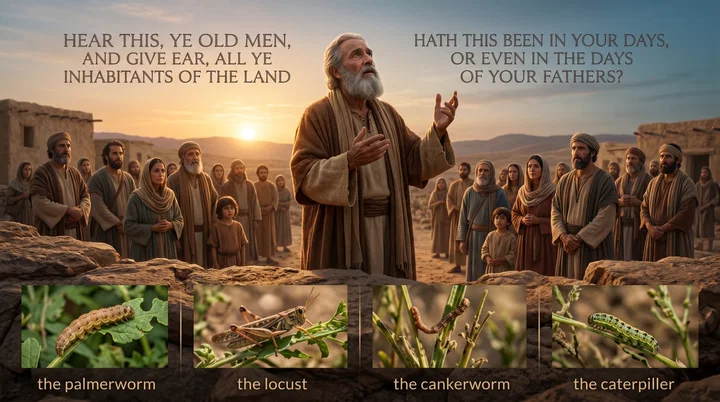
Joel commands parents to tell their children, and children to tell theirs onward, so the memory of an extraordinary and unprecedented devastation is preserved through every generation.ST Sep 26, 1911ST Dec 8, 1914ST Jul 13, 1904ST Jan 17, 1911RH Feb 18, 1875 The devastation is successive swarms of devouring insects each consuming what the last left, bringing failed crops and food, suffering beasts without pasture and water, dried waters, and fire consuming the land as a destruction from the Almighty in the day of the Lord.ST Sep 26, 1911ST Jul 13, 1904ST Jan 17, 1911RH Mar 31, 1868RH Jan 8, 1901 It opens by calling on the old men, elders and all inhabitants of the land whether anything so fearful happened in their days or their fathers' days, withholding the subject to excite attention and alarm and heighten its terrible character.ST Jan 17, 1911RH Feb 18, 1875ST May 27, 1875 The chapter describes conditions before Christ's second coming, when God's restraining power is withdrawn and literal crop-destroying insects, His army identified in Joel 2:25, accompany the plagues of Revelation upon those outside the ark of safety.ST Nov 8, 1905ST Jan 17, 1911RH Jan 8, 1901ST Sep 23, 1913 The account is handed down so that people yet unborn will be warned of the coming desolation under sin's curse, may prepare and escape it, and, taking the Lord's shelter, keep their joy and pass God's truth from children to families and later generations.ST Sep 26, 1911RH Jan 8, 1901ST Feb 13, 1901RH Apr 21, 1903RH Jan 8, 1901
Calamity and Its Setting
The command is to tell the account of Joel's message and the devastation to children, and to have children tell their children and on through successive generations, so that the memory of an extraordinary and unprecedented calamity is preserved.ST Sep 26, 1911ST Dec 8, 1914ST Jul 13, 1904RH Mar 31, 1868ST Sep 23, 1913 That calamity is devastation of the land by successive insect pests with resulting failure of crops, presented as a manifestation of the earth's decay under sin's curse.ST Sep 26, 1911ST Jul 13, 1904 In its setting it belongs among the evils associated with the great day of the Lord, pictured as vast, desolating swarms, and as the day of the Lord and a destruction from the Almighty when crops and food fail, animals suffer, and waters dry up, making the coming calamity a warning to be remembered and told to later generations.ST Jul 13, 1904RH Mar 31, 1868 The locusts and other devouring pests in the surrounding prophecy are literal destructive insects, not figurative human armies, for Joel 2:25 identifies them as God's army and promises restoration of what they consumed.ST Sep 23, 1913
The calamity is successive destruction of crops by devouring insect pests, with each kind consuming what the previous kind left.ST Sep 26, 1911ST Jul 13, 1904ST Jan 17, 1911 It is pictured as vast, desolating swarms bringing repeated destruction upon the fields.ST Jul 13, 1904ST Jan 17, 1911 The elders are called to witness that such devastating events in their day were unknown to their ancestors, and to pass the account down through successive generations.ST Jan 17, 1911
In its setting the devastation is the day of the Lord, a destruction from the Almighty and an unprecedented desolation coming on the land.RH Mar 31, 1868RH Jan 8, 1901 Fields and crops are ruined and food fails, beasts suffer for lack of pasture and water, waters dry up, and fire consumes the land.RH Mar 31, 1868RH Jan 8, 1901 The account is therefore to be passed from generation to generation so that people yet unborn may be warned of it and may escape it.RH Jan 8, 1901
The verse continues an abrupt opening appeal to all the inhabitants of the land and to the elders and old men to say whether anything so fearful had happened in their days or in their fathers' days.ST Jan 17, 1911RH Feb 18, 1875RH Feb 18, 1875 The subject is withheld while its terrible, fearful and unprecedented character is indicated, which excites attention and alarm and heightens the effect.RH Feb 18, 1875RH Feb 18, 1875 Because the announced event is so fearful and unprecedented, its memory is commanded to be handed down from parents to children and through every generation.ST Jan 17, 1911RH Feb 18, 1875ST May 27, 1875ST May 27, 1875RH Feb 18, 1875
Prophecy of Last Days
The chapter is important enough to be handed from one generation to the next because it describes conditions just before the second coming of Christ, including destroying insects eating the crops and the nearness of the day of the Lord.ST Nov 8, 1905 The account of the devastation is to be passed to children and children's children and onward so later generations will learn of it.ST Sep 23, 1913 The devouring creatures are literal destructive insects and not figurative human armies, for Joel 2:25 calls them God's army and promises restoration of what they have eaten.ST Sep 23, 1913 Their ravaging is a familiar picture of destruction to all acquainted with the East, and standing beside the locusts of Revelation 9 they are to be taken as symbols of devastation.ST Mar 21, 1911
Joel 1 and 2 point to a typical work like the feast of tabernacles and the day of atonement, coming after the third angel's message and before the coming of the Lord, which cannot belong to immortal saints.RH Sep 11, 1856 The prophecy looks to a dreadful time when God's restraining power is withdrawn and destructive insects go with the plagues of Revelation and fall upon those outside the ark of safety. The elders are called to witness that the devastating events of their day were unknown to their fathers and to hand the account down through successive generations, for each kind of insect eats what the kind before it has left.ST Jan 17, 1911 This is applied to widespread ruin of agriculture now and to the fuller desolation belonging to the time of the plagues, when fields and crops are laid waste, beasts suffer for want of pasture and water, waters fail, and fire devours the land.ST Jan 17, 1911RH Jan 8, 1901 The coming plague is the fulfillment of that scene, and the record is preserved that people yet unborn may be warned of the unprecedented desolation coming upon the land in the day of the Lord and may escape it.RH Jan 8, 1901
Warning Future Generations
The account is to be handed down from generation to generation so that people yet unborn will be warned of the unprecedented desolation coming upon the land in the day of the Lord and may prepare and escape it.RH Jan 8, 1901RH Jan 8, 1901 The warning describes fields and crops ruined, beasts suffering for lack of pasture and water, and fire consuming the land, with the coming plague presented as the fulfillment of this scene.RH Jan 8, 1901 The fire the false prophet used to deceive people will instead come from God as terrible judgment upon those who practiced the deception and upon those who entered into it despite God's warning.RH Jan 8, 1901
The extraordinary calamity to be remembered and passed from parents to children and to later generations is the devastation of the land by successive insect pests and the resulting failure of crops, presented as a manifestation of the earth's decay under sin's curse.ST Sep 26, 1911 The prophecy belongs to the last days, when disease and pests destroy crops, animals groan, and people's joy withers.ST Feb 13, 1901 Those who understand these conditions can take the Lord's shelter, keep their joy, and share it with others.ST Feb 13, 1901 What is learned about God's truth is to be passed from children to their families and on to later generations, so that children taught in Sabbath school can carry the truth into their homes and reach parents who might not be reached in other ways.RH Apr 21, 1903
Sources