John 11:1
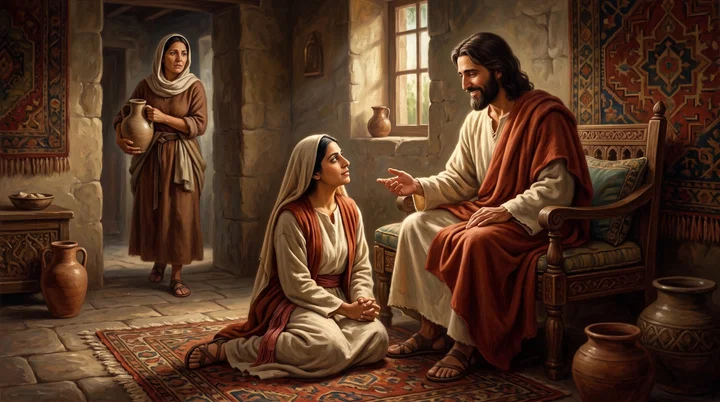
Now a certain man was sick, named Lazarus, of Bethany, the town of Mary and her sister Martha.
Translations
American King James Version, King James Version, KJV Cambridge Paragraph Bible, Webster Bible
Now a certain man was sick, named Lazarus, of Bethany, the town of Mary and her sister Martha.
Revised Version, American Standard Version
Now a certain man was sick, Lazarus of Bethany, of the village of Mary and her sister Martha.
And there was a certain one ailing, Lazarus, from Bethany, of the village of Mary and Martha her sister —
Now there was a certain [ man] sick, Lazarus of Bethany, of the village of Mary and Martha her sister.
Now a certain man was sick, Lazarus of Bethany, of the village of Mary and Martha her sister.
Berean Standard Bible, Majority Standard Bible
At this time a man named Lazarus was sick. He lived in Bethany, the village of Mary and her sister Martha.
Now a certain man was sick, Lazarus from Bethany, of the village of Mary and her sister, Martha.
Now a certain man named Lazarus was ill; he was of Bethany, the town of Mary and her sister Martha.
And a certaine man was sicke, named Lazarus of Bethania, the towne of Marie, and her sister Martha.
Douay-Rheims (Challoner revision)
Now there was a certain man sick, named Lazarus, of Bethania, of the town of Mary and Martha her sister.
Pictures
Cross-references 20 of 27
- John 11:43-44
And when he thus had spoken, he cried with a loud voice, Lazarus, come forth.
Jesus calls Lazarus from the tomb and restores him to life.
- John 11:25
Jesus said unto her, I am the resurrection, and the life: he that believeth in me, though he were dead, yet shall he live:
both read as funeral comfort pointing to resurrection
- John 12:1-3
Then Jesus six days before the passover came to Bethany, where Lazarus was which had been dead, whom he raised from the dead.
Places Lazarus, Mary, and Martha in Bethany, where Jesus visited and Mary anointed him.
- John 11:14-15
Then said Jesus unto them plainly, Lazarus is dead.
Jesus plainly says Lazarus is dead and explains his absence will strengthen the disciples’ faith.
- Luke 10:38-42
Now it came to pass, as they went, that he entered into a certain village: and a certain woman named Martha received him into her house.
Both texts identify Mary and Martha’s home in Bethany, where Jesus visits.
- John 11:5-6
Now Jesus loved Martha, and her sister, and Lazarus.
Jesus loved the family yet delayed going to Lazarus.
- John 12:10-11
But the chief priests consulted that they might put Lazarus also to death;
The chief priests plot to kill Lazarus because many believe in Jesus through him.
- John 11:35
Jesus wept.
Jesus weeps in sympathy with the family’s grief.
- John 11:21
Then said Martha unto Jesus, Lord, if thou hadst been here, my brother had not died.
Martha grieves Lazarus’s death and says Jesus could have prevented it.
- John 11:11
These things said he: and after that he saith unto them, Our friend Lazarus sleepeth; but I go, that I may awake him out of sleep.
Jesus describes Lazarus’s death as sleep and says he will awaken him.
- John 11:6
When he had heard therefore that he was sick, he abode two days still in the same place where he was.
Jesus waited two days after hearing Lazarus was sick.
- John 11:24
Martha saith unto him, I know that he shall rise again in the resurrection at the last day.
Martha looks forward to her brother’s resurrection at the last day.
- John 11:45
Then many of the Jews which came to Mary, and had seen the things which Jesus did, believed on him.
Many believed in Jesus after Lazarus was raised.
- Luke 24:50-51
And he led them out as far as to Bethany, and he lifted up his hands, and blessed them.
Jesus’ final meeting with the disciples and his ascension took place near Bethany.
- John 11:17
Then when Jesus came, he found that he had lain in the grave four days already.
Lazarus has been dead and buried four days.
- John 11:7-8
Then after that saith he to his disciples, Let us go into Judæa again.
Jesus decides to return to Judea despite the danger of being stoned.
- John 11:53
Then from that day forth they took counsel together for to put him to death.
The leaders plot to kill Jesus after he raises Lazarus.
- Luke 19:29-40
And it came to pass, when he was come nigh to Bethphage and Bethany, at the mount called the mount of Olives, he sent two of his disciples,
Jesus’ entry into Jerusalem begins near Bethany.
- John 11:39
Jesus said, Take ye away the stone. Martha, the sister of him that was dead, saith unto him, Lord, by this time he stinketh: for he hath been dead four days.
Martha notes that Lazarus has been dead and buried for four days.
- John 11:19
And many of the Jews came to Martha and Mary, to comfort them concerning their brother.
many came from Jerusalem to comfort them
Commentary
Each commentary is drawn from primary sources: the writings of Ellen G. White and Adventist pioneers and periodicals. Each commentary is separate. Its own words are not a quotation; follow the references to read the source passages.
Ellen G. White
26 sources
John 11:1 introduces Lazarus as a sick man of Bethany, the home he shared with his sisters Mary and Martha.DA 524.121MR 110.7–111.221MR 109.2–4 He and his household sincerely loved Jesus and believed in Him, and their humble home was a place of rest, welcome and pure friendship where He often found relief from conflict and labor.DA 524.1DA 524.2–321MR 110.7–111.2DA 326.46RED 88.1 His sudden violent sickness ran its course to death and burial until he had lain dead four days, while his sisters sent only the confiding word that he whom He loved was sick, fully expecting Him to come and heal him.ST Nov 10, 190921MR 109.2–4Ms 19, 1892, par. 7–9COS 86.2–87.2 Jesus knew of the sickness and could have stopped death from afar, yet He remained where He was for two more days, not from lack of love but by God's plan that the raising be a crowning, undoubted proof of His divine power as Saviour and Lifegiver.DA 524.13RED 102.221MR 110.7–111.221MR 109.2–4 After four days He called Lazarus from the tomb by His word and restored him, though not to immortality, so that many believed and glorified God while those hardened against light renewed their hostility.ST Mar 23, 1882Ms 18, 1898, par. 5–720MR 147.3–5Ms 47, 1897, par. 9–10ST Feb 3, 1914
Bethany Home and Sickness
Now a certain man was sick, named Lazarus, of Bethany, the town of Mary and her sister Martha, his sisters and household.DA 524.121MR 110.7–111.221MR 109.2–4ST Mar 23, 1882DA 326.4 Lazarus was a steadfast disciple whose faith in Christ was strong and whose love for Him was deep, sincerely loving Jesus and strongly believing in Him as the Way, the Truth, and the Life.DA 524.121MR 110.7–111.2Ms 19, 1892, par. 18–21 He knew the deep enmity of the Pharisees against Jesus and the injustice of the charges they sought to fasten upon Him, and the sympathy of the whole peaceful household was wholly with Jesus, with Mary earnestly listening to His words.21MR 110.7–111.2Ms 19, 1892, par. 18–21 Jesus loved him and was bound to the family at Bethany by especially tender affection.DA 524.121MR 110.7–111.2
Their Bethany home was a peaceful, humble place where Jesus, having no home of His own and depending on the hospitality of friends and disciples, often found rest and repose.DA 524.2–36RED 88.1ST Jan 4, 18833SP 250.3ST Oct 31, 1895 Weary and thirsting for human fellowship, He gladly escaped there from the suspicion and jealousy of the angry Pharisees and the weary conflict of public life, finding relief from care and labor amid an atmosphere of faith and love when misunderstood.DA 524.2–3DA 326.4Ms 19, 1892, par. 18–21 There He found sincere welcome and pure, holy friendship, a quiet home and interested listeners who understood and treasured His words.DA 524.2–3DA 326.4 Longing for human tenderness, courtesy and affection, He could speak there with simplicity and perfect freedom without parables, opening to an appreciative audience the volume of Providence and telling in private what He did not tell the mixed multitude.DA 524.2–3
Sorrow entered that home when Lazarus was seized by sudden, violent illness, a fever that rapidly grew worse until death triumphed and he died in anguish before his sisters.ST Nov 10, 1909Ms 19, 1892, par. 7–9Ms 31, 1892, par. 3–5 He was buried and lay dead four days, his body beginning to decay.COS 86.2–87.2Ms 41, 1897, par. 14–20 The illness became worse while the sisters waited for Jesus, whom they expected to come and heal him.21MR 109.2–4Ms 31, 1892, par. 3–5
Knowing Christ had shown power to heal all manner of diseases and trusting His sympathy in their distress, his sisters sent only the brief confiding word that he whom He loved was sick, making no urgent demand or plea for His immediate presence yet fully expecting their beloved friend to come at once and reach Bethany as soon as He could to heal him.ST Nov 10, 190921MR 109.2–4Ms 19, 1892, par. 7–9 They waited anxiously, praying and watching for Jesus to come while the spark of life remained in their brother, and when the messenger returned without Him but with the word that the sickness was not unto death, they clung to hope that Lazarus would live.ST Nov 10, 1909 With heavy hearts they prepared Lazarus for burial and laid him in the grave, all the while looking anxiously for Christ and longing to see Him and hear His words of comfort.Ms 19, 1892, par. 7–9
Delay, Raising, and Meaning
Jesus knew Lazarus was sick before the messenger reached Him and could have held back the power of death from where He was, yet He stayed where He was two more days and did not come until Lazarus had died, been buried, and two long sorrowful days had passed.3RED 102.221MR 110.7–111.221MR 109.2–4Ms 19, 1892, par. 7–9Ms 19, 1892, par. 18–21 He knew Lazarus was dead and said He was glad for the disciples' sakes that He had not been there, to the intent they might believe, and then set out for Judea though the Jews had lately sought to stone Him there.3RED 102.2
The delay came from no lack of interest or love for Lazarus and his family, but by God's plan that the sickness run its course to death and burial so the raising would be a crowning, undoubted proof of divine power.3RED 102.221MR 110.7–111.2Ms 19, 1892, par. 18–21 It was the greatest of His miracles, revealing His character as Saviour and Lifegiver shortly before His entry into Jerusalem.DA 524.1Ms 18, 1898, par. 5–7Ms 128, 1899, par. 15 He delayed though He could not witness suffering without bringing relief, and He let death be permitted so He could raise him.Ms 18, 1898, par. 5–7
He let Lazarus die to unite His disciples to Him in a faith that could not be broken and to answer doubts among them whether He was really the Christ since He had not saved Lazarus whom He loved.3RED 102.2 The miracle was to convince all who would be convinced that He is the Saviour of the world, to reveal the Father through His works to believers and unbelievers, and to give convincing proof of His divinity even when the body had begun to decay.3RED 102.2Ms 41, 1897, par. 14–20 It became the final, crowning evidence to the Jews that Jesus was the Son of God, the final test given to the Jewish nation and undeniable evidence of Messiahship, and it drew a large enthusiastic multitude.Ms 18, 1898, par. 5–720MR 147.3–5Ms 47, 1897, par. 9–104RED 18.1
After Lazarus had been dead four days Christ called him from the tomb by His word and restored him to Mary and Martha, showing sympathy for their grief and power to return their brother to them and to bring joy to his sisters.ST Mar 23, 1882Ms 1, 1867, par. 44–47COS 86.2–87.2 His raising shows Christ's power over death and points to the time when Christ returns, when His voice will call the dead in Christ from their tombs to immortal life to remain with the Lord.COS 86.2–87.2 Jesus wept at the grave, and His tears reflected sorrow that He could not save all brought low by death, though He gave Himself as a ransom for all who would return to loyalty to God.Ms 18, 1898, par. 5–7 In raising Lazarus He knew He would pay the ransom for that life at Calvary, for every such rescue moved Him toward humiliation and death.Ms 18, 1898, par. 5–7Ms 128, 1899, par. 15
Like the widow's son and the ruler's daughter, Lazarus returned to life but was not made immortal and remained subject to death and decay.ST Feb 3, 1914Ms 115, 1897, par. 17–20 The everlasting immortal life of those raised at Christ's resurrection will be different.ST Feb 3, 1914COS 86.2–87.2 He had no experience after death to report, because the dead know nothing and their love and hatred have perished.20MR 147.3–5Ms 47, 1897, par. 9–10 Instead he testified by his life and words to Christ's divine power, declaring that Jesus was the Son of God and asking what people would gain by putting Him to death.20MR 147.3–5Ms 47, 1897, par. 9–10
This crowning miracle led many to believe in Jesus and glorify God, while opponents who had repeatedly rejected light remained hardened and renewed hostility.21MR 110.7–111.2Ms 19, 1892, par. 18–21 That hardening stirred anew the hatred and jealousy of the Pharisees.Ms 19, 1892, par. 18–21 His raising of the dead in Bethany was part of His mission to lift the human race to a new and perfect life, as surely as His work as a carpenter and His death as humanity's sacrifice.Lt 1, 1880, par. 5–6
Sources
Pioneers and periodicals
87 sources
The verse introduces a real man fallen seriously ill, Lazarus of Bethany, the brother of Mary and Martha and a beloved friend and disciple whose family home welcomed and rested Jesus.ST Aug 23, 1899 His sudden near-fatal sickness brought sorrow into that peaceful house, and though the sisters sent word in confident expectation, Jesus remained two days beyond Jordan and did not arrive until Lazarus had lain four days dead and buried.ST Nov 10, 1909ST Jan 20, 1914ST Mar 15, 1899ST Jun 8, 1915 His death, first called sleep and then plainly named death, was wholly unconscious with no experience to tell, and his raising was to recognizable bodily life at the table, not to immaterial existence or immortality.ST Jan 20, 1914ST Jun 3, 1913ST Aug 20, 1896ST Aug 9, 1905ST Jun 8, 1915 The work was a deliberate crowning miracle by divine creative power after corruption had begun, proving Christ to be the resurrection and the life, the divine Son of God and Messiah with power over death and the grave.ST Aug 20, 1896ST Sep 17, 1912ST Dec 23, 1897ST Dec 3, 1894ST Mar 11, 1889 So literally raised, Lazarus foreshadows the greater resurrection when all in the graves will hear His voice, and shows the same pitying Friend still present to comfort every mourning heart today.ST Feb 7, 1906ST May 30, 1895ST Jan 31, 1911ST Oct 28, 1880RH Oct 19, 1869
Family Home at Bethany
Now a certain man was sick, named Lazarus, of Bethany, the town of Mary and her sister Martha.ST Aug 23, 1899ST Jul 8, 1886ST Apr 10, 1901ST Jan 20, 1914 He was Mary and Martha's brother and a close friend whom Jesus loved, and with his sisters a devoted disciple who had received His teaching.ST Apr 10, 1901ST Jan 20, 1914 Their home welcomed Jesus during His journeys to Jerusalem, a quiet place where He and His disciples rested as guests after travel and where Martha and Mary cared for them.ST Jan 4, 1883ST Jul 8, 1886ST Nov 17, 1898ST Aug 9, 1910 His illness and what followed belong toward the close of Jesus' ministry.ST Apr 10, 1901
Bethany lay on the east side and eastern slope of the Mount of Olives, a short distance east of and below the summit, about a mile beyond the summit where the road to Jericho begins its steeper descent toward the Jordan valley.ST Nov 17, 1898ST Aug 2, 1899ST Mar 15, 1899ST Mar 6, 1901 It was nearly two miles from Jerusalem, about forty minutes walk and less than two miles east of the city, near the Mount of Olives and near the main Jerusalem to Jericho road.ST Nov 17, 1898ST Aug 2, 1899ST Mar 15, 1899ST Nov 29, 1910RH May 13, 1902 It was reached by that road around the southern slopes or by a foot-path over the summit, among olive, fig and almond trees and green fields and surrounding heights, a beautiful and secluded place occupying the same place anciently as now.ST Nov 17, 1898ST Aug 2, 1899 It is now called El-Azarieh or Lazarieh, meaning the place of Lazarus, a wild mountain hamlet of about twenty families, with the house of Mary and Martha and Lazarus's tomb in ruins.ST Mar 15, 1899ST Mar 6, 1901RH May 13, 1902
It was a quiet, beautiful, secluded, humble village home where Jesus stayed more than any other place during His time at Jerusalem, teaching in the temple by day and returning at night to Bethany on the Mount of Olives, often stopping to rest.ST Jan 4, 1883ST Jul 8, 1886ST Nov 17, 1898ST Jun 25, 1912ST Aug 9, 1910 Although the family was not perfect, their home had an atmosphere He loved, and they gladly entertained Him in hospitable close friendship.ST Jun 25, 1912ST Aug 9, 1910 There the Master sat and taught, wept in sympathy for mourning hearts, demonstrated that He is the resurrection and the life, raised Lazarus, and after the resurrection saw Mary anoint His feet with precious ointment and wipe them with her hair at the feast in the house of Simon the leper, and there He ascended.ST Nov 17, 1898ST Mar 6, 1901 One account calls their village Nazareth, though the verse names it Bethany.
The setting is dated to A.D. 30.ST Aug 23, 1899 It came a short time after His teaching on the resurrection in John 5.RH Dec 11, 1855 It was performed during the about five months between the previous teaching and the last week of Christ's life on earth when the triumphal entry took place.ST Apr 14, 1898
Heaven knew Bethany through Mary and Martha, not for wealth, learning, institutions or famous people, but because Jesus was welcomed there and received loving service.ST Apr 27, 1882 It was the one household Jesus loved on earth in human flesh with special intimate friendship, as most devoted friend and guest, at home at their table where the door stood always open so He comes in and sups with them and they with Him.RH Aug 26, 1862 This pictures higher communion, fellowship and love belonging to the more advanced stages of the Christian life, and belongs to His work as the greatest missionary and reformer who passed through childhood and youth and could meet other young persons.RH Aug 26, 1862 It means Jesus had personal friendships and found rest in the society of some more than others, preferring their company in personal friendship, yet that preference never took Him from His duty or turned Him from the mission given Him of God.ST Oct 13, 1909 That liking some with personal friendship stands beside loving everyone with saving divine love that sees every soul as precious and labors to save all, and would die for others as quickly as for them.ST Oct 13, 1909
The specific names and setting give detailed, publicly checkable testimony to the miracle that follows.RH Feb 4, 1862 That raising from the dead is a miracle acknowledged even in the Jewish record discussed.RH Sep 5, 1865
This Lazarus is distinct from the poor Lazarus in the parable of the rich man and Lazarus.ST Mar 24, 1909 The parable's Lazarus represents the Gentile hungry for spiritual riches, while the rich man represents the Jew who considered himself spiritually rich.ST Mar 24, 1909 This Lazarus of Bethany was the son of a wealthy Jew, described as a sick young man, and was not the first person Christ raised, since Christ had already raised the widow of Nain's son.ST Mar 24, 1909 The name Lazarus means whom God aids, the Greek form of the Hebrew name Eleazar.ST Mar 24, 1909
The Mary named in the verse is the woman identified in the following verse as the one who anointed Jesus.ST Jul 29, 1889 The linking of Lazarus's sickness with that anointing does not mean the anointing happened first, though it occurred after he became sick, but the events are joined because one suggests the other, not because they happened in the order mentioned.RH Aug 27, 1872
Sickness Waiting and Delay
Sorrow entered the peaceful home where Jesus had rested when Lazarus was seized by sudden violent illness.ST Nov 10, 1909 It was a serious sickness that left him near death, with Martha watching anxiously and Mary waiting for Jesus to come.ST May 18, 1915 It was a sudden and fatal disease of the kind still experienced at Bethany, and its continued occurrence there bears witness to the truth of Scripture.RH Aug 29, 1871
His sisters knew Christ had shown power to heal all manner of diseases and trusted His sympathy in their distress.ST Nov 10, 1909 They therefore sent only the confiding message that he whom He loved was sick, making no urgent demand for His immediate presence.ST Nov 10, 1909ST Jan 20, 1914 Yet they expected Him to respond at once and reach Bethany as soon as He could.ST Nov 10, 1909 They waited anxiously, praying and watching for Jesus to come while the spark of life remained in their brother.ST Nov 10, 1909 When the messenger returned without Him but with the word that the sickness was not unto death, they clung to hope that Lazarus would live.ST Nov 10, 1909
Lazarus became sick in the home at Bethany he shared with his sisters Martha and Mary, whom Jesus loved.ST Mar 15, 1899 The sickness caused the sisters to send for Jesus while He was at Bethabara on the other side of Jordan.ST Mar 15, 1899 He did not start for Bethany until two days after receiving the summons.ST Mar 15, 1899 When He arrived Lazarus had already been dead four days, and the sisters led Him to the tomb.ST Mar 15, 1899 The funeral had taken place, the tomb was sealed with a stone, and decomposition was expected.ST Jun 8, 1915
Jesus deliberately allowed His friend to die, though He loved him and his family.RH Apr 28, 1910ST Jun 8, 1915 His delay in coming did not mean indifference, for God’s love remains sure even when His help seems withheld.ST Dec 24, 1896 An apparent affliction or neglect may prepare for a greater display of His power and glory.ST Dec 24, 1896 The death and the grief it caused served God’s purpose, showing His power to raise the dead and giving hope that His followers and the faithful of every age will be raised to everlasting life.RH Apr 28, 1910 His absence when Lazarus died also makes the sisters’ later words and His joy at being absent more significant.ST Dec 24, 1896
That Lazarus was sick while Jesus was away from Bethany illustrates that Jesus, being a person, could be in only one place at a time.ST Oct 5, 1904
Death as Unconscious Sleep
Jesus first called the death sleep and then said plainly that he was dead, using sleep to picture death as an unconscious sleep from which God will wake the dead.ST Jan 20, 1914ST Jun 3, 1913 Lazarus of Bethany, Mary and Martha's brother and a good man whom Jesus loved, was sick, died, and lay four days dead, and Jesus spoke of that condition as both death and sleep when He said He was going to awake him.ST Jun 8, 1915RH Dec 28, 1911 He then awoke him by bringing him back to life, and the four days in the tomb are still described as a sleep.ST Jun 8, 1915RH Dec 28, 1911
The account records no thoughts, experiences, sights, or revelation from those four days dead.STST Jun 8, 1915RH Aug 24, 1905 After being raised Lazarus had nothing to tell about life among the dead, and his theme was to glorify the Lord who restored him to life rather than to tell of heaven.ST Jun 8, 1915RH Dec 28, 1911 Like others restored to life he gave no account of conscious experience during death, showing he had not been in heaven but had remained unconscious in death.RH Dec 28, 1911RH Aug 24, 1905 His silence proves that man has no conscious soul that leaves the body at death and that the dead do not pass at once to glory, which exposes the error of that teaching and leaves the visions of the dying with no value as proof of an immediate transit to heaven.ST Feb 17, 1881ST Nov 4, 1880 It likewise gives no revelation about experiences in Paradise and challenges the claim that the dead remain conscious and receive knowledge about the living.ST Nov 4, 1880 The righteous and the wicked are both in their graves awaiting their resurrection, for the dead are wholly unconscious until life is restored.RH Dec 28, 1911RH Aug 24, 1905
If the dead remained conscious in heavenly bliss, bringing him back from it to this sinful world after four days in the tomb would be inexplicable.ST Oct 19, 1915
He was raised to material, recognizable, bodily life and afterward was alive at the table and served, confirming that the event was no deception and not an existence as an immaterial spirit.ST Aug 20, 1896ST Aug 9, 1905 Jesus proved Himself to be the resurrection and the life by raising him after corruption had begun.ST Aug 20, 1896 His raising was one of the earlier resurrections before Christ's own resurrection, as with the widow's son and the ruler's daughter, and although death's power was truly broken in his case he was not raised to immortality but remained subject to death, unlike the everlasting life of those raised at Christ's resurrection.ST Feb 3, 1914ST Aug 12, 1889
His raising is an exception to the general order of resurrection, in which the righteous dead rise at Christ's coming and the wicked rise a thousand years later, with exceptions both before and since Christ's first coming.ST Jan 28, 1889 Except for those made immortal at Christ's coming, all others live again only by a resurrection from the dead through the power of Christ.ST Jan 28, 1889
John 11:1-44 is literal truth and true history of a real man of Bethany who was truly sick, died, and was raised bodily from the tomb by Christ, not only a moral lesson and not a merely spiritual resurrection.ST Mar 13, 1907ST Oct 6, 1909ST Jul 21, 1909 To make it only moral or only spiritual denies bodily resurrection and rejects the fundamental doctrines of Christianity and the faith once delivered to the saints.ST Oct 6, 1909ST Jul 21, 1909 Denial that this real miraculous work can be credited belongs with denial that the Bible is an infallible book, denial of all doctrines of inspiration, denial of devils, denial of the virgin birth of Jesus, denial of the physical resurrection, denial of imputed righteousness, and denial that the law is immutable, and expresses doubt in the Gospel of John, though received as a true Gospel story it can bring comfort to mourners at a funeral.RH May 23, 1912ST Mar 13, 1907 Those who held otherwise taught that he was not dead, for his spirit had not entirely left his body but he was in a trance, which Jesus in His superior condition saw and restored by magnetic power over his system.RH Sep 8, 1853
Christ's Power and Identity
The raising displays divine creative power over death and the grave, the same word of power by which the world was created and all things are upheld, and the same power that raised Jesus from the dead.ST Dec 3, 1894ST Mar 11, 1889ST May 6, 1913 It was a direct miracle of divine power rather than a healing through natural agencies, done openly in public rather than hidden in a corner, and reckoned as one of three instances in which Jesus raised the dead.ST May 8, 1907ST Mar 31, 1898 That power that raised Lazarus even after decomposition had begun is the power that can change fallen nature, make a new man, overcome every evil habit, supply all that pertains to life and godliness, strengthen against sin, keep through faith unto salvation, quicken mortal bodies at last, and seat in glory those now seated in heavenly places in Christ.ST Mar 11, 1889
It was a crowning and incontestable miracle, wrought after corruption had begun and proved afterward by Lazarus alive and serving at the table, so that no deception could be claimed.ST Aug 20, 1896ST Apr 20, 1882 The story that begins with Lazarus sick at Bethany ends in resurrection and shows that life comes from Christ, who declared Himself the Light and the resurrection and the life.ST Aug 20, 1896ST Sep 17, 1912ST Dec 23, 1897 His giving of life to Lazarus is evidence that He is the Messiah, the divine Son of God and Comforter, with power to give life and to restore the sick and raise the dead.ST Jan 3, 1911ST Jan 26, 1915
The raising was accomplished by virtue of the Son's sacrifice, though that sacrifice had not yet been offered, because it was already established in God's purpose and determined in His character from the foundation of the world.ST Oct 12, 1876ST Jan 11, 1905 Lazarus being raised before Jesus does not contradict Christ as firstfruits of them that sleep, since first means pre-eminence and not first in time, as Ephraim is called firstborn though Manasseh was older and Jacob though Esau was older.ST Jan 11, 1905
After Lazarus had been dead and buried four days Jesus came to the tomb, had the stone removed, declared Himself the resurrection and the life, and called Lazarus out.ST Nov 8, 1883 That raising after four days gave the Jews powerful evidence that Jesus was the Messiah and King of Israel and proved His divine mission.ST Nov 8, 1883RH Sep 25, 1913 It displayed His power over death and the grave and His triumph over death for Himself and for His people, proving Him to be the very same Jesus who taught, healed, fed multitudes, suffered in Gethsemane, died on the cross, was buried, rose again, and will come again.ST Apr 15, 1897
Many believed because of it, multitudes were stirred, and from the triumphal entry to the last Passover there was a general desire among all classes to see Jesus.RH Nov 6, 1866ST Apr 20, 1882ST Oct 17, 1895 Yet the light proved greater than anything known before, and those who loved darkness were blinded by it, so that the greater the work the more they hated Him and His teaching.ST Dec 23, 1897 Even this clear evidence did not overcome unbelief, for some witnesses went and plotted to kill Jesus, and sought to kill Lazarus also because his resurrection led many to believe, while doubt was expressed even at the grave and the chief priests and Pharisees feared popular excitement would bring Roman retaliation.RH Sep 25, 1913RH Nov 6, 1866ST Apr 20, 1882ST Sep 26, 1895
At the grave and in the home Jesus showed mercy in the sickness, death, and raising of Lazarus, laboring in love to wipe tears from sorrow and bring consolation to distress.RH Jun 13, 1871 He stood deeply moved by the grave while the sisters wept, wept Himself in sympathy with Mary and Martha, dried their tears, broke the chain binding Lazarus in death's prison, and restored the dead brother alive to their joyful embrace.ST Mar 23, 1882ST Apr 4, 1911RH Dec 15, 1859RH Jun 13, 1871ST Aug 27, 1885 In the home of Mary and Lazarus which He visited, He strengthened family life and domestic love as He prepared for His final suffering, showing compassion for the bereaved and readiness to help sufferers.ST Apr 4, 1911ST Dec 4, 1901
The whole work belonged to going about doing good, giving His best, moving among men as friend and helper to help and heal, personally comforting Martha and Mary and serving people in their homes as a missionary.RH May 4, 1911ST Jun 14, 1905 The raising of Lazarus was one continual act of casting bread upon the waters, and the display of great power caused multitudes to believe, so the bread returned to Him.
Pledge of Final Resurrection
Lazarus of Bethany was literally raised from the dead during Christ's ministry, showing Christ's power to give life to the dead.RH Oct 19, 1869 His coming meant life to Lazarus, and it will mean life for all who sleep in Christ.ST Feb 7, 1906ST May 30, 1895 This is the hope of all who sleep in Jesus, that Christ's coming brings life to the dead.ST Feb 7, 1906ST May 30, 1895 His literal resurrection foreshadows the greater resurrection, when all who are in the graves will hear Christ's voice and come forth.RH Oct 19, 1869
That raising was done even after his body had undergone decomposition, by the same power that raised Jesus from the dead.ST Mar 11, 1889 That same power can change fallen human nature and make a new man, so that no evil habit is too strong to be overcome.ST Mar 11, 1889 It is a pledge of everything needed for life and godliness, and where that Spirit that raised Jesus dwells in a person, it strengthens against sin and keeps through faith unto salvation to be revealed when Christ comes.ST Mar 11, 1889 It will at last quicken mortal bodies, so that those now made to sit in heavenly places in spirit in Christ will then sit at His right hand clothed in glory according to the riches of His grace.ST Mar 11, 1889 Lazarus stands among those raised from natural death and returned to life before Christ's own resurrection.ST Dec 30, 1903RH Feb 25, 1873
Jesus' call brought Lazarus out of death, and this illustrates the miracle of conversion in which Christ calls sinners dead in sin to awake and come into His light and life.ST Nov 29, 1905 As Lazarus heard and obeyed, the sinner who answers Christ becomes a new creature and sees the world with transformed eyes.ST Nov 29, 1905 The account exposes the folly of refusing Christ's call and choosing to remain in darkness.ST Nov 29, 1905 Great as the raising of Lazarus was, the conversion of three thousand Jews at Pentecost was more wonderful still because it showed the Spirit's power overcoming hatred and unbelief.RH May 1, 1913
Comfort for Mourners Today
The voice of love heard at Bethany's tomb remains present now, and the remembered acts of love and sorrow in the Bethany family and at the grave of Lazarus continue to draw people.ST Jan 31, 1911RH Sep 4, 1855 The story of Lazarus of Bethany shows comfort for those who mourn over bereavement, for in earthly life there is comfort for every kind of grief.ST Jan 16, 1896 No mourning heart needs to bear heavy grief alone, because healing the broken-hearted and binding up the wounded spirit belongs to His mission in the world.ST Oct 28, 1880 The great Healer stands at the door with pitying eye and waits to be asked for help, for earth has no sorrow He cannot heal, since He is the same yesterday, today and forever.ST Oct 28, 1880
In the little house in Bethany He is Comforter binding up the wounded hearts of Martha and Mary in their sorrow.RH Feb 8, 1915 There He is husband to the widow and father to the fatherless, a resting place on His breast for the weary, and a friend to the friendless.RH Feb 8, 1915 He never varies, never fails, and never dies, with sympathy ever fresh and love ever free, so that widows and orphans and all the sorrowing and mourning have cause for thanks for Christ the Comforter.RH Feb 8, 1915
Bethany was the home of Mary, Martha, and Lazarus, a family that welcomed Jesus and gladly entertained Him, and although they were not perfect their home had an atmosphere in which He loved to be.ST Jun 25, 1912 It was the one family loved on earth in human flesh with special intimate friendship, illustrating the difference between general goodwill toward many and special fellowship with few.RH Aug 26, 1862 He is at home at their table, and the door stands always open so that He comes in and sups with them and they with Him, picturing the higher communion, fellowship and love belonging to the more advanced stages of the Christian life.RH Aug 26, 1862
The grave of Lazarus became one setting in which calm self-possession was displayed amid grief and trouble.ST Jul 29, 1886 That composure exemplifies a mind at rest in God, expressing faith in the heavenly Father and confidence in His promises rather than inaction.ST Jul 29, 1886
The sickness of Lazarus, the brother of Mary and Martha, ended in death, but as ruler over death the mighty word was spoken, and Lazarus heard the voice and lived again, loosed from the cold hold of the king of terrors. His sisters then led their brother home alive, with sorrow turned to joy. The raising stands with healing of the fever-stricken, palsied, deaf, blind and demon-possessed, with calming of the sea, feeding of the hungry, and blessing of children, as proof of pity for one and all and of power to heal sin-sick souls today as in Judea.
Sources