John 11:32
Then when Mary was come where Jesus was, and saw him, she fell down at his feet, saying unto him, Lord, if thou hadst been here, my brother had not died.
Translations
Then when Mary was come where Jesus was, and saw him, she fell down at his feet, saying to him, Lord, if you had been here, my brother had not died.
King James Version, KJV Cambridge Paragraph Bible
Then when Mary was come where Jesus was, and saw him, she fell down at his feet, saying unto him, Lord, if thou hadst been here, my brother had not died.
Then when Mary had come where Jesus was, and saw him, she fell down at his feet, saying to him, Lord, if thou hadst been here, my brother had not died.
Revised Version, American Standard Version
Mary therefore, when she came where Jesus was, and saw him, fell down at his feet, saying unto him, Lord, if thou hadst been here, my brother had not died.
Mary, therefore, when she came where Jesus was, having seen him, fell at his feet, saying to him, 'Sir, if thou hadst been here, my brother had not died;'
Mary therefore, when she came where Jesus was, seeing him, fell at his feet, saying to him, Lord, if thou hadst been here, my brother had not died.
Mary, therefore, when she came where Jesus was, seeing him, fell at his feet, saying unto him—Lord! if thou hadst been here, my brother had not died.
Berean Standard Bible, Majority Standard Bible
When Mary came to Jesus and saw Him, she fell at His feet and said, “ Lord, if You had been here, my brother would not have died.”
Therefore when Mary came to where Jesus was and saw him, she fell down at his feet, saying to him, “ Lord, if you would have been here, my brother wouldn’ t have died.”
When Mary came to where Jesus was and saw him, she went down at his feet, saying, Lord, if you had been here my brother would not be dead.
Then when Mary was come where Iesus was, and sawe him, she fell downe at his feete, saying vnto him, Lord, if thou haddest bene here, my brother had not bene dead.
Douay-Rheims (Challoner revision)
When Mary therefore was come where Jesus was, seeing him, she fell down at his feet, and saith to him: Lord, if thou hadst been here, my brother had not died.
Pictures
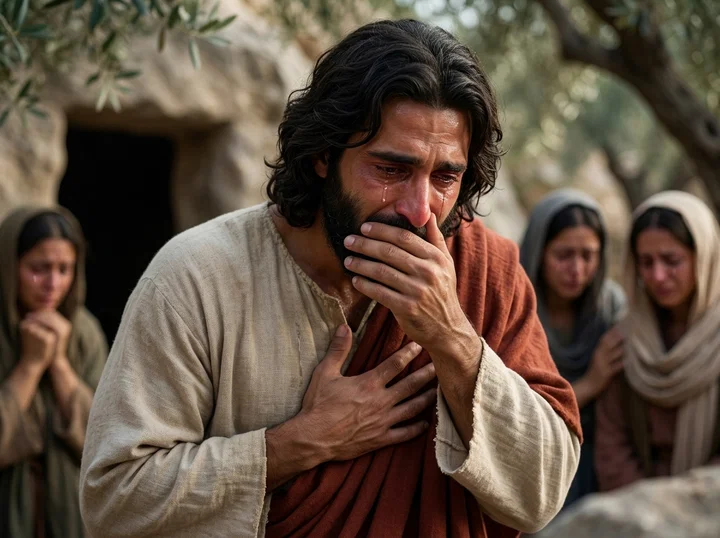
Cross-references 20 of 38
- John 11:43-44
And when he thus had spoken, he cried with a loud voice, Lazarus, come forth.
Jesus calls Lazarus from the tomb and restores him to life.
- John 11:25
Jesus said unto her, I am the resurrection, and the life: he that believeth in me, though he were dead, yet shall he live:
demonstrated in same Bethany scene
- John 11:21
Then said Martha unto Jesus, Lord, if thou hadst been here, my brother had not died.
Martha expresses the same belief that Jesus’ presence could have prevented Lazarus’s death.
- Luke 7:14-15
And he came and touched the bier: and they that bare him stood still. And he said, Young man, I say unto thee, Arise.
Jesus restores the widow’s son to life, another raising before Lazarus.
- John 12:10-11
But the chief priests consulted that they might put Lazarus also to death;
The chief priests plot to kill Lazarus because many believe in Jesus through him.
- John 11:11
These things said he: and after that he saith unto them, Our friend Lazarus sleepeth; but I go, that I may awake him out of sleep.
Jesus describes Lazarus’s death as sleep before going to awaken him.
- John 11:5-6
Now Jesus loved Martha, and her sister, and Lazarus.
Jesus loved the family yet delayed his arrival.
- Luke 10:38-42
Now it came to pass, as they went, that he entered into a certain village: and a certain woman named Martha received him into her house.
Both accounts show Mary and Jesus in the same Bethany home.
- John 11:37
And some of them said, Could not this man, which opened the eyes of the blind, have caused that even this man should not have died?
Bystanders question why Jesus did not prevent Lazarus’s death.
- 2 Kings 4:32-35
And when Elisha was come into the house, behold, the child was dead, and laid upon his bed.
Elisha raised the Shunammite’s son to life, as Jesus later raised Lazarus.
- John 11:45
Then many of the Jews which came to Mary, and had seen the things which Jesus did, believed on him.
Many believe in Jesus after seeing Lazarus raised.
- John 5:25
Verily, verily, I say unto you, The hour is coming, and now is, when the dead shall hear the voice of the Son of God: and they that hear shall live.
The dead hear the Son of God’s voice and live.
- 1 Corinthians 15:22
For as in Adam all die, even so in Christ shall all be made alive.
All die in Adam, but all are made alive in Christ.
- Mark 5:41-42
And he took the damsel by the hand, and said unto her, Talitha cumi; which is, being interpreted, Damsel, I say unto thee, arise.
Christ raises Jairus’s daughter, displaying the power also seen in raising Lazarus.
- John 11:3
Therefore his sisters sent unto him, saying, Lord, behold, he whom thou lovest is sick.
Mary appeals to Jesus to heal her sick brother.
- John 11:28
And when she had so said, she went her way, and called Mary her sister secretly, saying, The Master is come, and calleth for thee.
Martha’s message prompts Mary and the mourners to come to Jesus.
- 1 Kings 17:17-23
And it came to pass after these things, that the son of the woman, the mistress of the house, fell sick; and his sickness was so sore, that there was no breath left in him.
Elijah raises a widow’s son from death.
- John 11:27
She saith unto him, Yea, Lord: I believe that thou art the Christ, the Son of God, which should come into the world.
Martha confesses Jesus as the Christ and Son of God before Mary is called.
- 1 Thessalonians 4:13-14
But I would not have you to be ignorant, brethren, concerning them which are asleep, that ye sorrow not, even as others which have no hope.
Resurrection hope comforts those grieving the dead.
- Isaiah 26:19
Thy dead men shall live, together with my dead body shall they arise. Awake and sing, ye that dwell in dust: for thy dew is as the dew of herbs, and the earth shall cast out the dead.
The dead are promised life and rising from the earth.
Commentary
Each commentary is drawn from primary sources: the writings of Ellen G. White and Adventist pioneers and periodicals. Each commentary is separate. Its own words are not a quotation; follow the references to read the source passages.
Ellen G. White
25 sources
When Mary meets Jesus after the death of her brother Lazarus, she falls weeping at His feet and tells Him that had He been present her brother would not have died, voicing both sorrow at His absence and trust that He could have prevented the death.DA 524DA 530.5–6ST Apr 13, 18823RED 104.2 This takes place at Bethany in the beloved household where Jesus often found rest and sincere friendship away from hostile Pharisees, after Martha has secretly called Mary to meet Him waiting outside the village.DA 524.1DA 524.2–33RED 104.2ST Nov 10, 1909 His delay in coming and Lazarus lying four days in the tomb with decay begun were guided by divine wisdom, since He could not witness suffering without bringing relief and permitted the death so the resurrection might stand as crowning evidence that He is the Son of God.21MR 110.7–111.2Ms 19, 1892, par. 18–21Ms 18, 1898, par. 5–7COS 86.2–87.2Ms 128, 1899, par. 15 At the grave He is troubled by her grief and the distress around her, and He weeps knowing He cannot save all whom Satan has laid low and that each life rescued deepens the humiliation and death He Himself must suffer as ransom on the cross.DA 530.5–63RED 104.2Ms 18, 1898, par. 5–7 By His word He then calls Lazarus forth as His crowning miracle and final test to the nation, demonstrating His character as Saviour and Lifegiver, leading many to believe and glorify God while hardened leaders reject the undeniable proof of His Messiahship.21MR 110.7–111.220MR 147.3–5COS 86.2–87.2Ms 128, 1899, par. 15Ms 41, 1897, par. 14–20
Setting at Bethany
The words belong to the account of Jesus raising Lazarus from the tomb, spoken by Mary after her brother Lazarus has died.DA 524 Lazarus of Bethany was among the most steadfast of the disciples, strong in faith from the first meeting and deep in love, and he was greatly beloved by the Saviour.DA 524.1 Jesus loves all who seek His help and all the human family, yet to some He is bound by peculiarly tender associations, and His heart was knit by a strong bond of affection to the family at Bethany, and it was for Lazarus that the greatest of His miracles was performed.DA 524.1
The meeting takes place at Bethany in the peaceful household where Jesus had often found rest from the weary conflict of public life.DA 524.2–3ST Jan 4, 1883 Having no home of His own and being dependent on the hospitality of friends and disciples, when weary and thirsting for human fellowship He was glad to escape there from the suspicion and jealousy of the angry Pharisees.DA 524.2–3 There He found sincere welcome and pure, holy friendship, a quiet home with interested listeners, for He longed for human tenderness, courtesy, and affection, and those who received His heavenly instruction were greatly blessed.DA 524.2–3 There He could speak with simplicity and perfect freedom, knowing His words would be understood and treasured, and to that appreciative audience He opened the volume of Providence in private, unfolding what He did not attempt to tell the mixed multitude, so that He needed not to speak to His friends in parables.DA 524.2–3
At His bidding Martha secretly tells Mary that the Master has come and is calling for her.ST Nov 10, 1909 Mary rises hastily with an eager look and leaves the room with the friends who had come to comfort the afflicted sisters.3RED 104.2ST Nov 10, 1909 The mourners think she is going to the grave to weep and follow her, and she comes after Martha to where Jesus is waiting.3RED 104.2ST Nov 10, 1909
When Mary comes where Jesus is and sees Him she falls down and kneels at His feet weeping.DA 530.5–6ST Apr 13, 18823RED 104.2Ms 19, 1892, par. 18–21ST Nov 10, 1909 With quivering lips she repeats her sister's lament that her brother would not have died if Jesus had been there.DA 530.5–6ST Apr 13, 18823RED 104.2ST Nov 10, 19092SP 362.1–363.1 Her words express sorrow over His absence and trust and confidence in His power to have healed Lazarus and prevented his death.DA 530.5–6ST Apr 13, 18823RED 104.2Ms 19, 1892, par. 18–212SP 362.1–363.1
She longed to speak with Jesus privately, but the mourners with her and her awareness of some people's hostility toward Christ kept her from fully expressing her grief.DA 530.5–6 Her grief and the distress of those with her trouble Jesus so that He groans in spirit.3RED 104.2 He asks where Lazarus has been laid and goes with them all to the grave, a cave with a stone upon it.3RED 104.2
Grief, Delay, and Sympathy
Mary's words belong to a home whose members loved Jesus and trusted Him, who listened earnestly to Him and were wholly sympathetic to Him.21MR 110.7–111.2Ms 19, 1892, par. 18–21 Her coming to Jesus in grief expressed confidence that He could have kept Lazarus from dying.Ms 19, 1892, par. 18–21 His delay in coming was guided by divine wisdom, and Lazarus's death before He arrived served God's plan.21MR 110.7–111.2Ms 19, 1892, par. 18–21 That plan was fulfilled when Jesus raised Lazarus, leading many to believe and glorify God, though hardened opponents rejected the evidence.21MR 110.7–111.2Ms 19, 1892, par. 18–21
Jesus did not go at once to Lazarus because health and strength were in Himself and disease was always rebuked in His immediate presence.Ms 18, 1898, par. 5–7 He could not witness suffering or death without bringing relief and combatting the power of Satan.Ms 18, 1898, par. 5–7 The death of Lazarus was permitted so that through his resurrection the last and crowning evidence might be given to the Jews that Jesus is the Son of God.Ms 18, 1898, par. 5–7 Jesus wept at the grave of Lazarus at the thought that He could not save everyone whom Satan's power had laid low in death.Ms 18, 1898, par. 5–7
When He raised Lazarus He knew that for that life He must pay the ransom on the cross of Calvary.Ms 18, 1898, par. 5–7 Every rescue caused Him the deepest humiliation, and He must bear greater pain mingled with mockery and the greatest humiliation and taste death for every man.Ms 18, 1898, par. 5–7 He had given Himself a ransom for many, even all who would avail themselves of coming back to loyalty to God, as God gave His only begotten Son a sacrifice for sin and transgression.Ms 18, 1898, par. 5–7 His response to the sisters in their bereavement, as Mary grieved over Lazarus and fell at His feet trusting her brother would not have died if He had been there, shows His sympathy for mothers in their sorrow and His readiness to help them.ST Mar 23, 1882
The verse belongs to an account in which Jesus is away from the people who reject Him.3RED 112.2 It is part of a setting where prejudice and hatred keep people from receiving the light, despite His works of healing and power.3RED 112.2
Power and Public Witness
Mary's words at Jesus' feet belong to the raising of Lazarus, which was Christ's crowning miracle and the final test given to the Jewish nation.20MR 147.3–5Ms 128, 1899, par. 1 That miracle had a profound effect on people and drew a large, enthusiastic crowd to where Jesus was staying.Ms 128, 1899, par. 1 Lazarus was raised to bear testimony to Christ.20MR 147.3–5
Lazarus had been dead four days when Christ called him from the tomb by His word.COS 86.2–87.2Ms 127, 1899, par. 5–9 His body had already begun to decay, yet Christ raised him.Ms 41, 1897, par. 14–20 At his grave Christ's character as Saviour and Lifegiver was demonstrated.Ms 128, 1899, par. 15 This miracle is evidence of Christ's divinity and divine authority, revealing the Father through the works Christ does, and it stood as a public sign of that authority.Ms 128, 1899, par. 15Ms 41, 1897, par. 14–20Ms 127, 1899, par. 5–9
Lazarus testified that Jesus was the Son of God and urged the people to consider what they would gain by putting Him to death.20MR 147.3–5 His return to life became a public testimony and public sign of Christ's divine power, identity as the Son of God, and divine authority.20MR 147.3–5Ms 47, 1897, par. 9–10 He had no experience or story to tell from the time he was dead.Ms 47, 1897, par. 9–10
The raising led many to believe in Jesus and glorify God.21MR 110.7–111.2Ms 19, 1892, par. 18–21 It was an undeniable evidence of Jesus' Messiahship to Nicodemus.4RED 18.1 Yet hardened opponents and the religious leaders rejected the evidence and did not recognize Him through it, though they had witnessed Lazarus raised after four days in the grave.21MR 110.7–111.2Ms 127, 1899, par. 5–9
The raising of Lazarus is one of three raisings Jesus performed during His ministry, together with the son of the widow of Nain and the ruler's daughter, also called Jairus' daughter.ST Feb 3, 1914Ms 115, 1897, par. 17–20 These raisings restored mortal life only, for those raised were not clothed with immortality but continued subject to death and decay.ST Feb 3, 1914Ms 115, 1897, par. 17–20 This is different from those who came forth from the grave at Christ's own resurrection, who were raised to everlasting life nevermore to see death or experience sorrow.ST Feb 3, 1914Ms 115, 1897, par. 17–20
The raising of the dead connected with this verse shows Jesus just as certainly fulfilling His mission as the Pattern Man as when He toiled as a carpenter hiding His divine mission.Lt 1, 1880, par. 5–6 It shows Him fulfilling it as when He trod the foaming white-capped billows on the Sea of Galilee.Lt 1, 1880, par. 5–6 It shows Him fulfilling it as when He died as man's sacrifice upon the cross to lift up the whole race to a new and perfect life.Lt 1, 1880, par. 5–6
Sources
Pioneers and periodicals
99 sources
Mary came to where Jesus was at Bethany, and on seeing him fell weeping at his feet and called him Lord, saying her brother would not have died if he had been there.ST Mar 15, 1899ST Aug 23, 1899 She repeated the same sorrowful words Martha had already spoken, which the sisters had often said to one another in their grief.ST Mar 29, 1905RH May 9, 1907 Her words showed confident trust that his presence could have kept Lazarus from dying, yet a faith limited to his bodily presence, not grasping that his power is not lessened by distance, absence or time.ST Mar 15, 1899ST Mar 15, 1899ST Jun 18, 1896ST Mar 15, 1899 When she and those with her wept, Jesus was deeply moved in spirit and wept with them in love and pity, though he knew Lazarus would soon rise, seeing in their grief the mourning of the bereaved through the ages.RH Mar 9, 1905RH May 19, 1859 He then by creative power restored life to a body dead and corrupted four days, proving he is the resurrection and the life and that there is no limit of time after death to his power.ST Aug 20, 1896ST Jun 14, 1905ST Jun 7, 1899
Meeting at Bethany
Then when Mary came to where Jesus was and saw him, she fell down at his feet weeping, called him Lord, and told him her brother would not have died if he had been there, in grief and confident trust that his presence could have kept Lazarus from dying and healed his friend.ST Mar 15, 1899ST Aug 23, 1899ST Jun 29, 1876 She met him while mourning her brother dead four days, and her falling at his feet expressed both sorrow and conviction that he could have prevented the death.ST Aug 23, 1899ST Jun 14, 1905ST Jun 29, 1876 Her words belong to the events leading to Lazarus being raised from the dead, in which Christ's creative power restored life and living tissue to a corrupted body.ST Jun 14, 1905
In this she repeated the same lament Martha had already spoken, a sorrow the sisters had doubtless often expressed to each other.ST Nov 10, 1909ST Mar 29, 1905RH May 9, 1907 Like Martha she said in tears that Lazarus would not have died if Jesus had been there, voicing grief and belief that he could have healed him.ST Mar 29, 1905RH May 9, 1907 When she reached Jesus she knelt at his feet and with quivering lips repeated her sister's lament.ST Nov 10, 1909ST Mar 29, 1905
She came after Martha secretly told her the Master had come and was calling for her.ST Nov 10, 1909ST Mar 29, 1905ST May 18, 1915 She rose hastily with an eager look and left the house to seek Jesus where he was waiting.ST Nov 10, 1909ST Mar 29, 1905ST May 18, 1915 The mourners thought she was going to the grave to weep and followed her to Jesus.ST Nov 10, 1909ST Mar 29, 1905ST May 18, 1915
The meeting took place at Bethany, the home of Mary and Martha and Lazarus on the east side of the Mount of Olives about two miles from Jerusalem on the road to Jericho, where Jesus had often found rest.ST Jan 4, 1883ST Nov 17, 1898ST Mar 6, 1901RH May 13, 1902 It was a well-known family mourning Lazarus dead four days, with many comforters come from Jerusalem to comfort them and so to witness what followed.ST Nov 17, 1898 There Jesus wept in sympathy for mourning hearts and demonstrated that he is the resurrection and the life, a miracle that more than any other stirred the Pharisees to put him to death.ST Nov 17, 1898ST Mar 6, 1901 Bethany was the place where Jesus raised Lazarus from the dead, where Mary and Martha lived and Lazarus was buried, and the tomb was later described as in ruins.ST Mar 6, 1901RH May 13, 1902
The verse belongs to the section John 10 to 12 and to the Gospel written by John the son of Zebedee, the disciple whom Jesus loved, at Ephesus in A.D. 98 in the Greek language nearly thirty years after the destruction of Jerusalem. It is written in a simple, vivid, earnest, reverential style often full of pathos, omitting the parables, the Sermon on the Mount and the prophetic discourses on the supposition readers know the earlier Gospels. It records six miracles five of which are peculiar to it, with a large portion entirely new whose truths give solace, encouragement and instruction.
Faith Limited to Presence
Mary meets Jesus in deep grief, falls at his feet weeping, calls him Lord, and tells him her brother would not have died if he had been there.ST Mar 15, 1899ST Aug 23, 1899ST Jun 29, 1876 Her words express grief and confident trust and conviction that his presence could have kept Lazarus from dying and healed his friend and saved him.ST Mar 15, 1899ST Aug 23, 1899ST May 23, 1911ST Jun 29, 1876 Mary and Martha both make this same appeal while mourning their brother, who had been dead four days. When Jesus comes, his coming brings life rather than death.ST May 23, 1911
Her faith is limited to his bodily presence, marking the limit of faith that ties his power to being physically there.ST Mar 15, 1899ST May 31, 1905ST Apr 28, 1909 She believes he could have kept Lazarus from dying if he had been present, but does not grasp that his power is not lessened by physical distance, absence, or time.ST Mar 15, 1899ST May 31, 1905ST Jul 29, 1897 She and Martha and the people of Israel believe he can heal when present but do not yet grasp that his power can act when he is absent and apart from his bodily presence.ST May 31, 1905ST Jan 30, 1912 Her words illustrate the disciples' belief that his bodily presence was necessary for him to work miracles, a limitation even his devoted Jewish disciples shared and had difficulty understanding.ST Mar 15, 1899ST Jun 18, 1896ST Mar 15, 1899 This limitation in their faith had to be met with evidence from people outside the Jewish church, and a greater faith in his unseen spiritual presence and power would be developed through the Holy Spirit.ST Jun 18, 1896ST Mar 15, 1899
That limit of faith must be outgrown in the development of faith and character.ST Jul 29, 1897 Christ remains fully able now as when he walked the earth, and his power to heal and save is not lessened by physical distance or by time.ST Jul 29, 1897 He is present through his Holy Spirit dwelling in every soul that desires God, bringing comfort to all who ask.ST Jul 29, 1897 Mary loves Jesus but depends on his physical presence, unable to grasp his power working in the unseen, unfelt, silent realm without physically touching, looking, or speaking, and this marks the limit reached in his personal, physical presence, not the highest faith.ST Mar 18, 1897 It is better that he is not here in person, since he is also present to the child of faith, and his presence gives life not only when he is bodily present, though Mary feels it is too late once he arrives.ST Jul 29, 1897ST Apr 10, 1901
Her words also voice grief and reproach over his delayed arrival and disappointment at what seems a causeless, painful delay.STRH Jan 6, 1916 The sisters repeat this grief to each other, and their words sound almost like reproach, though he loves them and has power to prevent the death.RH Jan 6, 1916RH Nov 25, 1902 His arrival brings back their deferred hope and their sense that his delay is cruel and without cause.RH Nov 25, 1902 The sisters had sent word that Lazarus was sick expecting him to come and heal his friend, but their faith does not grasp that he can help unless present, so they think his coming this late is of no use for Lazarus himself.ST Mar 29, 1905 They do not expect him to do anything for the repose of the dead man's soul.ST Mar 29, 1905
Sympathy of Jesus
When Mary met Jesus in grief she fell at his feet and said what Martha had already said, that her brother would not have died if he had been there, a sorrow the sisters had doubtless expressed to each other many times.RH Mar 9, 1905 This belongs to his meeting with the bereaved sisters and their friends after Lazarus had been dead four days.RH Mar 9, 1905RH May 19, 1859 Mary and the people with her wept, and Jesus was deeply moved and groaned in spirit, sharing their sorrow and deeply moved by the death of one he loved.RH Mar 9, 1905 Though he knew Lazarus would soon rise and their sorrow would soon be relieved, he saw in their grief the mourning of bereaved people throughout the ages and wept with them in love and pity. His weeping at the grave reveals his sympathy for those who mourn.RH Mar 9, 1905RH May 19, 1859
His comforting of the weeping sisters shows his tender sympathy with mourners in trouble, his mercy and labor of love at the grave.RH Nov 19, 1908RH Apr 27, 1911RH Jun 13, 1871 He binds up wounded hearts, and his sympathy and love remain constant so that the sorrowing can still find a friend in him as comforter.RH Nov 19, 1908RH Apr 27, 1911RH Feb 8, 1915 At Lazarus's grave he wept in sympathy and dried the tears of the bereaved sisters by restoring their dead brother to their joyful embrace, breaking the chain that bound him in the prison of death.RH Sep 4, 1855RH Jun 13, 1871 His tears reveal deep sympathy for human sorrow, including the grief of mourners who cannot bring their loss to him as Mary did by falling at his feet in grief and trust.RH Nov 19, 1908RH Apr 27, 1911RH Sep 4, 1855
In Christ's mourning over Lazarus his tenderness and compassion are revealed, and in him God's character of tenderness and compassion is made known.ST Mar 23, 1882ST Feb 25, 1897 His response to the sisters' bereavement shows his sympathy for mothers in their sorrow and his readiness to help them.ST Mar 23, 1882ST Feb 25, 1897 At the grave his conduct exemplifies calm self-possession amid sorrow and trouble, a repose that is not inaction but a steady mind sustained by faith in the heavenly Father and confidence in his promises.ST Jul 29, 1886 The voice of his love at Bethany's tomb remains the same voice that stays near to the meek, lowly and penitent.ST Jan 31, 1911ST Jul 29, 1886
Power to Raise Dead
The raising of Lazarus is the crowning miracle of earthly ministry, proving that Christ is the resurrection and the life even after corruption had begun in the tomb.ST Aug 20, 1896ST Jun 14, 1905ST Jun 7, 1899 He permitted Lazarus to die and stayed away until he had been dead four days so that the glory of God might be manifested.ST Jun 7, 1899RH Dec 15, 1859 By creative power He restored life and living tissue to a corrupted dead body, and because He was the active agent in the original creation of man He is able to re-create, proving there is no limit of time after death to His power to raise the dead.ST Jun 14, 1905ST Jun 7, 1899 While the weeping sisters urged the dwelling of decay to be unbarred, He lifted His eyes in prayer and then gave the dead man a God-like summons to come forth, and the later presence of Lazarus at the table and serving there confirms the event was no deception.ST Aug 20, 1896RH Dec 15, 1859
Lazarus was raised through the power of Christ's sacrifice already established in God's purpose, by virtue of His death and resurrection already determined in character though not yet accomplished.ST Oct 12, 1876ST Jan 11, 1905 His raising before Jesus rose does not conflict with Jesus being called the first-fruits of those who sleep or the first begotten of the dead, because first means first in pre-eminence not first in time, as with Jacob over Esau and Ephraim over Manasseh.ST Jan 11, 1905RH Feb 25, 1873 It was not the first restoration to earthly life, since the widow's son raised by the prophet, the widow of Nain's son, and the daughter of Jairus were restored to natural life before Christ, so first denotes being first to arise out from among the dead who had left earth and were living in the spirit world.RH Feb 25, 1873
The work was not done in secret but was one of three occasions when Jesus raised the dead.ST Apr 20, 1882ST May 8, 1907 It was an undeniable miracle that intensified public excitement, prompted the chief priests and Pharisees to consider how to stop Him, and caused a general desire among all classes to see Jesus from that miracle until the crucifixion.RH Sep 25, 1913ST Apr 20, 1882ST Oct 17, 1895 The miracle took place about five months before the triumphal entry in the last week of life on earth.ST Oct 17, 1895ST Apr 14, 1898 Yet it became a decisive sign of Messiahship and divine mission that unbelief rejected even as clear evidence of who He was, for witnesses went away and conspired to kill both Jesus the Life-giver and Lazarus because many believed.RH Sep 25, 1913RH Nov 6, 1866
The account is true and literal history of a bodily resurrection from the tomb, not a story told only to convey a moral lesson, and Mary's coming to Jesus and her words about her brother really happened.ST Mar 13, 1907ST Oct 6, 1909ST Jul 21, 1909 The whole wonderful story with all its attendant circumstances is told in very few words, showing dignified majesty and comprehensive simplicity of expression. To say Lazarus was resurrected only spiritually denies that bodily raising and rejects a cardinal point of old orthodoxy, marking apostasy and undermining the faith once delivered to the saints.ST Oct 6, 1909ST Jul 21, 1909 Treating such restoration as a made-up tale, like a boy brought around after being under water for four hours, uses its impossibility to illustrate how dismissing biblical miracles as impossible undermines confidence in the Bible.ST Aug 22, 1916
Those who held otherwise taught that the raising was not a miraculous resurrection from death at all, but that Lazarus had not died and his spirit had not entirely left his body, being in a trance which Jesus in His superior condition saw and restored by magnetic power.RH Sep 8, 1853
Those raised in the ministry, including Lazarus with the widow of Nain's son and the ruler's daughter, were restored only to mortal life and still subject to death, not clothed with immortality.ST Feb 3, 1914ST Aug 12, 1889 They are different from those who came forth from the grave at Christ's resurrection, who were raised to everlasting life nevermore to see death or experience sorrow.ST Feb 3, 1914 Lazarus's return to life broke the power of death, though he was not raised to immortality, and he is named as an exception to the general rule that the dead await resurrection.ST Aug 12, 1889ST Jan 28, 1889 This Lazarus, brother of Martha and Mary and son of a wealthy Jew, was distinct from the poor Lazarus in the parable of the rich man and Lazarus, and he was not the first person Christ raised, since Christ had already raised the widow of Nain's son.ST Mar 24, 1909
The same healing and life-giving power still works today in every land and nation, making whole physically those who trust Him and keeping them whole, and proving true His promise that everyone who sees the Son and believes will have everlasting life and be raised up at the last day when all in the graves will hear His voice and come forth.ST Jan 26, 1915 God acted directly to restore life without a natural agency or treatment as the means of recovery, demonstrating creative power and directing faith beyond physical things to Jehovah as the great first cause.ST Mar 31, 1898ST May 6, 1913 That same power that could restore life even after death and bodily decay can change human nature and give strength to resist sin.ST Mar 11, 1889 Lazarus hearing the giver of life call him from four days' sleep and coming forth also illustrates the spiritual awakening of a sinner who obeys Christ's call to rise from death in sin and enter Christ's light, both being miracles of Christ's power and love, and the raising stands as the supreme test proving power over death, the king of terrors, the slayer of loved ones and destroyer of homes.ST Nov 29, 1905ST Jan 26, 1915
The work shows Him going about doing good, helping and healing people as their friend and helper, continually casting His bread upon the waters, so that seeing His great power and influence the multitudes began to believe on Him.ST Sep 16, 1889 In giving the dead back to the living He displayed a spotless, self-sacrificing character and ardent impartial love, loving the humble, lowly, penitent and poor as well as the influential and wealthy, standing with feeding the hungry multitudes, relieving suffering, comforting the sad and lonely, and opening blind eyes and deaf ears as the opposite of worldly greatness that lays waste and makes desolate by war.ST Aug 27, 1885 It was a quiet life free from affectation and outward show, ministering to people in grief and need, pointing forward to His greatest token of love in giving His own life to open the grave so all who will may cross beyond death's power, deserving highest praise and daily imitation by unselfish care for the welfare of others.ST Aug 27, 1885ST Sep 16, 1889 The conversion of three thousand at Pentecost is called still more wonderful because it displayed the Spirit's power overcoming hatred and unbelief.RH May 1, 1913
Jesus purposely allowed His friend to die to demonstrate His power to raise His followers from death, showing that His love for His friends did not mean He would spare them from death, and that permitting death could serve the purpose of revealing the hope of resurrection.RH Apr 28, 1910ST Jun 8, 1915 No one had died in His presence during the three years of His ministry.ST Jun 8, 1915
Sleep and Resurrection Hope
The raising shows the dead are asleep and not alive while dead, with hope lying not in a present life elsewhere but in rising again in the resurrection at the last day through him who is the resurrection and the life, so that he who believes, though dead, shall yet live again, and the raising proves his power to give life to the dead.ST Dec 19, 1916RH Dec 28, 1911ST Jun 8, 1915 Lazarus was truly dead and remained in the tomb until called back to life, regarded by his sister as dead because he would not have died had Jesus been present.ST Jan 24, 1884ST May 5, 1881 He had lain corrupted in the tomb four days before he was raised, and those four days are called sleep from which he was awakened.RH Dec 28, 1911ST Jun 8, 1915ST May 5, 1881ST Oct 19, 1915
Death is unconscious sleep with no conscious disembodied soul or spirit living in heaven, for those restored to life after death are silent about any conscious experience in death and knew only total unconsciousness.RH Aug 24, 1905ST May 5, 1881ST Feb 17, 1881 Lazarus was restored by being called forth bodily from the grave, with no reference to bringing a soul down from heaven and no report of experiences in a spirit realm or of heavenly enjoyment during the four days.ST Jun 8, 1915ST May 5, 1881ST Feb 17, 1881ST Nov 4, 1880 If he had been conscious and enjoying heaven it would have been cruel to recall him from bliss to earthly toil in a sinful world to die again, and his awakening shows the dead remain in the grave until awakened, the righteous to immortality and the rest to perish.ST May 5, 1881ST Oct 19, 1915
The resurrection gives material, recognizable life and reunion with loved ones, for which the sisters waited before they could be comforted even as Jesus shared their sorrow and was deeply moved by the death of one he loved.ST Aug 9, 1905RH Mar 9, 1905 Lazarus is named as an exception to the general rule that the dead await resurrection.ST Jan 28, 1889 The raising was used to defend the truth of the resurrection of the dead, having taken place shortly after the teaching that the dead would hear his voice and come forth, some to the resurrection of life and others to the resurrection of damnation.RH Dec 11, 1855RH Jun 8, 1916 Dead men hearing the voice of the Son of God during his ministry and living when they hear shows he has life in himself because the Father gave him life in himself, and therefore power to bestow life on those who hear his voice, so that Lazarus hearing and living is wonderful in itself yet only the foreshadowing of a greater manifestation when all in the graves shall hear his voice and come forth, the good unto the resurrection of life which is the beginning of life eternal and the evil unto the resurrection of judgment and condemnation.RH Oct 19, 1869
Future Life and Present Comfort
Mary falling at the feet of Jesus and declaring her brother would not have died had he been present shows his absence meant death for Lazarus, while his arrival brought life rather than death.ST Feb 13, 1907ST May 23, 1911ST Aug 12, 1913ST Dec 11, 1893 Her confidence was that his presence could have kept Lazarus from dying, and the contrast stands between absence bringing death and coming bringing life.ST May 23, 1911ST Aug 12, 1913ST Dec 11, 1893
His coming means life, for it gave Lazarus life and it will give life to all who sleep in Jesus.ST Jul 30, 1902ST Feb 7, 1906ST May 30, 1895 Death is the enemy rather than his representative, and death itself is not his coming.ST Jul 30, 1902ST May 10, 1910 His coming to Lazarus brought life, not death.ST Jul 30, 1902ST May 30, 1895ST May 10, 1910
Her words voice both the sorrow of all who are bereaved of loved ones and the hope that his return will end pain and death, wipe away tears, and bring life.RH Jan 14, 1915RH May 7, 1872 That yearning of humanity in all ages for reunion with the dead, expressed in going to weep at the tomb, is fulfilled only in recognized personal reunion.RH May 7, 1872 With the same voice that called sleeping Lazarus forth and restored him to his friends he will soon call the dead again, unlocking the graves with his keys.RH May 7, 1872 The very same Jesus who taught from Peter's boat, stopped the widow of Nain's funeral to restore her son, gave the Samaritan woman living water, fed multitudes with barley loaves and fishes, healed the Gentile mother's demon-possessed daughter near Sidon, agonized in Gethsemane, was nailed to the cross and died, was buried, and rose triumphant over death and the grave forever, is coming again literally, personally and visibly.ST Apr 15, 1897
At the grave the chapter lifts mourners' thoughts to the resurrection when those who sleep in Jesus will live again.ST Aug 24, 1915 The verse belongs with words of consolation at a funeral, presenting Mary grieving her brother yet turning to Jesus in sorrow and faith and expressing belief his presence could have prevented death.RH Nov 20, 1913RH Feb 9, 1911RH Sep 4, 1855 It is a text of comfort for those mourning death, revealing his nearness to mourners and sympathy with human grief.RH Feb 9, 1911RH Sep 4, 1855 To doubt the raising of Lazarus as a story that consoles mourners undermines consolation and the gospel story itself.RH May 23, 1912
Mourners should not try to bear heavy grief alone, which breaks down body and mind, but should turn to Jesus in sorrow and faith as Mary did and ask his help.ST Apr 4, 1911ST Oct 28, 1880RH Sep 4, 1855ST Jan 16, 1896 He is the great Healer whose work is to bind up the wounded spirit and heal the brokenhearted, standing with pity wanting to be asked.ST Oct 28, 1880 Because he is the same yesterday, today and forever, there is no earthly sorrow he cannot heal now as he did then, and at Lazarus's grave he has comfort for those grieving a loved one.ST Oct 28, 1880ST Jan 16, 1896
The story of Lazarus's resurrection shows that life comes from Christ.ST Sep 17, 1912
Sources