John 11:37
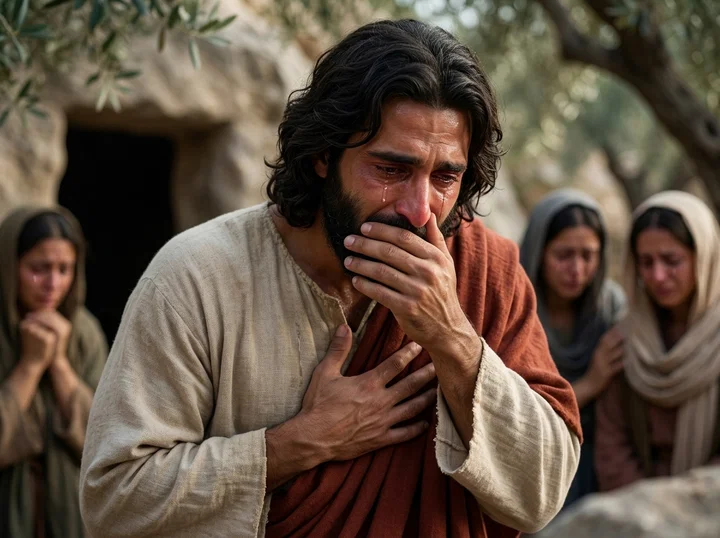
And some of them said, Could not this man, which opened the eyes of the blind, have caused that even this man should not have died?
Translations
American King James Version, King James Version, KJV Cambridge Paragraph Bible
And some of them said, Could not this man, which opened the eyes of the blind, have caused that even this man should not have died?
And some of them said, Could not this man, who opened the eyes of the blind, have caused that even this man should not have died?
But some of them said, Could not this man, which opened the eyes of him that was blind, have caused that this man also should not die?
But some of them said, Could not this man, who opened the eyes of him that was blind, have caused that this man also should not die?
and certain of them said, 'Was not this one, who did open the eyes of the blind man, able to cause that also this one might not have died?'
And some of them said, Could not this [ man], who has opened the eyes of the blind [ man], have caused that this [ man] also should not have died?
But, some from among them, said—Could not this man, who opened the eyes of the blind, have caused that, this one also, should not have died?
Berean Standard Bible, Majority Standard Bible
But some of them asked, “ Could not this man who opened the eyes of the blind also have kept Lazarus from dying?”
Some of them said, “Couldn’ t this man, who opened the eyes of him who was blind, have also kept this man from dying?”
But some of them said, This man, who made open the eyes of the blind man, was he not able to keep his friend from death?
And some of them saide, Coulde not he, which opened the eyes of the blinde, haue made also, that this man should not haue died?
Douay-Rheims (Challoner revision)
But some of them said: Could not he that opened the eyes of the man born blind, have caused that this man should not die?
Pictures
Cross-references 20 of 31
- Luke 7:11-15
And it came to pass the day after, that he went into a city called Nain; and many of his disciples went with him, and much people.
Jesus compassionately restores a grieving widow’s only son to life.
- John 9:6-7
When he had thus spoken, he spat on the ground, and made clay of the spittle, and he anointed the eyes of the blind man with the clay,
The mourners recall Jesus opening a blind man’s eyes.
- John 11:25
Jesus said unto her, I am the resurrection, and the life: he that believeth in me, though he were dead, yet shall he live:
Jesus declares himself the resurrection and the life.
- John 11:43-44
And when he thus had spoken, he cried with a loud voice, Lazarus, come forth.
Jesus calls Lazarus from the tomb and raises him.
- John 11:53
Then from that day forth they took counsel together for to put him to death.
Lazarus’s resurrection leads the leaders to plot Jesus’ death.
- Mark 5:41-42
And he took the damsel by the hand, and said unto her, Talitha cumi; which is, being interpreted, Damsel, I say unto thee, arise.
Jesus raises Jairus’s daughter, another resurrection compared with Lazarus’s.
- John 11:11-14
These things said he: and after that he saith unto them, Our friend Lazarus sleepeth; but I go, that I may awake him out of sleep.
Jesus describes Lazarus’s death as sleep before raising him.
- John 11:21
Then said Martha unto Jesus, Lord, if thou hadst been here, my brother had not died.
Martha and Mary say Jesus could have prevented Lazarus’s death.
- John 12:10-11
But the chief priests consulted that they might put Lazarus also to death;
Lazarus’s testimony led many to believe in Jesus, prompting a plot against him.
- John 5:25
Verily, verily, I say unto you, The hour is coming, and now is, when the dead shall hear the voice of the Son of God: and they that hear shall live.
Lazarus fulfills the promise that the dead hear Christ’s voice and live.
- John 11:4
When Jesus heard that, he said, This sickness is not unto death, but for the glory of God, that the Son of God might be glorified thereby.
Lazarus’s death and raising reveal God’s glory and the Son of God.
- John 11:24
Martha saith unto him, I know that he shall rise again in the resurrection at the last day.
Martha expresses hope in the resurrection at the last day.
- Luke 10:38-42
Now it came to pass, as they went, that he entered into a certain village: and a certain woman named Martha received him into her house.
It recounts Jesus’ connection with the Bethany household.
- 2 Kings 4:32-35
And when Elisha was come into the house, behold, the child was dead, and laid upon his bed.
Elisha raised the Shunammite’s son before Christ’s resurrection.
- 1 Kings 17:22
And the LORD heard the voice of Elijah; and the soul of the child came into him again, and he revived.
Elijah raised the widow’s son before Christ’s resurrection.
- Isaiah 26:19
Thy dead men shall live, together with my dead body shall they arise. Awake and sing, ye that dwell in dust: for thy dew is as the dew of herbs, and the earth shall cast out the dead.
The dead live and rise from the dust.
- John 5:28-29
Marvel not at this: for the hour is coming, in the which all that are in the graves shall hear his voice,
The dead hear Jesus’s voice and come forth, as Lazarus was restored.
- 1 Corinthians 15:22
For as in Adam all die, even so in Christ shall all be made alive.
Christ’s victory over death grounds hope that the faithful will be raised.
- John 11:32
Then when Mary was come where Jesus was, and saw him, she fell down at his feet, saying unto him, Lord, if thou hadst been here, my brother had not died.
Mary repeats the same reproach about Jesus not being there.
- John 11:5-6
Now Jesus loved Martha, and her sister, and Lazarus.
Jesus delayed going to Lazarus despite loving the family.
Commentary
Each commentary is drawn from primary sources: the writings of Ellen G. White and Adventist pioneers and periodicals. Each commentary is separate. Its own words are not a quotation; follow the references to read the source passages.
Ellen G. White
22 sources
At the grave of Lazarus some mourners and bystanders asked why the One who had opened the eyes of the blind had not kept Lazarus from dying.2SP 363.2–364.13RED 105.221MR 110.7–111.2 They mistook His tears and His delay for inability, supposing He wept only from love and grief and could not save His friend, without understanding that the delay served God's plan for a mighty sign.2SP 363.2–364.13RED 105.2ST Apr 13, 1882 Their words were unbelief and blind infidelity from those who should have had faith, spoken to spread doubt by judging only outward grief, and burdened by that unbelief Jesus groaned within Himself as He approached the grave.2SP 363.2–364.13RED 105.2ST Apr 13, 1882 Lazarus was permitted to die and Jesus delayed coming so that raising him after four days in the grave would give decisive evidence that He is the Son of God, becoming His crowning miracle and final test to the nation that led many to believe while those who had rejected light remained hardened.21MR 110.7–111.2Ms 19, 1892, par. 18–21Ms 18, 1898, par. 5–7 That return to life was not immortality, for Lazarus remained subject to death and had no story of death to tell since the dead know nothing, yet his being alive again stood as convincing proof of divine power over death and of Christ's character as Saviour and Lifegiver.20MR 147.3–5Ms 47, 1897, par. 9–104RED 18.1ST Feb 3, 1914Ms 115, 1897, par. 17–20
Question at the Grave
At the grave some of the mourners and bystanders whispered why the One who had opened the eyes of the blind had not kept Lazarus from dying.2SP 363.2–364.13RED 105.221MR 110.7–111.2ST Apr 13, 1882Ms 19, 1892, par. 18–21 They recognized His power to open blind eyes, yet asked why that power had not prevented this death.2SP 363.2–364.121MR 110.7–111.2ST Apr 13, 1882Ms 19, 1892, par. 18–21COS 86.2–87.2 Their questioning arose because Lazarus had died even though Jesus had power both to heal and to raise the dead.ST Mar 23, 1882COS 86.2–87.2
They mistook His tears and His delay for inability to save Lazarus.2SP 363.2–364.13RED 105.2ST Apr 13, 1882 They supposed He wept only from love for Lazarus and from grief, and concluded that He who had done such mighty works had been unable to save him from death.3RED 105.2ST Apr 13, 1882 They did not understand why He had delayed, even though the death and the delay served God's plan for the raising of Lazarus as a mighty sign.21MR 110.7–111.2Ms 19, 1892, par. 18–21
Their words revealed unbelief in His power to raise the dead and blind infidelity from people who professed faith in Him and should have had faith in Him.2SP 363.2–364.13RED 105.2ST Apr 13, 1882 They were spoken derisively, not as honest inquiry, to drop the seed of unbelief into the hearts of those present.3RED 105.2DA 533.1–534.2 They wrongly interpreted His tears, seeing only the outward grief of the moment rather than recognizing that His tears arose from love and grief while greater purpose stood behind them.ST Apr 13, 1882DA 533.1–534.2 Burdened by that unbelief, Jesus groaned within Himself as He approached the grave.3RED 105.2
The question belongs where Jesus wept with sympathy at Lazarus's grave and then gave Mary and Martha their brother back from the dead.ST Mar 23, 1882 That grave was at Bethany, where Jesus often found rest at the home of Lazarus.ST Mar 23, 1882ST Jan 4, 1883 The account shows His compassion and power in the face of death.ST Mar 23, 1882
Power and Purpose of Raising
Lazarus's death was permitted and Jesus delayed going so that the resurrection would give decisive evidence that He is the Son of God.21MR 110.7–111.2Ms 19, 1892, par. 18–21Ms 18, 1898, par. 5–7 That delay became the occasion for a mighty sign, for the raising was His crowning miracle and last test to the nation.21MR 110.7–111.2Ms 19, 1892, par. 18–2120MR 147.3–5Ms 47, 1897, par. 9–10 It led many to believe and drew a large enthusiastic crowd to see Jesus, though those who had rejected light remained hardened even in the face of this evidence.21MR 110.7–111.220MR 147.3–5Ms 128, 1899, par. 1
He did not go at once because His healing presence would have brought relief, and He could not witness suffering without opposing it.Ms 18, 1898, par. 5–7 He also knew that raising Lazarus would move Him toward His own death on the cross where He would pay the ransom for humanity.Ms 18, 1898, par. 5–7
The raising was convincing proof of His divinity that revealed the Father to believers and unbelievers.Ms 41, 1897, par. 14–20 It was undeniable evidence of Messiahship to one who had watched His works and considered their meaning.4RED 18.1 Together with His healings it gave the priests and elders evidence of His authority, but they did not recognize God in Him.Ms 41, 1897, par. 14–20Ms 127, 1899, par. 5–9
The question points to One who truly opened blind eyes, moved by compassion for human woe.3RED 112.2 That healing belongs with healing the sick, giving hearing to the deaf and speech to the dumb, feeding the hungry, comforting the sorrowful, walking on the heaving sea and stilling its roaring by a word, casting out devils who confessed Him the Son of God, raising the dead, and holding thousands with words of wisdom.3RED 112.2 It demonstrated His character as Saviour and Lifegiver in a life of power, purity, and disinterested benevolence that prejudice and insane hatred still rejected and resolutely refused.3RED 112.2Ms 128, 1899, par. 15
Lazarus, whom Christ raised after four days in the grave though his body had seen corruption, was brought back to life to the great joy of his sisters.Ms 1, 1867, par. 44–47Ms 41, 1897, par. 14–20Ms 127, 1899, par. 5–9 That return to life, like the raising of the son of the widow of Nain and Jairus' daughter during His ministry, was not immortality.ST Feb 3, 1914Ms 115, 1897, par. 17–20 Lazarus remained subject to death and decay, in contrast to those who came forth at Christ's own resurrection and were raised to everlasting life never more to see death or experience sorrow.ST Feb 3, 1914Ms 115, 1897, par. 17–20
Lazarus had no experience or story of the time he was dead to recount, for the dead know nothing.20MR 147.3–5Ms 47, 1897, par. 9–10 His testimony to Christ's divine power came from being alive again and bearing witness to Christ.20MR 147.3–5Ms 47, 1897, par. 9–10 Bringing the dead to life fulfilled His mission as the Pattern Man just as certainly as toiling as a carpenter while hiding His divine mission, treading the waves of the sea, and dying as man's sacrifice to lift the whole race to a new and perfect life.Lt 1, 1880, par. 5–6 That power over death grounds the plea for Him to heal the long-afflicted.Ms 1, 1867, par. 44–47
Sources
Pioneers and periodicals
100 sources
Some mourners at Lazarus's tomb wondered why the one who had given sight to a man born blind had not kept Lazarus from dying.ST Aug 23, 1899RH Nov 20, 1913RH Sep 5, 1865ST Aug 12, 1889 Their words mixed grief and confidence in his healing power with reproach for his delay and doubt that supposed his tears meant inability to save.ST Aug 23, 1899ST Aug 23, 1899ST Jan 14, 1897RH May 9, 1907RH May 4, 1911 He had in fact allowed the death on purpose so that the raising would display greater power than healing sickness.RH Apr 28, 1910ST Jun 8, 1915ST Mar 29, 1905 When he called Lazarus out after four days of corruption, he showed creative power without limit of time, proving he is the resurrection and the life.ST Aug 20, 1896ST Jun 14, 1905ST Jun 7, 1899 That silence of the raised man about any conscious life apart from the body shows death is a sleep of total unconsciousness, and his bodily return foreshadows the hour when all in graves will hear the Son's voice (John 5:28-29). ST Dec 19, 1916RH Aug 24, 1905ST Feb 17, 1881RH Oct 19, 1869
Setting and Wording
This saying belongs to the account of Lazarus's illness, death and raising, when mourners questioned whether Jesus could have kept him from dying.RH Nov 20, 1913RH Sep 5, 1865ST Nov 10, 1914 They recognized that he had opened a blind man's eyes and asked why he had not prevented the death of the man they were mourning, making the chapter an example of his miraculous power to heal and to raise the dead and to break death's power and restore a decaying body.RH Nov 20, 1913RH Sep 5, 1865ST Nov 10, 1914 The speakers were some of the Jews who had come from Jerusalem to comfort Mary and Martha and who came with Mary to the tomb.ST Aug 23, 1899ST Mar 29, 1905ST Nov 17, 1898 They spoke after they saw Jesus weeping at the tomb, when it was said, Behold how he loved him, and pointing to his opening the eyes of the blind man they reproached him by asking why he could not have kept Lazarus from dying.ST Aug 23, 1899ST Mar 29, 1905
The setting is a grieving household in Bethany, the home of Mary and Martha and Lazarus, where friends had lingered for four days and where Jesus was expected from Perea.ST Jan 4, 1883RH Mar 9, 1905 Mary and Martha grieved after Lazarus had died and been buried and longed for Jesus to have been there before he died, and Jesus shared the sorrow of the family he loved and wept.RH Mar 9, 1905 It was a home where he often found rest.ST Jan 4, 1883ST Mar 6, 1901 Bethany lies two miles from Jerusalem on and beyond the Mount of Olives, on the eastern slope about a mile beyond the summit where the road from Jerusalem to Jericho begins its steeper descent toward the Jordan valley.ST Nov 17, 1898ST Mar 6, 1901 It lies on the road toward Jericho, now called Lazarieh or el-Aziriyeh, meaning the place of Lazarus, a wild mountain hamlet of about twenty families, where Jesus often stopped to rest, where Mary anointed his feet with costly ointment and wiped them with her hair, and where he ascended to heaven.ST Nov 17, 1898ST Mar 6, 1901
Lazarus had died of a sudden fatal illness like the fatal disease known at Bethany, and had been buried and dead four days with corruption and putrefaction begun when Jesus came.RH Dec 28, 1911RH Aug 29, 1871 The scene shows people doubting Jesus and resisting belief in him before he raised Lazarus, making the raising a sign of God's glory and of power over death. The word cause means bring about: the question asks whether the one who opened a blind man's eyes could have brought it about that Lazarus should not die.ST May 7, 1894 The blind man means the man born blind whom Jesus had healed, so the question points to that known healing as ground for preventing death and connects healing power with power over death.ST Aug 23, 1899ST Aug 12, 1889ST Dec 30, 1903
Lazarus was the brother of Martha and Mary but not the first Jesus raised, for before this he had raised the son of the widow of Nain.ST Mar 24, 1909 The raising took place shortly after Jesus taught that the dead would hear his voice and come forth, showing him raising a dead person in literal accomplishment of that teaching.RH Dec 11, 1855 It took place about five months before the triumphal entry into Jerusalem in the last week of Christ's life on earth.ST Apr 14, 1898 The whole wonderful miracle with all its attendant circumstances is told in very few words, with dignified majesty and comprehensive simplicity, showing completeness and perfection of simplicity and comprehensiveness of expression, in contrast to the lengthy, detailed, sensational way such an amazing miracle would be reported today. Yet it is told with specific circumstances and reactions that make the reported miracle open to public scrutiny.RH Feb 4, 1862
Questioners and Question
Some of the mourners recognized that the one who had opened a blind man's eyes could also have kept Lazarus from dying by healing him, and their question expressed confidence that his power to heal should have extended to preventing death.ST Aug 23, 1899RH May 9, 1907RH May 4, 1911ST Sep 16, 1889ST May 6, 1913 It was spoken in grief and longing that he had not been present before Lazarus died and was buried, in the sorrow of Mary and Martha whom he loved and with whom he wept.ST Aug 23, 1899RH Mar 9, 1905RH Nov 25, 1902 The grief carried confidence in his power to heal, yet it turned critical over his delay in coming to one he had the power to save.ST Aug 23, 1899RH Mar 9, 1905RH Nov 25, 1902
The question also reproached him for not doing what they thought he was able to do, since he had been told of the illness and yet had delayed until death had taken place.ST Aug 23, 1899RH May 9, 1907ST Mar 29, 1905 In that reproach the words expressed doubt about his power and timing and about his mission itself, wondering why he did not keep Lazarus from dying.STST Jan 31, 1911ST Sep 26, 1895 The doubt was unbelief, for the speakers saw his tears and supposed he grieved as one unable to save Lazarus, rather than recognizing that his tears arose from love and shared sorrow.ST Jul 15, 1886ST Apr 13, 1882ST Jan 14, 1897ST Jan 14, 1897
That unbelief was cold and critical, fastening on his apparent delay as needless and cruel despite the power they acknowledged in him.RH Jan 6, 1916RH Nov 25, 1902 Some even thought this case might have defeated his power because he had been informed beforehand and still had not prevented the death.ST Mar 29, 1905 In fact the death was leading to a greater victory than healing sickness would have been.ST Mar 29, 1905 He could have prevented the death but permitted it, so the question raises why he allowed it without giving the answer at that point.RH Apr 28, 1910
Power Over Death
John 11:37 belongs to the account of Lazarus's death, when onlookers asked why Jesus, who had opened a blind man's eyes, had not kept Lazarus from dying, setting his healing power against the fact of death.ST Aug 20, 1896ST Feb 1, 1899 Jesus then broke death's power and restored Lazarus's decaying body, bringing him back to life even after corruption had set in and begun.ST Aug 20, 1896ST Feb 1, 1899 Lazarus afterward sat at table and served, a living witness that death had been undone.ST Aug 20, 1896
The raising manifested creative power, producing living tissue from a corrupted dead body and restoring its breath of life.ST Jun 14, 1905 Raising him after four days, when decomposition had begun, demonstrates that Christ is the resurrection and the life and that his power to raise the dead has no limit of time.ST Jun 7, 1899 Resurrection is re-creation, which he can accomplish as the active agent in humanity's original creation.ST Jun 7, 1899
The miracles on human bodies were done by the same divine word of power by which he created the world and upholds all things.ST Dec 3, 1894 His healing of the blind and raising of the dead display that divine creative power and direct faith beyond physical objects to Jehovah the Creator.ST Dec 3, 1894ST May 6, 1913 The story of Lazarus shows that life comes from Christ, for he is the resurrection and the life, and believers will live even after death.ST Sep 17, 1912
Jesus purposely let Lazarus lie dead four days to make the raising the crowning miracle demonstrating he is the divine Son of God.ST Jun 8, 1915 His allowing Lazarus to die was not indifference, but to bring him from the tomb to demonstrate power to raise the dead and give hope of life beyond death.RH Apr 28, 1910 As the Father allowed the Son to die from purpose and love for humanity, so the Son allowed Lazarus to die for a purpose of love.RH Apr 28, 1910
The question in the verse thus connects healing power with power over death, and Lazarus's resurrection stands as the example of that power.ST Feb 7, 1906ST Dec 5, 1892ST Dec 30, 1903 His coming means life, as it did for Lazarus, underscoring the contrast between his ability to give life and Lazarus's death.ST Feb 7, 1906 Raising a dead man is set forth among the mighty works he could perform.ST Dec 5, 1892
Person and Reception
At the tomb he groaned in spirit and wept as a man, then by his word brought Lazarus to life as God, showing human and divine natures exercised through one person.RH Jul 6, 1916RH Jul 6, 1916 The divine is seen controlling the human, revealing God as he is and man as he should be, and manifesting through him who is God with us the power of love both human and divine.RH Jul 6, 1916 The raising after he had been dead four days was a further miracle and proof of identity as Messiah, Son of God and King of Israel, and of divine mission.ST Nov 8, 1883RH Sep 25, 1913
The opening of blind eyes together with power over death proved him to be the Light.ST Dec 23, 1897 Yet the greater the light he sent the more his teaching was hated, because the light was not according to previous experience and men had loved and walked in darkness so long.ST Dec 23, 1897 Great light blinds eyes unaccustomed to it and causes them to close, and darkness is more intense to those coming out of light, so blindness came only by the sending of wonderful light.ST Dec 23, 1897 Giving life to Lazarus testified to power over death and helped lead people to believe he was the Messiah, and multitudes seeing his continual going about doing good as friend and helper to help and heal, making the blind see and raising the dead, began to believe.ST Jan 3, 1911 These miracles were casting bread upon the waters, displaying great power and influence, so that bread returned to him.
Even this divine power did not lead the people generally to believe.RH Nov 6, 1866RH Jul 1, 1873 Even the strongest evidence — calling Lazarus back to life after four days in the tomb — did not overcome unbelief, for witnesses who saw the works still questioned his power and went away and plotted to kill both the Life-giver and the one given life, since the resurrection led many to believe.RH Nov 6, 1866RH Jul 1, 1873ST Sep 26, 1895 The miracle crowned earlier miracles and stirred the people, and more than any other moved the Pharisees, chief priests and leading men to fear that a popular uprising would bring Roman retaliation and threaten their power and institutions.ST Nov 17, 1898ST Apr 20, 1882 Many had come from Jerusalem to comfort Mary and Martha and so witnessed him weep in sympathy for mourning hearts and demonstrate that he is the resurrection and the life, and afterward the leaders resolved that Jesus must die and that Lazarus must die because he showed forth the Nazarene's power.ST Nov 17, 1898RH Sep 25, 1913ST Dec 20, 1910
His works were public, not done in a corner or in secret, and the verse belongs to the account of raising the dead in which people knew he had opened blind eyes and wondered why he had not kept Lazarus from dying.ST May 8, 1907 After the resurrection of Lazarus there was a general desire on the part of all classes to see Jesus, continuing from that time through the triumphal entry into Jerusalem until the crucifixion.ST Oct 17, 1895 Lazarus's restoration to life was made possible by virtue of the Son's sacrifice already established in God's purpose though not yet offered, by virtue of his death and resurrection determined beforehand.ST Oct 12, 1876ST Jan 11, 1905 So Lazarus stands with Moses, Enoch, the Shunammite's son and others as a victor over death, proving that being called first-fruits means first in pre-eminence not first in time, so that his being raised before Jesus does not contradict it.ST Jan 11, 1905
Death Sleep and Resurrection
The raising shows that the dead while dead are not alive but asleep, passing into total unconsciousness with no conscious experience to report, and that Christ has power to give life to the dead.ST Dec 19, 1916RH Aug 24, 1905 The hope it holds out is the resurrection at the last day, when the dead shall live again, because Christ is the resurrection and the life, so that he who believes in him, though dead, shall yet live.ST Dec 19, 1916 Jesus called the death of Lazarus sleep and said he would awaken him, and Lazarus had died and lain four days in the tomb when Jesus brought him back to life.RH Dec 28, 1911 He was truly dead, not a conscious soul living elsewhere, and Jesus restored him by calling him out of the tomb, for raising the dead is a restoration of life.ST May 5, 1881
Lazarus in the tomb four days gave no report of experiences in heaven or of seeing the dead, and the account is silent about such experiences.ST Jun 8, 1915 He with the widow's son and the maid also brought back had no revelation to make of things seen, felt and enjoyed while dead.ST Nov 4, 1880 His theme after he came forth was to glorify the Lord whose power raised him.ST Jun 8, 1915 That silence shows that in death man knows nothing and has no conscious experience in Paradise to report.ST Nov 4, 1880 It shows that death is not an immediate transit to glory.ST Feb 17, 1881 It exposes as error the common teaching that man has an immortal soul that leaves the body at death to live and speak in heaven.ST Feb 17, 1881
If he had been enjoying heaven, restoring him to life would have called him back from that happiness to earthly toil and death and to a sinful world.ST May 5, 1881ST Oct 19, 1915 His resurrection is presented as an example of the dead being raised to material life in a form their friends can recognize.ST Aug 9, 1905 It was a bodily event, not merely a spiritual resurrection as some ministers reduced it.ST Oct 6, 1909 His return was real literal history, not a story invented only to teach a moral lesson.ST Aug 22, 1916ST Jul 21, 1909 To deny its literal truth is to deny the resurrection of the body and to reject a fundamental doctrine of Christianity once delivered to the saints.ST Jul 21, 1909 It is reckoned a real miracle of the same order as bringing back a person underwater for four hours, which the doctor declares impossible.ST Aug 22, 1916
His raising broke death's power, though it was not a resurrection to immortality, for he remained subject to death.ST Feb 3, 1914ST Aug 12, 1889 With the widow's son raised by Elijah, the Shunammite's son by Elisha, the man raised by the bones of Elisha, Moses, the son of the widow of Nain, Jairus' daughter, Eutychus, Tabitha, and those raised at the resurrection of the Lord, Lazarus stands among the exceptions to the general rule of resurrection both before and since the first coming of Christ.ST Jan 28, 1889 They prove that except for those made immortal alive at Christ's coming, all others will live again only by a resurrection from the dead through the power of Christ.ST Jan 28, 1889 Lazarus was restored to natural earthly life from natural death before Christ died, just like the widow's son, the widow of Nain's son, and the daughter of Jairus.RH Feb 25, 1873 This proves Christ was not the first to restore natural life, so his being the first begotten of the dead, the firstfruits of them that slept, and the first to rise from the dead cannot mean first restoration to earthly life.RH Feb 25, 1873
Being called first-fruits means first in pre-eminence not first in time, so Lazarus with Moses, Enoch, the Shunammite's son and others being a victor over the power of death by virtue of Jesus's death and resurrection determined beforehand does not contradict it.ST Jan 11, 1905 One position holds that first to rise means first to ascend out from among the dead who had left earth and were living in the spirit world.RH Feb 25, 1873 The case is a literal accomplishment in the days of Christ's ministry of the dead hearing the voice of the Son of God and living.RH Oct 19, 1869 It proves the Father has given the Son to have life in himself and therefore power to bestow life on those who hear his voice.RH Oct 19, 1869 Wonderful as it is, it is only the foreshadowing of the greater manifestation when all in the graves shall hear his voice and come forth, they that have done good unto the resurrection of life and they that have done evil unto the resurrection of judgment.RH Oct 19, 1869ST Jan 26, 1915
The raising is the supreme test proving Christianity has power over death, the king of terrors, the great slayer and destroyer of homes.ST Jan 26, 1915 The same Jesus who opened the eyes of the blind raised the dead — the widow's son, the little maid, and Lazarus — to prove true his promise that everyone who sees the Son and believes on him may have everlasting life and he will raise him up at the last day.ST Jan 26, 1915 John 11 is read as promise of the resurrection: those who sleep in Jesus will rise to immortal life, because God lives and his children will live.ST Aug 24, 1915 The Lazarus story is presented as a powerful defense of the resurrection of the dead.RH Jun 8, 1916
Comfort Sin and Witness
At Bethany at the grave Jesus groaned in spirit under the shadow of death upon one he loved, whose warm sympathy had often dispelled the sorrows of his way.RH Dec 15, 1859 While the weeping sisters urged leaving unbarred the dwelling of decay, he lifted his eyes in a moment of prayer and then with a God-like summons called the dead man to his first resurrection from the grave.RH Dec 15, 1859 He shared the sorrow of the family he loved after Lazarus had died and been buried, weeping as the sisters longed for him to have been there before the death.RH Mar 9, 1905 He is with the stricken mourners at the grave, weeping with them as they move the stone, and is found in deserted corners of sorrow and loss gathering his loved to himself.ST Apr 10, 1907
His tears at the grave expressed sympathy for Mary and Martha and for all who grieve the ravages of death, when some mourners questioned why he who had opened a blind man's eyes had not prevented Lazarus from dying.RH Feb 12, 1901 The weeping and then giving Martha and Mary their brother back shows he is moved by the sorrow of the bereaved and has power to restore the dead.ST Apr 4, 1911 He wept with sympathy and then gave Mary and Martha their brother back from the dead, the question reflecting both grief and recognition that he had healed the blind, and showing compassion and power in the face of death.ST Mar 23, 1882 That same merciful labor of love to relieve sorrow and distress dried the tears of the orphaned sisters by breaking the chain that bound their dead brother in the prison of death and restoring him to their joyful embrace.RH Jun 13, 1871 The sisters took their brother home alive after the raising, when people who saw his works wondered why he had not prevented the death.
The account of comforting the weeping sisters of Bethany shows him meeting sorrow with compassion and comfort, for his mission includes healing the brokenhearted and Jehovah remains the same, able to heal every earthly sorrow.ST Oct 28, 1880 At the grave his comfort for those grieving over death is made manifest amid the sorrow of bereaved people and their question whether he could have prevented the death.ST Jan 16, 1896 His bearing there shows calm self-possession and repose in God amid sorrow and pressure.ST Jul 29, 1886 He is the very same Jesus who taught the people, restored the widow of Nain's son, gave living water at Samaria, fed the multitudes, healed the stranger mother's daughter, suffered in Gethsemane, died on the cross, rose triumphant over death and the grave, and is coming again, and the raising of Lazarus shows his power over death.ST Apr 15, 1897 As he brought Lazarus back from death, his coming means life to those who sleep in him.ST May 30, 1895
The contrast between his power to heal and Lazarus's death is answered when he raises Lazarus from the tomb, drawing the lesson that he will restore his people from death to everlasting life.ST Jun 29, 1876 Giving new life to a man dead so long that putrefaction had set in demonstrates his proven ability as Physician, exemplifying power to take away sin by taking away its consequences, proving he is able not only to heal the sin-stricken soul but to preserve it from further affliction.ST Dec 1, 1898 The raising even after the body had begun to decay demonstrates God's power over death, and that same power can change human nature and give strength to overcome sin.ST Mar 11, 1889 As Lazarus heard his voice and came out of the tomb, so a sinner who heeds his call awakens, comes into his light and life, and becomes a new creature, a miracle of grace bringing a new way of seeing the world.ST Nov 29, 1905 The resurrection of Lazarus is an example of God's direct method in dealing with the sick and suffering, where healing and restoration are wrought directly by divine power without the employment of natural agencies or means.ST Mar 31, 1898
His work to feed the hungry multitudes, alleviate suffering, speak comfort to the sad and lonely, open blind eyes and unstop deaf ears, and restore life reveals true greatness as noble self-sacrificing deeds and ardent impartial love to humble, lowly, poor, influential, and wealthy alike, in a quiet life free from affectation and show.ST Aug 27, 1885 It culminates in giving his own life to open the chasm of death that all who will may cross to be forever beyond its power, and all seeking a home in his kingdom must not only admire this pattern but daily form a similar character of love, meekness, humility, and active interest in others' welfare that puts away selfishness.ST Aug 27, 1885 The account in John 11:1-44 of the bodily resurrection teaches an infallible Bible and inspired doctrine, the reality of devils, the virgin birth, the physical resurrection, imputed righteousness, and the immutability of the law, which unbelief discards as human embellishment possibly true but not reliable and to be carefully examined.ST Mar 13, 1907 The story of Lazarus is a Gospel account to be affirmed and used to comfort mourners, when people who saw his works wondered whether the one who opened blind eyes could also have prevented the dying.RH May 23, 1912 The scene at the tomb is remembered among the Gospel scenes that reveal his beauty, love, and power.RH Sep 4, 1855
The raising is a great work, yet surpassed in wonder by the conversion of three thousand at Pentecost through the Spirit's power, recalling that he had opened blind eyes and raising the question why he did not prevent the dying.RH May 1, 1913 It is a case that proposed psychotherapeutic explanations of his miracles do not address, requiring another explanation.RH Mar 18, 1909 The giving of sight to the man born blind was mercy that let him gaze on the face of the mother who had watched over him in darkness and helplessness, and at the grave that same mercy wept in sympathy and relieved sorrow and distress.RH Jun 13, 1871 He comforted Martha and Mary in their grief at Bethany when witnesses recognized his power to heal the blind and wondered why he had not prevented the death.RH Feb 8, 1915 Bethany is where he often found rest at the home of Lazarus.ST Jan 4, 1883
Sources